



Dryer Outlet Splitter for EV and Tesla Charging (2026)
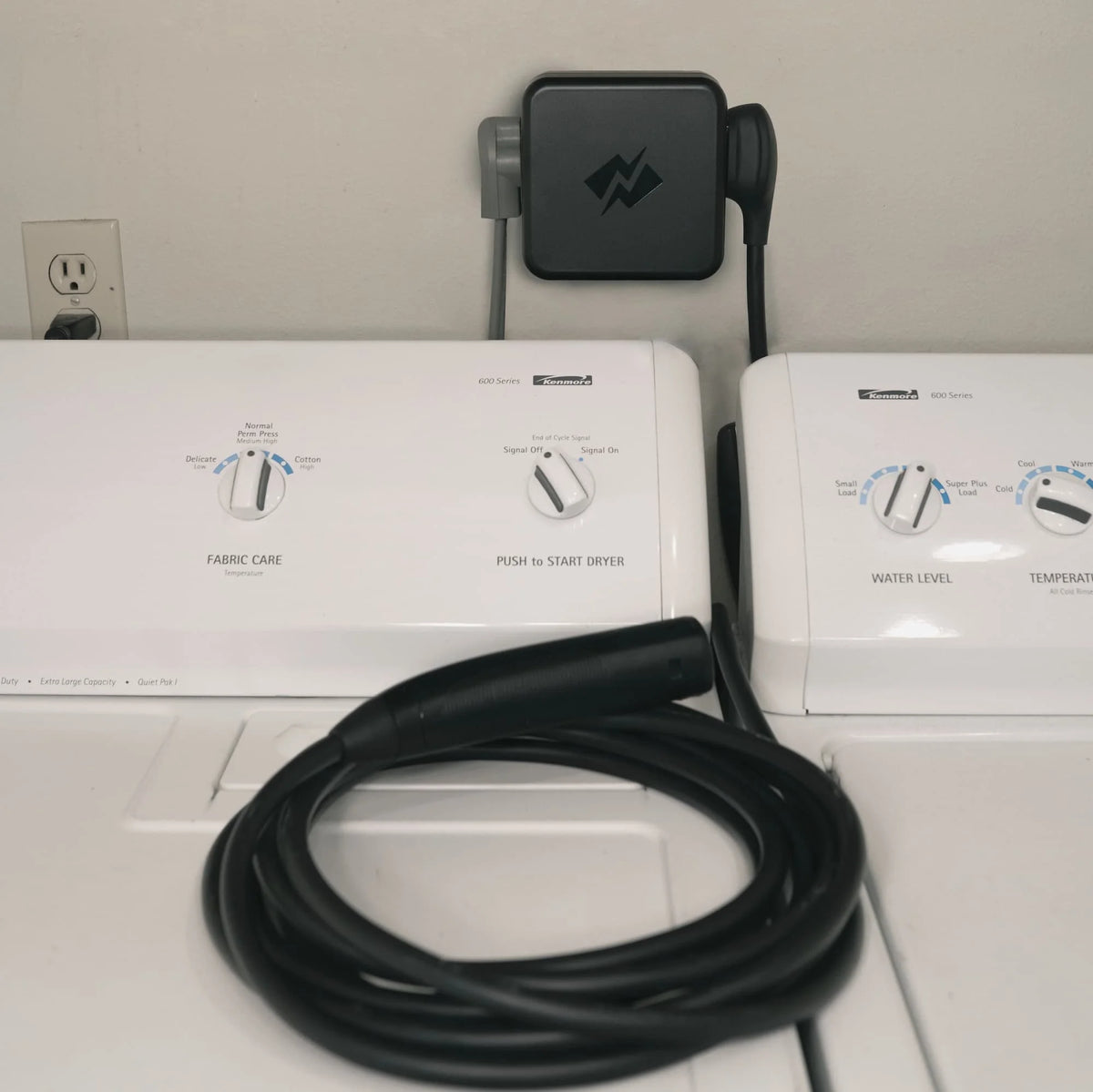
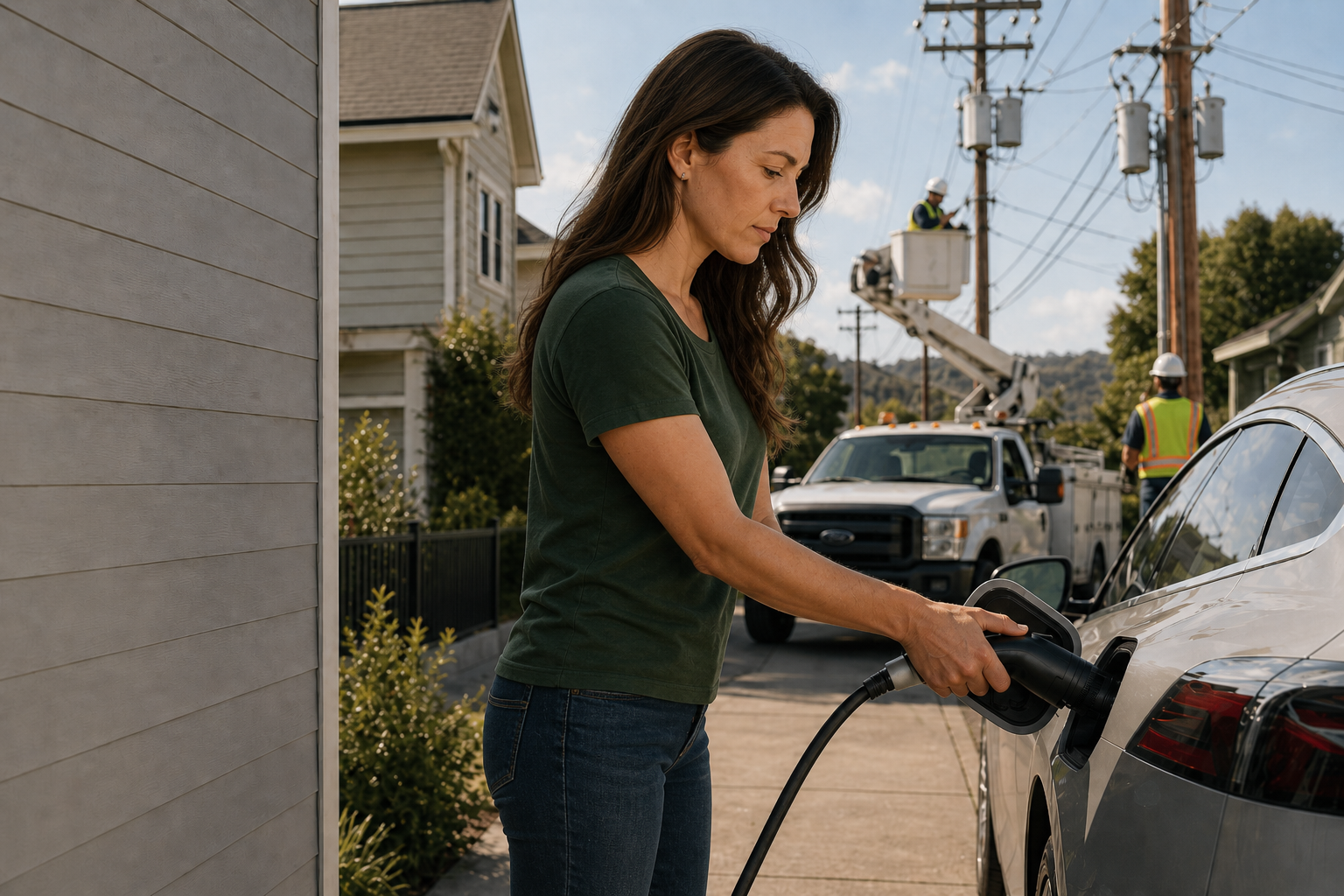
Direct answer: A dryer outlet splitter plugs into your 240V dryer outlet, usually a NEMA 14-30, and adds a second outlet for an EV charger such as a Tesla Mobile Connector, so the dryer and the car share one circuit. The safe kind switches automatically: the dryer gets priority, the car pauses while the dryer runs, and charging resumes when it stops. A plain Y-splitter that powers both at once can overload a 30A circuit, so skip it. On a 30A dryer circuit, the EV charges at up to 24A, about 5.7 kW.
- Can you split a 240V outlet? Yes, with a listed device that switches the loads. Never with a Y-cable that lets both draw at once.
- Speed: 24A on a 30A dryer circuit, about 20 miles of range an hour, or about 160 miles overnight.
- What to buy: UL or cUL listed, automatic switching with dryer priority, plugs that match your outlet, and a charger you can set to 24A.
- Cost: $399 for a smart splitter, compared with roughly $750 to $2,500 for a new circuit, plus a median $2,800 to $3,500 if the panel or service needs an upgrade.
- Permits: usually not needed in the US to plug in a listed device. British Columbia requires one.
Checked October 14, 2026 against the National Electrical Code's EV charging rules, Tesla's Mobile Connector manual, SMUD's and BC Hydro's circuit-sharing device programs, Technical Safety BC, installation cost data from Qmerit, EnergySage, and Lawrence Berkeley National Laboratory.
You have one 240V outlet near where you park, and the dryer is plugged into it. A dryer outlet splitter, also sold as an EV dryer splitter, a NEMA 14-30 splitter, or a circuit-sharing device, lets an EV charger use that same circuit without running new wire. The products sold under those names are not the same, though. Some are two outlets wired to one plug. Some have a switch you flip by hand. Others watch the dryer and switch the car off and on for you. This guide compares every approach, including the named products you'll find when shopping, then covers chargers, setup, cost, and permits.
Related: Is it safe to charge an EV from a dryer outlet? · NEMA 14-30 EV charging · Identify your dryer plug type · Two EVs on one 240V outlet
What is a dryer outlet splitter?
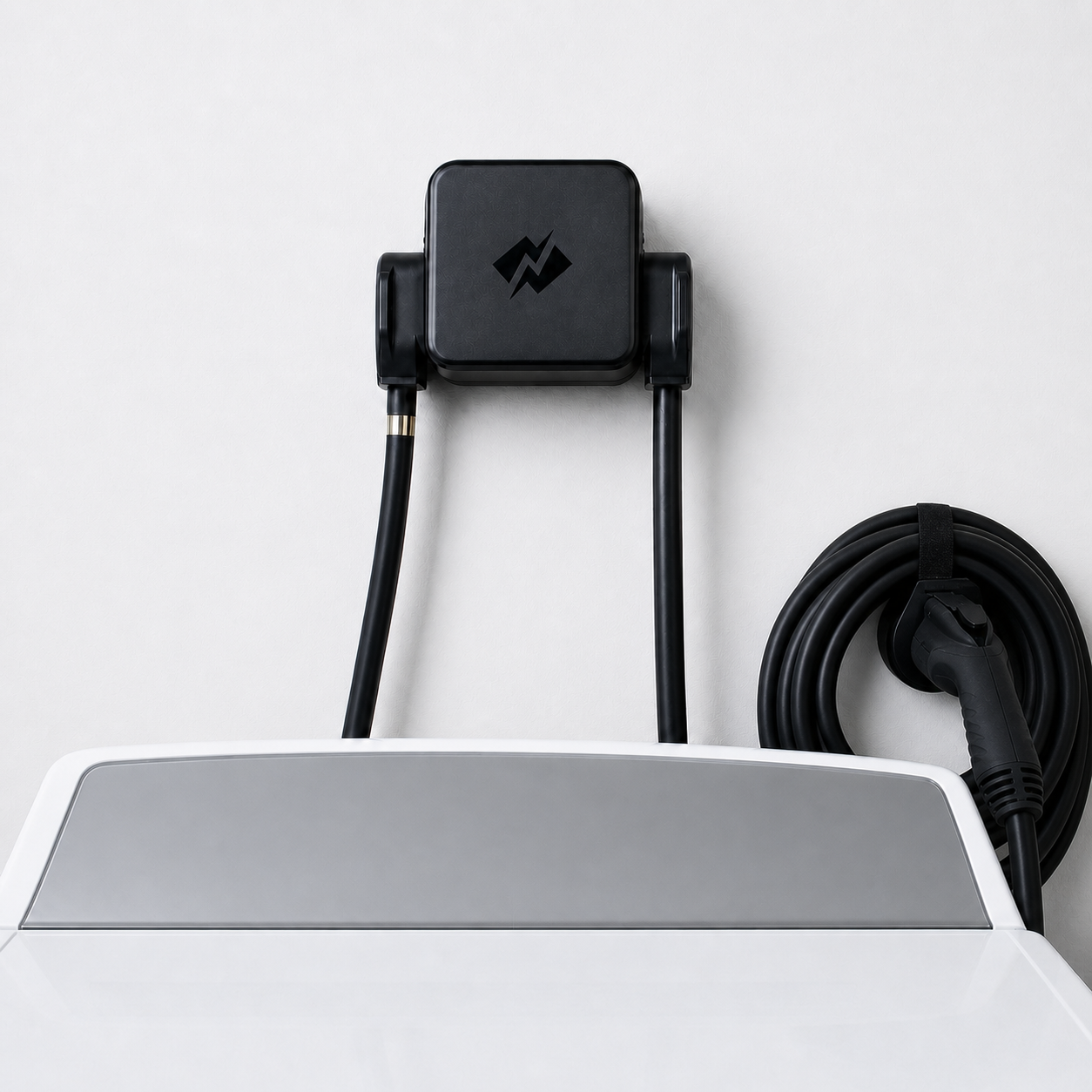
A dryer outlet splitter plugs into a 240V dryer receptacle and provides two outlets: one for the dryer, one for an EV charger. SMUD calls it a circuit-sharing device, one that lets two appliances, such as a dryer and an EV charger, share the same circuit. BC Hydro calls the approach branch circuit sharing. The electrical code calls the broader category an energy management system.
A 30A dryer circuit can carry a dryer, or an EV charging at 24A, but not both. The National Electrical Code treats EV charging as a continuous load limited to 80% of the breaker rating, and a heating dryer draws much of what's left. The whole job of a splitter is deciding who gets the circuit, and when.
Dryer splitter vs. switch box vs. load-sensing charger vs. new circuit
| Approach | Dryer and EV at once? | Who protects the circuit | Install and typical cost | Best for |
|---|---|---|---|---|
| Passive Y-splitter (two outlets on one plug) | Yes, both outlets are always live | Only the breaker | Plug in. Cheap | Not recommended for a dryer and an EV |
| Manual switch box (a selector between two outlets) | No. Only the selected outlet is live | You, by flipping the switch | Plug in. About $170 for one listed example | Occasional charging, if you'll always remember the switch |
| Automatic smart splitter | No. It switches for you | The device | Plug in. About $400 | Daily charging from the dryer outlet you have |
| Load-sensing charger or panel energy management | The charger slows or pauses to fit | Sensors and the charger | Electrician, permit, usually a new circuit | Adding a new EV circuit to a panel short on capacity |
| New dedicated circuit | Not shared, so not an issue | Its own breaker | Electrician and permit. About $750 to $2,500, plus the charger | Faster charging, or parking far from the dryer |
Whichever shared option you pick, the car should charge at no more than 24A on a 30A dryer circuit, about 5.7 kW. A new 50A circuit allows 40A, about 9.6 kW.
Passive Y-splitters keep both outlets live. Start the dryer while the car charges and the circuit carries both loads: at best the breaker trips, at worst a worn receptacle overheats first. The Electrical Safety Foundation tells drivers never to use a multi-plug adapter for EV charging, and many 14-30 Y-adapters sold online are this type.
Manual switch boxes power one outlet at a time, so the loads can't overlap, but someone has to flip the switch, and one forgotten flip means an uncharged car in the morning.
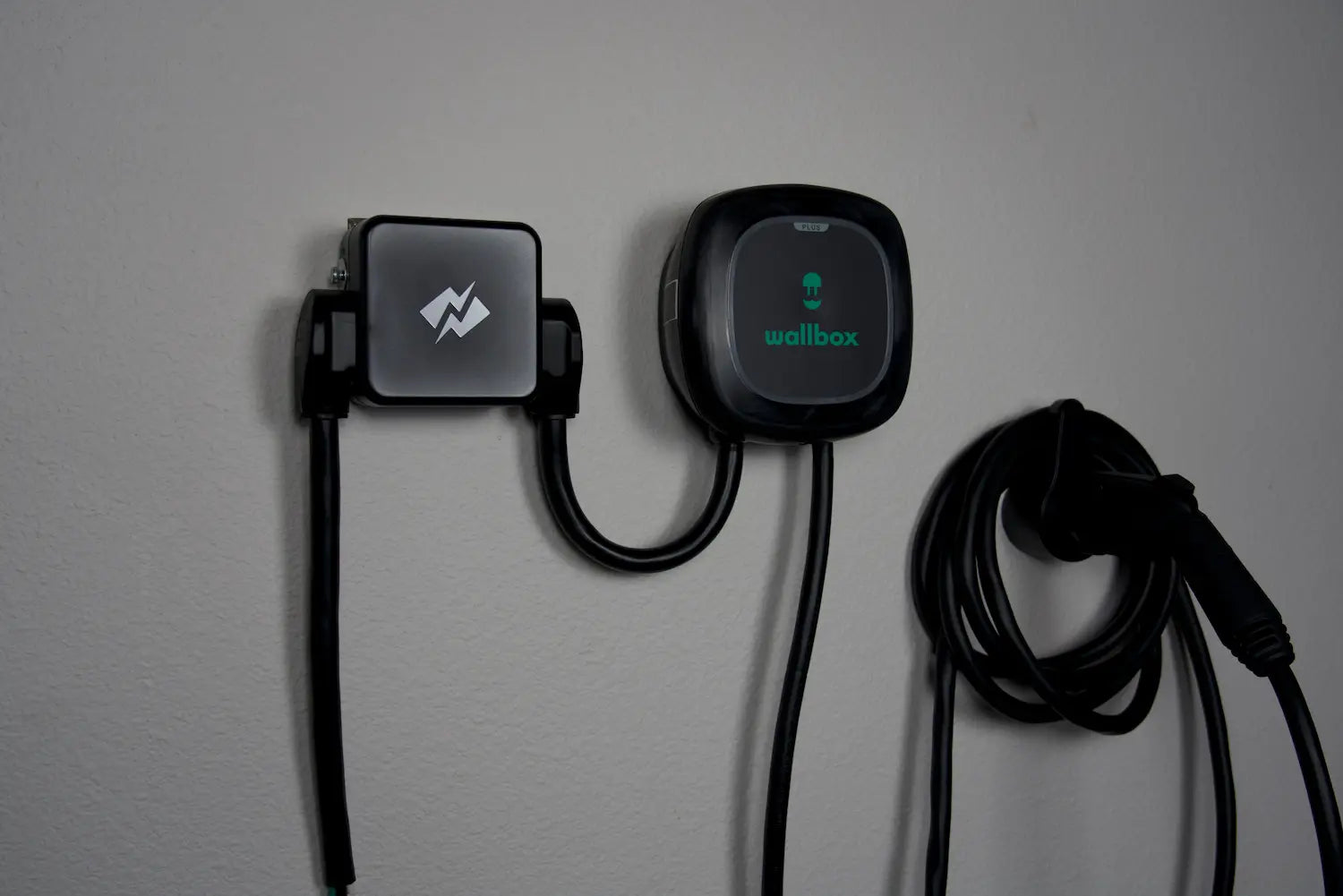
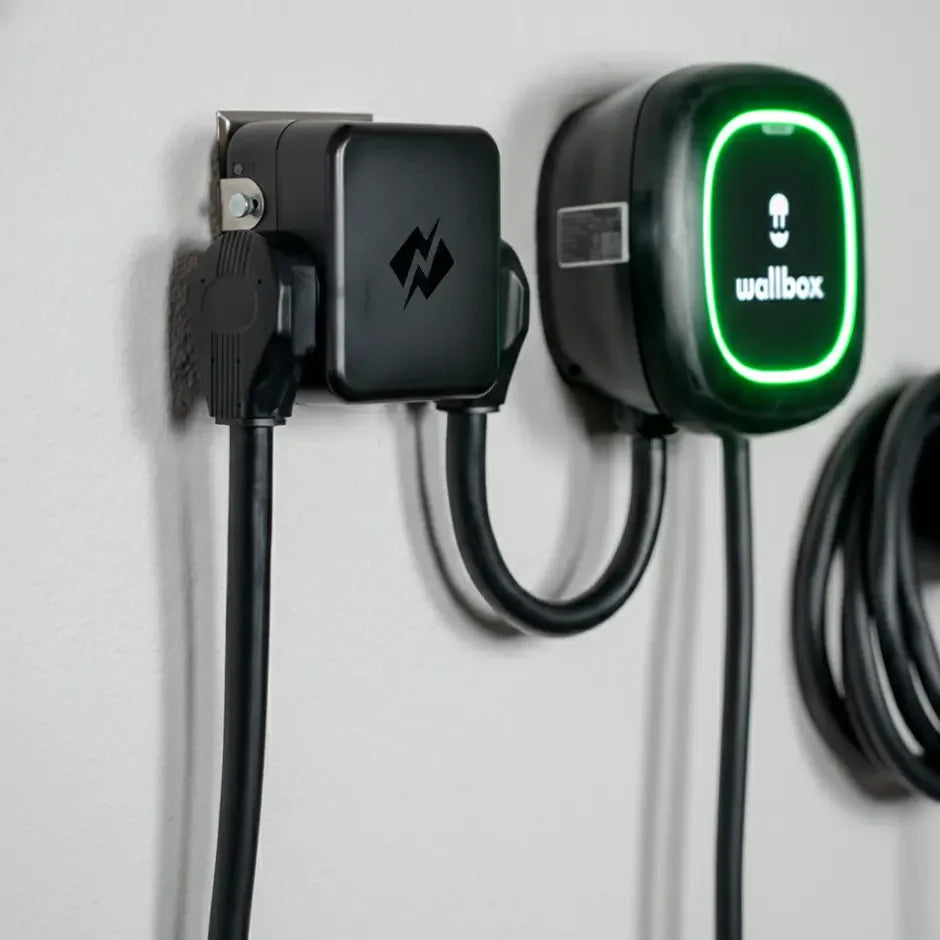
Automatic smart splitters are the kind utilities put on rebate lists: the EV outlet switches off when the dryer starts and back on when it stops. Our NeoCharge Smart Splitter is this type.
Load-sensing chargers and new circuits solve a different problem: adding a new EV circuit, with an electrician and a permit, when the dryer is nowhere near your parking spot. See smart splitter vs. load management vs. panel upgrade for how to choose.
How automatic switching works
- The splitter plugs into the dryer outlet. The dryer plugs into its primary outlet, the EV charger into the secondary.
- It monitors the primary outlet. While the dryer is off, the EV outlet is on and the car charges at whatever the charger is set to, up to 24A on a 30A circuit.
- When the dryer starts drawing power, the splitter switches the EV outlet off. The charger and car pause.
- When the dryer finishes, the EV outlet switches back on and charging resumes.
It switches between the loads; it doesn't divide the circuit. The dryer gets the full circuit and the car waits, so a load of laundry only delays charging by the length of the cycle.
The 2023 National Electrical Code (sections 220.70 and 625.42) lets an energy management system's limit, rather than the charger's full rating, count in the load calculation. Whether a plug-in device on a dryer circuit is accepted is up to your local inspector, but utilities treat listed circuit-sharing devices as an approved way to add charging without a panel upgrade.
NeoCharge Smart Splitter for NEMA 14-30: specs at a glance
| 24A model (dryer circuits) | 40A model (50A circuits) | |
|---|---|---|
| Fits | 30A circuits | 50A circuits |
| Plug | NEMA 14-30P or 10-30P | NEMA 14-50P, 10-50P, or 6-50P |
| Outlets | Two 14-30R or two 10-30R | Two matching outlets |
| Max EV charging | 24A, about 5.7 kW | 40A, about 9.6 kW |
| How it shares | Automatic switching. The primary outlet has priority; the EV on the secondary pauses | Same, or two EVs: one at a time, or both at once when each is set to 20A or less |
| Safety | cUL Listed (US and Canada), NEC compliant, internal software breaker | Same |
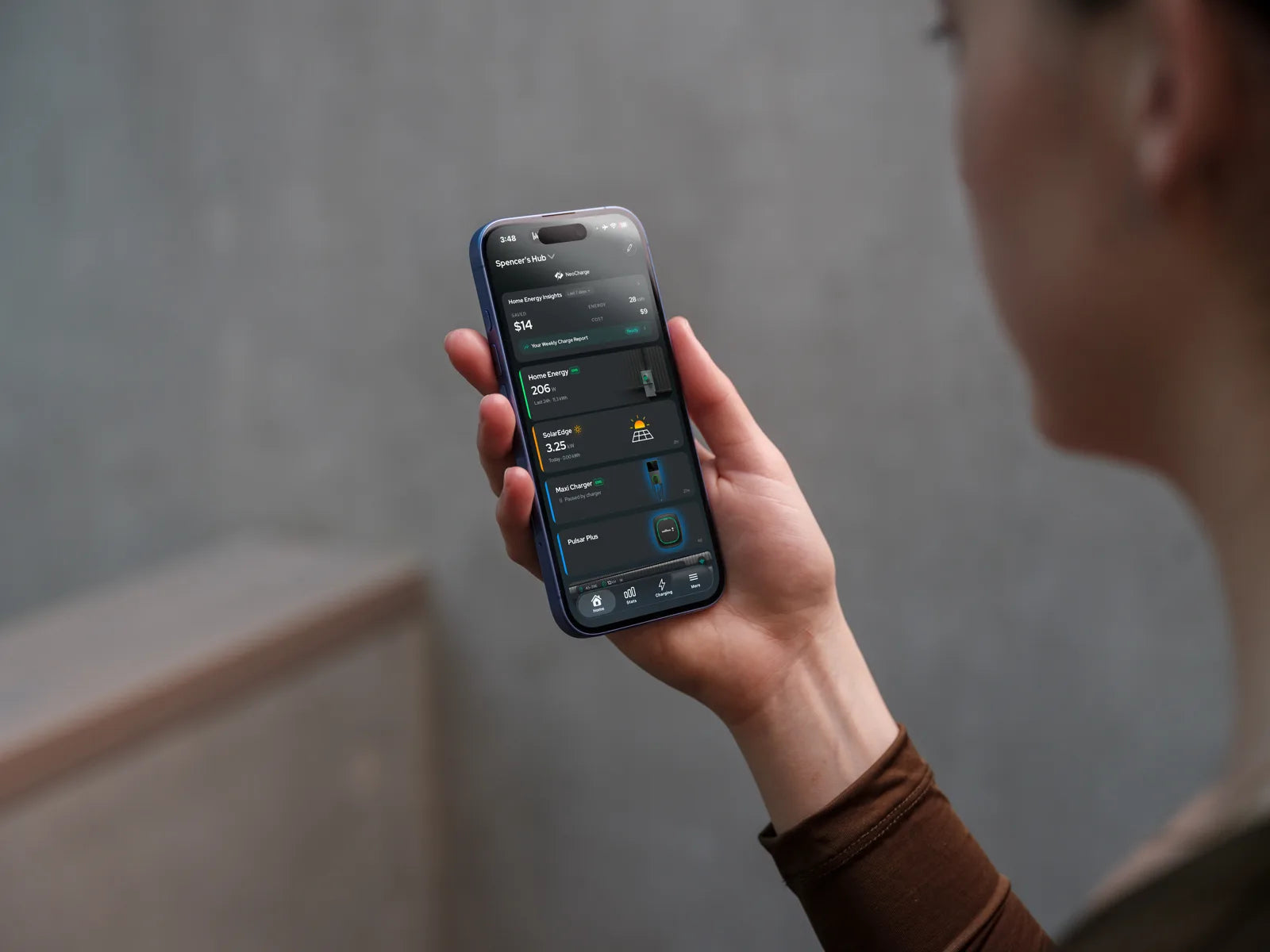
| Setup and app | Bluetooth for setup, then Wi-Fi. The app shows energy use and cost and schedules off-peak charging | Same |
| Use | Indoor only | Indoor only |
| US price and warranty | $399. 1-year limited warranty; the Pro Package adds 3 years and 60-day returns | Same |
Which EV chargers work with a dryer outlet splitter?
The splitter isn't a charger. Almost any plug-in Level 2 charger works, as long as its current can be set to 24A or less (or the car can reliably limit it).
| Charger | Works on a 30A dryer splitter? | Notes |
|---|---|---|
| Tesla Mobile Connector with the NEMA 14-30 or 10-30 adapter | Yes | Tesla's manual rates both adapters at 24A, about 5.7 kW, so the current is set for you |
| Plug-in Level 2 charger with adjustable current, such as a Grizzl-E | Yes | Set it to 24A, and use the matching plug (or the manufacturer's own 14-30 plug option) |
| Plug-in charger fixed at 32A or 40A | Only if the car can be limited to 24A | A plug adapter changes the shape, not the circuit. Without a reliable 24A limit, don't use it |
| Tesla Wall Connector or any hardwired charger | No | Hardwired chargers have no plug |
The common mistake is a generic 14-30-to-14-50 adapter on a 40A charger, which then pulls 40A from a 30A breaker. An adapter like that is not a splitter: it gives you one outlet, not two, and no switching. Confirm the charging current in the charger's settings or the car's app.
14-30, 10-30, or 14-50: which version do you need?
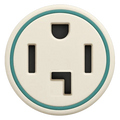
Match the splitter to the outlet, not the other way around. The NEMA 14-30 is the current four-prong dryer outlet, standard on new dryer circuits since the 1996 code, and takes the 14-30 version. The NEMA 10-30 is the older three-prong version with no separate ground; it takes the 10-30 version, and an electrician should check the circuit. A 50A outlet (14-50, 10-50, or 6-50) takes the 40A model and allows 40A charging, about 9.6 kW.
Not sure which you have? Our dryer plug types guide has photos of each. For outlet-specific detail, see NEMA 14-30 and NEMA 10-30.
Two EVs instead of a dryer? On a 50A circuit, the 40A model can serve two cars. It charges them in turn, primary first, or both at once only when each is set to 20A or less. See how to charge two EVs on one 240V outlet.
How to set up a dryer outlet splitter
- Check the outlet: a 30A breaker, and a receptacle that isn't warm, discolored, or loose.
- Match the plug (four prongs: 14-30; three prongs: 10-30) and set the charger to 24A. Tesla's 14-30 and 10-30 adapters do that for you.
- Turn off the dryer breaker, unplug the dryer, and plug the splitter in fully, following the maker's mounting instructions.
- Plug the dryer into the primary outlet and the EV charger into the secondary, then turn the breaker back on. The NeoCharge Smart Splitter pairs over Bluetooth, then joins your Wi-Fi.
- Test it once: start charging, start the dryer, and confirm charging pauses, then resumes when the dryer stops.
How fast does a shared dryer outlet charge?
| Setup | Charging power | Range per hour (typical EV) | Overnight, 8 hours |
|---|---|---|---|
| 120V wall outlet (Level 1) | about 1.4 kW | about 4 to 5 miles | about 35 miles |
| 30A dryer circuit at 24A | about 5.7 kW | about 20 miles | about 160 miles |
| 50A circuit at 40A | about 9.6 kW | about 30 miles | 240+ miles |
Range assumes about 3.5 miles per kWh, typical of an EV crossover; trucks get less. A night on a dryer circuit covers a typical commute, but a driver who drains a large battery daily may want a 50A circuit.
What not to do, and when a splitter isn't the answer
- Don't rely on a schedule alone. "We won't run the dryer at night" works until it doesn't. Hardware should enforce it.
- Don't swap plugs every day. Repeated plugging wears the receptacle's contacts, and a loose contact runs hot. Tesla's manual tells owners to leave the Mobile Connector plugged in to reduce wear.
- Don't use a household extension cord, and never run a cord through a wall. If the outlet is out of reach, see our extension cord guide. If the outlet is too far from the car, an electrician can add an outlet or a circuit.
- Don't ignore a warm, discolored, or loose receptacle. Fix it before it carries a car every night.
- Skip the splitter if your charger is hardwired (like a Tesla Wall Connector), if you need more than 24A every night, or if the outlet is outdoors: the NeoCharge Smart Splitter is for indoor use only.
Cost: splitter vs. new circuit vs. panel upgrade

| Option | Typical cost | What it involves |
|---|---|---|
| Smart splitter on the existing dryer outlet | $399, plus a plug-in charger if you don't have one (about $300 to $700) | Plug in. No new circuit |
| New 240V circuit from a panel with room | about $750 to $2,500 installed, plus the charger | Breaker, wire, outlet, permit, inspection |
| Panel or service upgrade | median $2,800 to $3,500, often $2,000 to $5,000 | New panel or bigger service, on top of the circuit |
Circuit costs are from Qmerit and EnergySage; upgrade medians from Lawrence Berkeley National Laboratory (August 2026). Our installation cost guide breaks each option down.
Rebates. SMUD's Charge@Home program pays up to $200 for a device on its qualified-product list, which includes the NeoCharge Smart Splitter (UL certificate E507438). PG&E offers up to 50% off the Smart Splitter, and up to 100% for income-qualified customers; check PG&E for current terms. BC Hydro pays a rebate for devices on its power management list. To see what applies at your address, use our rebate finder. The federal 30C credit no longer covers home charging equipment placed in service after June 30, 2026.
Do you need a permit or an electrician?
- United States: plugging a listed device into an existing outlet usually isn't permitted work, but permit rules are set by your city or county, so check locally. Replacing, moving, or adding an outlet almost always needs a permit.
- British Columbia: Technical Safety BC requires a permit and a load calculation even for plug-in switching devices on an existing dryer receptacle.
- Elsewhere in Canada: see charging an EV from a dryer outlet in Canada.
You don't need an electrician to plug in a splitter, but call one if the receptacle is warm, discolored, or loose, if it's a 10-30 on wiring you know nothing about, or if your home has aluminum branch wiring.
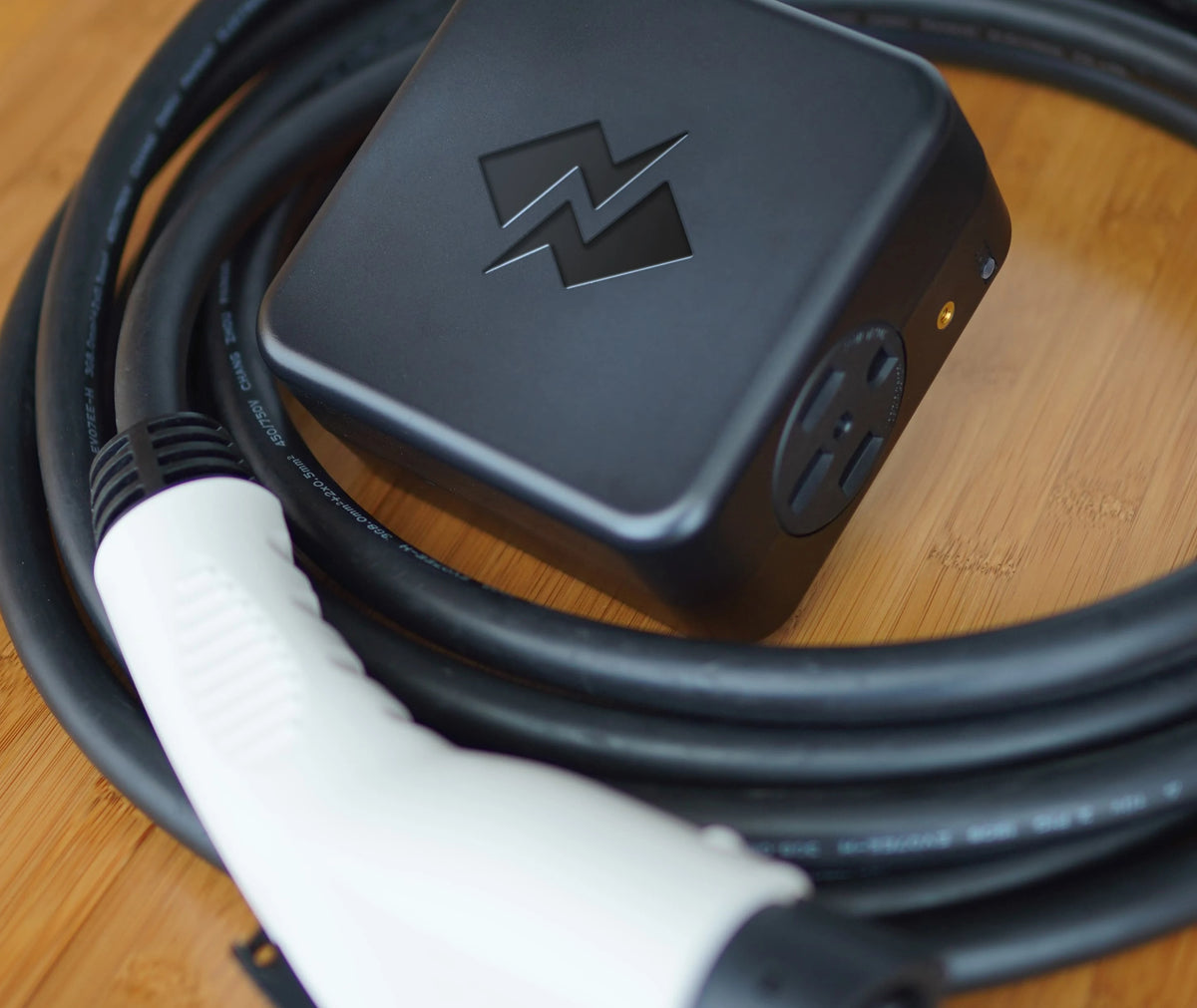
cUL Listed, on SMUD and BC Hydro rebate lists
The dryer outlet splitter that switches for you
The dryer gets priority and your EV charges the rest of the time, with nothing to unplug. Versions for 14-30, 10-30, and 50A outlets. Works with Tesla's Mobile Connector and almost any plug-in Level 2 charger you can set to 24A. $399, with utility rebates in many areas.
FAQ
Can you split a 240V dryer outlet to charge an EV?
Is a dryer outlet splitter safe?
Is there a splitter to plug in a dryer and a Tesla?
Can I run the dryer and charge my EV at the same time?
Is a 14-30 to 14-50 adapter the same as a dryer splitter?
Does a dryer splitter work on an old three-prong 10-30 outlet?
What does the NeoCharge Smart Splitter cost, and what's the warranty?
Do I need a permit for a dryer outlet splitter?
Bottom line
A dryer outlet splitter is the cheapest way to get Level 2 charging from a 240V outlet you already have, but only the switching kind is worth buying, and automatic switching means nobody has to remember anything. Look for a safety listing on the whole device, dryer priority, plugs that match your outlet, and a charger you can set to 24A. Skip passive Y-splitters, household extension cords, and daily plug swapping. If the outlet is old, warm, or loose, have it fixed first.
Next steps (NeoCharge)
- Identify your outlet with the dryer plug types guide.
- See how the NeoCharge Smart Splitter works with your outlet and charger.
- Check rebates for your address with the rebate finder.
- In Canada? Start with Can I charge my EV from a dryer outlet in Canada?
Sources
Checked October 14, 2026:
- National Electrical Code 2023, sections 625.41 (125% continuous load), 625.42 and 220.70 (energy management), as summarized by Leviton's Captain Code and EC&M's guide to Article 625
- U.S. Department of Energy, Alternative Fuels Data Center, Charging electric vehicles at home
- Tesla, Mobile Connector Gen 3 owner's manual: 24A on the NEMA 14-30 and 10-30 adapters, and safety instructions
- Electrical Safety Foundation, EV charging safety
- SMUD, Circuit sharing device qualified product list and Charge@Home
- PG&E, Residential EV Charging program
- BC Hydro, Rebates for EV power management devices
- Technical Safety BC, Information Bulletin IB-EL 2023-05, Revision 3 (March 4, 2025)
- Qmerit, How much does EV charger installation cost? (March 18, 2026); EnergySage, EV charger installation cost (updated June 22, 2026)
- Lawrence Berkeley National Laboratory, Understanding the Costs and Barriers of Residential Electrical Panel and Service Upgrades (August 2026)
- 26 U.S.C. §30C(i) and IRS, Alternative Fuel Vehicle Refueling Property Credit
Update log: rebuilt October 14, 2026 with current product details, compatibility, pricing, warranty, and permit rules; merged our earlier guide "How to Share a 240V Outlet Between Your EV Charger and Dryer (Safely)" into this page. Refreshed the same day with a comparison of every sharing approach, Smart Splitter specs, setup steps, and new FAQs.
Electrical safety disclaimer
This article is general information, not electrical advice. EV charging equipment must be installed and used according to the electrical code in force where you live, local permit rules, manufacturer instructions, and the judgment of a licensed electrician. If an outlet or plug is warm, discolored, or loose, stop using it and have it inspected.
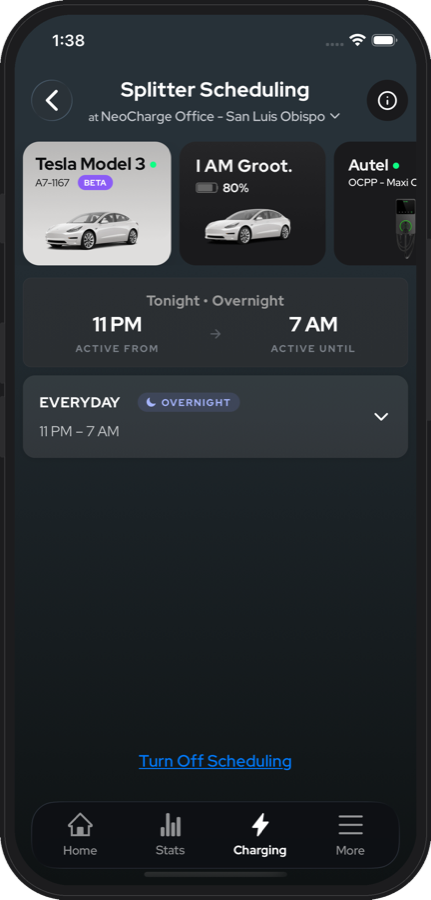
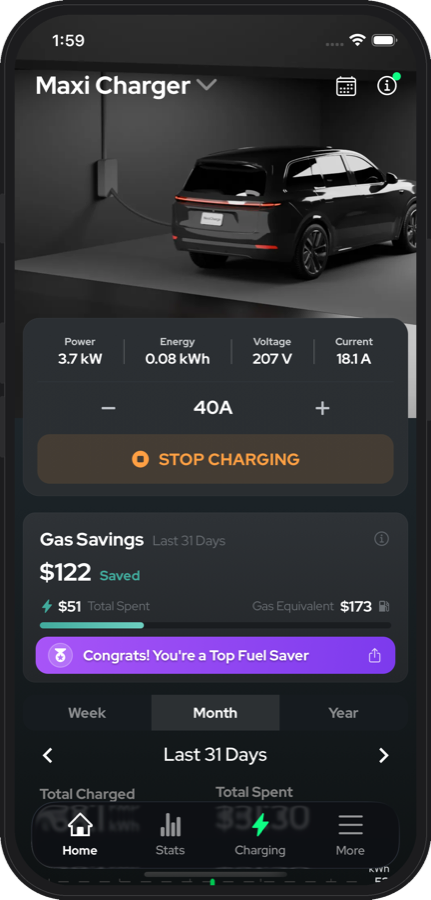
NeoCharge App
Turn rate plans into simple charging schedules
Schedule around off-peak windows, manage compatible chargers, and keep tabs on charging sessions from the app.
Explore the app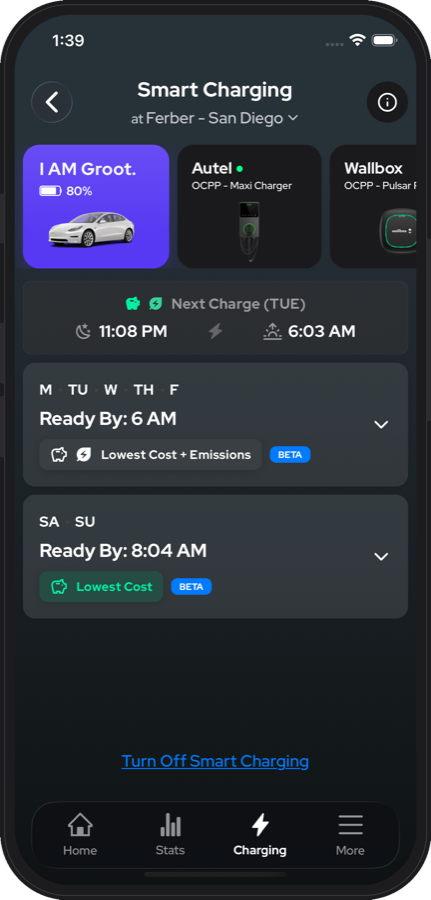
Next steps
Keep going with NeoCharge
Use the article as your decision guide, then jump into the product, app, or related guides that match what you are trying to solve next.
Key terms
- Level 2 charging
- Level 2 EV charging uses a 240V circuit (like a dryer outlet). It typically adds ~20–35 miles of range per hour, depending on your car and the circuit amperage.
- NEMA 14-50
- A NEMA 14-50 is a common 240V, 50A outlet (often used for EV charging). Many EV chargers plug into it, but the actual charging speed depends on the circuit and your EV.
- NEMA 14-30
- A NEMA 14-30 is a 240V, 30A dryer outlet. With a properly configured EV charger, it can usually support ~24A continuous charging (about 20–25 miles of range per hour for many EVs).
- Load management
- Load management is a strategy to keep your home’s electrical load within safe limits—often by scheduling or pausing EV charging when other appliances are running.
Related posts
EV Charging Best Practices: Battery Life, Safety, and Cost
Learn EV charging best practices for battery life, home safety, off-peak savings, fast charging, 80% limits, Level 2 charging, and panel upgrades.
Smart Splitter vs EVEMS vs Panel Upgrade: How to Choose the Right Path for Level 2 Charging
Need Level 2 charging but worried about a panel upgrade? Compare Smart Splitter outlet sharing vs EV energy management (EVEMS) vs a full panel upgrade—with a simple decision tree.
Charging an EV with a NEMA 10-30 Dryer Outlet (Grounding, Adapters, and Safer Alternatives)
A NEMA 10-30 dryer outlet can work for EV charging—but grounding and adapter safety matter. Learn the 24A guideline, key risks, and safer alternatives.
EV Charger Breaker Size & Wire Gauge (40A vs 50A vs 60A): How the 125% Rule Works
Confused about EV charger breaker size and wire gauge? Learn how the 125% continuous-load rule maps 32A→40A, 40A→50A, and 48A→60A.
