






Find residential EV charger rebates near you
Enter your ZIP or Canadian postal code to see curated incentives and official program links.
*Programs, amounts, and eligibility change frequently. Always confirm current terms on the program website.
Programs we track
A curated rebate guide for US and Canadian home EV charging.
We pulled the high-signal programs from the rebate data powering the app: direct homeowner rebates, Smart Splitter/load-management fits, and the Canadian strata or rewards paths customers actually ask about.
Best customer-fit programs
BC Hydro rebates for EV power management devices
BC Hydro · CleanBC Go Electric
BC Hydro offers a $200 rebate for eligible single-family home customers who install an eligible EV power management device with an eligible Level 2 EV charger. The device controls the EV charging load and can help avoid the need for an electrical service upgrade.
BC Hydro EV power management offer →Quebec Ecorecharge home charging grant
Gouvernement du Quebec
Quebec EV owners can receive a fixed grant for purchase and installation of an eligible home Level 2 charging station.
View Quebec grant →Federal Alternative Fuel Vehicle Refueling Property Credit
IRS · Form 8911
Federal tax credit for qualified home EV charging equipment and installation. Many customers can stack this with a local utility rebate, subject to tax eligibility.
View IRS details →United States · highlighted utility and state programs
PG&E Residential Charging Solutions Rebate
Northern & Central California
Residential customers can receive a rebate on a Smart Splitter or qualified Level 2 charger, with higher amounts for income-qualified customers.
PG&E rebate guide →SMUD Charge@Home incentive
Sacramento Municipal Utility District
Incentive toward qualifying Level 2 charger or energy management/circuit-sharing equipment for SMUD residential customers.
View SMUD program →Tacoma Power EV charging bill credits
Tacoma, Washington
Tacoma Power customers can receive bill credits for EV charging equipment, including Smart Splitter and outlet-related support.
View Tacoma program →Duke Energy Charger Prep Credit
Select Duke Energy service areas
Credit toward electrical preparation needed for a Smart Splitter or Level 2 charger. Availability depends on Duke territory and program rules.
View Duke program →Maryland EV charging station rebate
Maryland Energy Administration
State rebate for eligible residential Level 2 charging station acquisition and installation costs, subject to funding and current rules.
View Maryland rebate →PSE&G EV residential charging program
New Jersey
Make-ready support for customer-side work required to install eligible smart Level 2 charging equipment.
View PSE&G program →Canada · homeowner, strata, and rewards programs
FortisBC residential EV charging station rebate
British Columbia
FortisBC electric and some municipal electric customers can get support for eligible home Level 2 charger purchase and installation.
View FortisBC rebate →BC EV Ready rebates for condos and apartments
BC Hydro / FortisBC / CleanBC
Multi-unit buildings can receive EV Ready plan, infrastructure, and charger funding. This is the strongest path for strata-scale charging decisions.
View BC MURB rebates →Quebec Ecorecharge multi-dwelling programs
Gouvernement du Quebec
Quebec multi-unit buildings can receive support for analysis, electrical infrastructure, and charging station installation.
View Quebec MURB funding →Other Canadian home-charging rewards programs
Some private programs offer rewards for verified home charging data. These are listed for completeness, but they are separate from government utility rebates and may require competitor hardware, software, or enrollment.
- SWTCH Home Charging Program
- ChargeLab Home Charging Rewards
- WattsApp Home Charging Program
- Pion Power GreenMiles Rewards
How it works
Claim your EV charger rebate in 4 steps.
Most rebates are post-install: you buy the equipment, install it, then submit proof of purchase to the utility or to the IRS. Plan on 4–8 weeks for utility programs and a year-end tax filing for the federal credit.
- Step 01
Check eligibility
Enter your ZIP above. The finder confirms whether you’re in a participating utility’s service area and lists every rebate that applies to your address.
- Step 02
Buy and install
Purchase a qualifying device (Smart Splitter or approved Level 2 charger) and install it. Save your receipt — every program requires proof of purchase.
- Step 03
Submit application
Apply through your utility’s rebate portal. For the federal credit, complete IRS Form 8911 and attach it to your tax return at year-end.
- Step 04
Get paid
Utility rebates arrive as a check or bill credit within 4–8 weeks. The federal credit is applied as a reduction in your tax bill when you file.
WHY HOMEOWNERS CHOOSE SMART SPLITTER
Smart Splitter vs. a traditional Level 2 install.
Traditional L2 charger install
COST
$2,000–$5,000 panel upgrade
Most homes need an electrician + permits + a panel upgrade before a Level 2 charger can run on a dedicated 240V circuit.
INSTALL
Days to weeks of work
Quotes, permits, panel work, inspections. Best case 1 week, worst case 6 weeks of waiting on contractors and utility approval.
CHARGING SPEED
Level 2 — full speed
A dedicated 240V Level 2 charger gives you ~25–30 miles of range per hour of charging. Overnight = full battery.
REBATE STACKING
L2 chargers + federal credit
Many utilities cap the rebate at the L2 charger hardware. Federal Form 8911 covers 30% up to $1,000 of equipment + install.
NeoCharge Smart Splitter
COST
$399 plug-and-play
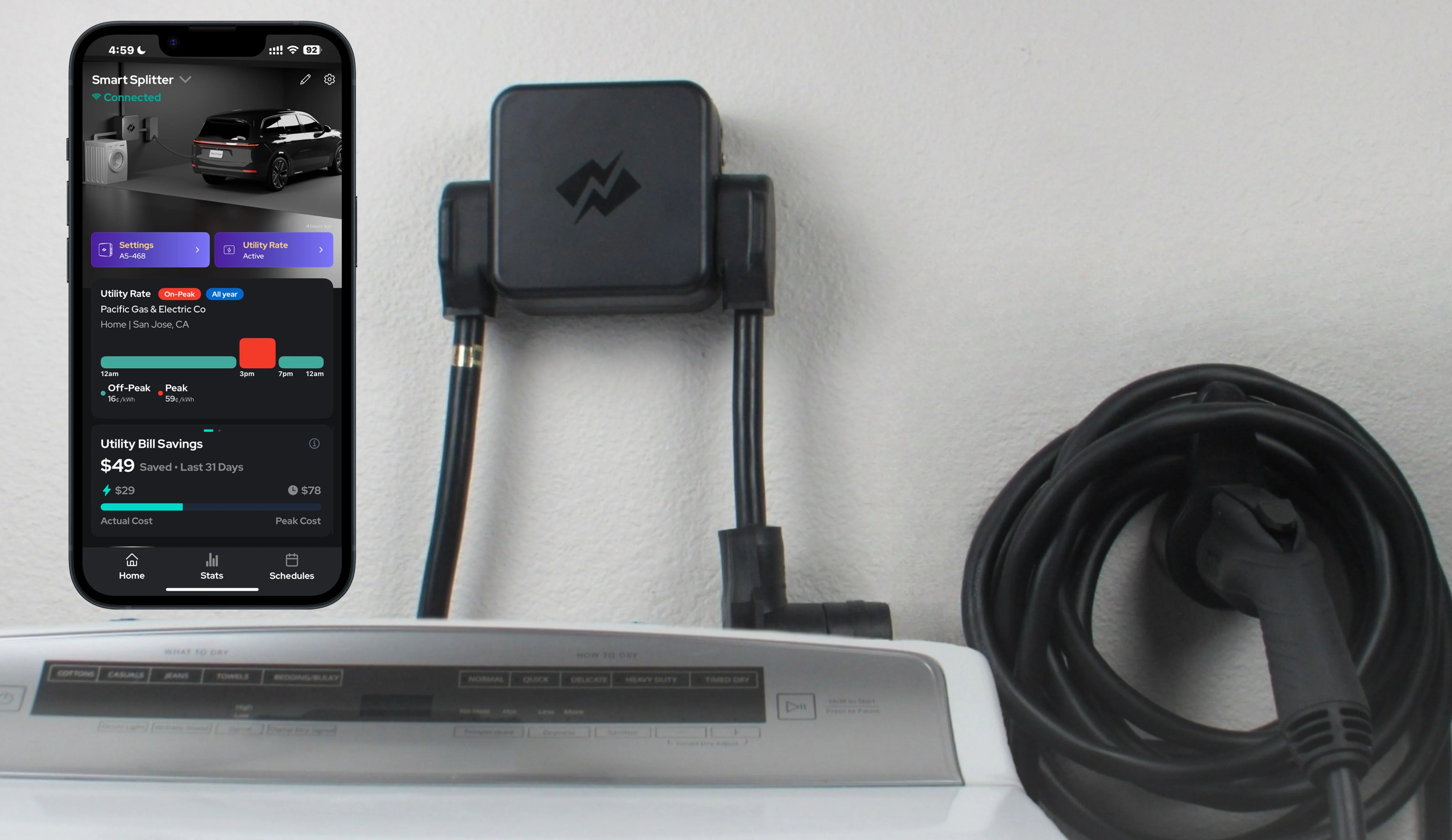
Smart Splitter plugs into your existing 240V dryer or EV outlet. Most utility rebates take this down to $79–$199 net.
INSTALL
Under 10 minutes, no electrician
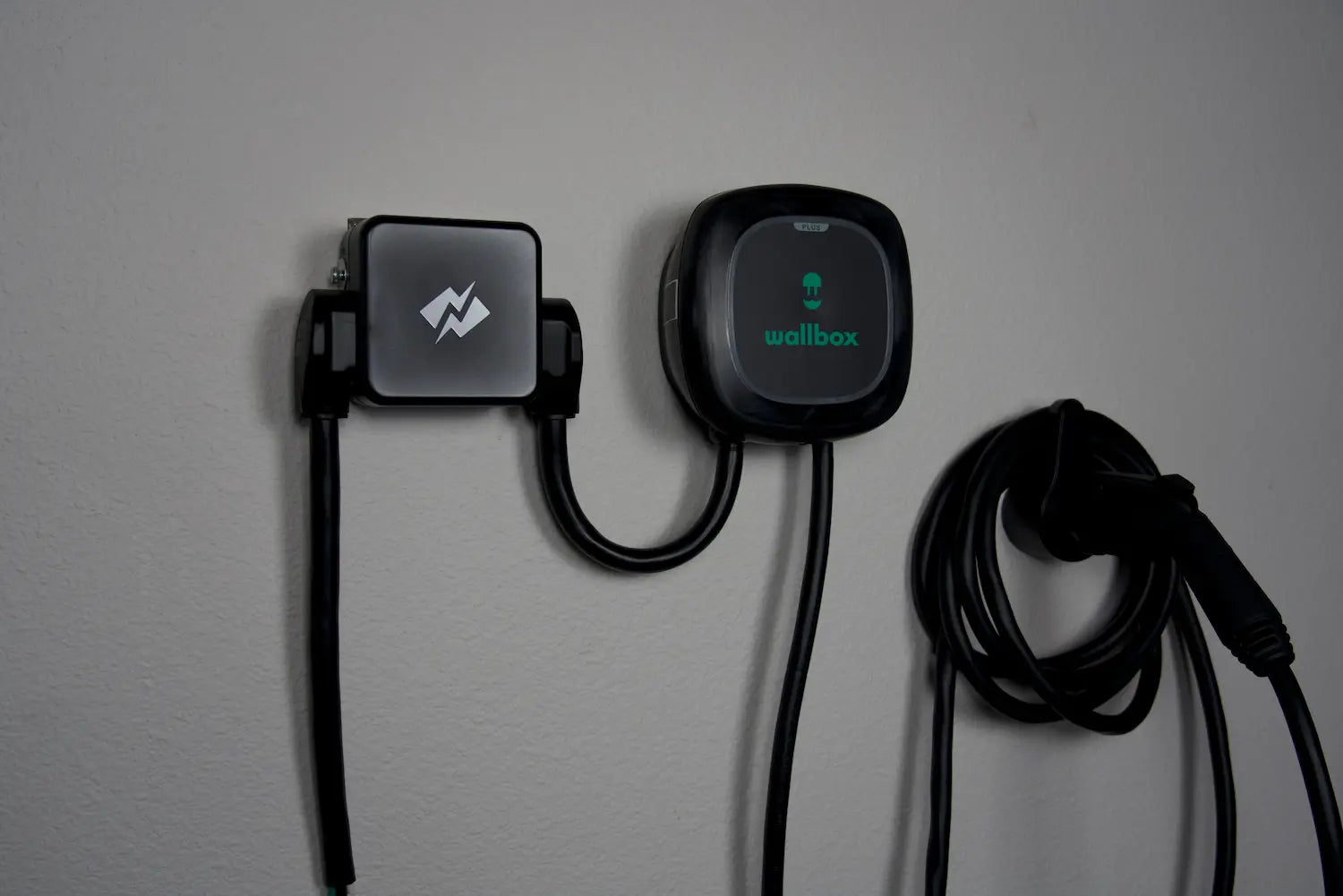
Plug the Smart Splitter into your existing outlet, plug your charger and dryer into it. Done. No electrician, no permit.
CHARGING SPEED
Level 2 — same full speed
Smart Splitter delivers true Level 2 charging on the same 240V circuit. Same speed as a hardwired install — auto-switches with your dryer.
REBATE STACKING
Smart Splitter + utility + federal
PG&E, SMUD, Tacoma, Duke, BC Hydro, and 3CE all explicitly approve the Smart Splitter. Stack with the federal credit for max savings.
We work with utilities to ensure home electrification is affordable.
Check out some examples of rebates currently offered on the Smart Splitter
Residential Charging Solutions Rebate
Income eligible PG&E customers can receive a rebate up to $700 on the Smart Splitter through the Residential Charging Solutions Rebate
Rebate for EV Power Management Device
Receive a $200 rebate by installing the Smart Splitter to help manage the electrical load from EV chargers.
Charge@Home Incentives Program
Get up to $200 off the Smart Splitter through SMUD in Sacramento. Learn more below about their Charge @ Home Program.
Charger Prep Credit
A credit up to $1,133 per charger to help cover the costs of preparing your home for an electric vehicle charger in eligible areas.
EV Charging Incentives Rebate
Receive a $400 bill credit with the purchase and isntallation of a Smart Splitter. An additional $200 is available for installing a 240V outlet.
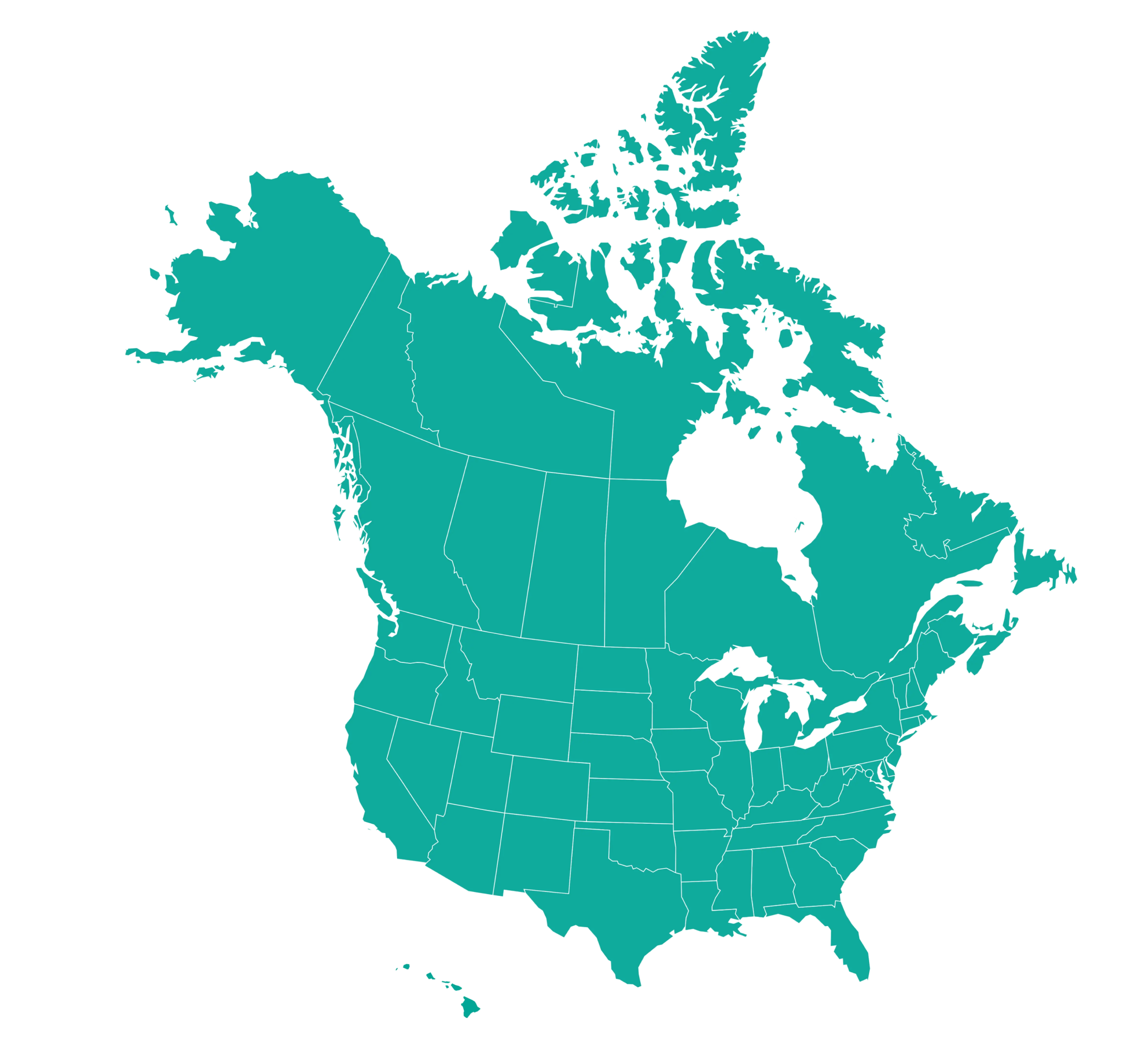
...And Many More!
$35M+
Total Smart Splitter Installation Savings By Customers
80%
Avoid A Panel Upgrade
$2,200
Avg. Smart Splitter Customer Savings
REBATE-ELIGIBLE PRODUCTS
Devices approved for the rebates above.
Every program listed on this page approves at least one of the products below. The Smart Splitter is the most-rebated device in our catalog — explicitly named in PG&E, SMUD, Tacoma Power, Duke Energy, BC Hydro, and 3CE programs.
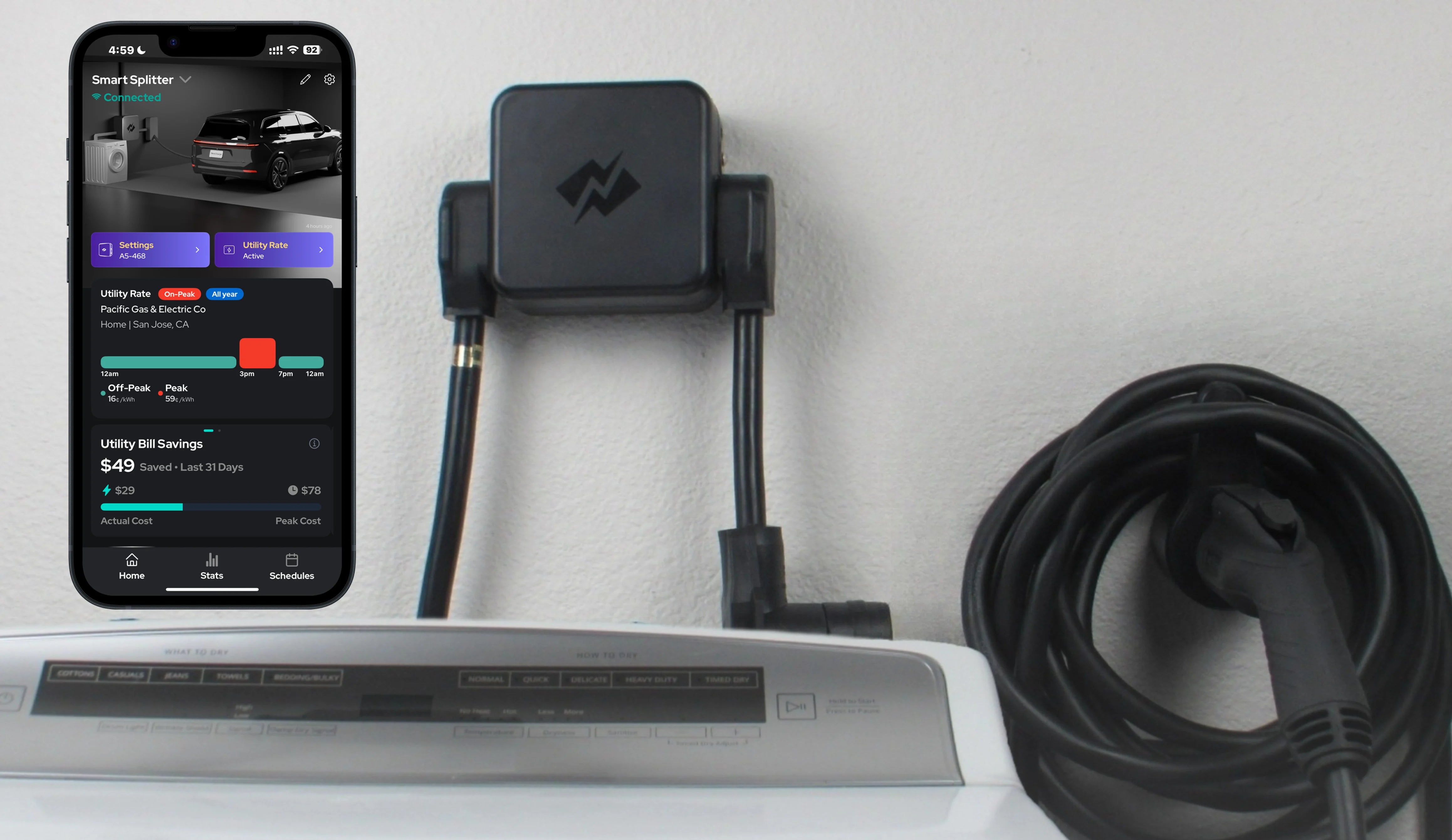
NeoCharge Smart Splitter
The flagship rebate-eligible device. Plugs into your existing 240V outlet for true Level 2 charging — no panel upgrade.
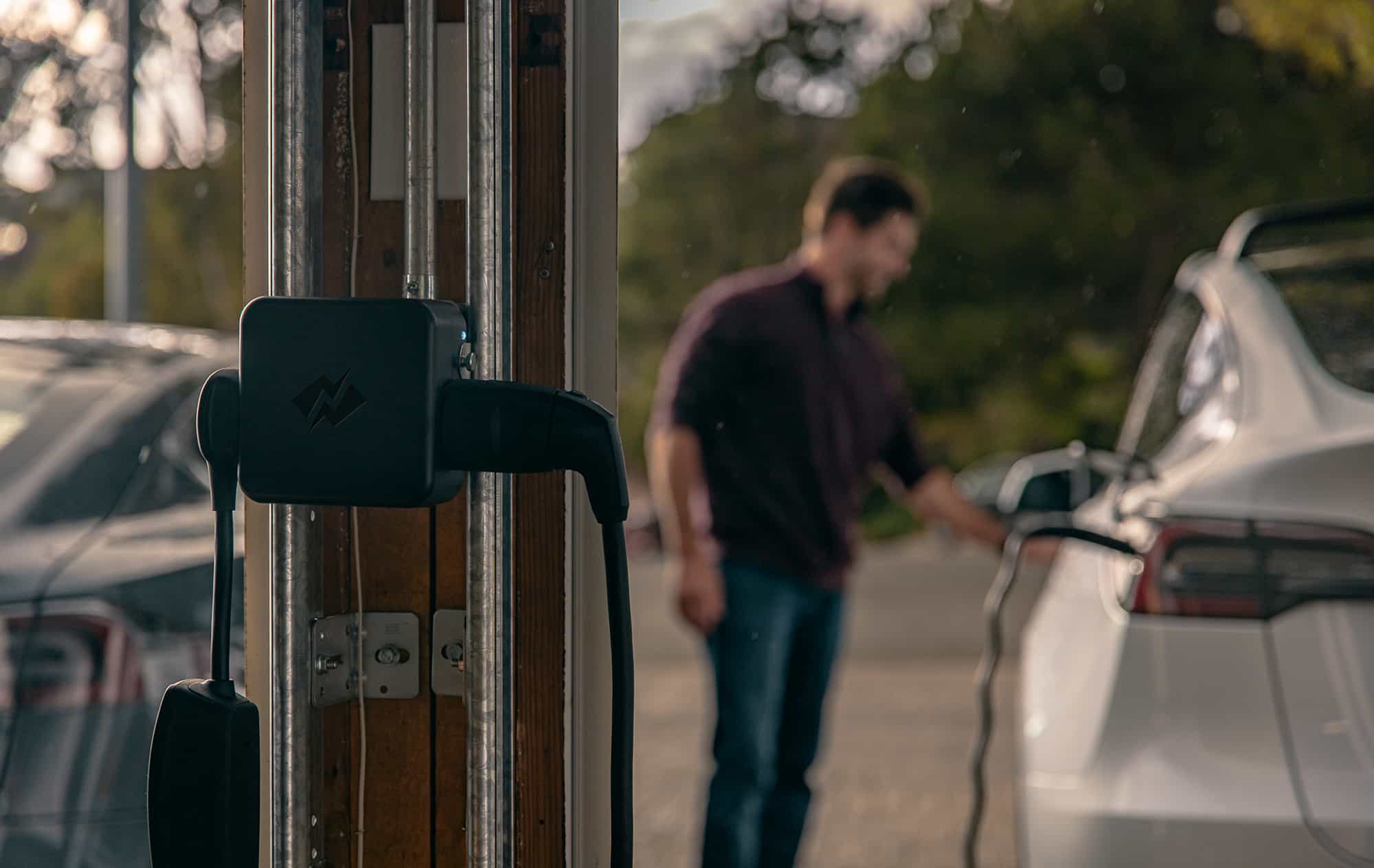
Smart Splitter — Rebate Edition
Same Smart Splitter, optimized for buyers stacking utility + federal rebates. See your net price after incentives by ZIP.
NEMA Adapters
10-30, 14-30, 14-50, 6-50, 10-50 — pick the adapter that matches your existing outlet. Bundle with the Splitter for fastest setup.
FREQUENTLY ASKED
EV charger rebate questions, answered.
The questions we get most often from customers stacking federal + utility rebates on home EV charging equipment.
Yes — this is the most common path to maximum savings. The federal Alternative Fuel Vehicle Refueling Property Credit (IRS Form 8911) covers 30% of equipment + installation, up to $1,000, and is independent of utility programs. You can claim it alongside one local utility rebate. Utility rebates typically cannot be combined with each other (you pick one), but the federal credit stacks on top.
Example: a PG&E customer buying a $399 Smart Splitter can claim a $399 PG&E rebate plus a federal credit on the remaining cost — net price often lands under $200.
The federal Alternative Fuel Vehicle Refueling Property Credit gives you a tax credit equal to 30% of the cost of qualified EV charging equipment installed at your primary residence, up to $1,000. The NeoCharge Smart Splitter and most Level 2 home chargers qualify. You claim it by filing IRS Form 8911 with your annual tax return.
Important: this is a non-refundable credit. It reduces your tax liability dollar-for-dollar but does not result in a refund check beyond what you owe in federal taxes.
California has the densest rebate landscape in North America. As of April 2026 we track residential rebates from PG&E (up to $399, Northern + Central CA), SMUD (up to $200, Sacramento), 3CE / Central Coast Community Energy (up to $399, Central Coast), LADWP (up to $1,500 income-qualified, Los Angeles), Pasadena Water & Power ($600 Wi-Fi / $200 standard), and Silicon Valley Power (up to $550, Santa Clara). Enter your ZIP at the top of this page to see which apply to your address.
Yes. BC Hydro offers a $200 rebate on the NeoCharge Smart Splitter under the CleanBC Go Electric program for residential customers in British Columbia (postal codes starting with V). The Smart Splitter qualifies as an EV power management device. Provincial and federal Canadian programs also offer additional incentives for L2 chargers; check ChargeHub or your provincial energy authority for the latest.
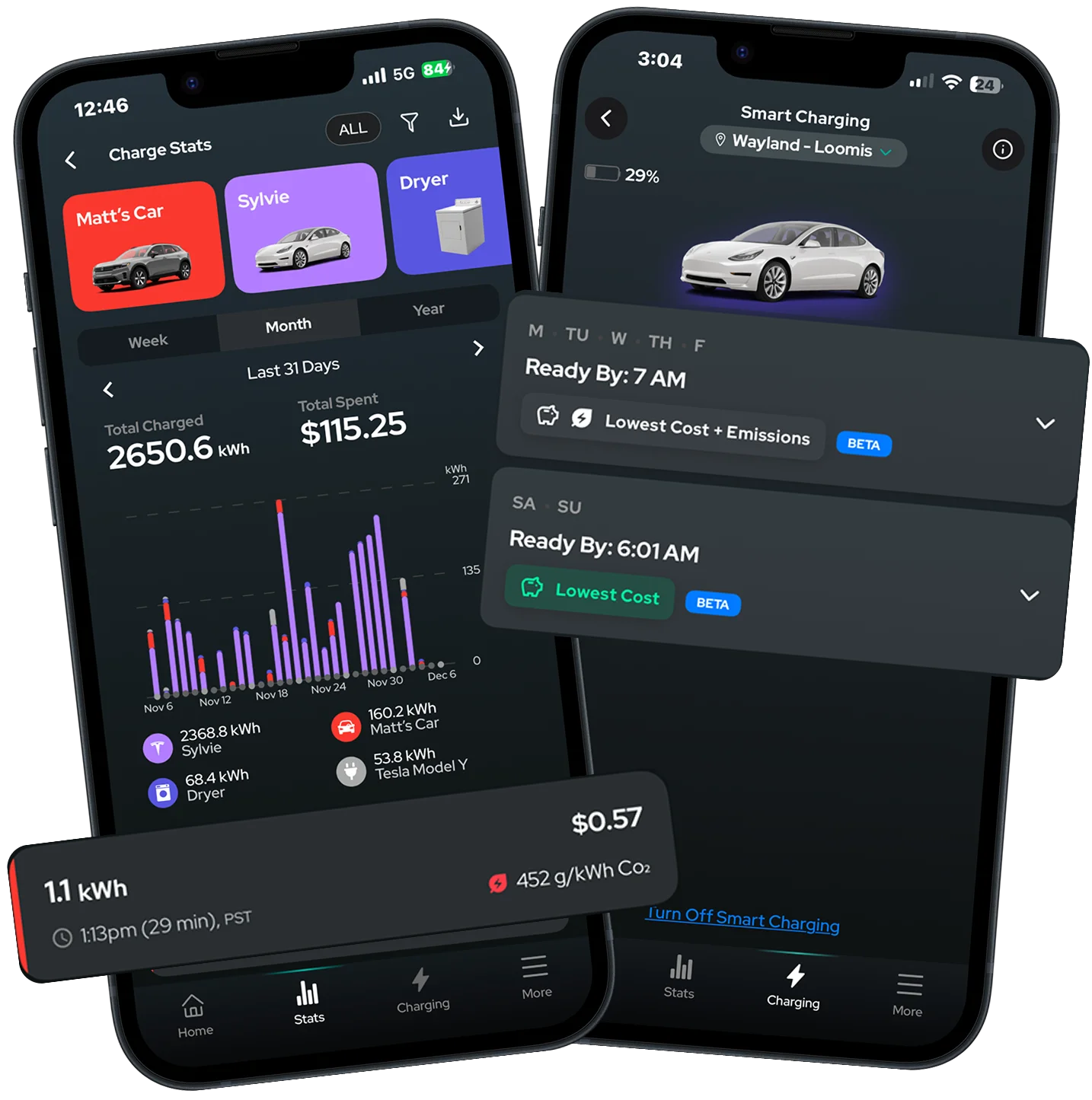
It depends on the program. Many utilities require a Wi-Fi enabled, smart-grid-capable device because the rebate is partially funded as a grid-management investment — the utility wants to schedule charging into off-peak hours. The NeoCharge Smart Splitter qualifies under most of these programs because it includes Wi-Fi and integrates with the NeoCharge App for off-peak scheduling.
A handful of programs (e.g. Pasadena Water & Power) offer a higher rebate tier specifically for Wi-Fi connected chargers vs. a lower tier for standard L2 hardware.
A Level 2 charger rebate covers the EVSE itself (the charger). It typically requires you to install it on a dedicated 240V circuit — which often means an electrical panel upgrade ($2,000–$5,000) for older homes. A Smart Splitter rebate covers the NeoCharge Smart Splitter, which avoids the panel upgrade entirely by sharing your existing 240V dryer or EV outlet between two devices.
Six utilities (PG&E, SMUD, Tacoma Power, Duke Energy, BC Hydro, 3CE) explicitly approve the Smart Splitter as an eligible device because it qualifies as an EV power management / circuit sharing device.
Utility rebates: typically 4 to 8 weeks from application submission to delivery, either as a mailed check or a credit applied to your utility bill. Most utilities require proof of purchase + proof of installation before processing.
The federal tax credit is applied when you file your annual return — it reduces the tax you owe at year-end rather than arriving as a separate payment.
You may still qualify for the federal tax credit (IRS Form 8911) regardless of your local utility. Beyond that: check if your state has a separate state-level EV incentive program (search the DOE’s Alternative Fuels Data Center), and ask your utility’s customer service whether they have a pilot program in development — programs are added every quarter. If we’re missing a program you know about, email hello@neocharge.io and we’ll add it.
Sources & methodology
Rebate amounts, eligibility rules, and ZIP coverage on this page are sourced directly from each program’s official website. NeoCharge cross-checks every program quarterly. Programs change — always confirm current terms with the program operator before purchasing.
