



How to Share a 240V Outlet Between Your EV Charger and Dryer (Safely)
 The short answer
Want Level 2 charging but only have one 240V circuit? Learn the safe ways to share a 240V outlet between EV charging and a dryer (or other appliance), what to avoid, and how load management devices work.
Key takeaways
- Hardware-enforced load management eliminates human error in avoiding electrical overloads
- Many dryer outlets use different NEMA types that won't work with standard EV charger plugs
- Scheduling can work but relies on perfect behavioral compliance—risky for safety
- Adding a dedicated circuit remains the gold standard when budget and electrical capacity allow
Best fit Is this guide right for you?
Drivers with time-of-use rates, off-peak discounts, utility programs, or charging schedules they want to automate.
Homes on flat electric rates where charging time does not change cost, unless you still want tracking and reminders.
Quick answer: hardware beats hoping
The safest approach: Use a hardware-enforced load management device that ensures only one high-power load operates at a time.
Why this matters: EV charging and dryer operation can each draw 30-50 amps for extended periods. Running both simultaneously on a shared circuit is a recipe for tripped breakers, overheated wiring, and potential fire hazards.
What doesn't work: Simple outlet splitters, behavioral scheduling without safeguards, or "just being careful" to avoid conflicts.
Why sharing 240V circuits requires real engineering
EV charging is a continuous load marathon, not a sprint
The Department of Energy emphasizes two critical points about EV charging installations:
- They must comply with local and state codes
- "EV charging infrastructure is considered a continuous load by the National Electrical Code (NEC)"
Source: DOE home charging overview
This "continuous load" designation isn't arbitrary—it recognizes that EV charging can demand high current for 6-10 hours straight, unlike most household appliances that cycle on and off.
The heat accumulation problem
When you run high-current loads continuously, even minor electrical imperfections become significant:
- Slightly loose connections heat up over time
- Outlet contacts wear from repeated high-current cycles
- Wire insulation degrades faster under sustained thermal stress
Sharing circuits without proper load management multiplies these risks by potentially doubling the thermal stress on connections and wiring.
Three safe approaches to circuit sharing
Option 1: Load management devices (the smart choice)
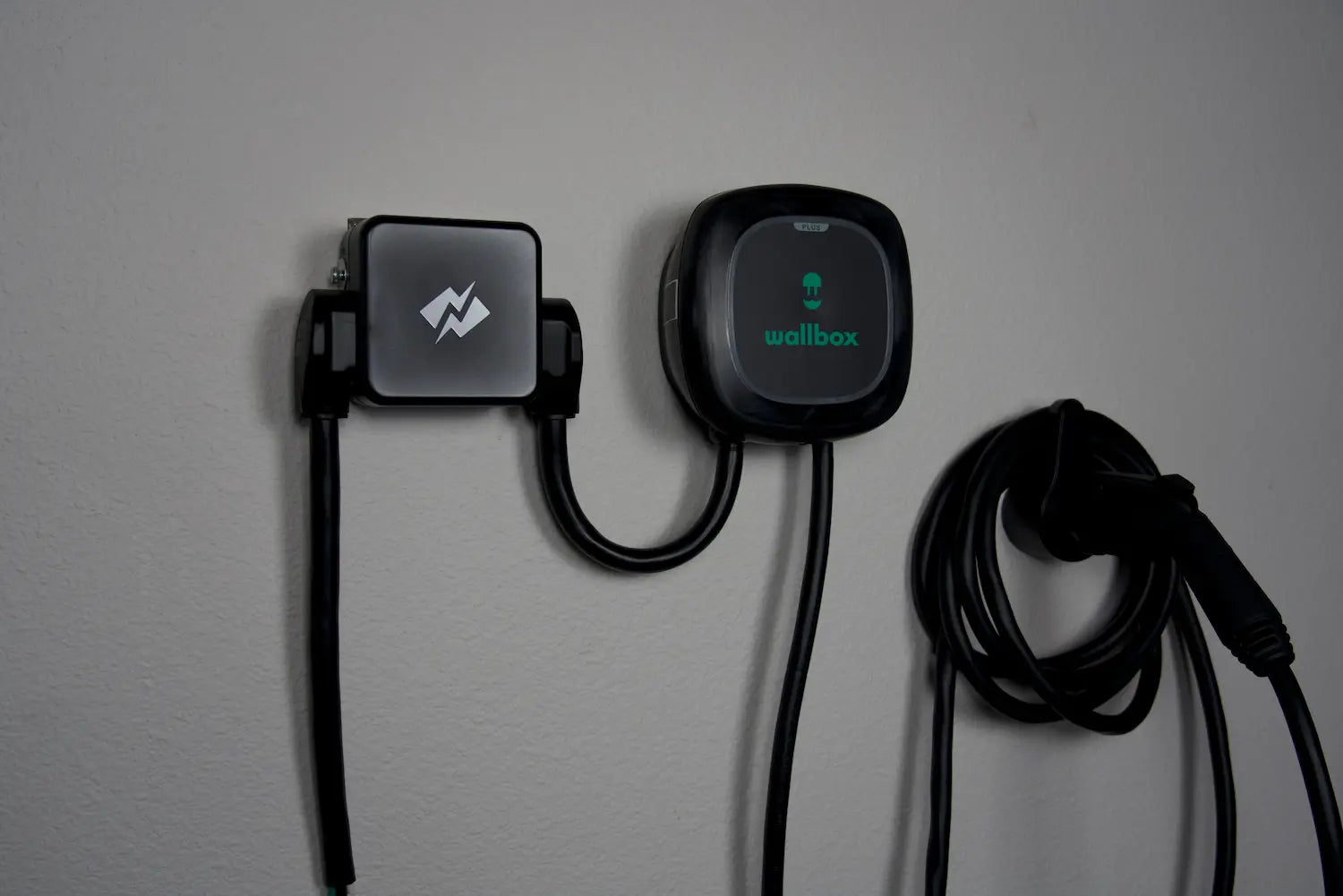
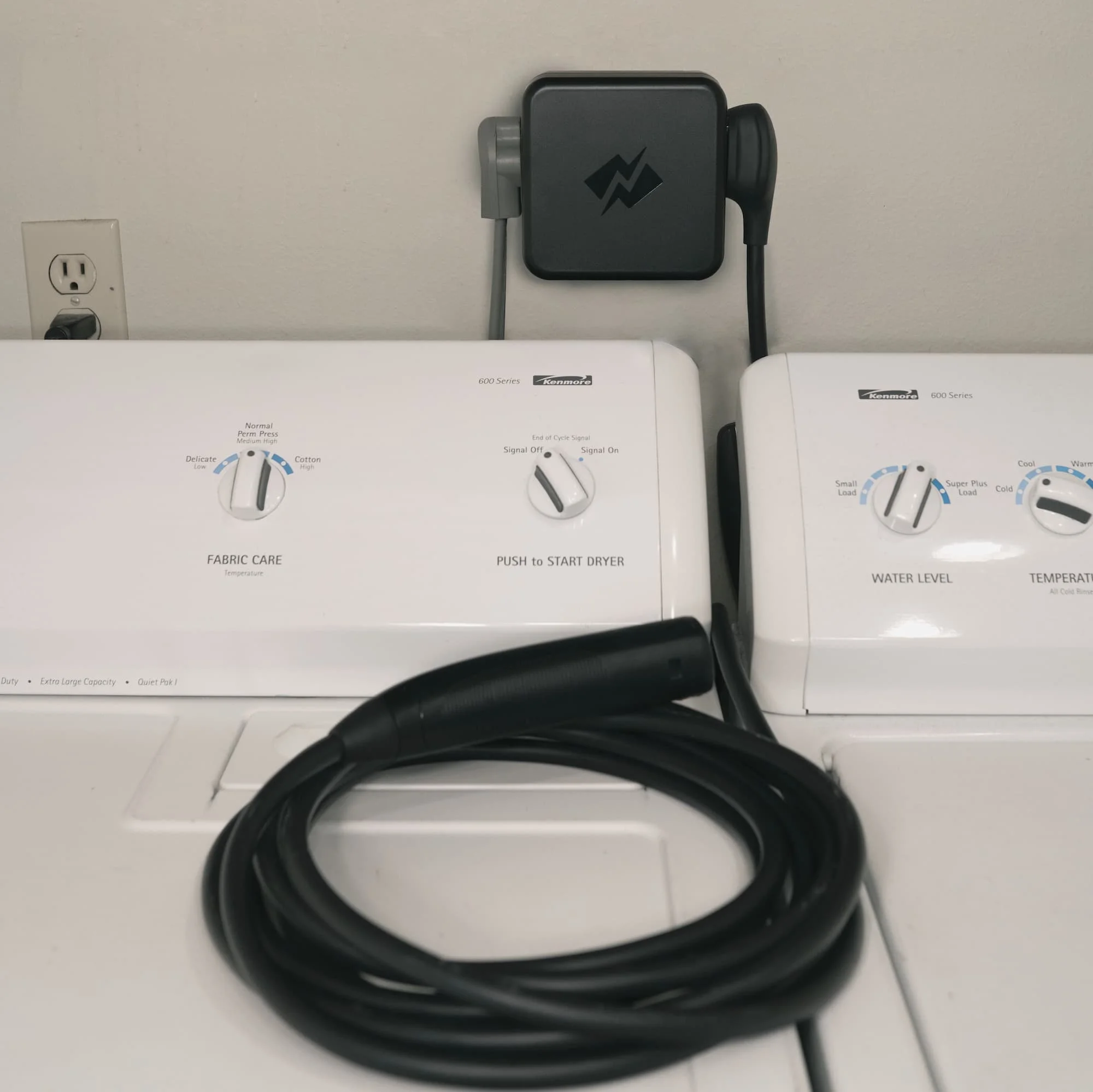
Load management means automatic enforcement of "only one high-power load at a time." When your dryer starts, EV charging pauses. When the dryer cycle finishes, EV charging resumes.
Why this works:
- Eliminates human error and forgetfulness
- Prevents the "oh crap, I started laundry while the car was charging" scenario
- Usually works within existing electrical capacity
Requirements for safe load management:
- UL-listed equipment designed for continuous high-current loads
- Proper installation by qualified electricians
- Clear override capabilities for emergency charging needs
Option 2: Strict scheduling with behavioral enforcement
If your household has military-level discipline, you can designate specific time windows for each appliance—typically overnight EV charging when the dryer isn't used.
When scheduling might work:
- Single-person households with predictable routines
- Families with very rigid laundry schedules
- Backup approach alongside load management hardware
Why scheduling often fails:
- One forgotten load of laundry can cause dangerous overload conditions
- Guest visitors or household routine changes break assumptions
- No safety mechanism if scheduling discipline breaks down
If you choose scheduling: Keep EV charging amperage conservative (well below circuit capacity) and install proper monitoring to detect overload conditions.
Option 3: Install a dedicated EV charging circuit
This remains the "gold standard" approach, especially when:
- You have electrical panel capacity for another high-amperage circuit
- Multiple EVs need charging
- Maximum charging speed is important
- Long-term reliability is prioritized over upfront cost
The dedicated circuit approach eliminates all sharing-related safety concerns and typically increases home value.
The outlet compatibility problem nobody mentions
Here's a critical detail that catches many people off guard: having a 240V outlet doesn't mean your EV charger can plug into it.
ChargePoint addresses this directly in their installation guidance:
"Many 240V outlets found in a garage, like a dryer outlet, use an outlet type that won't work with [their] plug (NEMA 6-50 or 14-50)."
They suggest asking an electrician about repurposing the circuit for lower amperage settings with a hardwired installation.
Source: chargepoint.com
Common dryer outlet configurations:
- NEMA 14-30 (older 30A, 4-prong)
- NEMA 10-30 (older 30A, 3-prong)
- Various 50A configurations (depending on installation vintage)
Most EV chargers expect:
- NEMA 14-50 or NEMA 6-50 for plug-in installation
- Hardwired installation for maximum flexibility
This mismatch often requires either outlet replacement or hardwired installation—both of which need qualified electrical work anyway.
Electrician consultation checklist
Before making any sharing decisions, get professional assessment of:
Circuit capacity and condition:
- Current circuit rating (30A vs 50A vs other)
- Wire gauge and conduit capacity
- Outlet condition (signs of heat damage, proper connections)
Load compatibility:
- Actual dryer amp draw during operation
- Desired EV charging amperage
- Whether combined loads exceed circuit capacity
Installation options:
- Outlet replacement feasibility
- Hardwired installation options
- Load management device compatibility
- Dedicated circuit installation cost and complexity
Code compliance:
- Local requirements for EV charging installations
- GFCI requirements for shared circuits
- Permit requirements for any modifications
FAQ
Can I use a simple "Y-splitter" to turn one outlet into two?
Never. Simple outlet splitters aren't designed for continuous high-current loads and create dangerous overload potential. They're appropriate for low-power devices, not 30-50 amp appliances.
Will sharing the circuit make my EV charging slower?
Potentially, but often not significantly. Most household dryer usage happens during specific windows (evening, weekends), leaving plenty of overnight hours for full-speed EV charging. Load management devices typically provide 6-8 hours of uninterrupted charging time.
What happens if I accidentally run both loads simultaneously?
With proper load management: The system automatically prioritizes one load and pauses the other—no danger.
Without load management: Circuit breaker should trip, but you risk outlet overheating, wire damage, or fire if protective devices fail or are improperly sized.
Is load management reliable enough to trust long-term?
Quality load management devices from established manufacturers are designed for years of reliable operation. However, any technology can fail—which is why emergency override capabilities and monitoring features are essential.
Bottom line
Sharing 240V circuits between EV charging and dryers is definitely possible, but it requires the right approach. Hardware-enforced load management eliminates the guesswork and human error that make other approaches risky.
The decision framework:
- Budget permits + panel capacity available: Install dedicated circuit
- Budget tight + disciplined household: Hardware load management
- Inconsistent routines + safety priority: Dedicated circuit or robust load management
Never attempt: Simple splitters, "just being careful," or any solution that depends entirely on behavioral compliance for electrical safety.
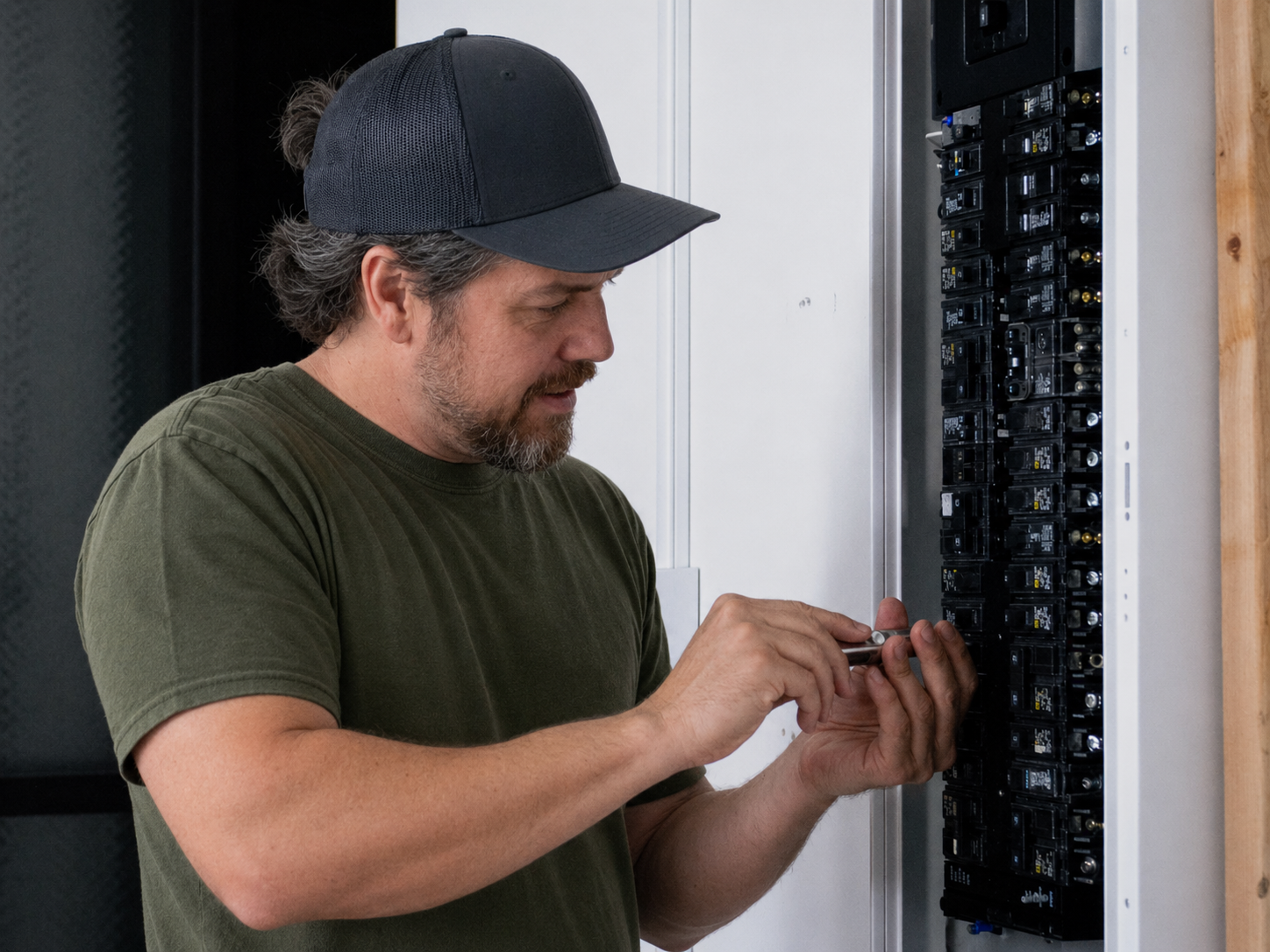
Most importantly, any sharing solution requires proper electrical assessment and installation by qualified professionals. The stakes—fire safety, code compliance, insurance implications—are too high for DIY electrical work on high-current circuits.
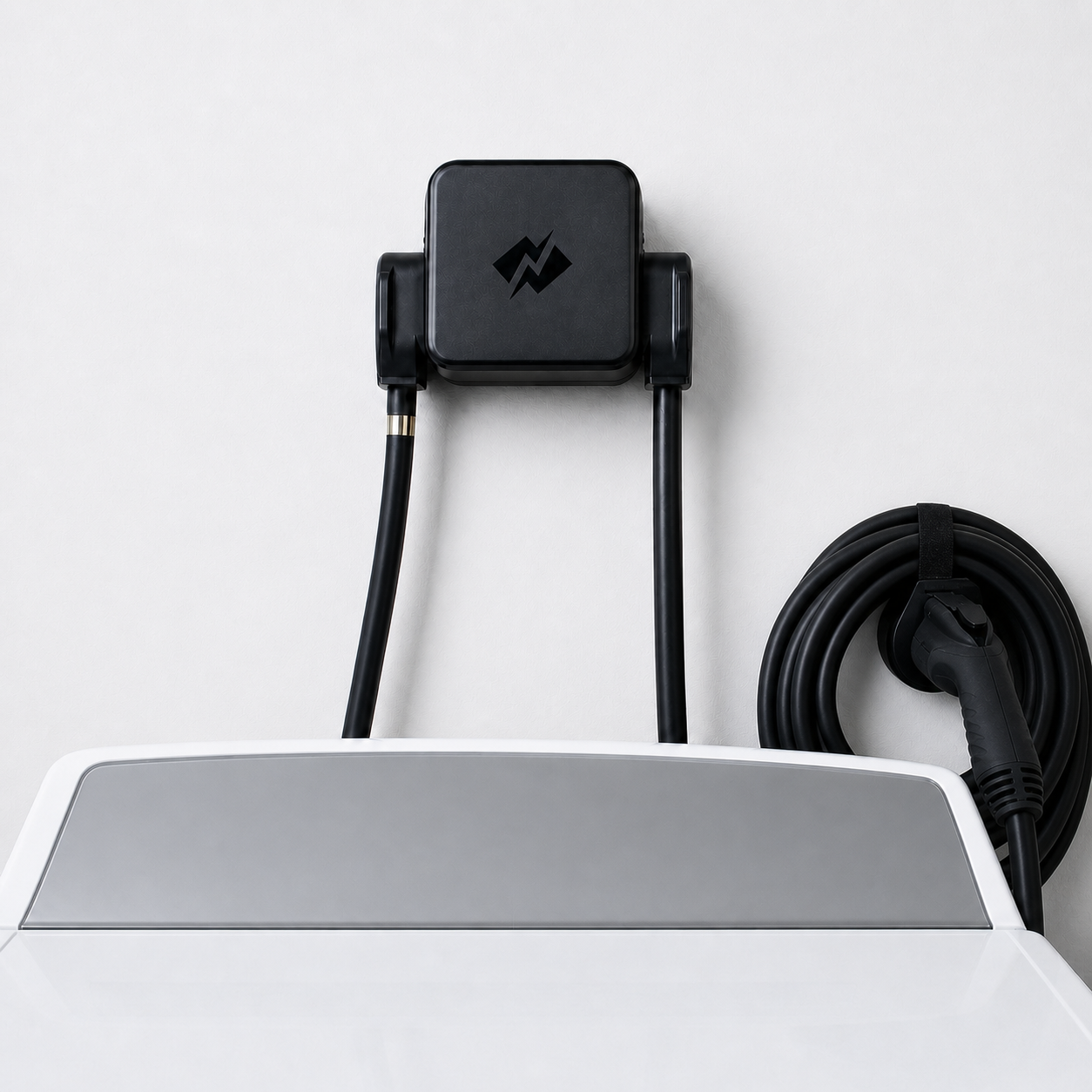
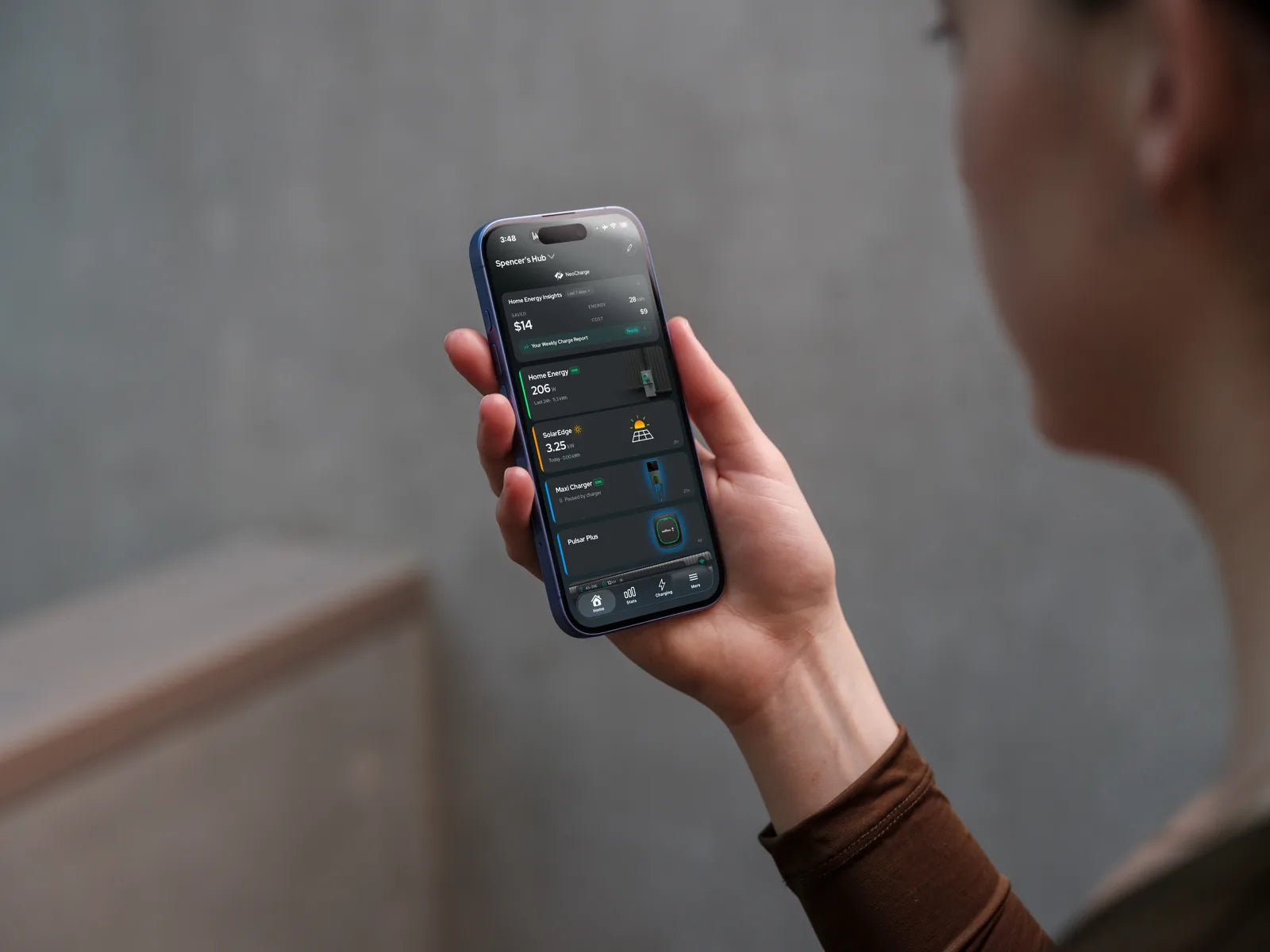
Ready to safely share your 240V circuit? NeoCharge's Smart Splitter provides hardware-level load management between your EV charger and dryer, automatically preventing dangerous overloads while the NeoCharge app helps you monitor and optimize your charging routine.
Next steps (NeoCharge)
- If you want to safely share a 240V outlet (dryer + EV) or avoid a costly panel upgrade, check out the NeoCharge Smart Splitter.
- If you want to reduce charging cost with off-peak schedules and rate-aware automation, explore the NeoCharge App.
NeoCharge App
Turn rate plans into simple charging schedules
Schedule around off-peak windows, manage compatible chargers, and keep tabs on charging sessions from the app.
Explore the app


Next steps
Keep going with NeoCharge
Use the article as your decision guide, then jump into the product, app, or related guides that match what you are trying to solve next.
Key terms
- NEMA 14-50
- A NEMA 14-50 is a common 240V, 50A outlet (often used for EV charging). Many EV chargers plug into it, but the actual charging speed depends on the circuit and your EV.
- NEMA 14-30
- A NEMA 14-30 is a 240V, 30A dryer outlet. With a properly configured EV charger, it can usually support ~24A continuous charging (about 20–25 miles of range per hour for many EVs).
- Load management
- Load management is a strategy to keep your home’s electrical load within safe limits—often by scheduling or pausing EV charging when other appliances are running.
- GFCI breaker
- A GFCI breaker protects against ground faults. Some EV chargers can cause nuisance trips on certain GFCI breakers; compatibility depends on the charger and installation.
FAQs
What's the quick takeaway from this article?
Who is this guide for?
What should I do next?
Related posts


Burnaby EV Charger Installation
Burnaby EV charging by home type: share a dryer outlet instead of a panel upgrade, City permits, BC Hydro's $350 + $200 rebates, and strata right-to-charge.

Richmond EV Charger Installation
Richmond EV charger installation: Technical Safety BC permit fees, the 2018 EV-ready rule, BC Hydro's $350 + $200 rebates, and room for a heat pump.

Surrey EV Charger Installation
Add Level 2 charging in Surrey without a panel upgrade: City of Surrey permit steps, BC Hydro's $350 + $200 rebates, suited-house load math, and overnight costs.

BC Hydro EV Power Management Device Rebate: Eligible Devices (2026)
BC Hydro pays $200 extra for an eligible EV power management device. The Sept 2026 device list, which chargers qualify, and the permit rule that decides who gets it.
