


NeoCharge Blog · EV Charging Basics
NACS vs J1772 vs CCS in 2026: EV Connector Guide (Plus What Adapter You Need)
TL;DR
Confused by EV connectors? Here’s the 2026 guide to J1772, CCS1, and J3400/NACS: which cars use what, what public stations support, and which adapters are common.
Key takeaways
- Connector standards are shifting rapidly—J3400/NACS adoption is accelerating across the industry
- Today's reality: non-Tesla EVs predominantly use J1772 for AC and CCS1 for DC fast charging
- Adapters are normal and safe when they're OEM or certified third-party products
- Home charging connector choice matters less than proper electrical installation and load management
Quick answer: what most drivers need to know today
Non-Tesla EV drivers currently use:
- J1772 for AC charging (home, workplace, public Level 2)
- CCS1 for DC fast charging on road trips
Tesla drivers currently use:
- Tesla's proprietary connector (NACS form factor) for both AC and DC
- J1772 adapters for non-Tesla public Level 2 charging
The future (2025-2026 and beyond): Many automakers have announced plans to adopt J3400/NACS connectors, potentially making Tesla's connector the de facto standard. But this is still a transition in progress, not a done deal.
The connector landscape: what each standard does
J1772: the AC workhorse for non-Tesla EVs
J1772 is the bread-and-butter connector for AC charging in North America. The DOE notes that Level 1 and Level 2 AC charging commonly use the SAE J1772 connector for non-Tesla vehicles, and crucially, Level 2 uses the same J1772 connector as Level 1.
Source: DOE charging station basics
J1772 handles:
- Home charging (Level 1 and Level 2)
- Workplace charging
- Public Level 2 charging (shopping centers, parking garages, etc.)
J1772 doesn't handle:
- DC fast charging (road trip speeds)
CCS1: J1772's big brother for DC fast charging
CCS (Combined Charging System) is essentially J1772 with extra pins for high-power DC charging. The DOE explains that the Combined Charging System (CCS), also known as SAE J1772 combo, can accept Level 1, Level 2, or DC fast charging equipment using the J1772 layout plus two additional DC pins for fast charging.
Source: DOE charging station basics
CCS1 handles:
- Everything J1772 does (AC charging)
- DC fast charging up to 150kW+ (depending on vehicle and station capabilities)
CCS1 is found on:
- Most non-Tesla EVs sold in North America
- The majority of DC fast charging networks (Electrify America, EVgo, ChargePoint Express, etc.)
J3400 (NACS): Tesla's connector goes mainstream
J3400 is the official SAE standard based on Tesla's NACS (North American Charging Standard) connector. The DOE notes that J3400 connector is being standardized based on Tesla's NACS design and is one of the DC fast charging connector types in the U.S.
Source: DOE charging station basics
The Joint Office provides important context about standardization: SAE published a Technical Information Report (TIR) for J3400 and explains that standardization of NACS as J3400 aims to make the connector openly usable by suppliers and manufacturers.
Source: driveelectric.gov
J3400/NACS handles:
- AC charging (Level 1 and Level 2)
- DC fast charging
- Both functions through a single, smaller connector
Why it's gaining traction:
- Tesla's Supercharger network is the largest and most reliable in North America
- The connector is physically smaller and arguably more elegant than CCS1
- Tesla has opened Supercharger access to other brands (with adapters initially)
CHAdeMO: the legacy option
CHAdeMO is primarily found on older Japanese EVs (early Nissan Leafs, some Mitsubishi models). The DOE lists CHAdeMO as another common DC fast connector type among Japanese automakers, though it's increasingly legacy as the market shifts.
Source: DOE charging station basics
Unless you're driving an older Japanese EV, CHAdeMO isn't relevant to your charging decisions in 2026.
Adapters: bridging the connector gap safely
Adapters are a normal part of EV ownership, not a sign that standards are broken. The key is using quality adapters appropriately.
Common adapters that work well
Tesla to J1772 (AC): The DOE notes that Tesla vehicles have historically come with a J1772 adapter to use non-Tesla Level 2 charging equipment.
Source: DOE charging station basics
CCS1 to NACS (DC): Increasingly available as Tesla opens Supercharger access to other brands.
Adapter safety guidelines
- Use OEM or certified adapters from reputable manufacturers
- Avoid unknown brands for high-power DC adapters—the safety stakes are higher
- Follow both station and vehicle manufacturer guidance for adapter compatibility
- Inspect adapters regularly for wear, especially the pins and housing
Home charging: connector choice matters less than you think
For home charging, the connector question is usually straightforward: buy an EVSE with the connector your car needs, then focus on proper electrical installation.
Current reality:
- Non-Tesla EVs use J1772 home chargers
- Tesla vehicles use Tesla-connector home chargers (or J1772 with adapter)
Future planning: If you're installing electrical infrastructure that might need to support multiple EV types:
- Install proper electrical capacity (circuit sizing, load management)
- Choose quality equipment from established manufacturers
- Consider adapters for flexibility rather than trying to predict future standards
The electrical work (circuit capacity, load management, code compliance) matters far more than connector future-proofing for home installations.
FAQ
Will everything standardize on NACS/J3400 soon?
The momentum is strong, with major automakers announcing J3400 adoption timelines around 2025-2026. However, these are plans, not guarantees, and implementation details vary significantly. Expect 2025-2027 to be a transition period with multiple standards coexisting.
What's the most "universal" charging setup I can install at home today?
Focus on proper electrical infrastructure rather than connector universality. A well-installed 240V circuit with appropriate load management can support any EV with the right EVSE or adapter. The electrical work is harder to change later; the connector endpoint is relatively easy to swap.
Should I wait to buy an EV until connector standards settle?
No. Current standards work well for today's needs, adapters handle compatibility gaps, and waiting for "perfect" standards means missing years of EV benefits. Buy based on your current needs with reasonable future flexibility.
Do I need to worry about connector compatibility for road trip charging?
Less than you might think. Most DC fast charging stations support multiple connector types, and the major networks (Electrify America, EVgo, Tesla Superchargers) are actively expanding compatibility. Plan road trips around available charging infrastructure rather than trying to predict future connector dominance.
Bottom line
The connector landscape is definitely evolving, but it's not worth losing sleep over. J1772 and CCS1 work well for today's non-Tesla EVs, J3400/NACS is gaining momentum, and quality adapters bridge compatibility gaps.
More importantly, good electrical infrastructure at home (proper circuit sizing, load management, code compliance) matters more than connector future-proofing. Install quality electrical work that can support any EV, then adapt the endpoint connections as needed.
The industry is moving toward greater standardization, which is good for everyone. But it's a transition, not a revolution, and current solutions work perfectly well while the dust settles.
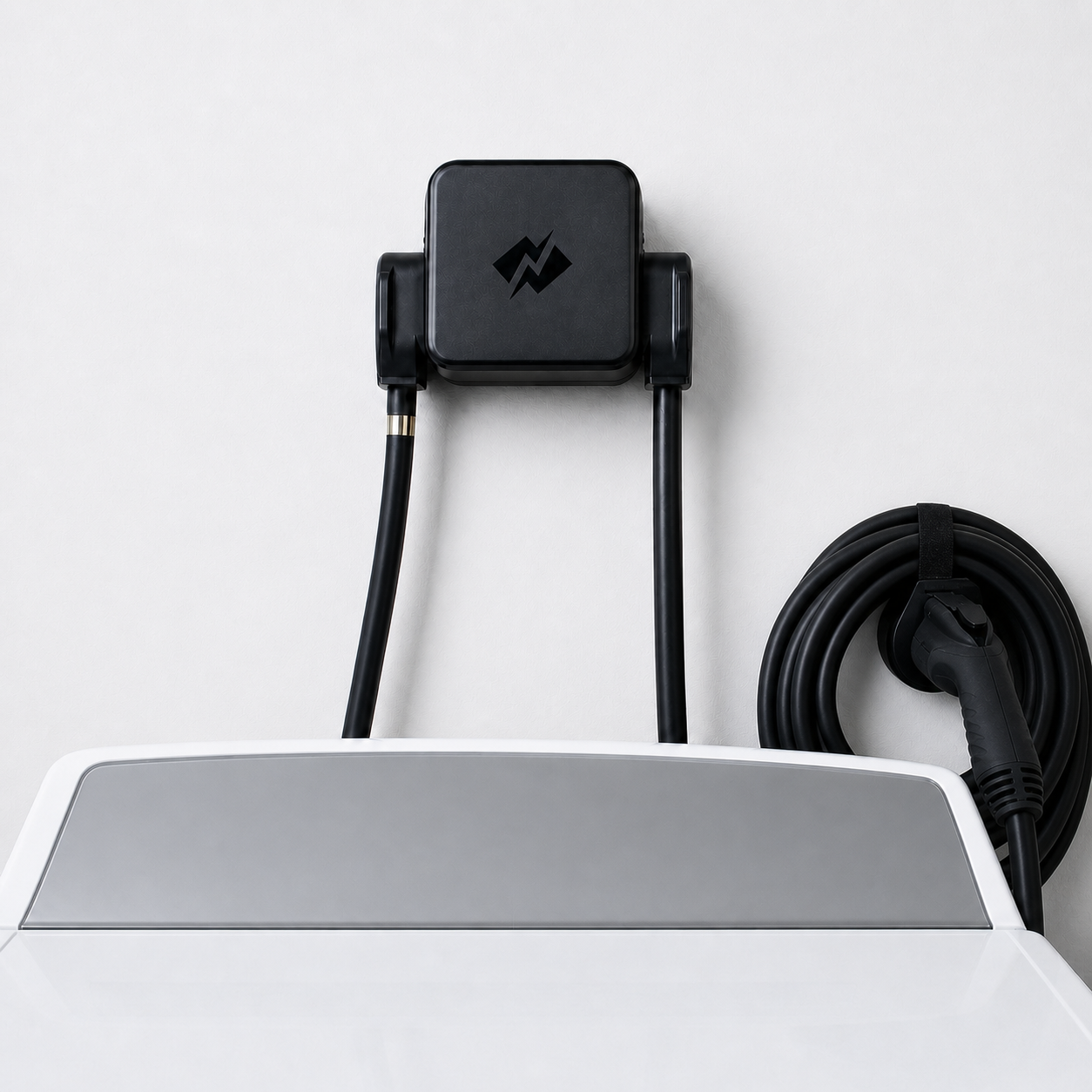
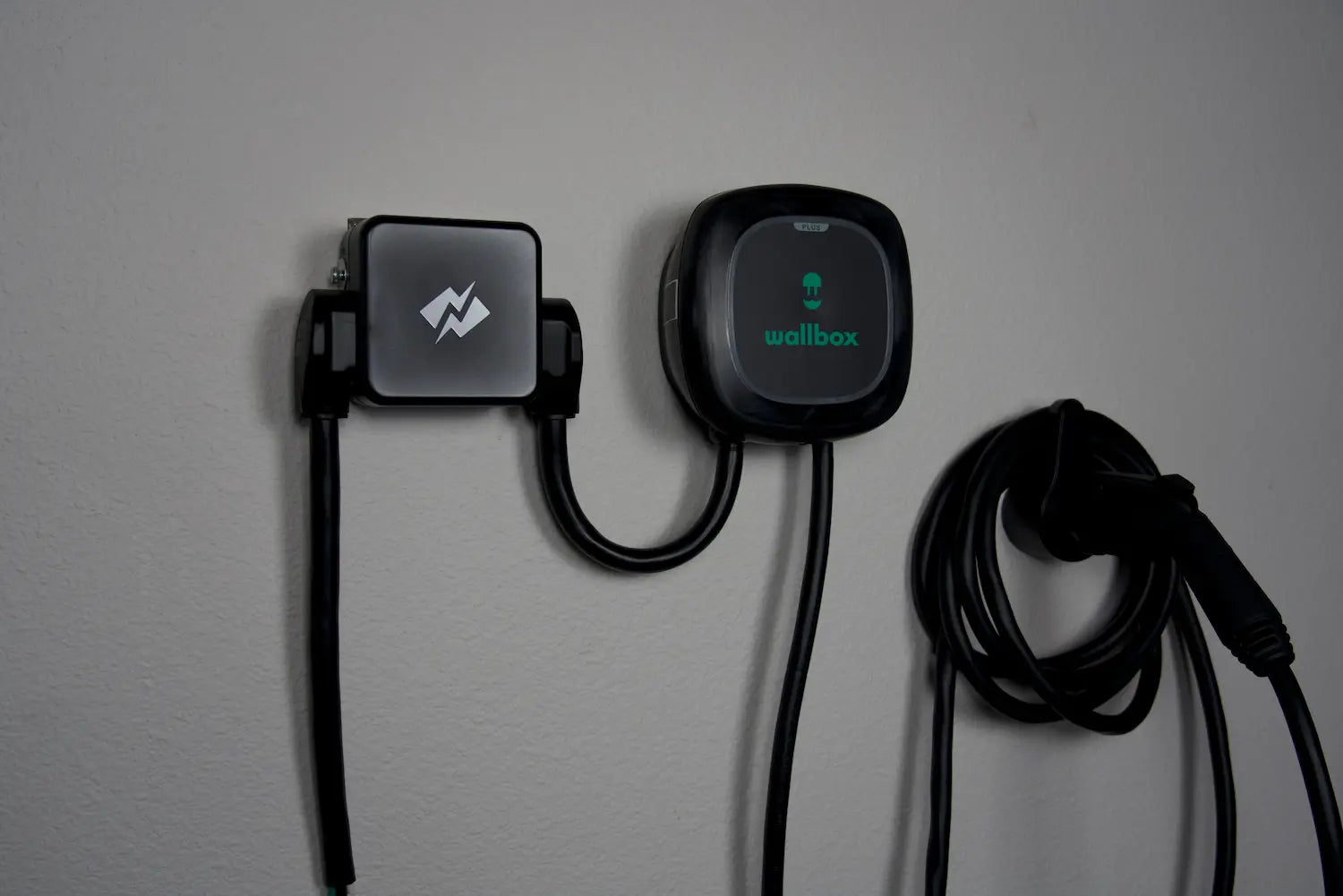
Regardless of which connector standard wins, the day-to-day home charging challenge is usually electrical capacity and load management. NeoCharge's Smart Splitter helps you safely share 240V circuits between EV charging and other appliances, while the NeoCharge app optimizes charging schedules—keeping you charged no matter which plug your next EV uses.
Next steps (NeoCharge)
- If you want to safely share a 240V outlet (dryer + EV) or avoid a costly panel upgrade, check out the NeoCharge Smart Splitter.
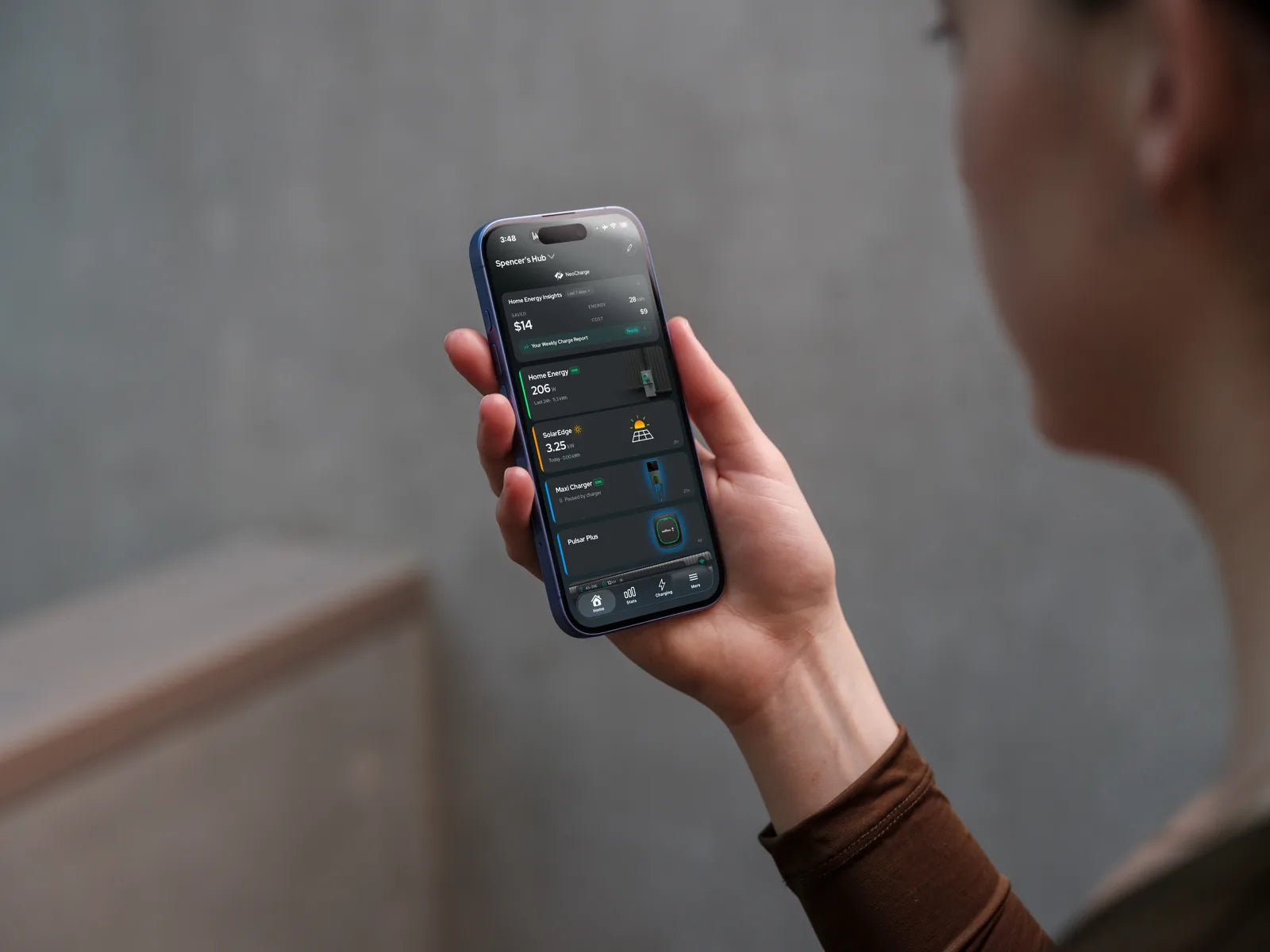
- If you want to reduce charging cost with off-peak schedules and rate-aware automation, explore the NeoCharge App.
NeoCharge App
Turn rate plans into simple charging schedules
Schedule around off-peak windows, manage compatible chargers, and keep tabs on charging sessions from the app.
Explore the app


Next steps
Keep going with NeoCharge
Use the article as your decision guide, then jump into the product, app, or related guides that match what you are trying to solve next.
Key terms
- Level 2 charging
- Level 2 EV charging uses a 240V circuit (like a dryer outlet). It typically adds ~20–35 miles of range per hour, depending on your car and the circuit amperage.
- EVSE
- EVSE stands for Electric Vehicle Supply Equipment (the “charger”). It safely delivers power to your EV and communicates with the car to control charging current.
- Load management
- Load management is a strategy to keep your home’s electrical load within safe limits—often by scheduling or pausing EV charging when other appliances are running.
FAQs
What's the quick takeaway from this article?
Who is this guide for?
What should I do next?
Related posts
BC Hydro EV Power Management Device Rebate: Eligible Devices (2026)
BC Hydro pays $200 extra for an eligible EV power management device. The Sept 2026 device list, which chargers qualify, and the permit rule that decides who gets it.

Can I Charge My EV From a Dryer Outlet in Canada?
Can you charge an EV from a dryer outlet in Canada? Learn NEMA 14-30, NEMA 10-30, 24 amp charging, Tesla adapters, safety, and Smart Splitter options.

Do You Need a Panel Upgrade for Home EV Charging in Canada?
Can you install an EV charger without a panel upgrade in Canada? Compare 100 amp panels, Level 2 charging, dryer outlets, load management, and rebates.
DCC-9 vs DCC-10 vs EVEMS vs Smart Splitter: Canada EV Load Management Guide
Compare DCC-9, DCC-10, EVEMS, dynamic charger load management, NeoCharge Smart Splitter, and panel upgrades for Canadian EV charging on 100A or 125A panels.
