



How to Add an EV Charger Without a Panel Upgrade (Load Management 101)
 The short answer
Think you need a costly panel upgrade to add Level 2 EV charging? Not always. Learn the practical options: lower-amp charging, scheduling, and load management (including smart splitters) to add EV charging safely.
Key takeaways
- Most homes can avoid panel upgrades with strategic planning and the right equipment
- Load management automatically prevents circuit overloads by prioritizing EV charging over competing appliances
- Hardwired installations offer more flexibility than plug-in outlets for tight electrical situations
- Right-sizing your charger to match your actual driving needs saves money and complexity
Best fit Is this guide right for you?
Drivers with time-of-use rates, off-peak discounts, utility programs, or charging schedules they want to automate.
Homes on flat electric rates where charging time does not change cost, unless you still want tracking and reminders.
Quick answer (what to do first)
Skip the panic and start with these three steps:
Calculate your real charging needs. How many miles do you actually drive per day? (Hint: it's probably less than you think.)
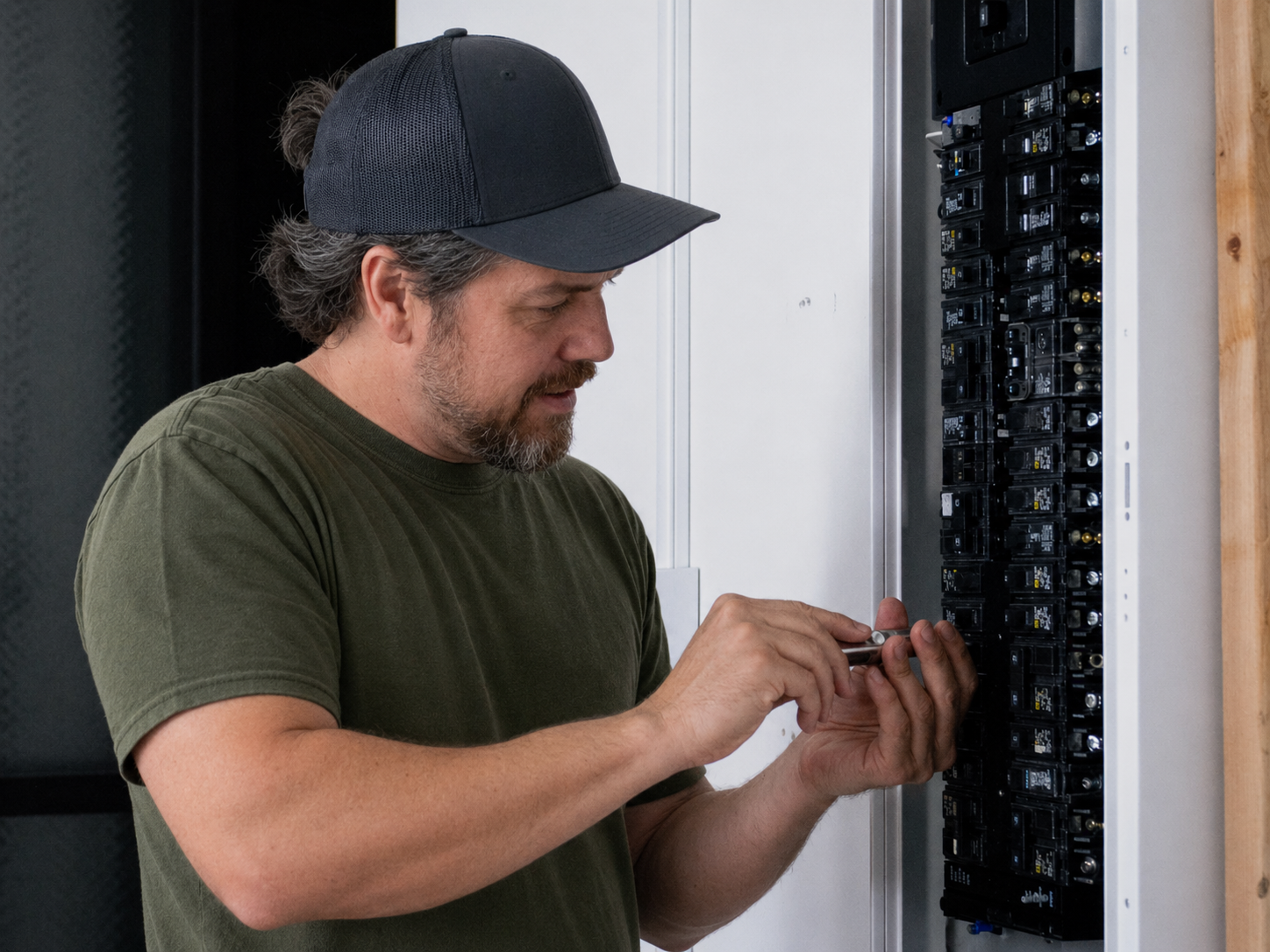
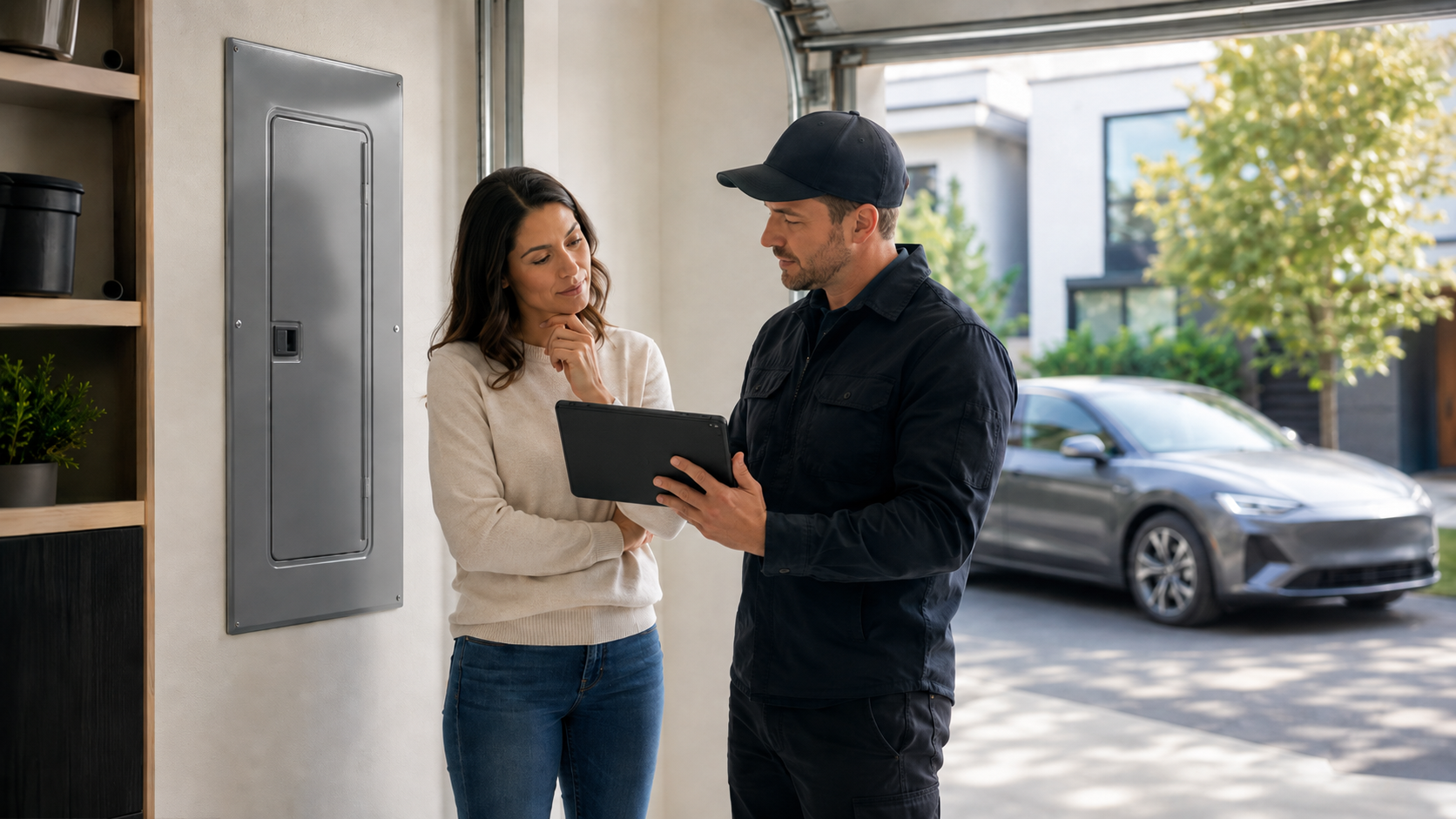
Get a proper electrical assessment. Ask a licensed electrician to evaluate your main panel size, available breaker spaces, and biggest simultaneous loads (dryer, range, HVAC).
Request alternatives to the panel upgrade. Specifically ask about lower-amp Level 2 circuits and load management solutions.
Most electricians will respect you more for coming prepared with alternatives—it shows you understand the problem isn't always "not enough power," but rather "too much power at the same time."
Why EV charging triggers panel upgrade recommendations
EV charging is a continuous load
Unlike your microwave that runs for 90 seconds, EV charging draws high current for hours. The U.S. Department of Energy explicitly states that "EV charging infrastructure is considered a continuous load by the National Electrical Code (NEC)." This matters because continuous loads have stricter safety requirements.
Source: DOE home charging overview
The 80% rule in practice
Here's where things get interesting. The electrical code requires that continuous loads not exceed 80% of the breaker rating. ChargePoint explains this clearly: "You can adjust your charging rate up or down, but it cannot exceed 80% of your breaker amperage."
Source: chargepoint.com
This is why you'll see these common pairings:
- 40A breaker → 32A maximum charging
- 50A breaker → 40A maximum charging
- 60A breaker → 48A maximum charging
The "80% rule" isn't about being conservative—it's about preventing your house from becoming a fire hazard.
6 ways to avoid a panel upgrade
Option 1 — Use Level 1 temporarily
Before you dismiss Level 1 as "too slow," consider this: the DOE notes that 8 hours at 120V can replenish about 40 miles of range for a mid-size EV. If you're averaging 30-40 miles per day and can plug in consistently, Level 1 might cover you while you plan something better.
Source: DOE charging station basics
It's not glamorous, but it beats spending $3,000 on a panel upgrade for a problem you might not have.
Option 2 — Install a lower-amp Level 2 circuit
Here's a secret: most people obsess over maximum charging speed they'll rarely use. A 30A circuit delivering ~24A of charging can still add 100+ miles overnight—more than enough for most daily driving.
ChargePoint's installation documentation includes tables showing multiple amp settings and their corresponding breaker sizes, proving that "maximum" isn't always "optimal."
Source: chargepoint.com
If your panel can handle a 30A or 40A circuit but not a 60A circuit, you're still getting real Level 2 charging at a fraction of the cost.
Option 3 — Go hardwired instead of plug-in
Hardwired installations often provide more flexibility across breaker sizes and can be cleaner for outdoor installs. ChargePoint notes that hardwiring is often "the best option" when GFCI requirements complicate plug-in installations.
Source: chargepoint.com
Plus, hardwired units typically look more professional and eliminate the "someone unplugged my charger" problem entirely.
Option 4 — Master the art of charging when nobody's looking
Even without fancy technology, timing your charging when other major loads are off can be the difference between "works perfectly" and "trips the breaker every time."
The DOE notes that many EV owners naturally charge overnight, and utilities often provide time-of-use incentives that make this approach both electrically and financially smart.
Source: DOE home charging overview
Option 5 — Use load management to play referee
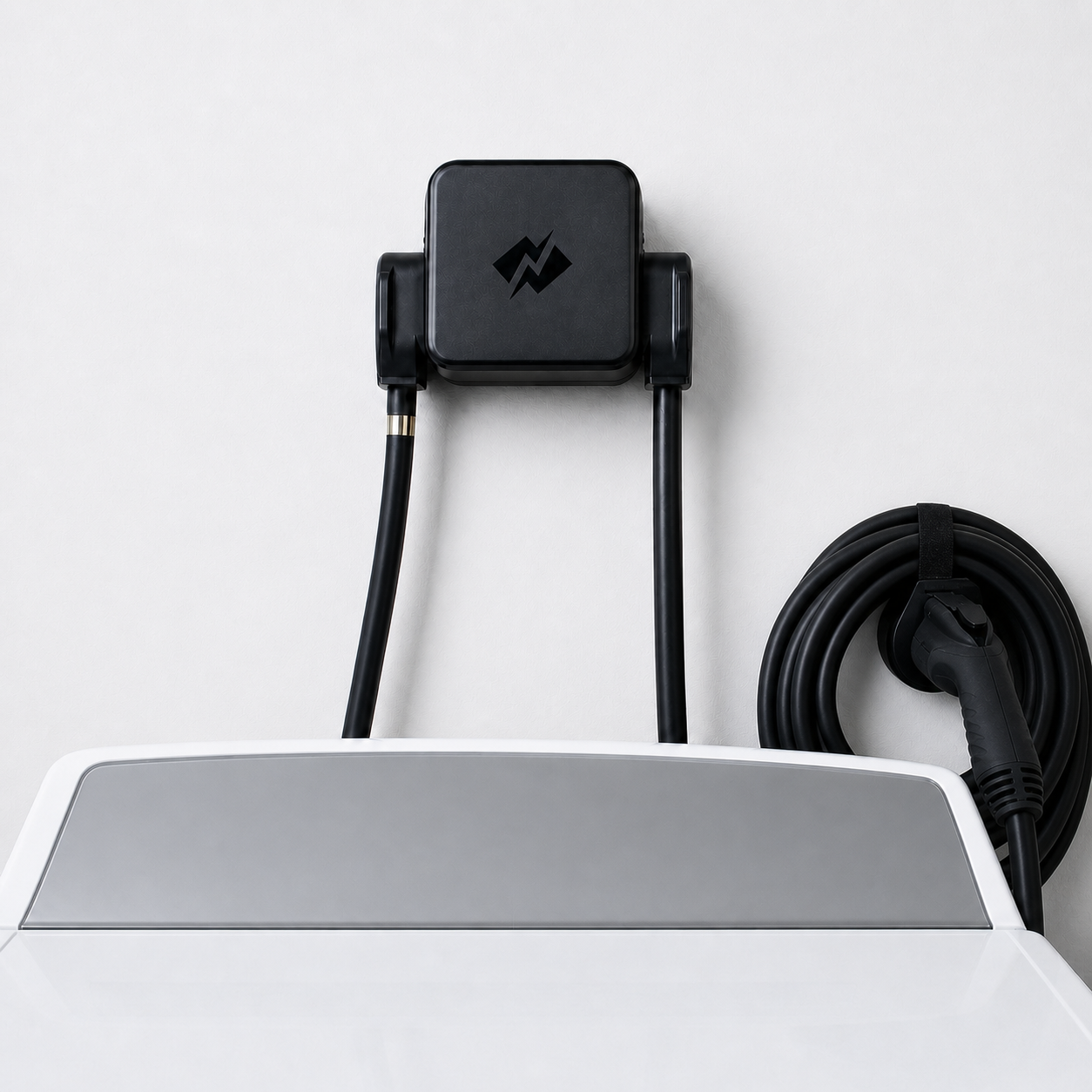
Load management is the art of preventing electrical conflicts before they happen. Instead of your EV charger and electric dryer having a circuit-overloading wrestling match, a smart load management device acts as the referee—ensuring only one high-draw appliance operates at full power.
The typical household conflicts are:
- EV charging vs. electric dryer
- EV charging vs. electric range
- EV charging vs. HVAC (during peak usage)
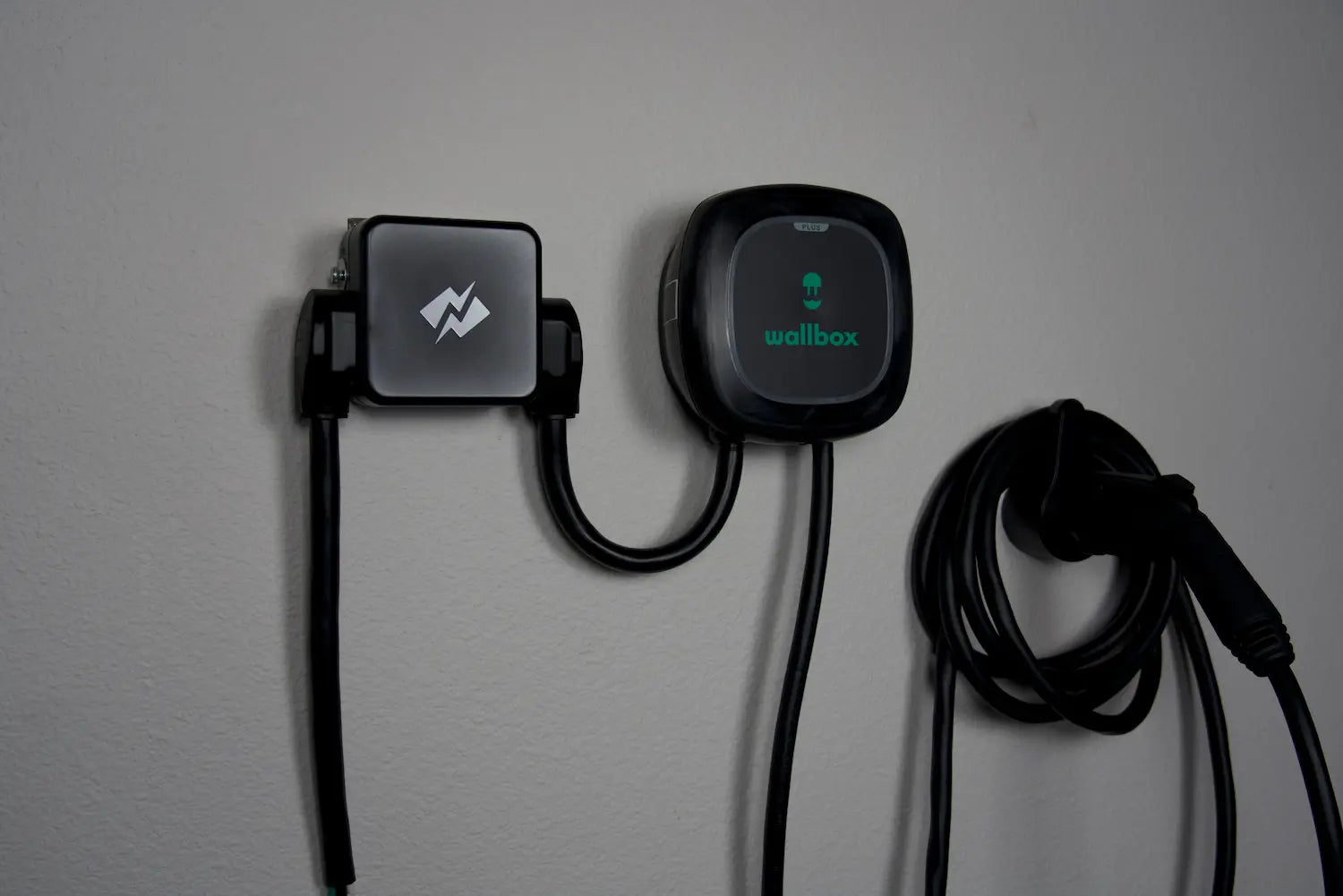
A smart splitter or load management device automatically prioritizes based on your preferences, then resumes full EV charging when the coast is clear. It's like having a very smart electrical traffic cop that never takes a break.
Option 6 — Right-size your charger to your car
Plot twist: your EV's onboard charger might not even accept the maximum amperage your EVSE can deliver. Paying for a 48A-capable charger when your car maxes out at 32A is like buying a Ferrari to drive in school zones—technically impressive, but practically pointless.
Check your vehicle's specifications before designing your electrical system around theoretical maximum charging speeds you'll never actually achieve.
A simple decision tree
- Drive less than 40 miles/day? Start with Level 1 while you plan your next move.
- Drive 40-120 miles/day with overnight parking? A 30-40A Level 2 circuit usually handles this beautifully.
- Need to share an existing 240V outlet? Load management or a smart splitter can make this work safely.
- Have two EVs or truly need maximum speed? Now we're talking about a potential panel upgrade—but you've eliminated the cheaper options first.
FAQ
Do I always need a service upgrade for Level 2 charging?
Absolutely not. The DOE explicitly notes that while some homes have insufficient capacity for Level 2, a qualified electrician can often add circuits or propose alternatives that work within existing capacity.
Source: DOE home charging overview
Isn't load management just "slow charging with extra steps"?
It can be slower when the competing appliance is running, but most households don't run their dryer or electric range all night. Load management typically gives you 6-8 hours of full-speed charging, which is plenty for overnight needs.
How do I know if my panel can handle a new circuit?
A qualified electrician can perform a load calculation based on your home's existing circuits and usage patterns. This is different from just counting empty breaker slots—it's about actual electrical capacity.
Bottom line
A panel upgrade might be the right long-term solution for some homes, but it shouldn't be the first solution for every home. Lower-amp Level 2 charging + smart scheduling + load management delivers nearly the same daily convenience at a dramatically lower cost.
The best part? These solutions can often be implemented in days rather than weeks, getting you to convenient EV charging faster than a full electrical overhaul ever could.
Looking for a way to safely share a 240V circuit? NeoCharge's Smart Splitter automatically manages loads between your EV charger and other appliances, giving you Level 2 charging without the panel upgrade costs.
Next steps (NeoCharge)
- If you want to safely share a 240V outlet (dryer + EV) or avoid a costly panel upgrade, check out the NeoCharge Smart Splitter.
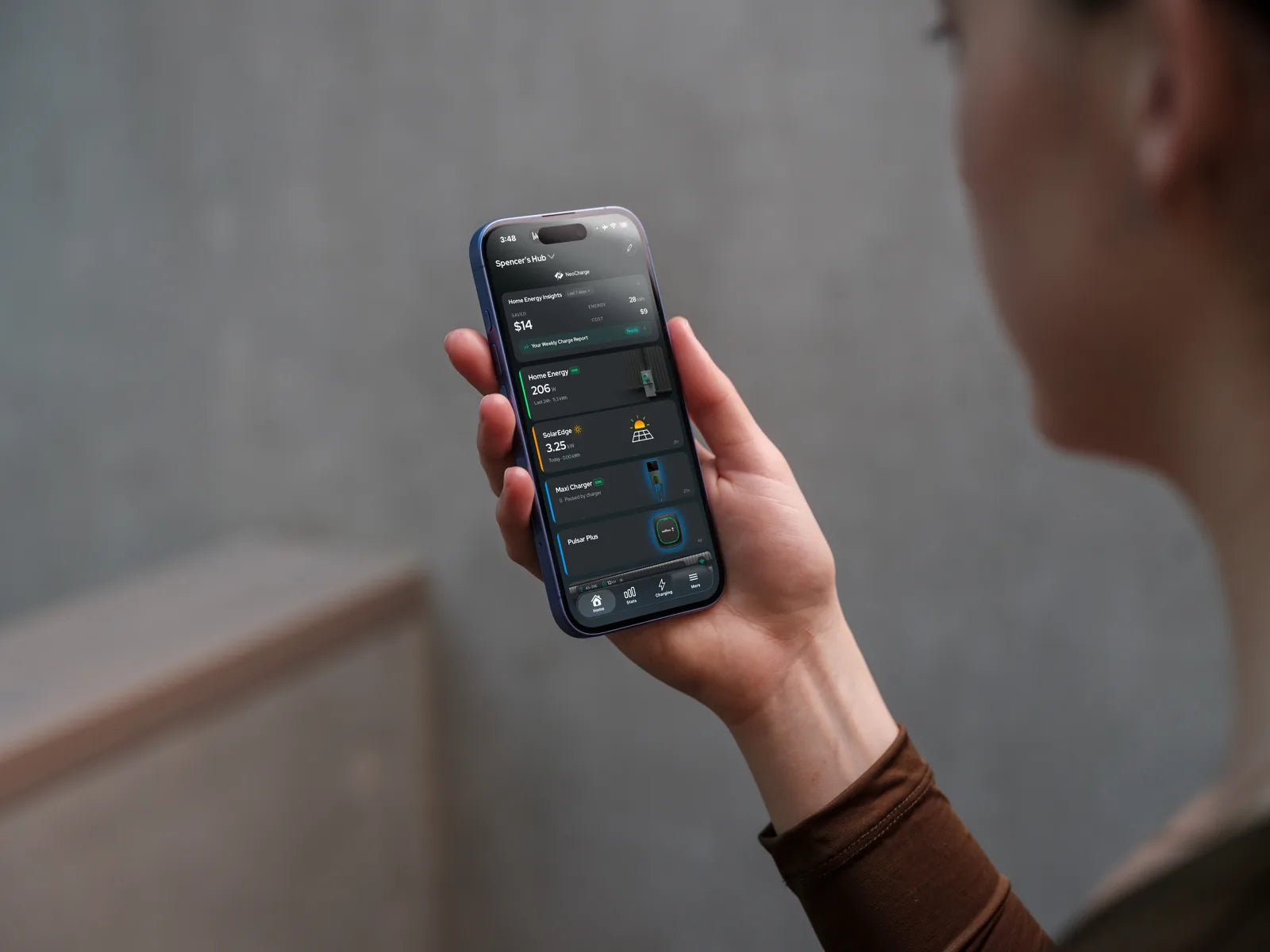
- If you want to reduce charging cost with off-peak schedules and rate-aware automation, explore the NeoCharge App.
NeoCharge App
Turn rate plans into simple charging schedules
Schedule around off-peak windows, manage compatible chargers, and keep tabs on charging sessions from the app.
Explore the app


Next steps
Keep going with NeoCharge
Use the article as your decision guide, then jump into the product, app, or related guides that match what you are trying to solve next.
Key terms
- Level 2 charging
- Level 2 EV charging uses a 240V circuit (like a dryer outlet). It typically adds ~20–35 miles of range per hour, depending on your car and the circuit amperage.
- EVSE
- EVSE stands for Electric Vehicle Supply Equipment (the “charger”). It safely delivers power to your EV and communicates with the car to control charging current.
- Time-of-use (TOU) rates
- Time-of-use rates are utility pricing plans where electricity costs more at peak hours and less off-peak. Scheduling EV charging off-peak can significantly reduce cost.
- Load management
- Load management is a strategy to keep your home’s electrical load within safe limits—often by scheduling or pausing EV charging when other appliances are running.
- GFCI breaker
- A GFCI breaker protects against ground faults. Some EV chargers can cause nuisance trips on certain GFCI breakers; compatibility depends on the charger and installation.
FAQs
What's the quick takeaway from this article?
Who is this guide for?
What should I do next?
Related posts


Burnaby EV Charger Installation
Burnaby EV charging by home type: share a dryer outlet instead of a panel upgrade, City permits, BC Hydro's $350 + $200 rebates, and strata right-to-charge.

Richmond EV Charger Installation
Richmond EV charger installation: Technical Safety BC permit fees, the 2018 EV-ready rule, BC Hydro's $350 + $200 rebates, and room for a heat pump.

Surrey EV Charger Installation
Add Level 2 charging in Surrey without a panel upgrade: City of Surrey permit steps, BC Hydro's $350 + $200 rebates, suited-house load math, and overnight costs.

BC Hydro EV Power Management Device Rebate: Eligible Devices (2026)
BC Hydro pays $200 extra for an eligible EV power management device. The Sept 2026 device list, which chargers qualify, and the permit rule that decides who gets it.
