


Can You Charge an EV From a Dryer Outlet? Is It Safe? (2026)
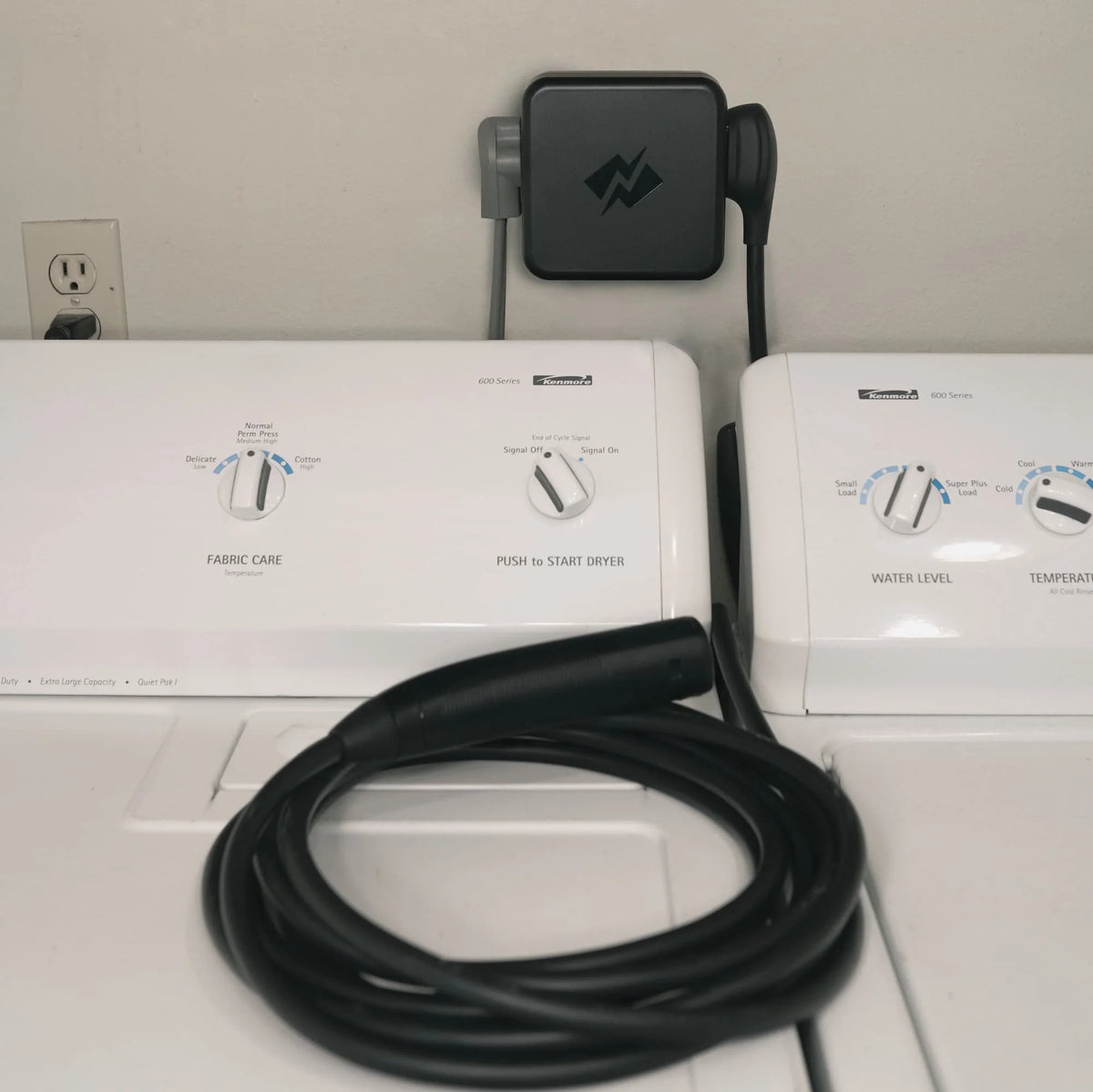
Direct answer: Yes. A 30A dryer outlet can safely charge an EV at up to 24A, about 5.8 kW or roughly 20 miles of range an hour, as long as the outlet and wiring are in good condition and you use certified equipment. What isn't safe is swapping the dryer and charger plugs every day, using a plain Y-splitter, or running a household extension cord. To share the outlet with the dryer, use a listed load-switching device that gives the dryer priority and pauses the car while it runs.
- Speed: 24A continuous on a 30A dryer circuit, which adds about 160 miles overnight.
- The safe way to share: a certified smart splitter switches between dryer and EV automatically, so the circuit never carries both.
- Tesla owners: the Mobile Connector's 14-30 adapter charges at 24A, the safe maximum for a dryer circuit.
- Permits: usually not needed in the US to plug in a certified device. B.C. requires one; check locally elsewhere in Canada.
- Check the outlet: a warm, discolored, or loose receptacle needs an electrician before it charges a car every night.
Checked October 9, 2026 against the National Electrical Code requirements for EV charging, Tesla's Mobile Connector manual, utility program rules, and provincial safety authorities.
Most homes already have the circuit an EV needs: the 240V outlet behind the dryer. The question people really ask is whether using it is safe, and the honest answer is that it depends on how. The circuit itself is fine. The risks come from shortcuts: unplugging the dryer every night, plugging both into a cheap adapter, or using a worn receptacle. This guide covers what makes it safe, what to avoid, and how fast it charges.
Related: Dryer plug types: identify your 240V outlet · NEMA 14-30 EV charging · How to share a 240V outlet between an EV and a dryer · What it costs to install an EV charger
What makes dryer-outlet charging safe
The 24A rule. The National Electrical Code treats EV charging as a continuous load and requires the circuit's overcurrent protection to be at least 125% of the charging current. On a 30A dryer breaker, that means a maximum of 24A of charging (30 ÷ 1.25). On a 50A range breaker, 40A. Any charger or adapter used on a dryer outlet must be set to, or fixed at, 24A.
Certified equipment. Every piece between the outlet and the car should carry a recognized safety certification (UL, ETL, CSA, or another nationally recognized lab). That includes the charger, any adapter, and any sharing device.
A sound receptacle. The weak point is usually the outlet, not the wire. A dryer receptacle was designed for a dryer that runs an hour or two a few times a week, not for a car drawing 24A for six hours every night. The 2026 edition of the National Electrical Code goes further and requires receptacles used for EV charging to be listed for that use, where adopted; few jurisdictions have adopted the 2026 code yet.
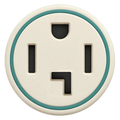
The right outlet type. Most newer homes have a four-prong NEMA 14-30. Older homes may have a three-prong NEMA 10-30, which has no separate ground wire. See the table below.
What not to do
- Don't swap plugs every day. Repeatedly unplugging and replugging a 240V plug wears the receptacle's contacts, and a loose contact runs hot. Tesla's own manual tells owners to leave the Mobile Connector plugged in "to reduce wear and tear" and never to use "a damaged, loose or worn power outlet."
- Don't use a plain Y-splitter. A passive splitter lets the dryer and the EV draw at the same time, which can overload a 30A circuit. If you share the outlet, use a certified device that switches the loads so they never run together.
- Don't use a household extension cord or power strip. The Electrical Safety Foundation advises against extension cords and multi-plug adapters for EV charging, and most setups don't need one. Plug the charger, or a certified sharing device, directly into the wall outlet. If the outlet is out of reach, a longer charger cable or an outlet near parking is the better fix; if you do use a cord, use a heavy-duty one rated for the full circuit (how to choose one).
- Don't ignore heat. In December 2016 Tesla recalled about 7,000 of its NEMA 14-30, 10-30, and 6-50 adapters after reports of 14-30 adapters overheating. The plug at a dryer outlet is a known hot spot, which is why its condition matters.
How sharing a dryer outlet works safely
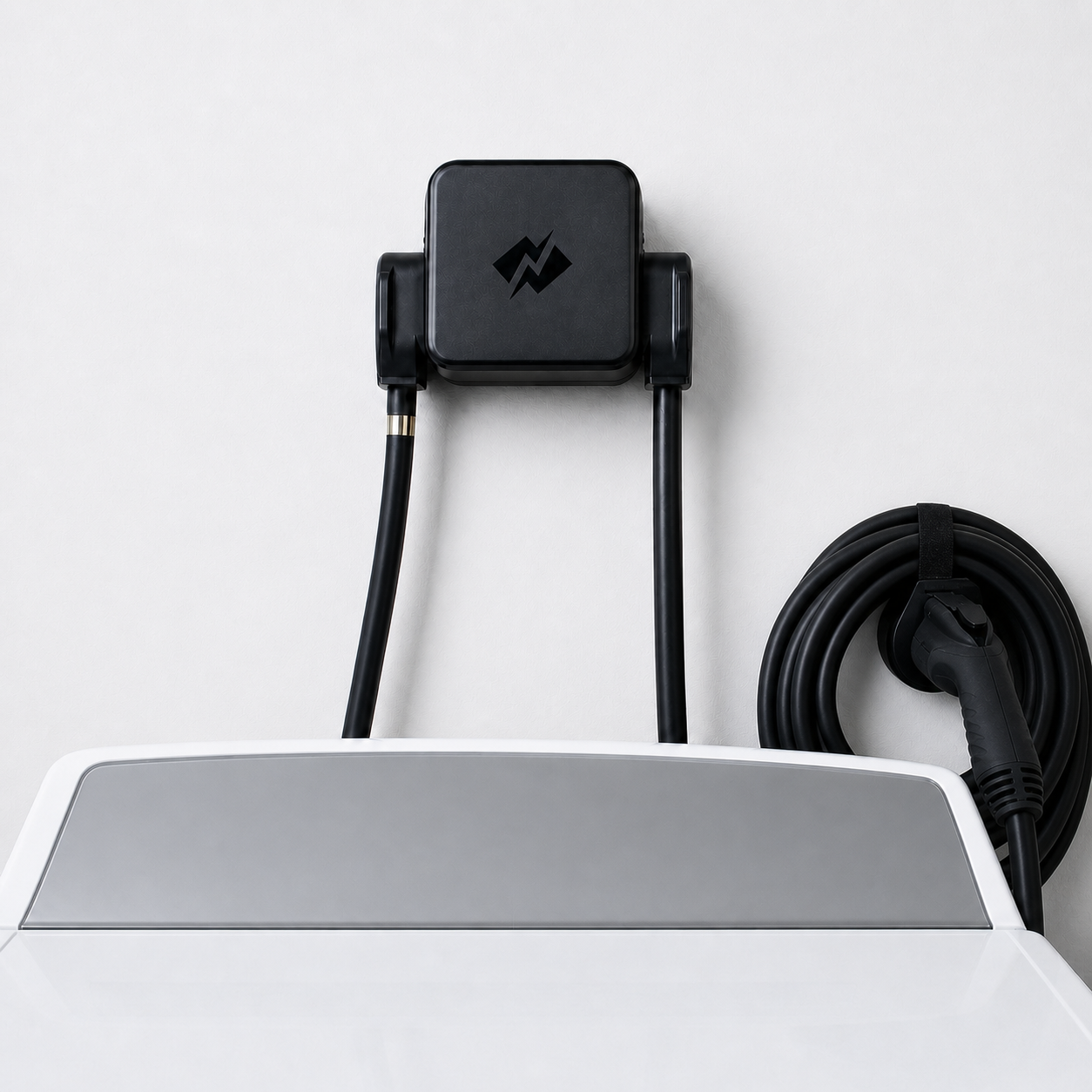
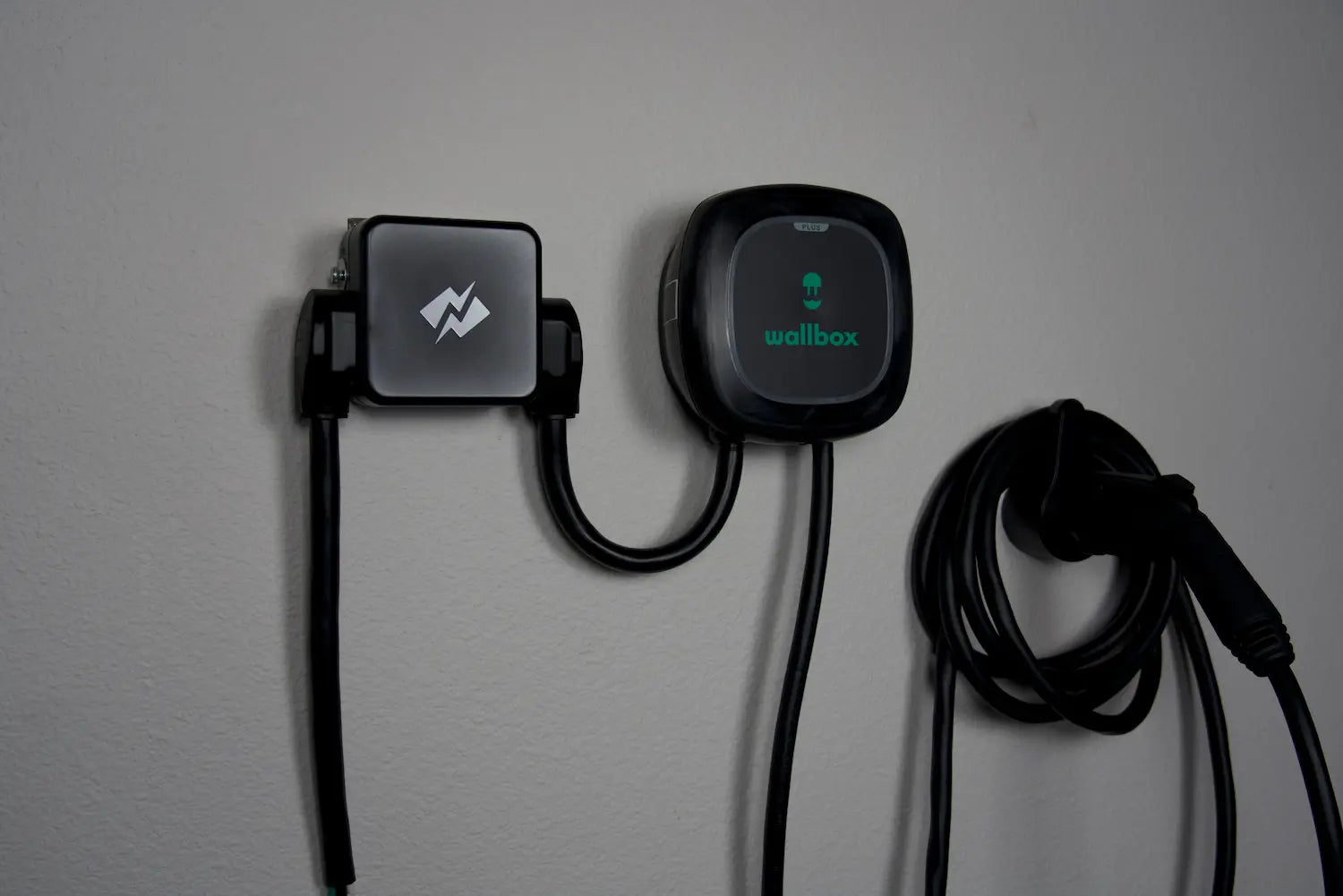
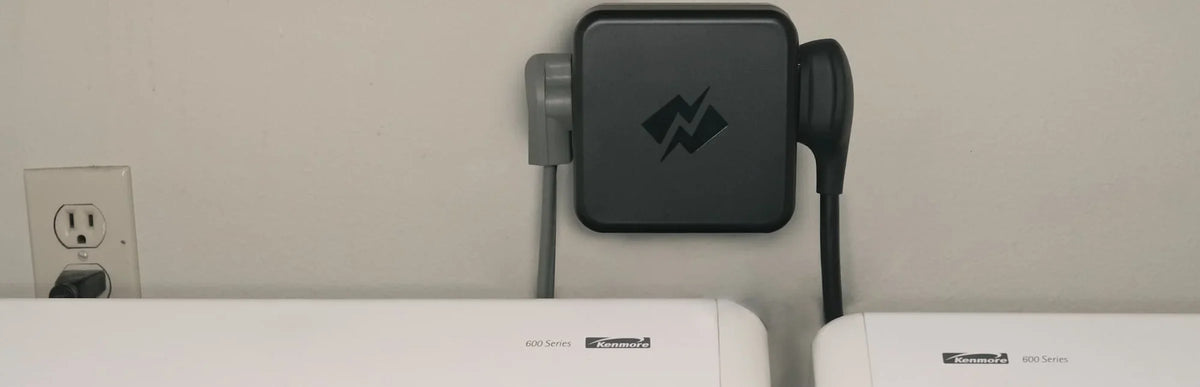
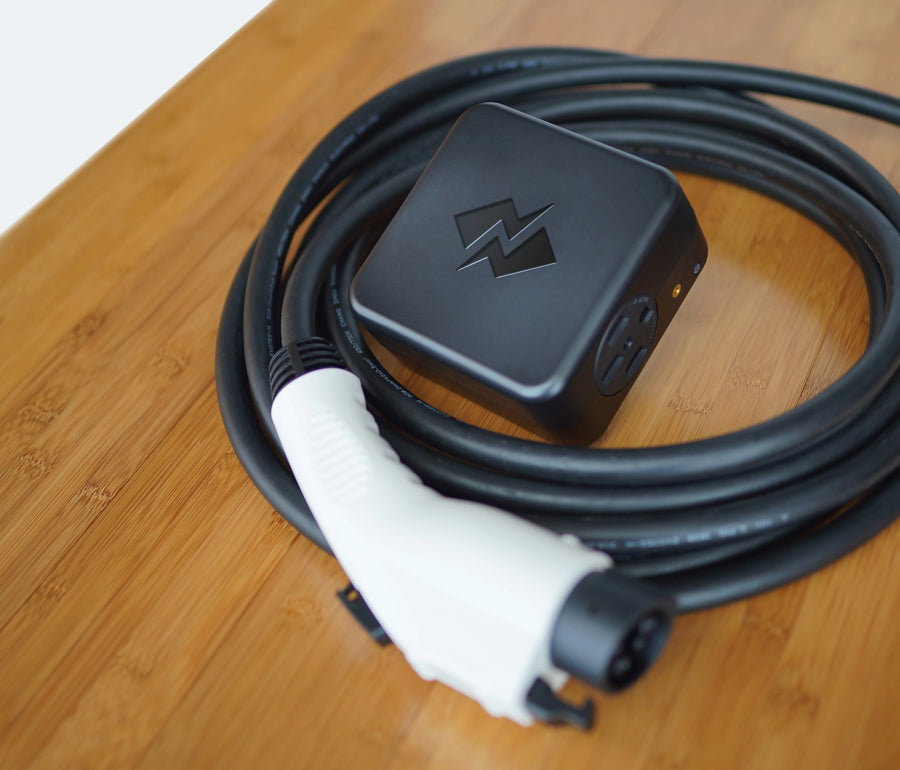
A load-switching device, often called a smart splitter or circuit-sharing device, plugs into the dryer outlet and provides two outlets: one for the dryer and one for the EV charger. It watches the dryer's current. When the dryer starts, the car pauses. When the dryer finishes, charging resumes. The two loads never run together, so the circuit never carries more than it was built for.
The 2023 National Electrical Code (sections 220.70 and 625.42) lets an energy management system's limit, rather than the charger's full rating, count in the load calculation. Whether a plug-in switching device on a dryer circuit is accepted is up to your local inspector, and in Canada the Electrical Code is more explicit: Rule 86-300 allows EV charging on a circuit with other loads when an EV energy management system is installed. Utilities treat certified circuit-sharing devices as an approved way to add charging without a panel upgrade. SMUD's qualified-product list puts it plainly: "A circuit sharing device allows two appliances, such as an electric clothes dryer and an EV charger, to share the same circuit." SMUD requires UL or other recognized-lab certification and lists the NeoCharge Smart Splitter (UL certificate E507438). BC Hydro calls the same approach "branch circuit sharing" and pays a rebate for listed devices.
Which dryer outlet do you have?
| Outlet | What it looks like | Circuit | Max EV charging | Notes |
|---|---|---|---|---|
| NEMA 14-30 | Four prongs; L-shaped slot plus a round ground | 30A | 24A | Standard on dryer circuits since the 1996 code. The common case |
| NEMA 10-30 | Three prongs, no separate ground | 30A | 24A | Older homes. The neutral doubles as the frame ground, and Tesla's manual warns against outlets that aren't properly grounded, so have an electrician check it and consider upgrading to a 14-30 |
| NEMA 14-50 | Four prongs; three straight slots plus a round ground | 50A | 40A | Range or dedicated EV outlet |
| NEMA 10-50 | Three prongs | 50A | 40A | Older range outlets; same caution as the 10-30 |
Not sure which you have? Our dryer plug types guide has photos of each.
How fast does a dryer outlet charge an EV?
| Outlet | Charging power | Range per hour (typical EV) | Overnight, 8 hours |
|---|---|---|---|
| Standard 120V wall outlet (Level 1) | about 1.4 kW | about 4 to 5 miles | about 35 miles |
| 30A dryer outlet at 24A | about 5.8 kW | about 20 miles | about 160 miles |
| 50A range or EV outlet at 40A | about 9.6 kW | about 30 miles | 240+ miles |
Range per hour assumes about 3.5 miles per kWh, typical of an EV crossover; a Tesla Model 3 does a little better, a pickup truck worse. For most commuters, a dryer outlet overnight is more than enough.
Charging a Tesla from a dryer outlet
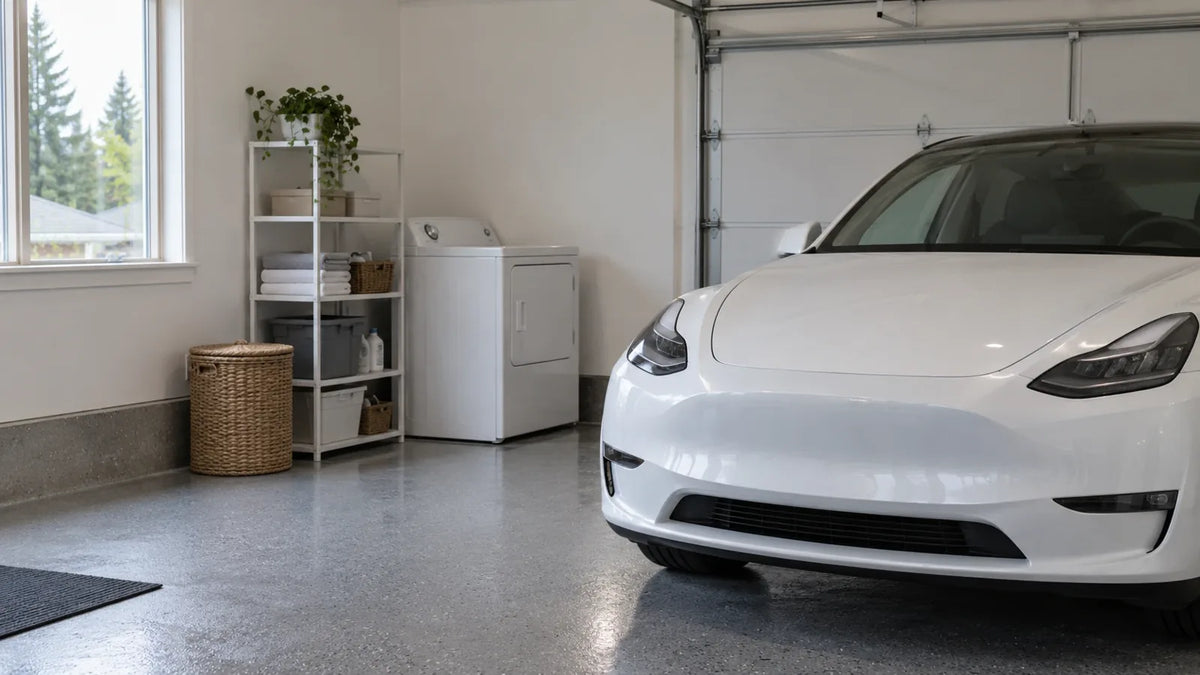
Tesla's Mobile Connector, sold separately since 2022, takes swappable plug adapters. Tesla's manual lists the NEMA 14-30 and 10-30 adapters at 24A, about 5.7 kW, which is exactly the safe limit for a 30A dryer circuit. To share the outlet with the dryer:
- Get the 14-30 (or 10-30) adapter for the Mobile Connector.
- Plug a listed smart splitter into the dryer outlet, and plug the dryer and the Mobile Connector into the splitter.
- Leave both plugged in. The splitter handles the switching, and nothing gets unplugged daily.
With the splitter in place, nothing gets unplugged daily, which avoids the receptacle wear Tesla warns about. A Tesla Wall Connector is hardwired, so it doesn't plug into a dryer outlet.
Two EVs? A splitter on a 14-50 outlet can share one 40A supply between two cars, taking turns overnight. See how to charge two EVs on one 240V outlet.
Do you need a permit or an electrician?
It depends on where you live, so check before you install.
- United States: plugging a certified device into an existing outlet usually isn't permitted work, but permit rules are set by your city or county. Replacing the receptacle, moving it, or adding a circuit almost always needs a permit.
- British Columbia: Technical Safety BC requires a permit and load calculation even for plug-in switching devices on an existing dryer receptacle.
- Ontario: the Electrical Safety Authority requires an electrical permit for EV charger installs, and hasn't published guidance on plug-in splitters specifically. Check with ESA or a licensed electrical contractor.
- Alberta: Calgary and Edmonton treat an energy management device that shares a dryer or stove circuit as permitted work with a load calculation, and Calgary requires a qualified electrical professional to install one. Check with your city.
- Quebec: electrical work must be done by an RBQ-licensed contractor. The province says a plug-in charger on an existing compliant 240V outlet may not need one, but it hasn't addressed splitters. Ask a licensed contractor.
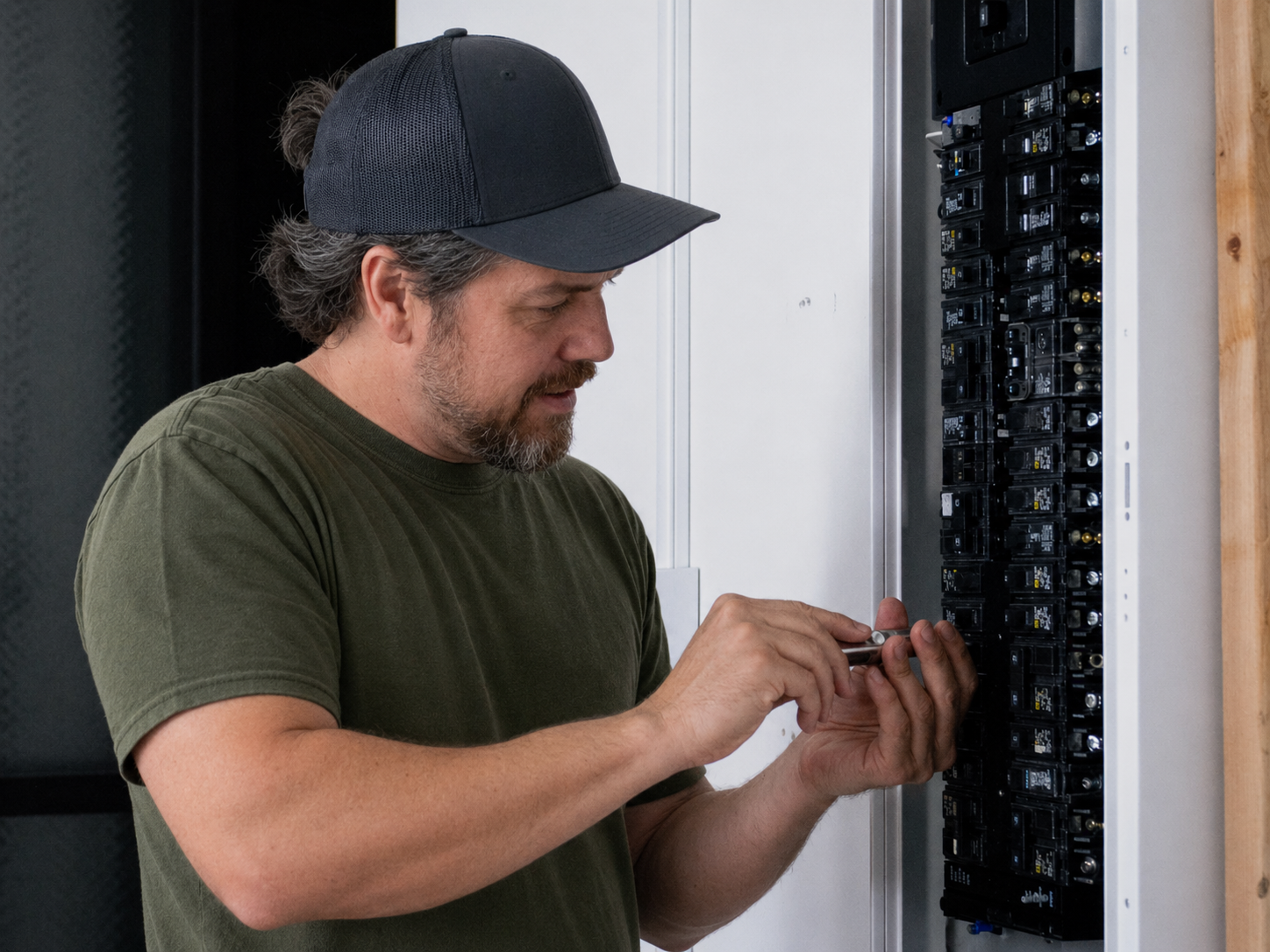
Whatever the rules, an electrician's look at an older outlet is cheap insurance.
Signs your dryer outlet needs attention first
Stop and call an electrician if the outlet or plug:
- feels warm or hot after the dryer runs,
- is discolored, scorched, or smells of burning,
- buzzes or crackles,
- holds the plug loosely, or
- is a three-prong 10-30 on wiring you know nothing about.
If your home has aluminum wiring, have an electrician check the terminations at the receptacle and breaker. The U.S. Consumer Product Safety Commission's well-known warnings cover small-gauge aluminum branch circuits; they don't apply to the larger-gauge aluminum used for some dryer and range circuits, which still needs proper, tight terminations.
What if the dryer is in another room?
Don't run a cord through a wall. Cords aren't permitted as a substitute for permanent wiring. The proper options are an electrician-installed outlet near parking on the existing circuit, a new circuit, or a charger with a cable long enough to reach (many are 18 to 25 feet). If the laundry is far from parking, a new circuit with load management is usually the better answer. Our installation cost guide prices each option.
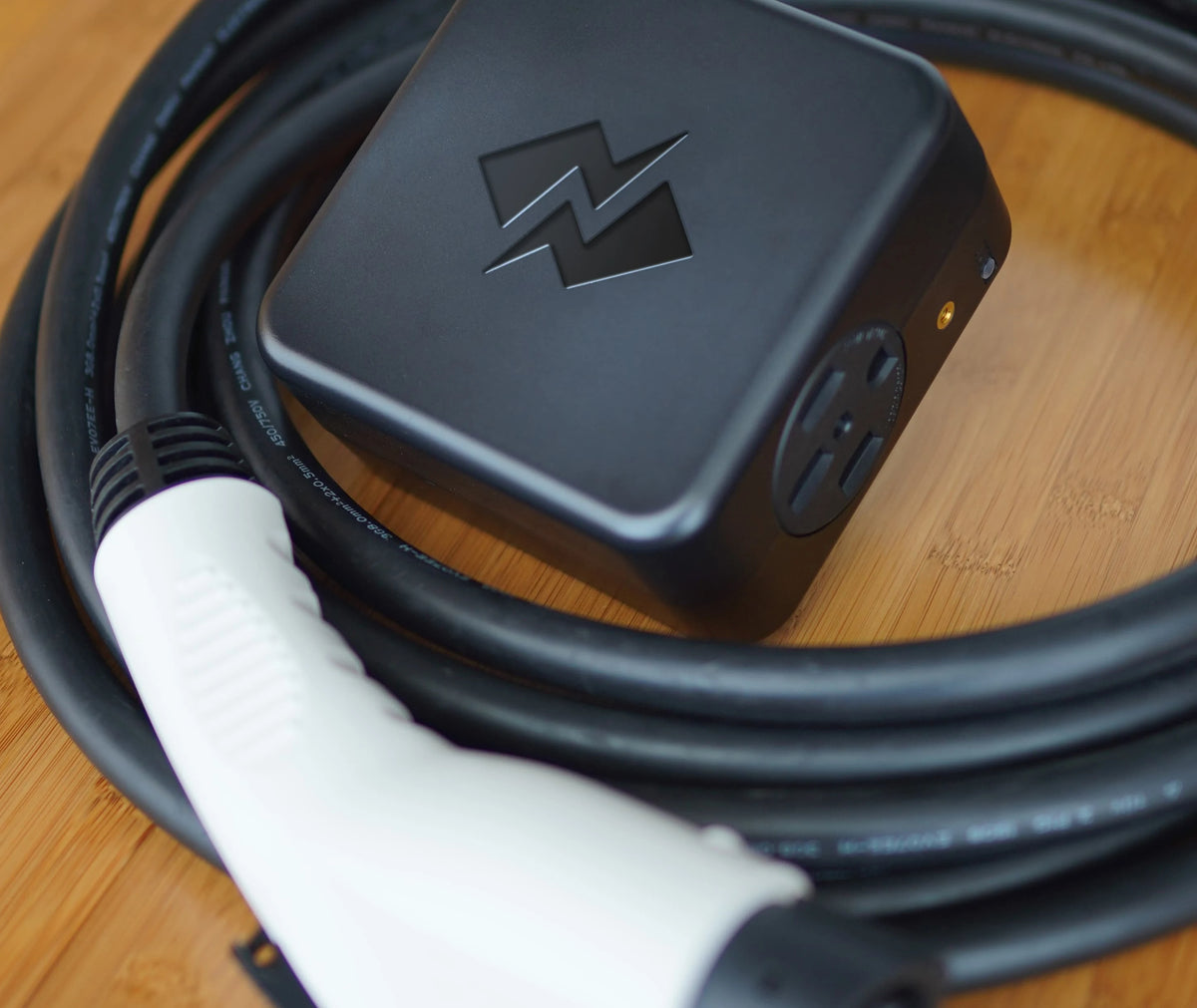
UL certified, on SMUD and BC Hydro rebate lists
Share your dryer outlet the safe way
The dryer gets priority and your EV charges the rest of the time, with nothing to unplug. Works with Tesla's Mobile Connector and any plug-in Level 2 charger. $399, with rebates from 30+ utilities.
FAQ
Is it safe to charge an EV from a dryer outlet?
Can I plug my Tesla into my dryer outlet?
How long does it take to charge an EV on a dryer outlet?
Can I just unplug my dryer and plug in my EV charger?
Can the dryer and EV run at the same time?
Can I use a three-prong 10-30 dryer outlet for EV charging?
Do I need a permit to use a smart splitter?
Bottom line
Charging an EV from a dryer outlet is safe when you respect the circuit: 24A maximum, certified equipment, a receptacle in good shape, and no daily plug swapping or Y-splitters. A smart splitter is the cleanest way to share the outlet with the dryer, and in most US homes it is the fastest, cheapest Level 2 charging available. If the outlet is old, warm, or loose, fix that first.
Next steps (NeoCharge)
- Identify your outlet with the dryer plug types guide.
- See how the NeoCharge Smart Splitter works with your outlet and charger.
- Check rebates for your address with the rebate finder.
- In Canada? Start with Can I charge my EV from a dryer outlet in Canada?
Sources
Checked October 9, 2026:
- National Electrical Code 2023, sections 625.41 (125% continuous load), 625.42 and 220.70 (energy management), as summarized by Leviton's Captain Code and EC&M's guide to Article 625
- LightNOW, EV charger changes in the 2026 NEC (December 17, 2025): listed receptacles for EV charging
- Tesla, Mobile Connector Gen 3 owner's manual: adapter ratings and safety instructions
- CNBC, Tesla recalls charging adapters after overheating (December 2016); NHTSA recall 16E091000
- Electrical Safety Foundation, EV charging safety
- SMUD, Circuit sharing device qualified product list (updated May 6, 2026)
- BC Hydro, Rebates for EV power management devices
- Technical Safety BC, Information Bulletin IB-EL 2023-05, Revision 3 (March 4, 2025)
- Electrical Safety Authority (Ontario), EV charging systems and Bulletin 86-1-7
- City of Calgary, Homeowner trades permits; City of Edmonton, EV charger permit and inspection process
- Gouvernement du Québec, Travaux d'installation d'une borne de recharge à domicile (March 19, 2026)
- U.S. CPSC, Repairing aluminum wiring
Update log: rebuilt October 9, 2026 with current code, Tesla guidance, and provincial permit rules; merged our earlier "Can I use my dryer outlet to charge my EV?" guide into this page.
Electrical safety disclaimer
This article is general information, not electrical advice. EV charging equipment must be installed and used according to the electrical code in force where you live, local permit rules, manufacturer instructions, and the judgment of a licensed electrician. If an outlet or plug is warm, discolored, or loose, stop using it and have it inspected.
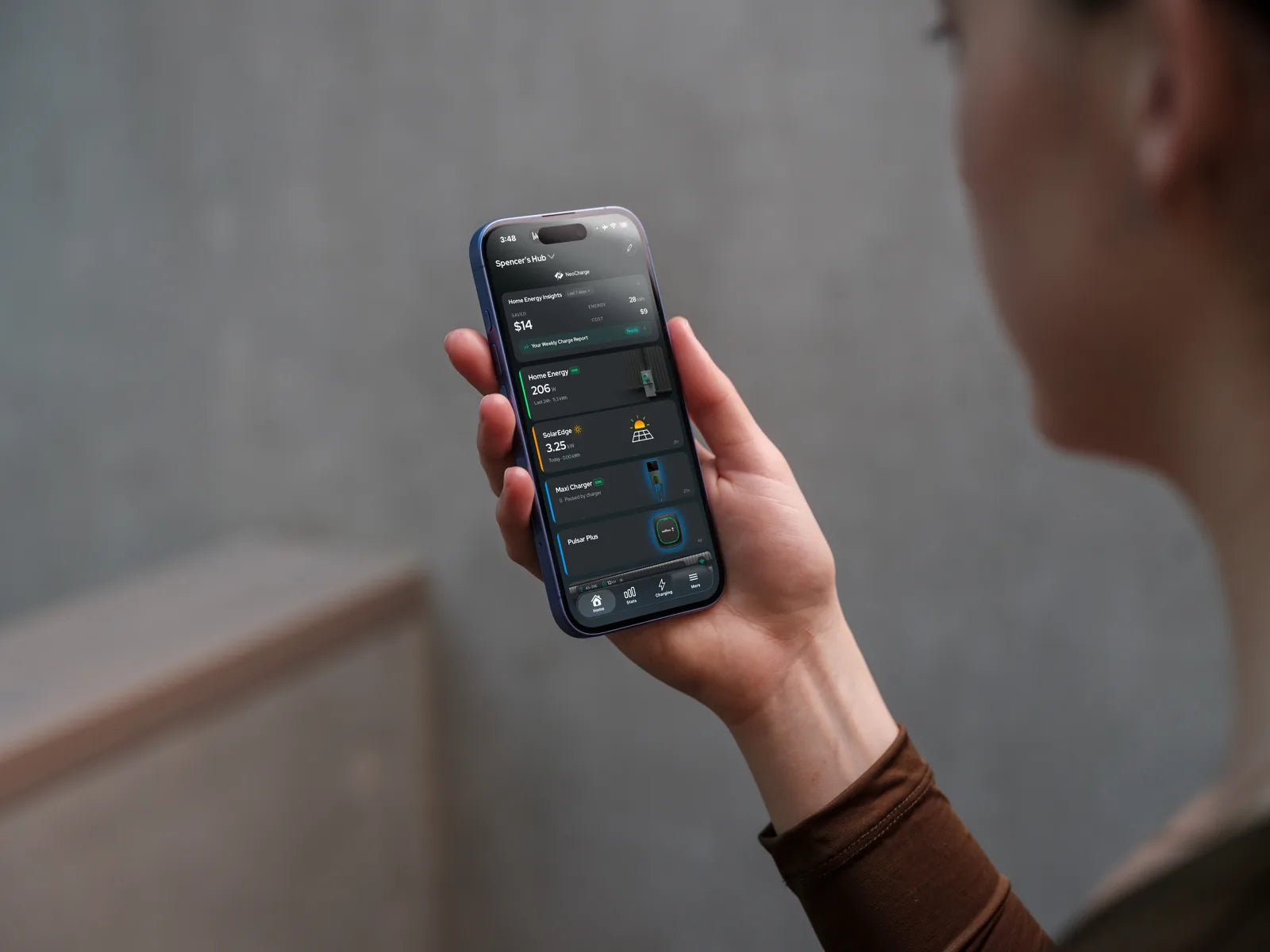
NeoCharge App
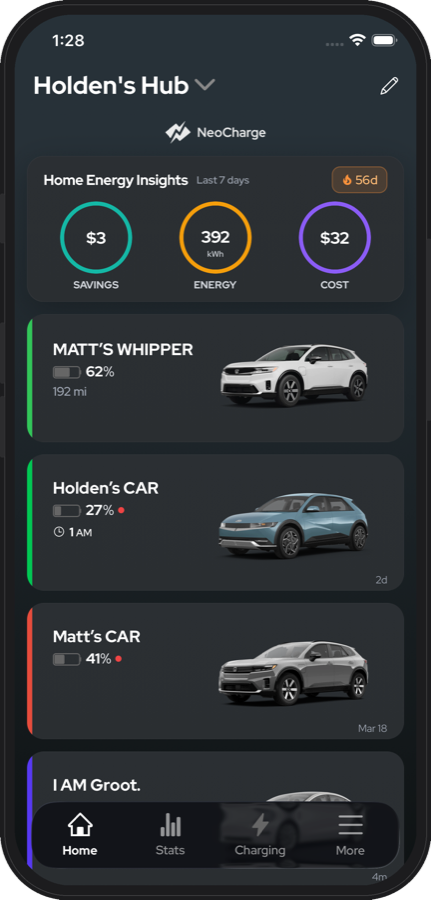
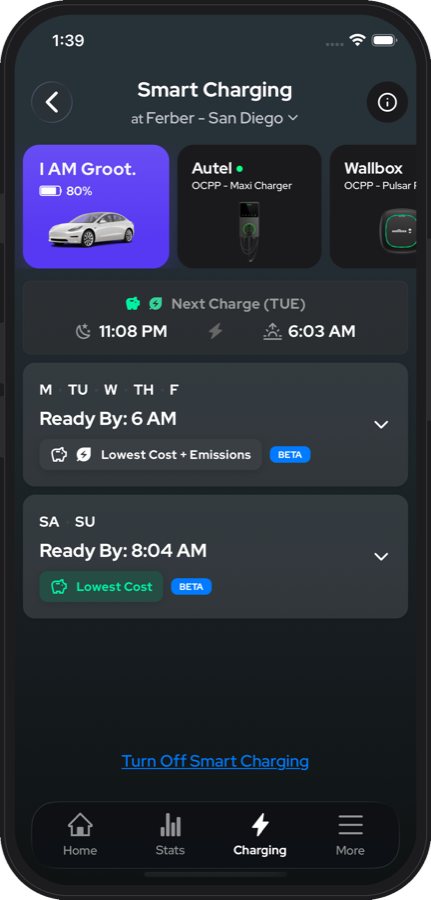
Track charging costs without spreadsheet work
See session history, monthly energy use, and savings so the article advice turns into a real household habit.
Explore the app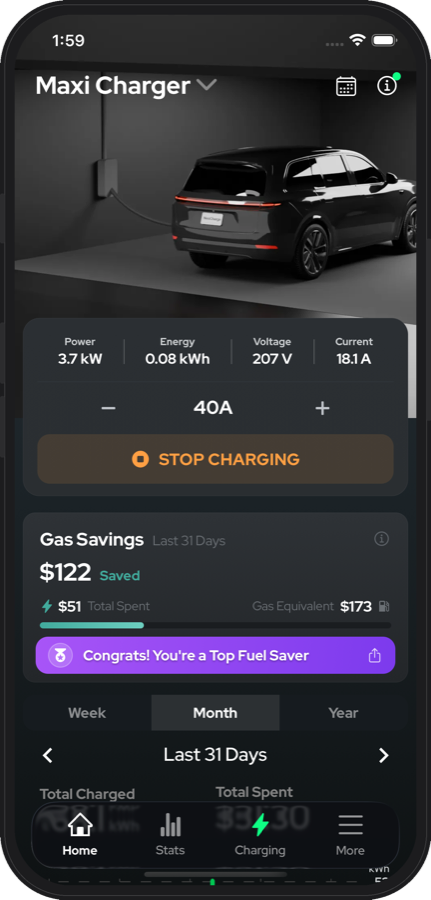
Next steps
Keep going with NeoCharge
Use the article as your decision guide, then jump into the product, app, or related guides that match what you are trying to solve next.
Key terms
- Level 2 charging
- Level 2 EV charging uses a 240V circuit (like a dryer outlet). It typically adds ~20–35 miles of range per hour, depending on your car and the circuit amperage.
- NEMA 14-50
- A NEMA 14-50 is a common 240V, 50A outlet (often used for EV charging). Many EV chargers plug into it, but the actual charging speed depends on the circuit and your EV.
- NEMA 14-30
- A NEMA 14-30 is a 240V, 30A dryer outlet. With a properly configured EV charger, it can usually support ~24A continuous charging (about 20–25 miles of range per hour for many EVs).
- Load management
- Load management is a strategy to keep your home’s electrical load within safe limits—often by scheduling or pausing EV charging when other appliances are running.
Related posts
EV Charging Best Practices: Battery Life, Safety, and Cost
Learn EV charging best practices for battery life, home safety, off-peak savings, fast charging, 80% limits, Level 2 charging, and panel upgrades.
Smart Splitter vs EVEMS vs Panel Upgrade: How to Choose the Right Path for Level 2 Charging
Need Level 2 charging but worried about a panel upgrade? Compare Smart Splitter outlet sharing vs EV energy management (EVEMS) vs a full panel upgrade—with a simple decision tree.
Charging an EV with a NEMA 10-30 Dryer Outlet (Grounding, Adapters, and Safer Alternatives)
A NEMA 10-30 dryer outlet can work for EV charging—but grounding and adapter safety matter. Learn the 24A guideline, key risks, and safer alternatives.

How to Find Your Off-Peak Hours for EV Charging (TOU Rate Plans Made Simple)
Off-peak hours depend on your utility’s TOU rate plan (and seasons/weekends). Here’s how to find your schedule, turn it into a charging rule, and save money.
