



EV Charging for Apartments & Renters: 7 Practical Options (and What to Ask Your Landlord)

 The short answer
Charging an EV in an apartment or rental is possible—even without a dedicated garage circuit. Here are 7 practical options, how to make the landlord ask easy, and resources for multi-unit dwelling EV readiness.
Key takeaways
- Start with a landlord-friendly approach using DOE resources and concrete proposals
- Workplace charging can often serve as your primary "home base" for daily charging needs
- Level 1 charging is surprisingly viable for many apartment dwellers with low daily mileage
- Shared charging solutions work well when properly managed with usage-based billing
Best fit Is this guide right for you?
Drivers with time-of-use rates, off-peak discounts, utility programs, or charging schedules they want to automate.
Homes on flat electric rates where charging time does not change cost, unless you still want tracking and reminders.
Quick answer
Your best bet is pushing for a dedicated Level 2 solution if you have an assigned parking spot and a reasonable property manager. If that's not happening, build a backup plan around workplace charging, nearby Level 2, and whatever Level 1 access you can negotiate.
The key is having multiple options working together, not putting all your eggs in one electrical basket.
Option 1 — Use existing on-site charging (if available)
Some buildings already have EV chargers, usually installed by forward-thinking property managers or required by local building codes. If you're building-shopping and EVs are non-negotiable, this is obviously the easiest path.
Questions to ask:
- Is access first-come-first-served or reserved?
- How does billing work? (Property-managed, third-party network, honor system?)
- Are there expansion plans if demand grows?
Pro tip: Even if existing charging is limited, it shows the property owner is EV-friendly, which makes future conversations much easier.
Option 2 — Ask for a dedicated Level 2 install (the gold standard)
Property owners typically worry about three things: upfront cost, ongoing electricity costs, and management headaches. The good news is there are established playbooks for handling all three concerns.
The DOE's Alternative Fuels Data Center highlights that multifamily housing owners face unique considerations (parking, electrical access, billing, legal), and provides resources and toolkits for implementation.
Source: afdc.energy.gov
A landlord-friendly request script
Here's a copy-paste message that addresses their concerns upfront:
Hi [Name],
I drive an EV and would like to request EV charging access for my parking spot. The U.S. DOE has a comprehensive guide on EV charging for multifamily housing with best practices and toolkits (afdc.energy.gov).
I'm happy to help gather installer quotes and research billing options that work for the property. Many installations can be tenant-funded with usage-based billing. Would you be open to exploring a charging solution?
Thanks for considering this!
The key is positioning yourself as a problem-solver, not a problem-creator. Most landlords appreciate tenants who do their homework.
Option 3 — Shared chargers with managed access
If individual charging stations aren't feasible, a common middle ground is shared charging with managed access. This typically involves:
- 2-4 charging stations for the building
- Scheduled access or first-come-first-served usage
- Usage-based billing through apps or building management
This works particularly well in smaller buildings where residents can coordinate informally, or larger buildings where property management wants to offer EV amenities without massive individual installations.
Option 4 — Level 1 in an assigned spot (with permission)
Level 1 gets dismissed as "too slow," but the DOE notes that many EV owners can meet daily needs with Level 1 overnight depending on commute distance and parking time.
Source: DOE home charging overview
Requirements for safe Level 1 charging:
- Dedicated outlet on its own circuit (not shared with other units)
- Code-compliant installation and GFCI protection
- Written permission from property management
- Clear agreement on electricity billing
This works best for:
- Short daily commutes (under 40 miles)
- Consistent overnight parking (8+ hours)
- Buildings where electrical access is straightforward
Option 5 — Workplace charging as your home base
If your employer offers EV charging, treat it like home charging rather than a convenient perk. This flips the equation: instead of scrambling for daily apartment charging, you're topping off weekly at home.
Many drivers successfully combine:
- Daily workplace charging (covers 80% of needs)
- Weekly Level 2 sessions at apartments or public stations (covers the rest)
- Public fast charging for road trips or emergencies
The reliability of workplace charging makes apartment charging less critical, giving you more negotiating flexibility with your landlord.
Option 6 — Nearby public Level 2 for weekly sessions
Public Level 2 charging has improved dramatically in the past few years. Instead of daily charging anxiety, many renters develop a weekly routine: grocery shopping + EV charging, or weekend coffee shop + top-off.
This works especially well when combined with:
- Light daily Level 1 charging (if available)
- Workplace charging for primary needs
- Public fast charging for longer trips
The key is finding Level 2 stations with reasonable rates and predictable availability, not relying on the single ChargePoint station at the grocery store that's broken half the time.
Option 7 — Build a temporary plan while negotiating
If your building is slow to respond, don't wait indefinitely. Start with whatever reliable charging method you have access to, document your usage patterns, and return with concrete data.
The DOE's multifamily resources include resident-focused guides like the "Plug-in Electric Vehicle Charging Guide for Residents of Multi-Unit Dwellings" that can help you build a compelling case.
Source: afdc.energy.gov
Present your landlord with:
- Usage data (kWh consumed, charging frequency)
- Installer quotes with multiple options
- Billing solutions that don't burden property management
- Examples of successful installations at similar properties
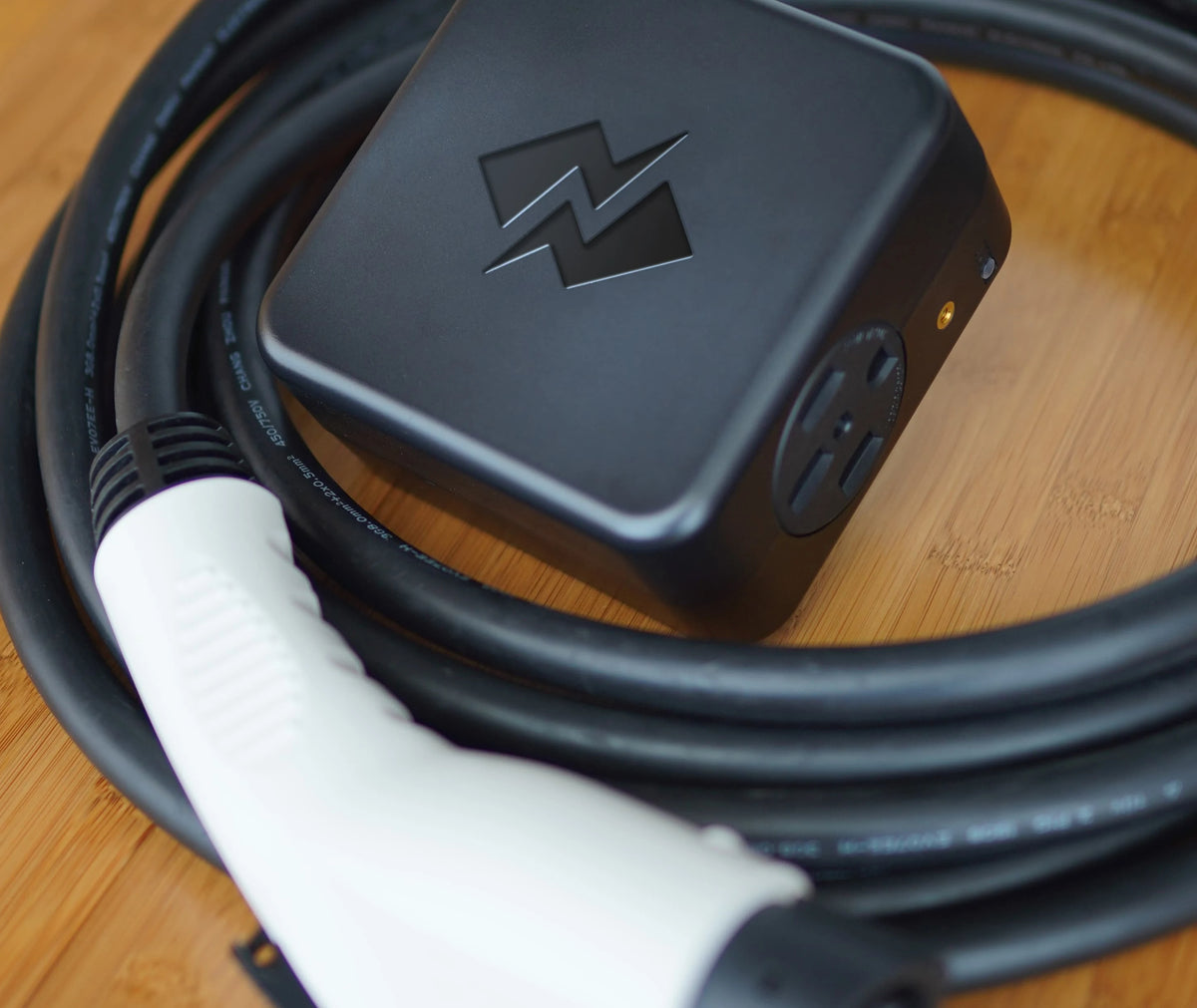
Skip the panel upgrade
Level 2 charging from the outlet you already have
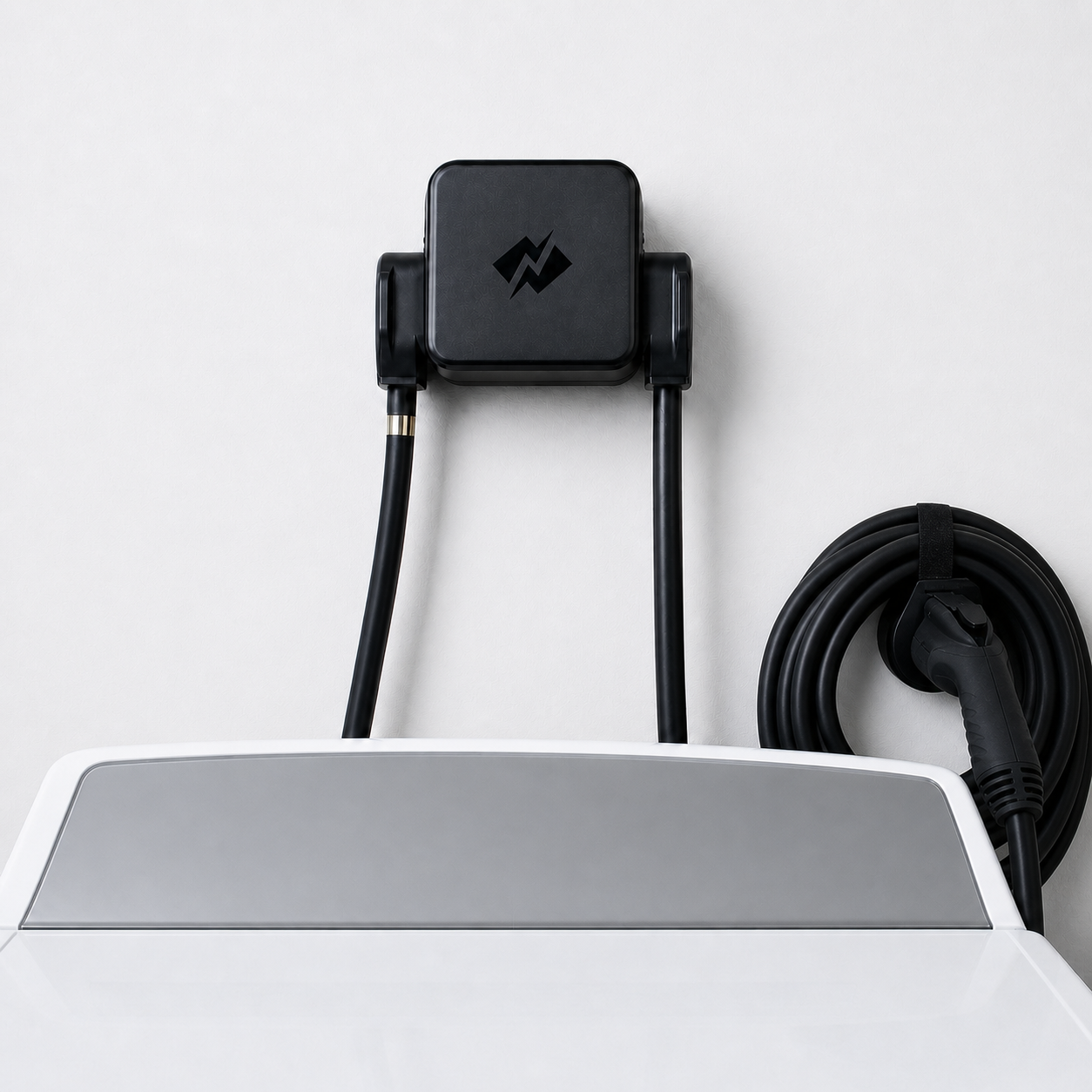
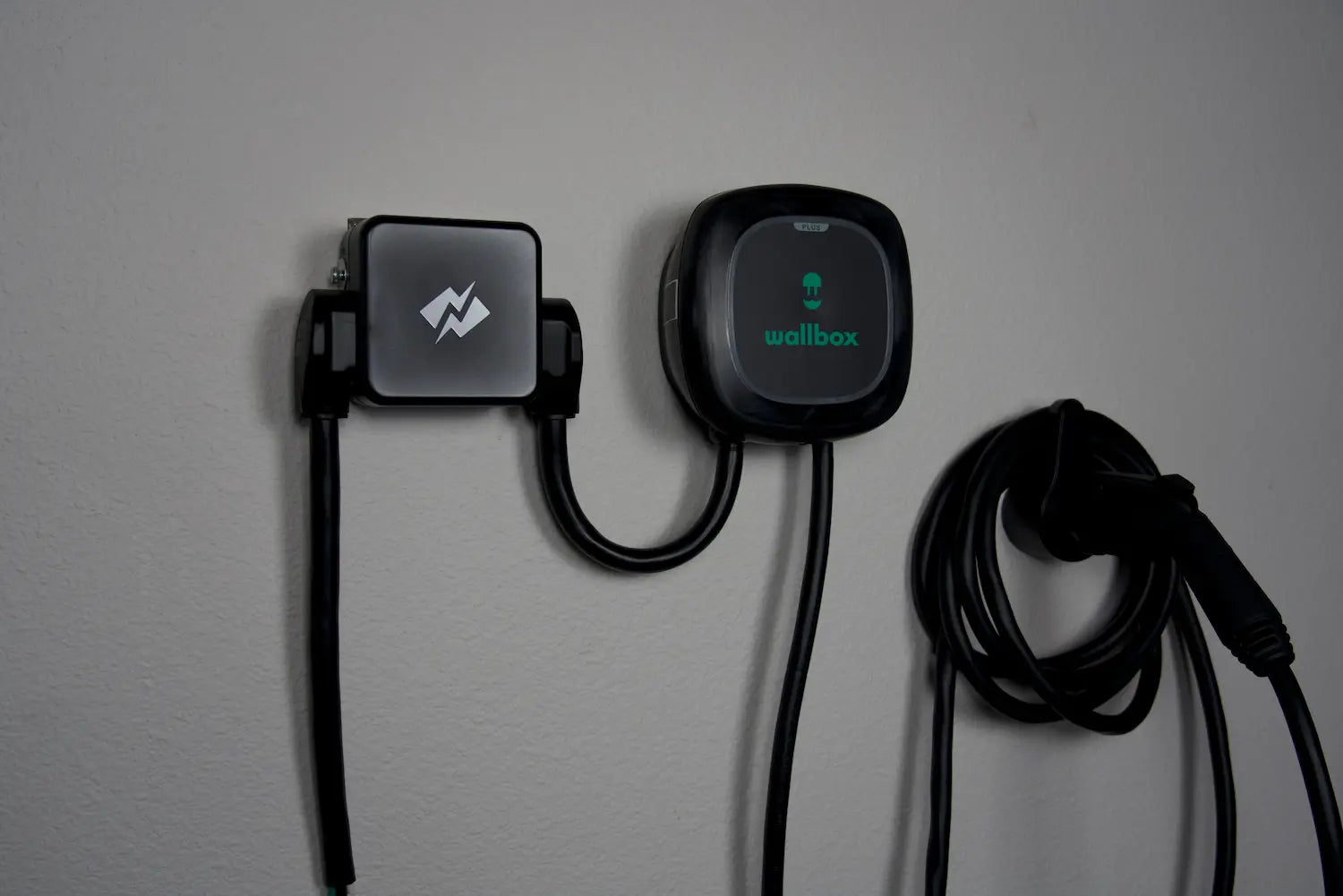
Plug into the 240V dryer outlet you already have. The dryer gets priority and your EV charges the rest of the night, with no panel upgrade and no new circuit. cUL Listed for the US and Canada, with rebates from 30+ utilities.
FAQ
Are landlords required to allow EV charging?
Laws vary by state and municipality. California, for example, has specific protections for EV charging requests in multifamily housing. The AFDC resource hub links to policy guides that can help you understand local requirements.
What's the cheapest "good enough" setup for renters?
Usually: workplace charging as your primary source + occasional public Level 2 for weekly top-offs + whatever Level 1 access you can negotiate with your building. This combination covers most charging needs without major property modifications.
How do I handle electricity billing for apartment charging?
Options include:
- Sub-metered outlets that bill directly to your unit
- Third-party charging networks that handle billing
- Flat monthly fees for unlimited charging
- Usage tracking with periodic reconciliation
The best approach depends on your property's electrical setup and management preferences.
Bottom line
EV charging in rentals is definitely solvable, but it's more about stakeholder management than electrical engineering. Bring your landlord a clear plan with credible resources, and you'll dramatically improve your odds of success.
Remember: property owners are increasingly aware that EV charging is becoming a standard amenity, like in-unit laundry or parking. The early-adopter phase is ending, which works in your favor.
If you do gain access to a shared 240V circuit in your rental, NeoCharge's Smart Splitter can help you safely share power with existing appliances—giving you reliable Level 2 charging without electrical modifications that might violate your lease.
Next steps (NeoCharge)
- If you want to safely share a 240V outlet (dryer + EV) or avoid a costly panel upgrade, check out the NeoCharge Smart Splitter.
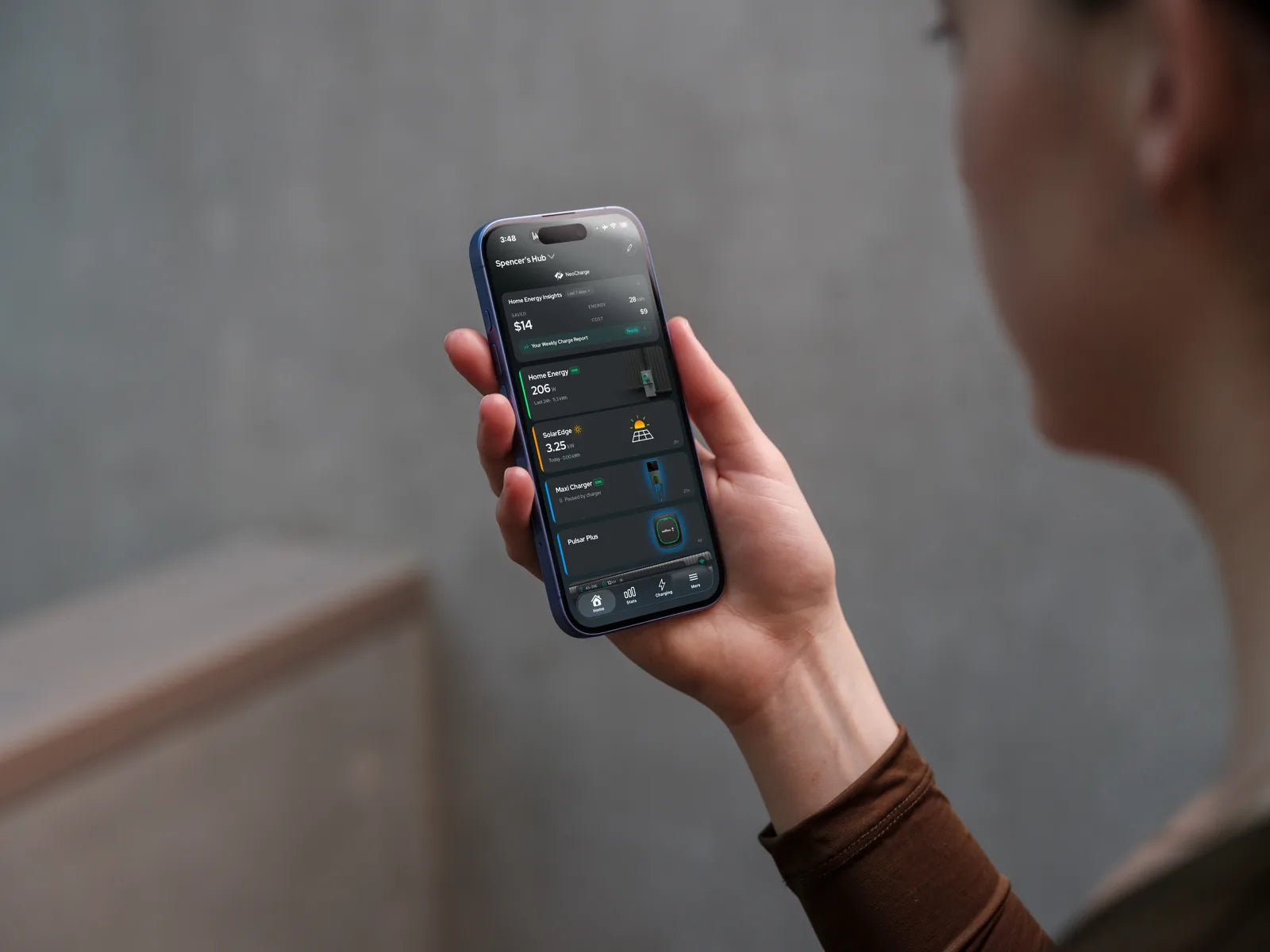
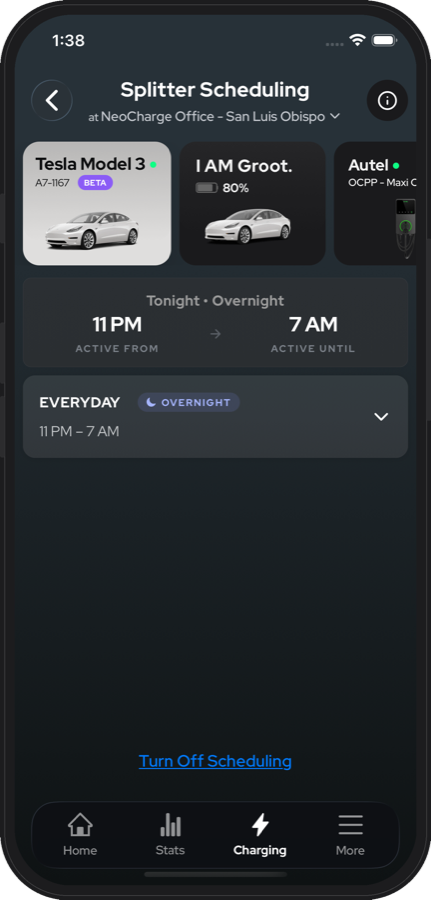
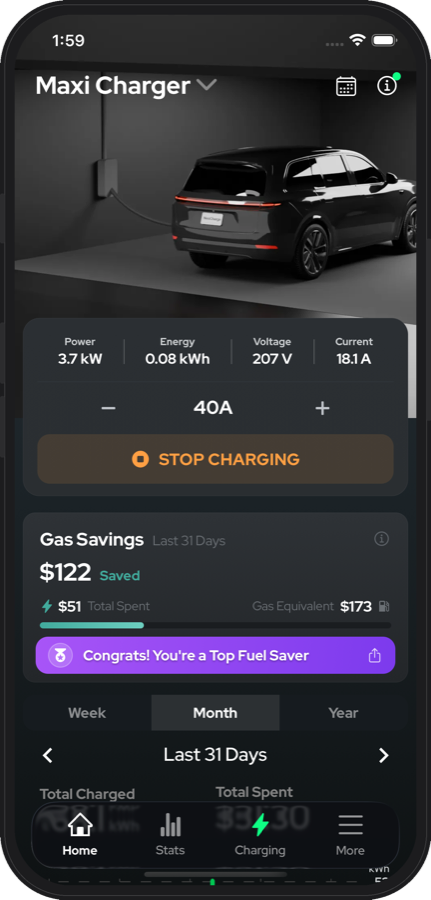
- If you want to reduce charging cost with off-peak schedules and rate-aware automation, explore the NeoCharge App.
NeoCharge App
Turn rate plans into simple charging schedules
Schedule around off-peak windows, manage compatible chargers, and keep tabs on charging sessions from the app.
Explore the app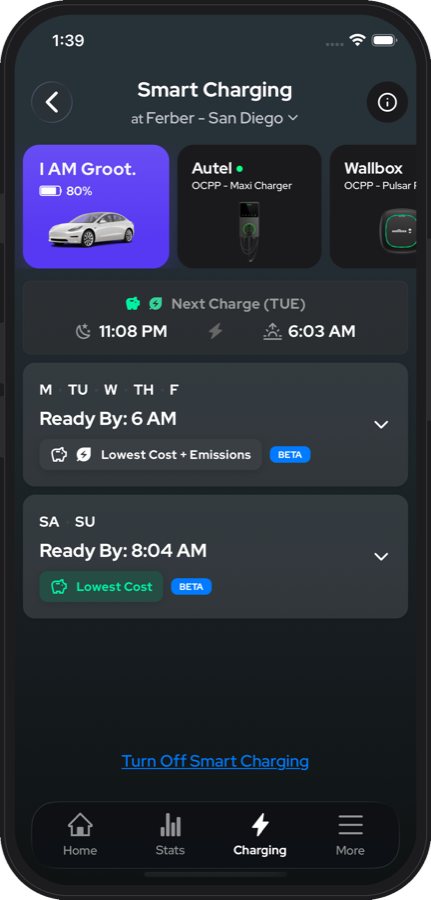
Next steps
Keep going with NeoCharge
Use the article as your decision guide, then jump into the product, app, or related guides that match what you are trying to solve next.
Key terms
- Level 2 charging
- Level 2 EV charging uses a 240V circuit (like a dryer outlet). It typically adds ~20–35 miles of range per hour, depending on your car and the circuit amperage.
- GFCI breaker
- A GFCI breaker protects against ground faults. Some EV chargers can cause nuisance trips on certain GFCI breakers; compatibility depends on the charger and installation.
FAQs
What's the quick takeaway from this article?
Who is this guide for?
What should I do next?
Related posts

EV Charging Best Practices: Battery Life, Safety, and Cost
Learn EV charging best practices for battery life, home safety, off-peak savings, fast charging, 80% limits, Level 2 charging, and panel upgrades.
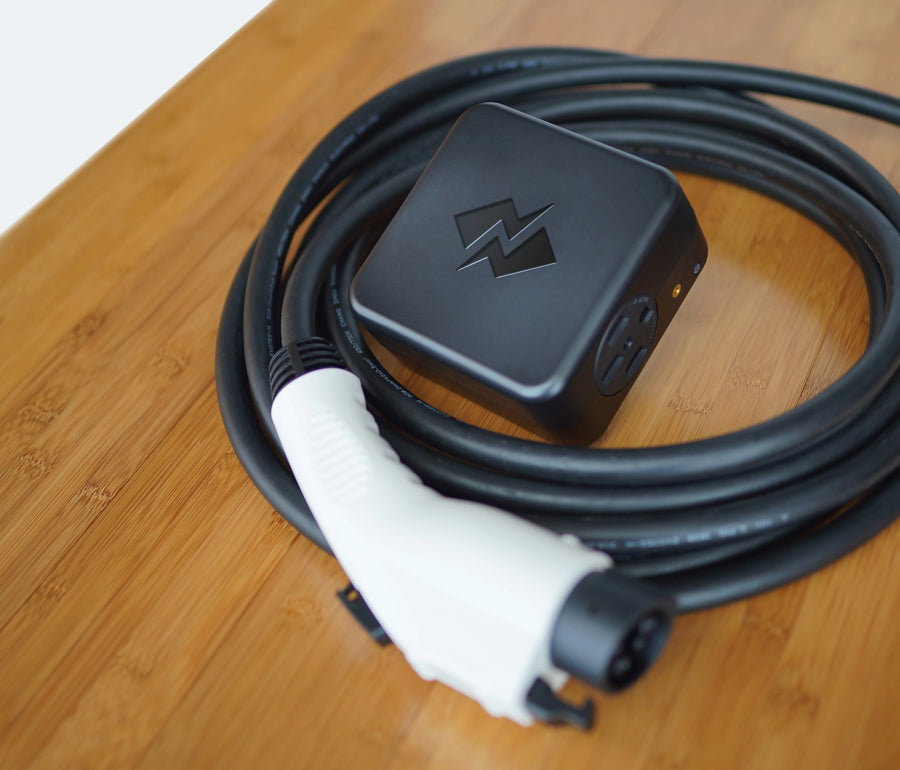
Smart Splitter vs EVEMS vs Panel Upgrade: How to Choose the Right Path for Level 2 Charging
Need Level 2 charging but worried about a panel upgrade? Compare Smart Splitter outlet sharing vs EV energy management (EVEMS) vs a full panel upgrade—with a simple decision tree.

Charging an EV with a NEMA 10-30 Dryer Outlet (Grounding, Adapters, and Safer Alternatives)
A NEMA 10-30 dryer outlet can work for EV charging—but grounding and adapter safety matter. Learn the 24A guideline, key risks, and safer alternatives.
How to Find Your Off-Peak Hours for EV Charging (TOU Rate Plans Made Simple)
Off-peak hours depend on your utility’s TOU rate plan (and seasons/weekends). Here’s how to find your schedule, turn it into a charging rule, and save money.
