





Time-of-Use (TOU) Rates + Smart Charging: How to Cut Your EV Charging Bill in 2026
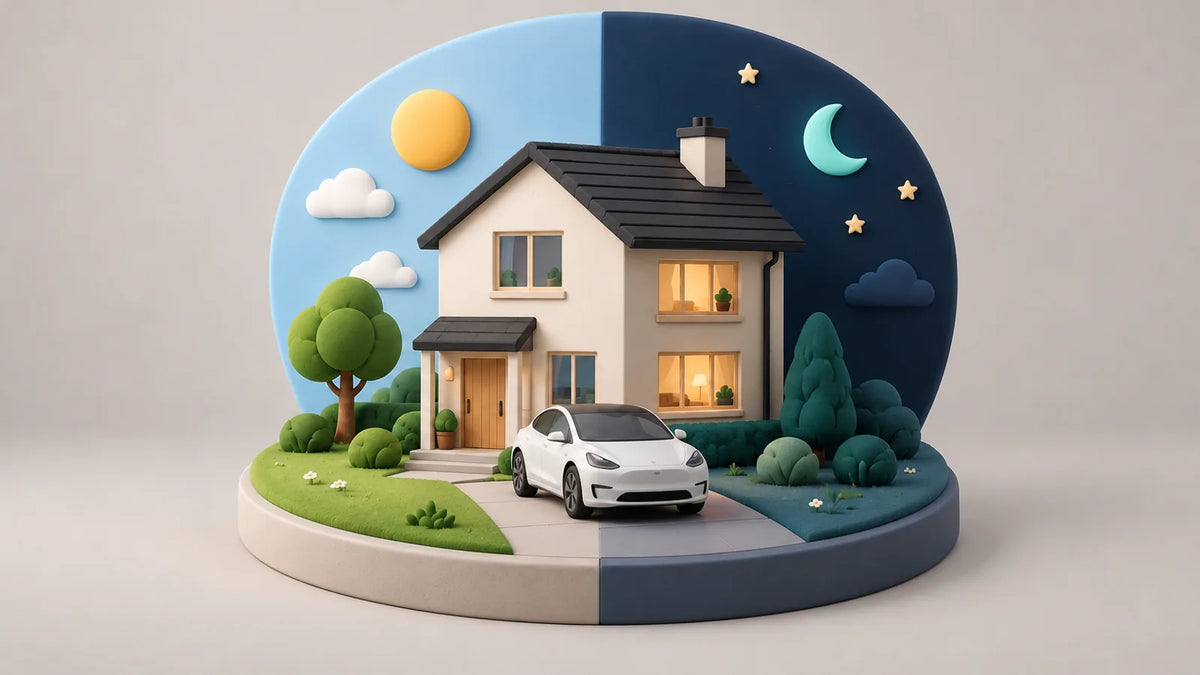
The short answer
A practical guide to TOU electric rates and smart EV charging: how to estimate your cost per mile, pick the right schedule, and avoid peak pricing—without sacrificing convenience.
Key takeaways
- The DOE notes many utilities offer time-of-use rates and EV charging incentives for overnight charging
- EPA efficiency ratings include charging losses, so you're paying for wall energy, not just battery storage
- Most modern chargers and vehicles can automatically schedule charging for cheapest hours
- TOU savings work best when you can reliably charge during off-peak windows without peak-time emergencies
Best fit Is this guide right for you?
Drivers with time-of-use rates, off-peak discounts, utility programs, or charging schedules they want to automate.
Homes on flat electric rates where charging time does not change cost, unless you still want tracking and reminders.
Quick answer: the "cheapest hours" strategy
The money-saving workflow that works for most people:
- Charge during off-peak hours (usually late night/early morning)
- Set charging to complete before you need the car (morning commute)
- Avoid peak-time charging except for genuine emergencies
- Right-size your charging power to your actual needs (faster isn't always cheaper)
The DOE confirms that "most drivers... charge their vehicles overnight at home" and that "some utilities offer residential time-of-use rates or other rate incentives" that reward this behavior.
Source: DOE home charging overview
Understanding time-of-use rates in practical terms
Time-of-use (TOU) pricing reflects the reality of electrical grid management: electricity is cheap when demand is low and expensive when everyone wants it at once.
Typical TOU patterns:
- Peak hours (expensive): Late afternoon to early evening (3 PM - 8 PM)
- Off-peak hours (cheap): Late night to early morning (11 PM - 6 AM)
- Shoulder hours (moderate): Everything else
Real-world rate differences: Many utilities offer TOU plans where off-peak rates are 40-60% lower than peak rates. In extreme cases, the difference can be even more dramatic.
Example TOU schedule (varies by utility):
- Peak: $0.40/kWh (4 PM - 9 PM)
- Off-peak: $0.15/kWh (11 PM - 6 AM)
- Shoulder: $0.25/kWh (other hours)
With smart charging, you'd pay $0.15/kWh instead of $0.40/kWh for the same energy—nearly a 3:1 savings ratio.
Calculate your actual EV charging costs (2-minute math)
The DOE provides a straightforward method for estimating EV fueling costs using kWh per 100 miles and your $/kWh electricity rate:
"The fuel efficiency of an EV may be measured in kilowatt-hours (kWh) per 100 miles... To calculate the cost per mile... the cost of electricity... and the efficiency of the vehicle... must be known."
Source: DOE home charging overview
Step 1: Find your vehicle efficiency
If your car displays kWh/100 miles: Use that number directly.
If your car displays mi/kWh: Convert using: kWh/100 miles = 100 ÷ (mi/kWh)
Efficiency reality check: The DOE's Vehicle Technologies Office notes that for model year 2024 EVs, combined efficiency ranged from 1.49 to 4.17 mi/kWh—a wide spread that significantly affects charging costs.
Source: energy.gov
Step 2: Apply your off-peak electricity rate
Basic formula: Cost per 100 miles = (kWh/100 miles) × ($/kWh off-peak)
Example calculation:
- Vehicle efficiency: 28 kWh/100 miles
- Off-peak rate: $0.18/kWh
- Cost per 100 miles = 28 × $0.18 = $5.04
- Cost per mile = $0.05
Step 3: Account for charging losses
The EPA's MPGe ratings include charging losses, noting that measurements "move... to the outlet in the wall to better represent how much users would pay."
Source: epa.gov
Real-world factors that affect efficiency:
- Cold weather reduces efficiency
- Lower charging speeds can have higher losses
- Older charging equipment may be less efficient
Rule of thumb: Add 5-15% buffer to your calculations for real-world charging losses, especially in cold climates or with older equipment.
Setting up smart charging schedules
Modern chargers make this easy
Most current EVSEs and many vehicles support automated scheduling. ChargePoint's guidance suggests connecting to Wi-Fi and "follow these steps to find the right schedule based on your local utility rates."
If the app doesn't automatically recognize your utility plan, "you can set your own... in the app."
Source: chargepoint.com
Scheduling best practices
Start with your daily routine:
- When do you typically plug in?
- When do you need the car ready?
- How much charge do you typically need overnight?
Build in flexibility:
- Set completion time 30-60 minutes before you actually need the car
- Leave some buffer for occasional longer driving days
- Ensure manual override is available for emergencies
Monitor and adjust:
- Track actual charging costs vs. estimates
- Adjust schedule based on seasonal rate changes
- Fine-tune charging amperage if you're consistently finishing with excess time
When TOU rates can backfire
Scenarios where TOU might not save money
Unpredictable schedules: If you frequently need emergency charging during peak hours, the savings from off-peak charging can be wiped out by occasional peak-rate sessions.
High household evening loads: If your home already has high electricity usage during off-peak hours (electric heating, hot water, etc.), adding EV charging might push you into higher-tier pricing.
Inadequate off-peak window: Some TOU plans have very narrow off-peak windows that don't provide enough time for full charging, forcing you to use more expensive shoulder or peak rates.
Mitigation strategies
Load management: If you share circuits with other high-power appliances, use load management devices to prevent simultaneous operation and avoid peak demand charges.
Right-size your charging: Don't default to maximum charging speed if lower amperage provides adequate overnight charging within your off-peak window.
Emergency planning: Have a strategy for peak-time charging when absolutely necessary—and limit it to genuine emergencies rather than convenience.
Advanced TOU optimization strategies
Demand charges and peak power management
Some utilities add demand charges based on your highest power usage during the billing period. For these plans:
- Spread high-power usage across multiple hours rather than concentrating it
- Consider lower-amperage charging that extends over more hours
- Coordinate EV charging with other major appliances to avoid simultaneous peak demands
Seasonal rate variations
Many TOU plans have different schedules for summer vs. winter months:
- Summer plans often have longer, more expensive peak windows
- Winter plans may shift peak hours earlier or later
- Adjust your charging schedule when plans change seasonally
Real-time pricing programs
Some utilities offer real-time pricing that varies hourly based on actual grid conditions:
- These can provide even greater savings than standard TOU
- Require more sophisticated charging management
- Best suited for households with flexible charging schedules
Skip the panel upgrade
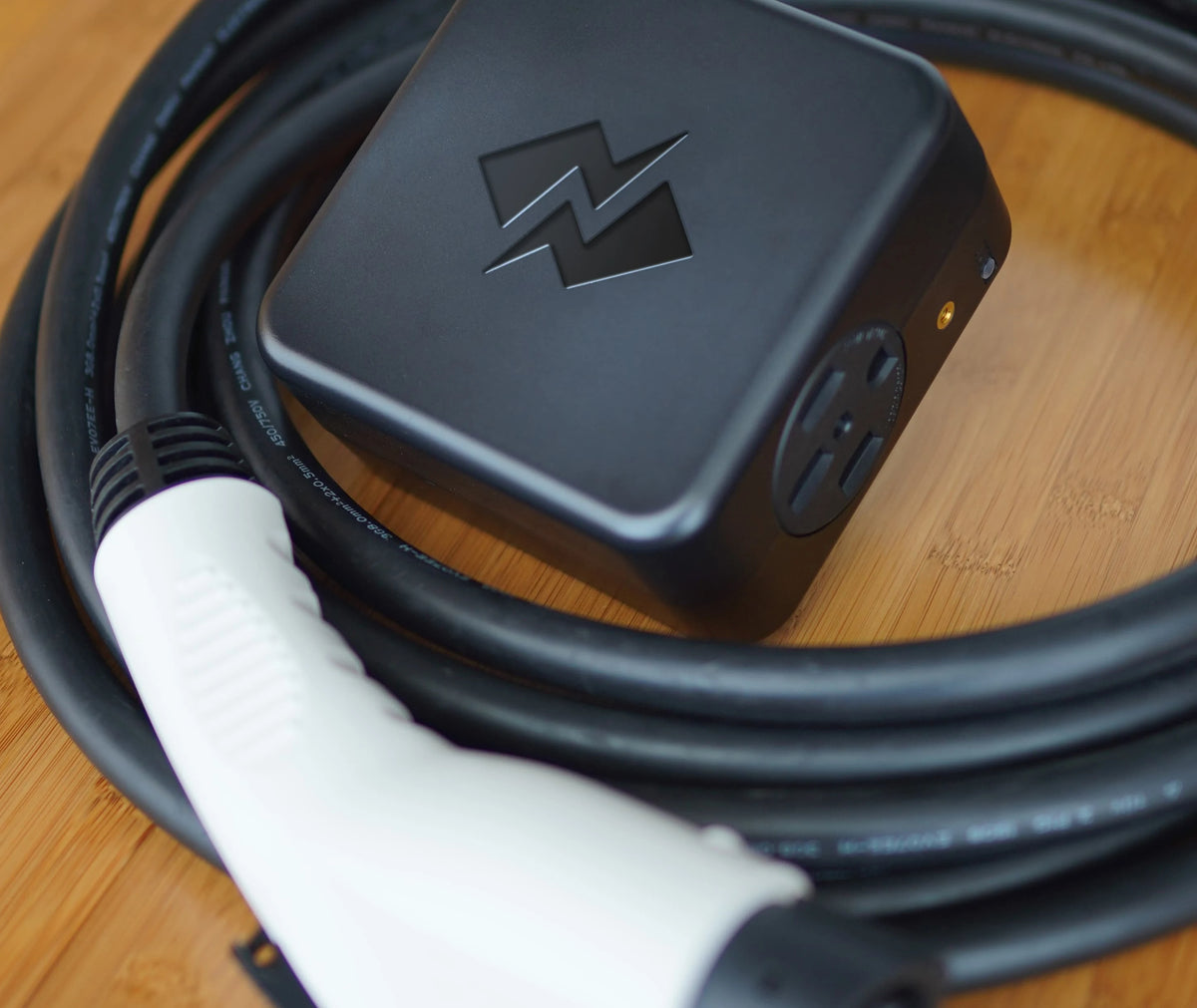
Level 2 charging from the outlet you already have
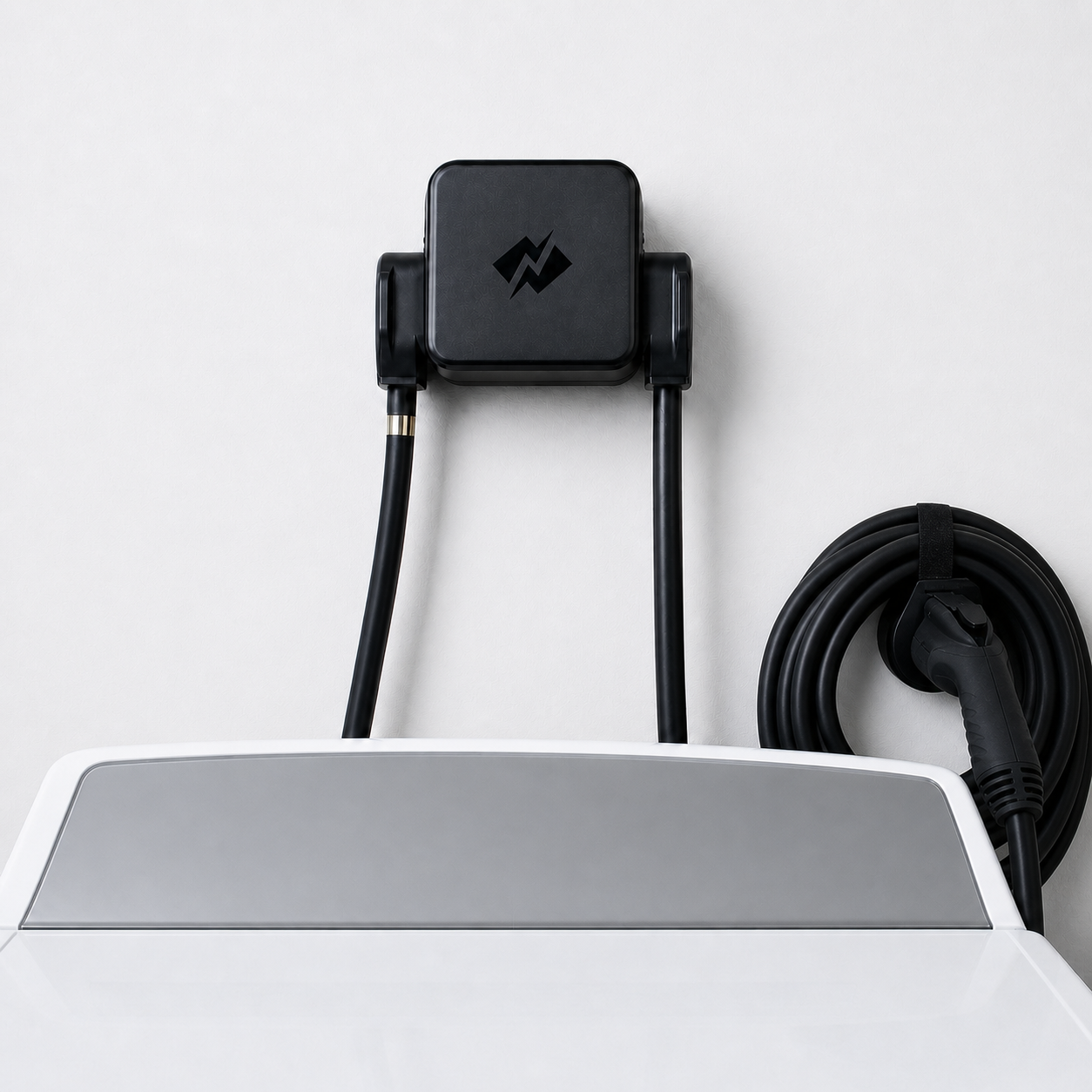
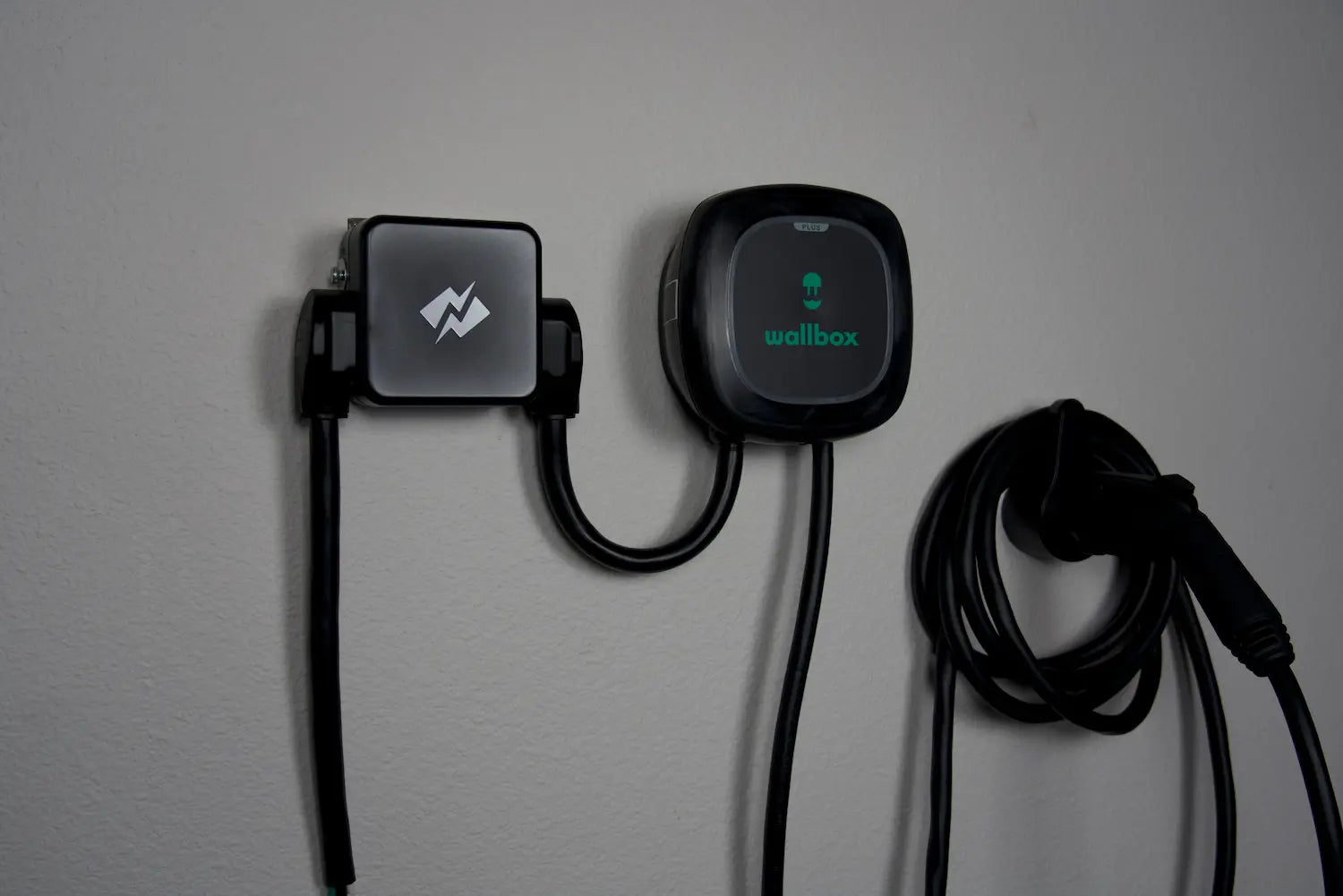
Plug into the 240V dryer outlet you already have. The dryer gets priority and your EV charges the rest of the night, with no panel upgrade and no new circuit. cUL Listed for the US and Canada, with rebates from 30+ utilities.
FAQ
Is Level 2 charging always more cost-effective than Level 1?
Not necessarily. Both charge at the same $/kWh rate, but Level 2 can be more efficient (lower charging losses) and provides better TOU optimization by reliably completing charging within off-peak windows.
How accurate are utility rate schedules in charging apps?
Variable. ChargePoint explicitly warns that their app might not automatically select the correct utility plan and provides manual override options. Always verify that your app's rate schedule matches your actual utility plan.
Can I override smart charging schedules for emergencies?
Good smart charging systems always provide manual override capability. If your system doesn't allow immediate charging when needed, consider it a red flag for the equipment choice.
What happens if my TOU schedule changes?
Utility rate schedules can change seasonally or due to regulatory updates. Monitor your utility communications and update your charging schedules accordingly. Many modern systems can automatically adapt to published rate changes.
Bottom line
Time-of-use optimization is one of the highest-impact, lowest-effort strategies for reducing EV charging costs. The key is shifting when you charge, not upgrading how you charge.
Success formula:
- Understand your utility's TOU schedule
- Set up automated charging during off-peak hours
- Build in schedule flexibility for real-world variation
- Monitor actual costs vs. estimates
- Adjust as needed for seasonal or rate changes
Most importantly: TOU savings compound over time. A strategy that saves $30/month on charging costs saves $360/year and $1,800 over five years—often more than the cost difference between charging equipment options.
The best part? Once you set up smart scheduling, the savings happen automatically without ongoing effort or lifestyle changes.
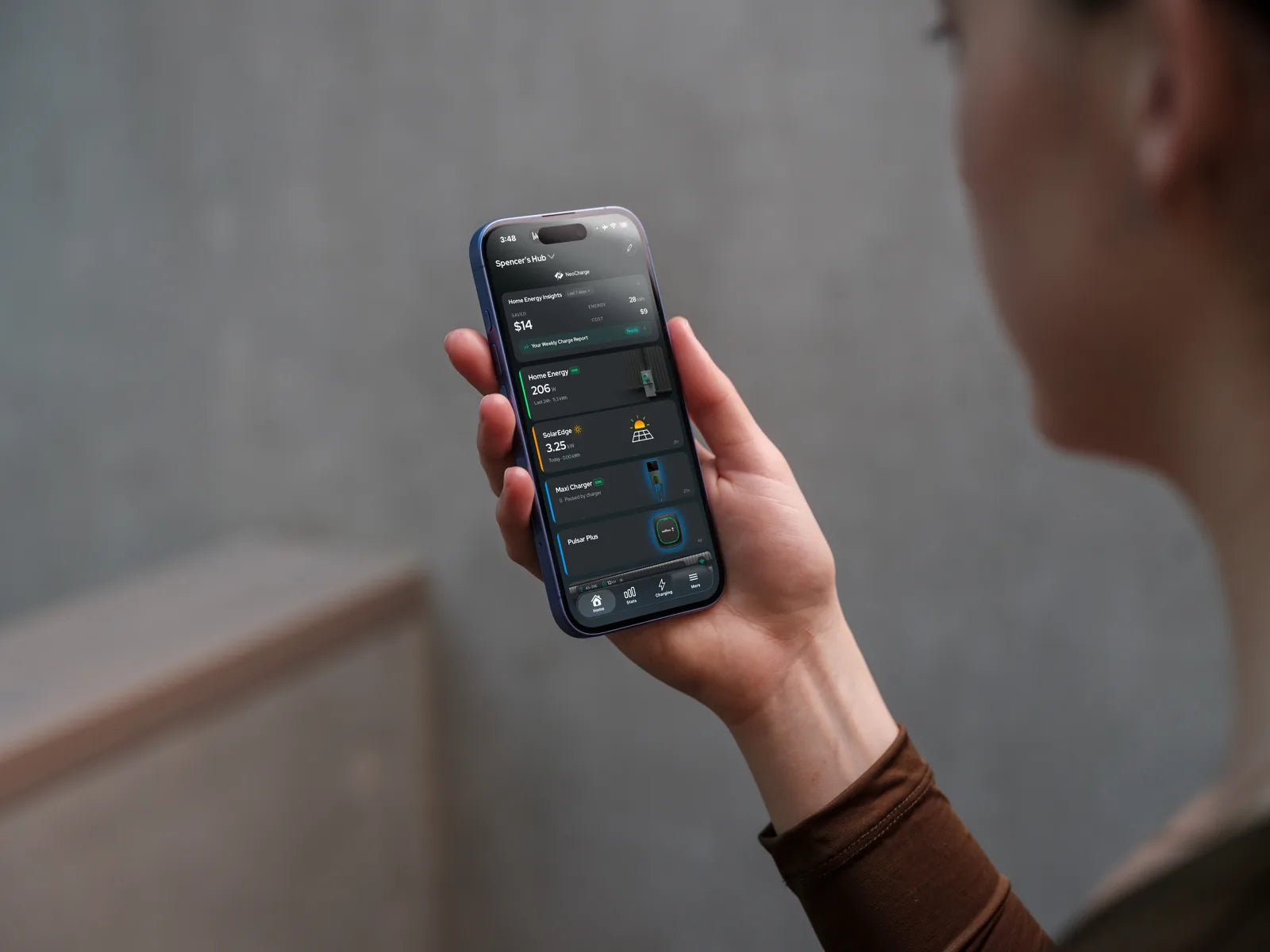
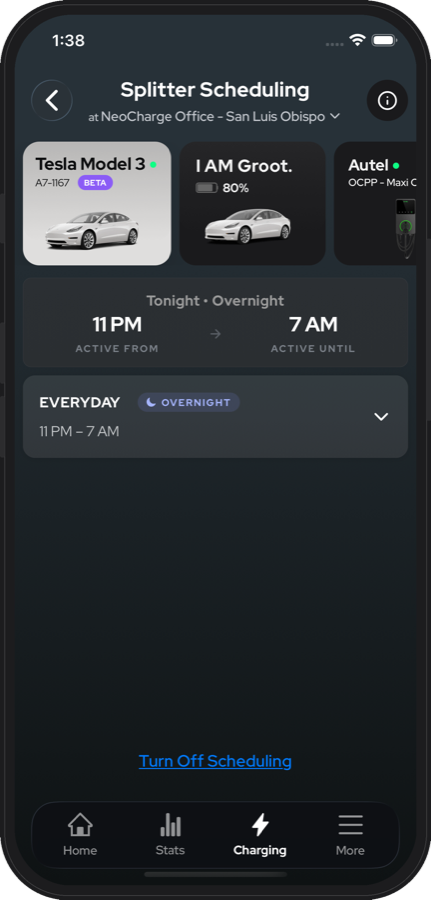
Want to maximize TOU savings while safely sharing circuits? NeoCharge's Smart Splitter enables reliable off-peak charging even when sharing 240V circuits with other appliances, while the NeoCharge app helps you track and optimize your charging costs over time.
Next steps (NeoCharge)
- If you want to safely share a 240V outlet (dryer + EV) or avoid a costly panel upgrade, check out the NeoCharge Smart Splitter.
- If you want to reduce charging cost with off-peak schedules and rate-aware automation, explore the NeoCharge App.
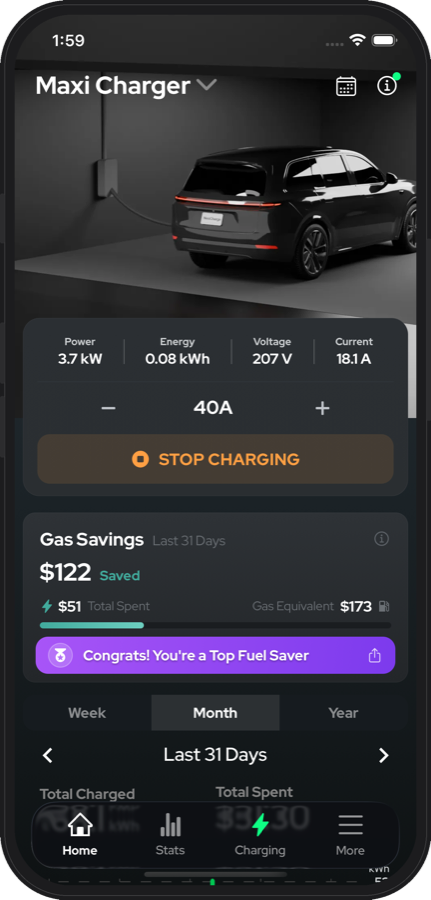
NeoCharge App
Turn rate plans into simple charging schedules
Schedule around off-peak windows, manage compatible chargers, and keep tabs on charging sessions from the app.
Explore the app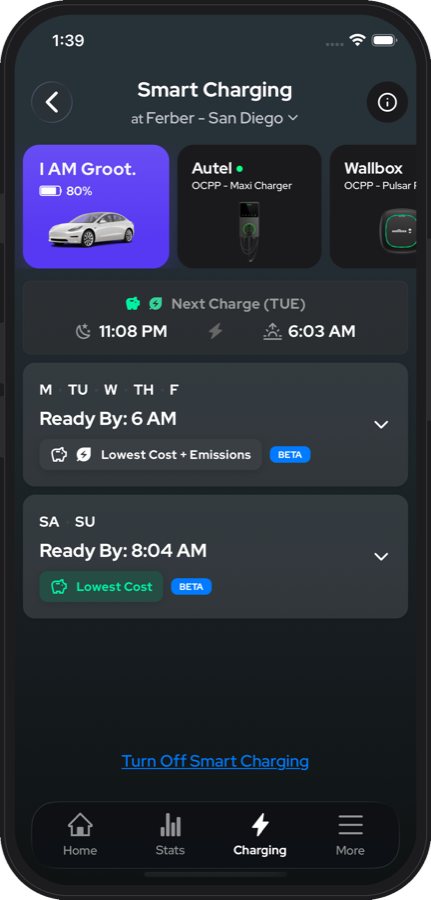
Next steps
Keep going with NeoCharge
Use the article as your decision guide, then jump into the product, app, or related guides that match what you are trying to solve next.
Key terms
- Level 2 charging
- Level 2 EV charging uses a 240V circuit (like a dryer outlet). It typically adds ~20–35 miles of range per hour, depending on your car and the circuit amperage.
- Time-of-use (TOU) rates
- Time-of-use rates are utility pricing plans where electricity costs more at peak hours and less off-peak. Scheduling EV charging off-peak can significantly reduce cost.
- Load management
- Load management is a strategy to keep your home’s electrical load within safe limits—often by scheduling or pausing EV charging when other appliances are running.
FAQs
What's the quick takeaway from this article?
Who is this guide for?
What should I do next?
Related posts
EV Charging Best Practices: Battery Life, Safety, and Cost
Learn EV charging best practices for battery life, home safety, off-peak savings, fast charging, 80% limits, Level 2 charging, and panel upgrades.
How to Schedule EV Charging During Off-Peak Hours (And Save Hundreds Per Year)
Learn how to schedule EV charging during off-peak hours and save $30-80/month on electricity. Step-by-step guide with real savings examples.
Demand Charges vs. TOU Rates for Home EV Charging: What Matters (and How to Avoid Peak Costs)
Learn the difference between demand charges and time-of-use (TOU) rates for home EV charging, how to tell what you’re on, and practical steps to reduce peak costs and charge cheaper overnight.
Managed EV Charging Programs: How They Work, What “Smart Charging” Means, and How to Benefit
Managed (smart) EV charging programs help drivers charge off-peak to save money and support the grid. Learn how they work, what OpenADR signals mean, and how to enroll.
