





How to Choose the Best Time-of-Use (TOU) Rate Plan for EV Charging
The short answer
A practical checklist to pick the best TOU rate plan for EV charging: compare peak/off-peak windows, seasonal schedules, fees, and estimate real savings.
Key takeaways
- Your EV is “schedulable load.” If you can consistently charge off-peak, TOU often becomes simpler and cheaper.
- The whole-home bill matters. A plan that saves on EV charging can still lose overall if your household uses lots of power during peak.
- Seasonality can flip the math. Summer peak periods are often much more expensive than winter.
- Don’t ignore fees. Fixed monthly charges and baseline allowances can change the outcome more than you’d think.
Best fit Is this guide right for you?
Drivers with time-of-use rates, off-peak discounts, utility programs, or charging schedules they want to automate.
Homes on flat electric rates where charging time does not change cost, unless you still want tracking and reminders.
How to Choose the Best Time-of-Use (TOU) Rate Plan for EV Charging
Time-of-Use (TOU) electricity rates can be a great fit for EV owners—because EV charging is flexible. If you can shift most charging to cheaper hours, you may lower your cost per mile without changing how much you drive. But not every TOU plan is a win: peak windows, seasonal pricing, fixed fees, and demand charges (in some cases) can erase the savings.
Below is a practical way to compare TOU plans and estimate your real-world savings.
How TOU Rates Work (In Plain English)
Under a TOU plan, electricity costs different amounts depending on the time of day (and sometimes the day of week and season). Typical buckets include:
- Off-peak: cheapest (often overnight)
- Mid-peak / shoulder: medium price
- Peak: most expensive (often late afternoon/evening)
Utilities do this to encourage customers to shift usage away from the grid’s busiest hours. Because EV charging can usually happen overnight, TOU can align well with home charging behavior. The U.S. Department of Energy also highlights that home charging is often the most convenient option and can be paired with utility rate structures to reduce cost.
Important: TOU pricing usually applies to your entire home, not just the EV—unless you have a dedicated EV meter or submetering program.
Step 1: Gather the Data You Need (Before Comparing Plans)
You don’t need perfect data—but you do need the right data.
1) Your current electricity usage and bill structure
From your utility bill (or online account), pull:
- Monthly total usage (kWh)
- Current rate type (tiered, flat, TOU already, etc.)
- Fixed monthly charges (customer charge, minimum bill, etc.)
- Any credits (e.g., baseline allowances)
If you’re trying to sanity-check what’s “normal,” the U.S. Energy Information Administration (EIA) summarizes the factors that influence residential electricity prices and why rates vary by location and time: eia.gov
2) Your EV charging energy (kWh) and timing
Get at least one of the following:
- EV/charger/app charge history (kWh per session, start/end time)
- A rough monthly estimate: miles driven ÷ EV efficiency (mi/kWh)
- Your vehicle’s typical charging schedule (e.g., 10pm–2am)
3) Your household usage during peak hours
This is the “silent killer” of TOU savings. If your home uses a lot of electricity during peak (A/C, cooking, laundry, electric water heating), you need to account for it.
Options:
- Utility interval data / “Green Button” downloads (best)
- A smart home energy monitor (if you have one)
- A simple behavioral estimate: “We run A/C hard from 4–9pm in summer,” etc.
4) The TOU plan details (for every plan you’re considering)
Capture:
- Peak / off-peak time windows (weekday vs weekend)
- Summer vs winter schedules and prices
- Any enrollment rules, minimum term, or bill protection periods
- Delivery vs generation components (some utilities list both)
Step 2: Understand the Two Big Ways TOU Plans Can “Win” or “Lose”
TOU “wins” when…
- You can move most EV charging to off-peak
- Your household can avoid heavy usage during peak
- The off-peak price is meaningfully lower than peak (or lower than your current flat rate)
TOU “loses” when…
- Peak prices are very high and you have unavoidable peak usage (A/C, cooking, kids’ schedules)
- Off-peak windows are too short for your charging needs
- Added fixed charges or minimum bills reduce the benefit
Pitfalls to Watch For (EV Owner Edition)
1) Narrow off-peak windows (or off-peak that starts late)
If off-peak doesn’t begin until midnight, but you plug in at 9pm, you could accidentally pay peak rates for a chunk of charging. This is where smart charging / TOU scheduling can help you automatically start charging at the cheapest time: NeoCharge App.
2) Seasonal schedules that change everything
Many utilities have:
- Summer: longer and more expensive peak windows
- Winter: cheaper peak periods (or different peak hours)
A plan that looks great in spring/fall can disappoint in summer if your home’s A/C load hits the most expensive hours.
3) “EV plans” that aren’t EV-only
Some utilities advertise an EV-friendly TOU plan, but it may still apply to the whole home unless you have a separate meter. Make sure you know whether you’re pricing:
- Whole-home TOU, or
- EV-only / separately metered TOU
4) Demand charges (less common for typical residential, but worth checking)
Demand charges bill you based on your highest short-term power draw (kW) during a billing period—not just total energy (kWh). They’re more common in commercial rates, but some specialized residential programs can include demand-based components.
If a plan includes demand charges:
- A single night of charging + running other big loads could set your demand peak
- The “savings” from cheap kWh may be offset by a demand fee
5) Circuit constraints and load conflicts at home
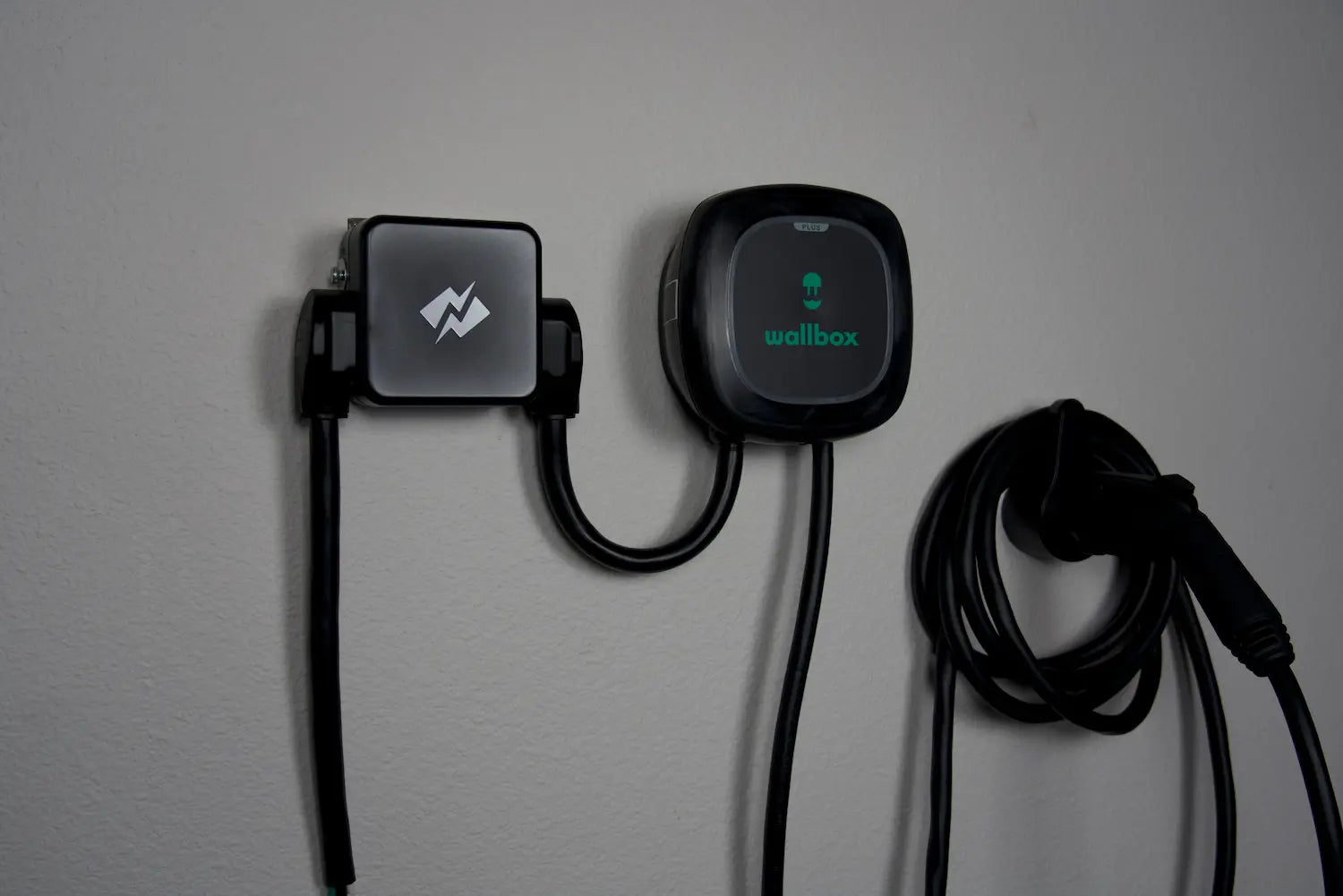
If you’re sharing a circuit (or trying to avoid a panel upgrade), you may not be able to charge at high power exactly when you want—especially if other appliances run at the same time. Good load management / sharing circuits can help you still hit off-peak hours without tripping breakers: NeoCharge Smart Splitter.
Step 3: A Simple, Practical Way to Estimate TOU Savings
You can do this with a calculator or a quick spreadsheet.
A) Estimate your EV charging energy per month
Pick one:
- From charger/app: total EV kWh/month (best)
- Or approximate:
EV kWh/month ≈ miles driven per month ÷ average mi/kWh
Example:
- 1,000 miles/month ÷ 3.3 mi/kWh ≈ 303 kWh/month
B) Estimate what fraction you can shift to off-peak
Be honest about your routine.
Example:
- 85% of EV charging can happen off-peak (overnight)
- 15% happens during peak/mid-peak (errands, late plug-ins, weekends, etc.)
C) Compare rates and compute the difference
For each plan, calculate EV charging cost as:
EV cost = (EV kWh off-peak × off-peak $/kWh) + (EV kWh peak × peak $/kWh) + fixed monthly charges (if incremental)
Then compare to your current plan (or your current effective average $/kWh).
Worked example (illustrative only)
Assume:
- EV charging = 300 kWh/month
- 85% off-peak → 255 kWh off-peak, 45 kWh peak
- Current flat rate = $0.30/kWh
- TOU rates: off-peak $0.18/kWh, peak $0.45/kWh
- Additional fixed charge for TOU plan vs current: +$5/month
Current plan EV cost:
- 300 × $0.30 = $90.00
TOU plan EV cost:
- 255 × $0.18 = $45.90
- 45 × $0.45 = $20.25
- Plus fixed difference: $5.00
- Total = $71.15
Estimated savings:
- $90.00 − $71.15 = $18.85/month (~$226/year)
D) Now do the “whole-home” check (quick version)
If you have interval data, great—run the same math on your total household kWh by time period.
If you don’t, do a quick stress test:
- In summer, how much electricity do you use during the peak window (A/C + cooking)?
- If peak is very expensive, even a few hundred kWh/month during peak can outweigh EV savings.
Step 4: TOU Plan Comparison Checklist (Copy/Paste)
Use this checklist to compare two or three plans side-by-side:
Rate design
- Is this plan whole-home or EV-only / separately metered?
- Are there tiers or baseline allowances that change $/kWh?
- Are there minimum bills or enrollment requirements?
Time windows
- Off-peak start/end time (weekday)
- Off-peak start/end time (weekend/holidays)
- Peak window length and timing (does it overlap with your life?)
Seasonality
- Summer vs winter prices (off-peak, mid-peak, peak)
- Summer vs winter peak hours (do they change?)
- Which months count as “summer”?
Fees and adders
- Monthly customer charge differences
- Any TOU program fees
- Any demand charges or demand-based components?
Your behavior fit
- What % of EV charging can you reliably schedule off-peak?
- Do you regularly use big loads during peak (A/C, dryer, oven)?
- Can you automate charging start time (to avoid accidental peak charging)?
Decision test
- Worst-case month (usually hot summer): do you still save overall?
- Best-case month: how much do you save if you optimize charging?
- Does the plan reduce cost and reduce hassle?
Practical Tips to Maximize TOU Savings (Without Overthinking It)
- Set a default overnight schedule. Even shifting charging from 6–10pm to after midnight can matter on some plans.
- Avoid “accidental peak charging.” If you often plug in right after work, schedule charging to begin in off-peak automatically.
- Watch summer peak hours carefully. If your utility’s peak is late afternoon/evening, consider pre-cooling, adjusting thermostat timing, or shifting laundry/dishwasher later.
- Re-check after 1–2 billing cycles. Compare your bills (not just the EV estimate) and adjust.
For more context on home charging basics and considerations, see the DOE Alternative Fuels Data Center overview: DOE home charging overview
Next steps (NeoCharge)
- Find your utility’s TOU options and write down the peak/off-peak windows (including summer vs winter).
- Estimate your EV kWh/month and what percent you can shift to off-peak.
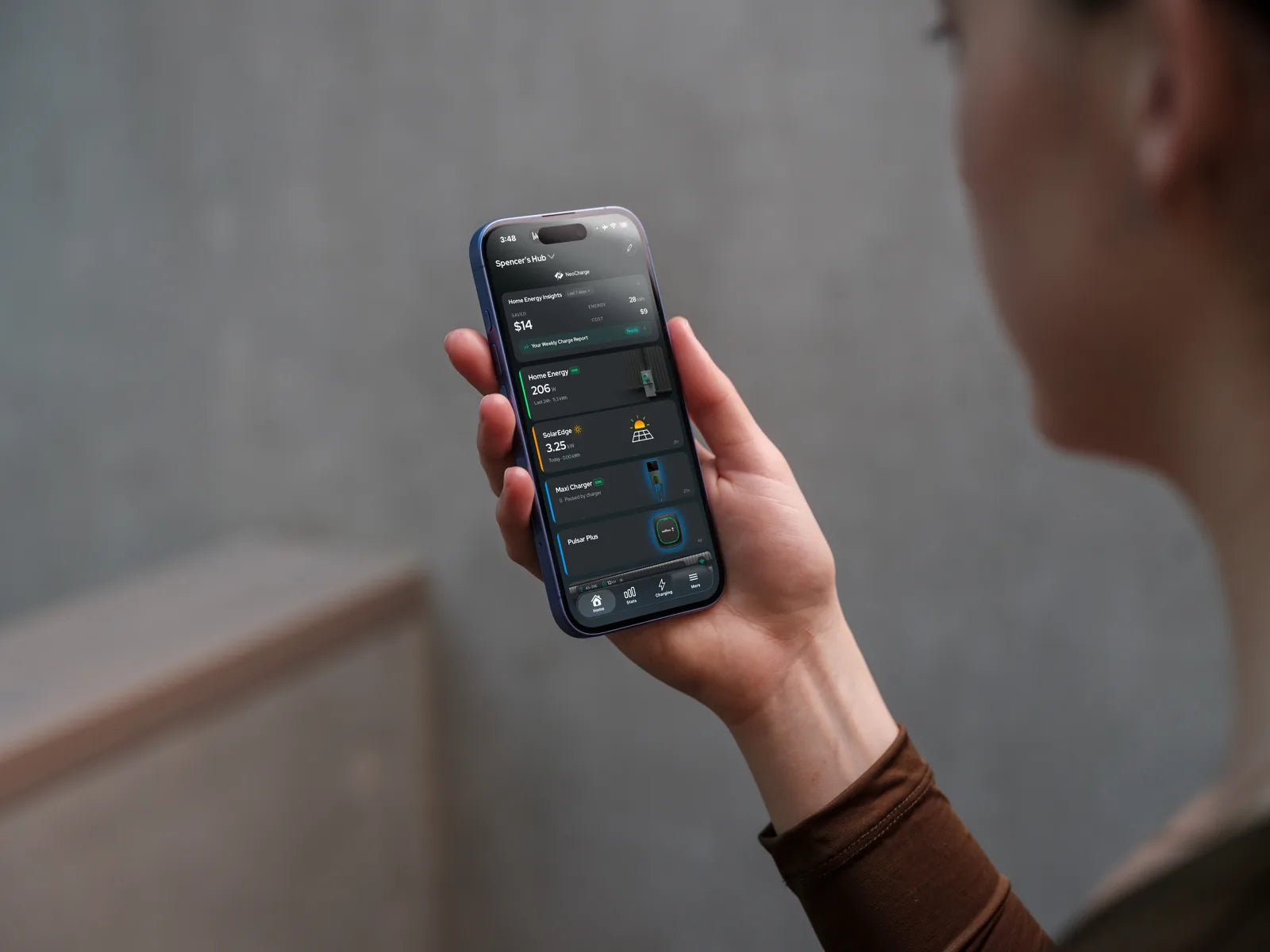
- Use smart scheduling to automatically charge during the cheapest windows: NeoCharge App
- If you’re constrained by your electrical setup, consider load management so you can reliably charge off-peak without conflicts: NeoCharge Smart Splitter
Sources
- U.S. Department of Energy, Alternative Fuels Data Center (AFDC) — “Charging at Home.” DOE home charging overview
- U.S. Energy Information Administration (EIA) — “Electricity explained: Prices and factors affecting prices.” eia.gov
Skip the panel upgrade
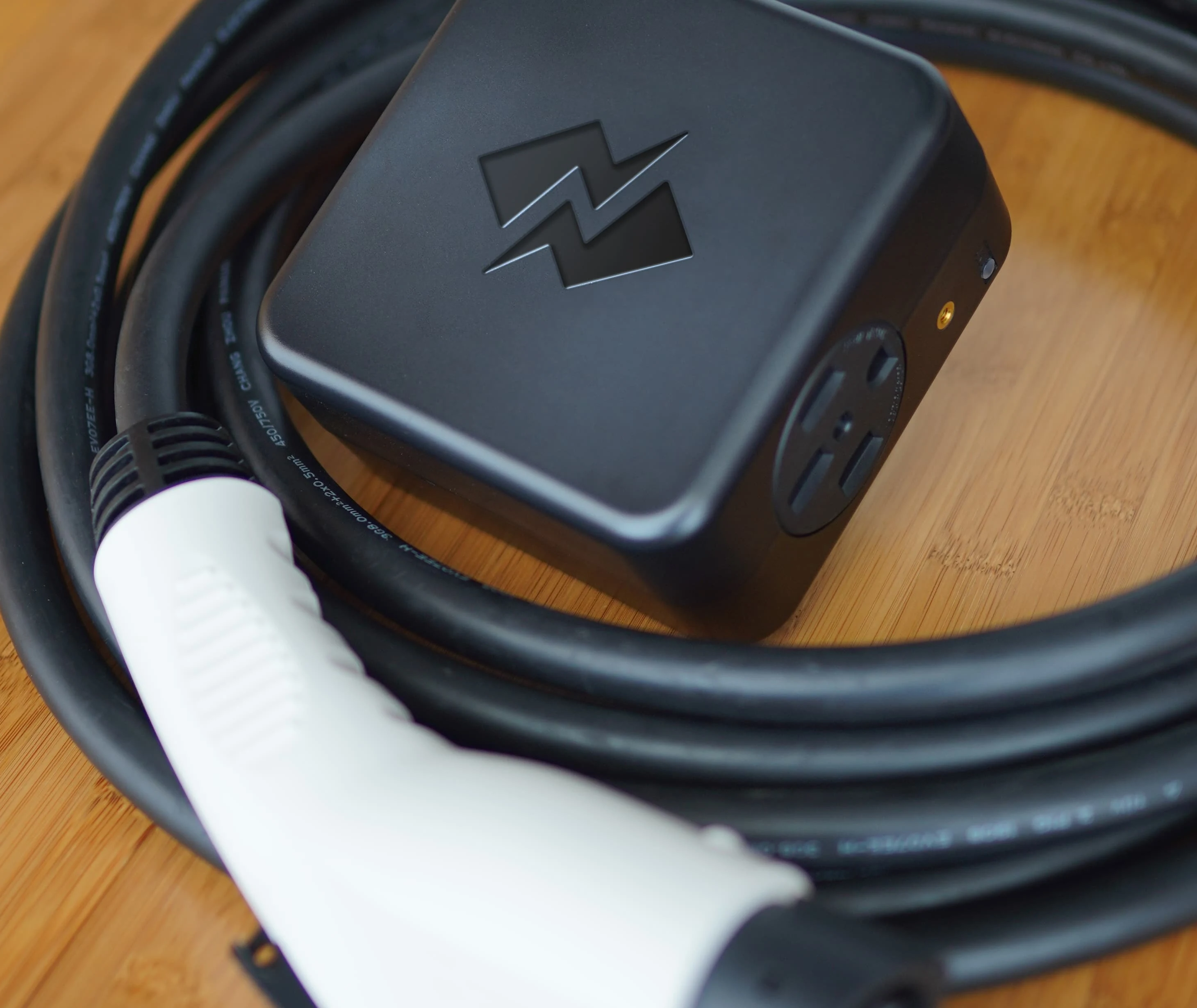
Level 2 charging from the outlet you already have
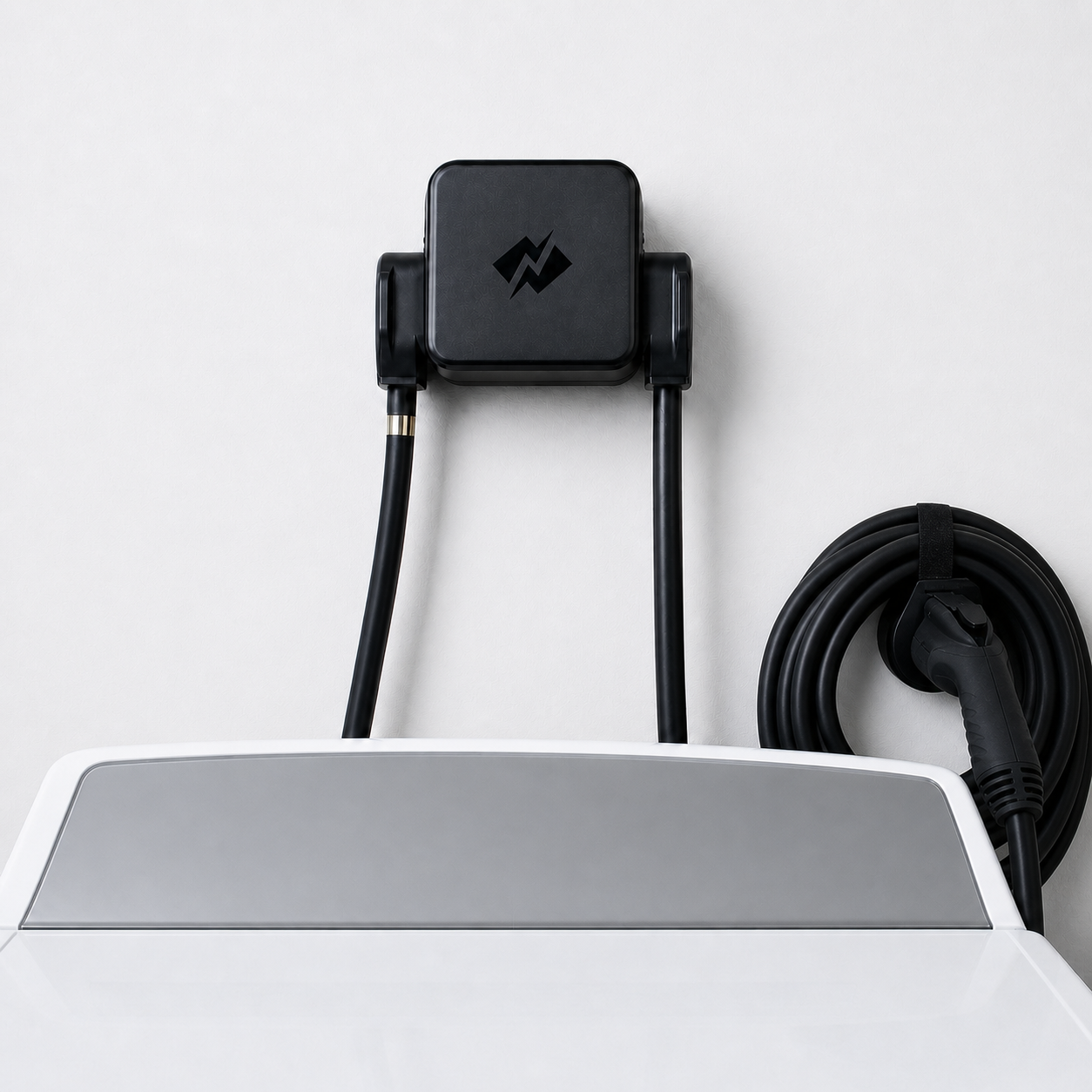
Plug into the 240V dryer outlet you already have. The dryer gets priority and your EV charges the rest of the night, with no panel upgrade and no new circuit. cUL Listed for the US and Canada, with rebates from 30+ utilities.
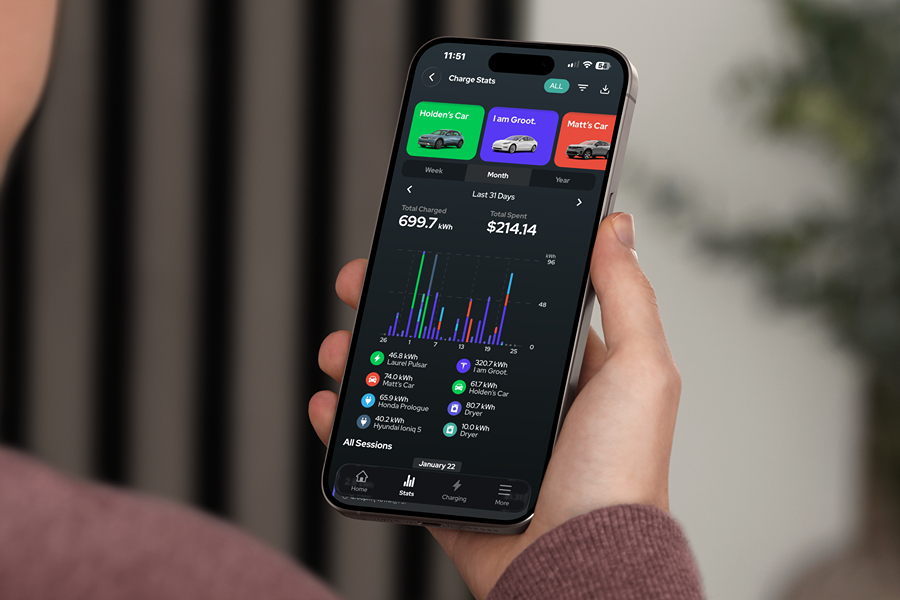
NeoCharge App
Turn rate plans into simple charging schedules
Schedule around off-peak windows, manage compatible chargers, and keep tabs on charging sessions from the app.
Explore the app


Next steps
Keep going with NeoCharge
Use the article as your decision guide, then jump into the product, app, or related guides that match what you are trying to solve next.
Key terms
- Time-of-use (TOU) rates
- Time-of-use rates are utility pricing plans where electricity costs more at peak hours and less off-peak. Scheduling EV charging off-peak can significantly reduce cost.
- Load management
- Load management is a strategy to keep your home’s electrical load within safe limits—often by scheduling or pausing EV charging when other appliances are running.
FAQs
What's the quick takeaway from this article?
Who is this guide for?
What should I do next?
Related posts

How Much Does It Cost to Charge an EV at Home? (2026, by State)
At the US average 18.3¢/kWh, home EV charging costs about 5.7¢ a mile, or $57 a month for 1,000 miles. Your state's cost, a calculator, and off-peak savings.
Home EV Charging Cost per Mile Calculator (2026)
Use this simple calculator to estimate EV charging cost per mile using your $/kWh and mi/kWh, plus tips to save money with off-peak TOU smart charging.
