


Can I Charge My EV From a Dryer Outlet in Canada?
Direct answer: Yes, many Canadian EV owners can charge from a dryer outlet, but only if the outlet type, breaker, wiring, grounding, EV charger, and charging current are compatible. A common 30 amp dryer outlet is usually treated as about 24 amp continuous EV charging, which is enough for many overnight Level 2 charging routines. Do not use a random adapter or manual splitter cord.
First: what kind of dryer outlet do you have?
Do not buy an adapter until you know the outlet type. In Canada, dryer outlets and 240V outlets can look similar but behave differently.
| Outlet type | Common use | Typical rating | EV charging note |
|---|---|---|---|
| NEMA 14-30 | Modern electric dryer | 30A / 240V | Often the best dryer-outlet EV charging candidate when the circuit is healthy. |
| NEMA 10-30 | Older electric dryer | 30A / 240V | Less common in Canada; treat as an electrician-check edge case. |
| NEMA 14-50 | EV/RV/range-style outlet | 50A / 240V | Faster if installed correctly, but not the same as a dryer outlet. |
| NEMA 6-30 | Some older 240V equipment | 30A / 240V | May work only with compatible equipment and proper inspection. |
| NEMA 6-50 | Welder/EV-style outlet | 50A / 240V | Common for some EVSEs; no neutral. |
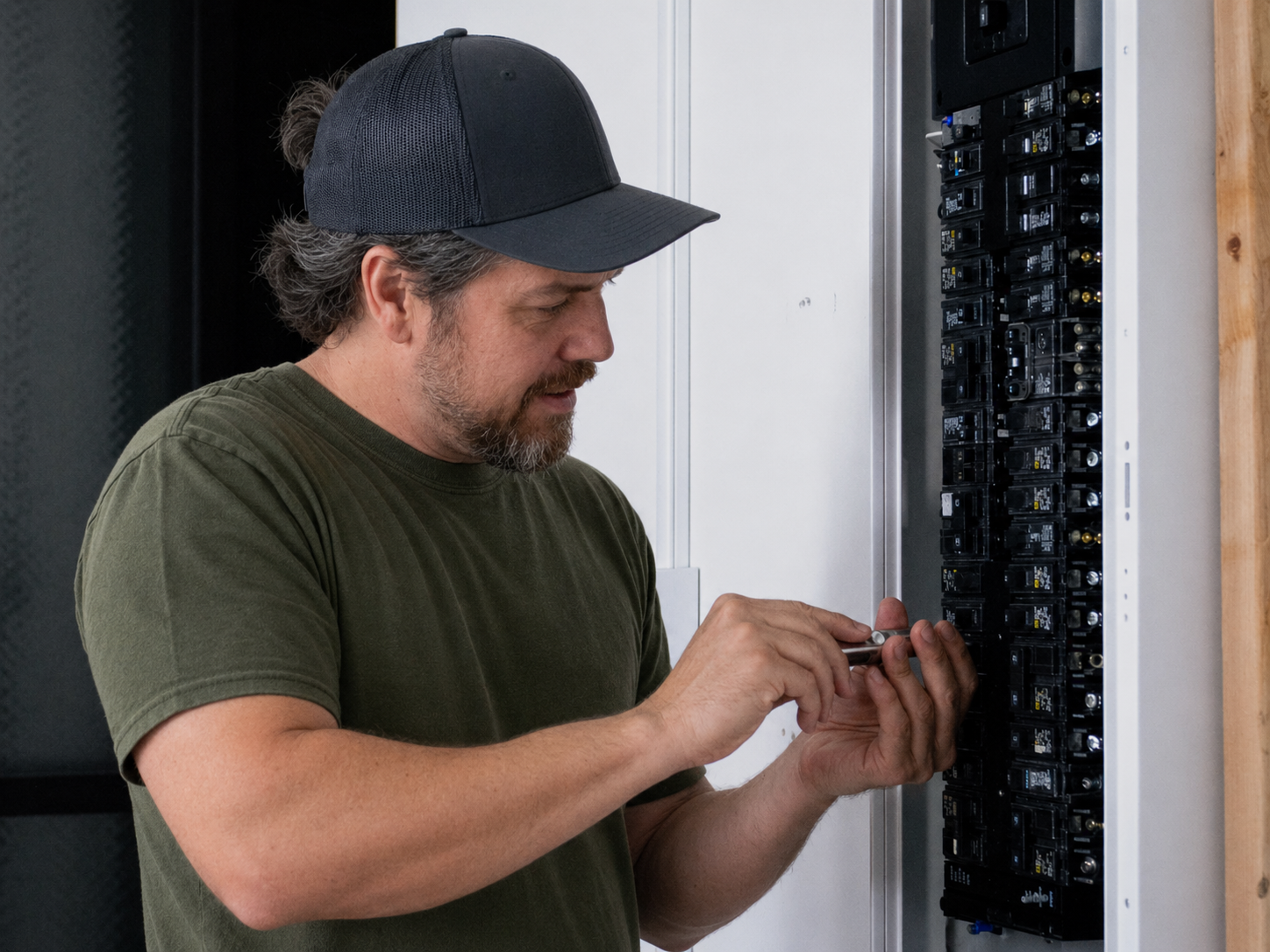
If you are not sure what you have, take a clear photo of the outlet and breaker label and ask a licensed electrician.
NEMA 14-30: the common Canadian dryer outlet
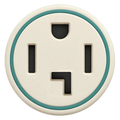
A NEMA 14-30 is the four-prong dryer outlet many newer Canadian homes use. It has two hot conductors, a neutral, and a ground.
For EV charging, a suitable 30A dryer circuit is commonly limited to about 24A because EV charging is a long-duration load.
That gives you:
| Circuit | Common EV charging limit | Approx. power | Practical meaning |
|---|---|---|---|
| 30A dryer circuit | 24A | 5.7 kW | Often enough for overnight daily driving recovery. |
| 40A circuit | 32A | 7.7 kW | Faster, usually needs a dedicated setup. |
| 50A circuit | 40A | 9.6 kW | Common high-speed home EV outlet when installed correctly. |
For a deeper version of this exact outlet, see NEMA 14-30 dryer outlet EV charging in Canada.
What about NEMA 10-30?
In Canada, NEMA 10-30 dryer outlets are not usually the main path we would plan around. If you do find an older three-prong dryer outlet, treat it as a stop-and-check moment rather than a shopping prompt.
The issue is grounding. Many 10-30 setups do not have a separate equipment grounding conductor, which makes EV charging more complicated than a modern four-prong dryer outlet. Do not solve that with a random adapter. Ask an electrician to confirm the wiring and choose a safer path.
How fast can a dryer outlet charge an EV?
For the most common dryer-outlet case, use this math:
- 30A circuit
- 24A common continuous charging limit
- 240V x 24A = 5,760 watts
- about 5.7 kW
How far that gets you depends on your EV. Many EVs use around 15-22 kWh per 100 km in normal driving, so 5.7 kW can often add roughly 30-40 km of range per hour depending on weather, charging losses, and vehicle efficiency.
If your car is parked for 8-10 hours overnight, a dryer outlet setup can be enough for many daily commutes.
The mistake is assuming a dryer outlet should charge like a brand-new 50A EV circuit. It usually should not.
Tesla dryer outlet charging in Canada
Tesla Model 3 and Model Y owners often search for dryer outlet charging because the car makes charging feel simple. The outlet side still matters.
A Tesla setup may involve:
- Tesla Mobile Connector
- the correct NEMA adapter for the outlet
- a current limit that matches the circuit
- a J1772/NACS charger depending on your equipment
- a Smart Splitter if the dryer and EV share one outlet
For a NEMA 14-30 dryer outlet, the key is that the car should not ask for more current than the circuit can safely provide. Tesla adapters and vehicle settings can help, but you still need the outlet, breaker, wiring, and load-sharing plan to be correct.
If your search is "Tesla Model Y dryer outlet" or "Tesla Model 3 dryer outlet," the answer is the same: identify the outlet first, use the right adapter or EVSE, limit current correctly, and do not let the dryer and EV overload the circuit together.
Dryer outlet vs dedicated EV charger
Here is the practical comparison:
| Setup | Cost | Speed | Convenience | Best for |
|---|---|---|---|---|
| Existing dryer outlet + EVSE | Lower if outlet is suitable | Moderate Level 2 | Good if close to parking | Daily overnight charging |
| Dryer outlet + Smart Splitter | Lower than many new-circuit projects | Moderate Level 2 | Better because dryer/EV sharing is automatic | Homes with one useful 240V outlet |
| Dedicated EV circuit | Higher | Faster | Very convenient | Long-term clean install |
| Panel upgrade + dedicated charger | Highest | Fastest/flexible | Homes that truly lack capacity |
If you are trying to decide whether the dryer outlet is a workaround or a real solution, start with your daily driving. Many people need reliability more than maximum speed.
How Smart Splitter solves the main issue
The main dryer-outlet problem is not just "can the plug fit?"
It is this:
What happens if the dryer and EV charger try to use the same circuit at the same time?
The unsafe answers are:
- manual plug swapping
- cheap Y-splitter cords
- household extension cords
- hoping nobody runs the dryer
- using a 50A charger on a 30A circuit
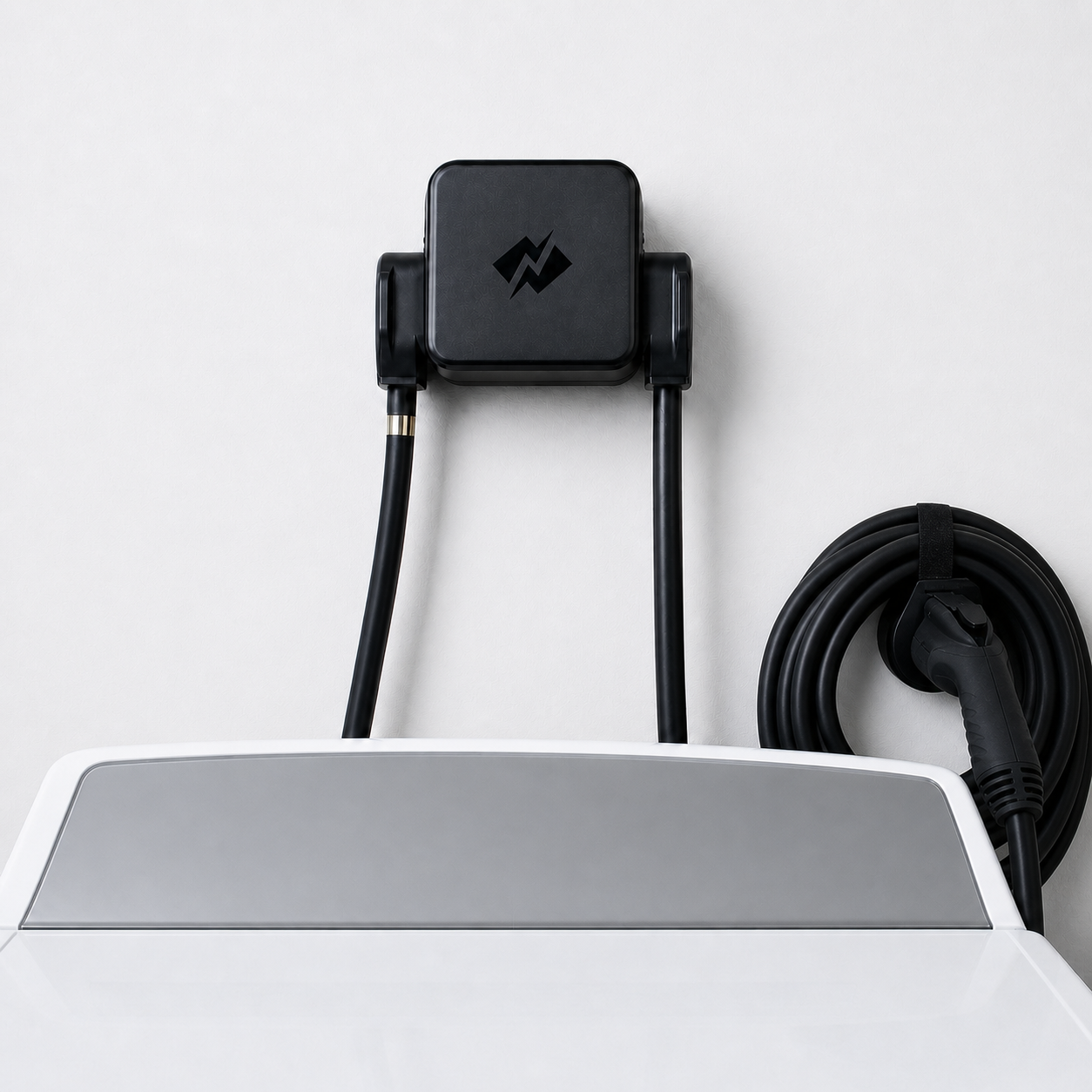
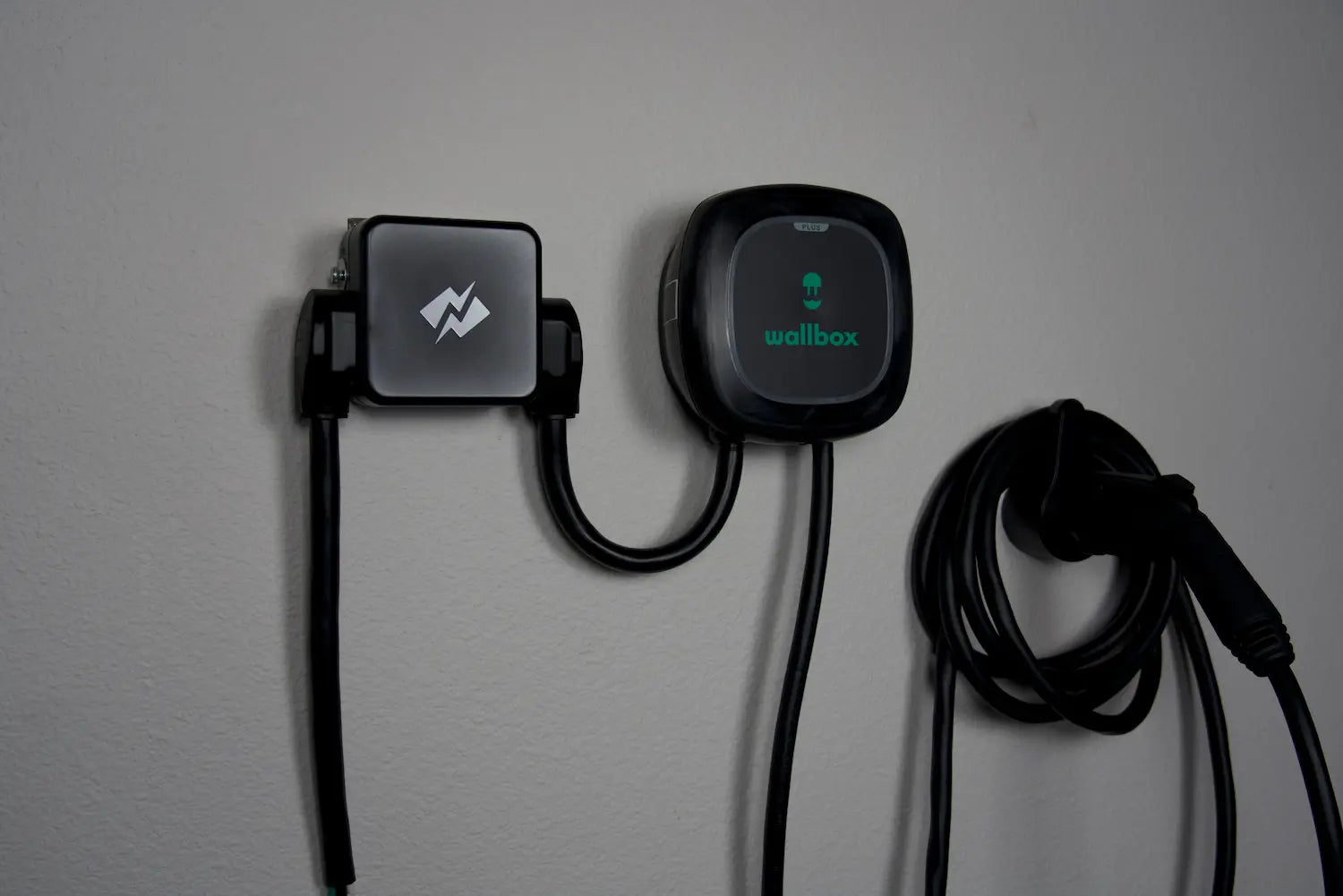
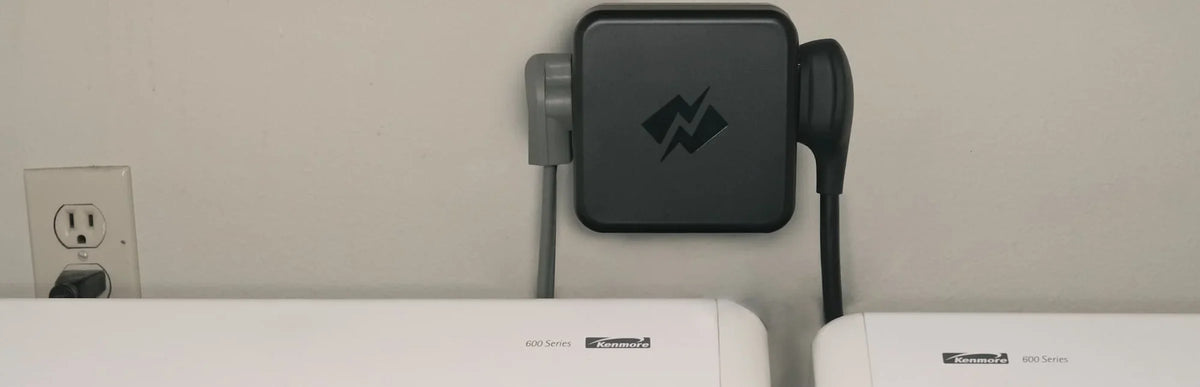
A NeoCharge Smart Splitter is designed to share a compatible 240V outlet automatically. The dryer can run when needed, and EV charging can pause or sequence so the circuit is not asked to power both high-load devices at once.
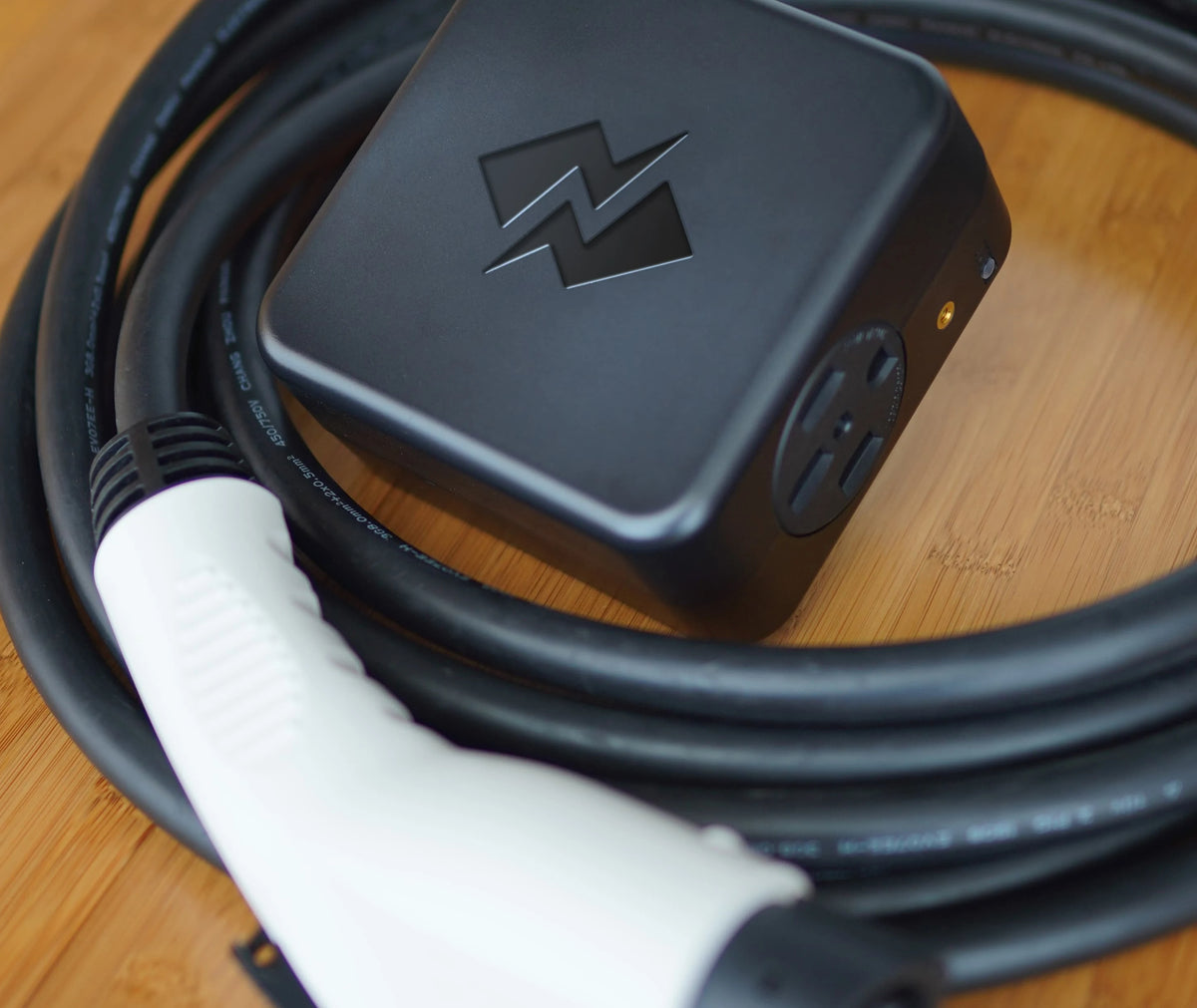
Dryer outlet EV charging
One 240V outlet, two devices, automatic sharing
Use your existing outlet without manual plug swapping or running the dryer and EV at the same time.
When a dryer outlet is not enough
Do not use a dryer outlet for EV charging if:
- the outlet is loose, cracked, discolored, buzzing, or warm
- the breaker trips
- the circuit has unknown DIY modifications
- the wiring is old, unsafe, or not understood
- the charger cannot be limited to the correct current
- the dryer and EV could run together without load management
- you need an extension cord to reach the car
- you need faster 40A or 48A charging every night
In those cases, ask about a dedicated EV circuit, EVEMS/load management, outlet relocation, or panel/service upgrade.
Canada-specific rebate and rate notes
British Columbia
BC Hydro has a dedicated EV power management device rebate page and says eligible single-family home customers installing a Level 2 charger may qualify for a $200 rebate. Its single-family home charger rebate page says the EV power management offer can help install an EV charger without needing to upgrade your electrical panel.
That makes dryer outlet + power management worth checking before approving a panel upgrade in B.C.
Source: bchydro.com
Ontario
Ontario’s Ultra-Low Overnight plan is a strong match for dryer-outlet charging because the car can sit plugged in for hours. The Ontario Energy Board lists ULO at 3.9 cents/kWh from 11 p.m. to 7 a.m., with higher weekday on-peak rates.
If a 24A dryer outlet setup covers your daily driving overnight, you may not need the fastest charger to get the best cost outcome.
Source: oeb.ca
Quebec
Quebec’s Écorecharge program says eligible EV owners may receive a $600 grant for purchase and installation of a home charging station, and Quebec says that from April 1, 2026, only connected charging stations are eligible for financial assistance.
If you are in Quebec, check current Écorecharge equipment rules before deciding between a dryer-outlet setup, a connected charger, or a combined load-management plan.
Source: quebec.ca
Dryer outlet checklist
Before charging your EV from a dryer outlet in Canada:
- Identify the outlet type.
- Confirm the breaker size.
- Confirm the EVSE or vehicle can limit current correctly.
- Inspect the outlet for heat, cracks, looseness, or discoloration.
- Avoid household extension cords and random adapters.
- Use automatic load sharing if the dryer and EV share one outlet.
- Check local permit, code, utility, and rebate requirements.
- Ask a licensed electrician if anything is unclear.
FAQ
Can I charge my EV from a dryer outlet in Canada?
Is dryer outlet EV charging safe?
How many amps can I charge from a 30 amp dryer outlet?
Can I charge a Tesla Model Y or Model 3 from a dryer outlet?
Can I use a dryer outlet splitter for an EV charger?
Should I use my dryer outlet or install a dedicated EV charger?
Bottom line
Yes, you can often charge an EV from a dryer outlet in Canada. The smart version is not "make the plug fit." It is identifying the outlet, limiting current correctly, checking circuit safety, and using load management if the dryer and EV share the same 240V outlet.
If you already have a suitable outlet near where you park, the dryer-outlet path may be the difference between practical Level 2 home charging and an expensive panel-upgrade project.
Next steps (NeoCharge)
- Start with the broader decision guide: Do you need a panel upgrade for home EV charging in Canada?
- If your outlet is a NEMA 14-30, read the detailed Canada NEMA 14-30 dryer outlet EV charging guide
- See the NeoCharge Smart Splitter if you want to share a compatible dryer outlet automatically.
Sources
- BC Hydro EV power management devices: bchydro.com
- BC Hydro single-family home charger rebates: bchydro.com
- Ontario Energy Board electricity rates: oeb.ca
- Quebec Écorecharge financial assistance: quebec.ca
- NeoCharge NEMA 14-30 Canada guide: getneocharge.com
Electrical safety disclaimer
This article is for general informational purposes only and does not replace advice from a qualified professional. Electrical work can cause fire, injury, or death if done incorrectly. Always follow local codes, obtain permits where required, and consult a licensed electrician to evaluate your specific panel, wiring, receptacle, and EV charging equipment before making changes or relying on a dryer outlet for regular EV charging.
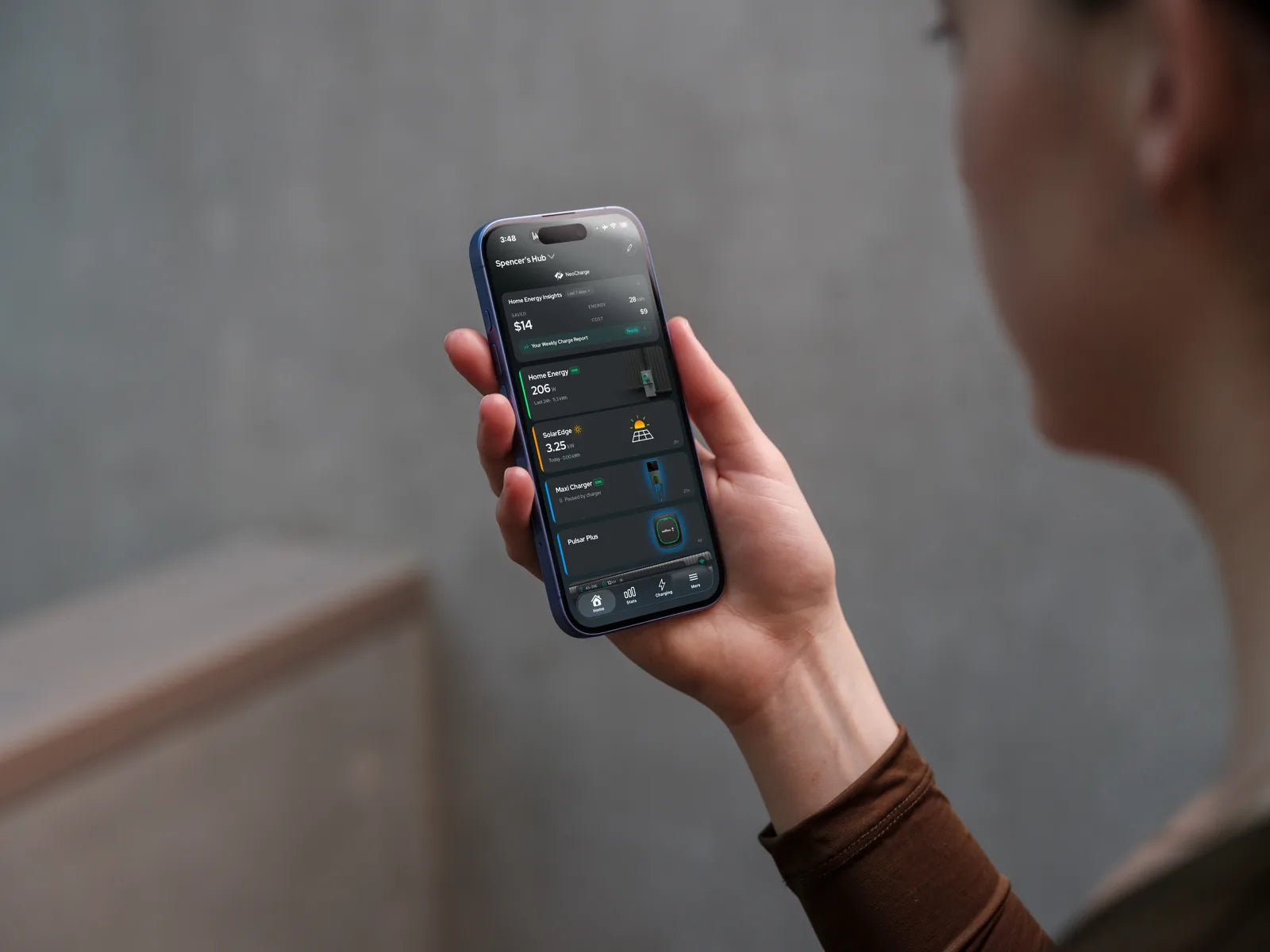
NeoCharge App
Track charging costs without spreadsheet work
See session history, monthly energy use, and savings so the article advice turns into a real household habit.
Explore the app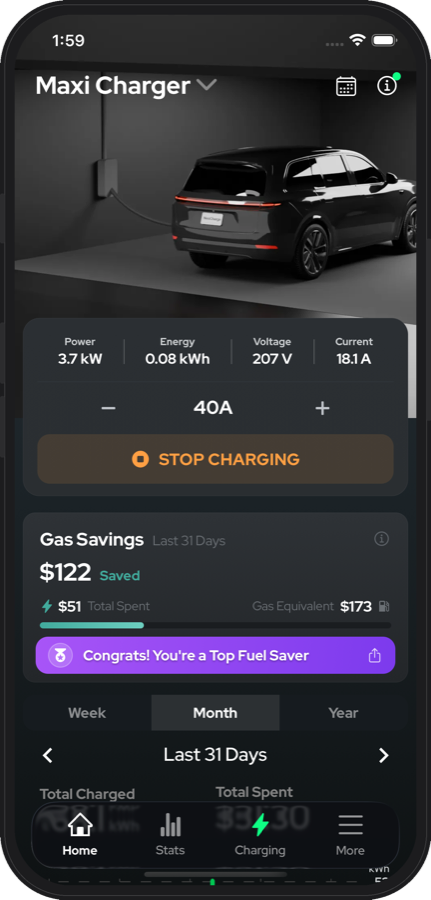
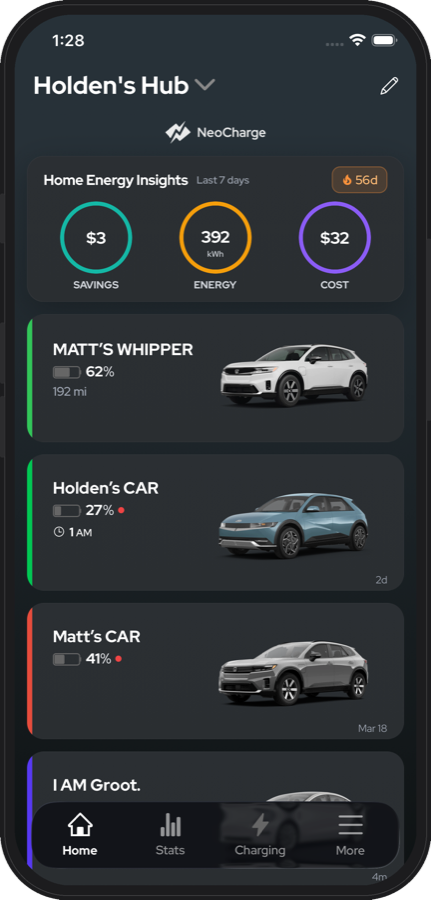
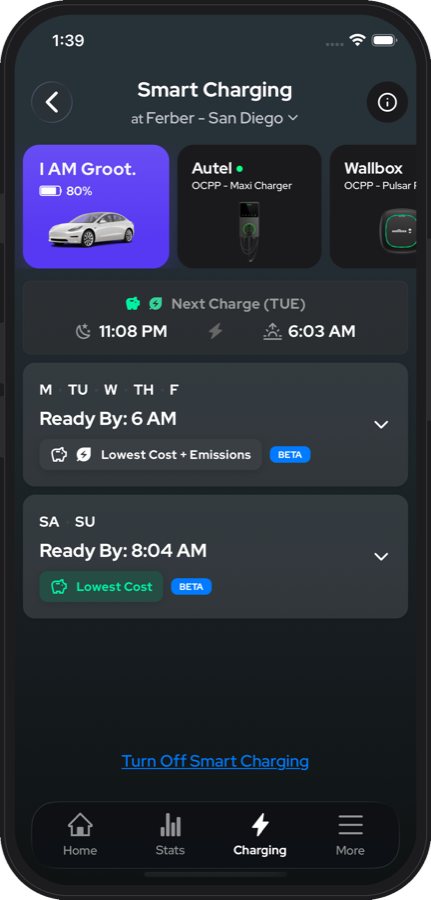
Next steps
Keep going with NeoCharge
Use the article as your decision guide, then jump into the product, app, or related guides that match what you are trying to solve next.
Key terms
- Level 2 charging
- Level 2 EV charging uses a 240V circuit (like a dryer outlet). It typically adds ~20–35 miles of range per hour, depending on your car and the circuit amperage.
- NEMA 14-50
- A NEMA 14-50 is a common 240V, 50A outlet (often used for EV charging). Many EV chargers plug into it, but the actual charging speed depends on the circuit and your EV.
- NEMA 14-30
- A NEMA 14-30 is a 240V, 30A dryer outlet. With a properly configured EV charger, it can usually support ~24A continuous charging (about 20–25 miles of range per hour for many EVs).
- EVSE
- EVSE stands for Electric Vehicle Supply Equipment (the “charger”). It safely delivers power to your EV and communicates with the car to control charging current.
- Load management
- Load management is a strategy to keep your home’s electrical load within safe limits—often by scheduling or pausing EV charging when other appliances are running.
Related posts
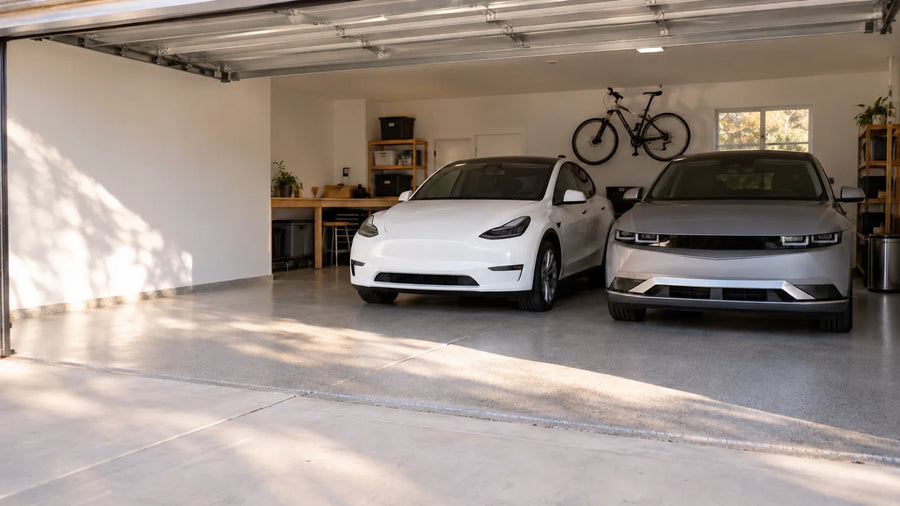
How to Charge Two EVs at Home in Canada on One 240V Outlet (2026)
One 50A circuit adds about 360 km overnight, enough for two commutes. What the Canadian Electrical Code allows, permits by province, BC Hydro rebates, and options.


Burnaby EV Charger Installation
Burnaby EV charging by home type: share a dryer outlet instead of a panel upgrade, City permits, BC Hydro's $350 + $200 rebates, and strata right-to-charge.

Richmond EV Charger Installation
Richmond EV charger installation: Technical Safety BC permit fees, the 2018 EV-ready rule, BC Hydro's $350 + $200 rebates, and room for a heat pump.

Surrey EV Charger Installation
Add Level 2 charging in Surrey without a panel upgrade: City of Surrey permit steps, BC Hydro's $350 + $200 rebates, suited-house load math, and overnight costs.
