



Do You Need a Panel Upgrade for Home EV Charging in Canada?

Direct answer: Sometimes yes, but often no. Many Canadian EV owners can add practical Level 2 charging without upgrading from a 100 amp panel to a 200 amp panel, especially if they already have a suitable 240V outlet, can use lower-amp charging, or install a certified EV charger load-management device like a Smart Splitter.
Why electricians recommend panel upgrades
EV charging is not like plugging in a laptop. A Level 2 charger can draw high power for hours, so electricians have to think about the whole home, not just the charger.
In a Canadian home, the panel may already be carrying:
- electric dryer
- electric range
- heat pump or air conditioner
- electric water heater
- hot tub or sauna
- basement suite appliances
- workshop tools
- future heat pump or induction range plans
That is why a panel upgrade sometimes enters the conversation. But the quote usually comes from one of these specific constraints:
| What the electrician sees | What it may actually mean |
|---|---|
| 100 amp service | The home has less headroom than a newer 200A service, but EV charging may still be possible. |
| Full breaker panel | There may be no physical breaker space, even if total load is manageable. |
| Large charger request | A 40A or 48A charger may be more than your driving actually needs. |
| Long wire run | The charger location may be expensive, not impossible. |
| Detached garage | Trenching and subpanel work can turn a simple install into a bigger project. |
| No load management | The quote assumes the EV can run at the same time as every other major appliance. |
That last line is the opening. The problem is often not "this home can never charge an EV." It is "this home should not add another large load that can run at the same time as everything else."
Load management changes that assumption.
Quick decision guide
Use this before you commit to a panel upgrade:
| Your situation | Start here |
|---|---|
| You have a dryer outlet near the car | Check whether a Smart Splitter can share it safely. |
| You have a 100A panel but normal daily driving | Ask about lower-amp Level 2 charging before upsizing service. |
| You want a dedicated wall charger but capacity is tight | Ask about EVEMS or another EV charger power management device. |
| You have no usable 240V outlet and a long wire run | Compare dedicated circuit cost against panel/service work. |
| You are adding heat pumps, induction, hot tub, and multiple EVs | A panel/service upgrade may be the cleaner long-term plan. |
If you only remember one thing, make it this: a panel upgrade should be the result of a load calculation, not a reflex.
The 3 paths to Level 2 home charging
Most Canadian homes land in one of three practical paths.
1. Dedicated EV charger circuit
This is the clean, familiar install: an electrician runs a new 240V circuit from your panel to a charger or outlet.
It is a good fit when:
- your panel has capacity
- the wire run is reasonable
- you want a clean permanent setup
- you need faster charging
- you may have multiple EVs later
This can be the right answer. It just gets expensive when the panel is full, service capacity is tight, the garage is detached, or the charger location is far from the electrical room.
2. Existing 240V outlet
This is the path people often miss. Many Canadian homes already have a 240V dryer outlet. If that outlet is close to the parking spot and the circuit is suitable, it may support Level 2 charging at the right current limit.
The common example is a NEMA 14-30 dryer outlet. A suitable 30A dryer circuit is commonly limited to about 24A continuous EV charging, or roughly 5.7 kW on 240V.
That is not the fastest possible home charging. But "fastest" is not always the goal. If your car is parked all night, 24A charging can still be a very real Level 2 experience.
If this is your situation, read the next guide in this cluster: Can I charge my EV from a dryer outlet in Canada?
3. Smart Splitter / EV charger load management
Load management solves the real problem in many homes: preventing the EV from stacking on top of another high-power load.
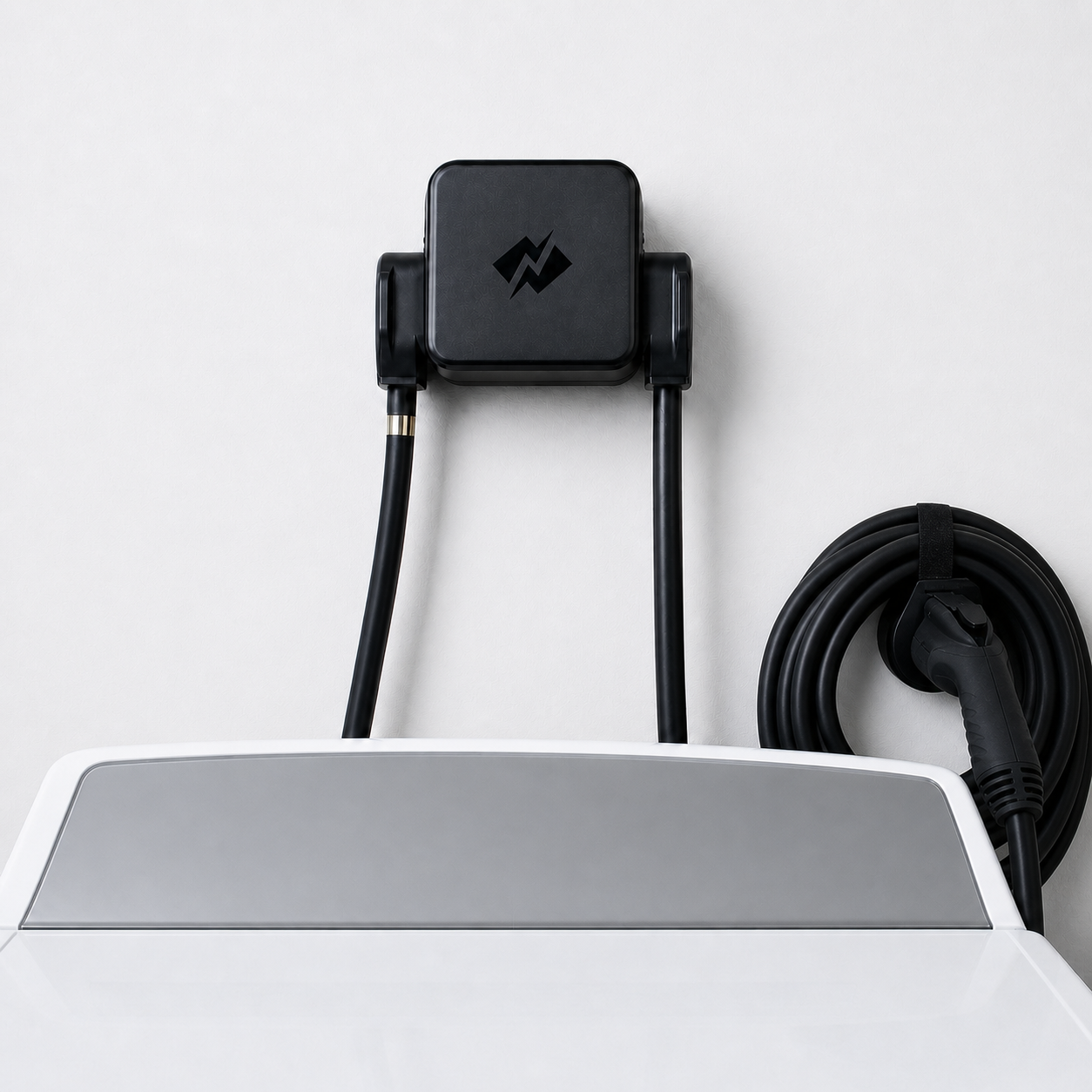
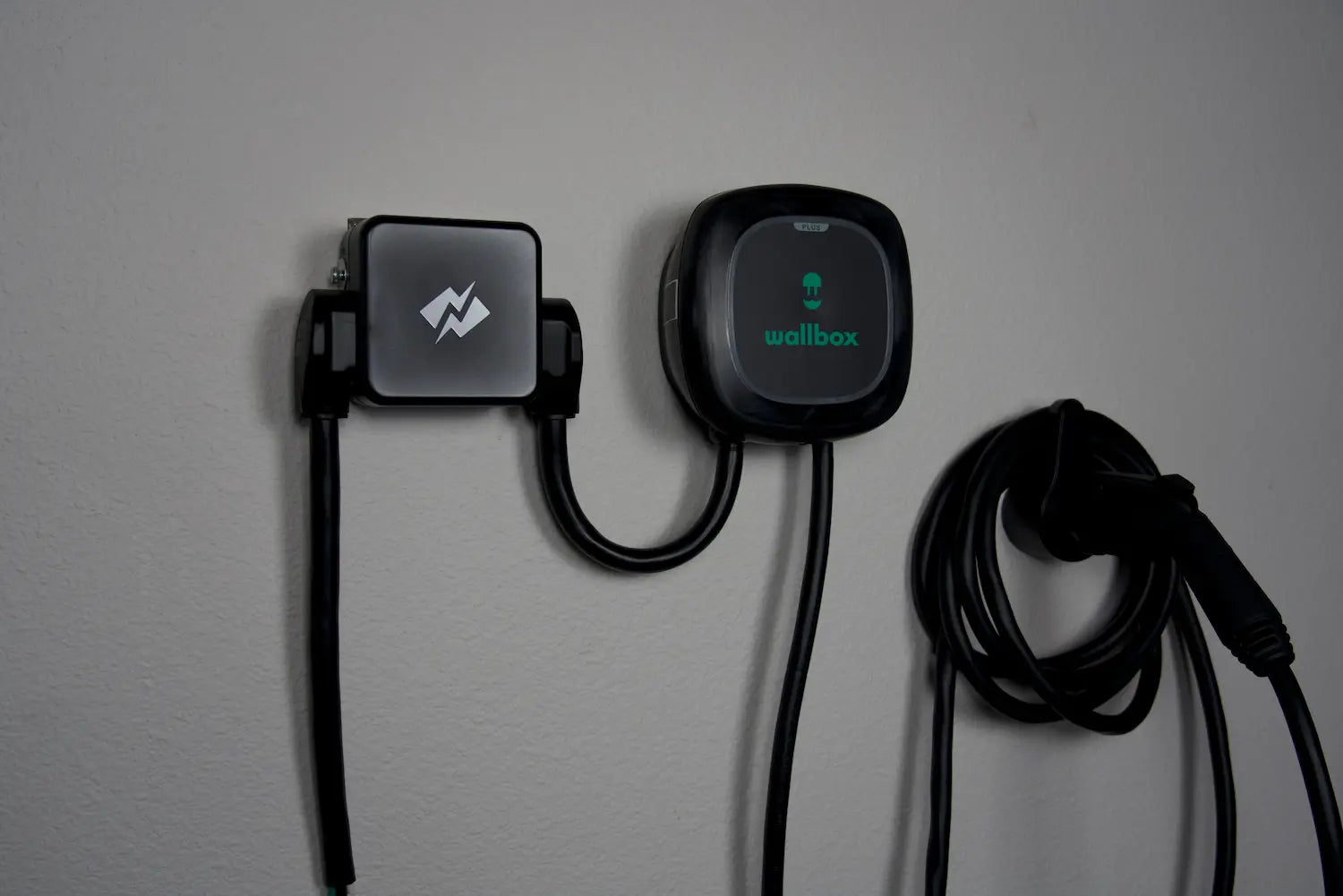
A NeoCharge Smart Splitter is built for the common dryer-outlet case. It shares an existing compatible 240V outlet between an EV charger and another appliance, so both are not pulling high power from the same circuit at once.
EVEMS or whole-home load-management systems solve a broader version of the same problem by monitoring load and adjusting charging.
The core idea is simple: you do not always need more electrical service. You may need smarter sequencing.
That is why "EV charger without panel upgrade Canada" is not a gimmick phrase. It is a real decision category.
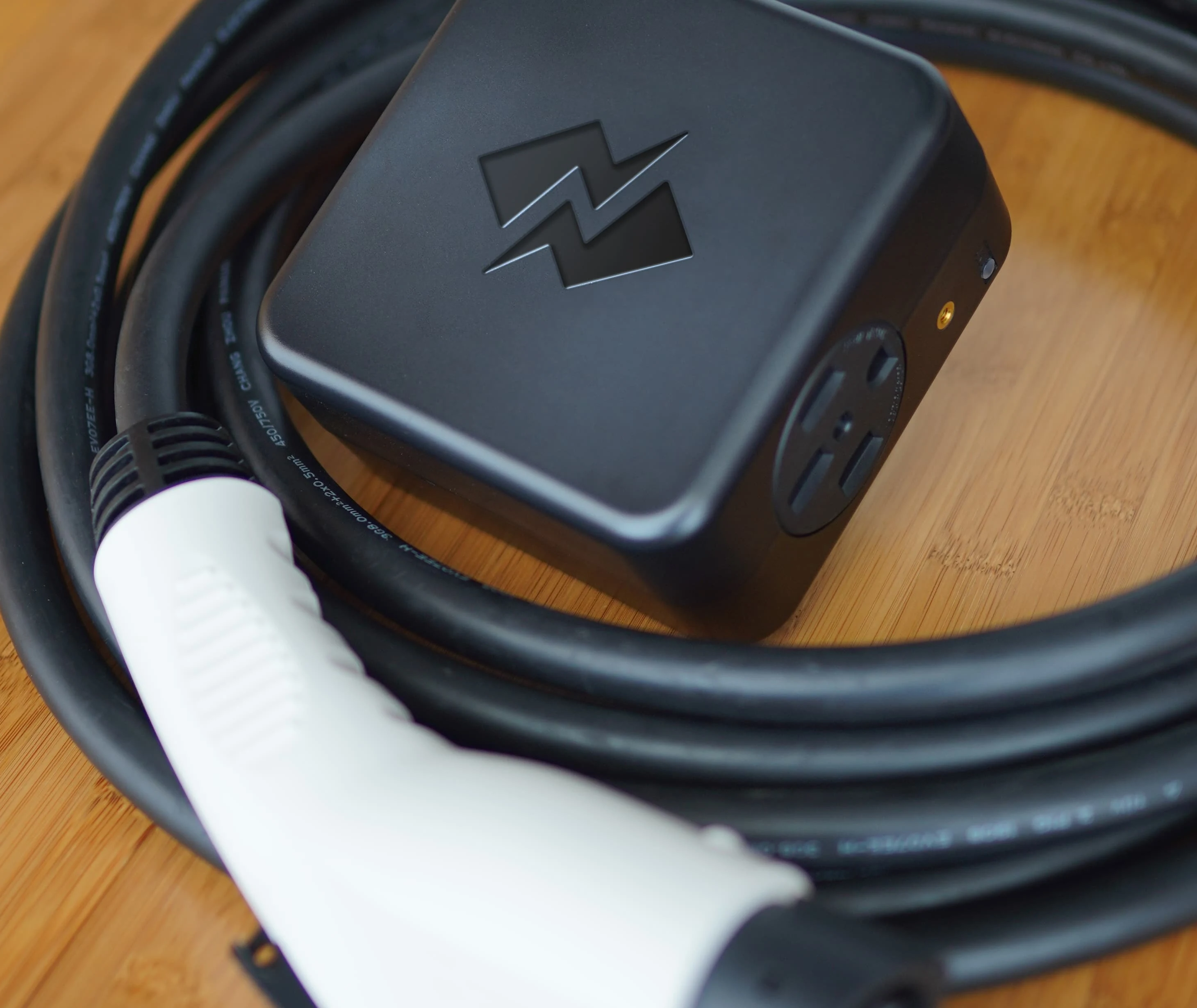
NeoCharge Smart Splitter
Level 2 charging without starting with a panel upgrade
Share an existing 240V outlet automatically, so your EV and dryer do not run at the same time.
100 amp vs 200 amp panel: what actually matters
A 200 amp panel gives more room for electrification. If you are building new, renovating heavily, adding a heat pump, switching to induction, and planning for two EVs, 200A service can be lovely.
But that does not mean every 100 amp home needs an upgrade before EV charging.
In Canada, plenty of older homes have 100A service and can still charge EVs safely with the right setup. The reason is simple: most EV owners do not need maximum charging power every night. They need enough charging to replace the day’s driving before morning.
Here is the simple version:
| Panel situation | What to ask |
|---|---|
| 100A panel, dryer outlet near parking | Can I use 24A Level 2 charging with a Smart Splitter? |
| 100A panel, no nearby 240V outlet | Can lower-amp Level 2 or EVEMS work before a service upgrade? |
| 125A or 150A service | Is there enough calculated capacity for a right-sized charger? |
| 200A panel with spare room | A dedicated EV circuit may be straightforward. |
| Older or unsafe wiring | Fix safety first; do not shortcut with adapters. |
The electrician should perform a load calculation. Empty breaker slots are not enough. A full panel is not automatically a service-capacity failure. The math matters, and so does the charging plan.
Panel upgrade vs Smart Splitter cost comparison
Exact costs vary by province, home age, utility, permits, panel location, and parking location. But the decision pattern is consistent.
| Option | Typical use case | Cost profile | Best when |
|---|---|---|---|
| Dedicated EV circuit | New charger location with panel capacity | Moderate to high | You want a clean permanent install and the panel supports it. |
| Smart Splitter / outlet sharing | Existing 240V dryer outlet near parking | Lower hardware-first path | You can share a suitable outlet and do not need simultaneous dryer + EV use. |
| EVEMS / power management device | Tight service capacity, dedicated charger desired | Medium to high | You need dynamic control of EV load. |
| Panel/service upgrade | Home truly lacks capacity or needs future electrification | Highest | The load calculation says it is required or you want future-proofing. |
The Smart Splitter does not make your home magically have more power. It helps use existing power more intelligently. If the dryer runs, EV charging can pause or be sequenced. When the dryer is done, the EV can charge again.
That is why it can be a strong fit for overnight charging: your car is parked for hours, and the dryer usually does not run all night.
Canada-specific rebates and rate programs
Rebate and rate programs change, so verify current rules before buying equipment. Here are the big Canada-specific signals to know.
British Columbia: BC Hydro EV power management device rebate
BC Hydro uses the official phrase EV power management device. BC Hydro says single-family home customers installing a Level 2 charger may be eligible for a $200 rebate for an EV power management device, and its single-family-home rebate page says this can help install an EV charger without needing to upgrade your electrical panel.
That exact wording matters because it matches the customer problem: EV charger without panel upgrade Canada.
BC Hydro source: bchydro.com
Quebec: Écorecharge home charging assistance
Quebec’s Écorecharge program says EV owners may be eligible for a $600 grant for purchase and installation of a home charging station. Quebec also says that from April 1, 2026, only connected charging stations are eligible for financial assistance.
That means Quebec homeowners should verify equipment eligibility before buying, especially if they are combining a dryer-outlet/load-management approach with a separate connected charging station.
Quebec source: quebec.ca
Ontario: Ultra-Low Overnight savings
Ontario is less about an EV charger rebate and more about charging at the right time. The Ontario Energy Board lists Ultra-Low Overnight pricing at 3.9 cents/kWh from 11 p.m. to 7 a.m., with a much higher weekday on-peak price.
If your EV can recover daily driving overnight on a lower-amp Level 2 setup, Ontario ULO can make "enough charging" more valuable than "maximum charging."
Ontario source: oeb.ca
When you should still upgrade the panel
Load management is powerful, but it is not magic. A panel or service upgrade may still be the right call when:
- there is no usable 240V outlet near parking
- the existing wiring is old, unsafe, damaged, or unknown
- the panel is obsolete or already overloaded
- the load calculation fails even with lower-amp charging
- you need high-power charging for multiple EVs
- you are adding other major electrification loads soon
- a licensed electrician says a service upgrade is required after evaluating the home
The goal is not to avoid every panel upgrade. The goal is to avoid unnecessary panel upgrades.
What to ask your electrician
Use this script before approving a major electrical project:
- Can you perform a load calculation before quoting a panel upgrade?
- Can my home support lower-amp Level 2 charging?
- Do I have a suitable 240V outlet, such as a dryer outlet, near parking?
- Can a certified EV charger power management device solve the capacity issue?
- What would a dedicated circuit cost versus load management?
- Does my province or utility have rebate rules that affect the equipment choice?
- If you recommend a panel upgrade, what specific load calculation or code issue requires it?
If the answer is just "EVs need 200 amps," get a second opinion.
FAQ
Can I install an EV charger without a panel upgrade in Canada?
Can I install an EV charger on 100 amp service?
How much does an EV charger panel upgrade cost in Canada?
What is an EV charger power management device?
Does BC Hydro have a power management rebate?
Is a Smart Splitter the same as a panel upgrade?
Bottom line
You may need a panel upgrade for home EV charging in Canada. But you should not assume that until you understand your panel capacity, outlet options, charging needs, and load-management choices.
If you already have a compatible 240V dryer outlet near where you park, start with the dryer-outlet path. If your panel is tight, ask about EV charger load management. If the home truly needs more electrical capacity, then a panel upgrade can be the right long-term move.
Next steps (NeoCharge)
- Check the practical solution page: Can I charge my EV from a dryer outlet in Canada?
- Compare options: Smart Splitter vs EVEMS vs panel upgrade
- See the NeoCharge Smart Splitter if you want to safely share an existing 240V outlet.
Sources
- BC Hydro EV power management devices: bchydro.com
- BC Hydro single-family home charger rebates: bchydro.com
- Ontario Energy Board electricity rates: oeb.ca
- Quebec Écorecharge financial assistance: quebec.ca
- Quebec eligible home charging station guidance: quebec.ca
Electrical safety disclaimer
This article is for general informational purposes only and does not replace advice from a qualified professional. Electrical work can cause fire, injury, or death if done incorrectly. Always follow local codes, obtain permits where required, and consult a licensed electrician to evaluate your specific panel, wiring, receptacle, and EV charging equipment before making changes.
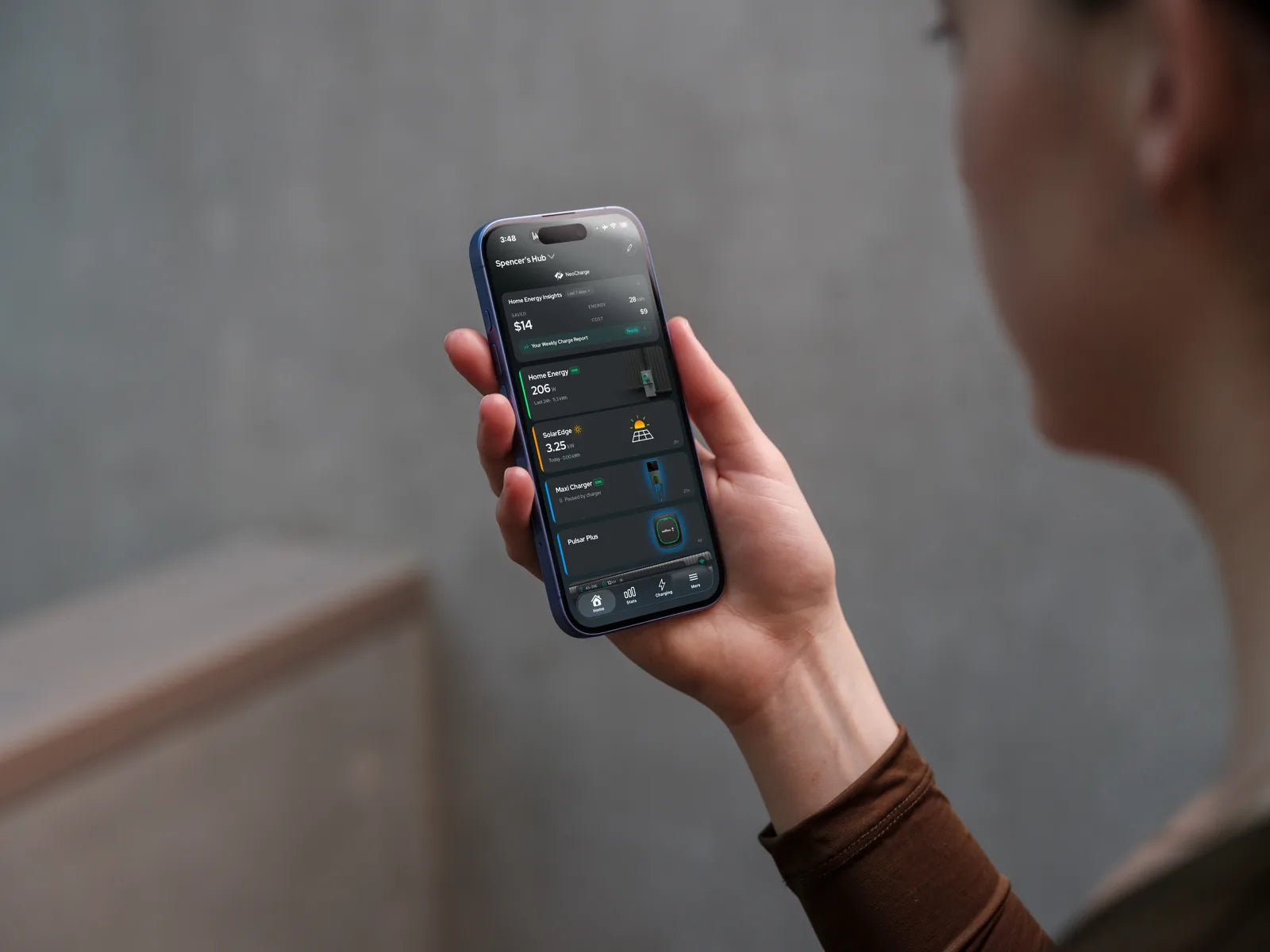
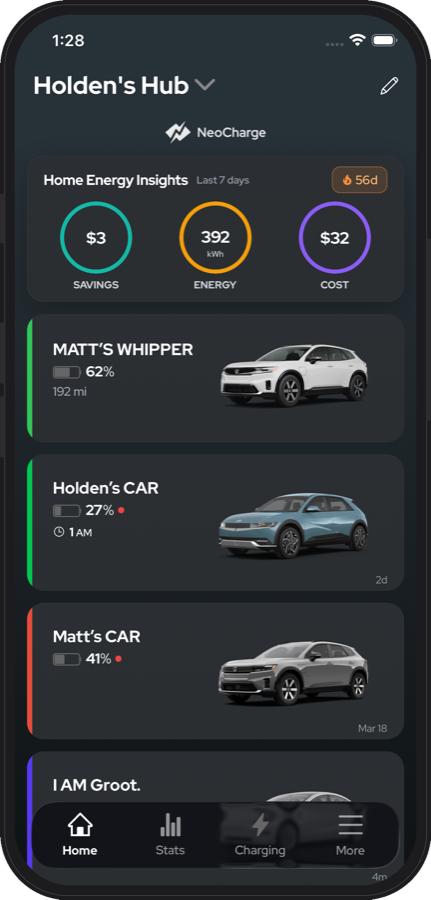
NeoCharge App
Track charging costs without spreadsheet work
See session history, monthly energy use, and savings so the article advice turns into a real household habit.
Explore the app

Next steps
Keep going with NeoCharge
Use the article as your decision guide, then jump into the product, app, or related guides that match what you are trying to solve next.
Key terms
- Level 2 charging
- Level 2 EV charging uses a 240V circuit (like a dryer outlet). It typically adds ~20–35 miles of range per hour, depending on your car and the circuit amperage.
- NEMA 14-30
- A NEMA 14-30 is a 240V, 30A dryer outlet. With a properly configured EV charger, it can usually support ~24A continuous charging (about 20–25 miles of range per hour for many EVs).
- Load management
- Load management is a strategy to keep your home’s electrical load within safe limits—often by scheduling or pausing EV charging when other appliances are running.
Related posts


Burnaby EV Charger Installation
Burnaby EV charging by home type: share a dryer outlet instead of a panel upgrade, City permits, BC Hydro's $350 + $200 rebates, and strata right-to-charge.

Richmond EV Charger Installation
Richmond EV charger installation: Technical Safety BC permit fees, the 2018 EV-ready rule, BC Hydro's $350 + $200 rebates, and room for a heat pump.

Surrey EV Charger Installation
Add Level 2 charging in Surrey without a panel upgrade: City of Surrey permit steps, BC Hydro's $350 + $200 rebates, suited-house load math, and overnight costs.

BC Hydro EV Power Management Device Rebate: Eligible Devices (2026)
BC Hydro pays $200 extra for an eligible EV power management device. The Sept 2026 device list, which chargers qualify, and the permit rule that decides who gets it.
