




Tesla Charging Cost in Canada (2026): Home vs Supercharger
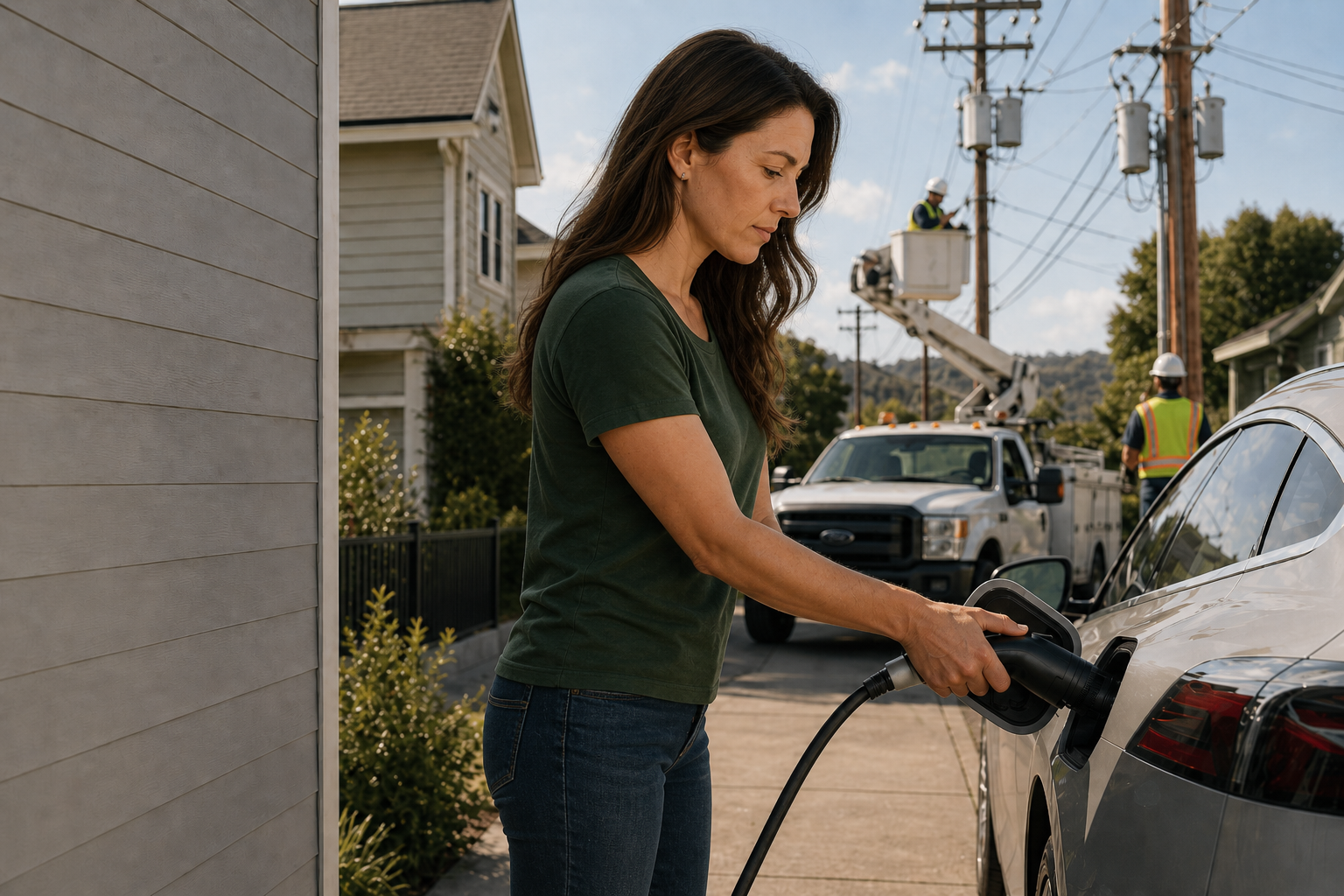
Direct answer: Charging a Tesla at home in Canada costs most drivers about $0.02 to $0.03 per km, or roughly $6 to $17 for a full charge depending on your province's electricity rate. That is about $300 to $500 per year for typical driving — and far less in Quebec or on an Ontario overnight rate. Supercharging is faster but usually costs 2 to 3 times more than charging at home.
The five things that decide your Tesla charging cost
- Battery size (kWh) — how big the "tank" is.
- Electricity rate ($/kWh) — what your provincial utility charges per unit of energy.
- Where you charge — home, a Tesla Supercharger, or another public network.
- Efficiency (kWh per 100 km) — how much energy your Tesla uses to travel 100 km.
- Charging losses — about 10% of energy is lost as heat between the wall and the battery.
Get those five right and the rest is arithmetic.
How much electricity does a Tesla use?
Every Tesla has a usable battery measured in kWh and an efficiency measured in kWh per 100 km. Here are typical, rounded figures — your exact numbers vary by model year, wheels, weather, and driving style.
| Tesla model | Usable battery (approx.) | Efficiency (approx.) |
|---|---|---|
| Model 3 (RWD) | ~57–60 kWh | ~14.5 kWh/100 km |
| Model 3 (Long Range) | ~75–79 kWh | ~15.5 kWh/100 km |
| Model Y | ~75–81 kWh | ~17 kWh/100 km |
| Model S | ~100 kWh | ~19 kWh/100 km |
| Model X | ~100 kWh | ~21 kWh/100 km |
Canadian winters matter here. Cold weather, highway speeds, and heavy acceleration all push real-world efficiency higher (more kWh per 100 km), so treat these as planning numbers, not guarantees. Expect to use noticeably more energy in January than in July.
How much does it cost to charge each Tesla model?
This is the table most people are looking for: what a full charge actually costs by model, plus the cost per 100 km. Figures assume a mid-range Canadian residential rate of $0.15/kWh and 90% charging efficiency (so they reflect the energy actually drawn from the grid, including losses).
| Tesla model | Battery (approx.) | Full charge | Cost per 100 km |
|---|---|---|---|
| Model 3 RWD | ~60 kWh | ~$10.00 | ~$2.40 |
| Model 3 Long Range | ~75 kWh | ~$12.50 | ~$2.60 |
| Model 3 Performance | ~75 kWh | ~$12.50 | ~$2.75 |
| Model Y RWD | ~60 kWh | ~$10.00 | ~$2.65 |
| Model Y Long Range | ~75 kWh | ~$12.50 | ~$2.85 |
| Model S | ~100 kWh | ~$16.70 | ~$3.15 |
| Model X | ~100 kWh | ~$16.70 | ~$3.50 |
| Cybertruck | ~123 kWh | ~$20.50 | ~$5.00 |
Estimates in CAD based on $0.15/kWh and ~90% charging efficiency. Your actual cost depends on your province, model year, weather, and driving.
But $0.15/kWh is just a national midpoint. The real story in Canada is the spread between provinces.
How much does it cost to charge a Tesla by province?
This is what makes Canada different. Residential electricity rates range from under 8 cents in Quebec to well over 17 cents in Alberta and the Maritimes — and Ontario's overnight rate is cheaper than all of them. Here is a full charge for a Model 3 Long Range (~75 kWh) and its cost per 100 km at typical 2026 residential rates:
| Province / rate | Approx. rate (¢/kWh) | Full charge (75 kWh) | Cost per 100 km |
|---|---|---|---|
| Quebec (Hydro-Québec) | ~7.8¢ | ~$6.50 | ~$1.35 |
| Manitoba (Hydro) | ~10¢ | ~$8.30 | ~$1.70 |
| British Columbia (BC Hydro) | ~13¢ | ~$10.80 | ~$2.25 |
| Ontario (average) | ~13¢ | ~$10.80 | ~$2.25 |
| Ontario (Ultra-Low Overnight) | 3.9¢ | ~$3.25 | ~$0.67 |
| Alberta (regulated rate) | ~17¢ | ~$14.20 | ~$2.95 |
| Nova Scotia (NS Power) | ~18.5¢ | ~$15.40 | ~$3.20 |
Two big takeaways:
- Quebec and overnight Ontario are the cheapest places in North America to charge a Tesla. A full charge for under $7 — or under $4 on Ontario ULO — is normal.
- In higher-rate provinces, a time-of-use or overnight rate matters even more. See how to find your off-peak hours and the city-specific guides below.
Provincial rates and tier structures change. Always check your own utility's current rate; this is the number that moves your bill the most.
What does it cost to charge a Tesla per month?
Canadians drive about 15,200 km per year, or roughly 1,250 km per month. Charging a Model 3 Long Range mostly at home:
| Province / rate | Estimated monthly cost |
|---|---|
| Quebec | ~$17 |
| Ontario (Ultra-Low Overnight) | ~$8–10 |
| BC / Ontario average | ~$28 |
| Alberta | ~$37 |
| Nova Scotia | ~$40 |
Expect your home electricity bill to rise by roughly $15–40 a month for that driving — while your gas-station spending drops to zero.
The simple Tesla charging cost formula
To estimate the cost of a full charge:
Cost of a full charge = Usable battery (kWh) × Rate ($/kWh) ÷ Charging efficiency (~0.9)
To estimate the cost to drive a set distance:
Cost for the trip = Distance (km) ÷ 100 × Efficiency (kWh/100 km) × Rate ($/kWh) ÷ 0.9
The ÷ 0.9 accounts for the energy lost as heat during charging. AC home charging is roughly 85–90% efficient, so you pay for a little more energy than actually lands in the battery.
Worked example: charging a Tesla at home in Ontario
Say you have a Model 3 Long Range with a ~75 kWh usable battery, you are on Ontario's average rate of 13¢/kWh, and you want to refill from 20% to 100% (an 80% top-up):
- Energy into the battery: 75 kWh × 80% = 60 kWh
- Account for charging losses: 60 ÷ 0.9 = 66.7 kWh drawn from the wall
- Cost: 66.7 kWh × $0.13 = about $8.70
Now do the same charge on Ultra-Low Overnight at 3.9¢/kWh: 66.7 × $0.039 = about $2.60. Same energy, charged while you sleep, for roughly the price of a coffee. That gap is why when you charge matters as much as where.
How much does Tesla Supercharging cost in Canada?
Supercharging is built for road trips, not daily use. Canadian Tesla Superchargers bill per kWh, commonly in the $0.30 to $0.55 per kWh range depending on location and time of day, with cheaper off-peak windows at many sites.
A full charge at a Supercharger roughly works out to:
| Supercharger rate | Full charge (Model 3/Y) |
|---|---|
| Low-cost site (~$0.34/kWh) | ~$25–28 |
| Average site (~$0.44/kWh) | ~$33–37 |
| High-cost site (~$0.55/kWh) | ~$41–46 |
Watch for extra fees that can quietly raise the price:
- Idle fees: around $1.00–$1.40/minute if you leave the car plugged in after it finishes.
- Congestion fees: charged per minute at busy sites to keep stalls moving.
- Third-party networks: Electrify Canada, FLO, and ChargePoint are alternatives, but pricing varies — some bill per kWh, some per minute, some add a session fee.
The practical takeaway: Supercharging is convenient and fast, but it typically costs 2 to 3 times more than charging at home. Use it for travel, charge to ~80% and finish at home, and make home your default.
How long does it take to charge a Tesla in Canada?
Cost and time go hand in hand: the cheapest charging (at home, overnight) is also the slowest, and that is exactly what you want. You plug in like a phone before bed and wake up full. Here is roughly how long each method takes and how much range it adds, for a Model 3/Y-sized battery:
| Charging method | Typical power | Range added per hour | 10% → 80% |
|---|---|---|---|
| Level 1 (standard 120V outlet) | ~1.4 kW | ~6–8 km | 2–3 days (impractical) |
| Level 2 — dryer outlet (240V, 24A) | ~5.5 kW | ~30 km | ~9–11 hours |
| Level 2 — Wall Connector (240V, 48A) | ~11.5 kW | ~50 km | ~5–7 hours |
| DC fast / Tesla Supercharger | up to 250 kW | up to ~1,000 km at peak | ~20–30 min |
A few things to keep in mind:
- Level 1 (the wall outlet) is too slow for most drivers — it only adds a few dozen kilometres overnight. It works as a backup or for very low-mileage drivers, but most Tesla owners want Level 2 at home.
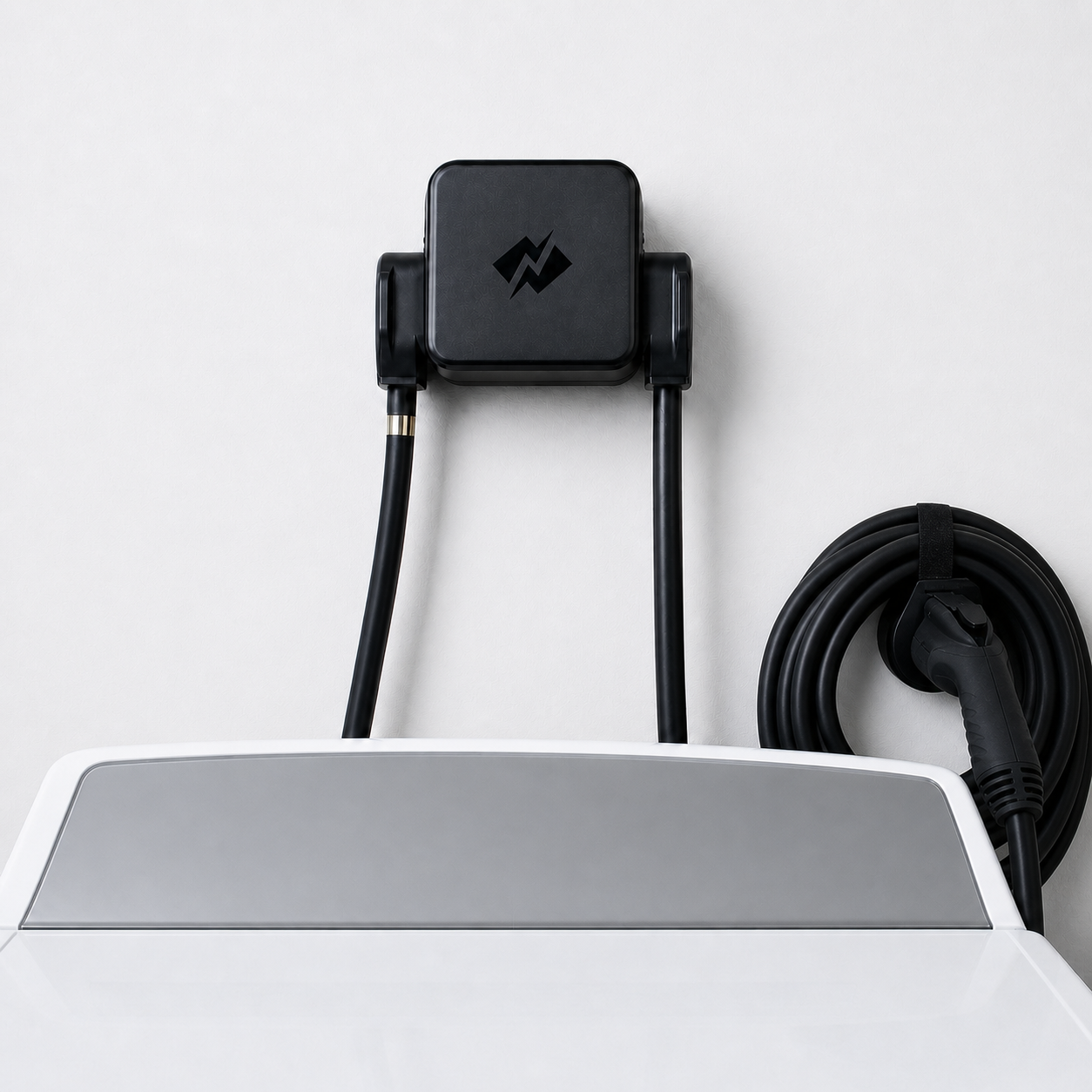
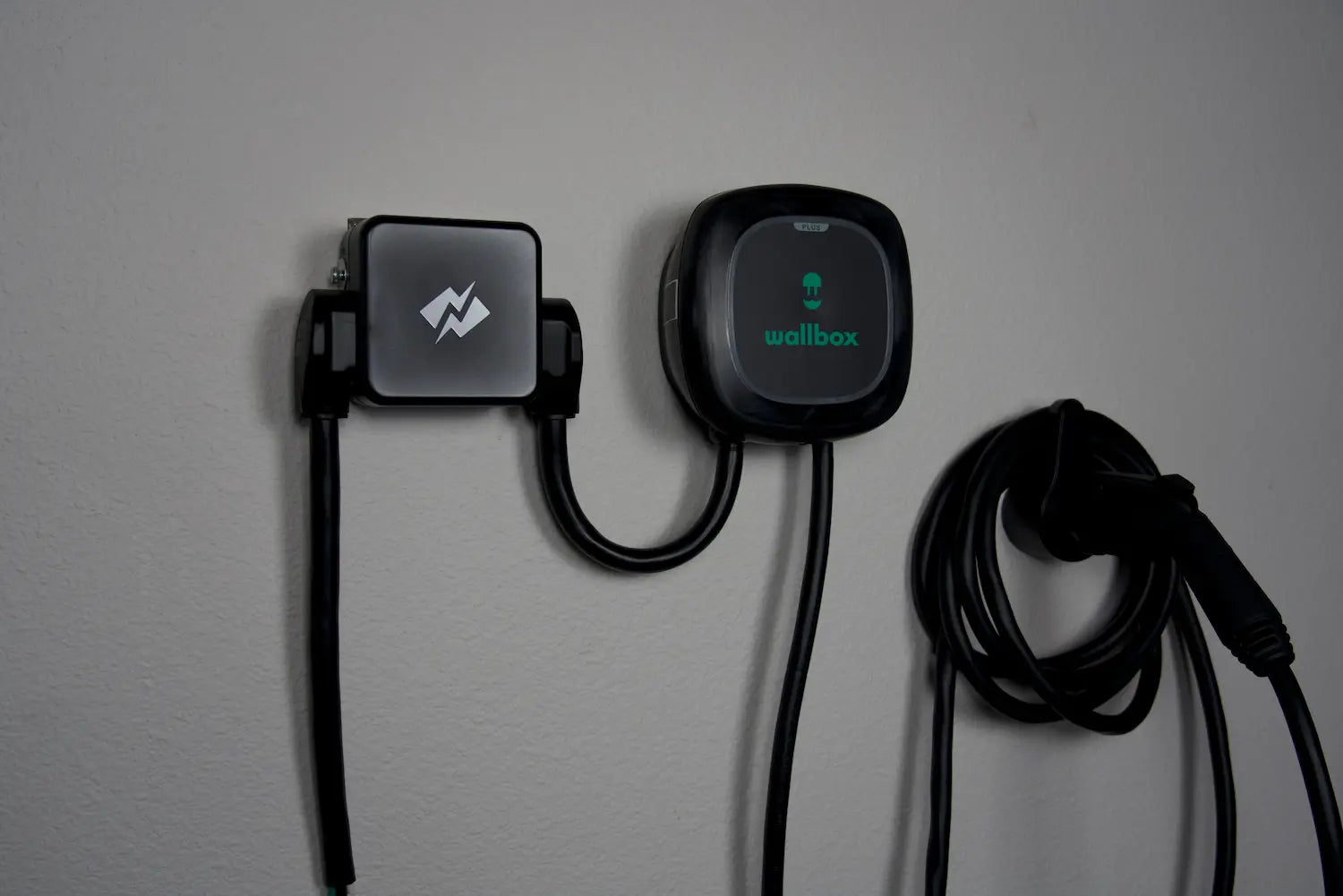
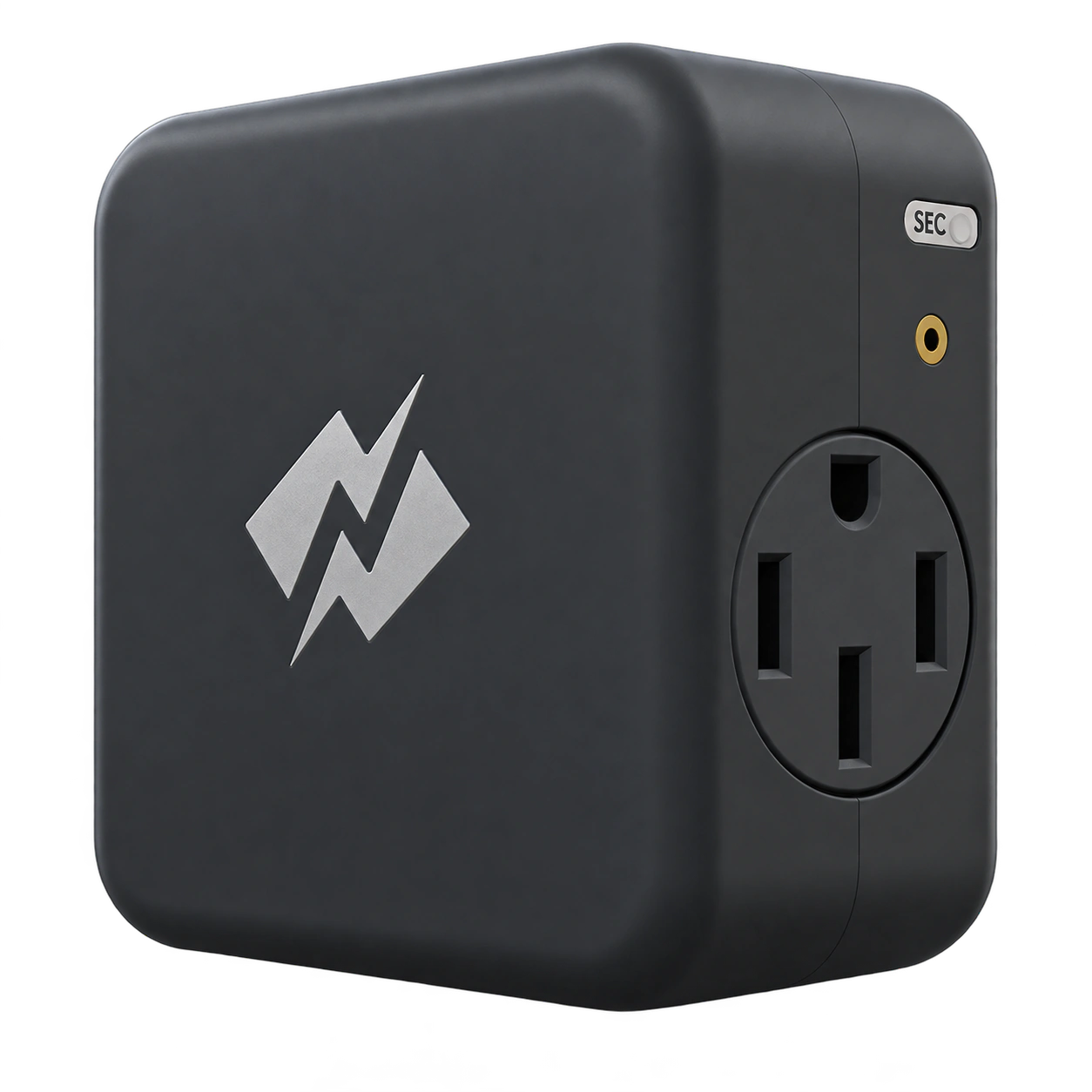
- Level 2 is the daily-driver sweet spot. A full overnight charge takes about 5–10 hours depending on amperage, which is why "plug in at night, unplug in the morning" is the standard routine. A NeoCharge Smart Splitter charging from a 240V dryer outlet runs at ~24A — a little slower than a hardwired 48A Wall Connector, but more than fast enough to refill a day's driving overnight, with no panel upgrade.
- Superchargers slow down past ~80% on purpose, to protect the battery. That is why road-trip advice is to charge to 80% and go, and to leave the slow top-up for home.
- Cold weather slows charging too. A cold battery accepts power more slowly, so Canadian winter charging — especially fast charging — takes longer until the pack warms up. Preconditioning on the way to a Supercharger helps.
Tesla charging cost vs gas in Canada: the savings
Home charging a Tesla costs roughly $2.60 per 100 km at an average Canadian rate. A comparable gas car, with gasoline near $1.55/L, is far higher — and the gap compounds over years of ownership:
| Vehicle you'd otherwise drive | Fuel per 100 km | Tesla equivalent | Savings per 100 km |
|---|---|---|---|
| Compact sedan (~8 L/100 km) | ~$12.40 | ~$2.60 (Model 3) | ~$9.80 |
| Compact SUV (~9 L/100 km) | ~$13.95 | ~$2.85 (Model Y) | ~$11.10 |
| Full-size pickup (~13 L/100 km) | ~$20.15 | ~$5.00 (Cybertruck) | ~$15.15 |
Gas figures assume ~$1.55/litre. At 15,200 km/year, switching a compact sedan to a Model 3 saves roughly $1,500/year in fuel — and far more in Quebec or on an overnight rate. Over a typical 6-year ownership period, fuel savings alone commonly add up to $6,000–10,000, before counting lower maintenance (no oil changes, less brake wear from regen braking).
Canada-specific rebates and rate programs
Rebate and rate programs change, so verify current rules before buying equipment. Here are the big Canada-specific signals to know.
Quebec: Écorecharge home charging assistance
Quebec's Écorecharge program says EV owners may be eligible for a $600 grant for the purchase and installation of a home charging station. From April 1, 2026, only connected charging stations are eligible for financial assistance, so verify equipment eligibility before buying. Combined with Hydro-Québec's low rates, Quebec is the cheapest place in the country to own and charge a Tesla.
British Columbia: BC Hydro charger and power-management rebates
BC Hydro offers rebates for eligible single-family-home customers installing a Level 2 charger, plus a separate $200 rebate for an EV power management device — which its rebate materials describe as a way to add a charger without upgrading your electrical panel. See our Vancouver BC Hydro rebate guide.
Ontario: Ultra-Low Overnight pricing
Ontario is less about a charger rebate and more about charging at the right time. The Ontario Energy Board lists Ultra-Low Overnight pricing at 3.9 cents/kWh from 11 p.m. to 7 a.m., with a much higher weekday on-peak price. If your Tesla can recover daily driving overnight, ULO makes "enough charging" far cheaper than daytime charging. See our Ontario ULO charging guide.
Five ways to lower your Tesla charging cost in Canada
- Charge overnight on a low rate. Ontario ULO (3.9¢/kWh), Hydro-Québec, and other off-peak windows are the biggest lever. See how to find your off-peak hours.
- Charge at home, not at Superchargers, for daily driving. Save fast charging for trips.
- Set a daily limit around 80% unless your manual says otherwise — less time at a high state of charge.
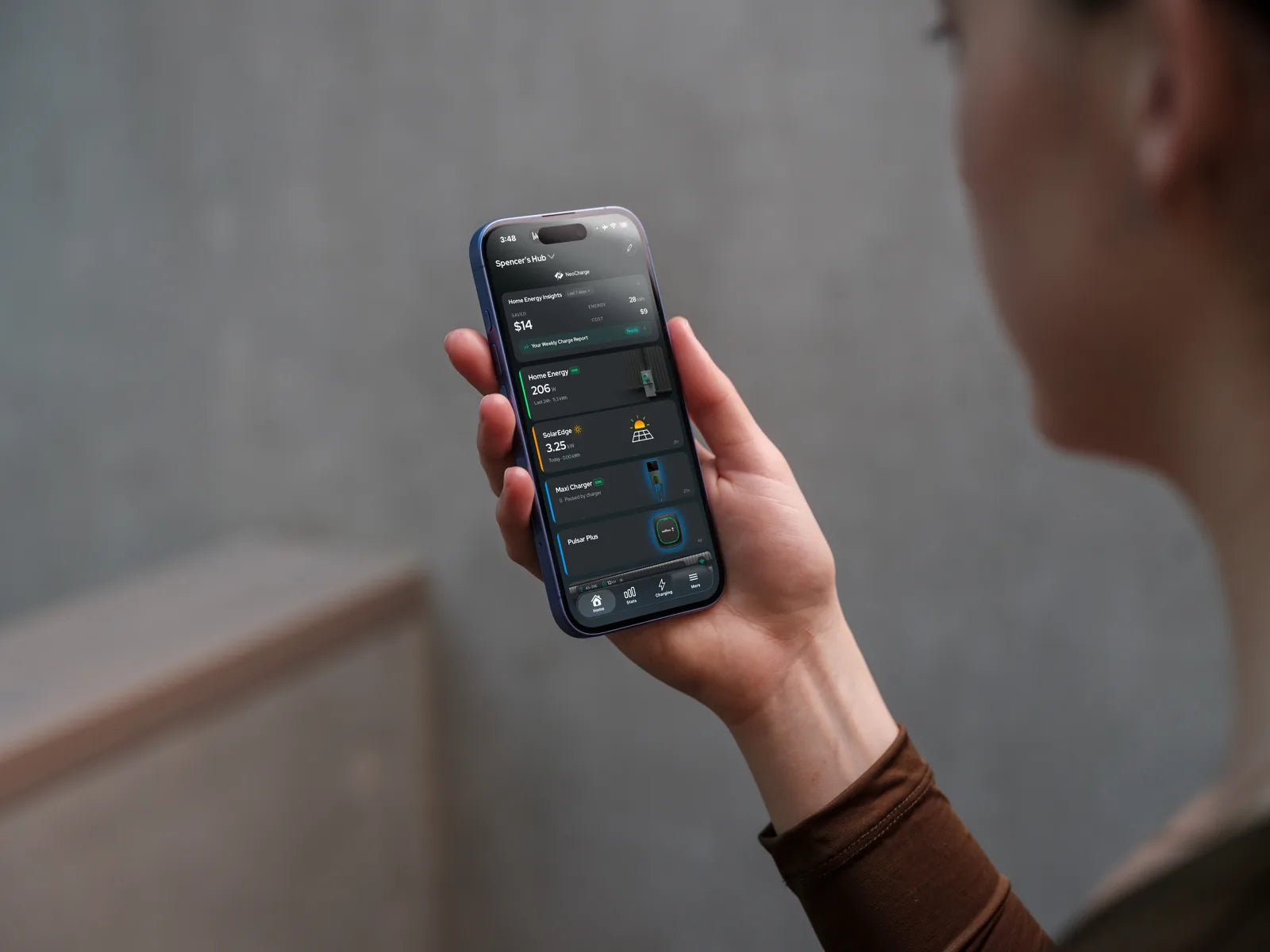
- Track what you actually spend. The NeoCharge App schedules charging around cheap hours and shows your real cost per session.
- Avoid an expensive install. If a dedicated circuit or panel upgrade is the obstacle, a Smart Splitter lets you charge from an existing 240V dryer outlet.
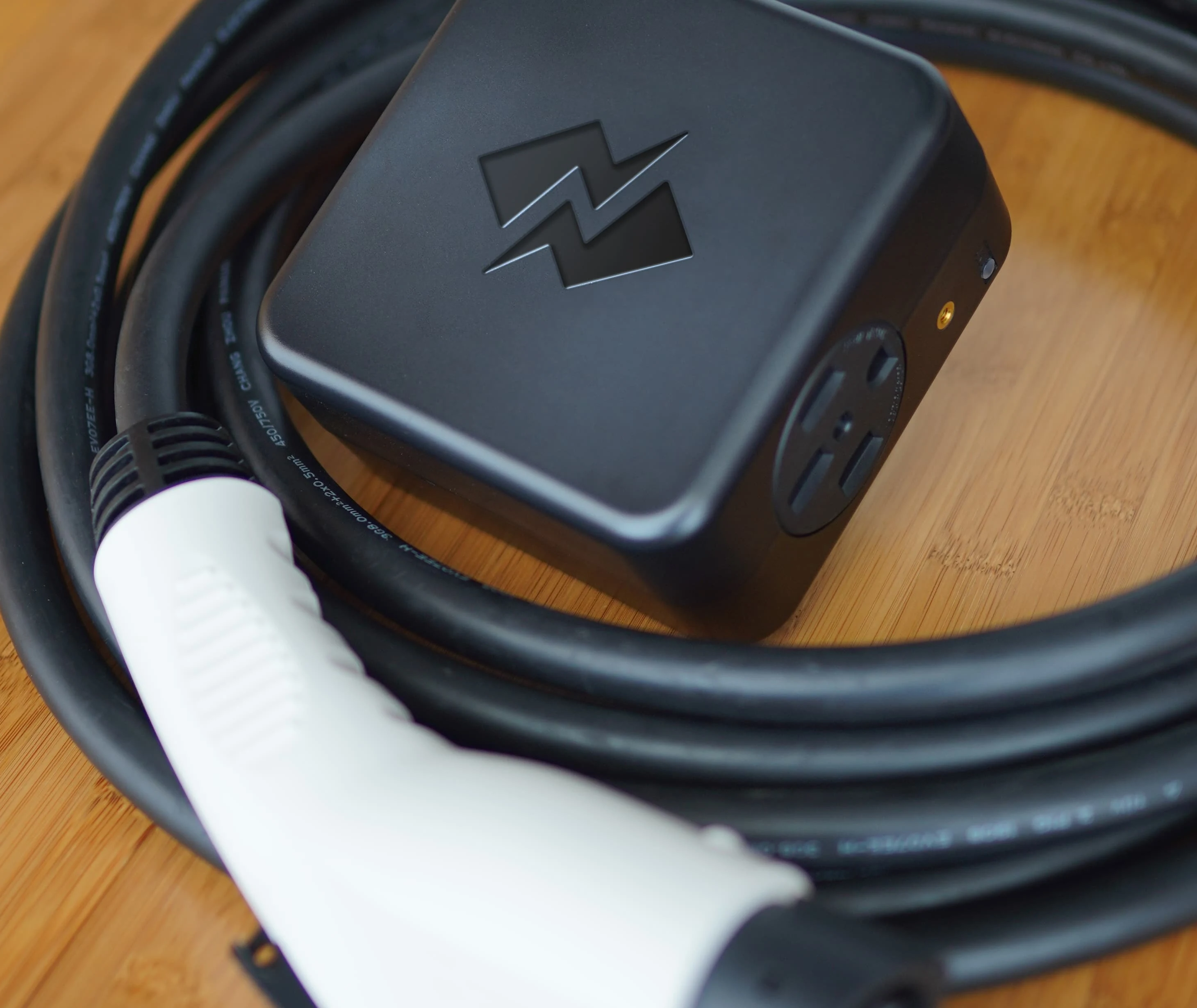
NeoCharge Smart Splitter
Charge your Tesla at home without a panel upgrade
Share an existing 240V dryer outlet automatically, so your Tesla and dryer never draw power at the same time.
What changes your Tesla charging cost?
Beyond your province and model, a few real-world factors move the number:
- Cold weather: a Canadian winter can cut efficiency 15–30%, so you use more kWh per 100 km. Preconditioning while plugged in helps.
- Driving style and speed: aggressive acceleration and highway speeds over ~110 km/h noticeably increase consumption.
- Where you charge: home is cheapest; Superchargers cost 2–3x more.
- When you charge: overnight rates like Ontario ULO can be a fraction of the daytime price.
- Battery age: older packs may need slightly more energy for the same range, though Tesla batteries hold up well over time.
None of these change the basic picture — home charging stays cheap — but they explain why your real bill may differ from a textbook estimate.
FAQ
How much does it cost to fully charge a Tesla in Canada?
How much does it cost to charge a Tesla per km in Canada?
Which province is cheapest to charge a Tesla?
Is Supercharging more expensive than charging at home?
How much does it cost to charge a Tesla per year in Canada?
How long does it take to charge a Tesla at home in Canada?
Does winter make charging more expensive?
Bottom line
Charging a Tesla at home in Canada is cheap, predictable, and far less expensive than gas — usually $6 to $17 a full charge and $0.02 to $0.03 a kilometre, with Quebec and overnight Ontario cheaper still. The two levers that move your cost the most are where you live (your provincial rate) and when you charge (overnight beats peak).
If the only thing standing between you and cheap home charging is an expensive electrical install, you may not need a panel upgrade at all.
Next steps (NeoCharge)
- To charge your Tesla from an existing 240V dryer outlet without a panel upgrade, see the NeoCharge Smart Splitter.
- To schedule charging around cheap overnight rates and track your real cost, explore the NeoCharge App.
- Wondering if your home can handle it? Read Do you need a panel upgrade for home EV charging in Canada?
- Compare the global numbers in our main Tesla charging cost guide.
Sources
- Hydro-Québec residential rates: hydroquebec.com
- Ontario Energy Board electricity rates (incl. Ultra-Low Overnight): oeb.ca
- BC Hydro EV charger and power management rebates: bchydro.com
- Quebec Écorecharge home charging assistance: quebec.ca
- Natural Resources Canada, electric vehicles and charging: natural-resources.canada.ca
A note on these estimates
Prices, provincial electricity rates, and Supercharger pricing change over time and vary by location, model year, and weather. The figures here are planning estimates in Canadian dollars based on public averages. Check your own utility rate and your vehicle's charging screen for exact numbers.
NeoCharge App
Turn rate plans into simple charging schedules
Schedule around off-peak windows, manage compatible chargers, and keep tabs on charging sessions from the app.
Explore the app


Next steps
Keep going with NeoCharge
Use the article as your decision guide, then jump into the product, app, or related guides that match what you are trying to solve next.
Key terms
- Level 2 charging
- Level 2 EV charging uses a 240V circuit (like a dryer outlet). It typically adds ~20–35 miles of range per hour, depending on your car and the circuit amperage.
- Time-of-use (TOU) rates
- Time-of-use rates are utility pricing plans where electricity costs more at peak hours and less off-peak. Scheduling EV charging off-peak can significantly reduce cost.
Related posts
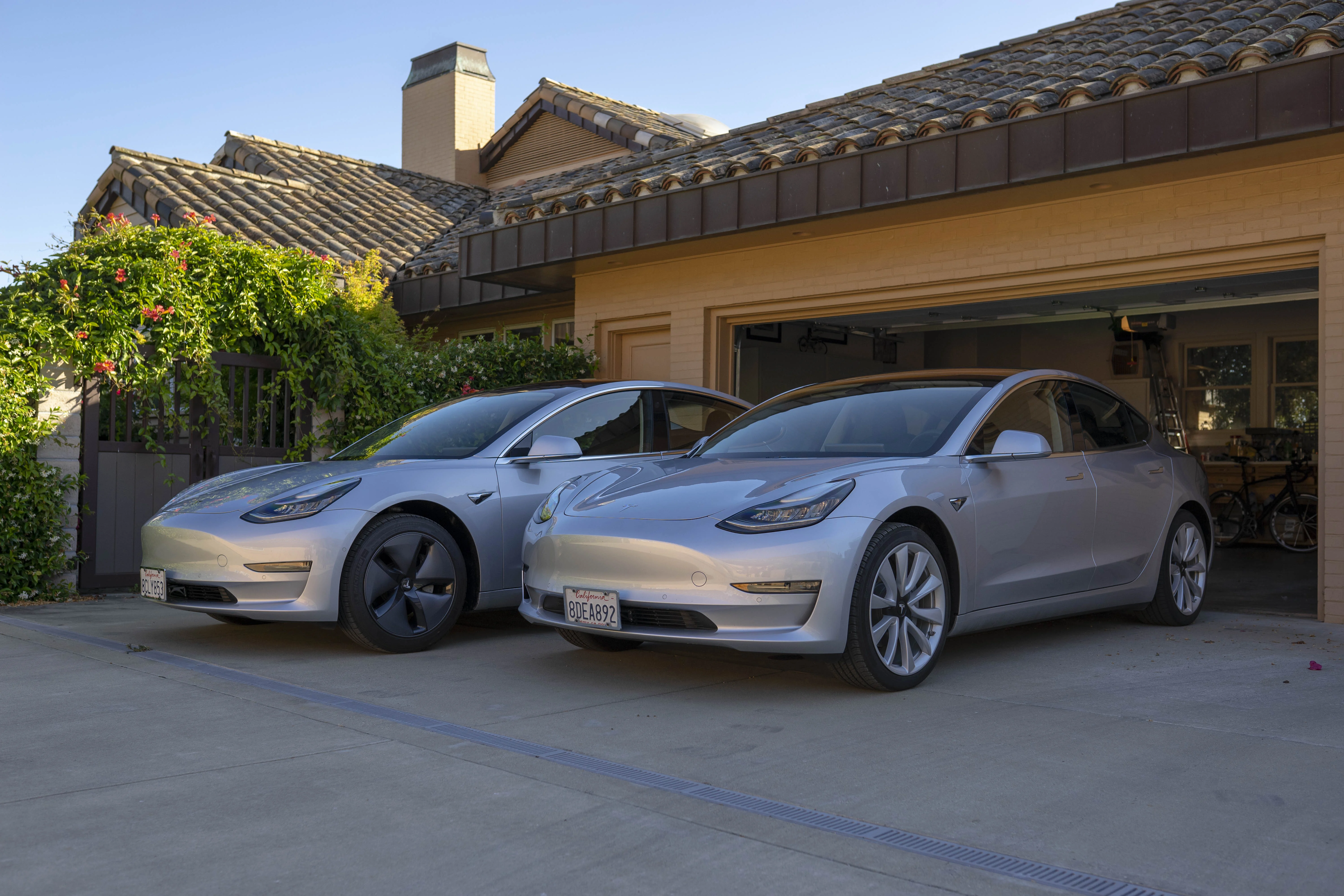
How to Charge Two EVs at Home in Canada on One 240V Outlet (2026)
One 50A circuit adds about 360 km overnight, enough for two commutes. What the Canadian Electrical Code allows, permits by province, BC Hydro rebates, and options.

Burnaby EV Charger Installation
Burnaby EV charging by home type: share a dryer outlet instead of a panel upgrade, City permits, BC Hydro's $350 + $200 rebates, and strata right-to-charge.
Richmond EV Charger Installation
Richmond EV charger installation: Technical Safety BC permit fees, the 2018 EV-ready rule, BC Hydro's $350 + $200 rebates, and room for a heat pump.
Surrey EV Charger Installation
Add Level 2 charging in Surrey without a panel upgrade: City of Surrey permit steps, BC Hydro's $350 + $200 rebates, suited-house load math, and overnight costs.
