



NeoCharge Blog · EV Charging Basics
Smart Splitter vs EVEMS vs Panel Upgrade: How to Choose the Right Path for Level 2 Charging
TL;DR
Need Level 2 charging but worried about a panel upgrade? Compare Smart Splitter outlet sharing vs EV energy management (EVEMS) vs a full panel upgrade—with a simple decision tree.
Key takeaways
- “Panel upgrade required” is often shorthand for capacity or scheduling constraints, not a hard rule.
- EV energy management systems (EVEMS) solve the “whole home load limit” problem by reducing EV charging when the home load rises.
- You can often get to safe Level 2 charging without a panel upgrade—but you must respect code, continuous load sizing, and safe hardware.
- Smart charging / TOU savings → https://getneocharge.com/pages/app
Step 1: Identify what’s actually limiting you
Most “I need a panel upgrade” situations are one of these:
A) You have a convenient 240V outlet (dryer), but only one
You’re trying to run:
- Dryer
- EV charger
…from one outlet/circuit. The problem is not your main service—it’s outlet sharing and the risk of overloading or unsafe splitter cords.
B) Your panel/service doesn’t have enough headroom for a new dedicated EV circuit
Your electrician is trying to avoid:
- Tripping your main
- Overloading feeders
- Noncompliant continuous loading
C) You want a high-power wall connector and future-proofing
Sometimes you can make something work now, but you want a cleaner long-term setup.
DOE’s home charging overview is a good baseline for understanding home charging setups and safety considerations:
Option 1: Smart Splitter (best when you’re sharing a dryer outlet)
Use this when:
- You have a 240V dryer outlet near where you park
- You don’t need to run the dryer and charge at the same time
- You want an automatic, safer alternative to unplugging / swapping / splitter cords
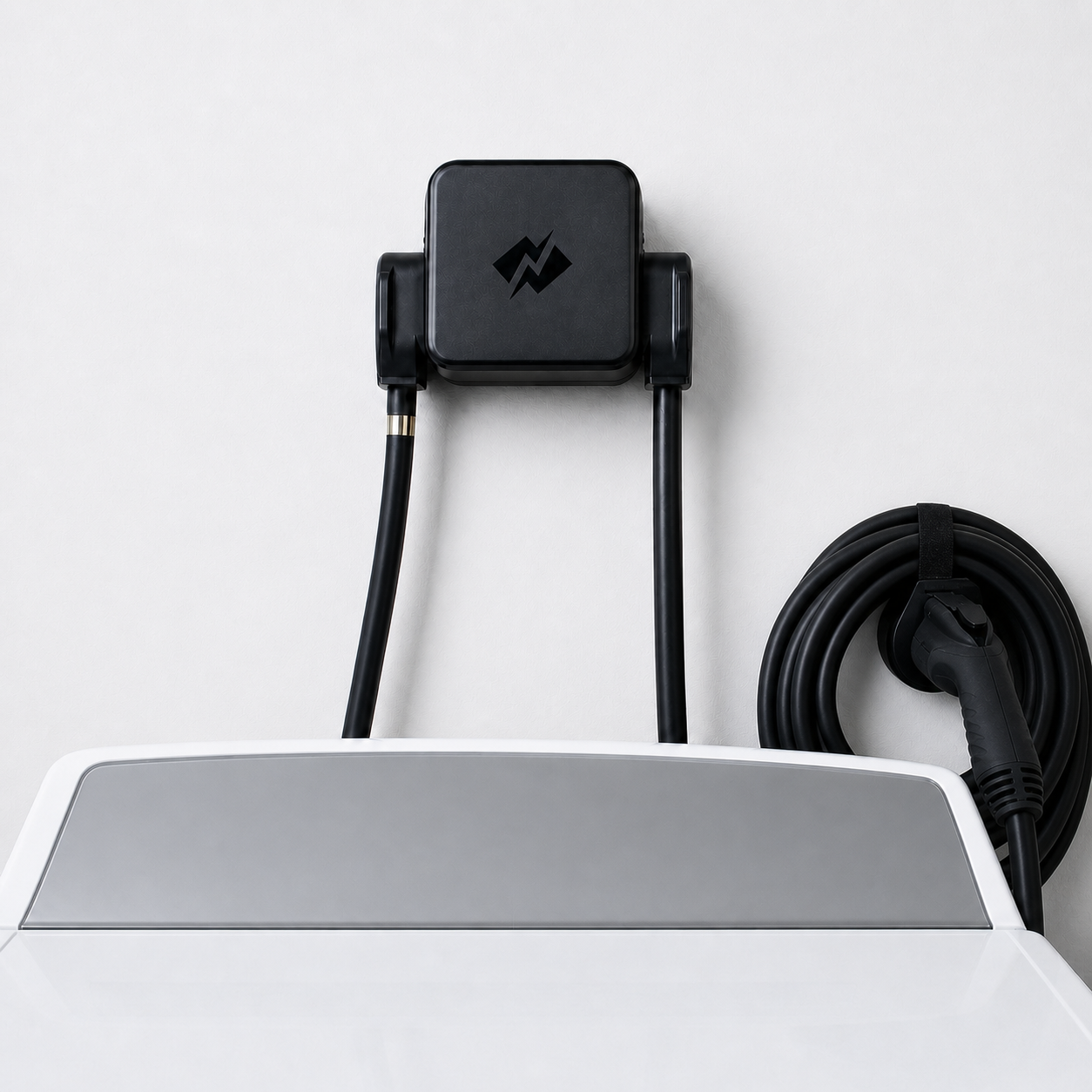
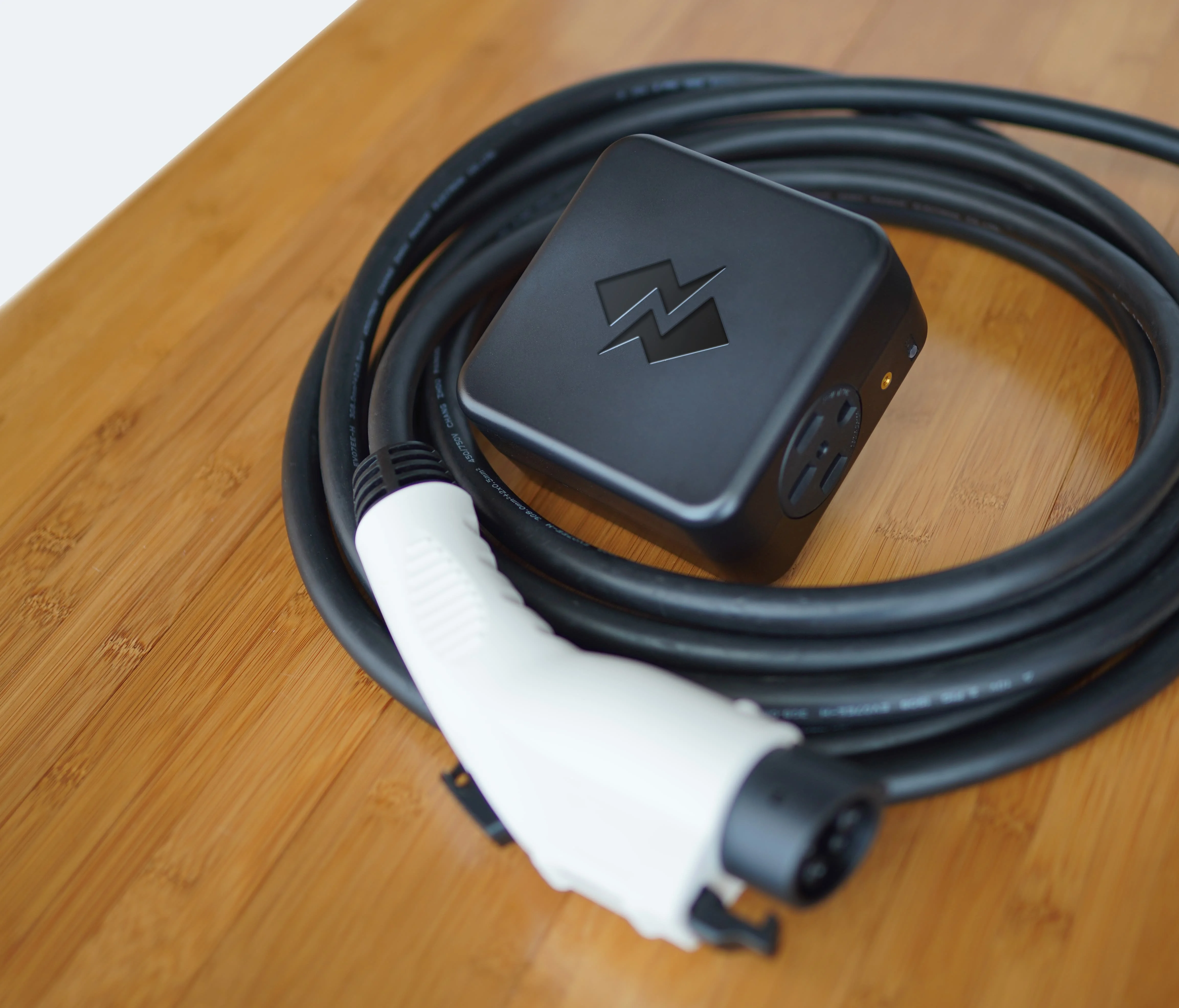
A Smart Splitter is designed to:
- Share one 240V circuit between two devices
- Prioritize one outlet (typically the dryer)
- Switch automatically so the circuit isn’t overloaded by simultaneous use
Learn more about the NeoCharge Smart Splitter.
Important: EV charging is commonly treated as a continuous load, so current limits (like ~24A on a 30A circuit) often matter. For a plain-English overview of EVSE + NEC Article 625 concepts, NYSERDA’s PDF is helpful:
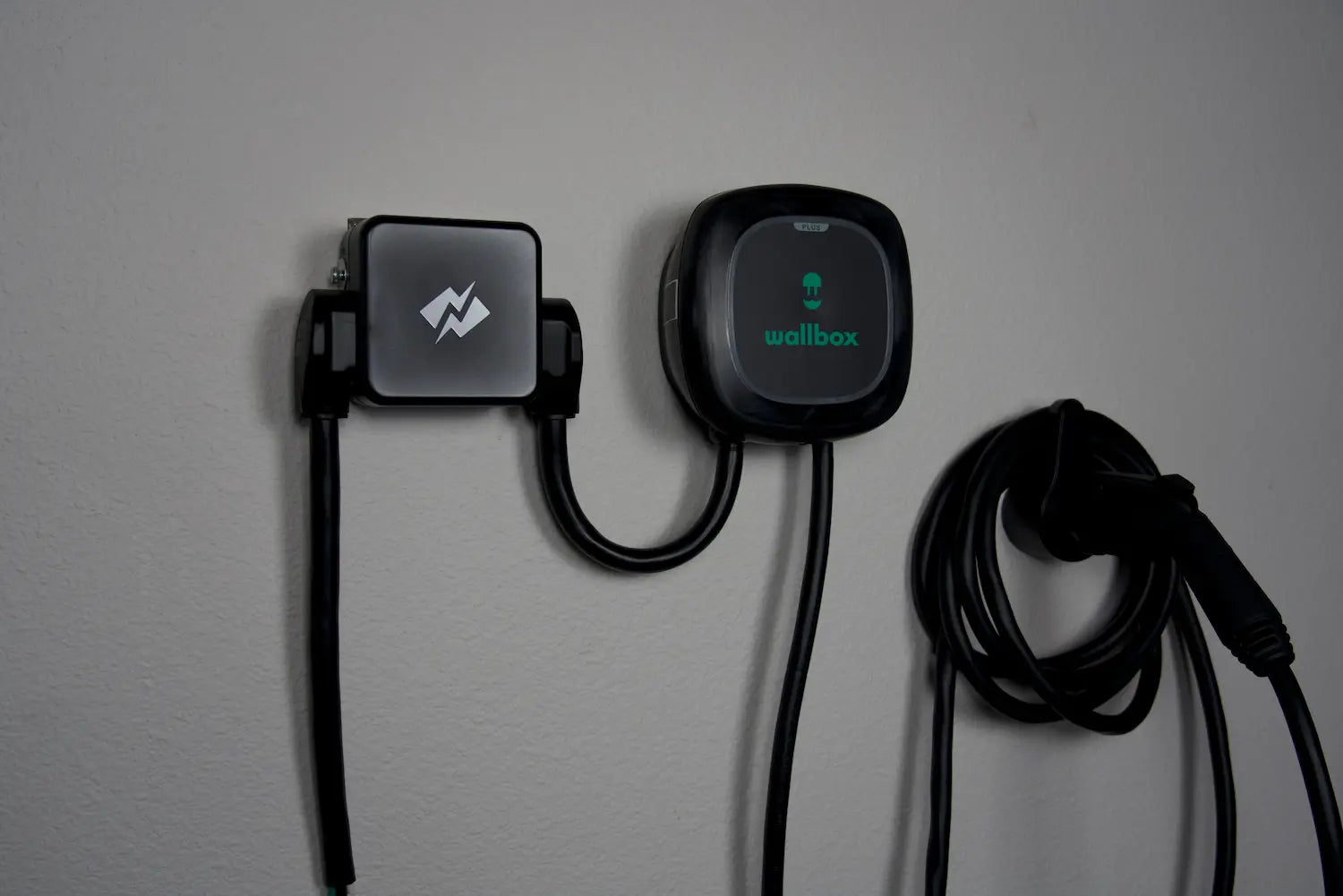
Option 2: EVEMS / load management (best when the constraint is your main service)
Use this when:
- You want a dedicated EV circuit or wall connector
- Your main service is close to its limit
- You want charging that automatically slows/stops when the home load spikes
These systems monitor total home load and adjust EV charging to stay within limits.
Tradeoffs:
- More complexity than outlet sharing
- Can reduce charging speed when the home is busy
- Often needs professional install/config
Option 3: Panel/service upgrade (best long-term, but expensive)
Use this when:
- You need high-power charging and other electrification (HVAC, induction, heat pump water heater)
- Your panel is old/undersized
- You want maximum flexibility later
Tradeoffs:
- Highest cost
- Permits/utility coordination can take time
- Can snowball into other work (meter base, conduit, drywall)
Decision tree: which one is right?
Pick the statement that matches your situation:
“I have a dryer outlet near parking and just want Level 2 without construction.” → Start with a Smart Splitter.
“I want a dedicated wall connector, but my electrician says capacity is tight.” → Ask about EVEMS/load management options before committing to a panel upgrade.
“I’m electrifying everything and want to future-proof.” → A panel/service upgrade may be the cleanest long-term solution.
Next steps (NeoCharge)
- Share a 240V dryer outlet safely and avoid a panel upgrade in many homes: Smart Splitter → NeoCharge Smart Splitter
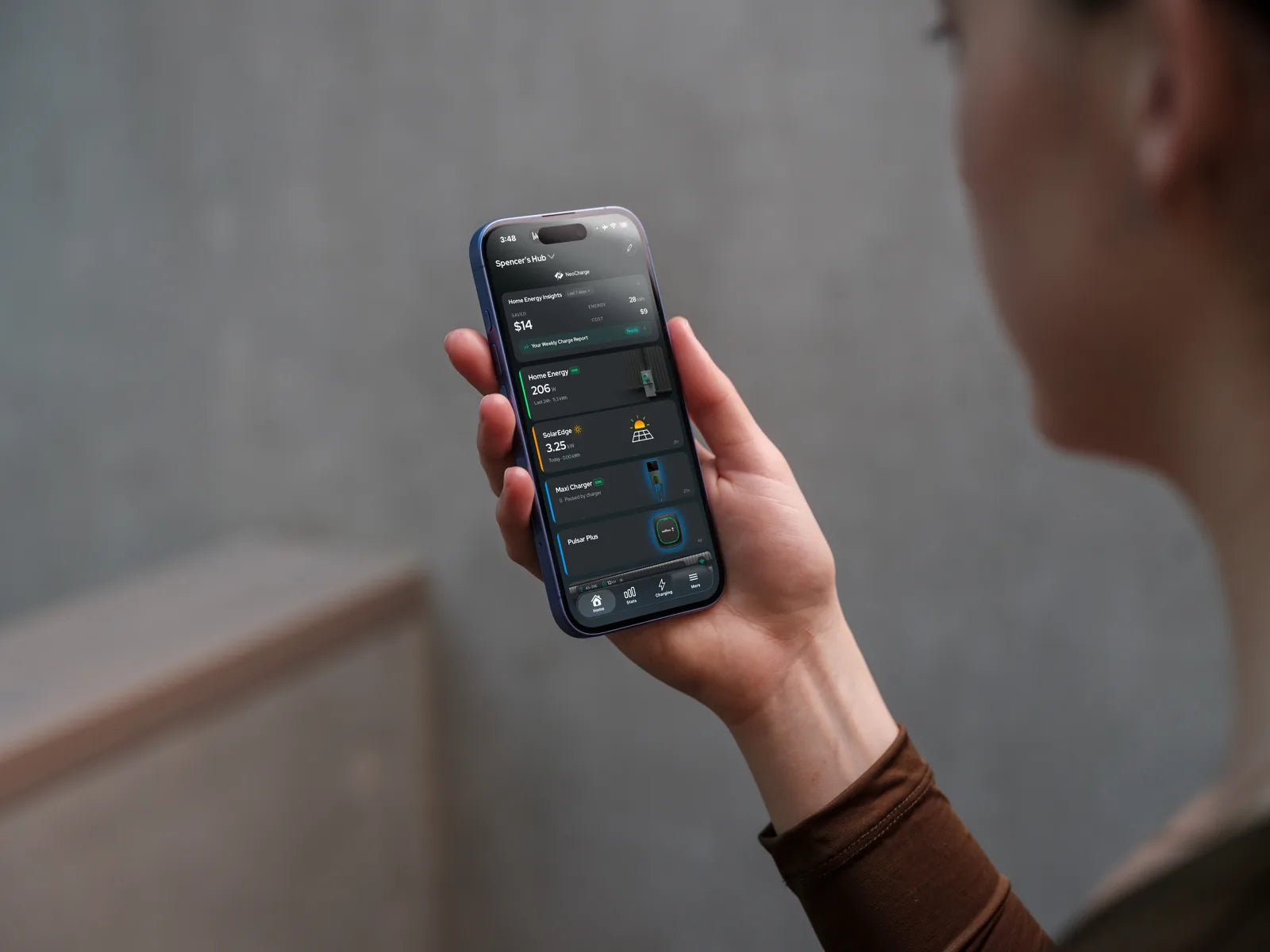
- Save money by charging off-peak and track costs more clearly: NeoCharge App → NeoCharge App
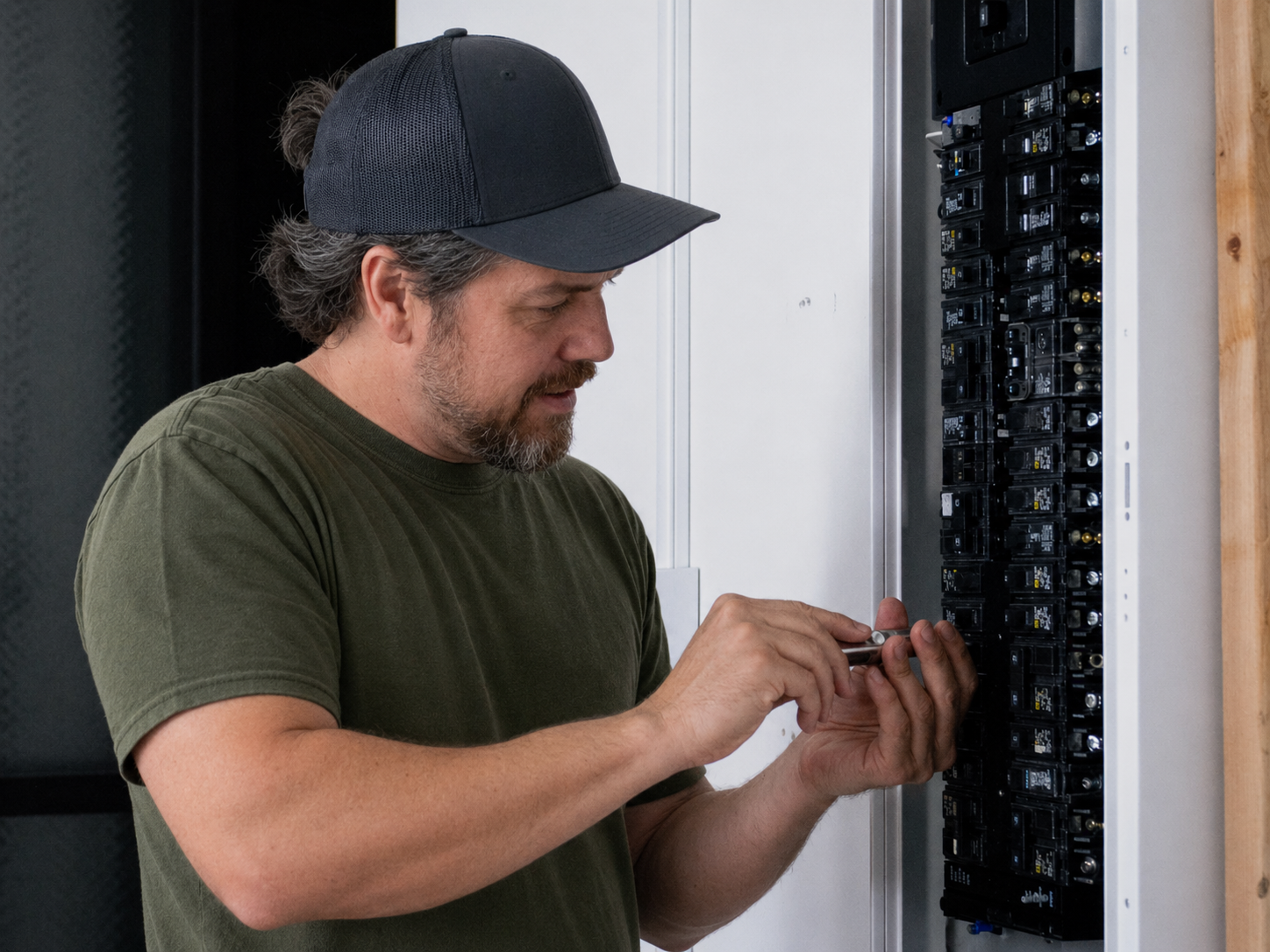
Safety disclaimer: Electrical work can be hazardous and code requirements vary. Use a licensed electrician and follow permitting requirements where applicable.
NeoCharge App
Turn rate plans into simple charging schedules
Schedule around off-peak windows, manage compatible chargers, and keep tabs on charging sessions from the app.
Explore the app


Next steps
Keep going with NeoCharge
Use the article as your decision guide, then jump into the product, app, or related guides that match what you are trying to solve next.
Key terms
- Level 2 charging
- Level 2 EV charging uses a 240V circuit (like a dryer outlet). It typically adds ~20–35 miles of range per hour, depending on your car and the circuit amperage.
- EVSE
- EVSE stands for Electric Vehicle Supply Equipment (the “charger”). It safely delivers power to your EV and communicates with the car to control charging current.
- Load management
- Load management is a strategy to keep your home’s electrical load within safe limits—often by scheduling or pausing EV charging when other appliances are running.
FAQs
What's the quick takeaway from this article?
Who is this guide for?
What should I do next?
Related posts
BC Hydro EV Power Management Device Rebate: Eligible Devices (2026)
BC Hydro pays $200 extra for an eligible EV power management device. The Sept 2026 device list, which chargers qualify, and the permit rule that decides who gets it.

Can I Charge My EV From a Dryer Outlet in Canada?
Can you charge an EV from a dryer outlet in Canada? Learn NEMA 14-30, NEMA 10-30, 24 amp charging, Tesla adapters, safety, and Smart Splitter options.

Do You Need a Panel Upgrade for Home EV Charging in Canada?
Can you install an EV charger without a panel upgrade in Canada? Compare 100 amp panels, Level 2 charging, dryer outlets, load management, and rebates.
DCC-9 vs DCC-10 vs EVEMS vs Smart Splitter: Canada EV Load Management Guide
Compare DCC-9, DCC-10, EVEMS, dynamic charger load management, NeoCharge Smart Splitter, and panel upgrades for Canadian EV charging on 100A or 125A panels.
