



Kitchener-Waterloo Home EV Charging Guide: Ultra-Low Overnight Rates, Dryer Outlets, and Skipping the Panel Upgrade

Direct answer: For most homes in Waterloo Region, the cheapest way to charge an EV is to switch to Ontario's Ultra-Low Overnight (ULO) rate plan and schedule charging from 11 p.m.–7 a.m. at 3.9¢/kWh — adding 30 kWh costs about $1.17, vs $11.73 during the 4–9 p.m. on-peak window at 39.1¢/kWh. If your panel is tight, a Smart Splitter on an existing NEMA 14-30 dryer outlet usually beats a $3,000–$8,000 panel upgrade — same daily result, fraction of the cost.
Waterloo Region rewards EV owners who plan ahead
If you live in Kitchener, Waterloo, Cambridge, or Guelph, your home charging math is unusually good — if you set it up right.
The Tri-Cities are full of tech-sector professionals, suburban single-family homes, and garages that were built between the 1970s and 2010s. Most have an electric dryer in the basement and a 100A or 125A panel. Most can absolutely handle a Level 2 EV charging setup without a service upgrade. And Ontario's Ultra-Low Overnight (ULO) rate plan is one of the cheapest residential EV charging windows in North America.
The trap is that none of that helps you if your car charges through the 4–9 p.m. weekday peak by accident. Set up the schedule once, and you'll save money every week for the life of the car.
What's actually going through your head right now
If you've just gotten an EV in the KW area, you're probably asking:
- Should I switch to ULO?
- Can I just use my dryer outlet?
- Do I really need to pay an electrician for a panel upgrade?
- What about my second EV when my partner switches?
- How do I make sure I don't accidentally charge during the peak?
We'll go through all five.
ULO is the single biggest home-EV win in Waterloo Region
Ontario lets you pick between three Ontario Energy Board regulated rate plans: Time-of-Use (TOU), Ultra-Low Overnight (ULO), and Tiered. For an EV owner whose car is home at night, ULO is almost always the winner.
| ULO period | When | Price (¢/kWh) |
|---|---|---|
| Ultra-low overnight | Every day, 11 p.m.–7 a.m. | 3.9 |
| Weekend off-peak | Weekends + holidays, 7 a.m.–11 p.m. | 9.8 |
| Mid-peak | Weekdays, 7 a.m.–4 p.m. and 9 p.m.–11 p.m. | 15.7 |
| On-peak | Weekdays, 4 p.m.–9 p.m. | 39.1 |
Source: oeb.ca. Electricity-line cost only; doesn't include delivery, regulatory charges, or HST.
Run the math on a typical EV session:
- 30 kWh on ULO overnight: about $1.17
- 30 kWh on standard TOU off-peak: about $2.94
- 30 kWh during ULO weekday on-peak: about $11.73
Same energy, almost 10× difference between cheapest and most expensive window. That's why your single highest-leverage decision in Waterloo Region is making sure your EV only ever charges during the overnight window.
Before you switch plans, run your whole-home pattern through the OEB bill calculator. ULO is great for EVs but the on-peak rate is higher than standard TOU's on-peak — so if you run a lot of high-load appliances at 5 p.m., the math gets less obvious.
Most Waterloo Region homes don't need a panel upgrade
Here's the thing electricians often don't lead with: in most KW-area homes, you don't need a new high-power circuit to charge an EV. You need to manage the circuits you already have.
A typical Waterloo Region single-family home built in the 70s–2000s has:
- 100A or 125A service
- An electric dryer in the basement laundry room
- That dryer is on a NEMA 14-30 four-prong outlet (30A, 240V)
- Heat pump or central AC pulling load in summer / winter evenings
- Maybe an electric range, water heater, hot tub, basement suite
A new dedicated EV circuit costs money — wire run, breaker, permit, drywall repair, electrician time. A panel upgrade costs a lot of money — typically $3,000–$8,000 CAD in this region, depending on age and service location.
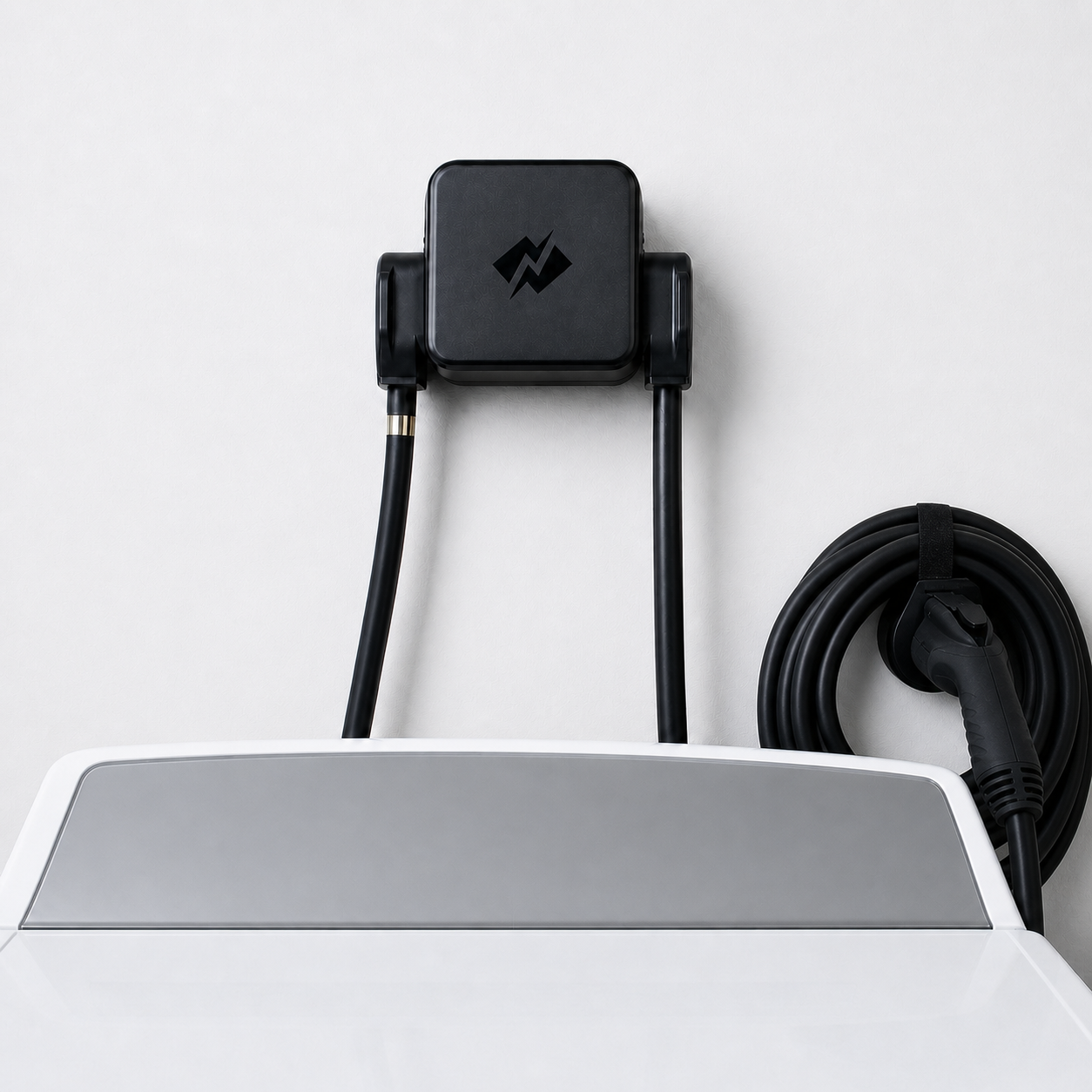
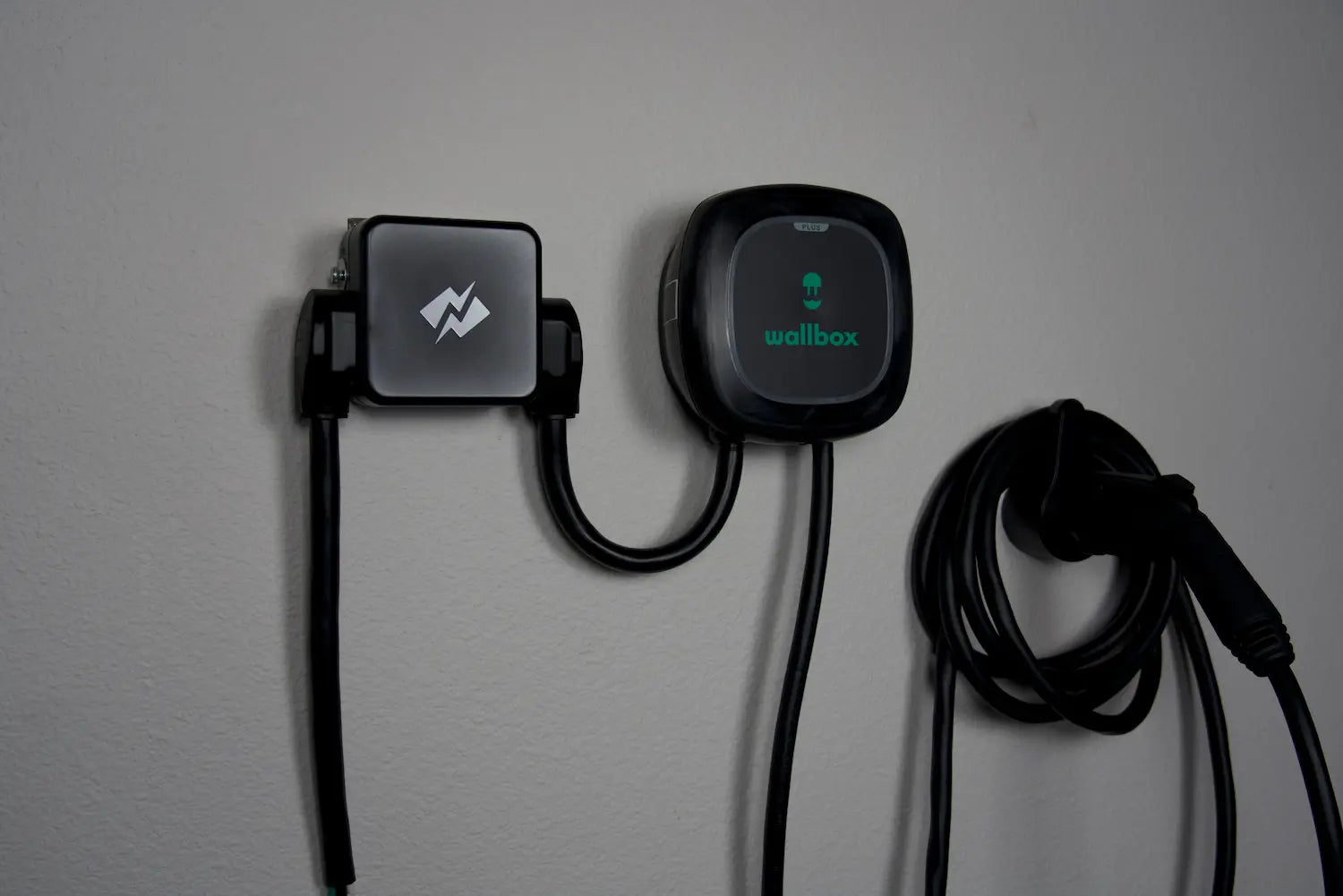
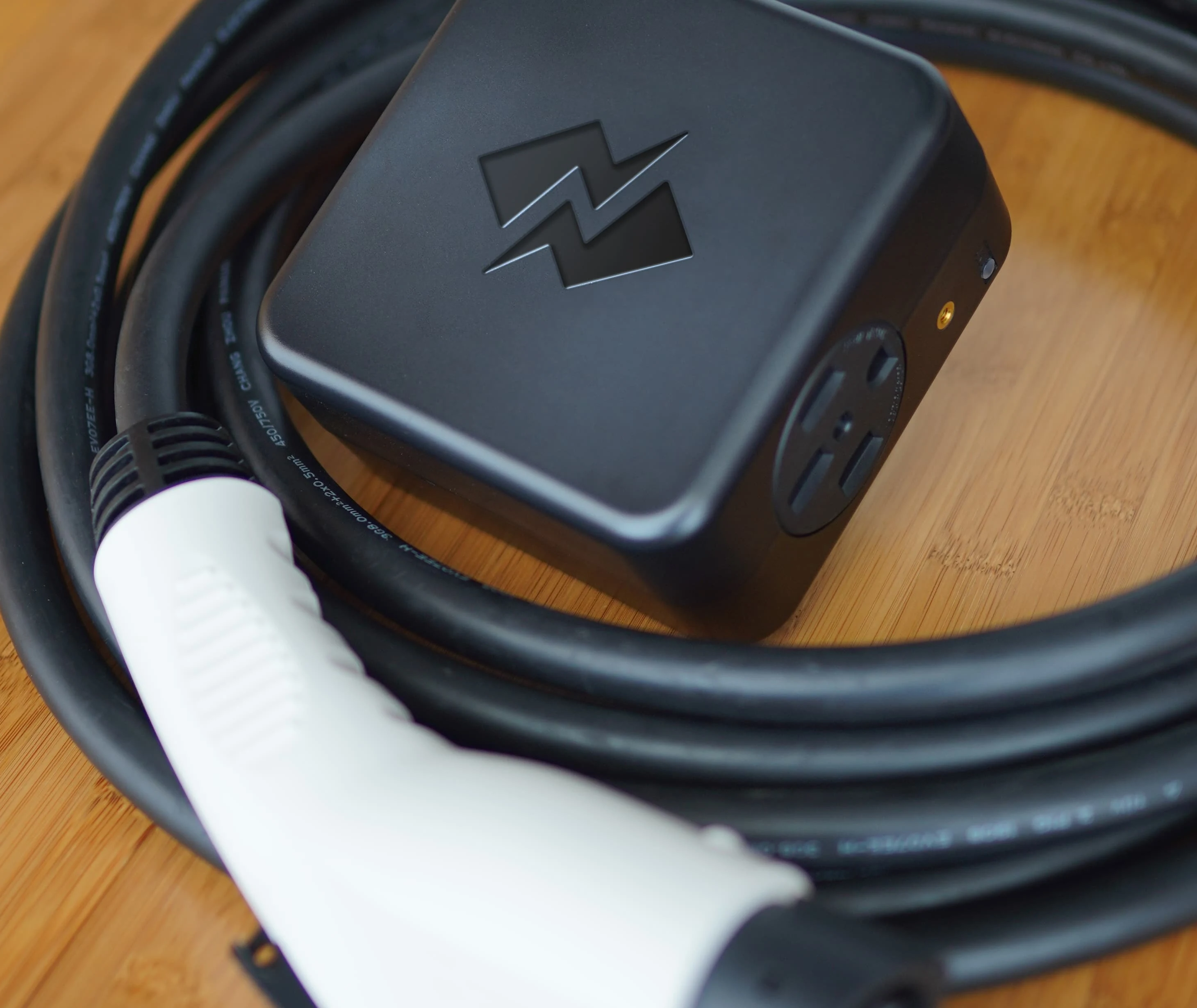
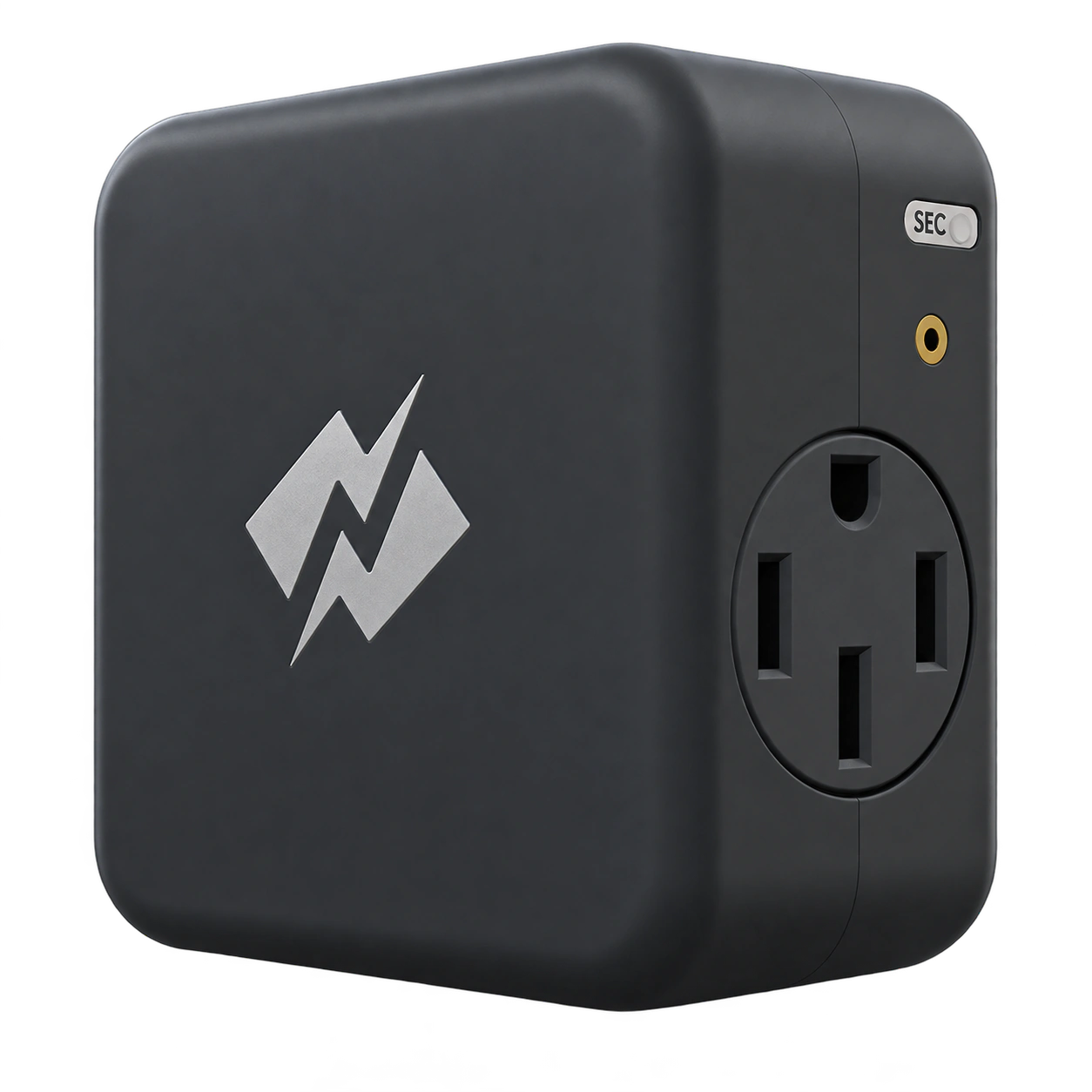
The cheaper path: share the dryer outlet. A Smart Splitter sits between the outlet and both devices. It electrically prevents the dryer and your EV from drawing high power at the same time. Your dryer still runs whenever you want. Your EV still charges overnight. The panel never sees both loads at once.
At 24A continuous charging on a NEMA 14-30, you're pulling ~5.7 kW — about 30–35 km of range per hour. Your car sits plugged in for 8–10 hours overnight. You'll wake up full for a typical Waterloo Region commute.
When a NEMA 14-50 makes sense (and when it doesn't)
If you're in a newer build in Doon, Hespeler, or one of the recent Cambridge developments, you might have a garage that's already wired for a 14-50 outlet (50A, 240V — supports up to ~40A continuous charging, or about 50 km/hr). If that's you, fantastic — install a Level 2 charger and skip the rest.
But don't fall into the "bigger circuit = better" trap if you don't need the speed. A properly managed 14-30 setup covers a normal Waterloo Region commute overnight just fine, and saves you whatever a new 50A circuit and panel work would have cost.
Choose by:
- Your actual daily driving (km/day, not theoretical road-trip needs)
- How many hours the car sits plugged in
- Your panel capacity
- Whether you'll have a second EV soon
- Installation cost (wire run, permits, electrician time)
Common questions, answered straight
- Should I switch to Ultra-Low Overnight? If your car is home overnight, almost certainly yes. The 3.9¢/kWh rate from 11 p.m.–7 a.m. is one of the cheapest EV charging windows in North America. Just make sure your whole-home usage isn't heavy during the 4–9 p.m. weekday peak.
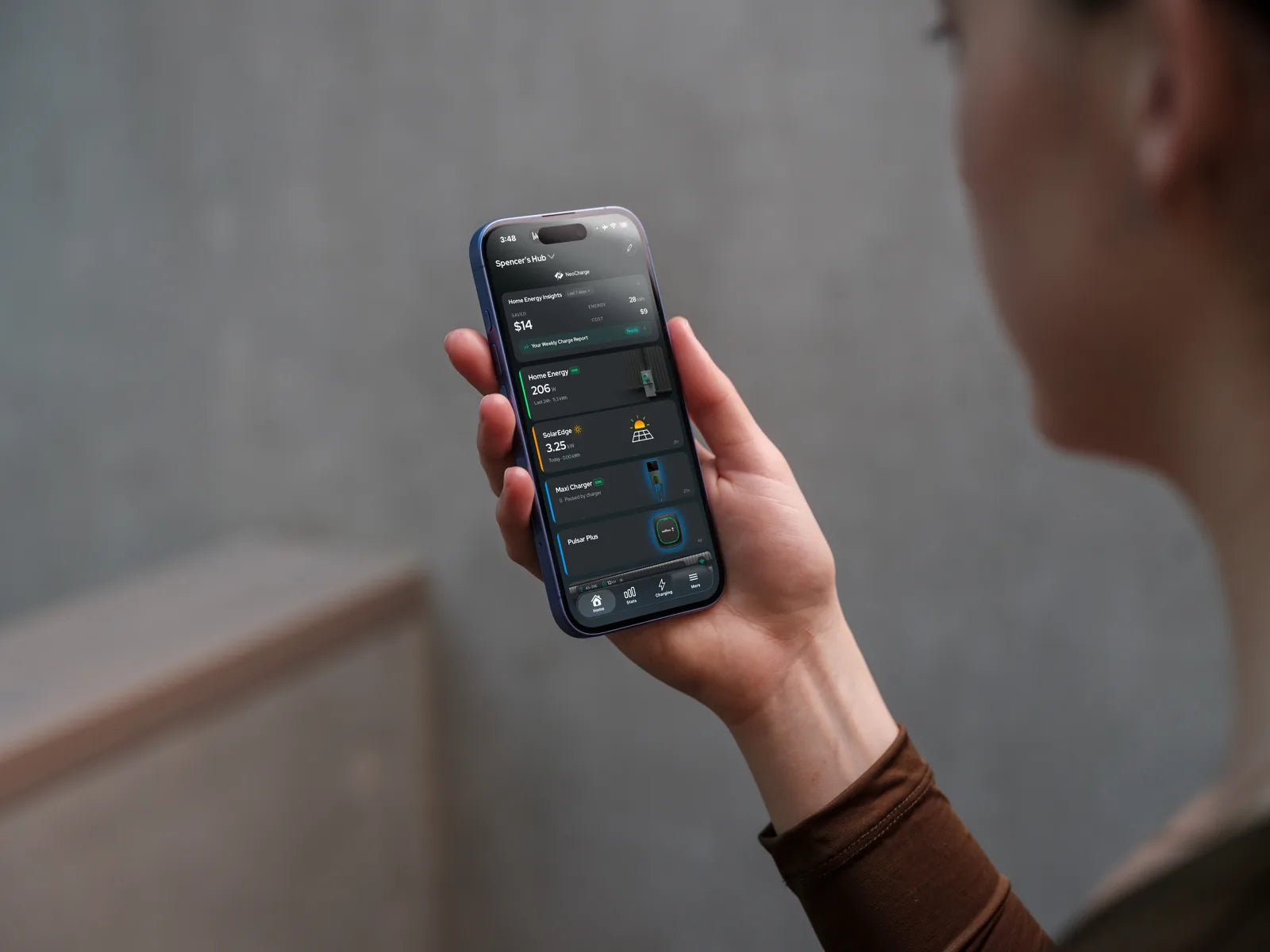
- What time should I actually plug in my EV? Plug in whenever you get home, but set the schedule to start charging at 11 p.m. and stop by 7 a.m. The NeoCharge App handles this automatically.
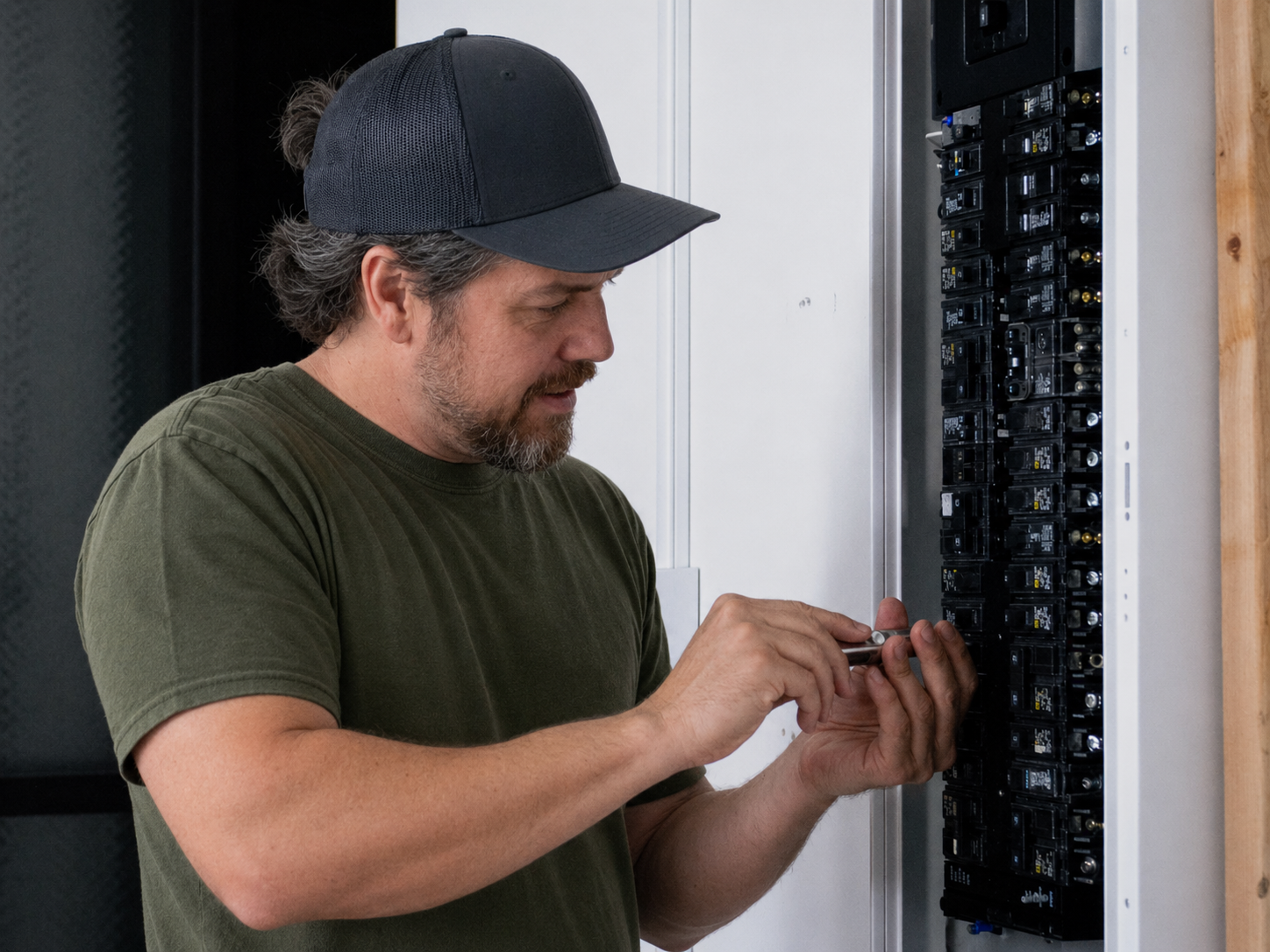
- Can my 100A panel handle EV charging? Usually yes, if you're not trying to add a maxed-out 50A circuit. A Smart Splitter on your existing dryer outlet plus 24A continuous charging covers most daily commutes without touching the panel.
- Do I need a NEMA 14-50? Probably not. A NEMA 14-30 dryer outlet at ~24A continuous adds 30–35 km of range per hour — enough for a typical Waterloo Region commute overnight. The 14-50 (~40A continuous, 50 km/hr) is faster but rarely necessary.
- What about my second EV when my partner switches? Two EVs at full Level 2 power simultaneously is too much for most 100A panels. The fix is staggered scheduling — one car at a time on the same circuit, both finished by morning. The Smart Splitter and NeoCharge App can handle this; talk to a licensed electrician about the load math for your specific home.
- Where do I buy the Smart Splitter? Order at getneocharge.com. Canadian pricing applies automatically at checkout, no code needed: $399 CAD as of October 9, 2026, and NeoCharge refunds $200 once it is connected to the app and charging your EV.
Do this this week
- Take a photo of your panel label and any 240V outlet in the garage or laundry room.
- Identify your outlet — NEMA 14-30 (dryer) or NEMA 14-50 (EV/RV).
- Run the OEB bill calculator with your real usage to see if ULO beats TOU for your household.
- Ask your electrician for three quotes: dedicated 50A Level 2, lower-amp Level 2, and a Smart Splitter / load-management option on your existing dryer outlet. Compare cost, timeline, and permits.
- Order the NeoCharge Smart Splitter. Canadian pricing applies automatically at checkout, no code needed; connect it to the NeoCharge app and charge your EV through it for the $200 refund.
- Set up the NeoCharge App to charge 11 p.m.–7 a.m. so the ULO rate runs on autopilot.
This guide applies whether you live in Kitchener, Waterloo, Cambridge, Guelph, Conestogo, Bridgeport, Doon, Hespeler, Preston, Fergus, or any of the Tri-Cities suburbs.
Sources
- Ontario Energy Board electricity rates: oeb.ca
- Ontario bill calculator: oeb.ca
- Ontario electricity price plans: ontario.ca
- Ontario Energy Board EV information: oeb.ca
Electrical safety disclaimer
This guide is general information, not electrical advice. Electrical work must be done by a licensed electrician under Ontario electrical rules, permits, and equipment instructions. Always verify rate plan options with your local utility before switching.
Skip the panel upgrade
Level 2 charging from the outlet you already have
Plug into the 240V dryer outlet you already have. The dryer gets priority and your EV charges the rest of the night, with no panel upgrade and no new circuit. cUL-listed for Canada, and NeoCharge refunds $200 once it is connected and charging your EV.
NeoCharge App
Turn rate plans into simple charging schedules
Schedule around off-peak windows, manage compatible chargers, and keep tabs on charging sessions from the app.
Explore the app


Next steps
Keep going with NeoCharge
Use the article as your decision guide, then jump into the product, app, or related guides that match what you are trying to solve next.
Key terms
- Level 2 charging
- Level 2 EV charging uses a 240V circuit (like a dryer outlet). It typically adds ~20–35 miles of range per hour, depending on your car and the circuit amperage.
- NEMA 14-50
- A NEMA 14-50 is a common 240V, 50A outlet (often used for EV charging). Many EV chargers plug into it, but the actual charging speed depends on the circuit and your EV.
- NEMA 14-30
- A NEMA 14-30 is a 240V, 30A dryer outlet. With a properly configured EV charger, it can usually support ~24A continuous charging (about 20–25 miles of range per hour for many EVs).
- Time-of-use (TOU) rates
- Time-of-use rates are utility pricing plans where electricity costs more at peak hours and less off-peak. Scheduling EV charging off-peak can significantly reduce cost.
FAQs
What's the quick takeaway from this article?
Who is this guide for?
What should I do next?
Related posts
How to Charge Two EVs at Home in Canada on One 240V Outlet (2026)
One 50A circuit adds about 360 km overnight, enough for two commutes. What the Canadian Electrical Code allows, permits by province, BC Hydro rebates, and options.

Burnaby EV Charger Installation
Burnaby EV charging by home type: share a dryer outlet instead of a panel upgrade, City permits, BC Hydro's $350 + $200 rebates, and strata right-to-charge.
Richmond EV Charger Installation
Richmond EV charger installation: Technical Safety BC permit fees, the 2018 EV-ready rule, BC Hydro's $350 + $200 rebates, and room for a heat pump.
Surrey EV Charger Installation
Add Level 2 charging in Surrey without a panel upgrade: City of Surrey permit steps, BC Hydro's $350 + $200 rebates, suited-house load math, and overnight costs.
