


Ottawa-Gatineau Home EV Charging Guide: ULO, Hydro-Québec, and Why the Bridge You Live On Matters

Direct answer: Ottawa-Gatineau is the only Canadian metro that straddles two provinces, two utilities, and two rate plans — and your bridge decides which one applies to you. Ottawa-side homes (Hydro Ottawa, Hydro One) should switch to Ontario's Ultra-Low Overnight (ULO) rate and charge between 11 p.m. and 7 a.m. at 3.9¢/kWh. Gatineau-side homes (Hydro-Québec) get cheap base rates but need to dodge Flex D winter peak events. Either way, most homes can skip a panel upgrade by using a Smart Splitter on an existing 240V dryer outlet.
You live in the only Canadian metro where home charging has two playbooks
Ottawa-Gatineau is unique. The Macdonald–Cartier Bridge isn't just a commute — it's the boundary between two electricity systems, two utility commissions, and two rate plans. The home on the Ottawa side of the river is on Ontario rates; the home on the Gatineau side is on Hydro-Québec rates. Same metro. Same weather. Completely different charging strategy.
Most home-EV-charging articles you'll find ignore this entirely. So let's not.
What's actually going through your head right now
If you just got an EV in the National Capital Region, you're probably asking:
- Which rate plan should I be on?
- Can I charge from my dryer outlet, or do I need to spend $4,000 on a panel upgrade?
- Does Quebec's $600 Écorecharge grant apply to me if I live in Aylmer?
- Does Ontario's ULO rate apply to me if I live in Kanata?
- Is there a smart way to handle this if I'm renovating an older Glebe or Sandy Hill home?
We'll go through both sides.
If you live on the Ottawa side (Hydro Ottawa, Hydro One)
You're on Ontario Energy Board (OEB) regulated rates. For an EV owner, the best plan is almost always Ultra-Low Overnight (ULO):
| ULO period | When | Price (¢/kWh) |
|---|---|---|
| Ultra-low overnight | Every day, 11 p.m.–7 a.m. | 3.9 |
| Weekend off-peak | Weekends + holidays, 7 a.m.–11 p.m. | 9.8 |
| Mid-peak | Weekdays, 7 a.m.–4 p.m. and 9 p.m.–11 p.m. | 15.7 |
| On-peak | Weekdays, 4 p.m.–9 p.m. | 39.1 |
Source: oeb.ca. Electricity-line cost only; doesn't include delivery, regulatory charges, or HST.
What this means in real money: adding 30 kWh to your EV overnight costs about $1.17. The same 30 kWh during the 4–9 p.m. peak costs about $11.73. 10× spread on the same energy. Your only job is to make sure your car never charges during the peak window.
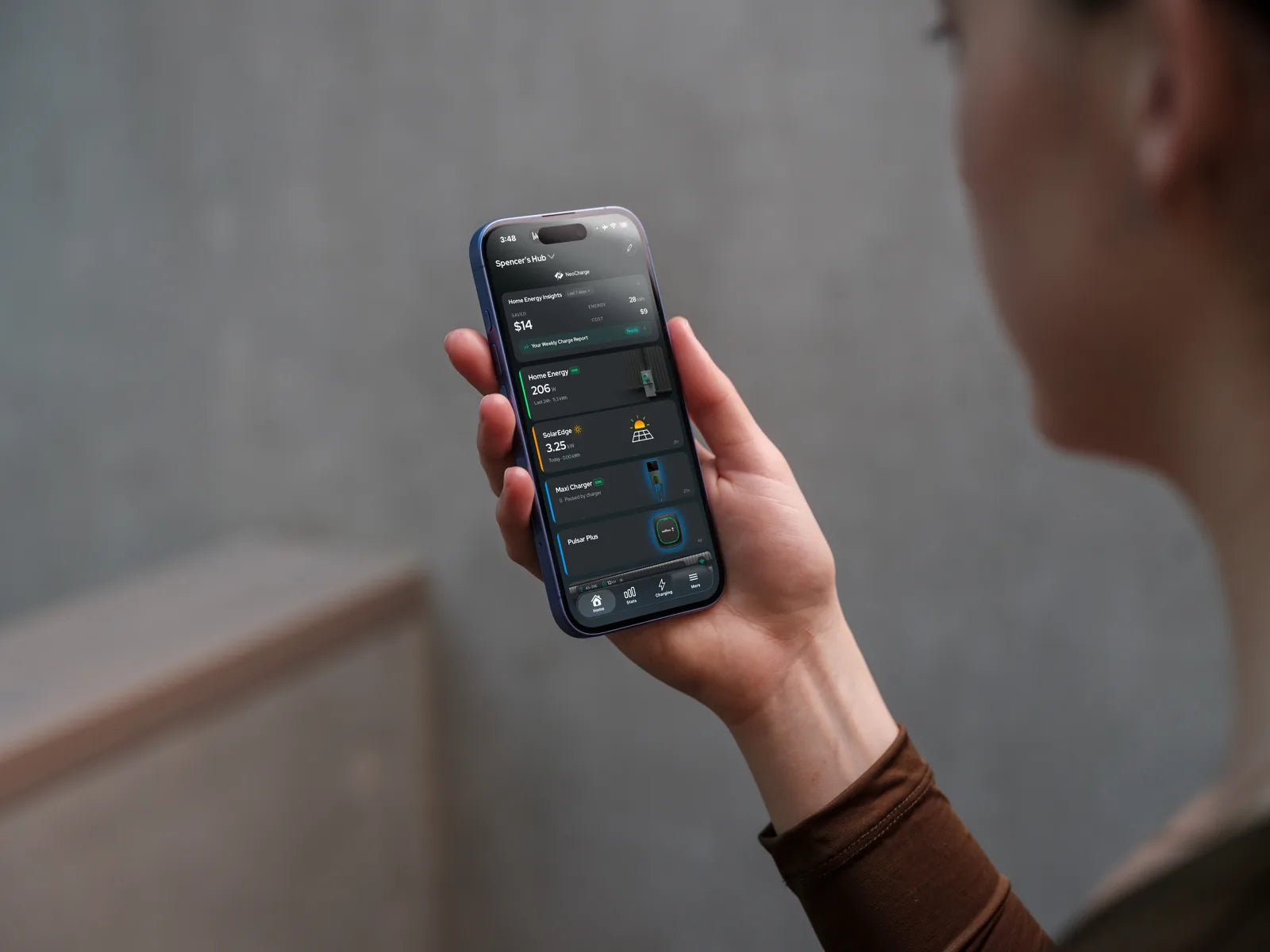
The fix is automatic scheduling. The NeoCharge App handles it so you don't have to remember.
Ottawa-side neighborhoods this applies to: Kanata, Nepean, Orleans, Stittsville, Barrhaven, Riverside South, Cumberland, Manotick, Findlay Creek, Glebe, Westboro, Sandy Hill, Centretown — and everywhere else in Hydro Ottawa or Hydro One service territory.
If you live on the Gatineau side (Hydro-Québec)
You're on Hydro-Québec, which has some of the cheapest residential electricity in North America. The numbers are flat-out better than Ontario — your everyday rate is lower than ULO's mid-peak rate.
But there's a catch if you opt into Flex D. Flex D gives you even lower base rates except during winter peak demand events, when prices spike. Peak events run from December 1 through March 31, usually on cold mornings and evenings, up to 120 hours total per winter.
If your EV is charging during one of those peak events, you're paying premium prices for an 8-hour session. A few of those undo the year's savings.
If you live in Hull, Aylmer, or anywhere else in Gatineau and you want Flex D's lower base rates, you need a connected charger that respects peak events. Same goes if you want Quebec's $600 Écorecharge grant — from April 1, 2026, only connected charging stations qualify.
Gatineau neighborhoods this applies to: Hull, Aylmer, Gatineau (Pointe-Gatineau, Touraine), Buckingham, Masson-Angers, Cantley, and the rest of Hydro-Québec service territory.
What both sides have in common
Whether you're in Kanata or Aylmer, the answer to "can I skip the panel upgrade?" is usually yes. Most homes in the Ottawa-Gatineau region were built between the 1960s and 1990s on 100A or 125A service, with an electric dryer in the basement. That dryer outlet is almost always a NEMA 14-30 — a 30A 240V circuit that can deliver safe ~24A Level 2 charging when set up correctly.
At 24A you're pulling ~5.7 kW, which adds 30–35 km of range per hour. Your car sits plugged in for 8–10 hours overnight. You'll wake up full.
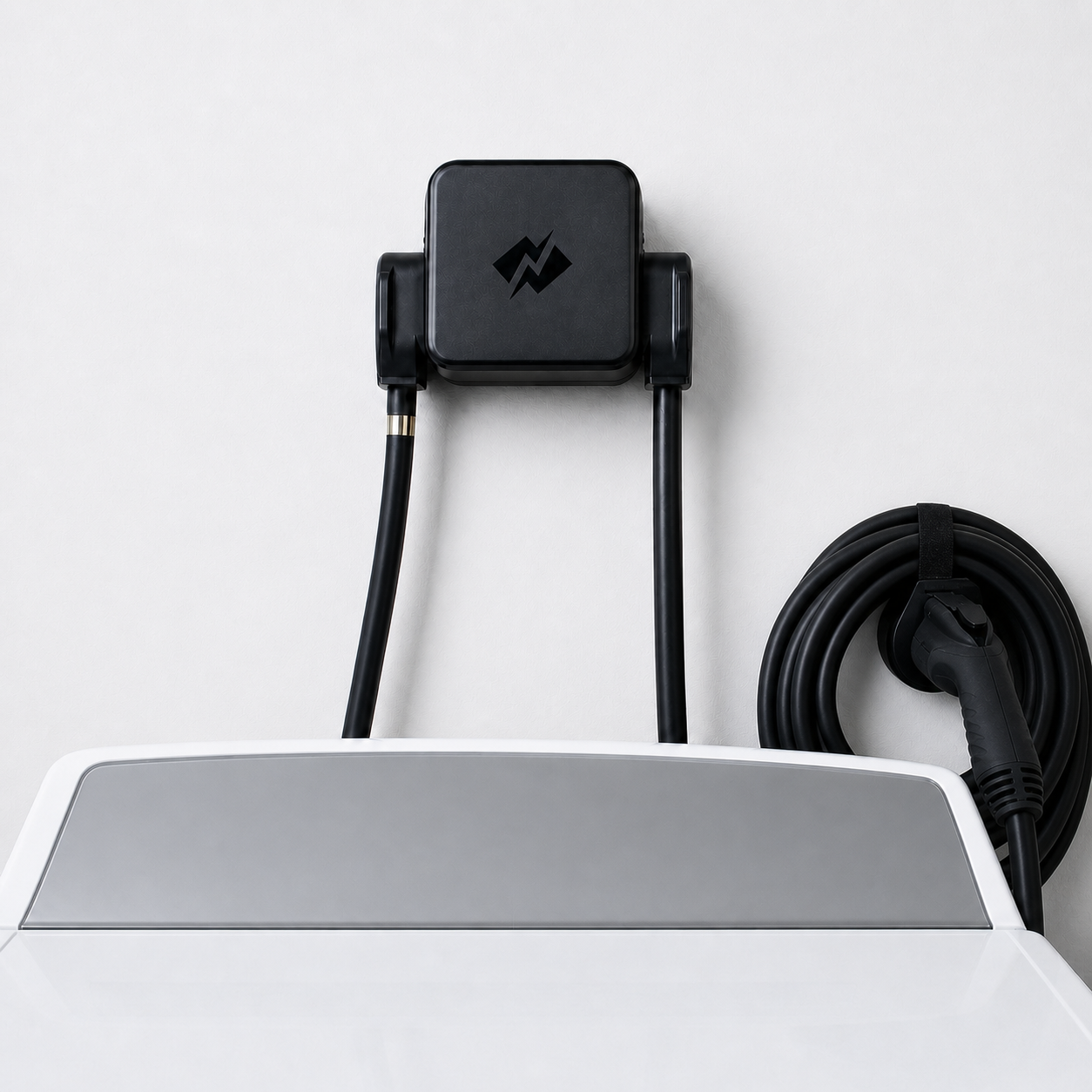
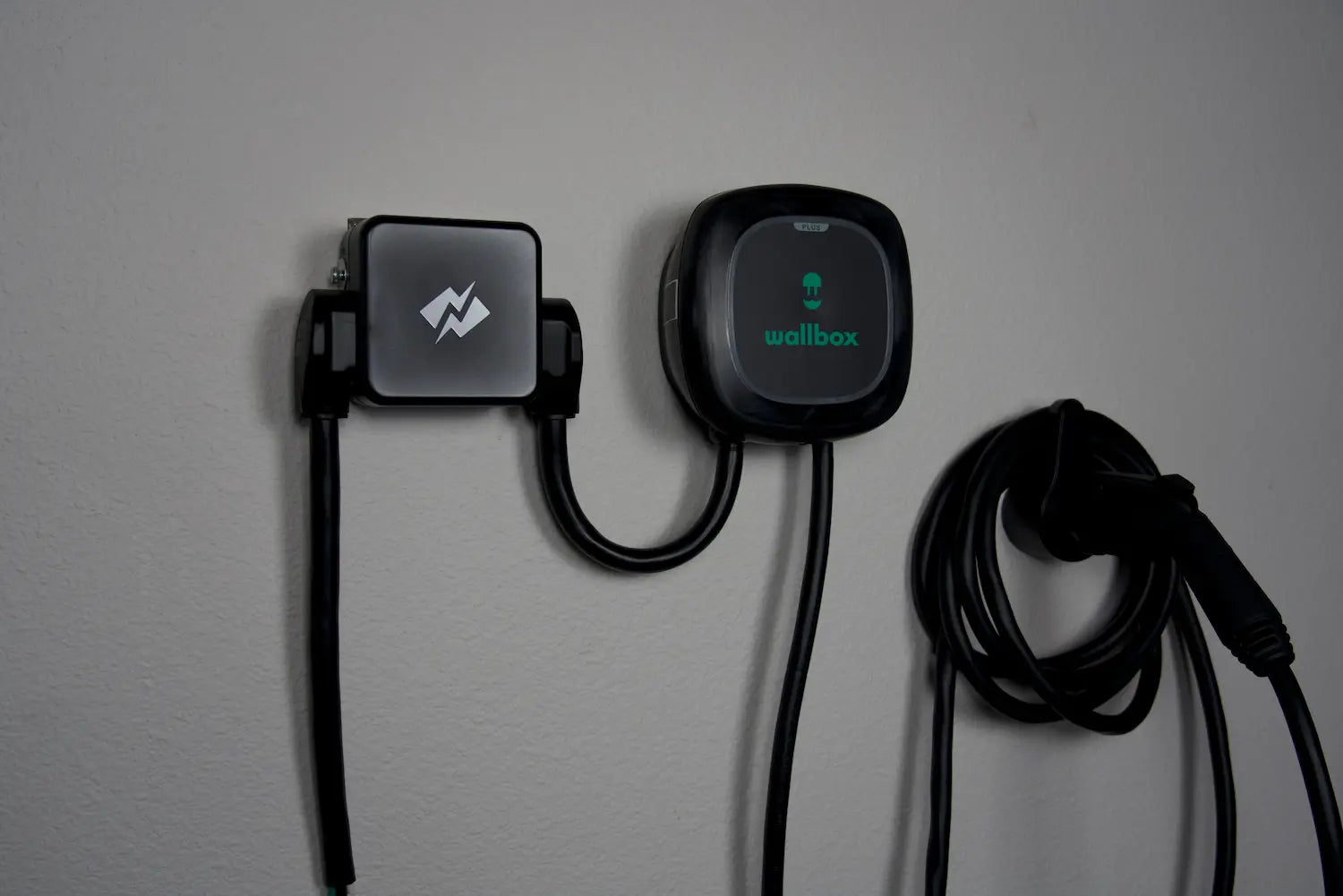
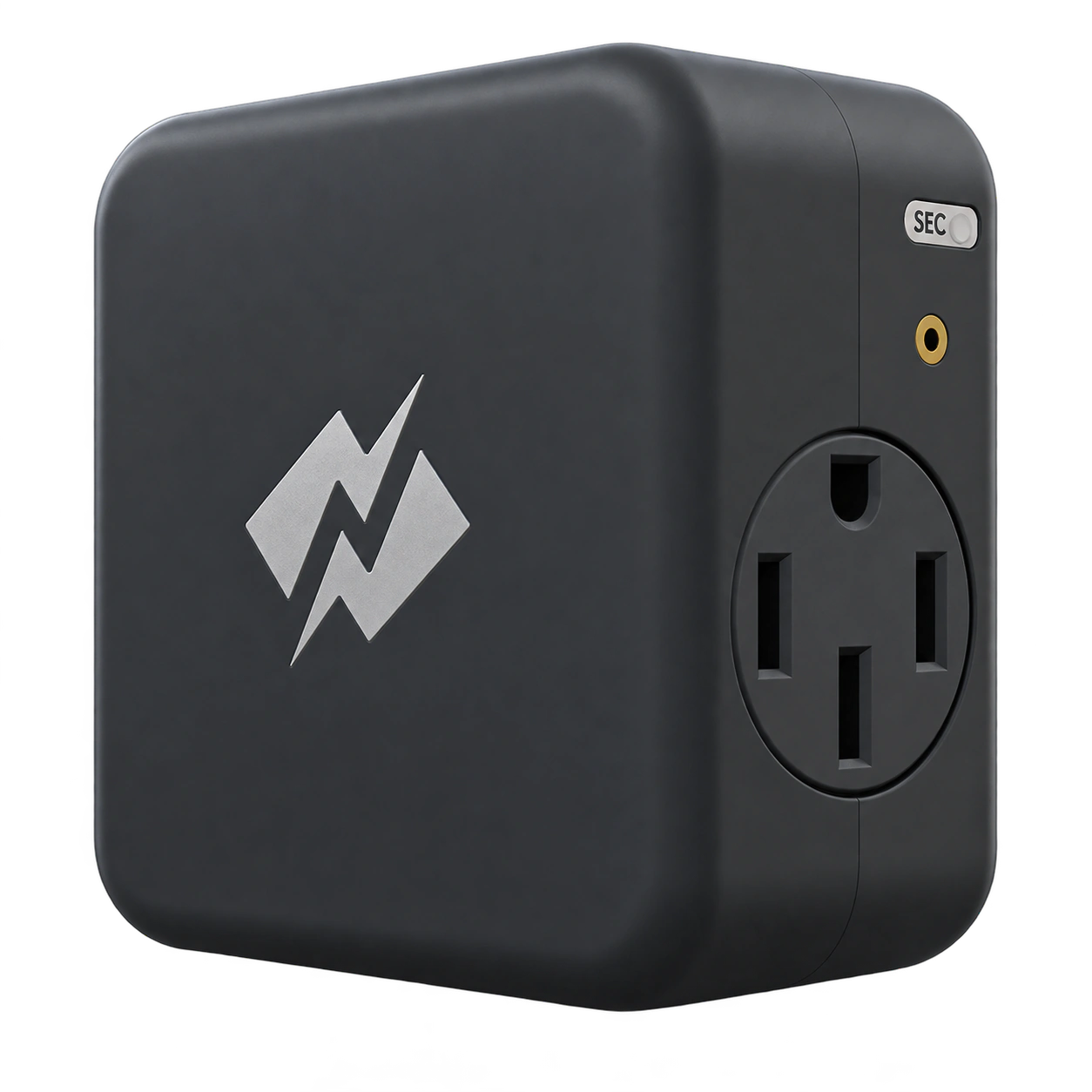
The trick is sharing that one outlet between your dryer and your EV without overloading the circuit. That's what a Smart Splitter does: it sits between the outlet and both devices and electrically prevents them from drawing high power at the same time. No memory required, no breaker trips, no fire risk.
Compared to a typical Ottawa-area panel upgrade quote of $3,000–$8,000 CAD, the Smart Splitter path is dramatically cheaper for most daily drivers — and works whether you're on the Ontario side or the Quebec side.
Common questions, answered straight
- I live in Kanata. Should I switch to Ultra-Low Overnight? Almost certainly yes if your car is home at night. ULO's 11 p.m.–7 a.m. rate is 3.9¢/kWh — adding 30 kWh costs about $1.17. The catch is the 4–9 p.m. weekday peak at 39.1¢/kWh, so use the OEB bill calculator with your whole-home pattern before switching.
- I live in Aylmer. Can I get the $600 Écorecharge grant? Yes — you're a Hydro-Québec customer, so Quebec's Écorecharge program applies. From April 1, 2026, only connected charging stations qualify. Verify the current eligible-station list on Québec.ca.
- I live in Orleans with a 100A panel. Do I really need a panel upgrade? Usually not. A Smart Splitter on your existing dryer outlet (NEMA 14-30) plus 24A continuous charging covers a typical commute overnight — without touching your panel. Ask your electrician for a load-management quote before approving a service upgrade.
- I live in central Ottawa and rent. Can I do this? If you have an in-unit electric dryer and a private parking spot with 240V access, yes. Talk to your landlord — most are open to a load-management device because it doesn't require new circuits.
- I work in Ottawa but live in Gatineau. Which rate plan covers me? Your home address determines your utility. If your home is in Gatineau, you're on Hydro-Québec regardless of where you work.
- What's the cheapest way to start? Order the NeoCharge Smart Splitter ($399 CAD at checkout, no code needed), plug into your existing dryer outlet, and set up the NeoCharge App to charge overnight automatically.
Do this this week
- Confirm which utility you're on. Hydro Ottawa, Hydro One, or Hydro-Québec — check your last bill.
- Take a photo of your panel label and dryer outlet.
- If you're Ontario-side: check your usage pattern in the OEB bill calculator and decide whether to switch to ULO.
- If you're Quebec-side: decide whether you want Flex D (lower base rates, peak risk) or the standard rate (higher base, no peak risk). Check current Écorecharge eligibility before buying a charger.
- Order the NeoCharge Smart Splitter. Canadian pricing applies automatically at checkout, no code needed; connect it to the NeoCharge app and charge your EV through it for the $200 refund.
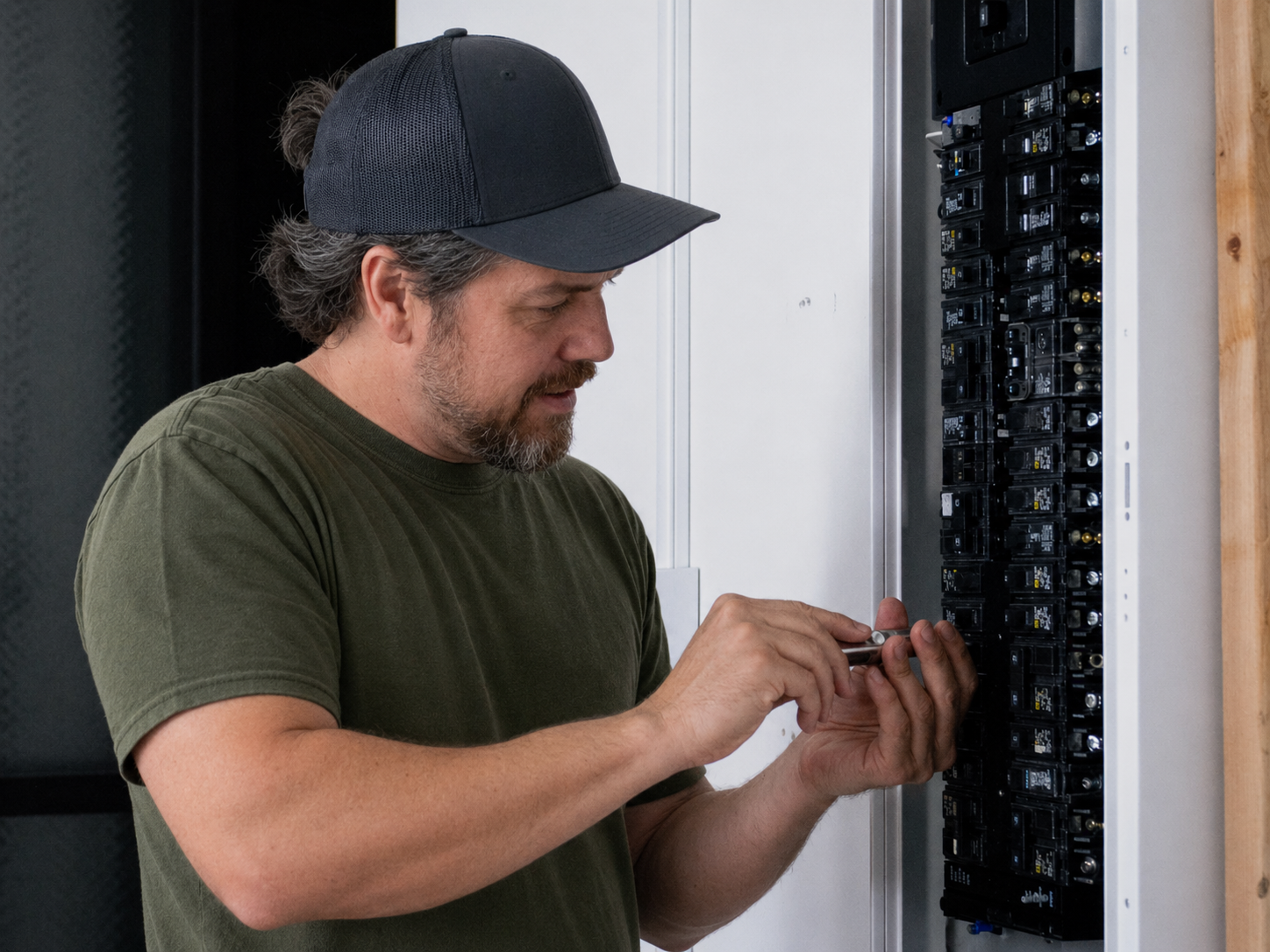
- Have a licensed electrician install it. Code and inspection rules are different on each side of the river — use a local pro.
Sources
- Ontario Energy Board electricity rates: oeb.ca
- Ontario bill calculator: oeb.ca
- Hydro-Québec Flex D: hydroquebec.com
- Quebec Écorecharge home charging station: quebec.ca
Electrical safety disclaimer
This guide is general information, not electrical advice. Electrical work must be done by a licensed electrician and meet local code on the appropriate side of the river. Always verify rate plan options with your local utility and rebate eligibility with the appropriate provincial program before purchasing equipment.
Skip the panel upgrade
Level 2 charging from the outlet you already have
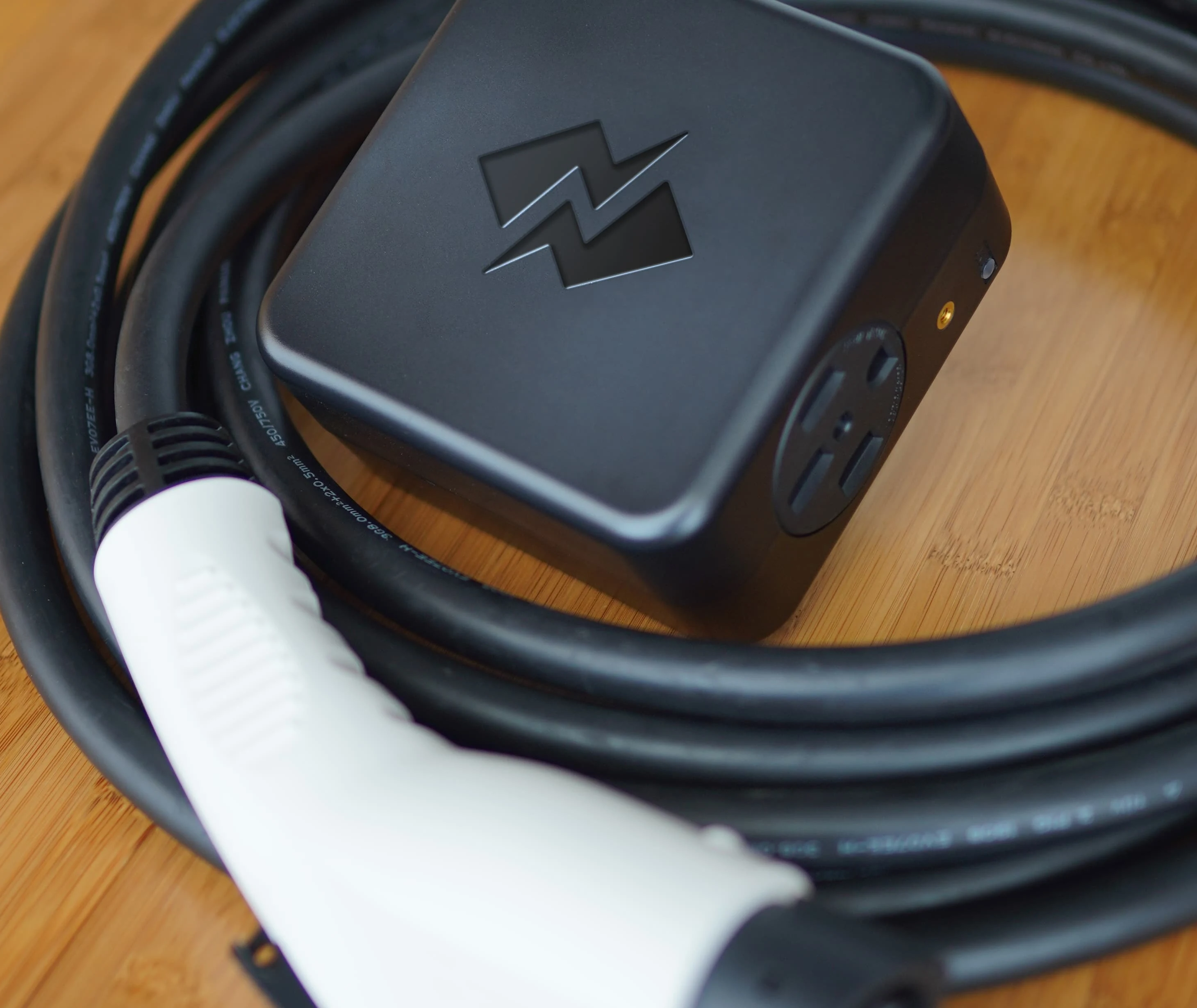
Plug into the 240V dryer outlet you already have. The dryer gets priority and your EV charges the rest of the night, with no panel upgrade and no new circuit. cUL-listed for Canada, and NeoCharge refunds $200 once it is connected and charging your EV.
NeoCharge App
Turn rate plans into simple charging schedules
Schedule around off-peak windows, manage compatible chargers, and keep tabs on charging sessions from the app.
Explore the app


Next steps
Keep going with NeoCharge
Use the article as your decision guide, then jump into the product, app, or related guides that match what you are trying to solve next.
Key terms
- Level 2 charging
- Level 2 EV charging uses a 240V circuit (like a dryer outlet). It typically adds ~20–35 miles of range per hour, depending on your car and the circuit amperage.
- NEMA 14-30
- A NEMA 14-30 is a 240V, 30A dryer outlet. With a properly configured EV charger, it can usually support ~24A continuous charging (about 20–25 miles of range per hour for many EVs).
FAQs
What's the quick takeaway from this article?
Who is this guide for?
What should I do next?
Related posts
How to Charge Two EVs at Home in Canada on One 240V Outlet (2026)
One 50A circuit adds about 360 km overnight, enough for two commutes. What the Canadian Electrical Code allows, permits by province, BC Hydro rebates, and options.

Burnaby EV Charger Installation
Burnaby EV charging by home type: share a dryer outlet instead of a panel upgrade, City permits, BC Hydro's $350 + $200 rebates, and strata right-to-charge.
Richmond EV Charger Installation
Richmond EV charger installation: Technical Safety BC permit fees, the 2018 EV-ready rule, BC Hydro's $350 + $200 rebates, and room for a heat pump.
Surrey EV Charger Installation
Add Level 2 charging in Surrey without a panel upgrade: City of Surrey permit steps, BC Hydro's $350 + $200 rebates, suited-house load math, and overnight costs.
