



NeoCharge Blog · Electrical Basics
NEC 625 Continuous Load (125% Rule) Explained: Why EV Charger Breaker Sizing Matters
TL;DR
EV charging is typically a continuous load. Learn the NEC 625 125% sizing concept in plain English, common breaker pairings (32A→40A, 40A→50A), and safety tips for homeowners.
Key takeaways
- This is about heat and safety: continuous loads can overheat undersized wiring/breakers.
- EVSE instructions and labeling matter; you size around the maximum continuous load.
- Electrical code varies by jurisdiction—always follow your local AHJ/permits.
What does “continuous load” mean for EV charging?
Many home charging sessions last for several hours—especially overnight. Because of that, EV charging is commonly treated as a continuous-duty load for circuit sizing.
An NEC-focused overview from NYSERDA is a good entry point to Article 625 and EVSE safety concepts. Source (PDF): nyserda.ny.gov
Safety note: This article is educational, not electrical advice. For any new circuit, breaker changes, or hardwired EVSE, use a licensed electrician and follow local permits/inspections.
What is the “125% rule” (in plain English)?
The simplified idea:
- If a device can run for hours at a time, you don’t want to run the wiring and breaker at 100% of their rating continuously.
- So you size the circuit to handle more than the EVSE’s continuous draw.
Industry references discuss the 125% concept for EVSE as continuous loads.
- EC&M (NEC Article 625 coverage; 125% continuous-duty framing): ecmweb.com
- Specifying Engineer Q&A referencing NEC sizing for continuous loads (context): csemag.com
Common EVSE sizes and what they imply
Here’s the pattern you’ll see most often in the U.S.:
| EV charging setting (continuous) | Typical circuit size | Why |
|---|---|---|
| 16A | 20A | 16A × 125% ≈ 20A |
| 24A | 30A | 24A × 125% ≈ 30A |
| 32A | 40A | 32A × 125% ≈ 40A |
| 40A | 50A | 40A × 125% ≈ 50A |
| 48A | 60A | 48A × 125% ≈ 60A |
This is why a “40A charger” often needs a 50A circuit.
Why this matters for homeowners
1) Prevent nuisance trips and overheating
Undersized circuits can run hot. Heat leads to:
- nuisance breaker trips
- damaged receptacles
- melted insulation
- higher fire risk
2) It impacts outlet choices
High-amp plug-in charging (like 14-50) can be convenient, but the outlet must be installed correctly and maintained.
3) It affects cost
Heavier-gauge wiring and larger breakers cost more. But they exist for a reason.
If your electrical limitation is capacity: use load management, not wishful thinking
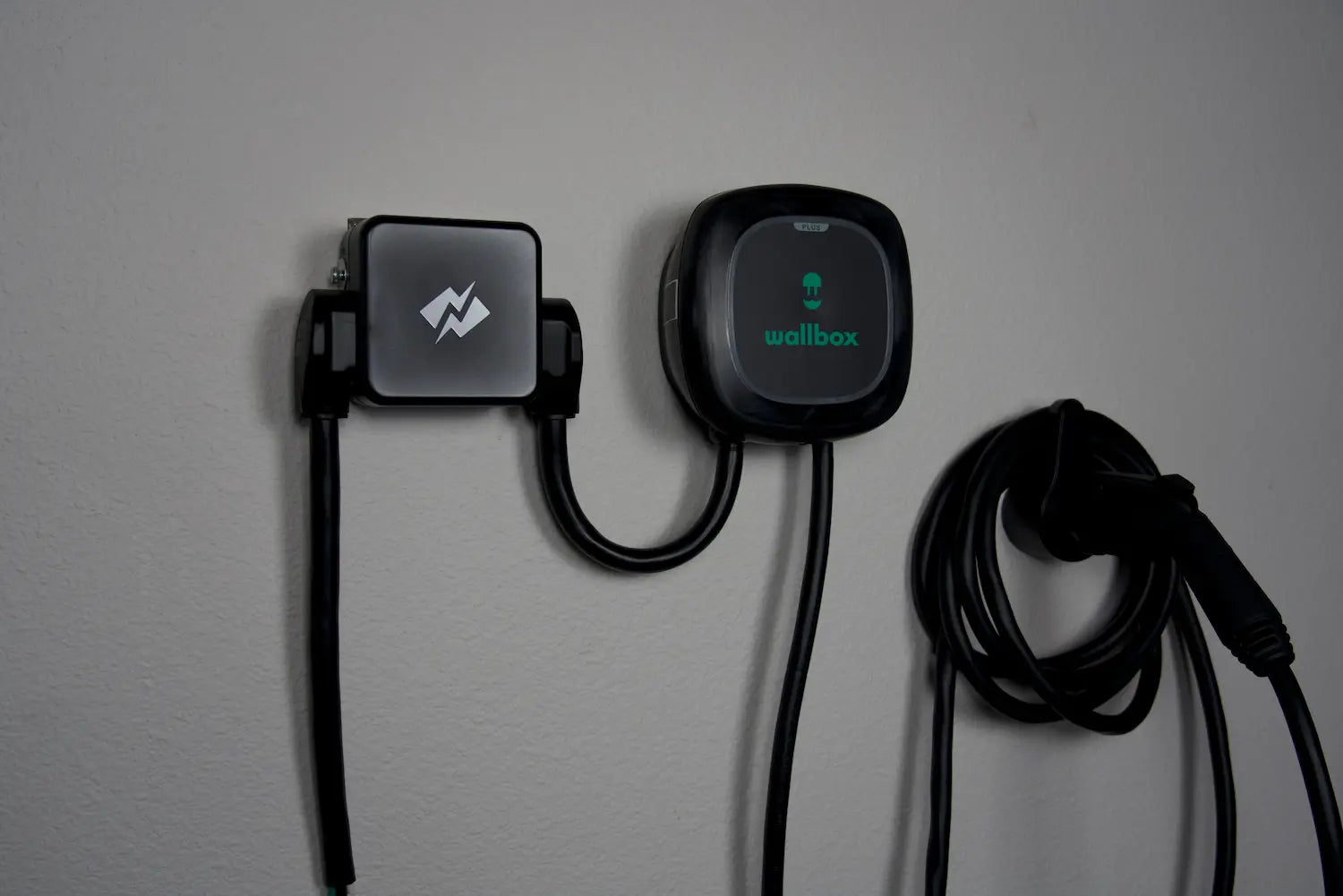
If your situation is “I can’t safely run the EV and the dryer at the same time” (or you’re trying to avoid a panel upgrade), you’re in load-management territory.
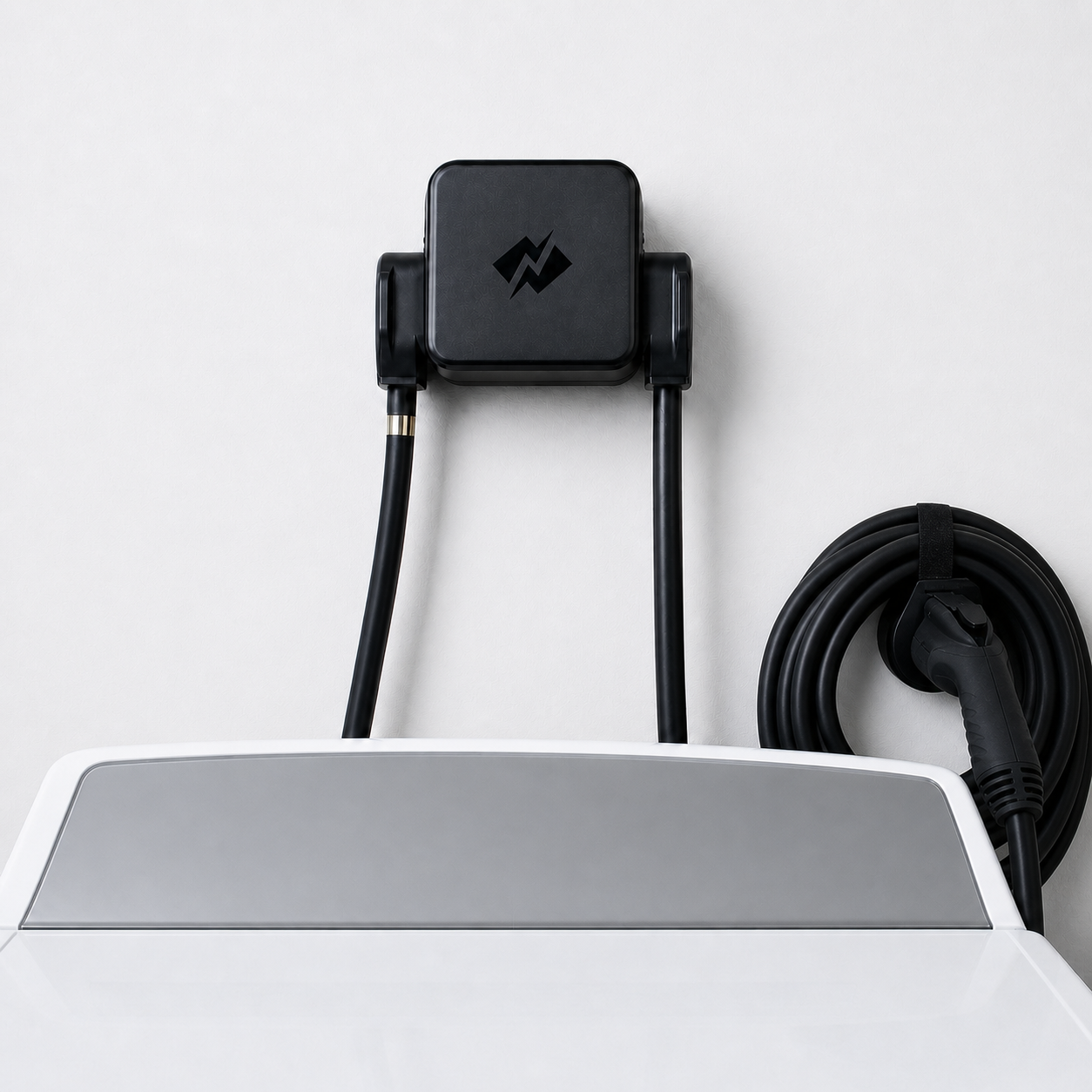
A product like NeoCharge Smart Splitter can automatically sequence loads on a shared circuit/outlet so only one runs at a time: NeoCharge Smart Splitter
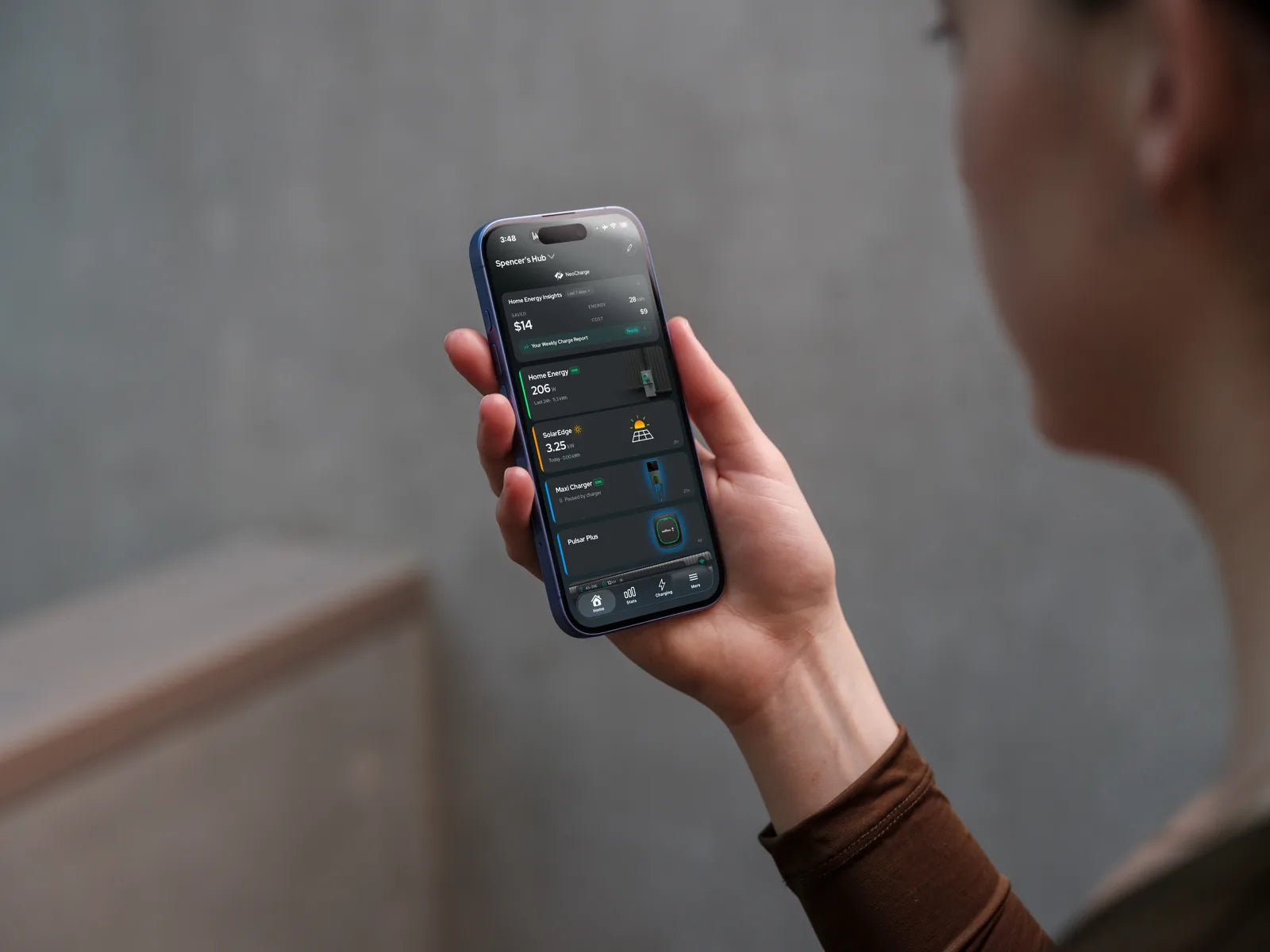
And if your goal is to hit off-peak windows reliably (instead of charging whenever you remember), use the NeoCharge App: NeoCharge App
FAQ
Is the 125% rule “optional”?
No. The intent is safety for continuous loads. Exact requirements and enforcement can vary by jurisdiction, but you should assume EV charging circuits must be designed for continuous duty.
Can I just turn down the EV’s charging current?
Often yes. If you have a 20A circuit, setting charging to 16A (continuous) can be an appropriate way to stay within limits—if the circuit is correctly wired and the EVSE is compatible.
What if I already have a 50A outlet but I’m not sure it was installed correctly?
Have an electrician verify breaker size, wire gauge, terminations, and receptacle condition—especially if you notice heat, discoloration, or intermittent charging.
Next steps (NeoCharge)
- Charge during cheaper hours and track costs: NeoCharge App → NeoCharge App
- Need to share a 240V circuit safely or avoid a panel upgrade with load management? Smart Splitter → NeoCharge Smart Splitter
NeoCharge App
Turn rate plans into simple charging schedules
Schedule around off-peak windows, manage compatible chargers, and keep tabs on charging sessions from the app.
Explore the app


Next steps
Keep going with NeoCharge
Use the article as your decision guide, then jump into the product, app, or related guides that match what you are trying to solve next.
Key terms
- NEMA 14-50
- A NEMA 14-50 is a common 240V, 50A outlet (often used for EV charging). Many EV chargers plug into it, but the actual charging speed depends on the circuit and your EV.
- EVSE
- EVSE stands for Electric Vehicle Supply Equipment (the “charger”). It safely delivers power to your EV and communicates with the car to control charging current.
- Load management
- Load management is a strategy to keep your home’s electrical load within safe limits—often by scheduling or pausing EV charging when other appliances are running.
FAQs
What's the quick takeaway from this article?
Who is this guide for?
What should I do next?
Related posts
Home EV Charging in Canada
The 2026 Canadian home EV charging playbook: BC Hydro $200 power-management offer, Ontario ULO at 3.9¢/kWh, Quebec $600 Écorecharge, NEMA 14-30 dryer outlets, Smart Splitters, and CAN100.

NEMA 6-20 EV Charging Guide (2026): A Cheap, Entry-Level Level 2 Setup
Can you charge an EV on a NEMA 6-20 outlet? Yes—learn typical speed (16A continuous), safety considerations, and how to get the most savings by charging off-peak.

Bidirectional EV Charging at Home: V2H, V2G, V2L, and V2X Explained
Learn how bidirectional EV charging works in 2026, including V2H home backup, V2G grid export, V2L portable power, solar integration, hardware requirements, runtime math, and buyer questions.

How Do You Charge an Electric Car at Home? (2026 Guide)
How do you charge an electric car at home? Plug into a 120V (Level 1) or 240V (Level 2) outlet, usually overnight. See speeds, costs, equipment, and how to skip a panel upgrade.
