

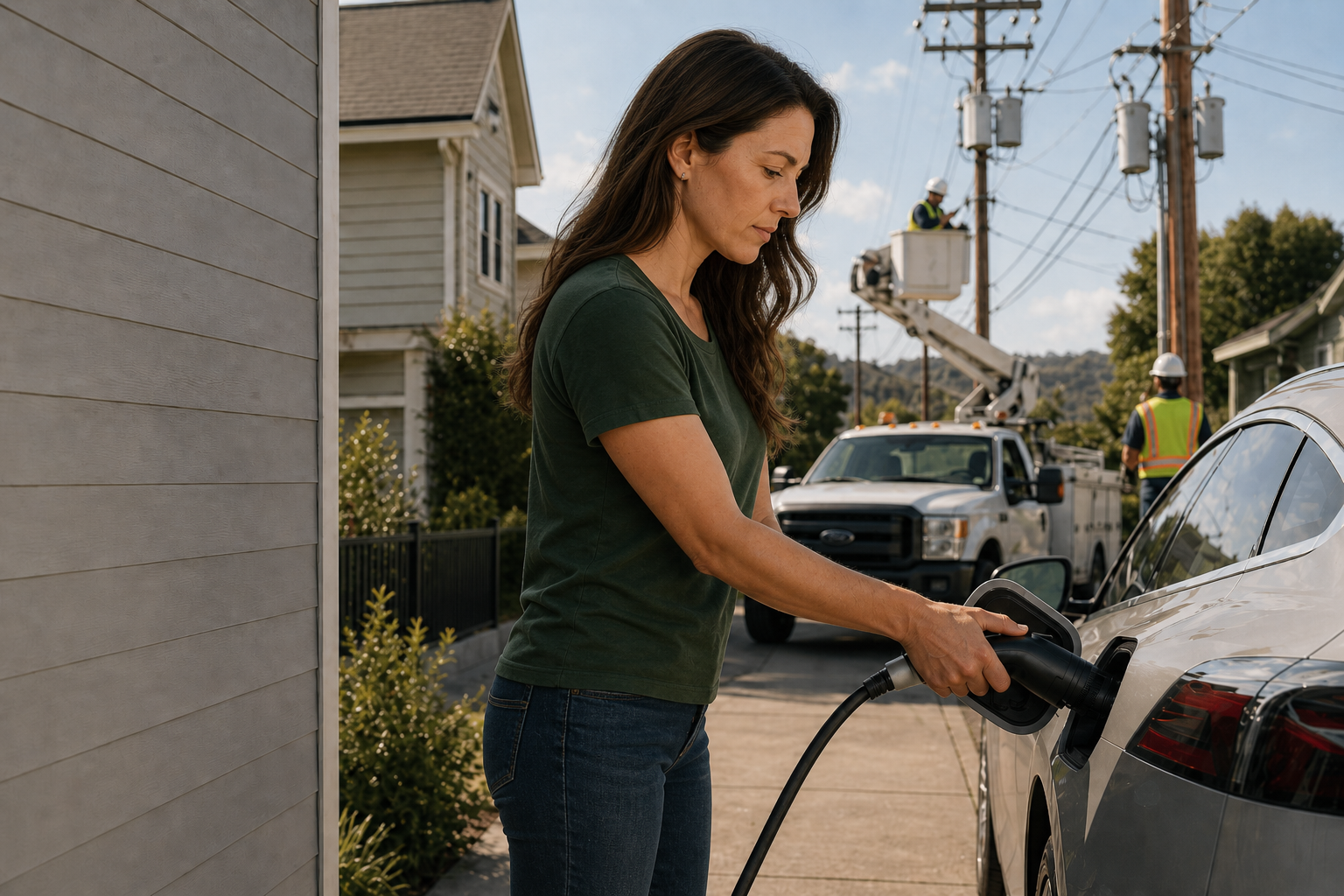



Home EV Charging in Canada: Rebates, Dryer Outlets, Smart Splitters, and Panel Upgrade Savings
Direct answer: For most Canadian homes, the cheapest reliable home EV charging path is to share an existing 240V outlet (usually a NEMA 14-30 dryer outlet) with a load-management device — not to pay $3,000–$8,000 for a panel upgrade. B.C. is the load-management province (BC Hydro $200 offer), Ontario is the schedule province (ULO at 3.9¢/kWh from 11 p.m.–7 a.m.), Quebec is the connected-charger province ($600 Écorecharge, connected-only from April 1, 2026).
Why most home EV charging advice doesn't fit Canadian homes
If you've been Googling "home EV charging," you've probably read the same article ten times: install a new 50A circuit, mount a wall connector, you're done. That's American advice written for American homes with 200A panels and clean garages.
You probably don't have that.
Most Canadian homes — especially in Vancouver, Toronto, Montreal, and their suburbs — run on a 100A or 125A panel, share that panel with an electric dryer and maybe a heat pump, have an older basement suite or a detached garage, and were not designed with EVs in mind. The expensive part of EV charging is almost never the charger itself. It's the panel work, the service upgrade, the trenching, the permits, the wall repair, and the electrician's calendar.
So the better question is not how fast can I charge? It's:
Can I get reliable overnight charging without overbuilding my electrical system?
For most Canadian drivers, you can. The path is just different in each province — which is what the rest of this guide walks through.
The five decisions that matter most
1. Do you already have a 240V outlet?
If you have an electric dryer, you almost certainly have a NEMA 14-30 — that four-prong outlet behind it. If you've got a dedicated EV/RV outlet in the garage already, that's a NEMA 14-50.
Either one can charge your EV. Most Canadian homes have one of them sitting unused for 22 hours a day.
2. Do you actually need maximum charging speed?
Most drivers do not need to refill an empty battery every night. They need to replace normal daily driving while the car is parked overnight. A safe 24A or 32A Level 2 setup can be plenty for many households.
3. Is your panel the constraint?
If an electrician says the panel is tight, do not jump straight to a panel upgrade. Ask about:
- load calculation
- lower-amp Level 2 charging
- EV energy management
- Smart Splitter/load sharing
- whether an existing 240V circuit can be used safely
4. What does your province reward?
B.C. is the clearest province for checking load management incentives first. Ontario is strongest for ultra-low overnight scheduling. Quebec is strong for low-cost home charging, but winter peak events and Flex D-style behavior can matter.
5. Can your setup schedule and track energy?
The best charging setup is not just a plug. It is the combination of:
- safe hardware
- right-sized amperage
- charging schedule
- energy tracking
- utility-rate awareness
That is where the NeoCharge app and Smart Splitter story becomes useful to the driver, not just promotional.
Province-by-province starting point
If you live in B.C.
Your first question is: can I skip the panel upgrade?
For most homes, yes. BC Hydro has a separate $200 EV power-management offer for homes that add EV charging without upgrading the panel. Their optional time-of-day rate also gives you a 5¢/kWh discount overnight (11 p.m.–7 a.m.) and a 5¢/kWh surcharge on the 4–9 p.m. peak — so you want to charge while you sleep.
The math: the NeoCharge Smart Splitter is on BC Hydro's eligible-device list. It is $399 CAD at checkout and $199 after NeoCharge's $200 app refund, and BC Hydro's $200 device top-up applies on top when it is installed under an electrical permit. Compare that to $3,000–$8,000 for a panel upgrade.
Read next: the full B.C. guide · Vancouver step-by-step
If you live in Ontario
Your first question is: when should I actually charge?
Ontario's Ultra-Low Overnight (ULO) rate is one of the cheapest residential EV-charging windows in North America: 3.9¢/kWh from 11 p.m.–7 a.m. The catch is the weekday peak — 39.1¢/kWh from 4–9 p.m. Same energy, ~10× the cost.
Adding 30 kWh overnight on ULO costs about $1.17. The same 30 kWh on the peak window costs about $11.73. That's why your single biggest job in Ontario is making the schedule automatic — not buying a faster charger.
Read next: the full Ontario guide · Toronto step-by-step
If you live in Quebec
Your first question is: how do I keep this simple without getting burned by a winter peak event?
Quebec has some of the cheapest everyday electricity in Canada, but the grid has a winter personality. If you opt into Hydro-Québec's Flex D rate, you trade lower base rates for dynamic pricing during winter peak events (December 1–March 31, up to 120 hours total). Charging your EV through one of those without realizing is what undoes the savings.
The other thing to know if you're shopping: from April 1, 2026, the $600 Écorecharge grant only applies to connected charging stations — chargers you can actually schedule and control remotely. So buy a connected charger, not a dumb one.
Read next: the full Quebec guide · Montreal step-by-step
The lowest-friction path for many Canadian homes
For many homeowners, the decision tree is simple:
- Check whether you have a usable 240V outlet.
- Confirm the outlet type: NEMA 14-30 or NEMA 14-50.
- Ask an electrician whether the circuit and receptacle are safe for EV charging.
- If the circuit is shared with a dryer or the panel is tight, check load management before a panel upgrade.
- Use scheduling to charge overnight.
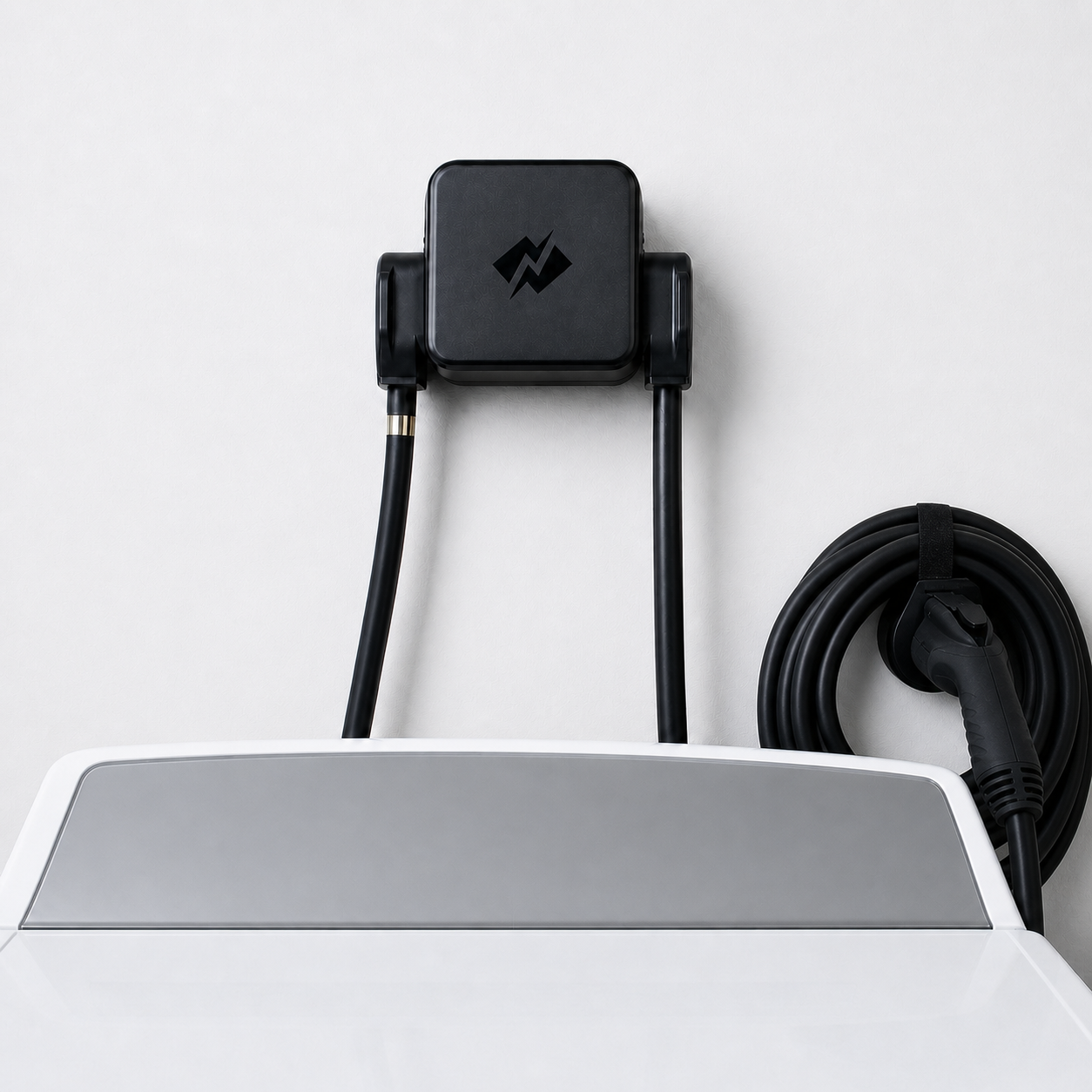
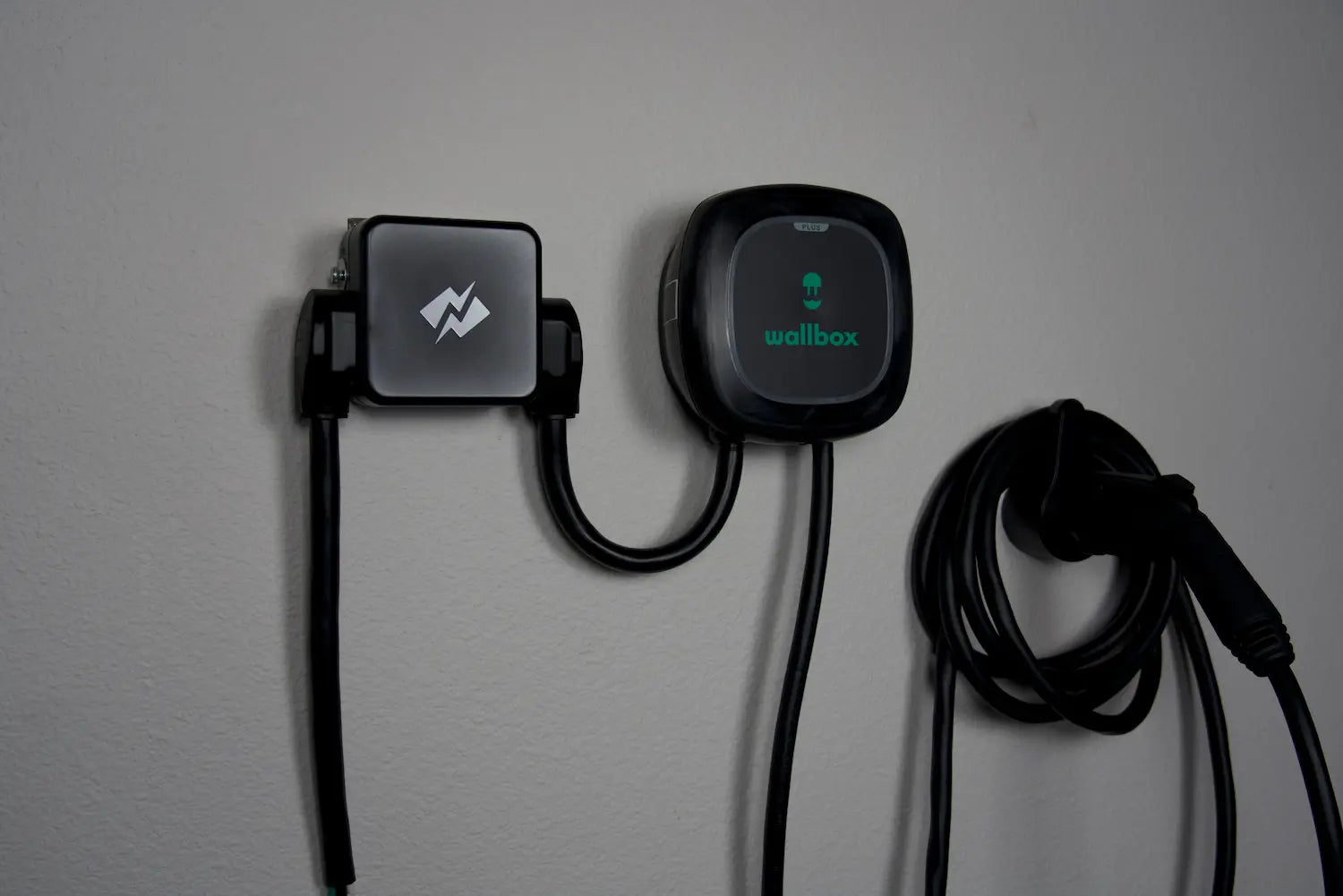
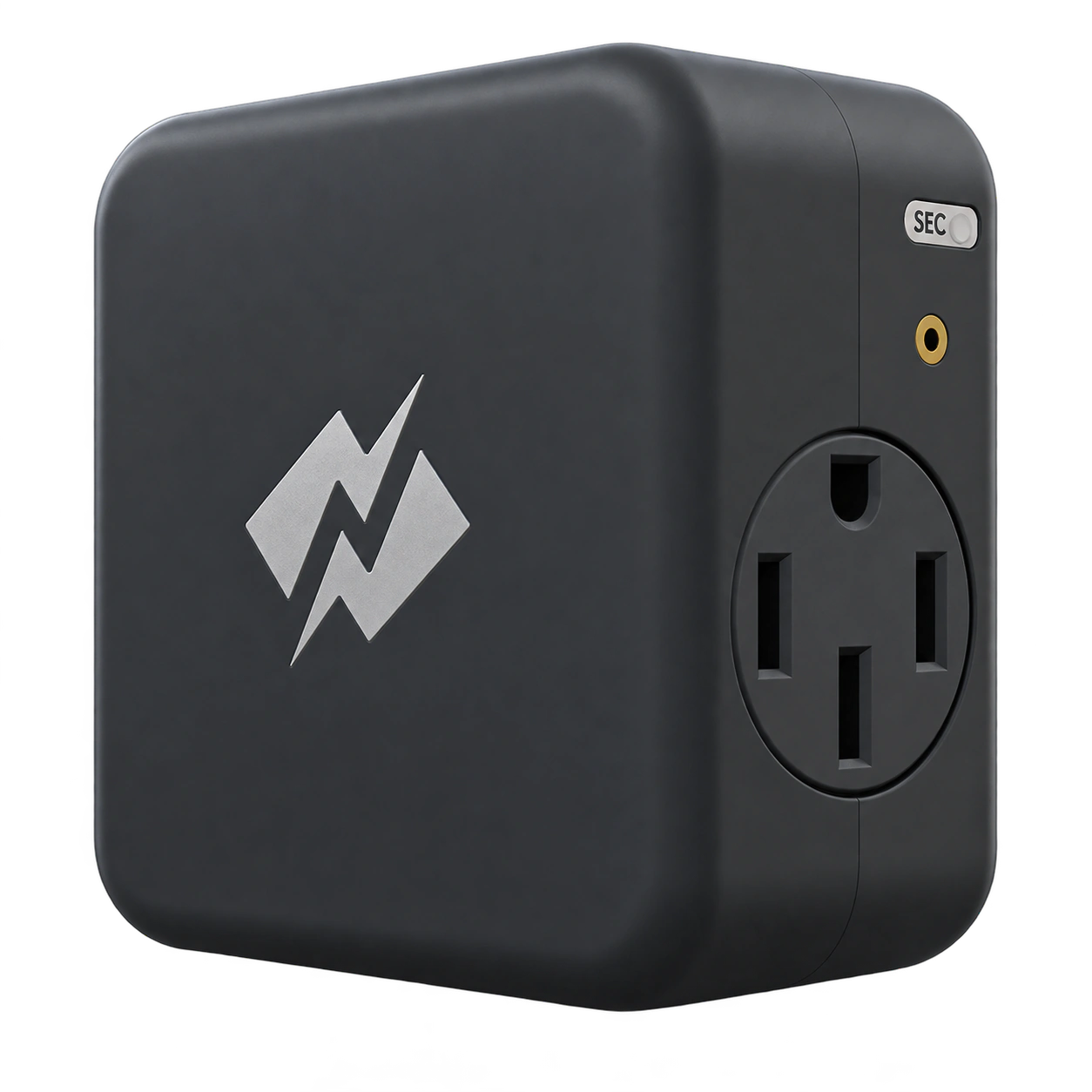
That is why the Smart Splitter is a strong first check for Canada. It can help eligible homes share a 240V outlet, avoid manual plug swapping, prevent simultaneous high-load use, and make Level 2 charging practical without immediately turning the project into a major electrical upgrade.
Order the NeoCharge Smart Splitter: $399 CAD at checkout as of October 9, 2026, no code needed, and NeoCharge refunds $200 once it is connected to the app and charging your EV.
Common questions, answered straight
- What's the best home EV charging setup in Canada? For most homes, a right-sized Level 2 setup that charges overnight, uses an existing 240V outlet where possible, and works with your province's rate plan. Speed almost never matters — schedule and circuit-sharing do.
- Can I charge my EV from a dryer outlet? Usually yes, if your electrician confirms the circuit is safe and you set the EV charging current correctly. A NEMA 14-30 dryer outlet typically supports ~24A continuous EV charging — enough for a normal Canadian commute overnight.
- Do I really need a panel upgrade? Often, no. A lower-amp Level 2 setup or a load-management device like the Smart Splitter can let you add EV charging without touching your panel.
- What does a panel upgrade actually cost? Quotes vary, but $3,000–$8,000 CAD is normal across Canadian cities. That's why pricing the load-management path *first* tends to pay off.
- Which province has the biggest home-charger rebate? Quebec's $600 Écorecharge grant is the largest single rebate. B.C.'s $200 EV power-management offer is the cleanest rebate specifically for load-management devices. Ontario's win is the ULO rate plan, not a device rebate.
- When should I charge my EV? Between 11 p.m. and 7 a.m. on most Canadian rate plans (BC Hydro time-of-day, Ontario ULO). If you're on Hydro-Québec Flex D, schedule around winter peak events.
- Does NeoCharge's Canadian pricing stack with provincial rebates? The $300 checkout reduction and the $200 app refund are NeoCharge's own offers. Utility and provincial programs have their own terms; BC Hydro's $200 device top-up, for example, requires an install under an electrical permit. Verify each program before you buy.
- Where do I actually buy the Smart Splitter? Order at getneocharge.com. Canadian pricing applies automatically at checkout, no code needed: $399 CAD as of October 9, 2026, and NeoCharge refunds $200 once it is connected to the app and charging your EV.
Sources
- Transport Canada ZEV Council Dashboard: tc.canada.ca
- BC Hydro home EV charger rebates: bchydro.com
- Ontario electricity price plans: ontario.ca
- Ontario Energy Board EV information: oeb.ca
- Hydro-Quebec Flex D: hydroquebec.com
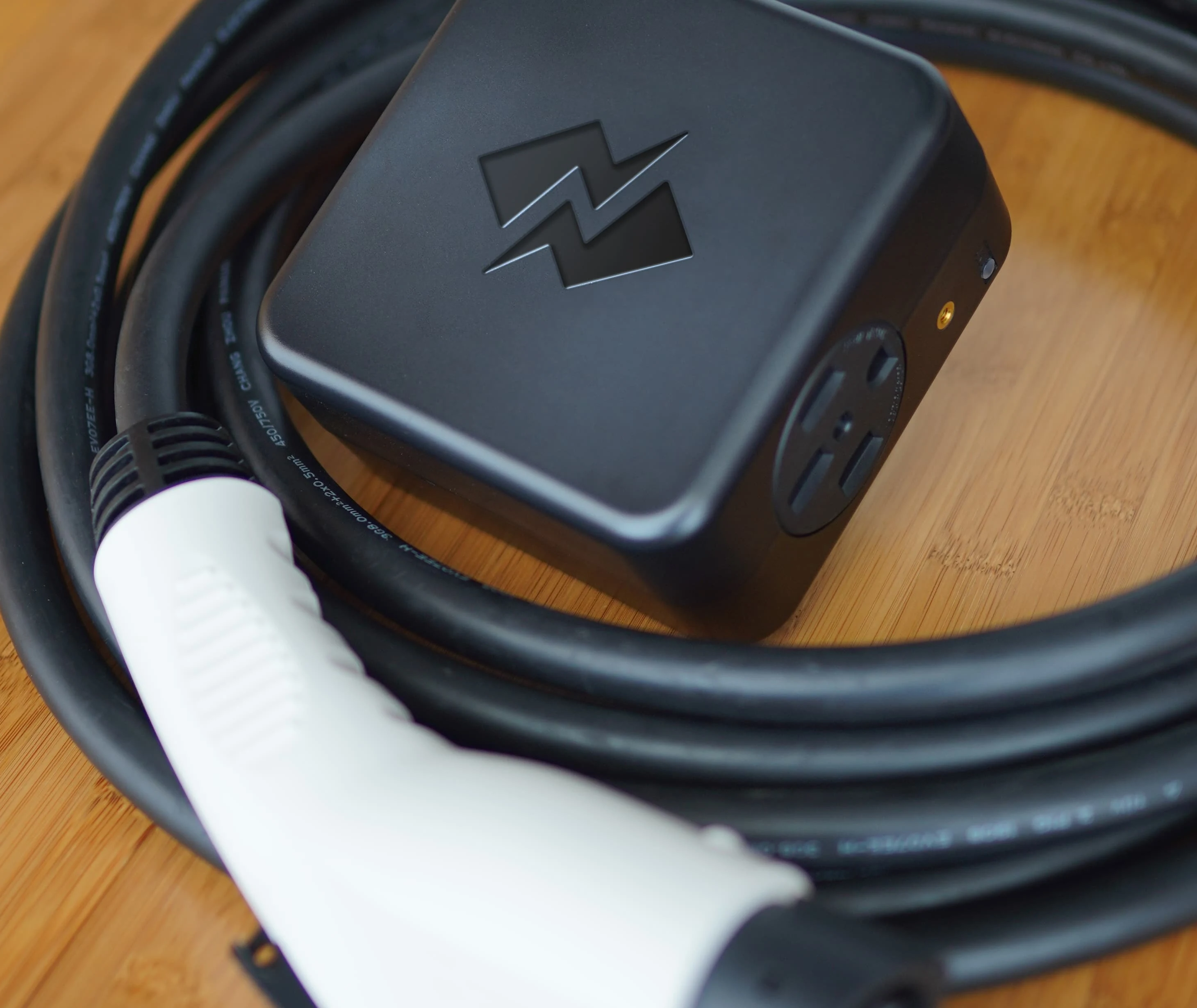
Skip the panel upgrade
Level 2 charging from the outlet you already have
Plug into the 240V dryer outlet you already have. The dryer gets priority and your EV charges the rest of the night, with no panel upgrade and no new circuit. cUL-listed for Canada, and NeoCharge refunds $200 once it is connected and charging your EV.
NeoCharge App
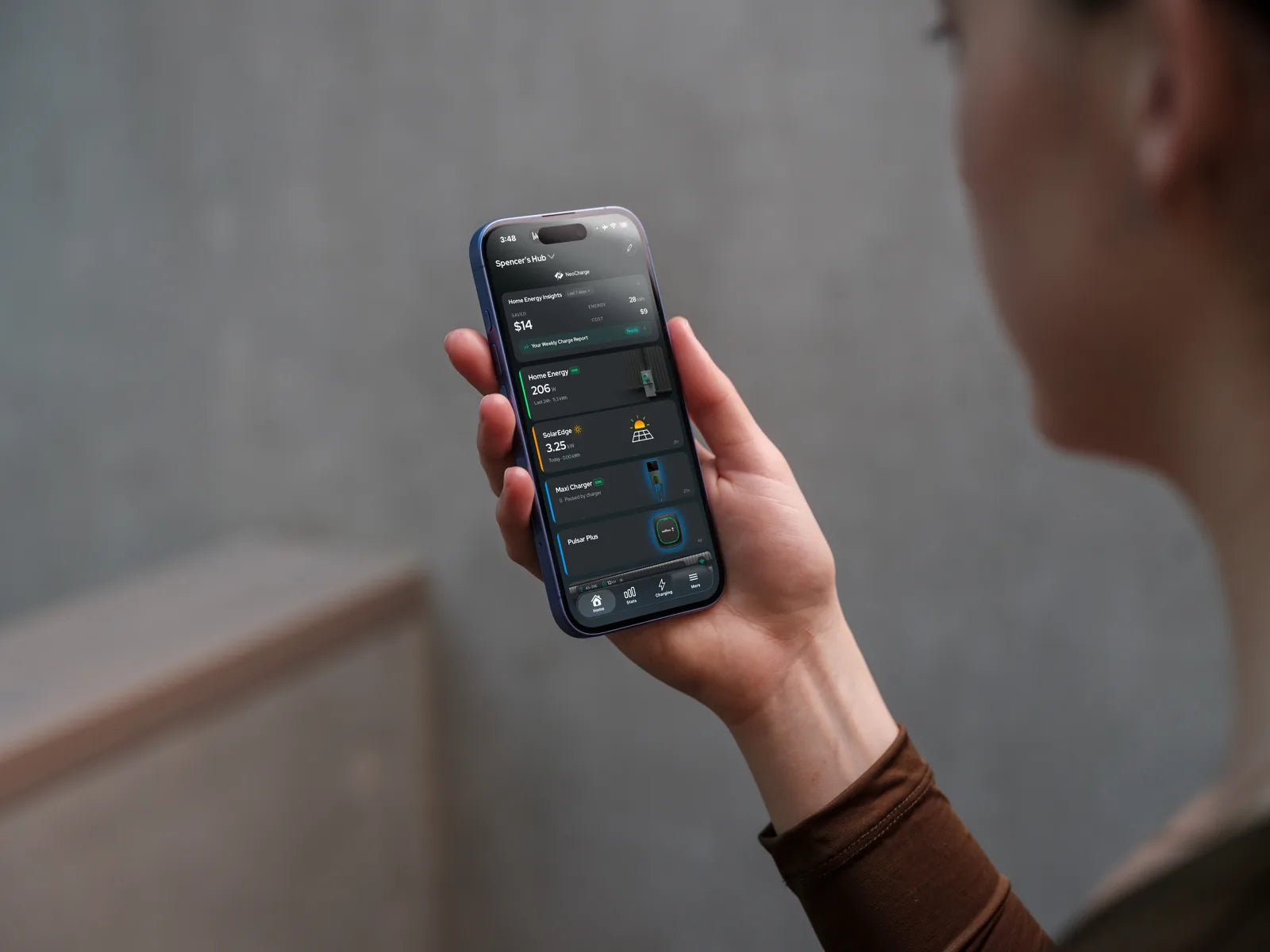
Turn rate plans into simple charging schedules
Schedule around off-peak windows, manage compatible chargers, and keep tabs on charging sessions from the app.
Explore the app


Next steps
Keep going with NeoCharge
Use the article as your decision guide, then jump into the product, app, or related guides that match what you are trying to solve next.
Key terms
- Level 2 charging
- Level 2 EV charging uses a 240V circuit (like a dryer outlet). It typically adds ~20–35 miles of range per hour, depending on your car and the circuit amperage.
- NEMA 14-50
- A NEMA 14-50 is a common 240V, 50A outlet (often used for EV charging). Many EV chargers plug into it, but the actual charging speed depends on the circuit and your EV.
- NEMA 14-30
- A NEMA 14-30 is a 240V, 30A dryer outlet. With a properly configured EV charger, it can usually support ~24A continuous charging (about 20–25 miles of range per hour for many EVs).
- Load management
- Load management is a strategy to keep your home’s electrical load within safe limits—often by scheduling or pausing EV charging when other appliances are running.
FAQs
What's the quick takeaway from this article?
Who is this guide for?
What should I do next?
Related posts
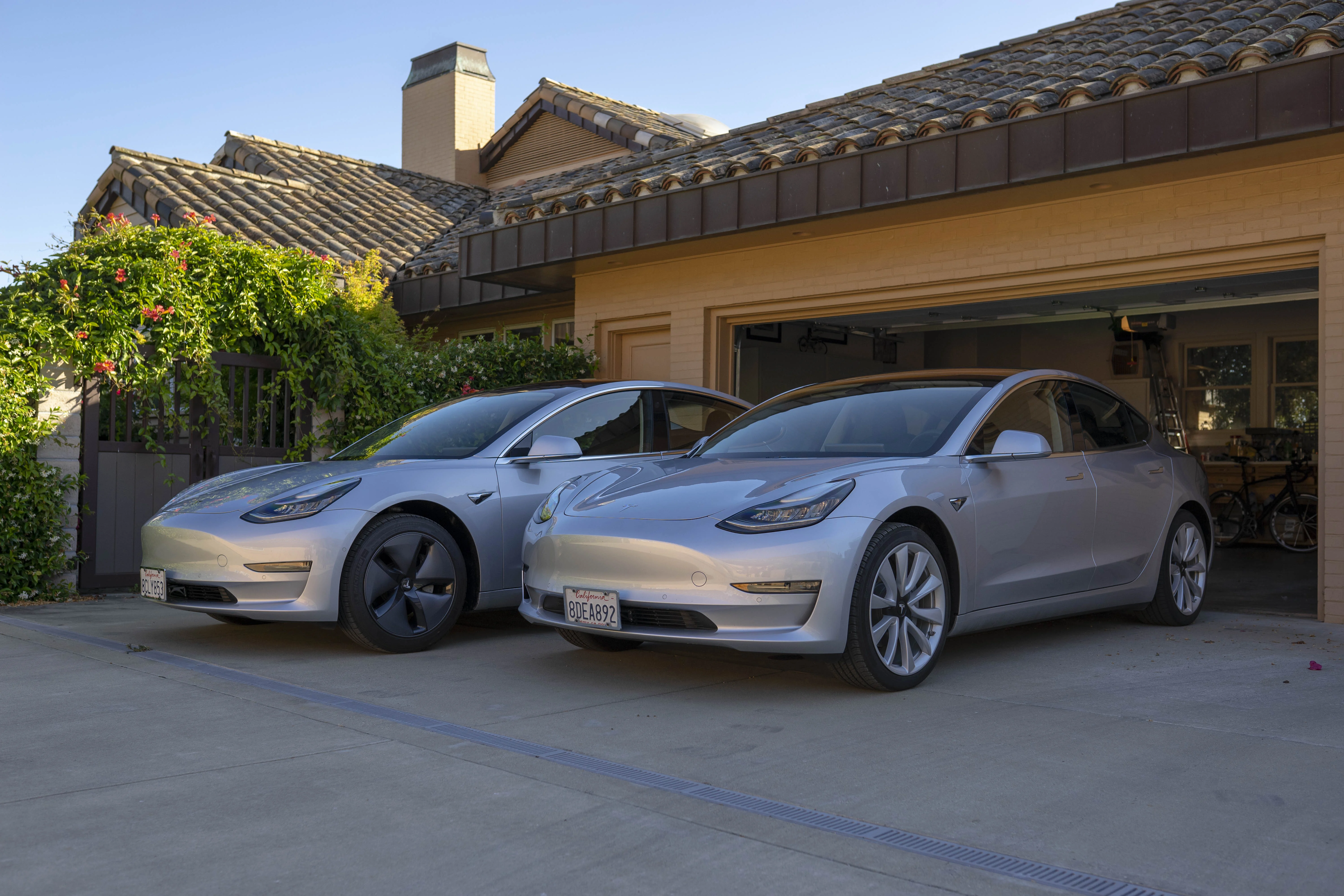
How to Charge Two EVs at Home in Canada on One 240V Outlet (2026)
One 50A circuit adds about 360 km overnight, enough for two commutes. What the Canadian Electrical Code allows, permits by province, BC Hydro rebates, and options.

Burnaby EV Charger Installation
Burnaby EV charging by home type: share a dryer outlet instead of a panel upgrade, City permits, BC Hydro's $350 + $200 rebates, and strata right-to-charge.
Richmond EV Charger Installation
Richmond EV charger installation: Technical Safety BC permit fees, the 2018 EV-ready rule, BC Hydro's $350 + $200 rebates, and room for a heat pump.
Surrey EV Charger Installation
Add Level 2 charging in Surrey without a panel upgrade: City of Surrey permit steps, BC Hydro's $350 + $200 rebates, suited-house load math, and overnight costs.
