



Victoria & Vancouver Island Home EV Charging Guide: BC Hydro Rebates, Dryer Outlets, and Skipping the Panel Upgrade
Direct answer: Most homes in Victoria, Saanich, Nanaimo, and the rest of Vancouver Island are BC Hydro customers — which means you can add Level 2 EV charging without a panel upgrade by using a BC Hydro–eligible Smart Splitter on an existing 240V outlet (such as your NEMA 14-30 dryer outlet). The Splitter is $399 CAD at checkout as of October 9, 2026 and $199 after NeoCharge's $200 app refund, with BC Hydro's $200 device top-up on top when it is installed under an electrical permit — versus $3,000–$8,000 for a panel upgrade. Schedule charging from 11 p.m. to 7 a.m. on BC Hydro's optional time-of-day rate for a 5¢/kWh overnight discount.
Vancouver Island is the same BC Hydro playbook as the mainland — with different homes
If you live in Victoria, Saanich, Oak Bay, Esquimalt, Sidney, Sooke, Colwood, Langford, Nanaimo, Duncan, Courtenay, or Campbell River, your utility is almost certainly BC Hydro. That means everything that applies to a Vancouver home charging setup also applies to you: the same time-of-day rate, the same $200 EV power-management offer, the same eligible-device list, the same path around the panel upgrade.
What's different is your housing stock. Older Victoria heritage homes (Fairfield, James Bay, Fernwood), 1970s suburban Saanich and Esquimalt builds, and newer Langford developments each present different electrical realities — but most of them share one thing: a 240V NEMA 14-30 dryer outlet that's idle 22 hours a day.
That's your EV charging starting point.
What's actually going through your head right now
If you've just gotten an EV in the Capital Regional District or anywhere on the Island, you're probably asking:
- Can I charge from my dryer outlet?
- Does BC Hydro actually pay for any of this?
- Will my 100A panel handle it, or am I in for a $5,000 service upgrade?
- When should I charge to avoid peak rates?
- What about ferries / road trips — do I need fast home charging?
Let's go through them.
What BC Hydro will actually help you pay for
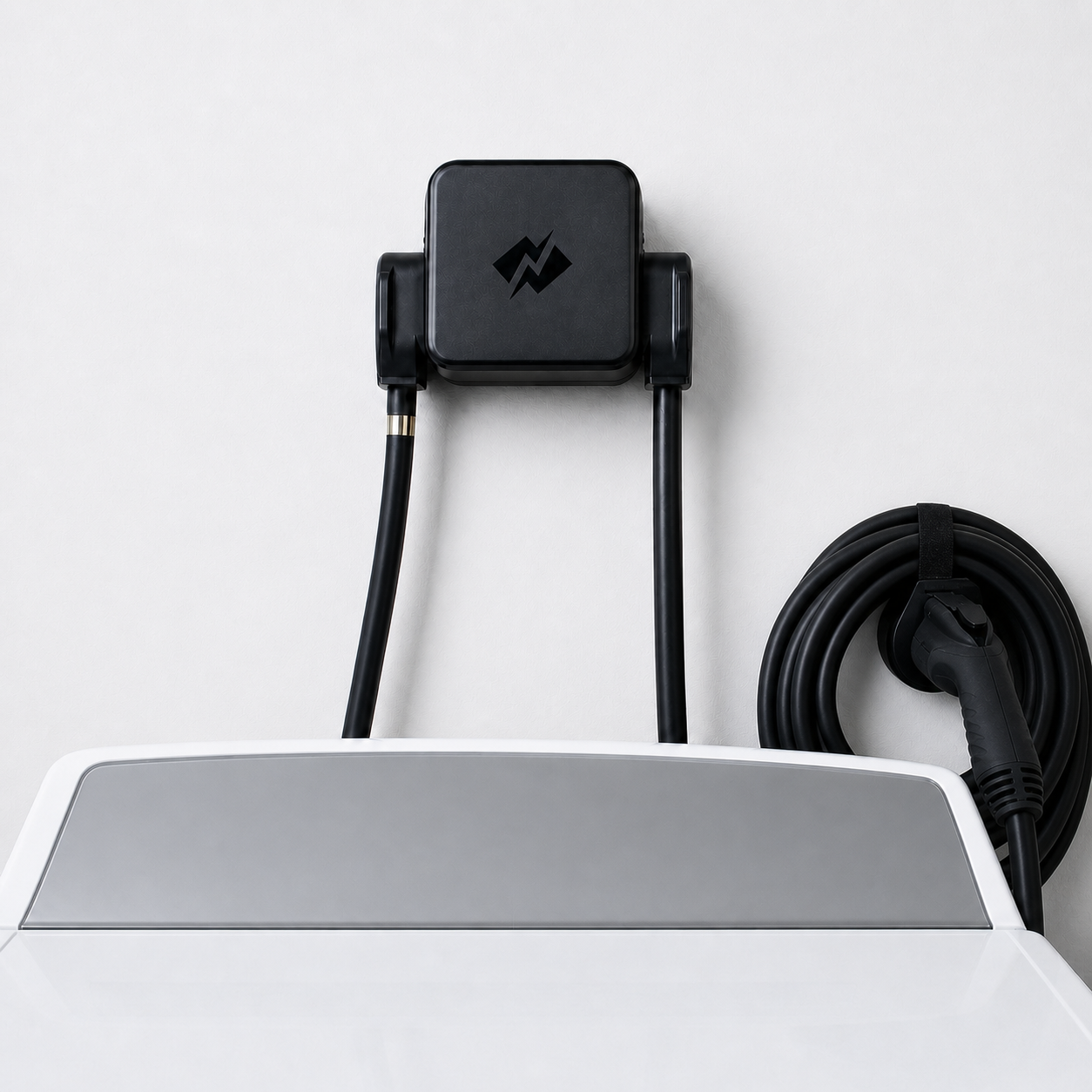
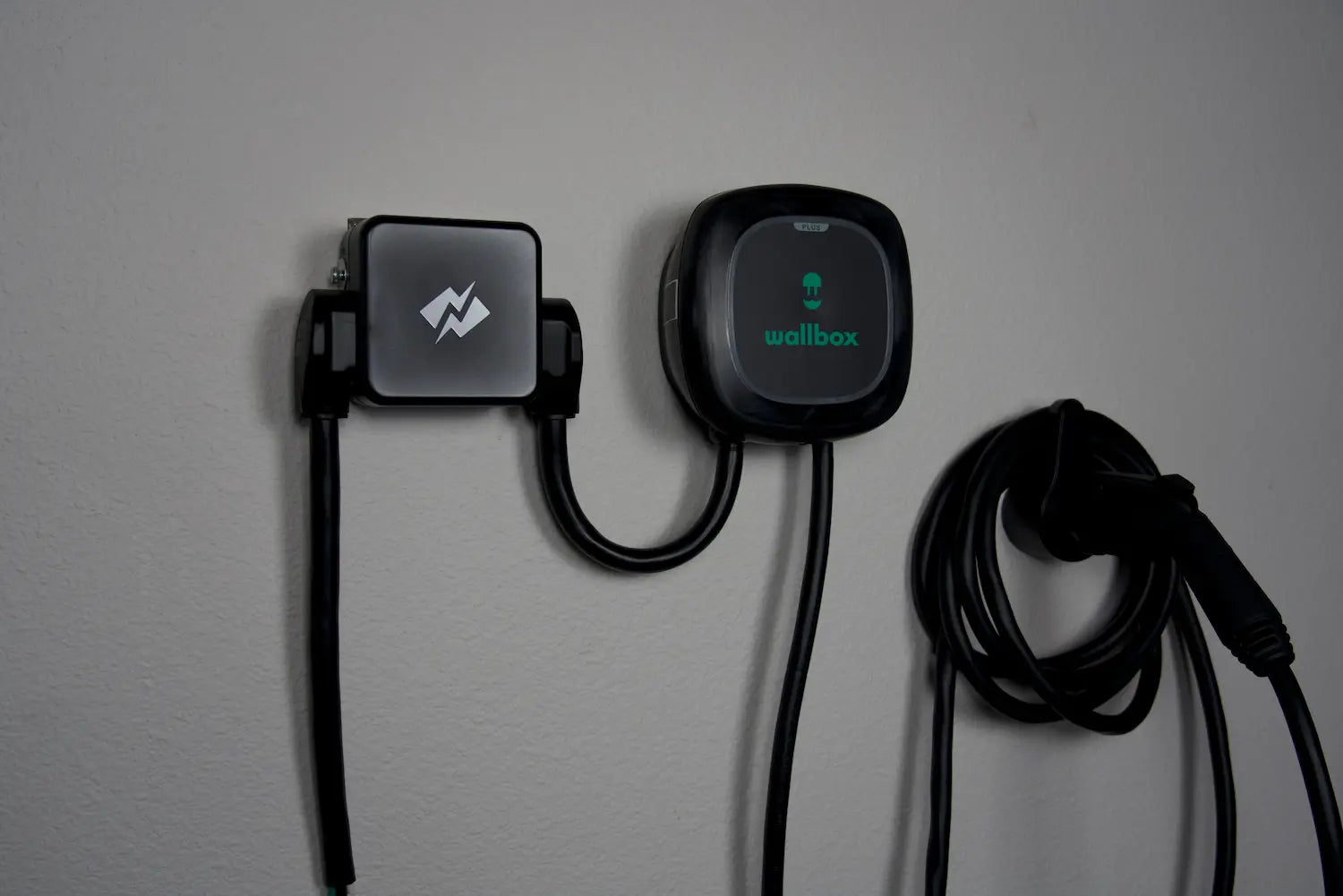
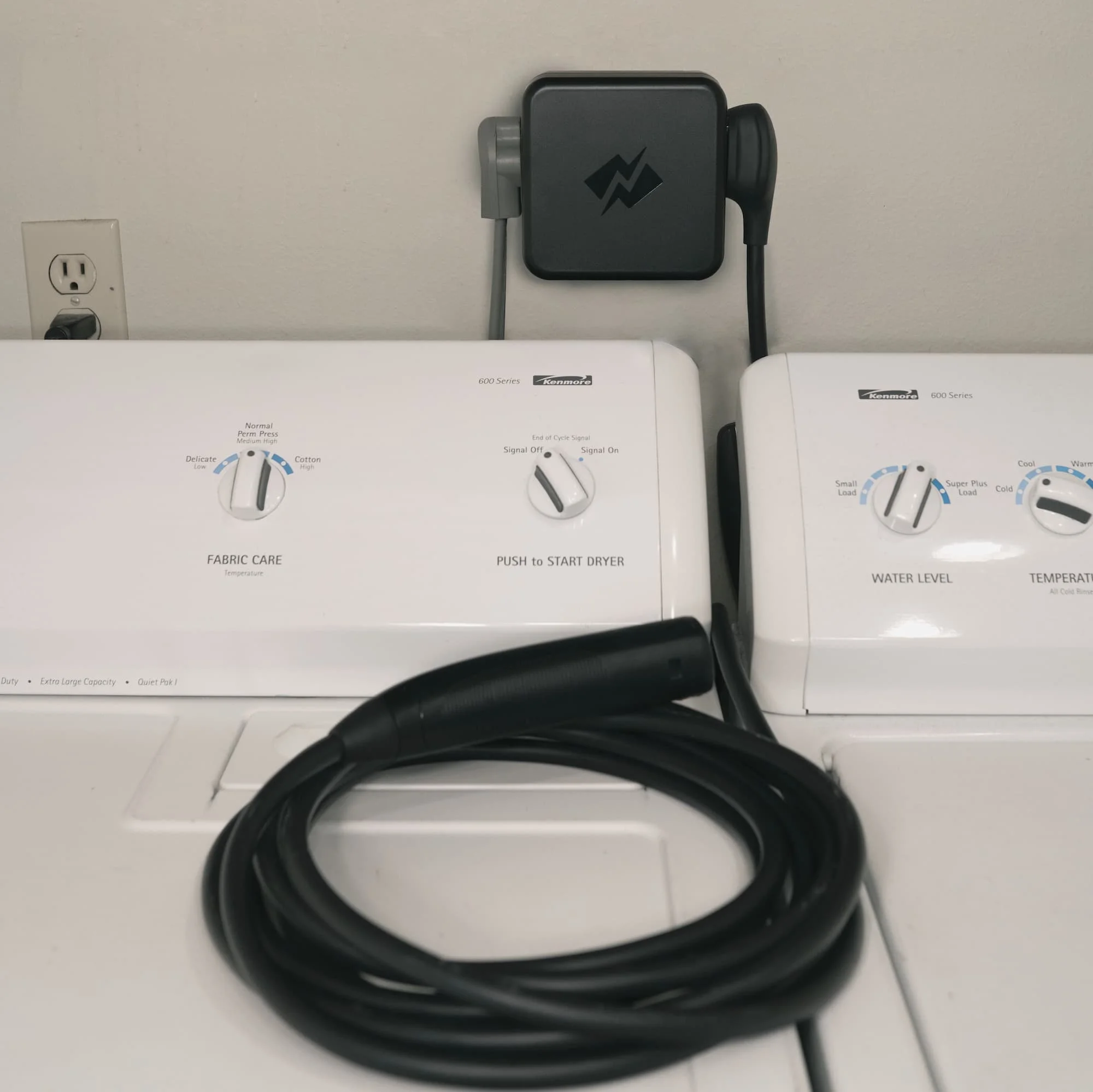
The NeoCharge Smart Splitter is on BC Hydro's eligible EV power management device list. On the Canadian store it is $399 CAD at checkout as of October 9, 2026, and NeoCharge refunds $200 once it is connected to the app and charging your EV. BC Hydro adds its own $200 device top-up when the Splitter is installed with a listed charger under an electrical permit (how that works):
| The math | Amount (CAD) |
|---|---|
| Smart Splitter list price | $699 |
| Canada instant rebate, applied at checkout | −$300 |
| You pay at checkout | $399 |
| NeoCharge app refund, after 14 days connected for EV charging | −$200 |
| Your cost | $199 before taxes and shipping |
| BC Hydro device top-up, with a listed charger under an electrical permit | a further −$200 |
Source: app.bchydro.com
Compare that to a typical Vancouver Island panel-upgrade quote of $3,000–$8,000 CAD (and good luck booking an electrician inside two months on the Island) — the Smart Splitter path is dramatically cheaper for most daily drivers. Verify current BC Hydro program terms before you order.
Why the rebate path works
It uses the outlet your home already has
For many Island homes, the install is not about adding the biggest possible charger. It is about managing the existing dryer circuit safely, then letting the EV charge overnight when the dryer is not running.
BC Hydro's time-of-day rate makes overnight the obvious window
BC Hydro's optional time-of-day pricing is built for people who can shift usage and charge overnight. The rate applies a 5¢/kWh discount from 11 p.m. to 7 a.m. and a 5¢/kWh surcharge during the 4 p.m. to 9 p.m. on-peak window.
Source: app.bchydro.com
That makes the rule simple: design your EV charging around 11 p.m., not 5 p.m. The NeoCharge App handles the schedule for you so you don't lose the discount the first week life gets busy.
Yes, your dryer outlet probably charges your EV
That four-prong plug behind your dryer is almost certainly a NEMA 14-30 — a 30A 240V circuit. With proper equipment that limits charging current to ~24A continuous, you'll get roughly 5.7 kW of charging — about 30–35 km of range per hour. Your car sits plugged in for 8–10 hours overnight. You'll wake up full for any normal Island commute.
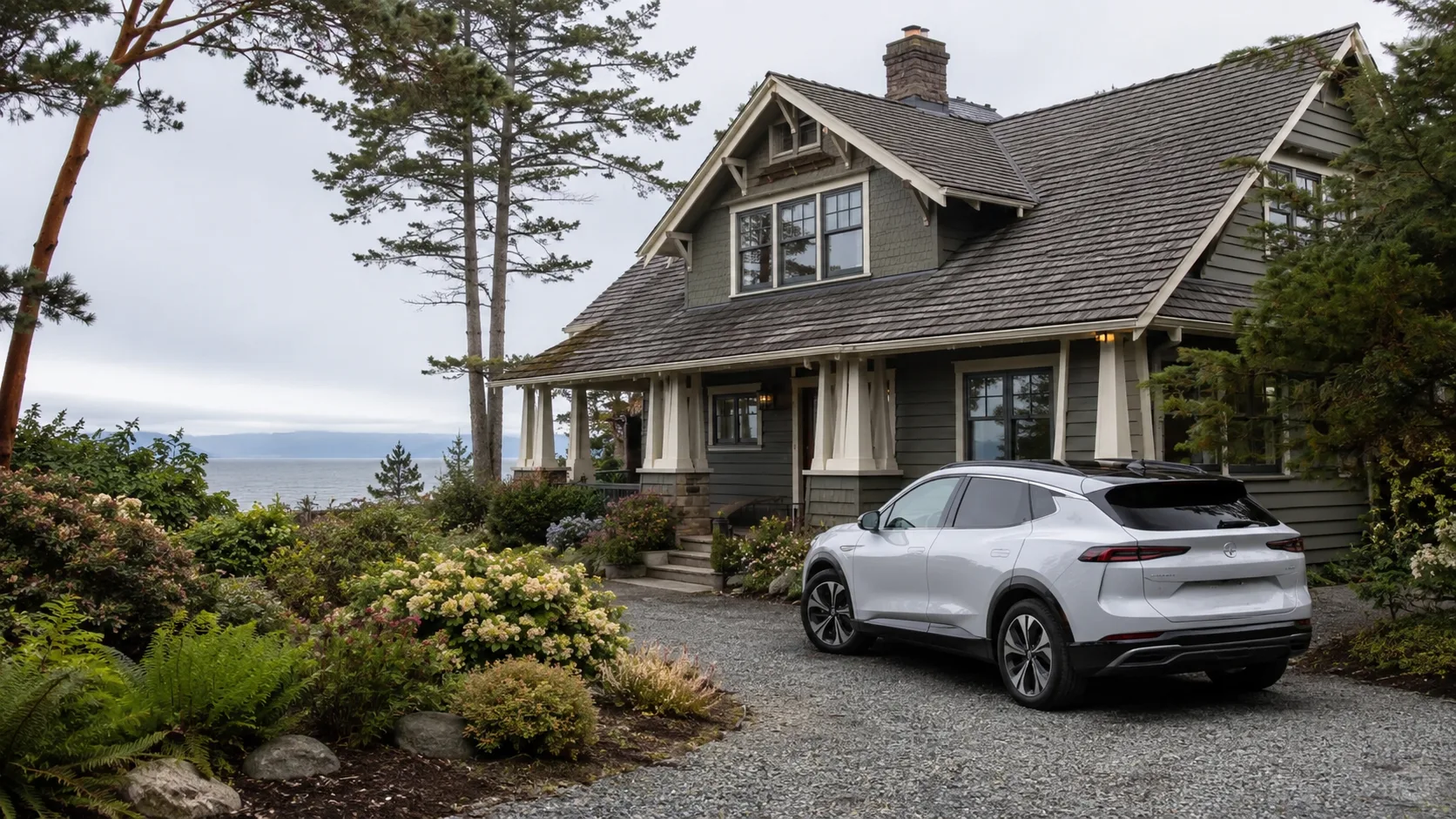
That's true whether you're in a 1920s Craftsman in James Bay, a 1980s split-level in Saanich, a newer detached in Langford, or an oceanfront ranch in Cordova Bay.
Before you use it:
- Confirm it's a NEMA 14-30, not an older three-prong dryer outlet (NEMA 10-30 is less safe for EV charging — common in older Island homes).
- Have a licensed electrician inspect the breaker, wiring, and receptacle condition. The damp coastal climate is hard on older receptacles.
- Set the EV charging current to ~24A, not the default 32A or 40A.
- No extension cords. No cheap adapters. Ever.
- If you're sharing with the dryer, use automatic load sharing — a Smart Splitter, not "I'll just unplug it when I'm done."
What about ferries and road trips?
A common Island homeowner concern: "I take the ferry to the mainland for work; do I need fast home charging to keep up?"
Almost always no. A managed 24A NEMA 14-30 setup adds 30–35 km of range per hour. Eight hours of overnight charging gets you 240–280 km of range — more than enough for a typical Island commute, the ferry queue, and the drive on the other side. The exception is if you're doing 300+ km/day every day, in which case the conversation shifts to a dedicated 14-50 circuit (~40A, ~50 km/hr) and possibly DC fast charging on the long days.
For most Island drivers, home charging is for daily driving, and public DC fast charging is for road trips. They're different tools.
Common questions, answered straight
- Is Vancouver Island on BC Hydro? Yes — almost all of Vancouver Island is BC Hydro service territory. That means the same rebates, the same eligible-device list, the same time-of-day rate as Greater Vancouver. (Some smaller communities and a couple of FortisBC-served pockets exist; check your bill if you're unsure.)
- Can I get the BC Hydro $200 EV power-management offer in Victoria? Yes, if you're a BC Hydro customer and you install an eligible EV power-management device. Check current terms and the device list before purchasing.
- Can I install Level 2 charging in Victoria without a panel upgrade? Usually yes. A lower-amp Level 2 setup or a Smart Splitter on your existing dryer outlet often does the job — and BC Hydro will help pay for the load-management device.
- What if I'm in a strata or condo townhouse in Langford or Esquimalt? If you have an in-unit electric dryer and a private parking spot with 240V access, a Smart Splitter is often the easiest path because it doesn't require strata approval for new circuits. Confirm with your strata council first.
- When should I charge to save money? Between 11 p.m. and 7 a.m. on BC Hydro's optional time-of-day rate. You get a 5¢/kWh discount overnight and avoid the 5¢/kWh surcharge during the 4 p.m.–9 p.m. peak.
- Does it matter that my home is old and on a 60A or 100A service? It matters, which is exactly why a load-managed setup makes sense — you're not adding load, you're sharing the load you already have. Have an electrician confirm.
- Where do I buy the Smart Splitter? Order at getneocharge.com. Canadian pricing applies automatically at checkout, no code needed: $399 CAD as of October 9, 2026, and NeoCharge refunds $200 once it is connected to the app and charging your EV.
Do this this week
- Confirm your utility. Check your last bill — almost everyone on the Island is BC Hydro, but a few small areas are different.
- Take a photo of your panel label and dryer outlet. You'll want both when you talk to your electrician.
- Check current BC Hydro rebate terms and the eligible-device list.
- Order the NeoCharge Smart Splitter. Canadian pricing applies automatically at checkout, no code needed; connect it to the NeoCharge app and charge your EV through it for the $200 refund.
- Set up the NeoCharge App to charge automatically between 11 p.m. and 7 a.m.
- Book a licensed electrician for the install. Electricians on the Island book out fast — call early.
This guide applies whether you live in Victoria, Saanich, Oak Bay, Esquimalt, View Royal, Colwood, Langford, Sooke, Sidney, Brentwood Bay, Cordova Bay, Nanaimo, Lantzville, Parksville, Qualicum Beach, Duncan, Courtenay, Comox, or Campbell River.
Sources
- BC Hydro home EV charger rebates: bchydro.com
- BC Hydro time-of-day pricing: app.bchydro.com
- BC Hydro eligible EV power-management device list: app.bchydro.com
Electrical safety disclaimer
This guide is general information, not electrical advice. Electrical work must be done by a licensed B.C. electrician under local code, manufacturer instructions, and permits. The coastal climate is hard on older receptacles and panels — have your installation inspected. Always verify rebate and utility-program eligibility before purchasing.
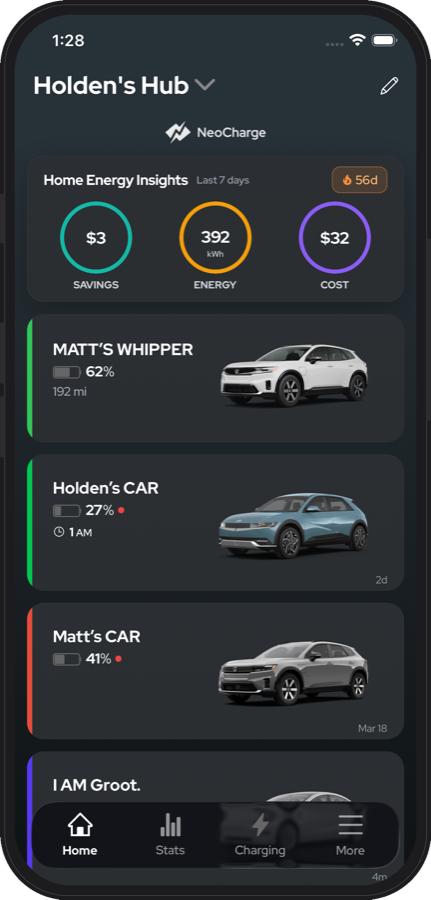
NeoCharge App
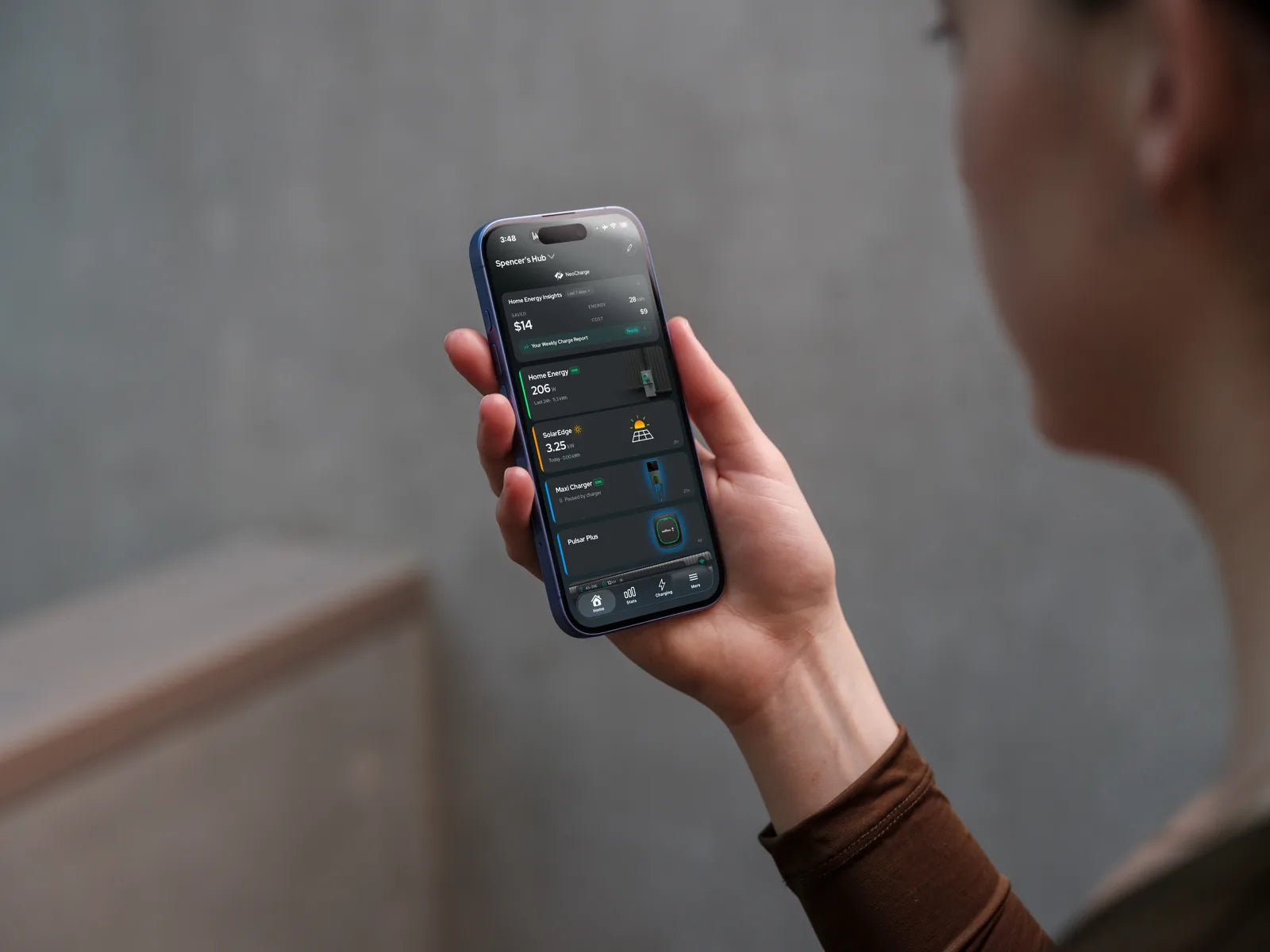
Track charging costs without spreadsheet work
See session history, monthly energy use, and savings so the article advice turns into a real household habit.
Explore the app

Next steps
Keep going with NeoCharge
Use the article as your decision guide, then jump into the product, app, or related guides that match what you are trying to solve next.
Key terms
- Level 2 charging
- Level 2 EV charging uses a 240V circuit (like a dryer outlet). It typically adds ~20–35 miles of range per hour, depending on your car and the circuit amperage.
- NEMA 14-50
- A NEMA 14-50 is a common 240V, 50A outlet (often used for EV charging). Many EV chargers plug into it, but the actual charging speed depends on the circuit and your EV.
- NEMA 14-30
- A NEMA 14-30 is a 240V, 30A dryer outlet. With a properly configured EV charger, it can usually support ~24A continuous charging (about 20–25 miles of range per hour for many EVs).
- Load management
- Load management is a strategy to keep your home’s electrical load within safe limits—often by scheduling or pausing EV charging when other appliances are running.
FAQs
What's the quick takeaway from this article?
Who is this guide for?
What should I do next?
Related posts

Burnaby EV Charger Installation
Burnaby EV charging by home type: share a dryer outlet instead of a panel upgrade, City permits, BC Hydro's $350 + $200 rebates, and strata right-to-charge.

Richmond EV Charger Installation
Richmond EV charger installation: Technical Safety BC permit fees, the 2018 EV-ready rule, BC Hydro's $350 + $200 rebates, and room for a heat pump.

Surrey EV Charger Installation
Add Level 2 charging in Surrey without a panel upgrade: City of Surrey permit steps, BC Hydro's $350 + $200 rebates, suited-house load math, and overnight costs.
BC Hydro EV Power Management Device Rebate: Eligible Devices (2026)
BC Hydro pays $200 extra for an eligible EV power management device. The Sept 2026 device list, which chargers qualify, and the permit rule that decides who gets it.
