


Kelowna & Okanagan Home EV Charging Guide: FortisBC, Power Hours Rewards, and Skipping the Panel Upgrade
Direct answer: Most homes in Kelowna, West Kelowna, Vernon, Penticton, and the rest of the Okanagan are on FortisBC — which has its own EV-friendly Power Hours Rewards Program that pays you to shift charging away from the 4–9 p.m. peak. The cheapest way to add Level 2 charging is to share your existing NEMA 14-30 dryer outlet with a Smart Splitter (no panel upgrade needed), then schedule charging outside peak hours. The Smart Splitter is $399 CAD at checkout as of October 9, 2026, with no code needed, and NeoCharge refunds $200 once it is connected to the app and charging your EV.
The Okanagan plays by FortisBC rules, not BC Hydro rules
If you live in Kelowna, West Kelowna, Vernon, Penticton, Lake Country, Summerland, Peachland, Coldstream, Naramata, or the surrounding Okanagan valley, you're probably a FortisBC Electric customer. That matters because most home-EV-charging advice online assumes BC Hydro — the rates, the rebates, and the EV program lanes are different here.
The good news: the answer is mostly the same. Skip the panel upgrade if you can, share your dryer outlet, and schedule charging outside the 4–9 p.m. peak.
The only thing that changes is which utility program you participate in.
What's actually going through your head right now
If you've just gotten an EV in the Okanagan, you're probably asking:
- Am I on BC Hydro or FortisBC?
- Does FortisBC have a rebate like BC Hydro does?
- Can I just use my dryer outlet?
- When should I charge — is it the same 11 p.m. window as Vancouver?
- Do I need a panel upgrade in this older Kelowna home?
Let's go through them.
FortisBC Power Hours Rewards: the program to know
FortisBC's Power Hours Rewards Program focuses on reducing residential electricity load during the 4 p.m. to 9 p.m. peak hours. EV participants can earn rewards by charging outside that window, with a sign-up incentive and per-event participation incentive for eligible EVs or EV chargers.
Source: fortisbc.com
What this means in practice: your job in the Okanagan is the same as in Vancouver — keep your EV out of the 4–9 p.m. window, especially during winter cold snaps and summer heat waves when grid demand peaks. Set your charger to start at 9 p.m. or later (or 11 p.m. for safety margin) and you're aligned with both your wallet and the grid.
The NeoCharge App handles the schedule so you don't have to think about it.
Why most Okanagan homes don't need a panel upgrade
Here's the part your electrician may not lead with: in most Kelowna-area homes, you don't need a new high-power circuit to charge an EV. You need to manage the circuits you already have.
A typical Okanagan single-family home built between the 70s and 2010s has:
- 100A or 125A service (some lakefront and new West Kelowna builds have 200A)
- An electric dryer in the laundry room
- That dryer is on a NEMA 14-30 four-prong outlet (30A, 240V)
- AC pulling load on summer evenings (Okanagan summers are hot)
- Maybe an electric range, water heater, hot tub, or pool pump
A typical Okanagan panel-upgrade quote runs $3,000–$8,000 CAD depending on age, service location, and whether the utility needs to disconnect at the meter base. That's a lot of money for a fix you may not need.
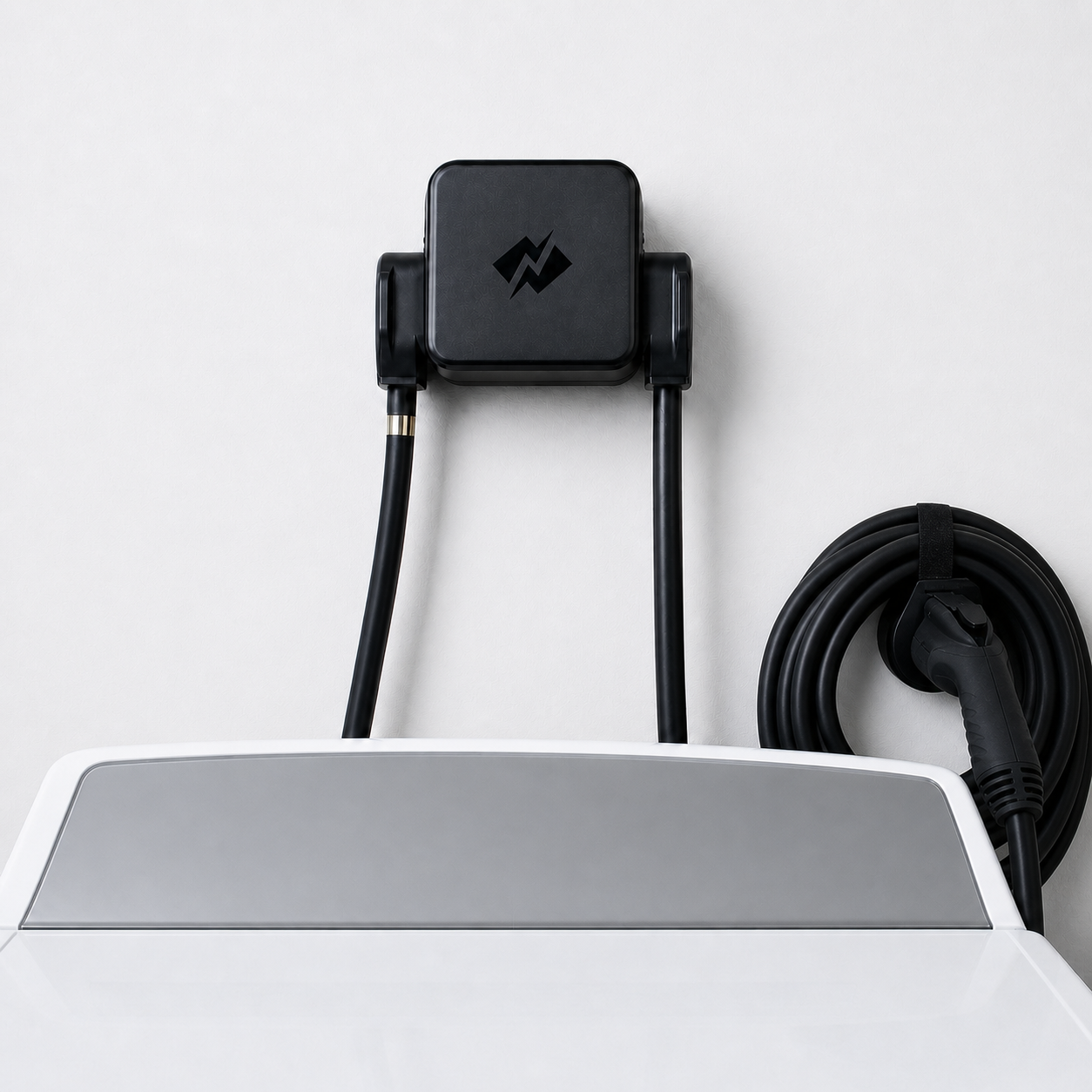
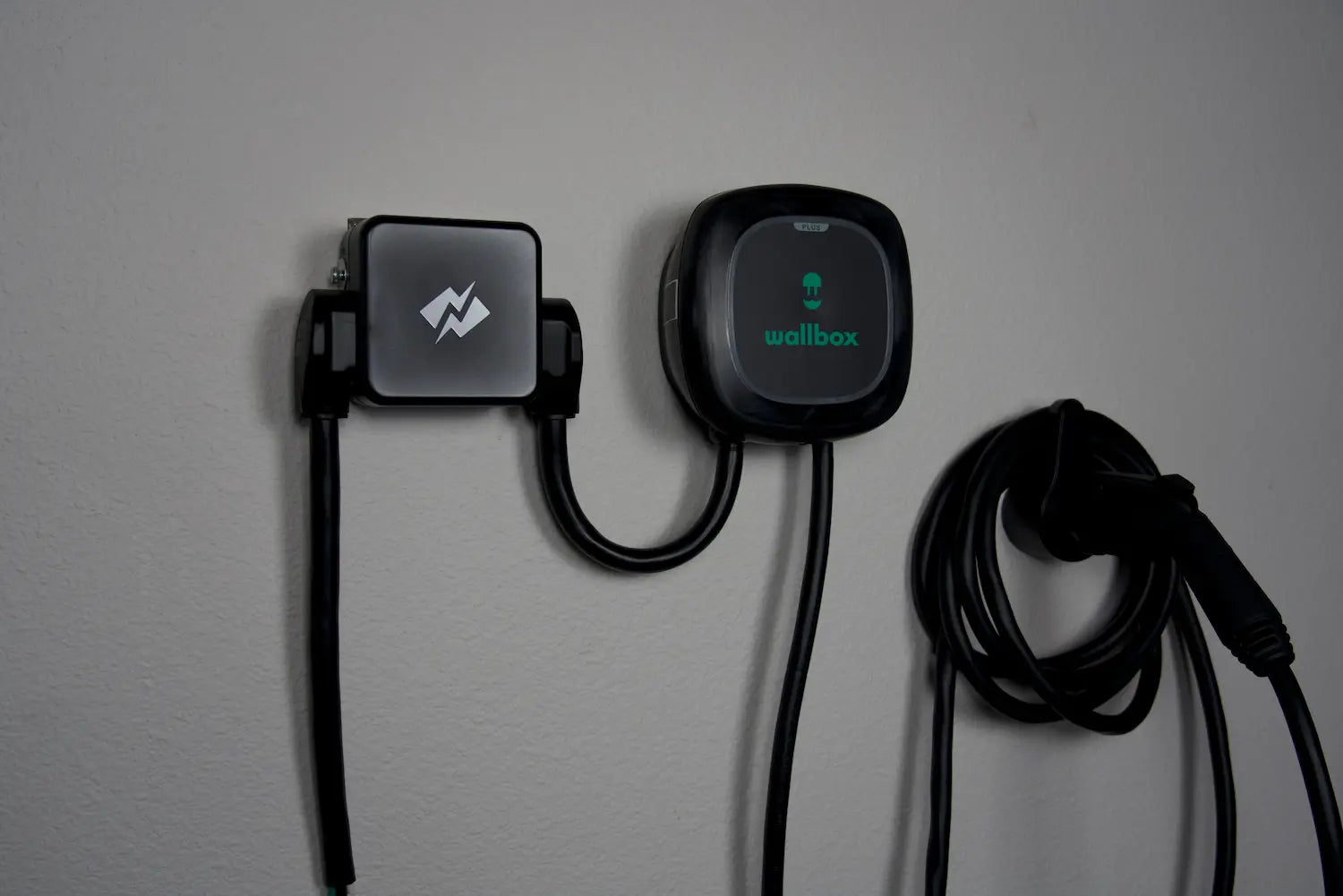
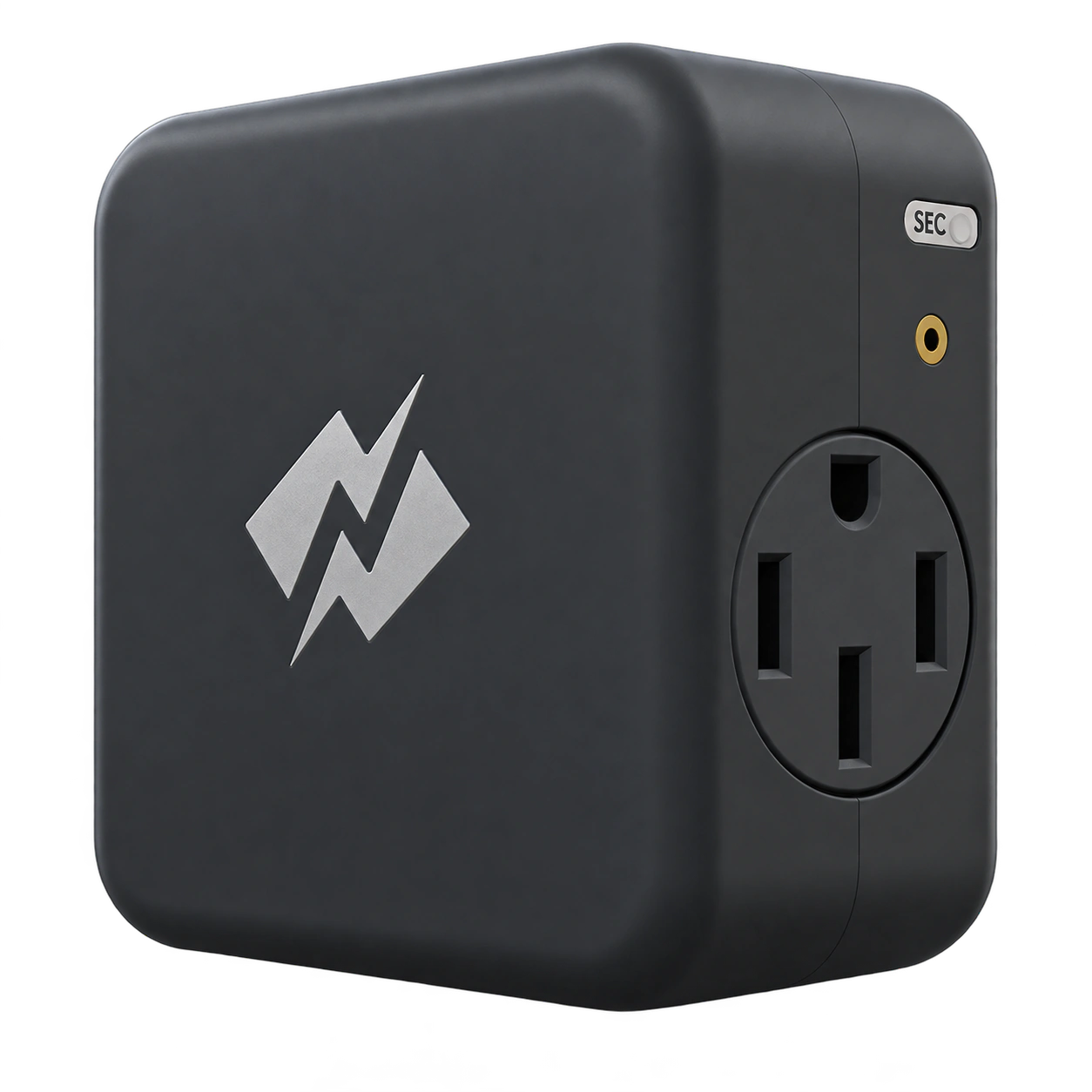
The cheaper path: share your dryer outlet. A Smart Splitter sits between the outlet and both devices and electrically prevents your dryer and your EV from drawing high power at the same time. Your dryer still runs. Your EV still charges. The panel never sees both loads at once.

Load management, visually
One shared circuit, one high-power load at a time
In a hot Okanagan home with AC, pool pumps, and EV charging, the win is keeping the EV from adding peak load at the wrong time. The Smart Splitter handles dryer sharing while the app keeps charging out of the 4–9 p.m. peak.
At 24A continuous charging on a NEMA 14-30, you're pulling ~5.7 kW — about 30–35 km of range per hour. Your car sits plugged in for 8–10 hours overnight. You'll wake up full for any normal Okanagan commute, school run, or vineyard tour.
What about summer AC load and pool pumps?
The Okanagan has a unique summer profile that other B.C. regions don't: hot afternoons, big AC loads, and a lot of pools. If your home runs central AC, a pool pump, and an EV charger all at 5 p.m., you can absolutely overload a 100A panel.
That's exactly the case load management was designed for. A Smart Splitter on the dryer outlet means your EV is never competing with the dryer. Add app-based scheduling to keep the EV out of the 4–9 p.m. window entirely, and you've removed the EV from the summer-peak conversation completely.
If you have a pool pump on a separate timer, the same logic applies — keep it off the 4–9 p.m. window if you can.
Common questions, answered straight
- Am I on FortisBC or BC Hydro in the Okanagan? Most Okanagan homes (Kelowna, West Kelowna, Vernon, Penticton, Summerland, Peachland) are FortisBC Electric customers. Some neighbouring areas are BC Hydro — check your last bill to confirm.
- Does FortisBC have an EV charger rebate like BC Hydro? FortisBC's main lever is the Power Hours Rewards Program, which pays EV participants to shift charging away from the 4–9 p.m. peak. Eligibility, sign-up incentives, and per-event incentives can change — verify current terms on the FortisBC site before buying.
- Can I install Level 2 charging in Kelowna without a panel upgrade? Usually yes. A Smart Splitter on your existing dryer outlet plus 24A continuous charging covers a typical commute overnight without touching your panel.
- What if I have a pool pump and an EV charger? Schedule both outside the 4–9 p.m. window. The Smart Splitter handles dryer-vs-EV sharing on the same circuit; the NeoCharge App handles the overnight schedule. If your home is genuinely close to its panel limit, talk to a licensed electrician about a load calculation before adding anything.
- When should I charge to save money in the Okanagan? After 9 p.m. is the safe baseline (avoids the FortisBC peak window). After 11 p.m. is even better for grid alignment.
- I have a vineyard / agritourism property — does this still apply? Yes, but the load math is different because you may have larger 240V loads (well pumps, irrigation, processing equipment). Get a proper load calculation first. The Smart Splitter is still useful for the residential portion.
- Where do I buy the Smart Splitter? Order at getneocharge.com. Canadian pricing applies automatically at checkout, no code needed: $399 CAD as of October 9, 2026, and NeoCharge refunds $200 once it is connected to the app and charging your EV.
Do this this week
- Confirm your utility. Check your last bill — most Okanagan homes are FortisBC Electric.
- Take a photo of your panel label and dryer outlet.
- Check current FortisBC Power Hours Rewards terms and EV eligibility.
- Order the NeoCharge Smart Splitter. Canadian pricing applies automatically at checkout, no code needed; connect it to the NeoCharge app and charge your EV through it for the $200 refund.
- Set up the NeoCharge App to charge after the 4–9 p.m. window (start at 9 p.m. or later; 11 p.m. is even better).
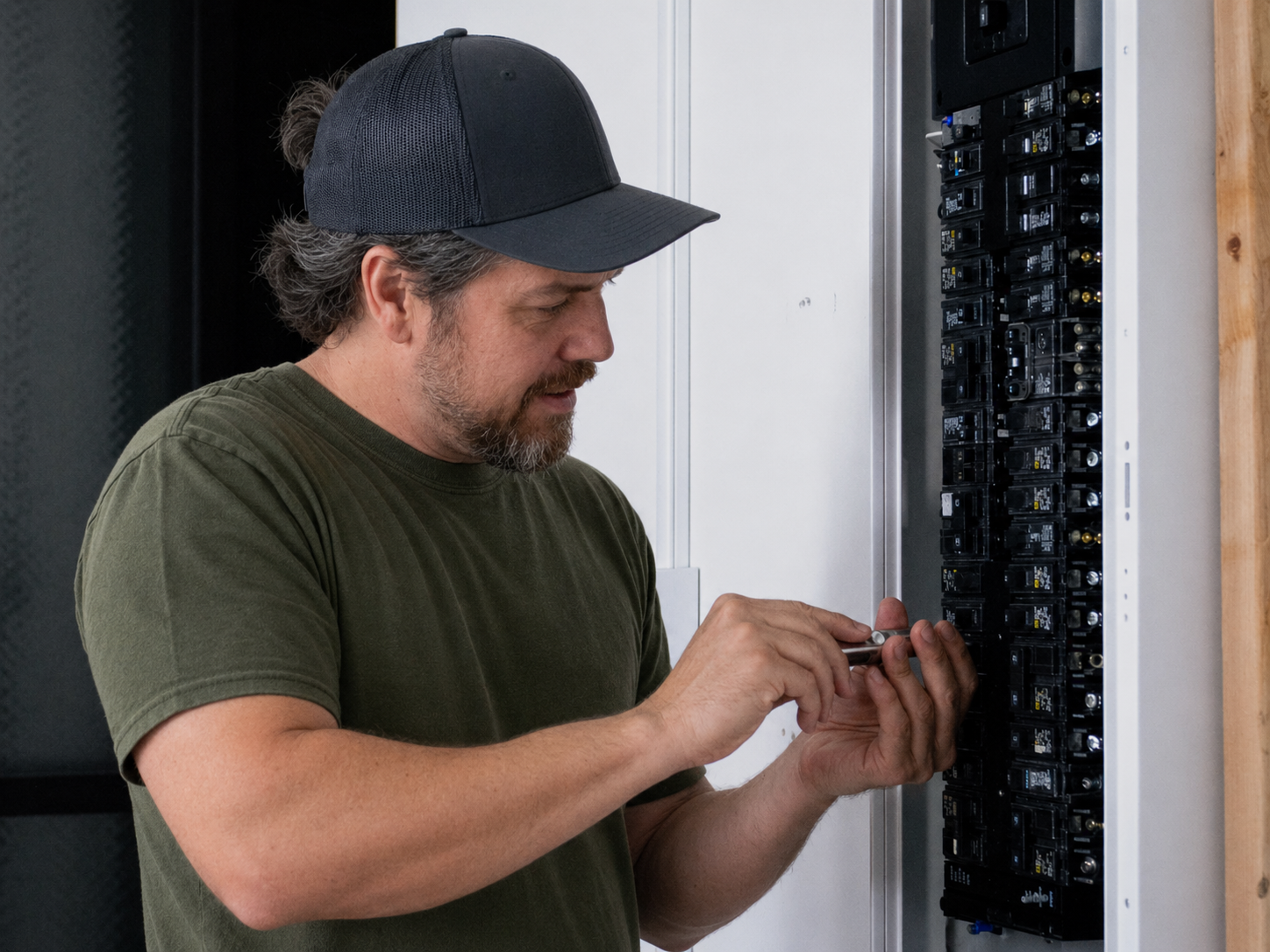
- Book a licensed electrician for the install — Okanagan electricians get busy in summer building season, call early.
This guide applies whether you live in Kelowna, West Kelowna, Vernon, Penticton, Lake Country, Summerland, Peachland, Coldstream, Naramata, Oyama, Westbank, Rutland, Glenmore, or anywhere else in the Okanagan and Shuswap.
Sources
- FortisBC Power Hours Rewards Program: fortisbc.com
- BC Hydro home EV charger rebates (reference): bchydro.com
Electrical safety disclaimer
This guide is general information, not electrical advice. Electrical work must be done by a licensed B.C. electrician under local code, manufacturer instructions, and permits. Always verify FortisBC program terms and eligibility before purchasing equipment.
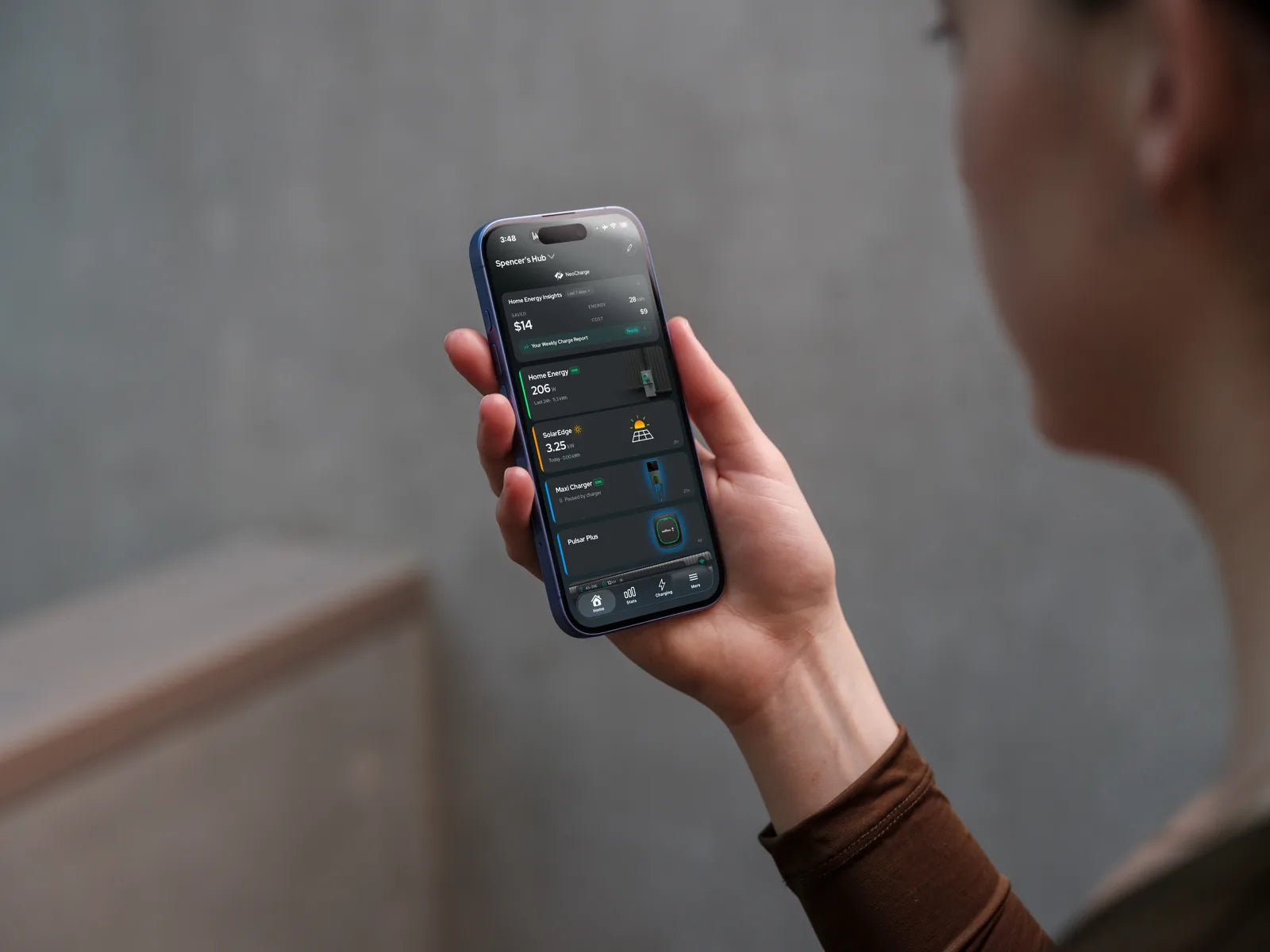
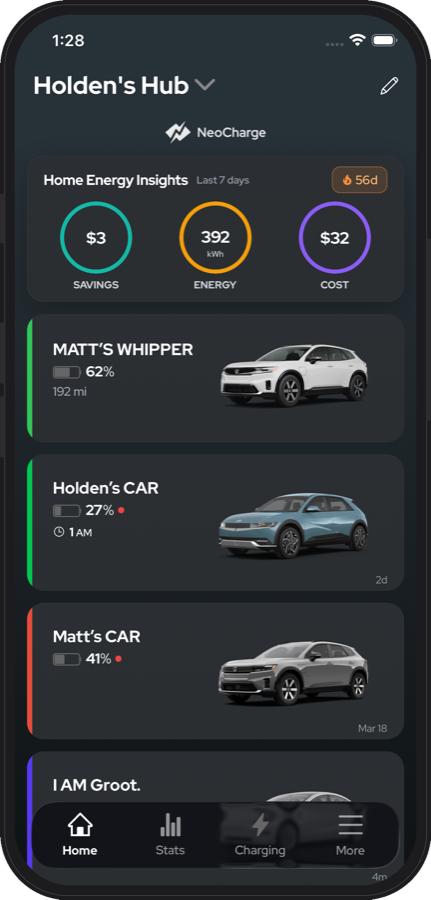
NeoCharge App
Track charging costs without spreadsheet work
See session history, monthly energy use, and savings so the article advice turns into a real household habit.
Explore the app

Next steps
Keep going with NeoCharge
Use the article as your decision guide, then jump into the product, app, or related guides that match what you are trying to solve next.
Key terms
- Level 2 charging
- Level 2 EV charging uses a 240V circuit (like a dryer outlet). It typically adds ~20–35 miles of range per hour, depending on your car and the circuit amperage.
- NEMA 14-30
- A NEMA 14-30 is a 240V, 30A dryer outlet. With a properly configured EV charger, it can usually support ~24A continuous charging (about 20–25 miles of range per hour for many EVs).
- Load management
- Load management is a strategy to keep your home’s electrical load within safe limits—often by scheduling or pausing EV charging when other appliances are running.
FAQs
What's the quick takeaway from this article?
Who is this guide for?
What should I do next?
Related posts
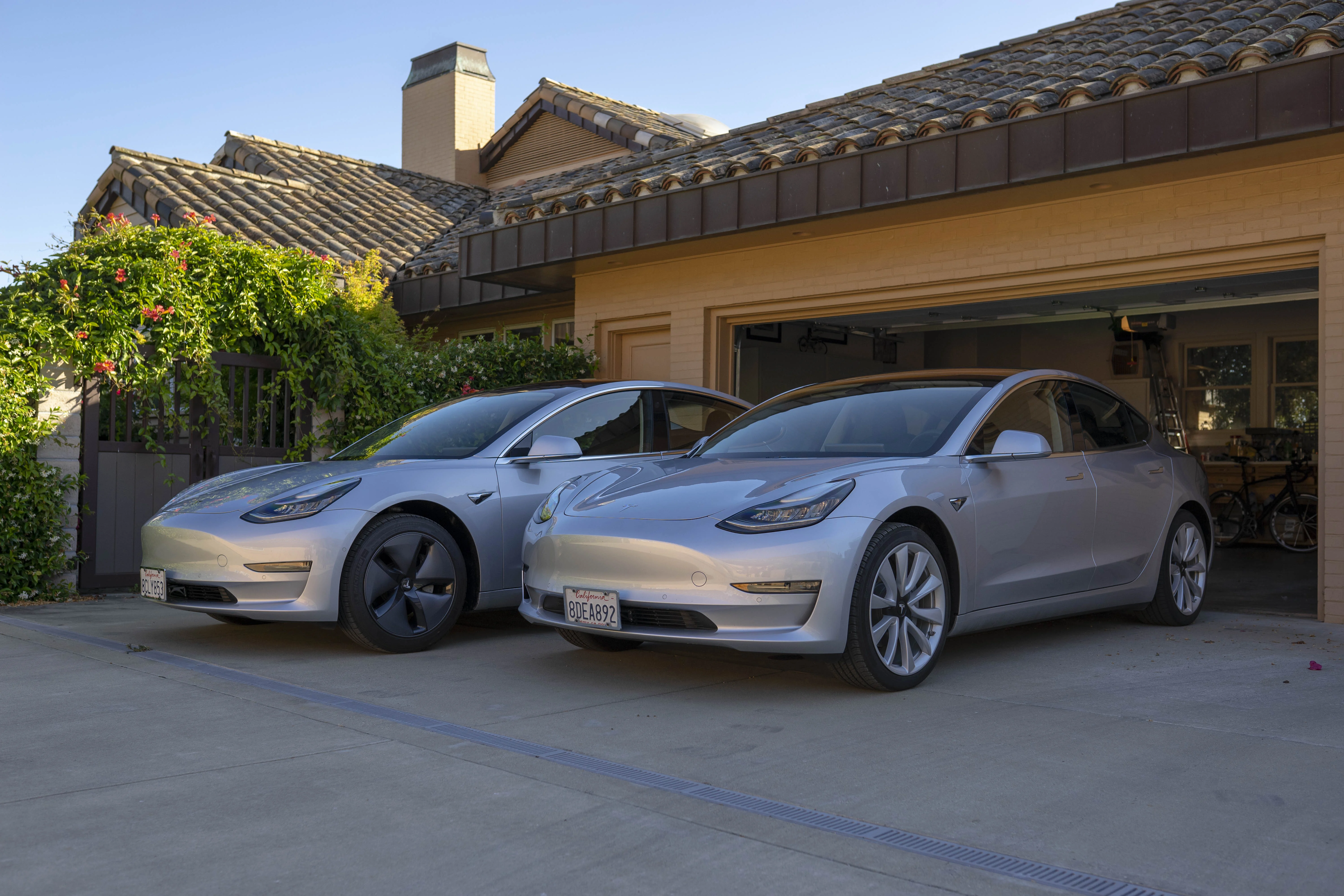
How to Charge Two EVs at Home in Canada on One 240V Outlet (2026)
One 50A circuit adds about 360 km overnight, enough for two commutes. What the Canadian Electrical Code allows, permits by province, BC Hydro rebates, and options.
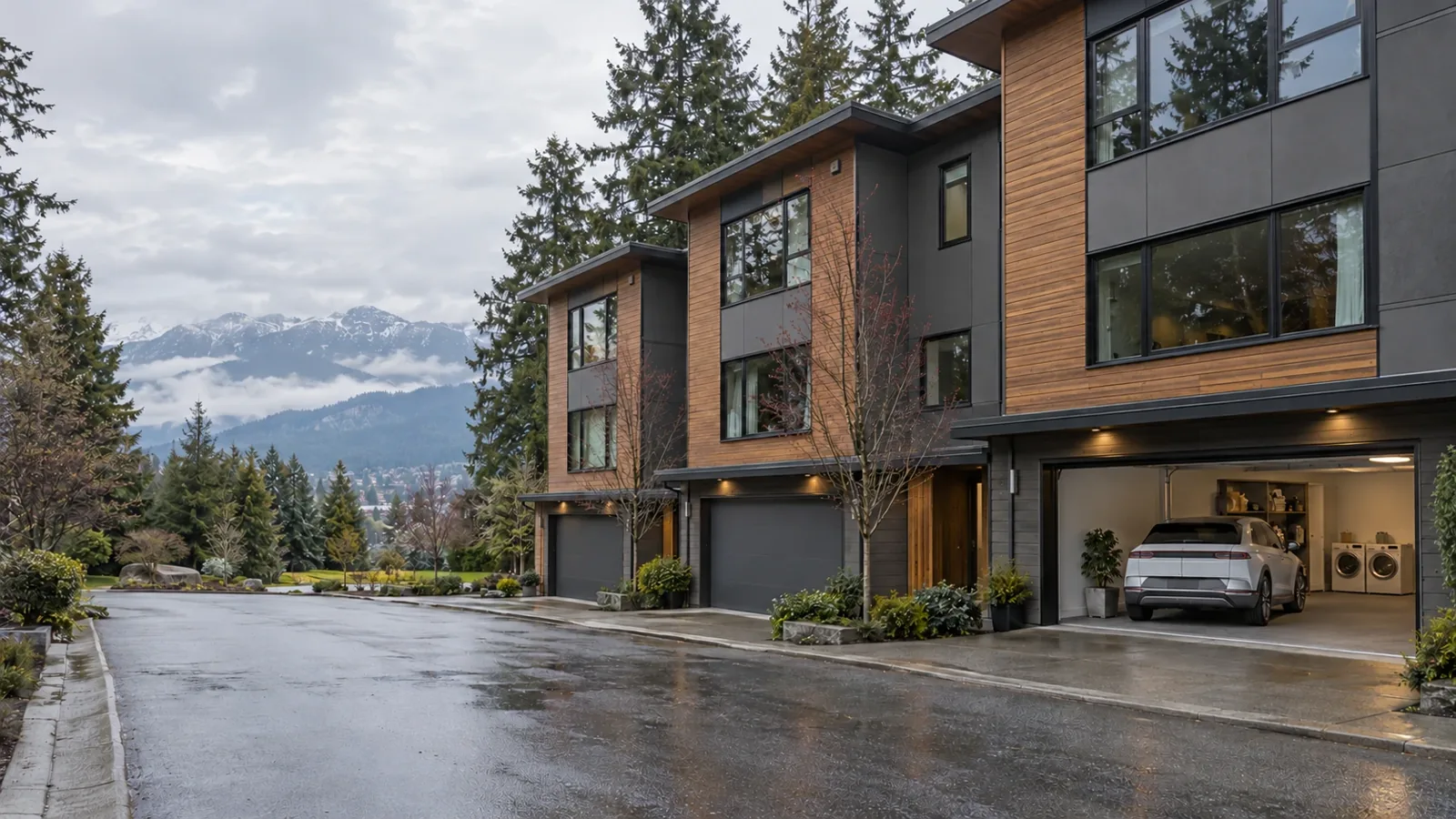

Burnaby EV Charger Installation
Burnaby EV charging by home type: share a dryer outlet instead of a panel upgrade, City permits, BC Hydro's $350 + $200 rebates, and strata right-to-charge.
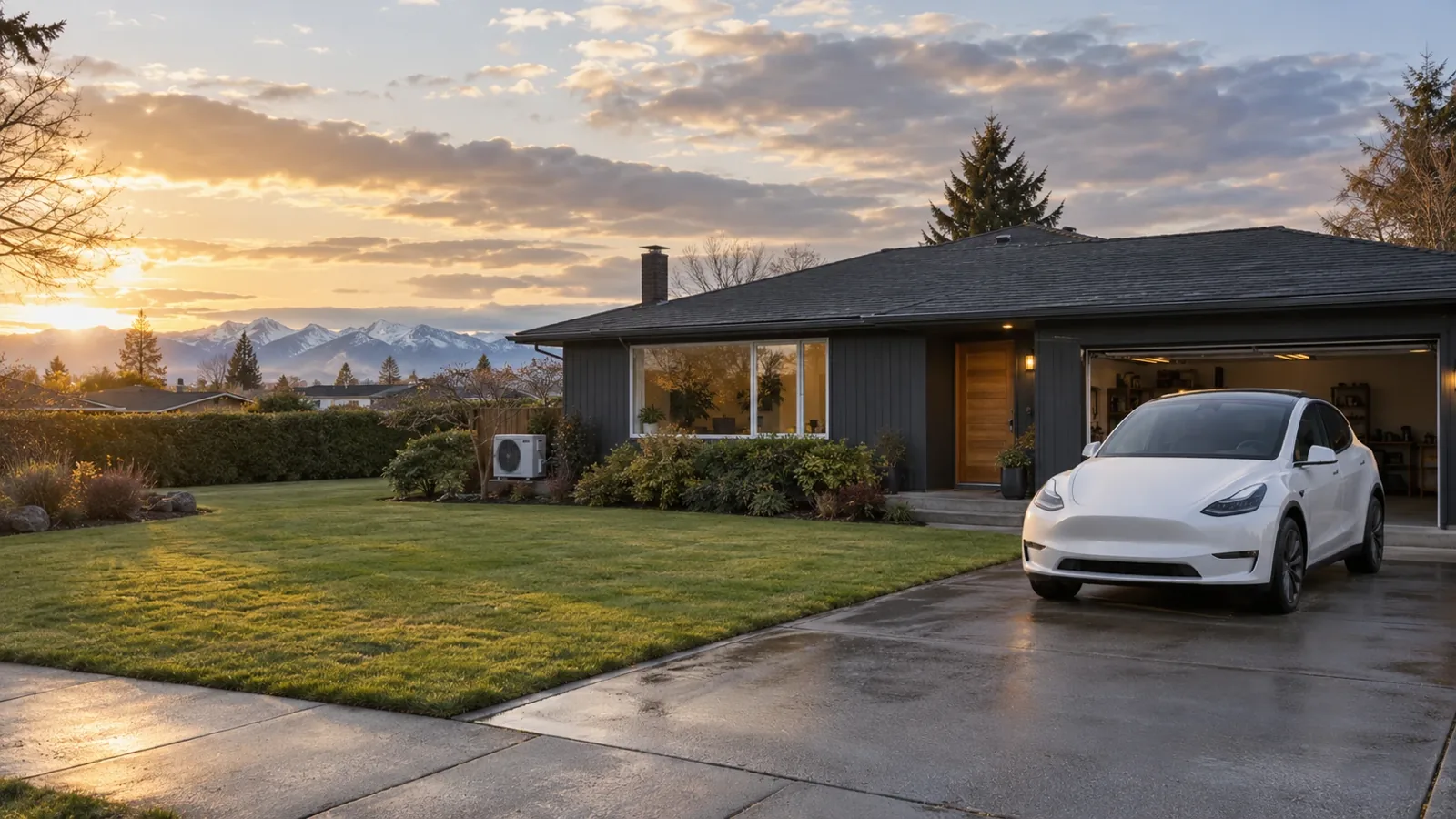
Richmond EV Charger Installation
Richmond EV charger installation: Technical Safety BC permit fees, the 2018 EV-ready rule, BC Hydro's $350 + $200 rebates, and room for a heat pump.
Surrey EV Charger Installation
Add Level 2 charging in Surrey without a panel upgrade: City of Surrey permit steps, BC Hydro's $350 + $200 rebates, suited-house load math, and overnight costs.
