



EV Charger Breaker Size & Wire Gauge (40A vs 50A vs 60A): How the 125% Rule Works
 The short answer
Confused about EV charger breaker size and wire gauge? Learn how the 125% continuous-load rule maps 32A→40A, 40A→50A, and 48A→60A.
Key takeaways
- Continuous load matters: EV charging can run for hours, so safety rules require extra headroom.
- Breaker size is not the same as charging speed: A larger breaker only helps if the EVSE is configured/approved to draw more current.
- Plug-in vs hardwired changes your options: Many higher-output EVSE settings (like 48A) are typically associated with hardwired installs.
- Sizing down is often the right move: Panel capacity, long wire runs, heat, and older equipment can make a lower-amp setup safer and more practical.
Best fit Is this guide right for you?
Drivers with time-of-use rates, off-peak discounts, utility programs, or charging schedules they want to automate.
Homes on flat electric rates where charging time does not change cost, unless you still want tracking and reminders.
EV Charger Breaker Size & Wire Gauge (40A vs 50A vs 60A): How the 125% Rule Works
Installing (or upgrading) a Level 2 EV charger at home often comes down to three questions:
- What breaker size do I need—40A, 50A, or 60A?
- What wire gauge should be used for that circuit?
- Why do people keep saying “continuous load” and “125% rule”?
This guide breaks down the most common EV charging amperages and how they typically pair with breaker sizes and wiring—plus when it’s smart to size down instead of trying to max out.
Disclaimer: This is general educational information, not electrical advice. Requirements vary by location, panel, and installation method. Always follow your EVSE (charger) manufacturer’s instructions and work with a qualified electrician for final design, permitting, and inspection.
What “Continuous Load” Means (and Why EV Charging Triggers It)
A continuous load is generally a load expected to run for 3 hours or more. Level 2 EV charging frequently falls into this category because charging sessions can last overnight.
That’s why many electrical standards treat EV charging as a continuous load and require circuit sizing to include headroom. In practice, you’ll often see this expressed as:
- Max continuous current = 80% of breaker rating
- or equivalently
- Breaker rating ≥ 125% of continuous current
The 80% / 125% math (simple examples)
- On a 40A breaker, typical continuous current is 40A × 0.80 = 32A
- On a 50A breaker, typical continuous current is 50A × 0.80 = 40A
- On a 60A breaker, typical continuous current is 60A × 0.80 = 48A
This is why those “32A / 40A / 48A” EVSE settings map so cleanly to “40A / 50A / 60A” breakers.
Sources:
- NYSERDA overview of NEC Article 625 (EVSE): nyserda.ny.gov
- Tesla Energy Library (breaker selection guidance): energylibrary.tesla.com
Common EV Charger Amps → Breaker Size Pairings (Most Popular Setups)
Below are the most common “real world” pairings for Level 2 charging:
32A EVSE → 40A breaker
- A very common, budget-friendly Level 2 setup.
- Often used when the panel has limited spare capacity or when the homeowner wants a straightforward install with less material cost than higher-amp circuits.
- Still delivers a substantial speed upgrade over Level 1 charging.
40A EVSE → 50A breaker
- A common target for plug-in EVSE on a 240V receptacle, depending on the EVSE and receptacle type.
- Often associated with “50A circuits” people talk about for garage EV charging.
48A EVSE → 60A breaker
- A common “high output” home charging configuration.
- Frequently associated with hardwired installation (and many EVSE models treat 48A as a hardwired-only configuration).
Important: Your EVSE must be listed and configured for the chosen circuit. Many EVSE units allow multiple amperage settings—your electrician typically sets this during installation per the manufacturer instructions.
Wire Gauge Basics for 40A / 50A / 60A Circuits (Why the Answer Is “It Depends”)
People often want a simple chart like: “40A breaker = X wire gauge.” But wire sizing depends on factors that materially change what’s safe and compliant, including:
- Copper vs aluminum conductors
- Wire insulation temperature rating (commonly 60°C / 75°C / 90°C)
- Length of the run (voltage drop considerations)
- Ambient temperature (hot garages/attics)
- Conduit fill and bundling (heat dissipation)
- Terminations/lugs ratings and equipment specs
Typical starting point (common practice, not a universal rule)
In many residential installs using copper conductors, you’ll often see:
- 40A breaker: commonly sized around 8 AWG copper
- 50A breaker: commonly sized around 6 AWG copper
- 60A breaker: commonly sized around 6 AWG copper (sometimes larger depending on conditions)
Because those “depending on conditions” details matter, treat this as a starting conversation with your electrician—not a final spec to DIY from.
Plug-In vs Hardwired EV Chargers: What Changes?
Plug-in (receptacle) installs
Plug-in EV chargers connect to a wall receptacle (for example, a 240V outlet). Benefits include:
- Easier EVSE replacement
- Potential portability
Tradeoffs:
- The receptacle type, plug type, and installation quality become critical.
- Some EVSE units limit maximum output when used plug-in.
- Receptacles can be a wear point if frequently unplugged/replugged.
If you’re considering a plug-in setup, it’s especially important to:
- Use the correct receptacle type for the EVSE plug
- Ensure the EVSE output setting matches the circuit’s continuous-load capability
- Follow manufacturer requirements (some specify particular receptacle grades or hardwiring above certain currents)
Hardwired installs
Hardwiring typically:
- Reduces “plug/receptacle” failure points
- Is often used for higher continuous output configurations (like 48A)
- May allow a cleaner install and cable routing
Tradeoffs:
- EVSE replacement usually requires an electrician
- More permanent
When It Makes Sense to Size Down (Even If You Want Faster Charging)
Bigger isn’t always better for home charging. Here are practical reasons homeowners choose 32A (40A breaker) or 40A (50A breaker) instead of jumping to 48A (60A breaker):
- Limited panel capacity / service size: Your home may not have enough headroom for a larger circuit without load calculations and upgrades.
- Long distance from panel to garage: Longer runs can drive up cost and may require upsizing conductors to manage voltage drop.
- Hot environments or crowded conduit: Heat reduces effective ampacity; bundling can require derating.
- Older panels or marginal electrical infrastructure: Sometimes it’s smarter to install a lower-amp circuit than push equipment to its limits.
- Your actual daily driving doesn’t need max speed: Many drivers can comfortably recharge overnight at 32A.
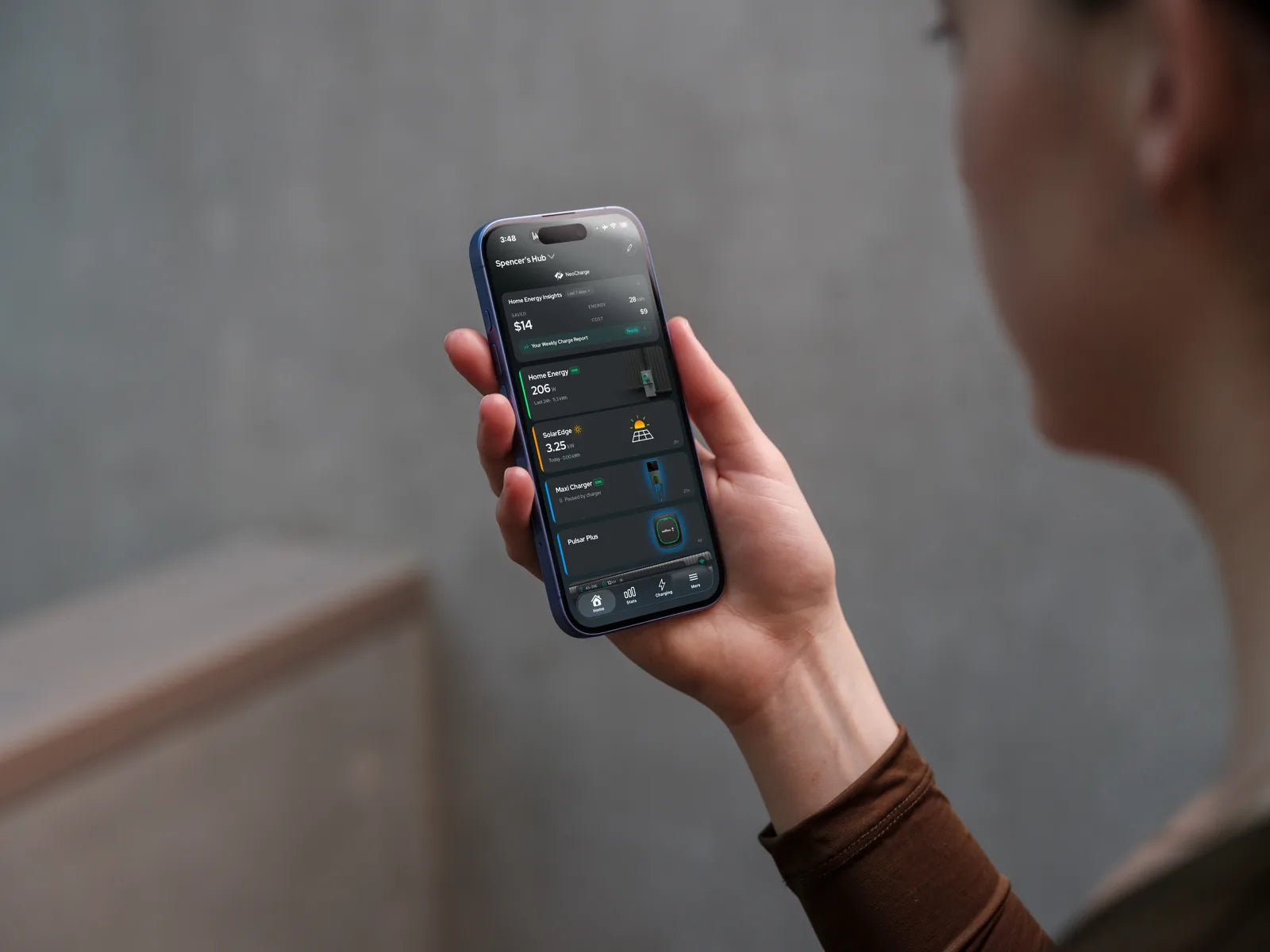
If panel capacity is the limiting factor, you can also combine right-sized hardware with smart charging features (like scheduling around Time-Of-Use rates) to reduce costs without needing the highest amperage—NeoCharge smart charging options are here: NeoCharge App.
A Quick Sanity Check: Match Three Things
Before finalizing an install, make sure these three items align:
- Breaker size (40A / 50A / 60A)
- EVSE configured continuous current (32A / 40A / 48A)
- Wire size + installation method (as designed by your electrician)
If any one of these is mismatched—like a charger set to 48A on a 50A circuit—that’s a red flag.
Next steps (NeoCharge)
If you want faster home charging but your panel is near capacity, consider options that can help you charge safely without immediately jumping to a costly electrical upgrade:
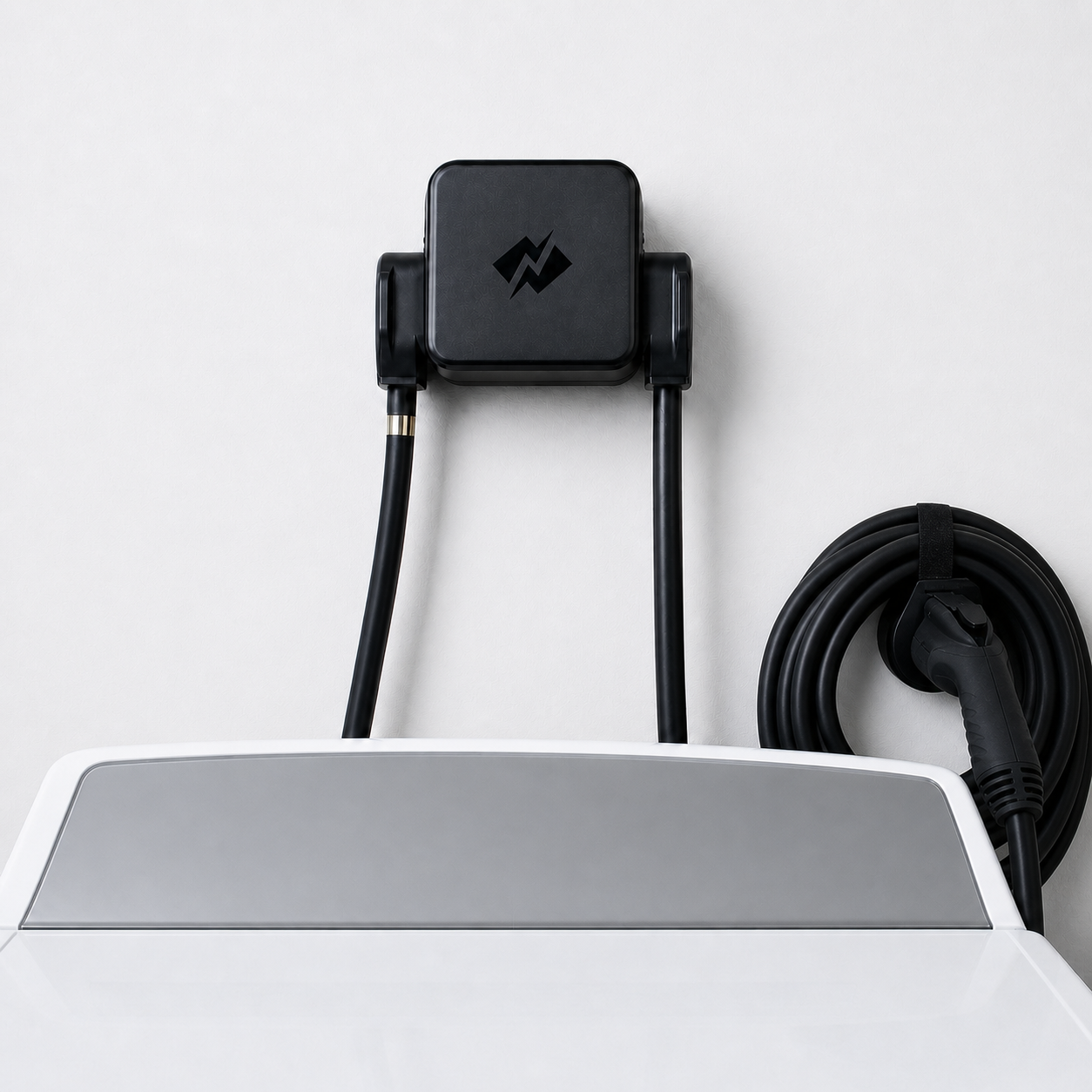
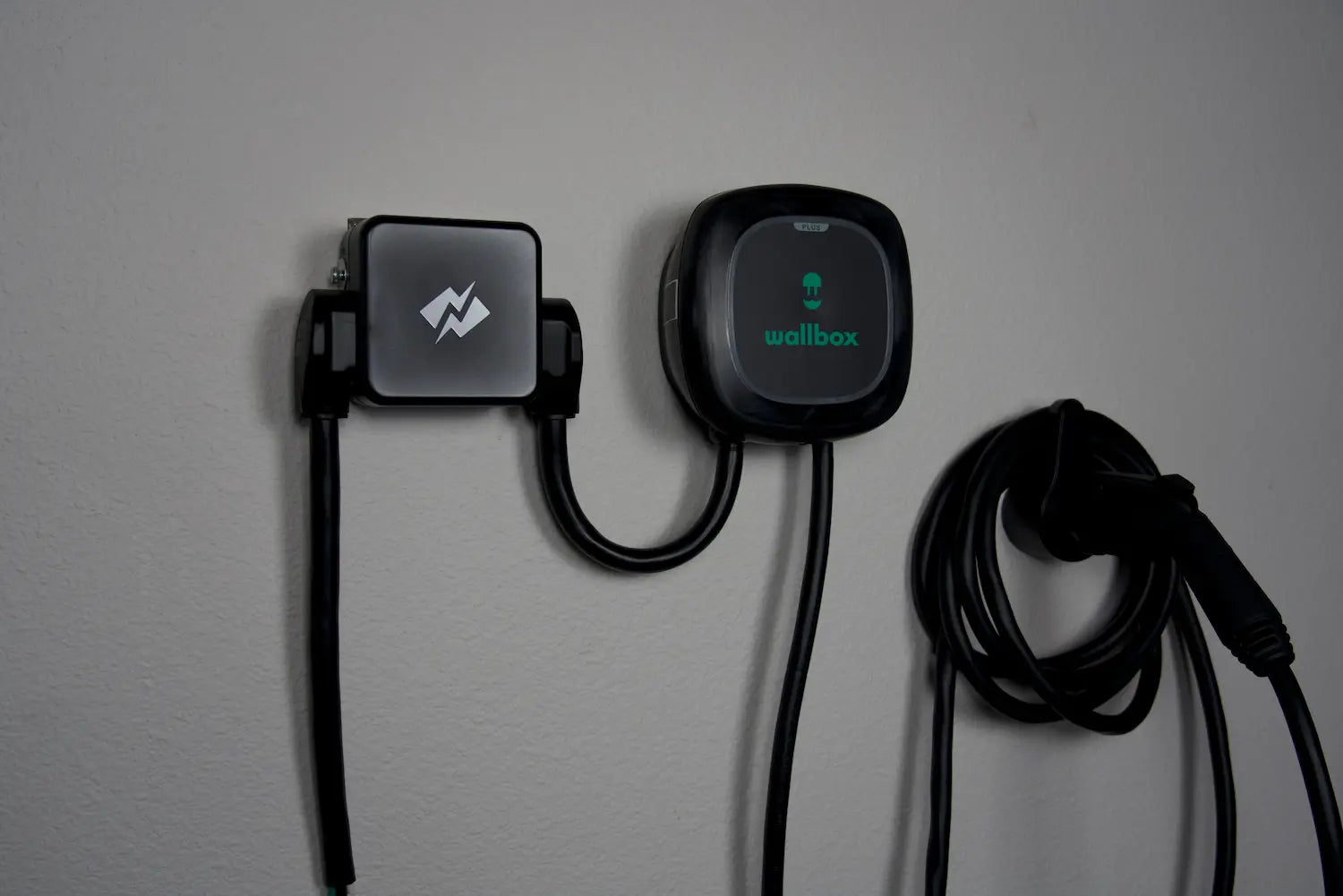
- Explore NeoCharge solutions for load management and sharing existing capacity: NeoCharge Smart Splitter
- Set up smart charging to better align with Time-Of-Use rates and reduce charging costs: NeoCharge App
Sources
- NYSERDA — EVSE Overview: NEC Article 625 (PDF): nyserda.ny.gov
- Tesla Energy Library — Breaker selection guidance: energylibrary.tesla.com
NeoCharge App
Turn rate plans into simple charging schedules
Schedule around off-peak windows, manage compatible chargers, and keep tabs on charging sessions from the app.
Explore the app


Next steps
Keep going with NeoCharge
Use the article as your decision guide, then jump into the product, app, or related guides that match what you are trying to solve next.
Key terms
- Level 2 charging
- Level 2 EV charging uses a 240V circuit (like a dryer outlet). It typically adds ~20–35 miles of range per hour, depending on your car and the circuit amperage.
- EVSE
- EVSE stands for Electric Vehicle Supply Equipment (the “charger”). It safely delivers power to your EV and communicates with the car to control charging current.
- Time-of-use (TOU) rates
- Time-of-use rates are utility pricing plans where electricity costs more at peak hours and less off-peak. Scheduling EV charging off-peak can significantly reduce cost.
- Load management
- Load management is a strategy to keep your home’s electrical load within safe limits—often by scheduling or pausing EV charging when other appliances are running.
FAQs
What's the quick takeaway from this article?
Who is this guide for?
What should I do next?
Related posts


Burnaby EV Charger Installation
Burnaby EV charging by home type: share a dryer outlet instead of a panel upgrade, City permits, BC Hydro's $350 + $200 rebates, and strata right-to-charge.

Richmond EV Charger Installation
Richmond EV charger installation: Technical Safety BC permit fees, the 2018 EV-ready rule, BC Hydro's $350 + $200 rebates, and room for a heat pump.

Surrey EV Charger Installation
Add Level 2 charging in Surrey without a panel upgrade: City of Surrey permit steps, BC Hydro's $350 + $200 rebates, suited-house load math, and overnight costs.

BC Hydro EV Power Management Device Rebate: Eligible Devices (2026)
BC Hydro pays $200 extra for an eligible EV power management device. The Sept 2026 device list, which chargers qualify, and the permit rule that decides who gets it.
