



How Much Does It Cost to Charge a Tesla? (2026 Guide)
Direct answer: Charging a Tesla at home costs most U.S. drivers about $0.04 to $0.06 per mile, or roughly $10 to $16 for a full charge at an average residential electricity price near 17 cents per kWh. That works out to about $500 to $750 per year for typical driving. Supercharging is faster but usually costs 2 to 3 times more than charging at home.
The five things that decide your Tesla charging cost
- Battery size (kWh) — how big the "tank" is.
- Electricity rate ($/kWh) — what your utility charges per unit of energy.
- Where you charge — home, a Tesla Supercharger, or another public network.
- Efficiency (kWh per mile) — how far your Tesla travels on each kWh.
- Charging losses — about 10% of energy is lost as heat between the wall and the battery.
Get those five right and the rest is arithmetic.
How much electricity does a Tesla use?
Every Tesla has a usable battery measured in kWh and an efficiency measured in kWh per mile (or miles per kWh). Here are typical, rounded figures — your exact numbers vary by model year, wheels, weather, and driving style.
| Tesla model | Usable battery (approx.) | Efficiency (approx.) |
|---|---|---|
| Model 3 (RWD) | ~57–60 kWh | ~0.25 kWh/mi |
| Model 3 (Long Range) | ~75–79 kWh | ~0.26 kWh/mi |
| Model Y | ~75–81 kWh | ~0.28 kWh/mi |
| Model S | ~100 kWh | ~0.30 kWh/mi |
| Model X | ~100 kWh | ~0.34 kWh/mi |
Cold weather, highway speeds, and heavy acceleration all push real-world efficiency higher (more kWh per mile), so treat these as planning numbers, not guarantees.
How much does it cost to charge each Tesla model?
This is the table most people are looking for: what a full charge actually costs by model, plus the cost per mile. Figures assume the U.S. average residential rate of $0.17/kWh and 90% charging efficiency (so they reflect the energy actually drawn from the grid, including losses).
| Tesla model | Battery (approx.) | Full charge | Cost per mile |
|---|---|---|---|
| Model 3 RWD | ~60 kWh | ~$11.30 | ~$0.042 |
| Model 3 Long Range | ~75 kWh | ~$14.20 | ~$0.040 |
| Model 3 Performance | ~75 kWh | ~$14.20 | ~$0.045 |
| Model Y RWD | ~60 kWh | ~$11.30 | ~$0.042 |
| Model Y Long Range | ~75 kWh | ~$14.20 | ~$0.043 |
| Model S | ~100 kWh | ~$18.90 | ~$0.047 |
| Model X | ~100 kWh | ~$18.90 | ~$0.057 |
| Cybertruck | ~123 kWh | ~$23.20 | ~$0.069 |
Estimates based on $0.17/kWh (U.S. average, 2026) and ~90% charging efficiency. Your actual cost depends on your local rate, model year, weather, and driving.
Even the thirstiest Tesla, the Cybertruck at about 6.9¢ per mile, still costs roughly half as much per mile as a comparable gas pickup. The Model 3 and Model Y sit at the bottom at 4–4.5¢ per mile.
What does it cost to charge a Tesla per month?
For typical driving of about 1,000 miles per month, charging mostly at home at $0.17/kWh:
| Tesla model | Estimated monthly cost |
|---|---|
| Model 3 RWD | ~$38–44 |
| Model 3 Long Range / Performance | ~$42–50 |
| Model Y (any) | ~$42–52 |
| Model S / X | ~$56–64 |
| Cybertruck | ~$75–85 |
Expect your home electricity bill to rise by roughly $40–65 a month for that driving — while your gas-station spending drops to zero.
What is the average electricity rate?
The U.S. Energy Information Administration (EIA) reports the average U.S. residential electricity price at roughly 17 cents per kWh, though it ranges from under 12 cents in some states to well over 30 cents in others.
Source: eia.gov
Two homes with identical Teslas can have very different bills purely because of their rate. That is why your rate plan matters more than your model.
Does your state change the cost?
A lot. Residential rates range from around 12¢/kWh in the cheapest states (such as Louisiana and other parts of the South) to 40¢+/kWh in Hawaii and parts of the Northeast and California — roughly a 3x spread. Two takeaways:
- If you live in a high-rate state, an EV/time-of-use rate plan matters even more — some drivers get overnight power for as little as 6¢/kWh.
- A Tesla that costs ~$14 to charge in Texas can cost $30+ on the same charge in Hawaii. Always check your own utility's current rate.
The simple Tesla charging cost formula
To estimate the cost of a full charge:
Cost of a full charge = Usable battery (kWh) × Rate ($/kWh) ÷ Charging efficiency (~0.9)
To estimate the cost to drive a set distance:
Cost for the trip = Miles ÷ Efficiency (mi/kWh) × Rate ($/kWh)
The ÷ 0.9 accounts for the energy lost as heat during charging. AC home charging is roughly 85–90% efficient, so you pay for a little more energy than actually lands in the battery.
Worked example: charging a Tesla at home
Say you have a Model 3 Long Range with a ~75 kWh usable battery, you pay 17¢/kWh, and you want to refill from 20% to 100% (an 80% top-up).
- Energy into the battery: 75 kWh × 80% = 60 kWh
- Account for charging losses: 60 ÷ 0.9 = 66.7 kWh drawn from the wall
- Cost: 66.7 kWh × $0.17 = about $11.30
A full 0–100% charge of the same car would be roughly $14–$15. On a cheaper overnight rate of 10¢/kWh, that same full charge drops to about $8–$9.
Worked example: cost per mile
Cost per mile is the number that actually matters day to day:
| Where you charge | Effective rate | Model Y (~0.28 kWh/mi) cost per mile |
|---|---|---|
| Home, off-peak | $0.10/kWh | ~$0.028 |
| Home, average | $0.17/kWh | ~$0.048 |
| Supercharger | $0.40/kWh | ~$0.112 |
At average U.S. driving of about 13,500 miles per year, home charging that Model Y costs roughly $650/year, while doing all of it at a Supercharger would be closer to $1,500/year.
How much does Tesla Supercharging cost?
Supercharging is built for road trips, not daily use. Most Tesla Superchargers bill per kWh, commonly in the $0.25 to $0.50 per kWh range depending on location and time of day, with cheaper off-peak windows at many sites. A few locations in states that restrict per-kWh billing charge per minute instead, split into two tiers based on charging speed.
A full charge at a Supercharger roughly works out to:
| Supercharger rate | Full charge (most models) |
|---|---|
| Low-cost site (~$0.25/kWh) | ~$15–25 |
| Average site (~$0.35/kWh) | ~$21–35 |
| High-cost site (~$0.50/kWh) | ~$30–50 |
Watch for extra fees that can quietly raise the price:
- Idle fees: around $1.00/minute if you leave the car plugged in after it finishes.
- Congestion fees: charged per minute at busy sites to keep stalls moving.
- Third-party networks: EVgo, Electrify America, and ChargePoint are alternatives, but pricing varies wildly — some bill per kWh, some per minute, some add a session fee.
The practical takeaway: Supercharging is convenient and fast, but it typically costs 2 to 3 times more than charging at home. Use it for travel, charge to ~80% and finish at home, and make home your default.
Five ways to lower your Tesla charging cost
- Charge overnight on a time-of-use rate. Many utilities offer cheap overnight windows. See how to find your off-peak hours.
- Charge at home, not at Superchargers, for daily driving. Save fast charging for trips.
- Set a daily limit around 80% unless your manual says otherwise — less time at a high state of charge.
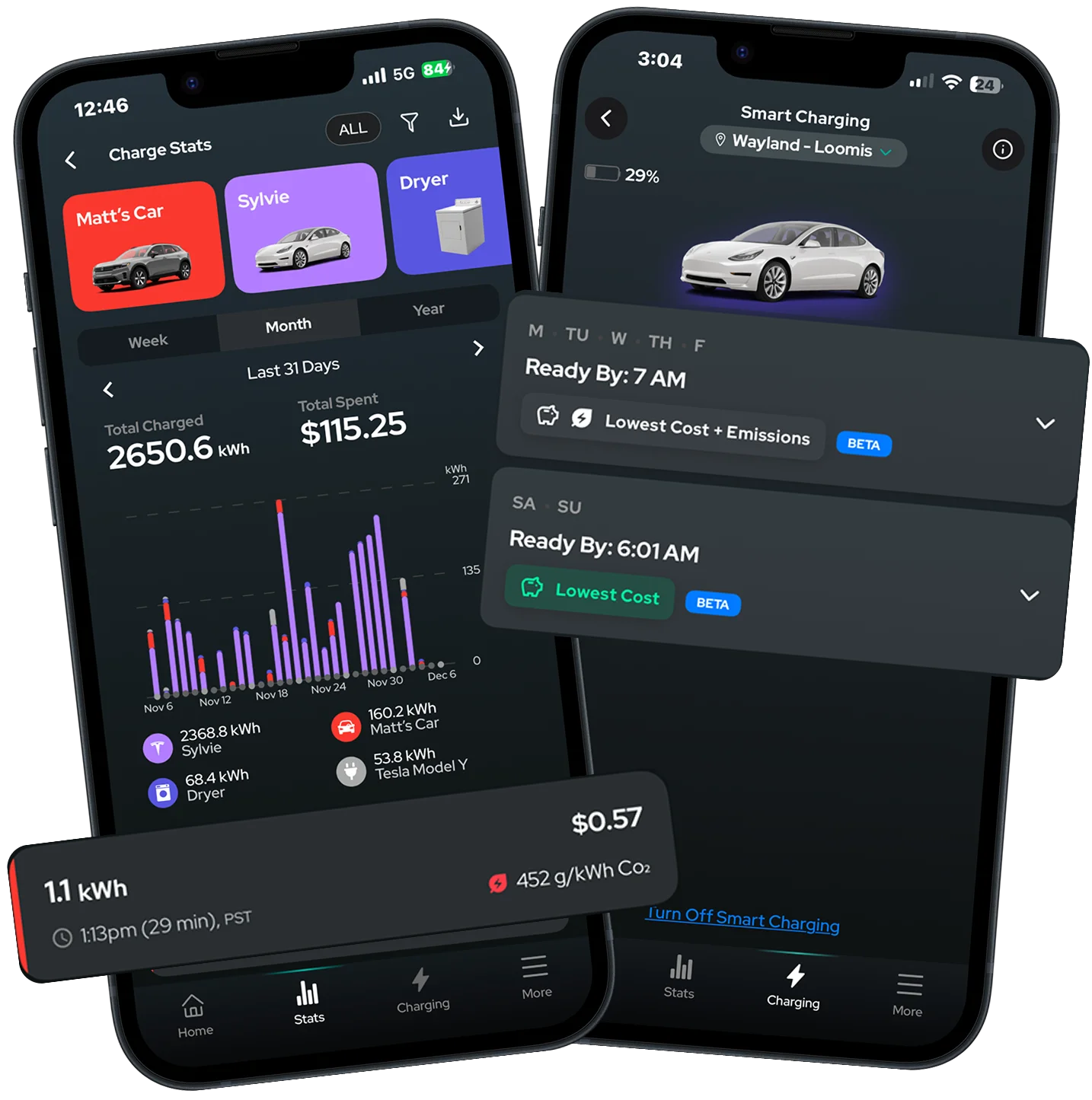
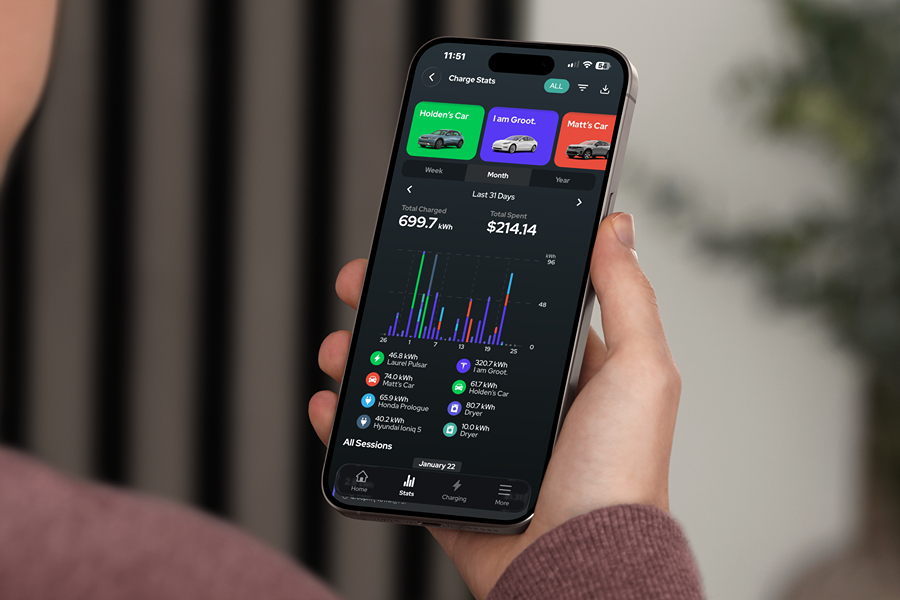
- Track what you actually spend. The NeoCharge App schedules charging around cheap hours and shows your real cost per session.
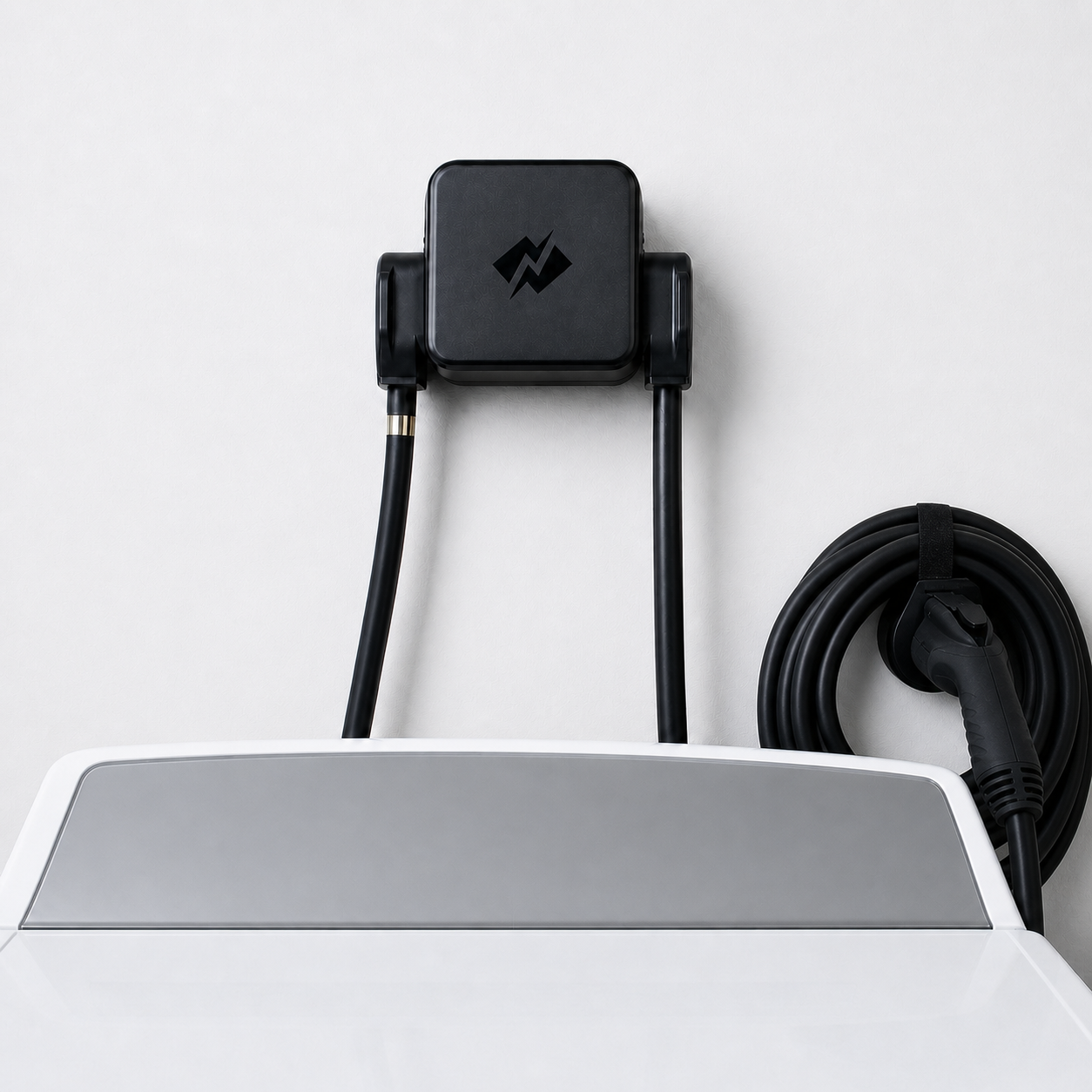
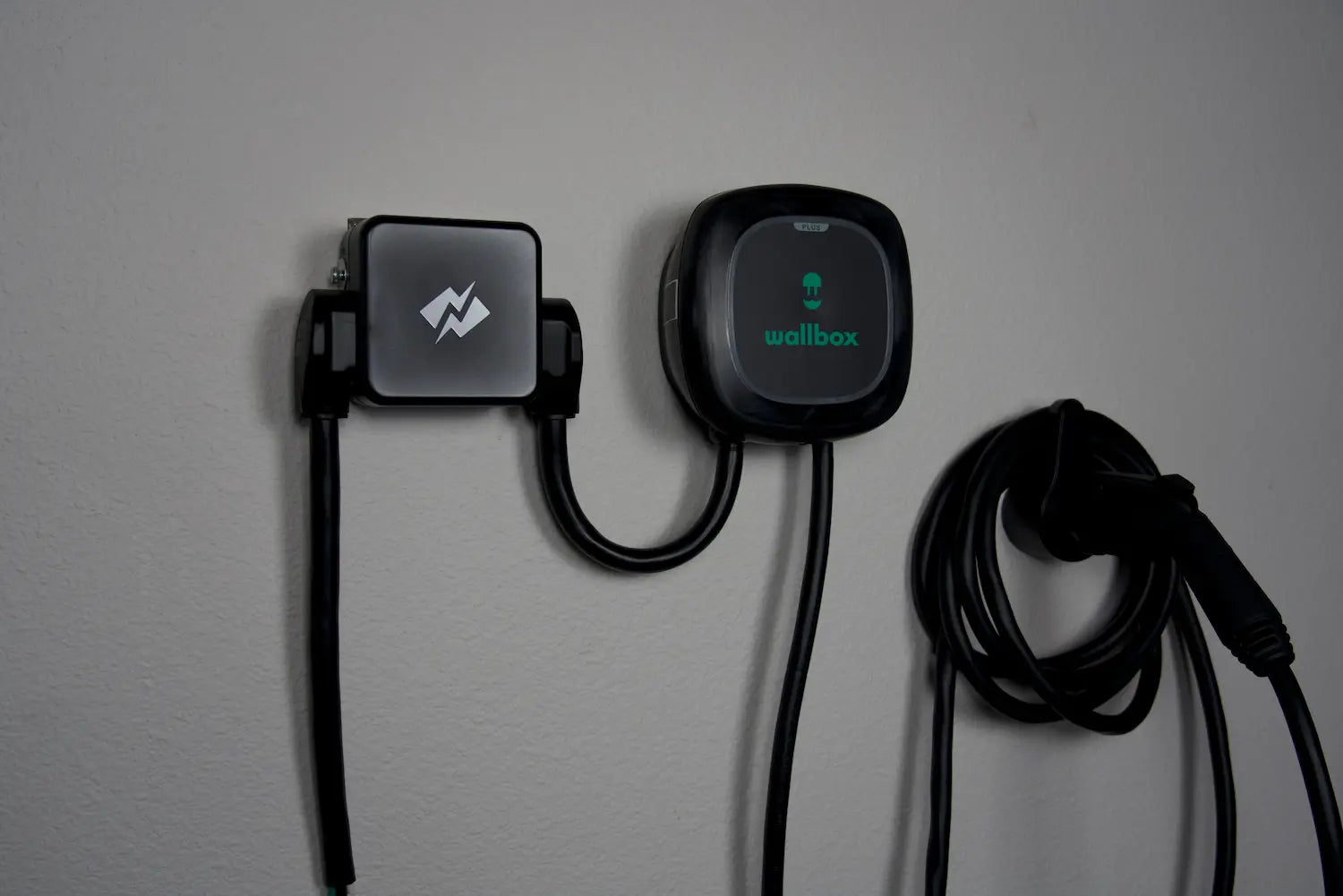
- Avoid an expensive install. If a dedicated circuit or panel upgrade is the obstacle, a Smart Splitter lets you charge from an existing 240V outlet.
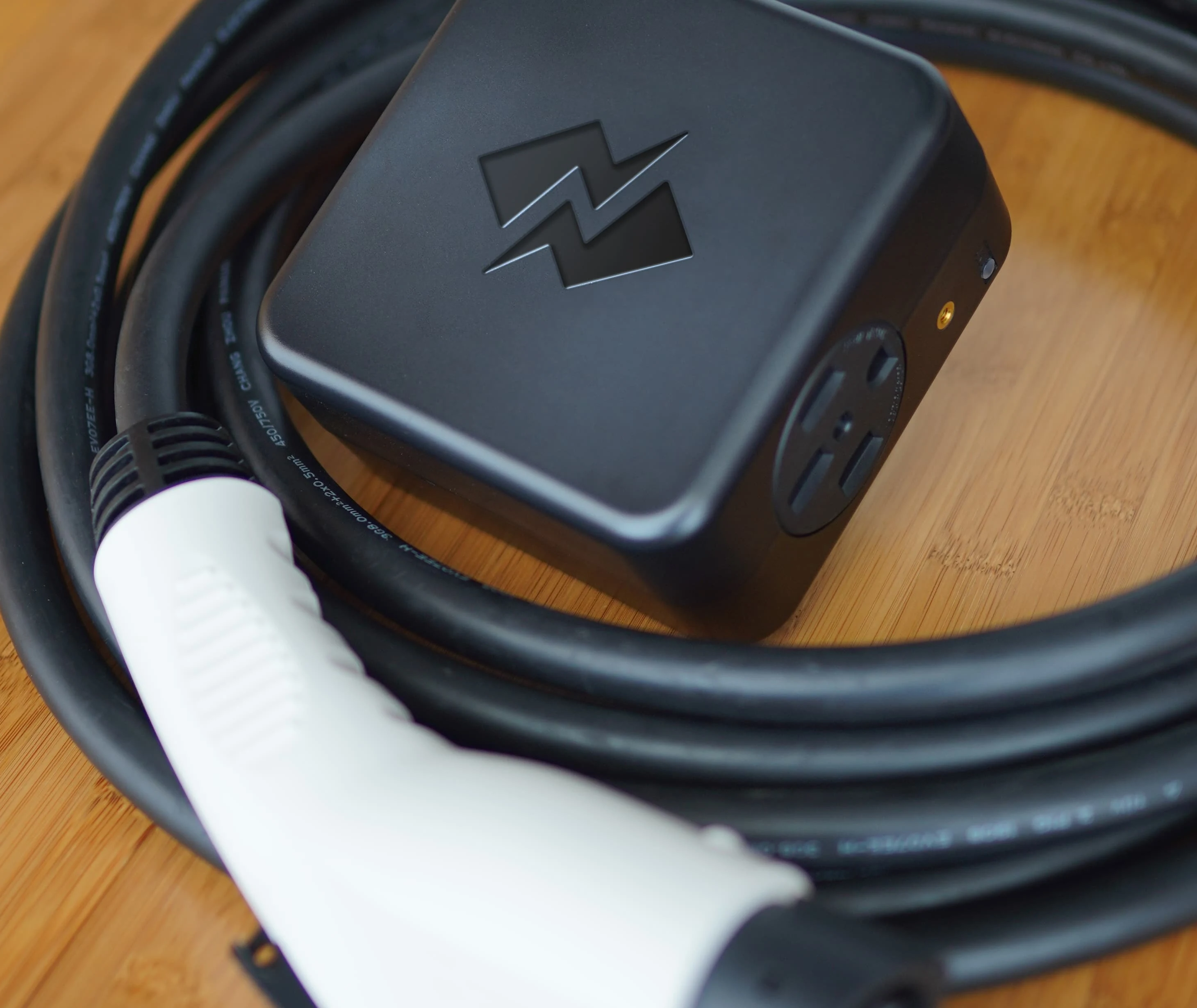
NeoCharge Smart Splitter
Charge your Tesla at home without a panel upgrade
Share an existing 240V outlet automatically, so your Tesla and dryer never draw power at the same time.
What changes your Tesla charging cost?
Beyond your model and rate, a few real-world factors move the number:
- Cold weather: winter can cut efficiency 15–30%, so you use more kWh per mile.
- Driving style and speed: aggressive acceleration and highway speeds over ~70 mph noticeably increase consumption.
- Where you charge: home is cheapest; Superchargers cost 2–3x more.
- When you charge: off-peak overnight rates can be half the daytime price.
- Battery age: older packs may need slightly more energy for the same range, though Tesla batteries hold up well over time.
None of these change the basic picture — home charging stays cheap — but they explain why your real bill may differ from a textbook estimate.
Tesla charging cost vs gas: the savings
Home charging a Tesla costs about $0.048 per mile at average rates. A comparable gas car is far higher, and the gap compounds over years of ownership:
| Vehicle you'd otherwise drive | Monthly fuel (1,000 mi) | Tesla equivalent | Monthly savings |
|---|---|---|---|
| Compact sedan (~30 mpg) | ~$100–115 | ~$42–50 | ~$60–70 |
| Compact SUV (~28 mpg) | ~$110–125 | ~$42–52 | ~$65–75 |
| Full-size pickup (~20 mpg) | ~$155–175 | ~$75–85 (Cybertruck) | ~$80–90 |
Gas figures assume ~$3.10/gallon. Over a typical 6-year ownership period, fuel savings alone commonly add up to $4,000–8,000 — before counting lower maintenance (no oil changes, less brake wear from regen braking).
For the full total-cost-of-ownership picture, see our 2025 Tesla savings reality check.
FAQ
How much does it cost to fully charge a Tesla at home?
How much does it cost to charge a Tesla per mile?
Is Supercharging more expensive than charging at home?
How much does it cost to charge a Tesla per year?
Does charging a Tesla raise my electric bill a lot?
Why do I pay for more energy than my battery holds?
Bottom line
Charging a Tesla at home is cheap, predictable, and far less expensive than gas — usually $10 to $16 a full charge and $0.04 to $0.06 a mile. The two levers that move your cost the most are where you charge (home beats Superchargers) and when you charge (off-peak beats peak).
If the only thing standing between you and cheap home charging is an expensive electrical install, you may not need a panel upgrade at all.
Next steps (NeoCharge)
- To charge your Tesla from an existing 240V outlet without a panel upgrade, see the NeoCharge Smart Splitter.
- To schedule charging around cheap utility rates and track your real cost, explore the NeoCharge App.
- To compare your rate options, read how to find your off-peak hours.
- For the full ownership math, read Do Teslas really save you money?
Sources
- U.S. Energy Information Administration, average residential electricity prices: eia.gov
- U.S. Department of Energy Alternative Fuels Data Center, home charging guide: DOE home charging overview
- U.S. EPA home EV charging guide: epa.gov
A note on these estimates
Prices, electricity rates, and Supercharger pricing change over time and vary by location, model year, and weather. The figures here are planning estimates based on public averages. Check your own utility rate and your vehicle's charging screen for exact numbers.
NeoCharge App
Turn rate plans into simple charging schedules
Schedule around off-peak windows, manage compatible chargers, and keep tabs on charging sessions from the app.
Explore the app


Next steps
Keep going with NeoCharge
Use the article as your decision guide, then jump into the product, app, or related guides that match what you are trying to solve next.
Key terms
- Time-of-use (TOU) rates
- Time-of-use rates are utility pricing plans where electricity costs more at peak hours and less off-peak. Scheduling EV charging off-peak can significantly reduce cost.
Related posts
How Much Does It Cost to Charge a Tesla in Canada? (2026 Guide)
How much does it cost to charge a Tesla in Canada? About $6-$17 per full charge depending on province. See per-province rates, the formula, and Supercharger pricing.
How Much Does It Really Cost to Charge an EV at Home? (2026 Calculator)
Charging an EV at home costs $8-$15 per full charge on average. Learn the exact formula, compare Level 1 vs Level 2 costs, and calculate your actual charging expenses with real examples.

How to Schedule EV Charging During Off-Peak Hours (And Save Hundreds Per Year)
Learn how to schedule EV charging during off-peak hours and save $30-80/month on electricity. Step-by-step guide with real savings examples.

Demand Charges vs. TOU Rates for Home EV Charging: What Matters (and How to Avoid Peak Costs)
Learn the difference between demand charges and time-of-use (TOU) rates for home EV charging, how to tell what you’re on, and practical steps to reduce peak costs and charge cheaper overnight.
