






Do Teslas Really Save You Money? 2026 Math, New and Used

Direct answer: On running costs, yes. Charged at home at the U.S. average electricity price, a Model 3 or Model Y costs about 4.4 cents a mile to fuel, against about 14.4 cents for a 30-mpg gas SUV and 8.5 cents for a Camry Hybrid. Bought new, the higher sticker price eats most or all of those savings over five years now that the $7,500 federal credit is gone. Bought used, the math flips: a 2023 Model 3 now sells for only about $2,000 more than a 2023 Camry Hybrid, so the fuel savings win within five years.
- Fuel: about $527 a year to charge a new Model 3 or Model Y at home at 12,000 miles, against $1,020 for a Camry Hybrid and $1,733 for a gas Honda CR-V.
- New, five years: a Model Y Standard ends up about $1,000 behind a gas CR-V and about $4,500 behind a RAV4 Hybrid once purchase, fuel and maintenance are added up.
- Used, five years: a 2023 Model 3 comes out about $300 ahead of a 2023 Camry Hybrid and about $2,100 ahead of a gas Camry on the same method.
- Tax credits: the $7,500 new and $4,000 used federal EV credits both ended for vehicles acquired after September 30, 2025.
- What decides it: home charging, your mileage, your insurance quote, and how long you keep the car.
Checked October 14, 2026 against Tesla's US configurator and warranty pages, Kelley Blue Book values, Recurrent and iSeeCars used-price data, EIA electricity data, AAA gas prices and its 2026 Your Driving Costs study, EPA ratings on fueleconomy.gov, and IRS guidance.
The old version of this page leaned on the $7,500 federal tax credit. That credit is gone, so the math has to stand on purchase price, fuel and maintenance alone. Below are Tesla's current prices for every Model 3 and Model Y trim, the five-year cost against the gas and hybrid cars most buyers cross-shop, and a used-Tesla section with current prices, what to check, and the same five-year math.
Related: How much it costs to charge a Tesla · Cost to charge an EV at home, by state · What it costs to install a home charger · Time-of-use rates and smart charging
The tax credit situation in 2026
The federal clean vehicle credit under section 30D, worth up to $7,500 on a new EV, ended for vehicles acquired after September 30, 2025, under the law signed July 4, 2025. The used EV credit under section 25E, worth up to $4,000, ended on the same date. The IRS counts a vehicle as acquired once a binding contract is signed and a payment is made, so a 2026 purchase, new or used, does not qualify.
A $7,500 credit used to close most or all of the price gap between a new Tesla and a comparable gas car. Without it, the gap has to be earned back through cheaper fuel and maintenance, one mile at a time. Some states and utilities still offer EV or charger rebates, so check what applies at your address before you buy.
Tesla Model 3 and Model Y prices (October 2026)
These are the cash prices on Tesla's US configurator on October 14, 2026, before taxes and fees. Tesla also charges a $1,390 destination fee and a $250 order fee, so add $1,640 for the delivered price.
| Model (2026) | Price | With $1,640 in fees | EPA range | EPA efficiency | Battery warranty |
|---|---|---|---|---|---|
| Model 3 Standard RWD | $36,990 | $38,630 | 321 mi | 24 kWh/100 mi | 8 yr / 100,000 mi |
| Model 3 Premium RWD | $42,490 | $44,130 | 363 mi | 25 kWh/100 mi | 8 yr / 120,000 mi |
| Model 3 Premium AWD | $47,490 | $49,130 | 346 mi | 26 kWh/100 mi | 8 yr / 120,000 mi |
| Model 3 Performance AWD | $54,990 | $56,630 | 309–314 mi | 30 kWh/100 mi | 8 yr / 120,000 mi |
| Model Y Standard RWD (18-in wheels) | $39,990 | $41,630 | 321 mi | 24 kWh/100 mi | 8 yr / 100,000 mi |
| Model Y Standard AWD | $41,990 | $43,630 | 294 mi | 26 kWh/100 mi | 8 yr / 100,000 mi |
| Model Y Premium RWD | $45,990 | $47,630 | 357 mi | 25 kWh/100 mi | 8 yr / 120,000 mi |
| Model Y Premium AWD | $49,990 | $51,630 | 327 mi | 27 kWh/100 mi | 8 yr / 120,000 mi |
| Model Y Performance AWD | $57,990 | $59,630 | 306 mi | 32 kWh/100 mi | 8 yr / 120,000 mi |
| Model Y L Premium AWD (six seats) | $61,990 | $63,630 | not yet listed | not yet listed | 8 yr / 120,000 mi |
Range and efficiency are EPA figures from fueleconomy.gov (EPA lists the Premium Model Y trims as Long Range). Battery warranty terms are from Tesla's warranty page and require at least 70% capacity retention. Cars.com's May 2026 Model Y pricing, which includes the $1,390 destination fee, matches these prices.
Current Tesla offers (as listed October 14, 2026): Tesla advertised 1.99% APR financing for well-qualified buyers on new Model Y RWD orders placed on or after September 28, 2026, on terms up to 72 months, and a 1.99% APR offer on the Model 3 Performance. Tesla says these offers can end at any time and do not apply to used cars. It also lists $500 off for verified military, first responders, healthcare workers, teachers and students. Full Self-Driving (Supervised) is a $99-a-month subscription. Every new Model 3 and Model Y includes the Mobile Connector for home charging.
This guide uses the two Standard trims for the five-year math because they are the cheapest way into a new Tesla, which gives the most favorable comparison.
How much do you save on gas with a Tesla?
Fuel is where a Tesla wins clearly. These figures use EPA combined ratings, the U.S. average residential electricity price of 18.31 cents per kWh (EIA, July 2026), and AAA's national average of $4.33 a gallon for regular (October 14, 2026). EPA's kWh-per-100-mile figures are measured at the wall, so they already include charging losses.
| Vehicle | EPA rating | Fuel cost per mile | Per year (12,000 mi) | Five years (60,000 mi) |
|---|---|---|---|---|
| Model 3 or Model Y Standard, home charging | 24 kWh/100 mi | 4.4¢ | $527 | $2,637 |
| Toyota Camry Hybrid LE | 51 mpg | 8.5¢ | $1,020 | $5,098 |
| Toyota RAV4 LE (hybrid) | 43 mpg | 10.1¢ | $1,209 | $6,046 |
| Honda CR-V LX (gas, 1.5T) | 30 mpg | 14.4¢ | $1,733 | $8,666 |
| Model 3 or Model Y, Superchargers only | 24 kWh/100 mi at $0.434/kWh | 10.4¢ | $1,250 | $6,250 |
Your yearly gas savings depend mostly on how far you drive:
| Miles a year | Tesla home charging cost | Savings vs a 30-mpg gas car | Savings vs a 51-mpg hybrid |
|---|---|---|---|
| 10,000 | $439 | $1,005 | $410 |
| 12,000 | $527 | $1,206 | $492 |
| 15,000 | $659 | $1,507 | $615 |
| 20,000 | $879 | $2,010 | $820 |
Against a regular gas car, home charging saves about $1,000 to $2,000 a year. Against a modern hybrid, the savings are about $400 to $800 a year, because hybrids have closed much of the efficiency gap. The 2026 Camry and RAV4 are now sold only as hybrids, so a gas-only comparison means looking at cars like the CR-V LX.
Tesla's own estimate. Tesla's configurator shows about $5,000 in estimated gas savings over five years for a Model 3. Its assumptions are 10,000 miles a year, a 28-mpg comparison car, $4.07 gas, 18 cents per kWh, and 25.4 kWh per 100 miles. Those inputs work out to about $1,000 a year, close to our figures for a gas car. It is not a comparison against a hybrid.
Your own numbers are easy to compute:
Annual charging cost = miles per year × (kWh per 100 miles ÷ 100) × your price per kWh
Annual gas cost = miles per year ÷ mpg × your price per gallon
Gas prices move the result more than anything else. AAA's national average was $3.08 a year ago. At that price, the CR-V's five-year fuel bill would be about $6,150 instead of $8,670. Our cost-per-mile calculator runs the same formula with your own rates.
Public charging network analysis
Superchargers are built for road trips, and they are not cheap. DCFC Tracker's October 2026 survey of more than 3,200 U.S. Supercharger sites put the average peak price at about $0.43 per kWh for Tesla owners and $0.62 for non-Tesla drivers. Many sites charge less off-peak, and the Tesla app shows the live price.
At $0.43 per kWh, a Model 3 or Model Y costs about 10.4 cents a mile to drive. That is still cheaper than a 30-mpg gas car, but more than a Camry Hybrid. If you can't charge at home and would rely on Superchargers, most of the fuel savings in this guide disappear. A more typical mix, 80% of miles charged at home and 20% at Superchargers, works out to about $672 a year for 12,000 miles.
Insurance and maintenance
Maintenance is the second place EVs save money, though less than people expect. AAA's 2026 Your Driving Costs study, which counts scheduled maintenance, wear-and-tear repairs, an extended warranty and one set of tires over five years, found:
| AAA 2026 category | EV | Hybrid | Gas |
|---|---|---|---|
| Medium sedan | 10.7¢/mi | 10.8¢/mi | 12.2¢/mi |
| Compact SUV | 9.3¢/mi | 10.0¢/mi | 13.0¢/mi |
Per-mile figures are calculated from AAA's annual maintenance, repair and tire costs at 15,000 miles a year, as reported by The Auto Wire. They are category averages, not Tesla-specific.
EVs skip oil changes, spark plugs and transmission service, and regenerative braking eases brake wear. Tires still wear, and EVs are heavy. Against a hybrid, the maintenance difference is small.
Insurance usually goes the other way. In AAA's 2026 comparisons, the EV cost about $366 a year more to insure than the gas car in the medium sedan category and about $89 more in the compact SUV category. Your premium depends on your driver record, ZIP code and insurer, so get quotes on the exact trims you are considering. This guide leaves insurance out of the totals because it varies so much.
The 2026 verdict for a new Tesla: five-year cost
Here is the cost to buy and run each new car for five years and 60,000 miles, with home charging for the Teslas. It adds the purchase price with destination fees, fuel or electricity from the table above, and maintenance scaled from AAA's 2026 per-mile figures.
| Five years, 60,000 miles | Model 3 Standard | Camry Hybrid LE | Model Y Standard | RAV4 LE Hybrid | CR-V LX (gas) |
|---|---|---|---|---|---|
| Purchase (with destination) | $38,630 | $30,895 | $41,630 | $33,350 | $32,370 |
| Fuel or electricity | $2,637 | $5,098 | $2,637 | $6,046 | $8,666 |
| Maintenance, repair, tires | $6,408 | $6,476 | $5,608 | $6,024 | $7,816 |
| Total | $47,675 | $42,469 | $49,875 | $45,420 | $48,852 |
| Tesla vs this car | Tesla costs $5,206 more | Tesla costs $4,455 more | Tesla costs $1,023 more | ||
| Years to earn back the price gap | about 15 | about 11 | about 5.6 |
Assumptions: 12,000 miles a year, 18.31¢ per kWh, $4.33 per gallon, flat prices for five years, and no tax credit. Not included: sales tax, insurance, financing, home charging setup, and resale value.
What the table says:
- Against a gas compact SUV, a new Model Y is close to even after five years and pulls ahead in year six. A $7,500 credit would have put it about $6,500 ahead.
- Against a hybrid, a new Tesla does not pay for itself on running costs within a normal ownership period at average mileage and electricity prices.
- Resale value can swing the answer either way. AAA's 2026 study found the EV in its medium sedan category lost about $3,456 more in value each year than the gas car. If you sell after five years, depreciation matters more than fuel. If you keep the car ten years, it matters less.
How the payback changes with your situation:
| Change | Model Y vs CR-V payback | Model Y vs RAV4 Hybrid payback |
|---|---|---|
| Base case (12,000 mi, 18.31¢/kWh) | about 5.6 years | about 10.8 years |
| Drive 15,000 miles a year | about 4.5 years | about 8.7 years |
| Drive 20,000 miles a year | about 3.4 years | about 6.5 years |
| Charge at a 12¢/kWh off-peak rate | about 5.1 years | about 8.7 years |
Paybacks divide the price gap by the yearly fuel and maintenance savings. Home charging setup costs, covered below, add to the gap.
Used Teslas: the cheaper way to get the savings
That steep depreciation works in a used buyer's favor. Someone else has already paid for the first big drop in value, which removes most of the price gap that makes a new Tesla hard to justify. The $4,000 used EV credit is gone too, but used prices have fallen far more than $4,000.
How much does a used Tesla cost?
Kelley Blue Book's values for October 2026, from the base trim to the top trim at typical mileage:
| Model year | Used Model 3 | Used Model Y |
|---|---|---|
| 2018 | $19,150 to $20,500 | not sold |
| 2019 | $20,800 to $23,700 | not sold |
| 2020 | $21,000 to $25,700 | $26,900 to $27,500 |
| 2021 | $22,700 to $27,000 | $25,300 to $29,000 |
| 2022 | $24,000 to $29,200 | $29,900 to $31,100 |
| 2023 | $26,200 to $31,900 | $32,100 to $34,400 |
| 2024 | $32,500 to $41,600 | $33,900 to $38,800 |
Listing data lines up. Recurrent's June 2026 median asking prices were about $23,800 for a 2021 Model 3, $27,000 for a 2022 or 2023 Model 3, and $27,600 to $33,600 for a 2021 to 2023 Model Y. iSeeCars found 1- to 5-year-old Model 3s averaged $28,520 in June 2026 and Model Ys $32,916. Mileage, trim, wheels and battery health move individual prices by thousands.
For scale, KBB lists the 2023 Model 3's original base price as $40,630, and a base 2018 Model 3 is now under $20,000.
Why used Tesla prices fell, and where they are now
- Tesla cut new-car prices. Big new-price cuts in 2023 pulled used values down with them. Recurrent found used Model 3 and Model Y prices about 27% below their July 2022 peak by March 2023.
- More supply. Tesla is the most common used EV by far, about 45% of used EV listings in September 2026 per Recurrent, and three-year leases from 2023 are now coming back to market.
- Weak new-EV demand. After the tax credits ended, new EV demand stayed soft, and CarGurus data put used EV prices down about 35% from 2022 as of March 2026.
- The 2026 rebound. Gas prices jumped this spring, and used EV prices firmed up. iSeeCars measured used Model 3 prices up 13.5% and Model Y up 12.0% year over year in June 2026, and Recurrent's September 2026 report had retail used EV prices about 8% above a year earlier and steady in recent months.
Used Teslas are no longer in free fall, but they are still far below what they cost new.
What to check before you buy a used Tesla
- Battery health. Range loss is usually modest. Recurrent's owner data shows a Model 3 keeping about 95% of its original range at three years and 93% at five, and a Model Y about 96% and 95%. In its November 2025 study, battery replacements outside recalls were about 0.3% for 2022 and newer EVs and about 2% for the 2017 to 2021 generation across all makes. Ask for a battery health report, or compare the car's full-charge range on the screen with its original EPA range.
- Battery and drive unit warranty. Tesla covers the battery and drive unit for 8 years and 100,000 or 120,000 miles depending on trim, with at least 70% capacity retained. Base (Standard) trims have generally carried 100,000 miles and Long Range, Premium and Performance trims 120,000, but confirm it for the specific car. The clock starts when the car was first delivered, not when you buy it, so a 2019 car has little left. Ask the seller to show the "Specs & Warranty" screen in the Tesla app.
- Transfer. Tesla's warranty follows the car when ownership is transferred through Tesla. In a private sale, complete Tesla's ownership transfer so the warranty and app access move to you.
- Tesla's own used inventory. Tesla Certified Pre-Owned cars get the rest of the 4-year, 50,000-mile basic warranty, then an extra 1 year or 10,000 miles, plus the remaining battery warranty. Private sales are often cheaper but come with only whatever factory coverage is left.
- Full Self-Driving. Tesla now sells FSD (Supervised) as a $99-a-month subscription, and a subscription does not come with the car. Tesla's FSD transfer program ended March 31, 2026. If a listing says FSD is included, confirm it on the car before you pay extra for it.
- Free Supercharging. Some older Teslas came with free Supercharging, but Tesla only shows that status to the registered owner or an added driver. Don't pay a premium for it unless the seller can show it in the app.
- Charging gear. New Teslas include a Mobile Connector, but a used car may not come with one or its outlet adapters. Ask, because buying them adds to your setup cost.
Used Tesla vs used gas or hybrid: five-year math
Same method as the new-car table: purchase price, plus five years and 60,000 miles of fuel and maintenance. Prices are Kelley Blue Book values for the base trim of each 2023 model.
| Five years, 60,000 miles | 2023 Model 3 | 2023 Camry Hybrid LE | 2023 Camry LE (gas) | 2023 Model Y | 2023 RAV4 Hybrid LE | 2023 CR-V LX (gas) |
|---|---|---|---|---|---|---|
| Used price (KBB) | $26,200 | $24,200 | $22,000 | $32,100 | $28,800 | $24,800 |
| EPA rating | 25 kWh/100 mi | 52 mpg | 32 mpg | 28 kWh/100 mi | 40 mpg | 30 mpg |
| Fuel or electricity | $2,747 | $5,000 | $8,124 | $3,076 | $6,500 | $8,666 |
| Maintenance, repair, tires | $6,408 | $6,476 | $7,308 | $5,608 | $6,024 | $7,816 |
| Total | $35,355 | $35,676 | $37,432 | $40,784 | $41,324 | $41,282 |
| Tesla vs this car | Tesla saves $321 | Tesla saves $2,077 | Tesla saves $540 | Tesla saves $498 | ||
| Years to earn back the price gap | about 4.3 | about 3.3 | about 4.3 | about 4.7 |
Assumptions match the new-car table: 12,000 miles a year, 18.31¢ per kWh, $4.33 per gallon, and AAA's 2026 maintenance rates. Not included: sales tax, insurance, financing, home charging setup and resale value.
What the used table says:
- A used Model 3 beats a used gas Camry by about $2,100 over five years and pays back its higher price in a little over three years.
- Against a used hybrid, it is close. The Model 3 comes out about $300 ahead of a Camry Hybrid. If your insurance quote for the Tesla runs more than about $65 a year higher, the hybrid wins. AAA's medium sedan comparison put that gap at $366 a year for new cars, so get real quotes.
- The used Model Y edges out both SUVs by about $500, a much better result than the new Model Y's $1,000 to $4,500 deficit.
- Depreciation is less of a risk now. By KBB's estimate, a 2023 Model 3 lost about 25% of its value over the last three years, the same as a 2023 Camry Hybrid. A 2023 Model Y lost 34%, against 16% for a 2023 RAV4 Hybrid.
- Watch the warranty math. A 2023 Model 3 RWD with Recurrent's typical 37,000 miles, driven another 60,000, ends near 97,000 miles, just inside its 100,000-mile battery warranty. Older or higher-mileage cars may run past it, and AAA's maintenance rates are for new cars, so older cars may cost more to repair.
Is a used Tesla worth it?
For most people who can charge at home, a used Model 3 or Model Y with healthy battery data and time left on the battery warranty is the cheapest way to get the savings this page describes. It is less attractive if you would rely on Superchargers, if your insurance quote is much higher, or if the car is near the end of its battery warranty.
Home charging: the cost that decides the math
Every number above assumes cheap home charging. How you get it changes the result by hundreds or thousands of dollars, new or used.
| Home charging option | Typical cost | Speed | Daily driving at 12,000 mi/yr (about 33 miles) |
|---|---|---|---|
| Level 1, standard 120V outlet | No new wiring; you need a charger cord that fits | 3 to 5 miles of range an hour | 7 to 11 hours a night |
| Dryer outlet with a Smart Splitter | $399, plus a plug-in Level 2 charger | Up to 24A on a 30A circuit, about 20 miles an hour | under 2 hours |
| New 240V circuit | about $1,000 to $3,000 all in, including the charger | 32A to 48A, depending on circuit | about an hour |
| New circuit plus panel upgrade | add about $2,000 to $5,000 | same as above | same as above |
Installed-cost ranges come from our home charger installation cost guide.
Level 1 can work if you drive about 30 miles a day and park for 10 hours. It is slow, and Level 1 loses a little more energy to heat than Level 2, so your real cost per mile runs slightly above the EPA figure.
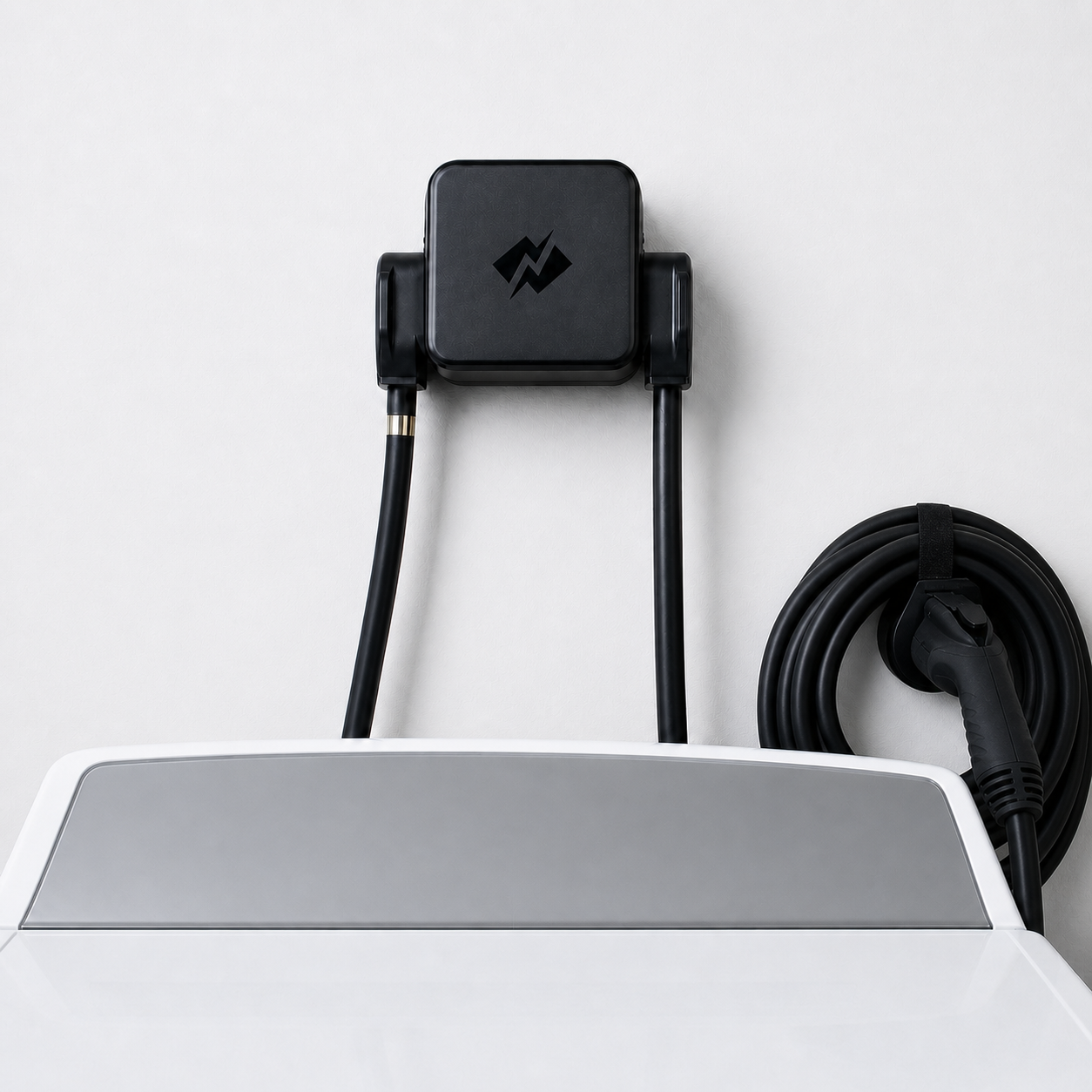
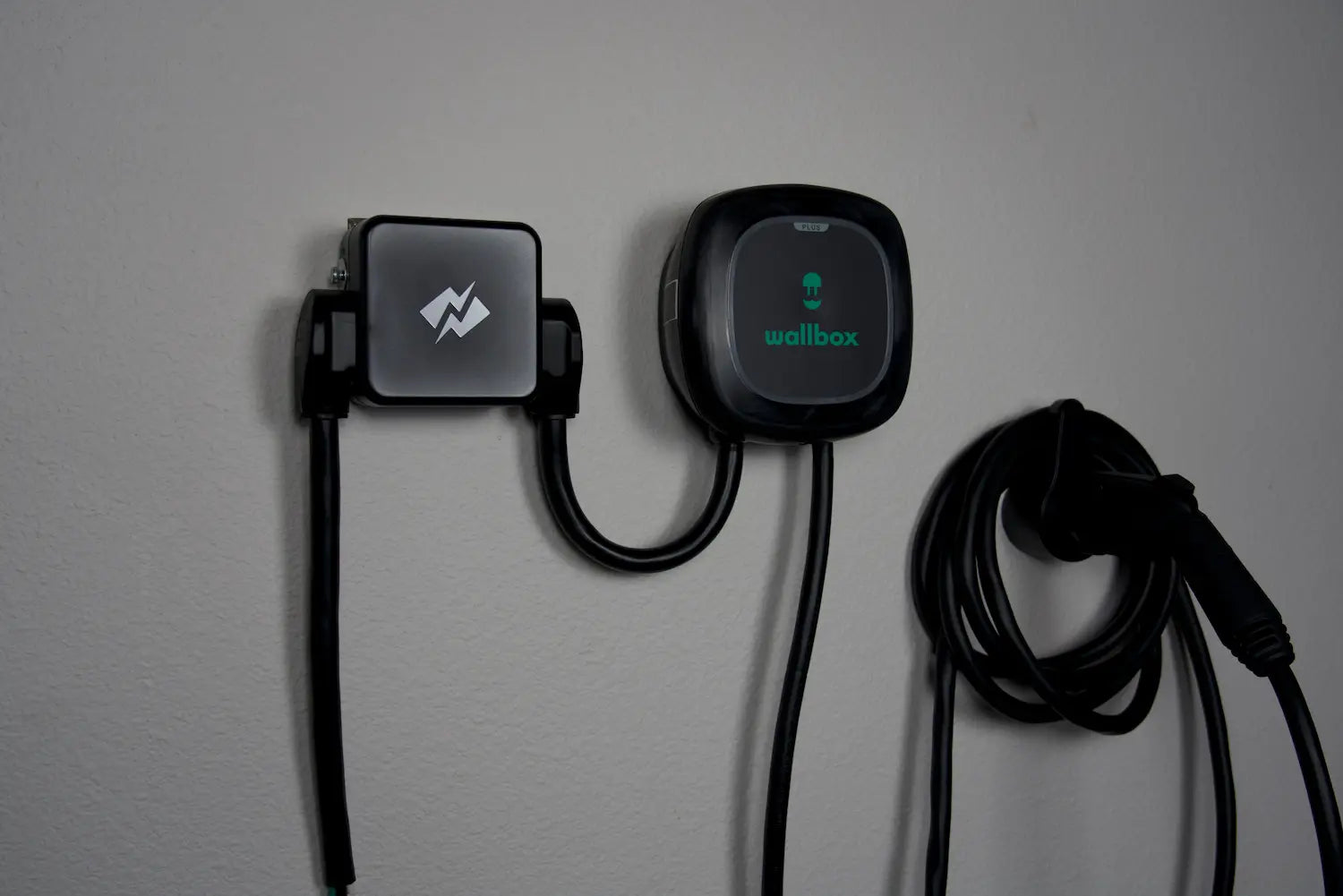
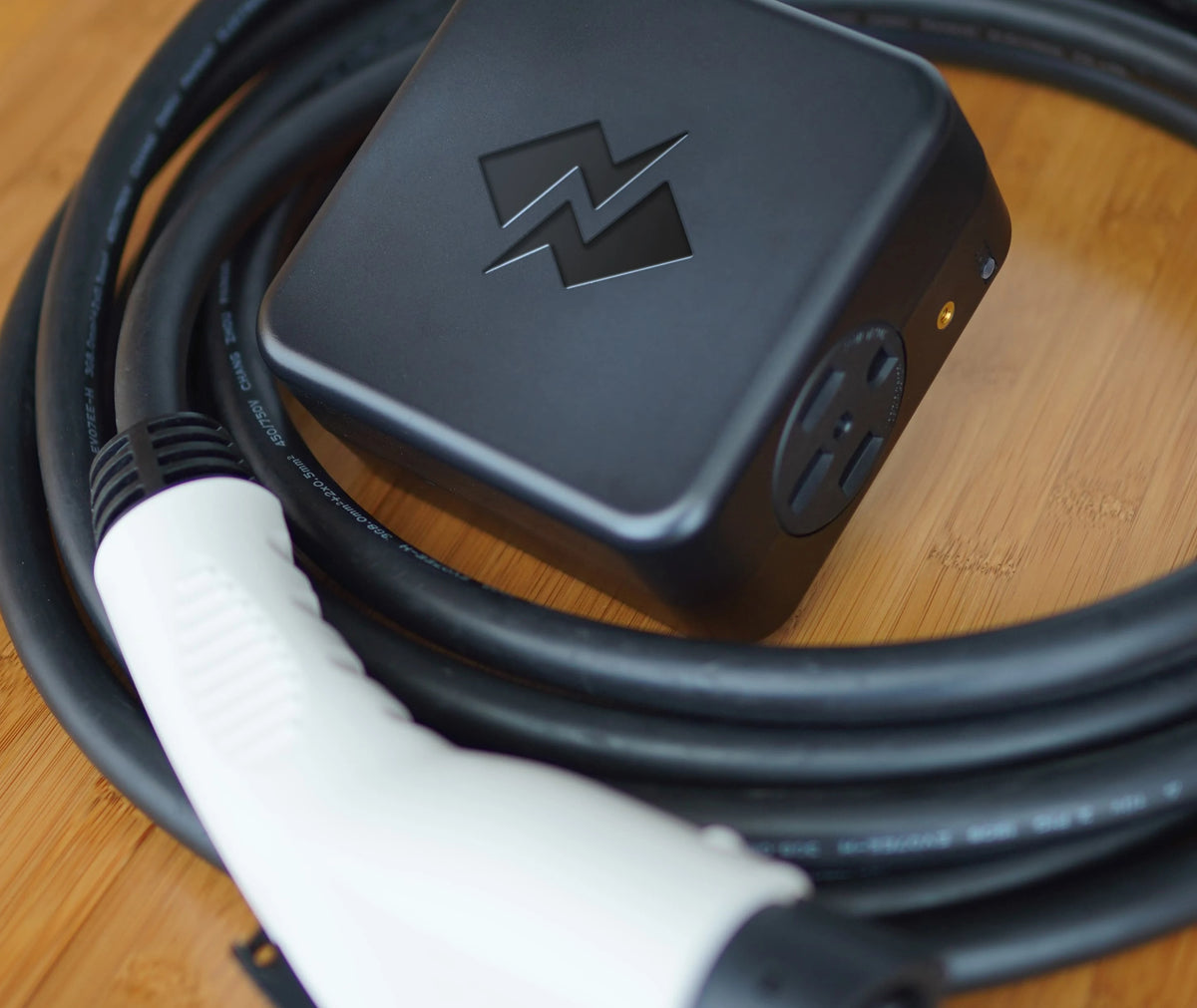
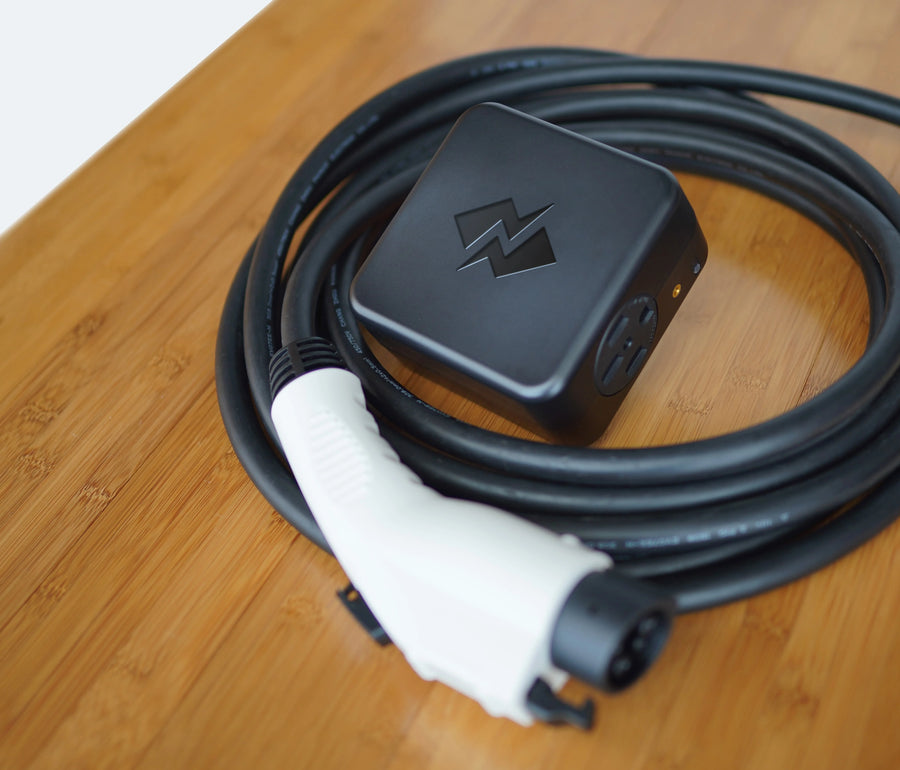
A dryer outlet is the cheapest Level 2 option most homes already have. A 30A dryer circuit supports 24A of continuous charging, enough for a typical day's driving in under two hours. The NeoCharge Smart Splitter plugs into that outlet and gives you two: one for the dryer, one for your charger. When the dryer runs, charging pauses, and it resumes when the dryer stops. There is no new circuit. Tesla's Mobile Connector with its 14-30 adapter works with it; a hardwired Wall Connector does not. Permit rules are local, so check with your city. Our guide to charging an EV from a dryer outlet covers the safety rules.
A new circuit gives faster charging but adds $1,000 or more to the price gap you need to earn back. At the new Model Y vs CR-V savings rate of about $1,650 a year, a $2,000 install adds more than a year to the payback. On a used Model 3, where the five-year advantage over a Camry Hybrid is about $300, a $2,000 install would wipe it out. The $399 splitter adds about three months to a new-car payback, plus a plug-in charger if you don't already have one.
Time-of-use scheduling
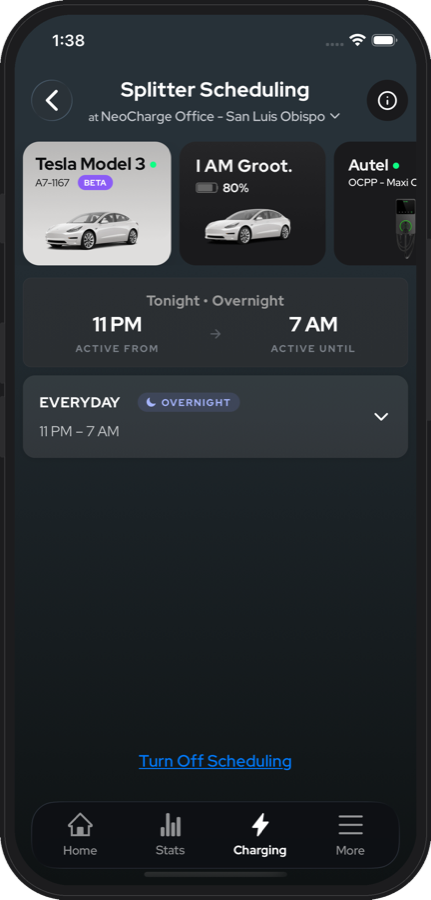
Many utilities offer time-of-use or EV rates with cheaper overnight hours. Scheduling charging into that window is the easiest way to improve the math after you own the car. At an off-peak price of 12 cents per kWh instead of 18.31 cents, a Model 3 or Model Y costs about $346 a year to charge at 12,000 miles instead of $527, or about $900 less over five years. Rates vary by utility, so check your own plan. Our time-of-use guide explains how to find the cheapest window, and the state-by-state cost table shows what electricity costs where you live.
In Canada? See Tesla charging cost in Canada.
cUL Listed for the US and Canada
Keep the setup cost out of your Tesla math
Charge from the 240V dryer outlet you already have. The dryer gets priority and your Tesla charges the rest of the time, with no new circuit. Works with Tesla's Mobile Connector and plug-in Level 2 chargers with adjustable current. $399.
FAQ
Do Teslas really save you money in 2026?
How much do you save on gas with a Tesla?
How much does a used Tesla cost?
Is a used Tesla worth it?
Is there still a federal tax credit for buying a Tesla?
Is a Tesla a good investment?
Is Supercharging cheaper than gas?
Do I need a new circuit to charge a Tesla at home?
Bottom line
A Tesla is much cheaper to run than a gas car, and somewhat cheaper to run than a hybrid. Bought new in 2026, it costs about $7,700 to $9,300 more than comparable cars with no tax credit to close the gap, so it pays off only if you drive a lot, charge at home and keep it for years. Bought used, most of that gap is gone: a three-year-old Model 3 or Model Y costs only a few thousand dollars more than a comparable used hybrid and comes out ahead within five years. Either way, keep the home charging setup cheap, because every dollar spent there is another dollar to earn back.
Next steps (NeoCharge)
- Price your own setup with the home charger installation cost guide.
- Work out your cost per mile with how much it costs to charge a Tesla.
- Buying used? Read our battery care and charging best practices to keep the pack healthy.
- If you have a dryer outlet near parking, see how the NeoCharge Smart Splitter works, and check rebates with the rebate finder.
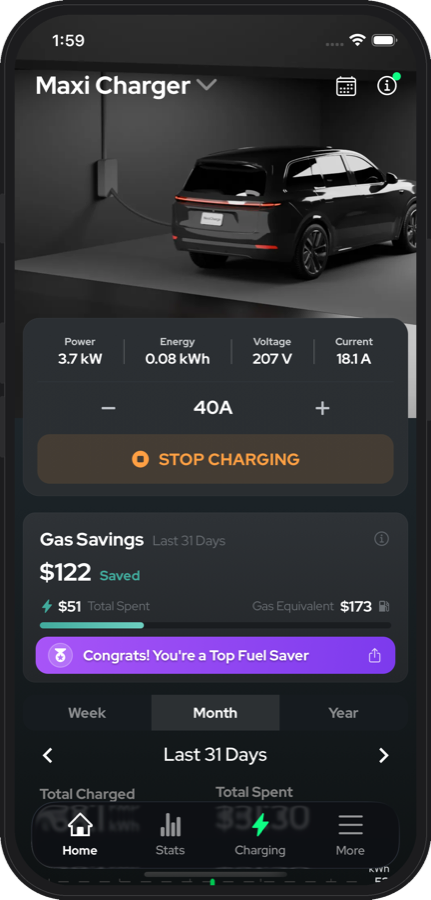
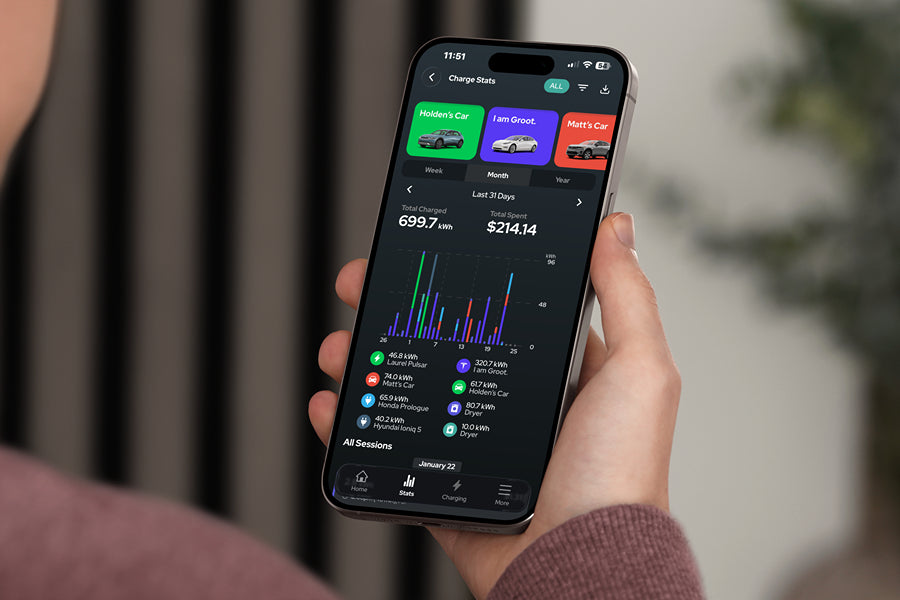
- Schedule charging around cheap hours with the NeoCharge App, which tracks charging costs and supports time-of-use scheduling.
- In Canada? Start with Tesla charging cost in Canada.
Sources
Checked October 14, 2026:
- Tesla, Design your Model 3 and Design your Model Y: US cash prices for every trim, 1.99% APR offer terms, $500 purchase program, FSD (Supervised) $99/month, Mobile Connector included, and the gas-savings estimate and its assumptions
- Tesla, Vehicle Warranty: battery and drive unit coverage by trim, 70% retention, Certified Pre-Owned coverage, and transfer on ownership change
- Tesla, Full Self-Driving (Supervised) Transfers: transfer program ended March 31, 2026
- Tesla, Supercharging support: free Supercharging visible only to the registered owner or added driver
- Cars.com, How much is the 2026 Tesla Model Y? (May 18, 2026): trim prices with $1,390 destination (cross-check), and 2026 Tesla Model 3
- Kelley Blue Book model pages, values valid through October 14, 2026: 2023 Tesla Model 3, 2023 Tesla Model Y, other Model 3 (2018–2024) and Model Y (2020–2024) years, 2023 Toyota Camry, 2023 Toyota Camry Hybrid, 2023 Toyota RAV4 Hybrid, 2023 Honda CR-V
- Recurrent, Tesla Model 3 vs. Model Y (June 15, 2026): median used asking prices and mileage
- Recurrent, Used electric car prices and market report (September 30, 2026)
- Recurrent, Used Tesla prices and market update (March 2023): decline from the July 2022 peak
- Recurrent, How long do Tesla batteries last? and How long do EV batteries last? (November 11, 2025)
- iSeeCars via WKRN, Tesla leads a sharp rebound in used EV prices (June 2026 data)
- Forbes via Yahoo Autos, EVs gain as gas prices rise (March 23, 2026): CarGurus used EV price data
- U.S. Energy Information Administration, Electric Power Monthly, Table 5.3: U.S. average residential price 18.31¢/kWh, July 2026 (released September 24, 2026)
- AAA, Gas Prices: national average regular $4.333 on October 14, 2026; $3.076 a year earlier
- U.S. EIA, Gasoline and Diesel Fuel Update: U.S. regular $4.354, October 5, 2026 (cross-check)
- U.S. EPA and DOE, fueleconomy.gov: 2026 Tesla ratings, plus 2026 and 2023 Toyota Camry, Toyota RAV4, Honda CR-V and 2023 Tesla ratings
- Edmunds, 2026 Toyota Camry pricing guide: LE $30,895 with destination
- Kelley Blue Book, 2026 Toyota RAV4 pricing (November 19, 2025): LE FWD $33,350 with destination
- iSeeCars, 2026 Honda CR-V price: LX $30,920 plus $1,450 destination
- AAA, Your Driving Costs 2026 fact sheet (September 15, 2026)
- The Auto Wire via Yahoo Autos, The EV maintenance discount is real (September 26, 2026): AAA 2026 maintenance, insurance and depreciation by powertrain
- Kelley Blue Book, AAA: hybrids come out on top in 2026 ownership cost study (September 17, 2026)
- DCFC Tracker, Supercharger pricing report (October 2026, peak prices)
- IRS, Clean vehicle tax credits and FAQs on the 2025 changes to 25E, 30D and 30C
Update log: rebuilt October 14, 2026 for the end of the federal EV tax credit, with current prices, EPA ratings, AAA's 2026 ownership-cost data, and a five-year comparison. Refreshed the same day with every current Model 3 and Model Y trim and offer from Tesla's configurator, a gas-savings-by-mileage table, and a new used-Tesla section with Kelley Blue Book prices, battery and warranty checks, and a five-year used comparison. Earlier versions of this page were based on 2025 prices and the $7,500 credit.
A note on these estimates
This article is general information, not financial or electrical advice. Prices, electricity rates, gas prices and insurance premiums change and vary by location, so run the formulas with your own numbers before you buy. EV charging equipment must be installed and used according to the electrical code in force where you live, local permit rules, manufacturer instructions, and the judgment of a licensed electrician.
NeoCharge App
Turn rate plans into simple charging schedules
Schedule around off-peak windows, manage compatible chargers, and keep tabs on charging sessions from the app.
Explore the app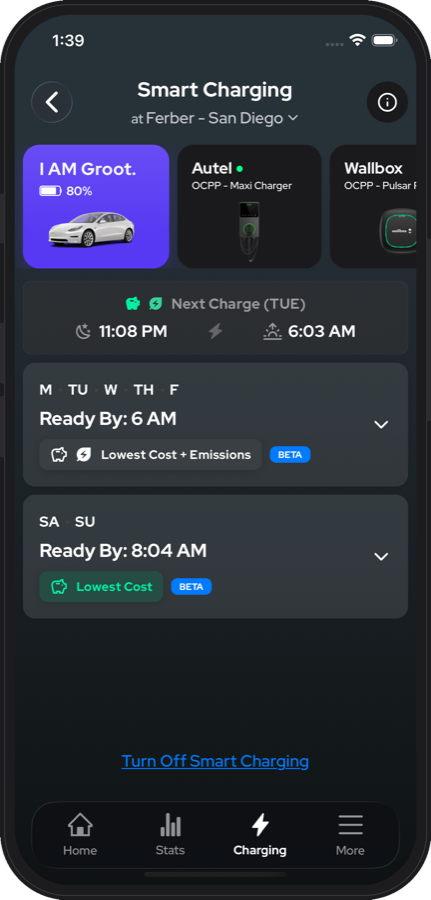
Next steps
Keep going with NeoCharge
Use the article as your decision guide, then jump into the product, app, or related guides that match what you are trying to solve next.
Key terms
- Level 2 charging
- Level 2 EV charging uses a 240V circuit (like a dryer outlet). It typically adds ~20–35 miles of range per hour, depending on your car and the circuit amperage.
- NEMA 14-30
- A NEMA 14-30 is a 240V, 30A dryer outlet. With a properly configured EV charger, it can usually support ~24A continuous charging (about 20–25 miles of range per hour for many EVs).
- Time-of-use (TOU) rates
- Time-of-use rates are utility pricing plans where electricity costs more at peak hours and less off-peak. Scheduling EV charging off-peak can significantly reduce cost.
Related posts
How Much Does It Cost to Charge an EV at Home? (2026, by State)
At the US average 18.3¢/kWh, home EV charging costs about 5.7¢ a mile, or $57 a month for 1,000 miles. Your state's cost, a calculator, and off-peak savings.

Demand Charges vs. TOU Rates for Home EV Charging: What Matters (and How to Avoid Peak Costs)
Learn the difference between demand charges and time-of-use (TOU) rates for home EV charging, how to tell what you’re on, and practical steps to reduce peak costs and charge cheaper overnight.

Smart Splitter vs EVEMS vs Panel Upgrade: How to Choose the Right Path for Level 2 Charging
Need Level 2 charging but worried about a panel upgrade? Compare Smart Splitter outlet sharing vs EV energy management (EVEMS) vs a full panel upgrade—with a simple decision tree.

How to Add an EV Charger Without a Panel Upgrade (Load Management 101)
Think you need a costly panel upgrade to add Level 2 EV charging? Not always. Learn the practical options: lower-amp charging, scheduling, and load management (including smart splitters) to add EV...
