

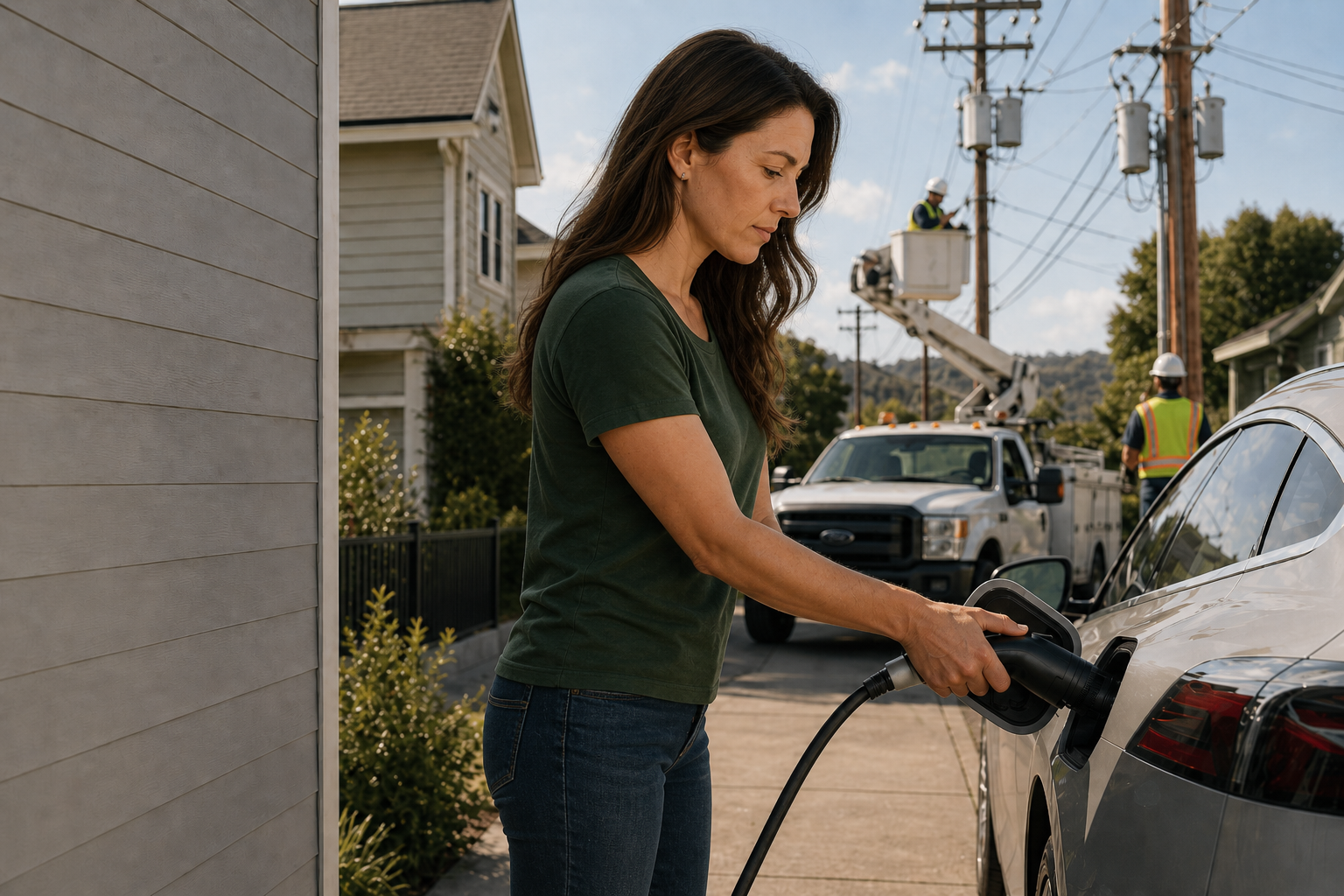


NEC 625 + EVEMS: How Load Management Helps You Add EV Charging Without a Panel Upgrade
 The short answer
NEC 625 treats EV charging as a continuous load. Learn what EVEMS/EMS means and how load management can help you add Level 2 charging without a panel upgrade.
Key takeaways
- NEC 625 treats EV charging as a continuous load.
- Learn what EVEMS/EMS means and how load management can help you add Level 2 charging without a panel upgrade.
Best fit Is this guide right for you?
Drivers with time-of-use rates, off-peak discounts, utility programs, or charging schedules they want to automate.
Homes on flat electric rates where charging time does not change cost, unless you still want tracking and reminders.
NEC 625 + EVEMS (Energy Management Systems): How Load Management Can Help You Add EV Charging Without a Panel Upgrade
TL;DR
Home EV charging often looks like it requires a costly service or panel upgrade—but many homes can safely charge an EV by managing electrical load instead of increasing electrical capacity. Under NEC Article 625, EV charging is typically treated as a continuous load (sized at 125%), which can “use up” your available panel capacity on paper. EVEMS/EMS (Energy Management Systems) and practical load-management setups (like a Smart Splitter for sharing a dryer outlet, adjustable charging, or load-shedding) can help you stay code-compliant and avoid overloading your electrical system.
Key Takeaways
- EV charging is usually a continuous load under NEC, so circuits and capacity are typically sized at 125% of the charging current.
- EVEMS/EMS is a code-recognized approach to automatically reduce or pause EV charging so your home’s total load stays within safe limits.
- Load management can look like:
- Outlet/circuit sharing (e.g., dryer + EV) with a smart device
- Two EV chargers sharing one circuit
- Load-shedding (temporarily pausing EV charging when the house load is high)
- Adjustable charging rates (set lower amps to fit your panel’s capacity)
- The right solution depends on your panel capacity, wiring, charging goals, and whether you need automation to stay within limits.
- Always involve a qualified electrician when you’re adding a new EV circuit, changing breaker sizes, or using any EMS/load-management hardware.
The Problem: “I Want Home EV Charging… But My Panel Is Full”
A common experience:
- You buy (or plan to buy) an EV.
- You want faster, more reliable charging than a standard wall outlet.
- Then you hear: “You need a panel upgrade” or “You need a service upgrade.”
Sometimes that’s true. But often, the real issue isn’t that your home can’t support EV charging—it’s that your home needs a safe way to prioritize loads so you don’t exceed what your electrical service and panel can handle.
That’s where NEC 625 and EVEMS/EMS load management come in.
The Code Concept: NEC 625 Treats EV Charging Like a Continuous Load (125%)
The National Electrical Code (NEC) has specific requirements for EV charging equipment (EVSE) in Article 625. One of the biggest practical impacts for homeowners is that EV charging is generally considered a continuous load, meaning it can run for 3 hours or more.
Why it matters: continuous loads must be sized differently. In simple terms, the electrical system must be designed so it can handle EV charging continuously without overheating wires or stressing breakers.
What “125% continuous load” means (plain English)
A common rule of thumb in NEC load calculations is:
- Continuous loads are sized at 125% (or conversely, the circuit is only used to 80% for continuous use).
Practical examples (typical EV charging currents):
- 32A EV charging generally requires a 40A circuit (32A ÷ 0.8 = 40A)
- 40A EV charging generally requires a 50A circuit
- 48A EV charging generally requires a 60A circuit
This is a big reason EV charging can “consume” a lot of capacity in load calculations—even if you’re not always charging at full power.
Authoritative references for NEC 625 overviews and EVSE requirements:
- NYSERDA, EVSE Overview — NEC Article 625 (PDF): nyserda.ny.gov
- Mike Holt, Article 625 overview (PDF): mikeholt.com
EVEMS / EMS in Plain English: “Charge the Car, But Don’t Overload the House”
EVEMS stands for Electric Vehicle Energy Management System (often discussed as EMS, Energy Management System). The core idea is straightforward:
An EVEMS/EMS helps ensure your EV charging load stays within safe limits by automatically reducing charging or pausing it when the home’s other loads are high.
Instead of upgrading your electrical service to support “everything at once,” an EMS helps your home share existing capacity intelligently.
Why EVEMS matters more in newer code cycles
Recent NEC updates explicitly address energy management for home electrification and EV charging. For a useful high-level discussion (including references to NEC 625 updates like 625.42 A/B), see:
- Eaton, NEC 2023 home electrification / EV charging updates: eaton.com
(Always confirm which NEC edition your local jurisdiction has adopted and what your AHJ—Authority Having Jurisdiction—requires.)
Practical Options (Real-World Load Management Setups)
Here are common ways homeowners add EV charging while working within the limits of an existing panel/service.
Option 1: Share an Existing High-Power Circuit (Dryer + EV)
If your panel is tight but you already have a 240V dryer circuit, one approach is to share that circuit between your dryer and EV charging—so only one runs at a time.
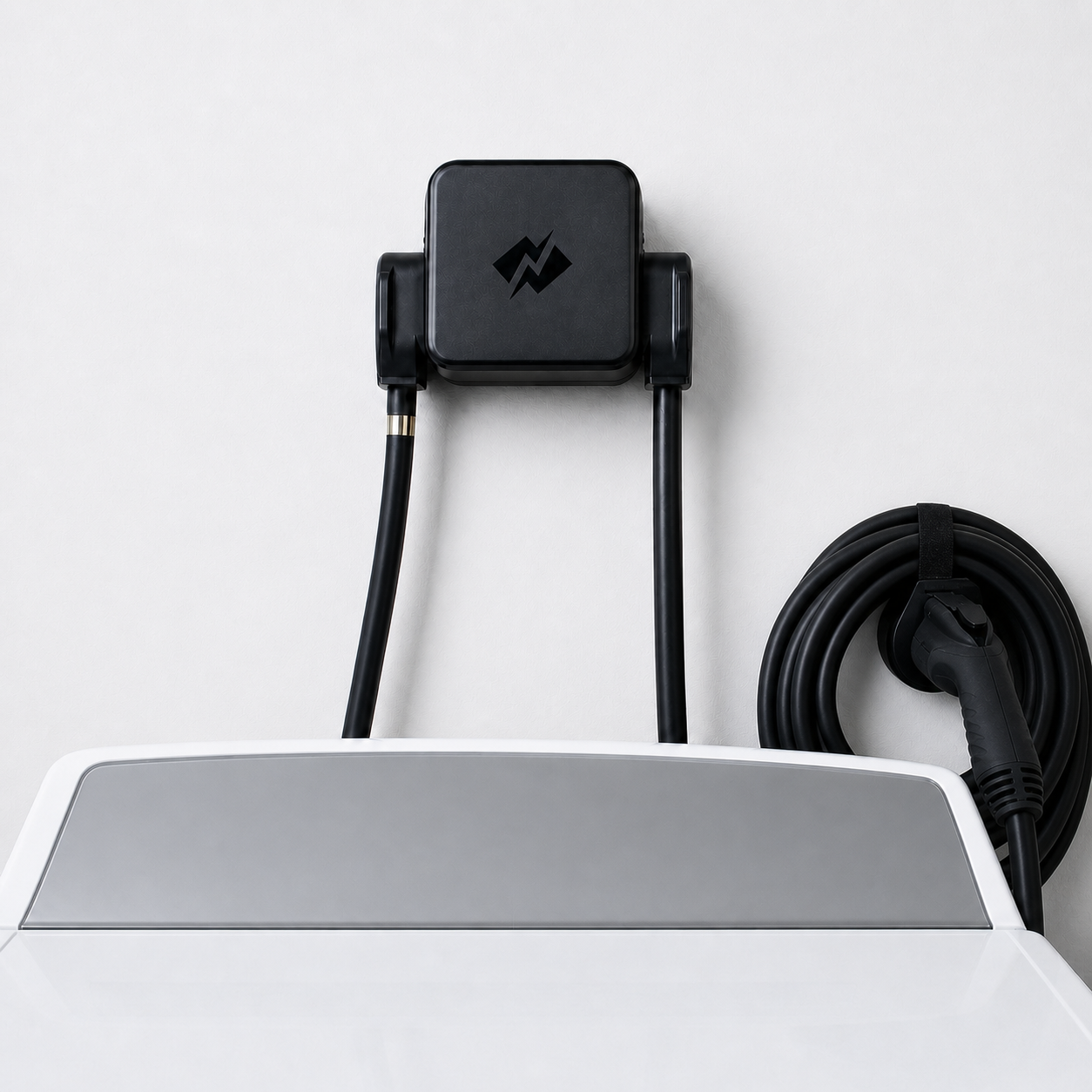
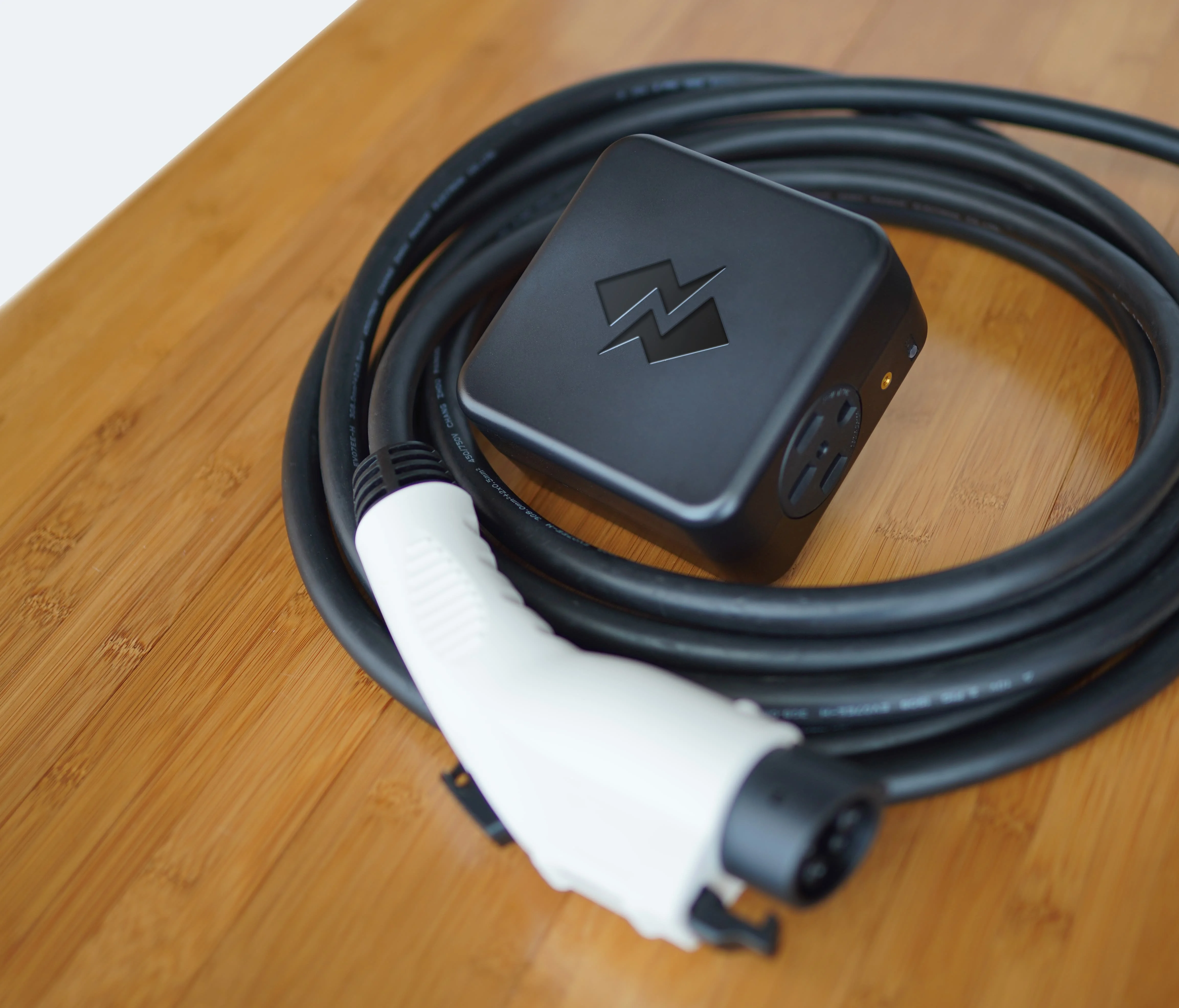
A purpose-built load-management device can automatically handle the switching and prevent simultaneous use. The result: you can often get Level 2 charging without adding a new 240V circuit from the panel.
Learn about NeoCharge load management with a Smart Splitter.
Best fit for:
- Homes with limited spare breaker space or limited load calculation headroom
- EV drivers who mostly charge overnight and can avoid running the dryer at the same time
Important considerations:
- The device must be listed/labeled appropriately
- The circuit and receptacle type must match your EV charging setup
- Your electrician should verify conductor size, breaker rating, and receptacle condition (dryer outlets can be older/worn)
Option 2: Set a Lower Charging Rate (Adjustable EVSE)
Many EVSEs let you configure the maximum charging current (amps). Lowering the EV charging current reduces the load your panel must support.
Examples:
- Dropping from 40A charging to 24A can significantly reduce load impact while still adding meaningful overnight range.
- This can be especially helpful if your load calculation is “close” and you want a code-compliant installation without upgrading service.
Best fit for:
- Drivers with moderate daily mileage
- Homes where the panel can support some Level 2 charging, just not the maximum
Watch-outs:
- “Just turn it down” isn’t always enough—your installation still needs to be properly sized and permitted where required.
- If multiple big loads can overlap (HVAC, electric range, dryer), automation may be safer than relying on habits.
Option 3: Load-Shedding (Pause Charging When Other Loads Run)
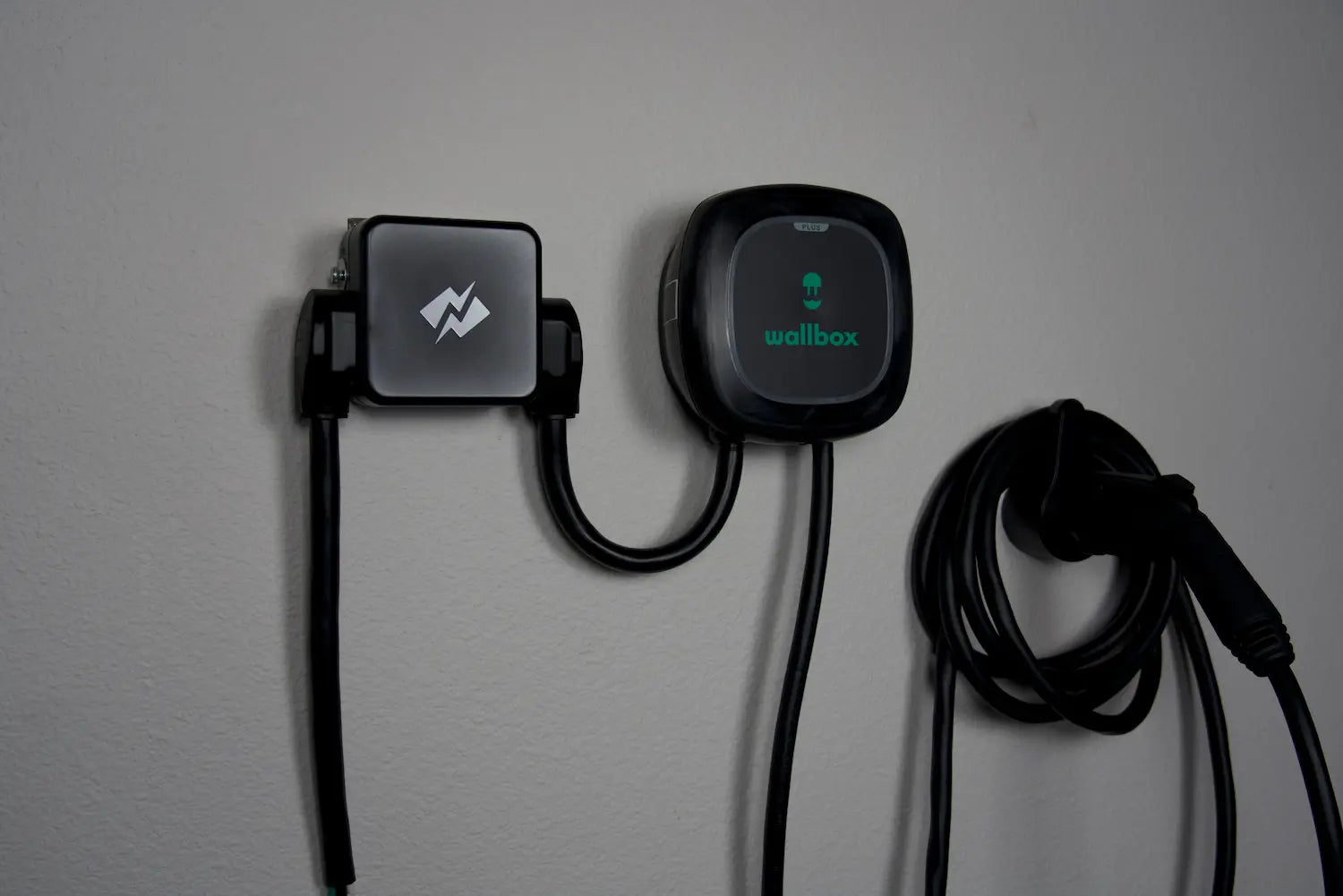
Load-shedding systems monitor the home’s usage and temporarily stop or reduce EV charging when total load approaches a limit. When the house load drops again, EV charging resumes.
Think of it like a traffic cop for your electrical panel:
- HVAC kicks on → EV charging slows/pauses
- HVAC turns off → EV charging resumes
Best fit for:
- All-electric or partially electrified homes (heat pump, electric water heater, etc.)
- Homes where “simultaneous loads” are the real issue, not just panel space
Option 4: Two EV Chargers, One Circuit (EVSE Load Sharing)
If you have two EVs (or you’re planning ahead), you may not need two full-power circuits.
Some setups allow:
- Two EVSEs sharing one branch circuit
- Power is allocated so the circuit limit isn’t exceeded (e.g., one car gets more power, then it shifts, or both get reduced power)
Best fit for:
- Two-EV households
- Families charging overnight where “total energy by morning” matters more than peak speed
How to Decide: Speed, Simplicity, and Your Home’s Real Constraints
Ask these questions:
- How many miles do you need overnight?
Many drivers don’t need maximum-amp charging every night. - Do you have an existing 240V circuit that can be shared (like a dryer)?
Outlet sharing can be the simplest “no-panel-upgrade” path. - Do you regularly run big loads at the same time (HVAC, dryer, oven, water heater)?
If yes, automation (EMS/load-shedding) is safer than relying on habits. - Are you planning for a second EV soon?
Load sharing between EVSEs can avoid duplicating expensive electrical work.
When You Actually Do Need a Panel or Service Upgrade
Load management can be a powerful tool—but it isn’t a magic wand. You should strongly consider an electrician-led upgrade if:
- Your service is undersized for your electrification goals (EV + heat pump + electric water heater + induction, etc.)
- Your panel is obsolete or unsafe (e.g., known-problem panels, severe corrosion, overheating signs)
- You need more circuits than your panel can safely accommodate (physical space and load capacity both matter)
- Your calculated demand load is clearly beyond what EMS can reasonably manage for your lifestyle (e.g., frequent high simultaneous usage with tight timing constraints)
When to Call an Electrician (and What to Ask)
Call a licensed electrician if you’re:
- Installing a new EV circuit or receptacle
- Unsure whether your panel has enough capacity
- Considering an EMS/load-shedding approach
- Seeing flickering lights, warm outlets, tripping breakers, or buzzing at the panel
What to ask for:
- A load calculation based on your home and local NEC adoption
- Confirmation of continuous-load sizing for the EV circuit (125% rule)
- Options for managed charging (adjustable EVSE, load-shedding/EMS, circuit sharing)
- Permit requirements and inspection expectations in your area
Next steps (NeoCharge)
If you’re trying to add EV charging without the cost and disruption of a panel upgrade, load management may be the most practical starting point.
- Explore NeoCharge load management options (Smart Splitter): NeoCharge Smart Splitter
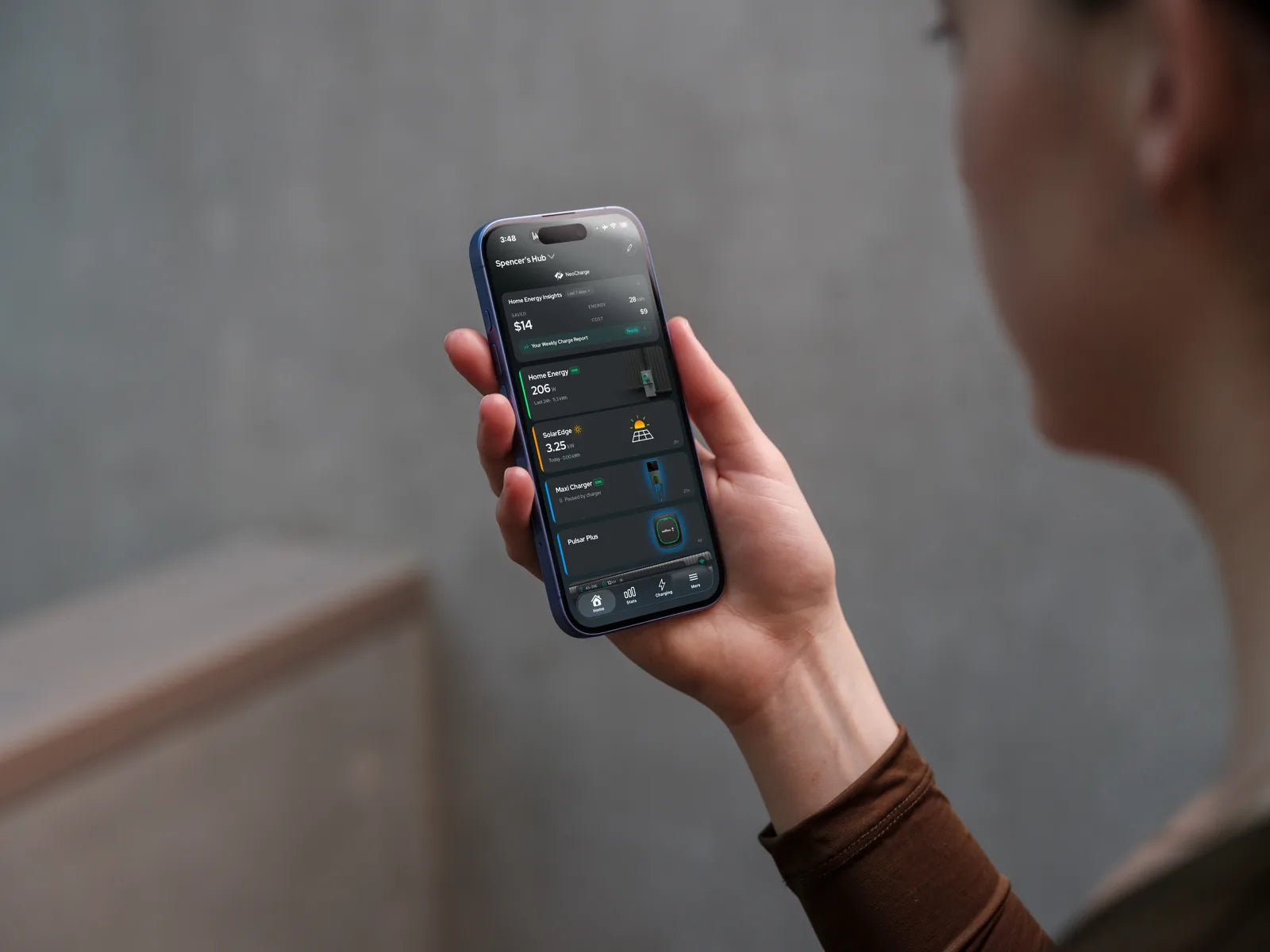
- Explore smart charging features and time-of-use (TOU) tools to charge when electricity is cheaper (and grid demand is lower): NeoCharge App
Electrical Safety Disclaimer
This article is for general informational purposes only and is not electrical advice. Electrical work can be dangerous and must comply with applicable codes, manufacturer instructions, and local jurisdiction requirements. Always consult a licensed electrician and your local Authority Having Jurisdiction (AHJ) before installing, modifying, or using EV charging equipment, receptacles, breakers, or any energy management/load-management system.
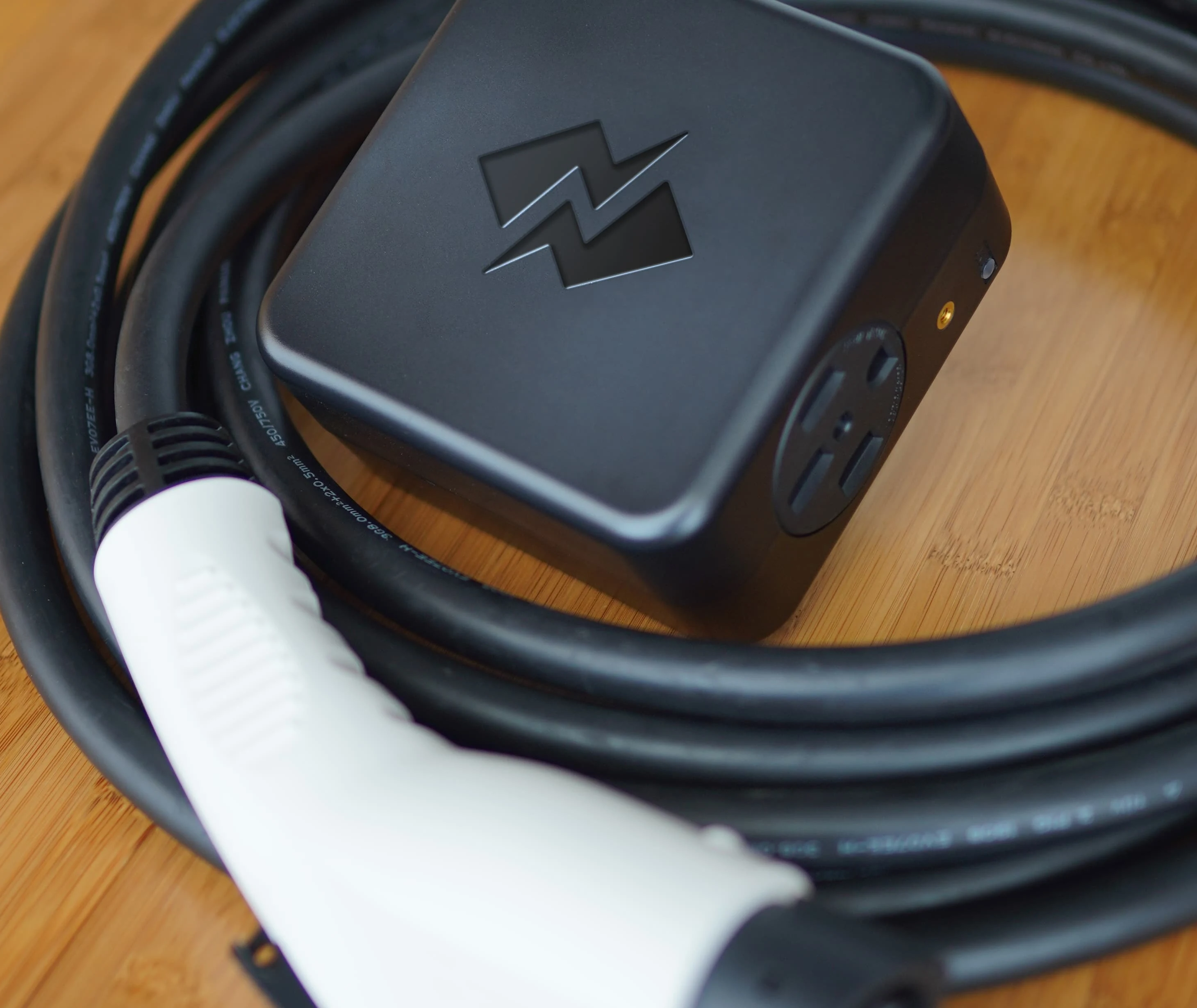
Skip the panel upgrade
Level 2 charging from the outlet you already have
Plug into the 240V dryer outlet you already have. The dryer gets priority and your EV charges the rest of the night, with no panel upgrade and no new circuit. cUL Listed for the US and Canada, with rebates from 30+ utilities.
NeoCharge App
Turn rate plans into simple charging schedules
Schedule around off-peak windows, manage compatible chargers, and keep tabs on charging sessions from the app.
Explore the app


Next steps
Keep going with NeoCharge
Use the article as your decision guide, then jump into the product, app, or related guides that match what you are trying to solve next.
Key terms
- Level 2 charging
- Level 2 EV charging uses a 240V circuit (like a dryer outlet). It typically adds ~20–35 miles of range per hour, depending on your car and the circuit amperage.
- EVSE
- EVSE stands for Electric Vehicle Supply Equipment (the “charger”). It safely delivers power to your EV and communicates with the car to control charging current.
- Time-of-use (TOU) rates
- Time-of-use rates are utility pricing plans where electricity costs more at peak hours and less off-peak. Scheduling EV charging off-peak can significantly reduce cost.
- Load management
- Load management is a strategy to keep your home’s electrical load within safe limits—often by scheduling or pausing EV charging when other appliances are running.
FAQs
What's the quick takeaway from this article?
Who is this guide for?
What should I do next?
Related posts
EV Charger Breaker Size & Wire Gauge (40A vs 50A vs 60A): How the 125% Rule Works
Confused about EV charger breaker size and wire gauge? Learn how the 125% continuous-load rule maps 32A→40A, 40A→50A, and 48A→60A.


How Much Does It Cost to Install an EV Charger at Home? (2026)
Most US homes pay $1,000 to $2,600 for a Level 2 install, and a panel upgrade adds $2,000 to $5,000. What drives the price and the $399 way to skip a new circuit.
How to Charge Two EVs at Home on One 240V Outlet (2026 Guide)
One 50A circuit adds about 230 miles overnight, enough for two EV commutes. Compare smart splitters, power-sharing chargers, dual-port units, and a second circuit.
