

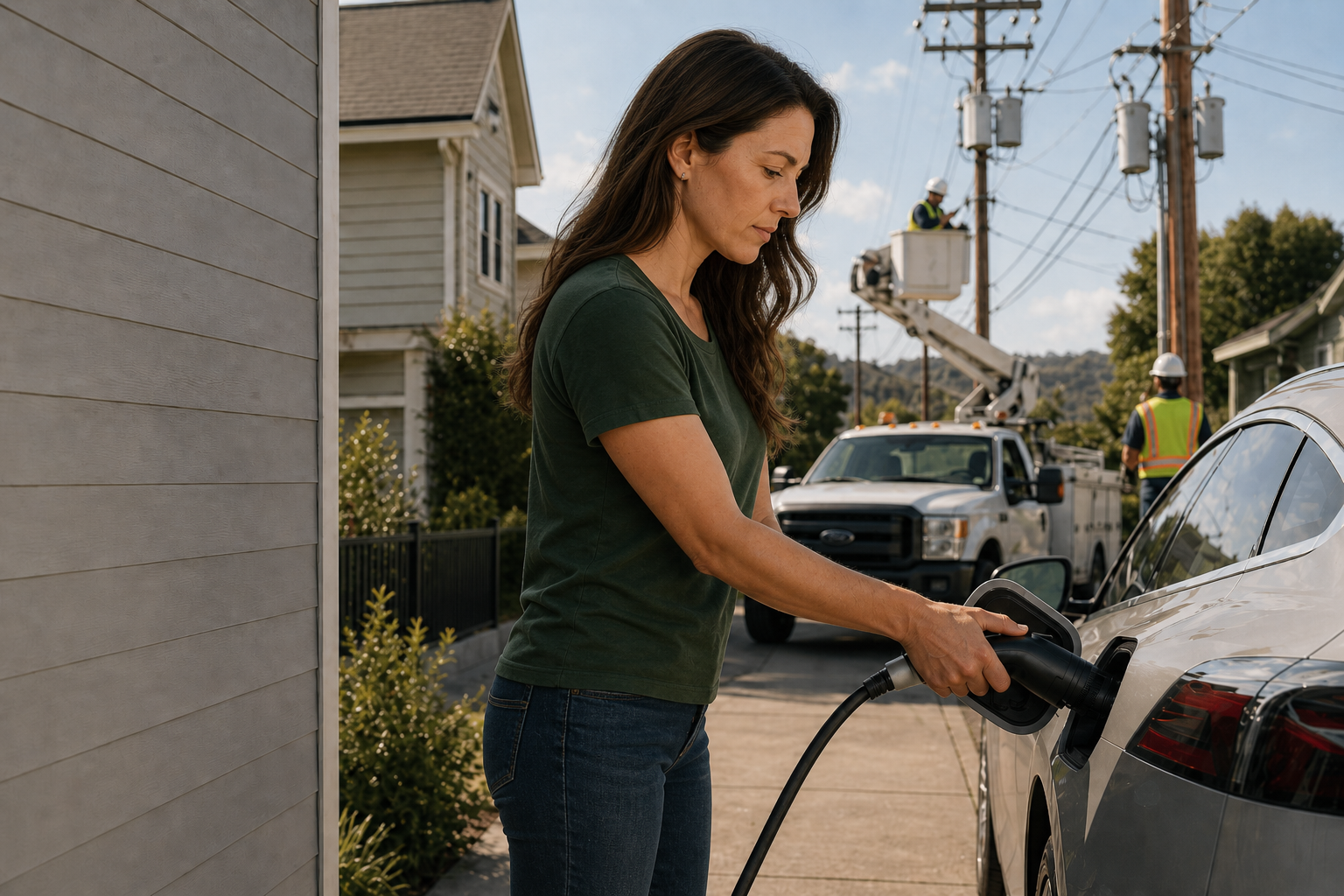



Quebec City Home EV Charging Guide: Écorecharge, Hydro-Québec Flex D, and Smart Level 2 Charging

Direct answer: Most Quebec City homes can charge an EV at home for pennies per kWh using a NEMA 14-30 dryer outlet — you don't need a panel upgrade. To claim the $600 Écorecharge grant from April 1, 2026, you'll need a connected charging station you can schedule remotely. If you're on Hydro-Québec Flex D, make sure your car never charges during a winter peak event (Dec 1–Mar 31, up to 120 hours total).
Quebec City has the best home charging economics in Canada — if you don't waste them
You probably already know the punchline: electricity in Quebec is some of the cheapest in North America, and Hydro-Québec's grid is mostly hydroelectric. If you live anywhere in the Quebec City CMA — Sainte-Foy, Beauport, Charlesbourg, L'Ancienne-Lorette, Cap-Rouge, Lévis, or in the old city — your home is already in one of the most EV-friendly grids on the continent.
That advantage disappears if you do two things wrong:
- Pay thousands for a panel upgrade you didn't need.
- Let your car charge through a winter peak event on Hydro-Québec Flex D.
This guide is about avoiding both.
What's actually going through your head right now
If you've just taken delivery of an EV in Quebec City, you're probably asking:
- Can I just plug into my dryer outlet?
- Do I actually need a panel upgrade?
- How do I get the $600 Écorecharge grant — and is it worth the paperwork?
- Is Flex D a trap for EV drivers?
- When should I actually charge?
Let's go through them.
The $600 grant — and the rule that's about to change
Quebec's Écorecharge program currently offers up to $600 toward the purchase and installation of a home charging station. The big change for 2026: starting April 1, 2026, only connected charging stations qualify. Quebec defines that as a charger you can receive, send, and process remote commands through — basically, one you can schedule and control from an app.
What this means for you: if you're shopping for a home charger this year, don't buy a "dumb" plug-in EVSE if you want the grant. Buy connected.
Verify current Écorecharge terms on Québec.ca before you order — eligible models and rules can change.
The Flex D trap (and how to avoid it)
Hydro-Québec's Flex D rate gives you lower base electricity prices most of the year, except during peak demand events when prices spike. Peak events run from December 1 through March 31, usually on cold mornings and evenings, up to 120 hours total per winter.
Here's the trap most EV drivers fall into: you plug in at 6 p.m. on a cold January night, you go to sleep, your car charges for 8 hours, and several of those hours happened during a peak event. A few of those sessions undo a year's worth of savings.
Here's the fix: schedule your charging so the car doesn't run during peak windows. The simplest version is "always charge after midnight." The smarter version is "let an app pause charging when a peak event is called." Either way, your car cannot be in charge of its own timing on Flex D — you need to be.
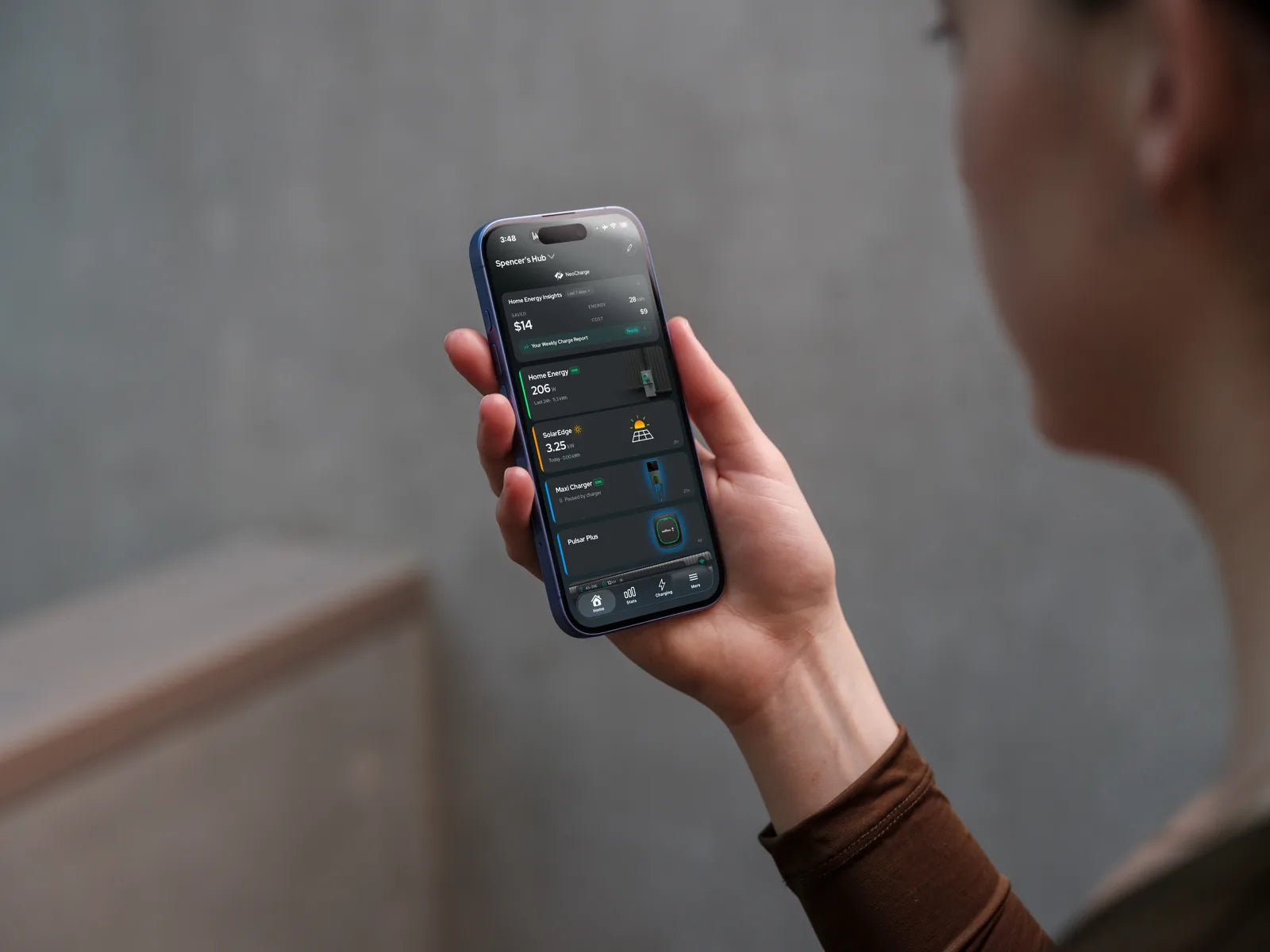
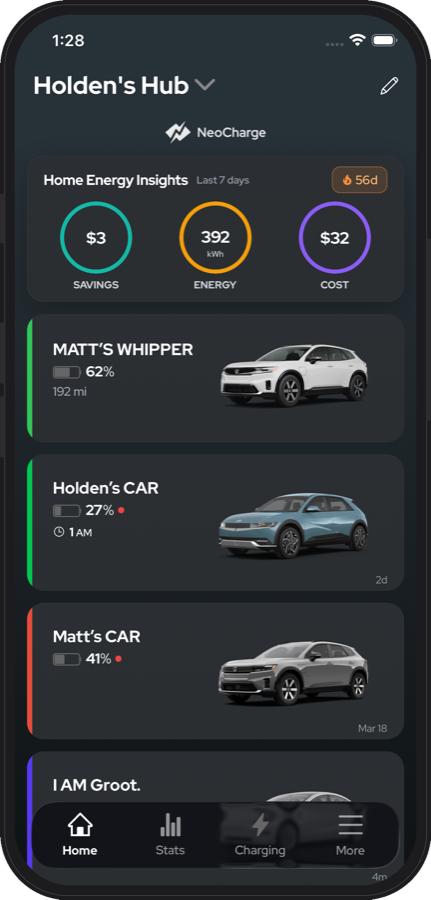
The NeoCharge App is built for exactly this pattern: schedule the cheap window, monitor your EV kWh separately from the rest of the house, never get surprised by your bill.
Yes, your dryer outlet probably charges your EV
That four-prong plug behind your dryer is almost certainly a NEMA 14-30 — a 30A, 240V circuit. With proper equipment that limits charging current to ~24A continuous, you'll get roughly 5.7 kW of charging — about 30–35 km of range per hour. Your car sits plugged in for 8–10 hours overnight. You'll wake up full.
That's true whether you're in a 1950s home in Limoilou, a townhouse in Sainte-Foy, a single-family in Lévis, or a duplex in Saint-Roch.
Before you use it:
- Confirm it's a NEMA 14-30, not an older three-prong dryer outlet (NEMA 10-30 is less safe for EV charging).
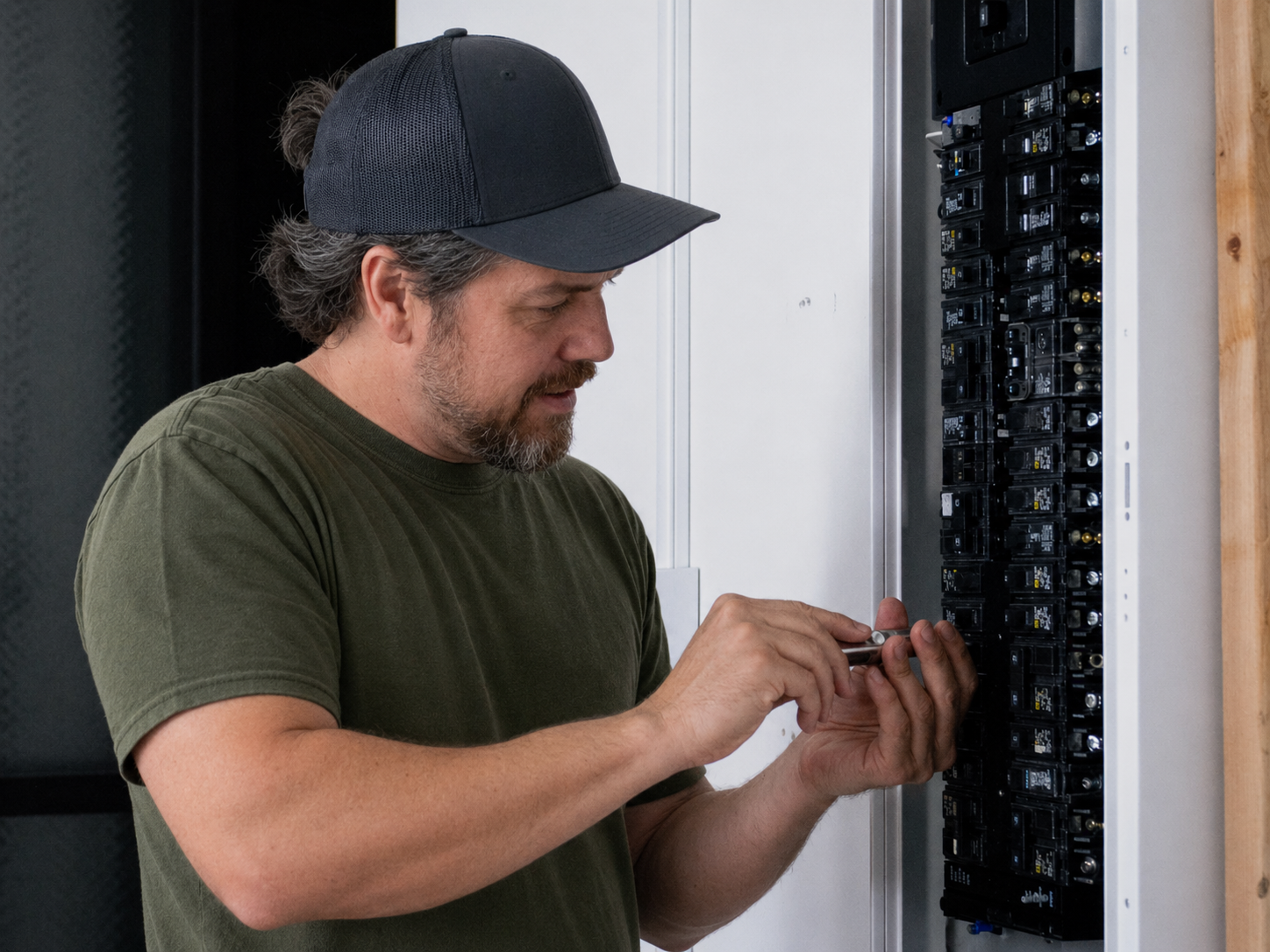
- Have a licensed electrician inspect the breaker, wiring, and receptacle condition. Quebec has strict electrical code — follow it.
- Set the EV charging current to ~24A, not the default 32A or 40A.
- No extension cords. No cheap adapters. Ever.
- If you're sharing with the dryer, use automatic load sharing — a Smart Splitter, not "I'll just unplug it when I'm done."
Why the Smart Splitter is the right move in older Quebec City homes
A lot of homes in Limoilou, Saint-Sauveur, Saint-Roch, and Beauport were built before EVs existed. They have 100A panels, gas or electric baseboard heat, and one 240V dryer circuit in the basement laundry room. You can technically run a new high-amp circuit for an EV charger, but the wire run, permits, and electrician time often push that quote into the thousands.
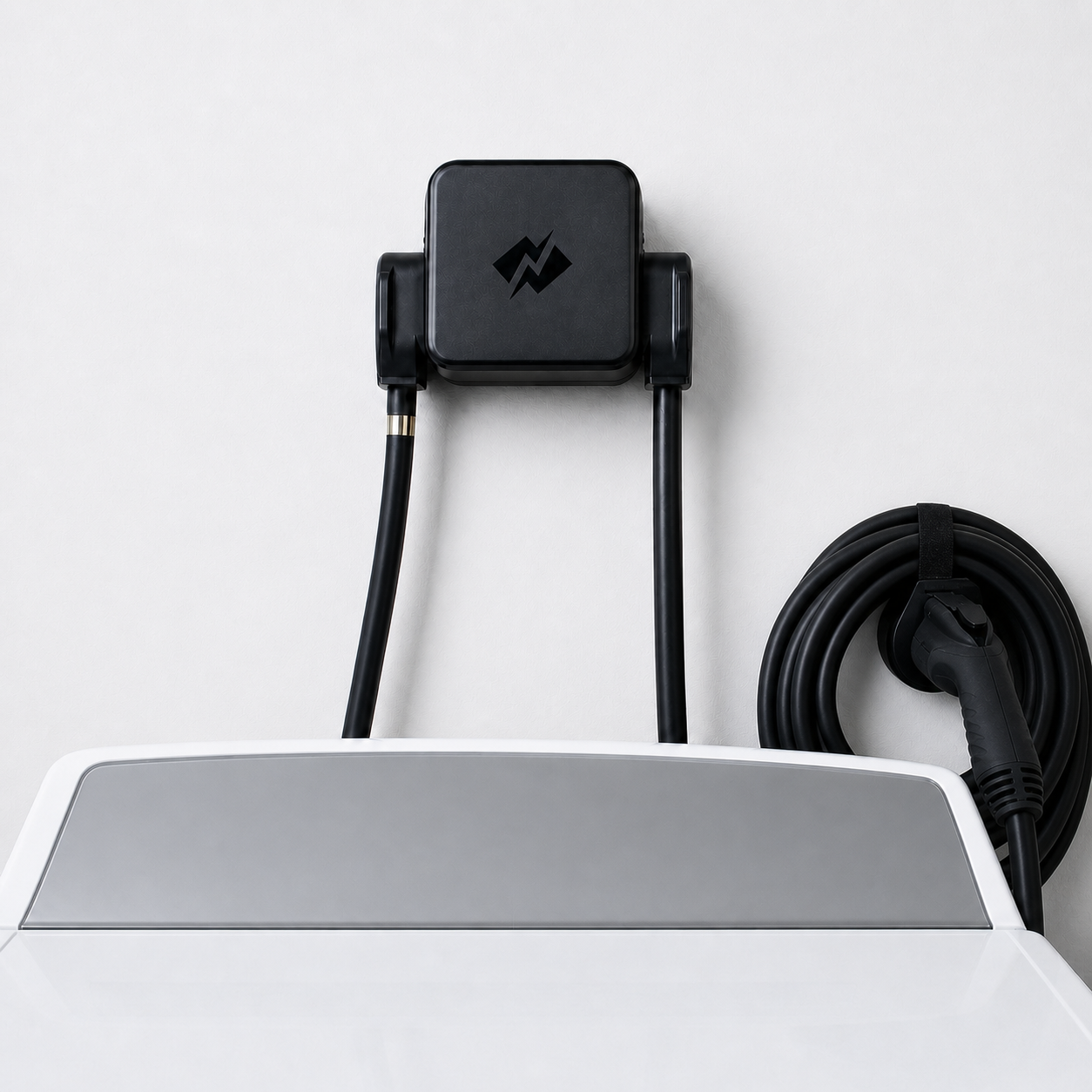
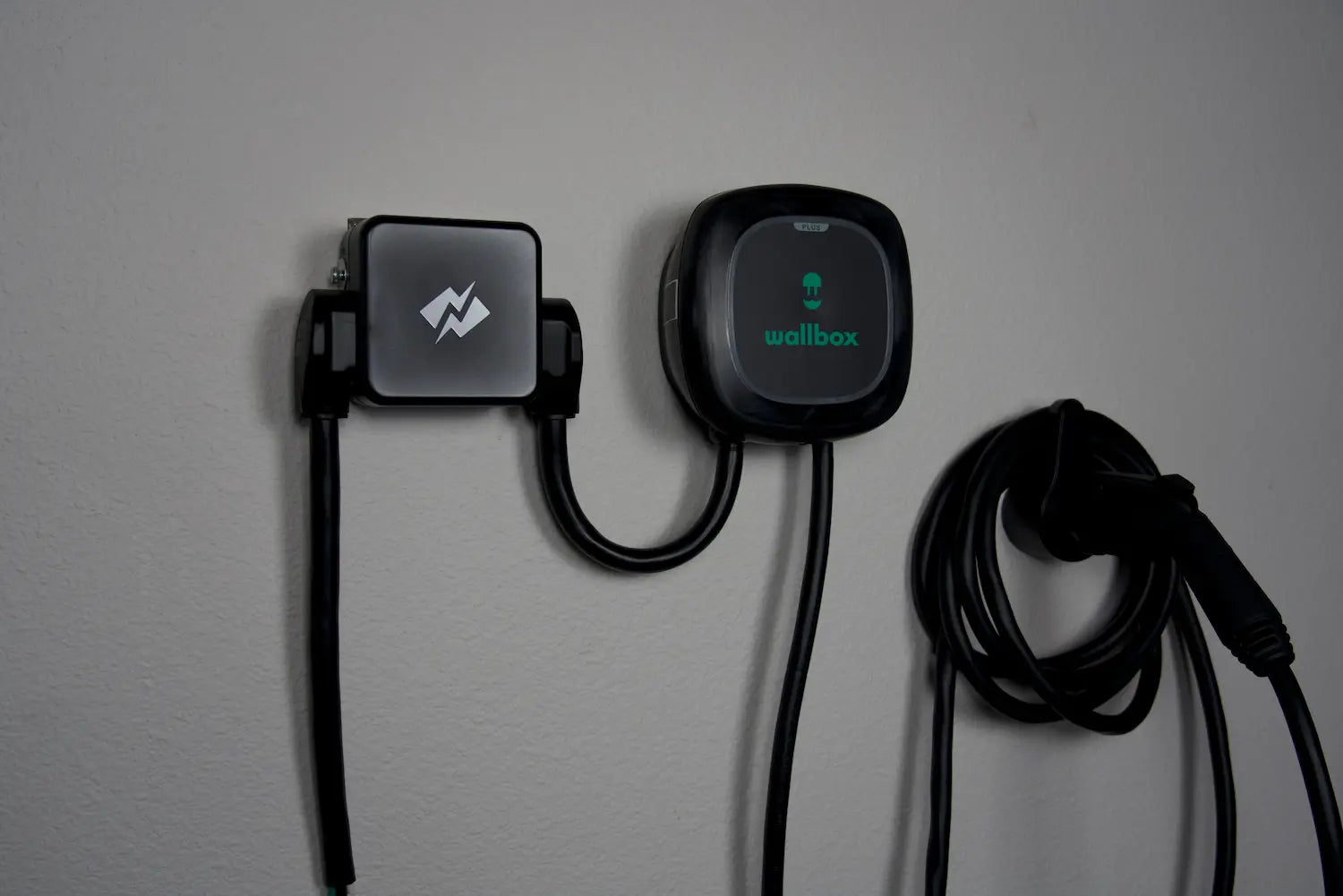
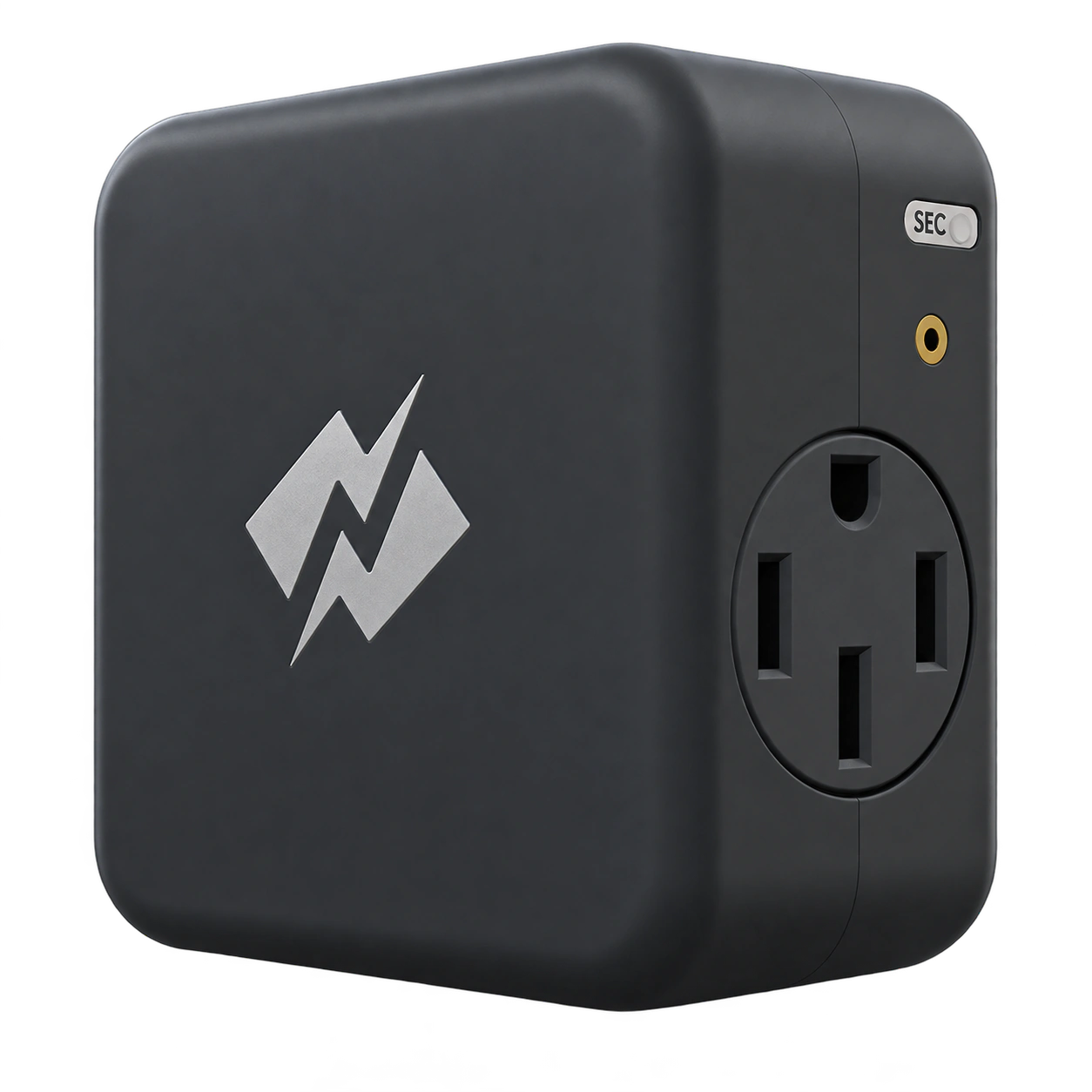
A Smart Splitter sits between your outlet and both devices — your dryer and your EV. It electrically prevents them from drawing high power at the same time. Your dryer still works. Your EV still charges. The panel never sees both loads at once.
That's the trick: you didn't add a new circuit, you just managed the one you already had.
Common questions, answered straight
- Is home EV charging really cheaper in Quebec City than the rest of Canada? Yes — Hydro-Québec residential rates are among the lowest in North America. The catch is Flex D winter peak events. If you opt into Flex D, you need to schedule your charging so the car never runs during a peak. If you stay on the standard rate, you don't have to worry about it.
- Do I qualify for the $600 Écorecharge grant? Possibly — verify on Québec.ca. The big rule change: from April 1, 2026, only connected charging stations qualify. Buy a charger you can schedule and control remotely.
- Can I really skip the panel upgrade? In most Quebec City homes, yes. A Smart Splitter on your existing dryer outlet plus a 24A continuous charging setting covers a normal daily commute overnight — without touching your panel.
- Does Quebec City have colder winters than Montreal? Slightly, but the EV charging math is the same. Cold weather drops range and raises heating load, which is exactly why scheduling and load management matter even more here.
- When should I plug in my EV? Plug in whenever you get home, but set the schedule to start charging late (after midnight) and stop by morning. On Flex D, make sure the schedule respects peak event windows.
- Where do I buy the Smart Splitter? Order at getneocharge.com. Canadian pricing applies automatically at checkout, no code needed: $399 CAD as of October 9, 2026, and NeoCharge refunds $200 once it is connected to the app and charging your EV.
Do this this week
- Find your dryer outlet. Take a photo of the plug and the breaker label.
- Confirm it's a NEMA 14-30 (four prongs, dryer-shaped) and not the older three-prong NEMA 10-30.
- Check the current Écorecharge eligible-station list if you want the $600 grant.
- Decide on Flex D or the standard rate — Flex D pays off only if your charger respects peak events.
- Order the NeoCharge Smart Splitter. Canadian pricing applies automatically at checkout, no code needed; connect it to the NeoCharge app and charge your EV through it for the $200 refund.
- Have a licensed electrician handle the install — Quebec's Code de construction takes electrical work seriously, and so should you.
Sources
- Quebec Écorecharge home charging station: quebec.ca
- Hydro-Québec Flex D: hydroquebec.com
- Hydro-Québec EV charging information: hydroquebec.com
Electrical safety disclaimer
This guide is general information, not electrical advice. Quebec electrical work must be installed and inspected according to local code, manufacturer instructions, and the judgment of a licensed electrician. Verify Écorecharge eligibility, charger model, installer documentation, and panel/circuit safety for your specific home before purchasing or installing equipment.
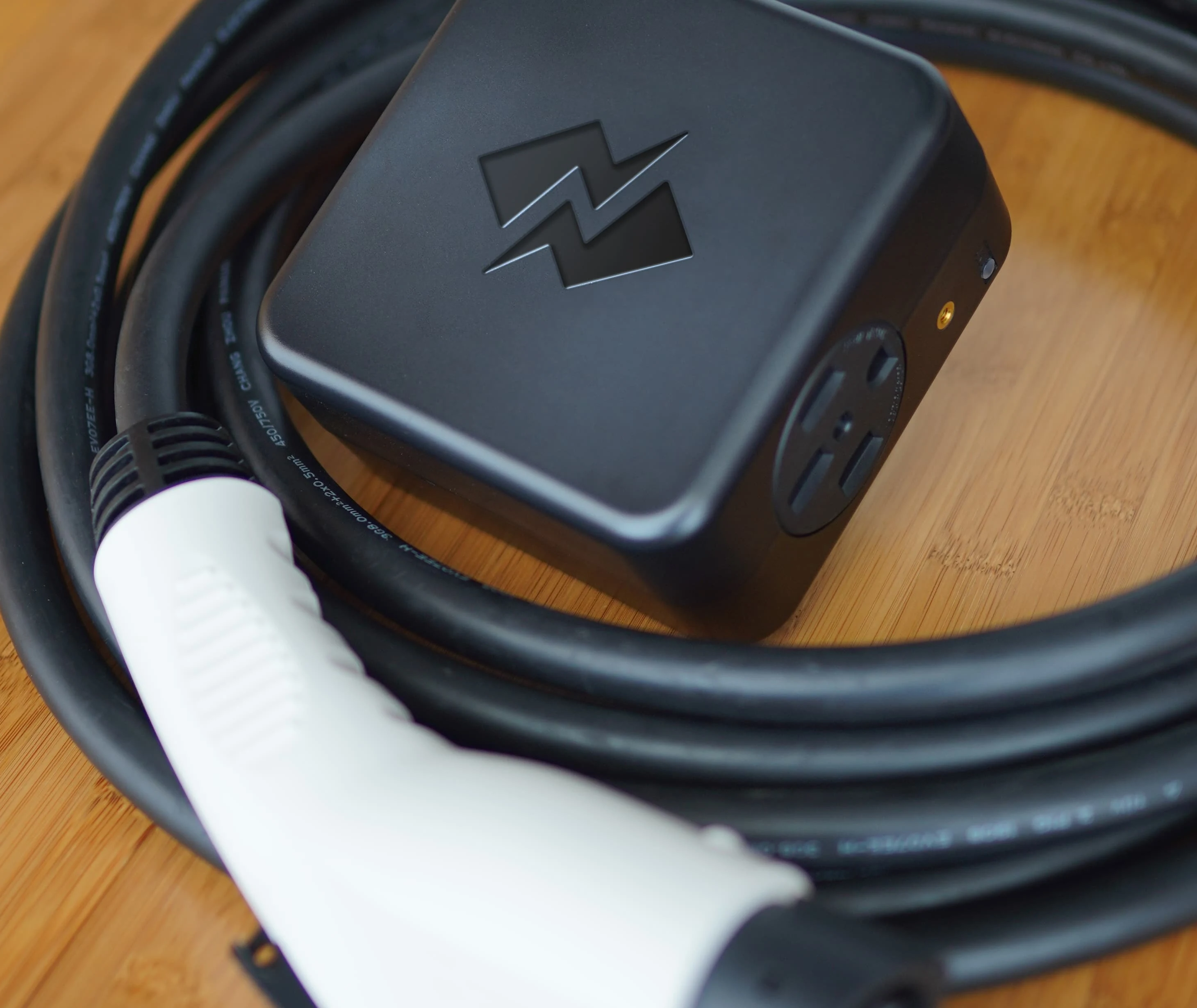
Skip the panel upgrade
Level 2 charging from the outlet you already have
Plug into the 240V dryer outlet you already have. The dryer gets priority and your EV charges the rest of the night, with no panel upgrade and no new circuit. cUL-listed for Canada, and NeoCharge refunds $200 once it is connected and charging your EV.
NeoCharge App
Track charging costs without spreadsheet work
See session history, monthly energy use, and savings so the article advice turns into a real household habit.
Explore the app

Next steps
Keep going with NeoCharge
Use the article as your decision guide, then jump into the product, app, or related guides that match what you are trying to solve next.
Key terms
- Level 2 charging
- Level 2 EV charging uses a 240V circuit (like a dryer outlet). It typically adds ~20–35 miles of range per hour, depending on your car and the circuit amperage.
- NEMA 14-30
- A NEMA 14-30 is a 240V, 30A dryer outlet. With a properly configured EV charger, it can usually support ~24A continuous charging (about 20–25 miles of range per hour for many EVs).
- EVSE
- EVSE stands for Electric Vehicle Supply Equipment (the “charger”). It safely delivers power to your EV and communicates with the car to control charging current.
- Load management
- Load management is a strategy to keep your home’s electrical load within safe limits—often by scheduling or pausing EV charging when other appliances are running.
FAQs
What's the quick takeaway from this article?
Who is this guide for?
What should I do next?
Related posts
How to Charge Two EVs at Home in Canada on One 240V Outlet (2026)
One 50A circuit adds about 360 km overnight, enough for two commutes. What the Canadian Electrical Code allows, permits by province, BC Hydro rebates, and options.

Burnaby EV Charger Installation
Burnaby EV charging by home type: share a dryer outlet instead of a panel upgrade, City permits, BC Hydro's $350 + $200 rebates, and strata right-to-charge.

Richmond EV Charger Installation
Richmond EV charger installation: Technical Safety BC permit fees, the 2018 EV-ready rule, BC Hydro's $350 + $200 rebates, and room for a heat pump.
Surrey EV Charger Installation
Add Level 2 charging in Surrey without a panel upgrade: City of Surrey permit steps, BC Hydro's $350 + $200 rebates, suited-house load math, and overnight costs.
