



Vancouver Home EV Charging Guide: BC Hydro Rebates, Dryer Outlets, Smart Splitters, and Avoiding Panel Upgrades

Direct answer: Yes — most Vancouver-area homes can install Level 2 home EV charging without a panel upgrade. The shortest path is sharing a NEMA 14-30 dryer outlet with a BC Hydro–eligible NeoCharge Smart Splitter ($399 CAD at checkout as of October 9, 2026, $199 after NeoCharge's $200 app refund). BC Hydro adds a $200 device top-up when it is installed with a listed charger under an electrical permit. Schedule charging between 11 p.m. and 7 a.m. on BC Hydro's optional time-of-day rate to capture the 5¢/kWh overnight discount.
You're not asking the wrong question — you're asking five at once
If you live in Vancouver, Burnaby, Richmond, Surrey, North Vancouver, Coquitlam, Langley, Victoria, or Kelowna and you just took delivery of an EV, you're probably not asking "what charger should I buy?" any more.
You're asking:
- Can my 100A panel actually handle this?
- Can I just use the dryer outlet in my garage?
- Does BC Hydro help pay for any of this?
- Is a Smart Splitter cheaper than a brand-new circuit?
- How do I charge overnight without getting hit by the peak rate?
Good news: you can answer all five today, in one afternoon, without hiring a sales-y electrician. Here's how.
Why home EV charging in Vancouver feels harder than it should
Most homes in the Lower Mainland were not built around an EV. You probably have an electric dryer, maybe a heat pump, possibly a basement suite, an older panel, and a garage that wasn't planned for any of this.
A dedicated high-power EV circuit is possible in most homes — but it's rarely the simplest or cheapest option. Before you let an electrician quote you a panel upgrade, ask them three things:
- What does the load calculation say? (This is the math your home actually runs on.)
- Is there an existing 240V circuit we can use safely? (Dryer, range, welder — anything 240V counts.)
- Would a load-management device work here instead? (This is the Smart Splitter question.)
If the answer to #3 is yes, price the Smart Splitter path before you say yes to a service upgrade. It often comes in at a fraction of the cost.
What BC Hydro will actually help you pay for
Here's the part most Vancouver EV owners miss: BC Hydro doesn't just reward "bigger charger, bigger circuit." They actively reward homes that manage their load so they don't need a panel upgrade in the first place.
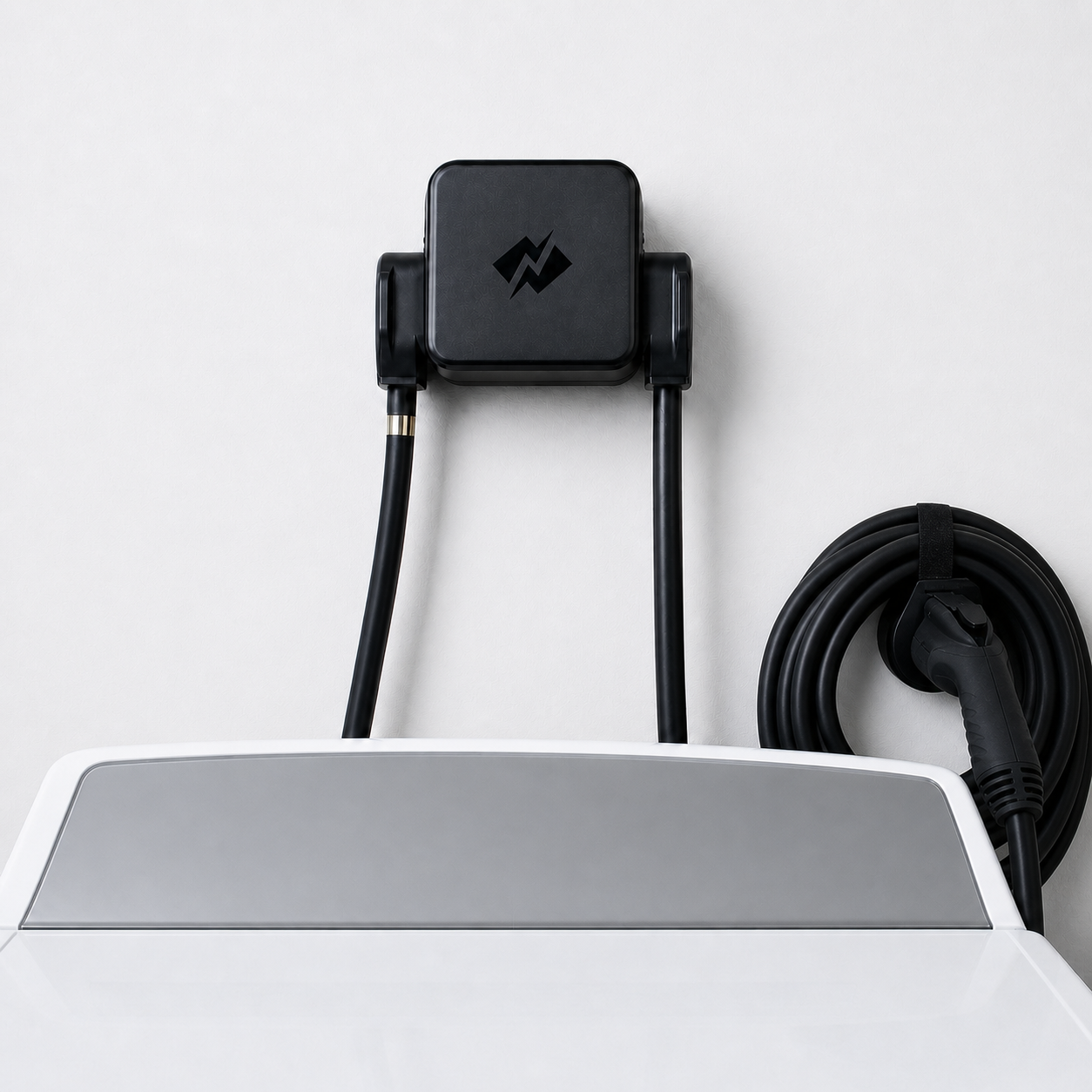
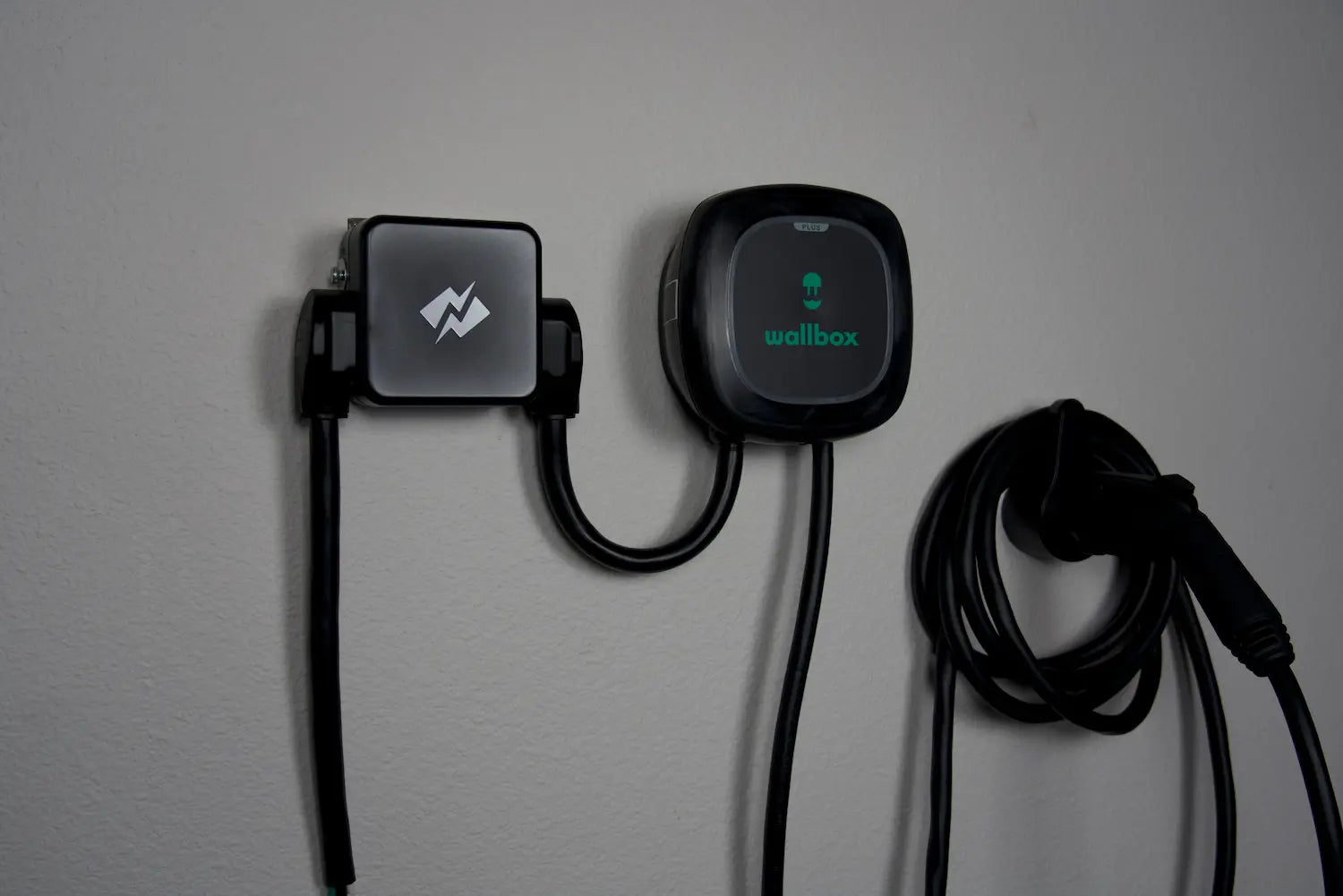
The NeoCharge Smart Splitter is on BC Hydro's eligible EV power management device list. On the Canadian store it is $399 CAD at checkout as of October 9, 2026, and NeoCharge refunds $200 once it is connected to the app and charging your EV. BC Hydro adds its own $200 device top-up when the Splitter is installed with a listed charger under an electrical permit (how that works):
| The math | Amount (CAD) |
|---|---|
| Smart Splitter list price | $699 |
| Canada instant rebate, applied at checkout | −$300 |
| You pay at checkout | $399 |
| NeoCharge app refund, after 14 days connected for EV charging | −$200 |
| Your cost | $199 before taxes and shipping |
| BC Hydro device top-up, with a listed charger under an electrical permit | a further −$200 |
Compare that to a typical Vancouver panel-upgrade quote of $3,000–$8,000. Eligibility and stacking depend on current program terms and your specific home — verify before you buy — but the order of operations is clear: check the load-management path first.
Yes, your dryer outlet probably works
That four-prong plug behind your dryer is a NEMA 14-30, and it's a 30A 240V circuit. Because EV charging is a continuous load, you'll usually be limited to about 24A of charging on it — but that's enough.
At 24A you're pulling ~5.7 kW, which adds roughly 30–35 km of range per hour for most EVs. Your car sits plugged in for 8–10 hours overnight. Do the math: you'll wake up topped off for any normal Vancouver commute.
Here's what not to do:
- Don't swap plugs back and forth every time you want to run the dryer.
- Don't buy a cheap adapter off Amazon and hope it works.
- Don't run an extension cord. Ever.
- Don't trust the household to remember whose turn it is on the circuit.
Here's what works: a Smart Splitter sits between the outlet and both devices. It electrically prevents the dryer and your EV from drawing high power at the same time. No memory required, no breaker trips, no fire risk.
This guide is written for the whole Lower Mainland and Vancouver Island
Everything here applies whether you live in Vancouver proper, Burnaby, Richmond, Surrey, North Vancouver, West Vancouver, Coquitlam, Port Moody, Langley, Delta, Maple Ridge, White Rock, Tsawwassen — or over the water in Victoria, Saanich, Nanaimo, or Kelowna. The grid, the rate plan, and the rebate framework are the same. Only your dryer outlet's location changes.
Common questions, answered straight
- Can I install Level 2 charging in Vancouver without a panel upgrade? Usually, yes. A lower-amp Level 2 setup or a Smart Splitter on your existing dryer outlet often does the job — and BC Hydro will help pay for the load-management device.
- Does BC Hydro really help with load management? Yes. BC Hydro lists eligible EV power-management devices and offers up to $200 CAD for qualifying installs. Check current terms before you buy.
- Is a NEMA 14-30 dryer outlet enough for my EV? For most daily drivers — yes. A safe 24A Level 2 setup adds ~30–35 km of range per hour. Plug in at night, you're full by morning.
- What's the cheapest way to start? The Smart Splitter is $399 CAD at checkout and $199 after NeoCharge's $200 app refund, and BC Hydro adds a $200 device top-up when it is installed under an electrical permit. That is versus thousands for a panel upgrade.
- When should I actually charge? Between 11 p.m. and 7 a.m. on BC Hydro's optional time-of-day rate. You get a 5¢/kWh discount overnight and avoid the 5¢/kWh surcharge from 4–9 p.m.
- What if I have two EVs? A Smart Splitter can still help, but the load math changes. Have a licensed electrician check whether your panel can support both cars before you order anything.
Do this today (15 minutes)
- Snap a photo of your panel label and the four-prong outlet behind your dryer. You'll want both when you talk to anyone — electrician, utility, or us.
- Confirm your outlet is a NEMA 14-30 (four prongs, dryer) or a NEMA 14-50 (four prongs, slightly larger, often labeled for EV/RV).
- Check BC Hydro's current rebate terms at bchydro.com. Eligibility changes.
- Order the NeoCharge Smart Splitter. Canadian pricing applies automatically at checkout, no code needed; connect it to the NeoCharge app and charge your EV through it for the $200 refund.
- Set up the NeoCharge App to charge automatically between 11 p.m. and 7 a.m. so you never miss the BC Hydro overnight discount.
- Have a licensed electrician do the install — Smart Splitter or not, your safety and your insurance both depend on it.
Sources
- BC Hydro home EV charger rebates: bchydro.com
- BC Hydro time-of-day pricing: app.bchydro.com
- BC Hydro eligible EV power management models: app.bchydro.com
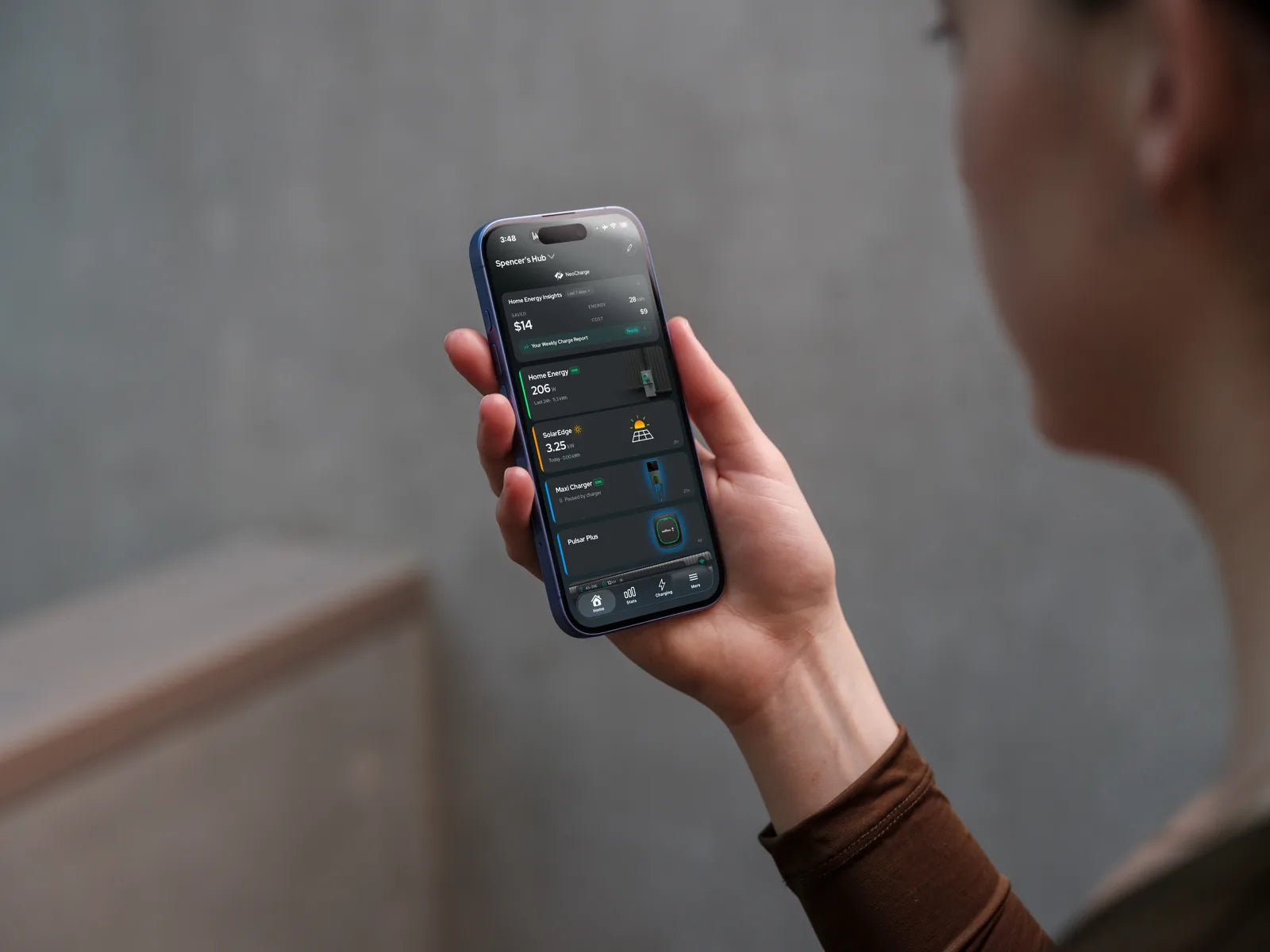
NeoCharge App
Turn rate plans into simple charging schedules
Schedule around off-peak windows, manage compatible chargers, and keep tabs on charging sessions from the app.
Explore the app


Next steps
Keep going with NeoCharge
Use the article as your decision guide, then jump into the product, app, or related guides that match what you are trying to solve next.
Key terms
- Level 2 charging
- Level 2 EV charging uses a 240V circuit (like a dryer outlet). It typically adds ~20–35 miles of range per hour, depending on your car and the circuit amperage.
- NEMA 14-50
- A NEMA 14-50 is a common 240V, 50A outlet (often used for EV charging). Many EV chargers plug into it, but the actual charging speed depends on the circuit and your EV.
- NEMA 14-30
- A NEMA 14-30 is a 240V, 30A dryer outlet. With a properly configured EV charger, it can usually support ~24A continuous charging (about 20–25 miles of range per hour for many EVs).
- Load management
- Load management is a strategy to keep your home’s electrical load within safe limits—often by scheduling or pausing EV charging when other appliances are running.
FAQs
What's the quick takeaway from this article?
Who is this guide for?
What should I do next?
Related posts

Burnaby EV Charger Installation
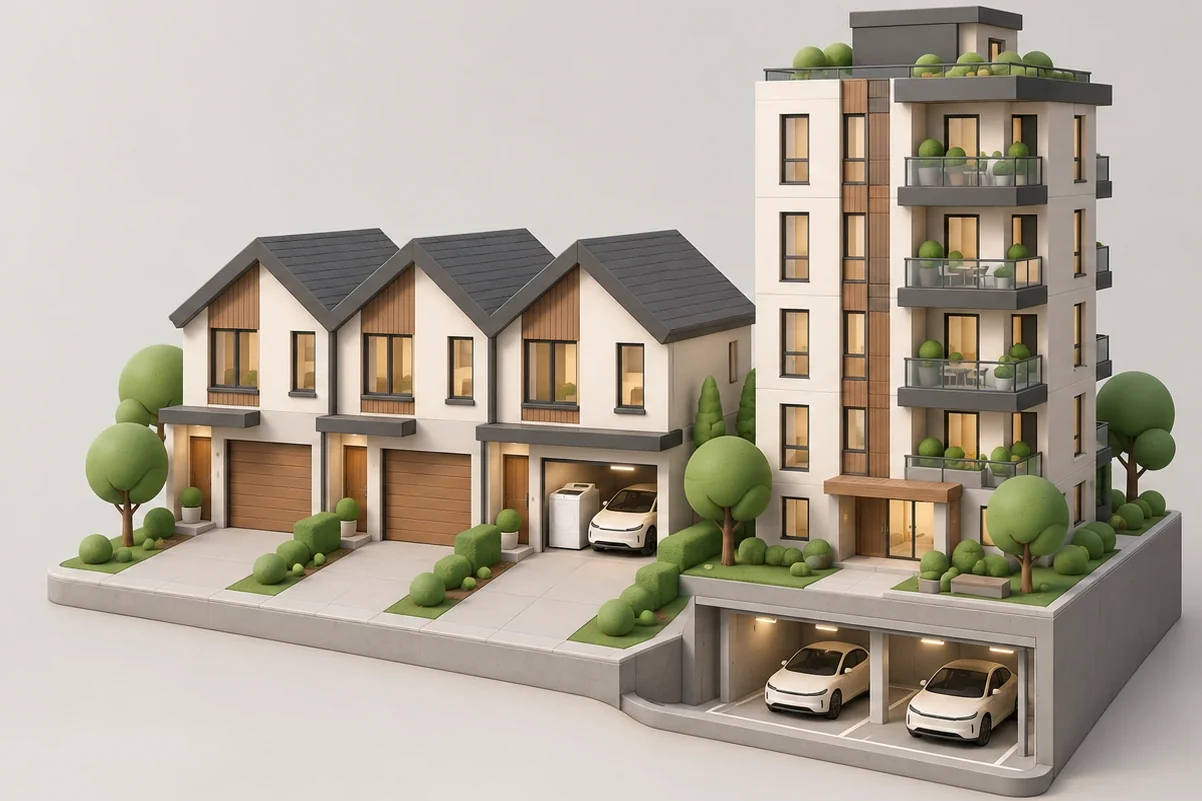
Burnaby EV charging by home type: share a dryer outlet instead of a panel upgrade, City permits, BC Hydro's $350 + $200 rebates, and strata right-to-charge.

Richmond EV Charger Installation
Richmond EV charger installation: Technical Safety BC permit fees, the 2018 EV-ready rule, BC Hydro's $350 + $200 rebates, and room for a heat pump.

Surrey EV Charger Installation
Add Level 2 charging in Surrey without a panel upgrade: City of Surrey permit steps, BC Hydro's $350 + $200 rebates, suited-house load math, and overnight costs.
BC Hydro EV Power Management Device Rebate: Eligible Devices (2026)
BC Hydro pays $200 extra for an eligible EV power management device. The Sept 2026 device list, which chargers qualify, and the permit rule that decides who gets it.
