

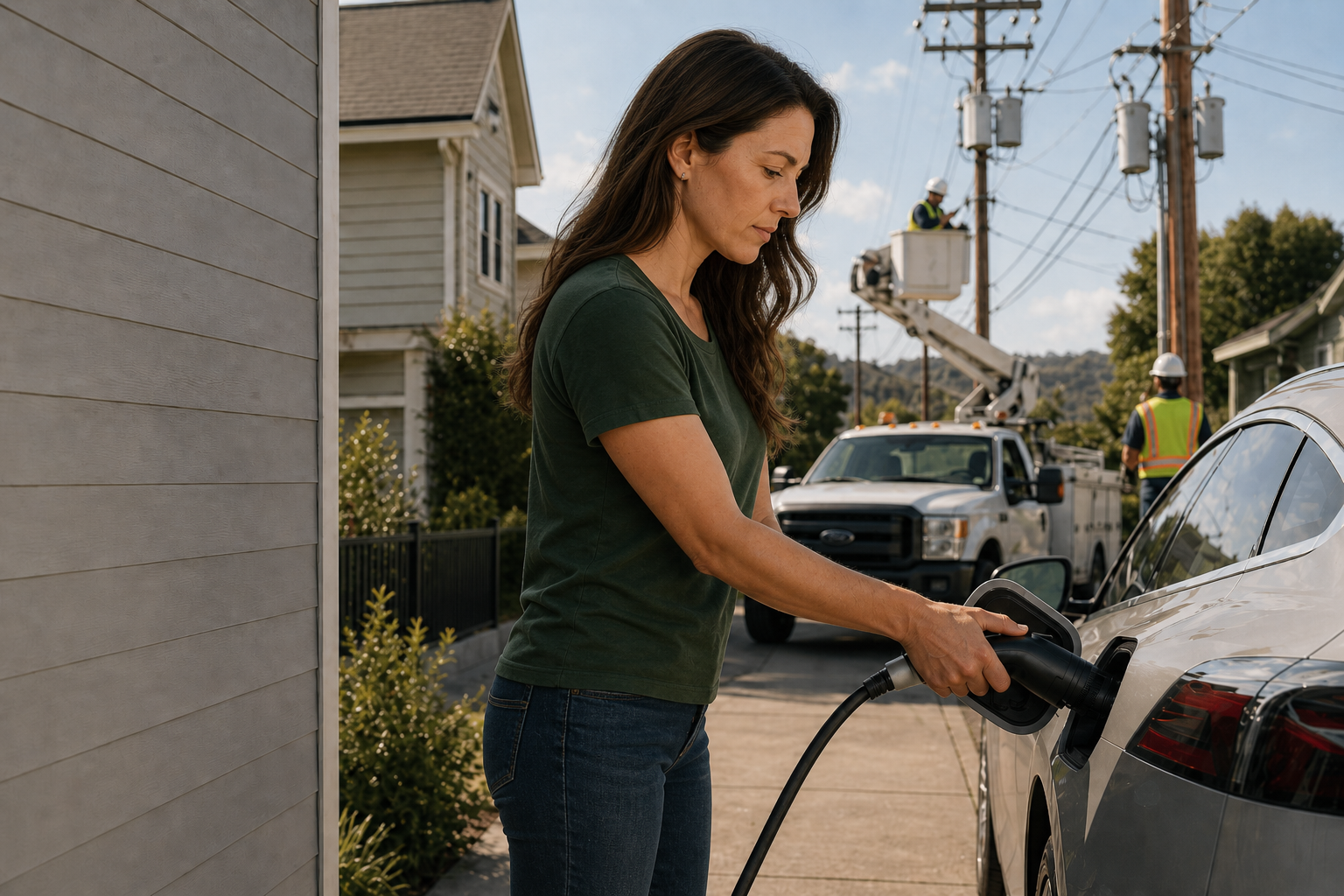



Toronto Home EV Charging Guide: Ultra-Low Overnight Rates, NEMA 14-50 Outlets, and Panel Upgrade Alternatives
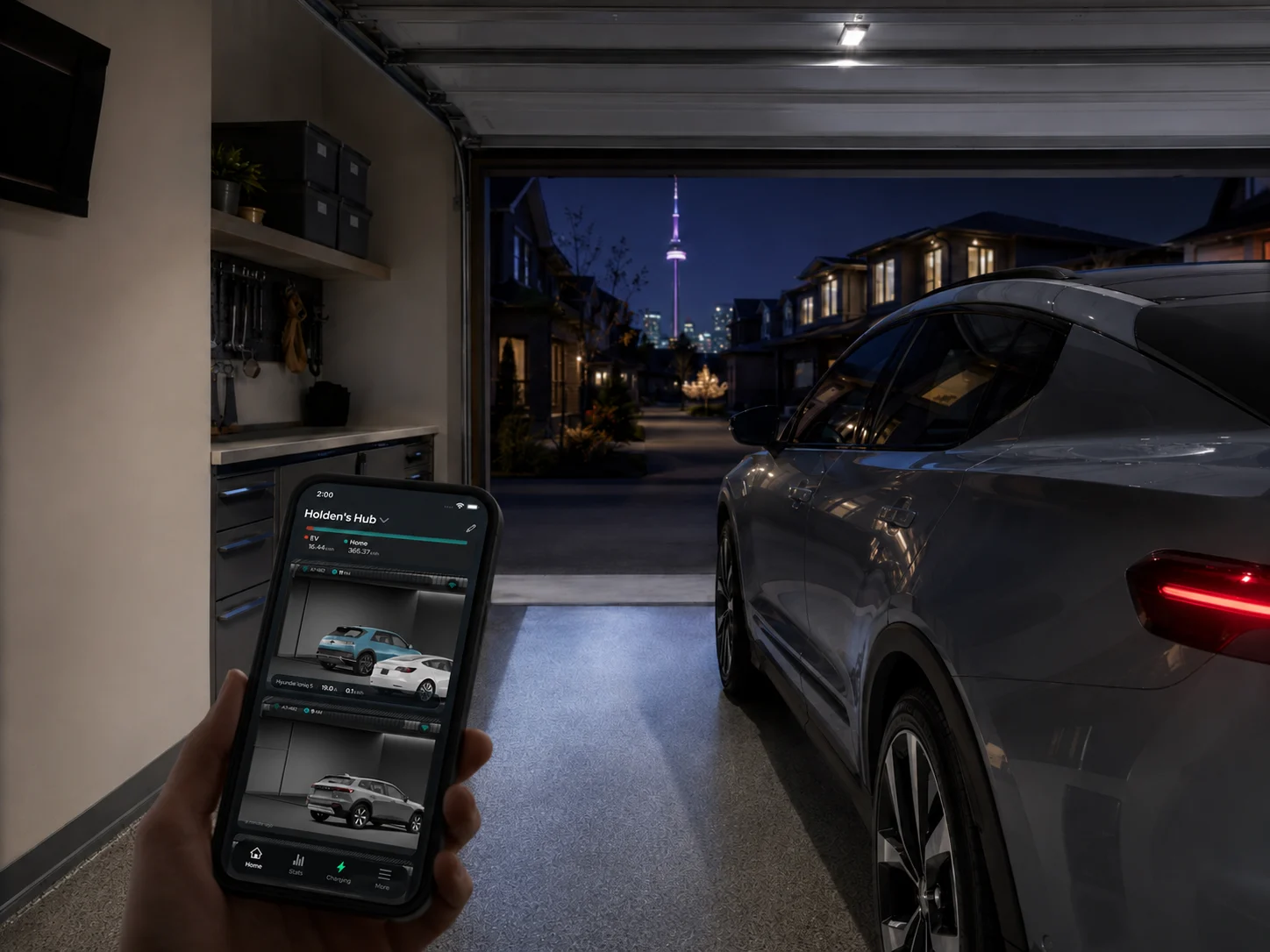
Direct answer: For most Toronto-area EV owners, the best home charging setup is an automatic overnight schedule on the Ontario Energy Board's Ultra-Low Overnight rate. Adding 30 kWh costs about $1.17 overnight at 3.9¢/kWh, vs $11.73 during the 4–9 p.m. on-peak window at 39.1¢/kWh — a ~10× spread on the same energy. If your panel is tight, sharing a NEMA 14-30 dryer outlet with a Smart Splitter can skip a $3,000–$8,000 panel upgrade.
In Toronto, your biggest savings come from when you charge — not how fast
If you've just gotten an EV in the GTA, here's the most important habit you'll build: let the car wait until the cheap window.
Ontario sells you electricity at very different prices at different times of day. The right move is almost never "buy the fastest charger." It's "make sure your charger is asleep during the expensive hours and working hard during the cheap ones."
Ontario electricity customers can choose between three Ontario Energy Board regulated price plans: Time-of-Use (TOU), Ultra-Low Overnight (ULO), and Tiered. The OEB says customers can use its bill calculator to help compare plans.
For EV drivers who can reliably charge late at night, ULO can make scheduling one of the highest-impact habits in the home. The exact rates matter most when they are separated by plan:
Ultra-Low Overnight rates
| Period | Time window | Current OEB electricity price |
|---|---|---|
| Ultra-low overnight | Every day, 11 p.m. to 7 a.m. | 3.9 cents/kWh |
| Weekend off-peak | Weekends and holidays, 7 a.m. to 11 p.m. | 9.8 cents/kWh |
| Mid-peak | Weekdays, 7 a.m. to 4 p.m. and 9 p.m. to 11 p.m. | 15.7 cents/kWh |
| On-peak | Weekdays, 4 p.m. to 9 p.m. | 39.1 cents/kWh |
Standard Time-of-Use rates
| Period | Time window | Current OEB electricity price |
|---|---|---|
| Off-peak | Weekdays 7 p.m. to 7 a.m., weekends, and holidays | 9.8 cents/kWh |
| Mid-peak | Weekdays, 7 a.m. to 11 a.m. and 5 p.m. to 7 p.m. | 15.7 cents/kWh |
| On-peak | Weekdays, 11 a.m. to 5 p.m. | 20.3 cents/kWh |
Source: oeb.ca. Prices are for the electricity commodity line and do not include delivery, regulatory charges, taxes, or other bill items.
A simple EV example makes the difference obvious. If you add 30 kWh to your EV:
- ULO overnight at 3.9 cents/kWh is about $1.17 before other bill charges.
- Standard TOU off-peak at 9.8 cents/kWh is about $2.94 before other bill charges.
- ULO weekday on-peak at 39.1 cents/kWh is about $11.73 before other bill charges.
If you're trying to figure out home charging in Toronto, you're probably asking:
- Should I switch to Ultra-Low Overnight?
- When should I actually plug in?
- Can my panel handle a NEMA 14-50?
- Can I just use my dryer outlet?
- How do I see what my EV is actually costing me each month?
We'll answer all five below.
Same garage, same problem — whether you're in Toronto, Mississauga, Brampton, Markham, or Vaughan
The GTA is a patchwork of housing: detached homes in Markham and Vaughan, older bungalows in East York and Scarborough, townhomes in Mississauga and Brampton, basement suites in Etobicoke, condos downtown, detached garages everywhere. None of them were planned around an EV.
If you're lucky, you've got room in the panel and a clean spot for a NEMA 14-50. If you're like most GTA homeowners, you're hitting one of these walls:
- My panel is full.
- I only have a 100A service.
- The garage is way too far from the panel.
- A new circuit costs more than I expected.
- I do have a dryer outlet right there, though…
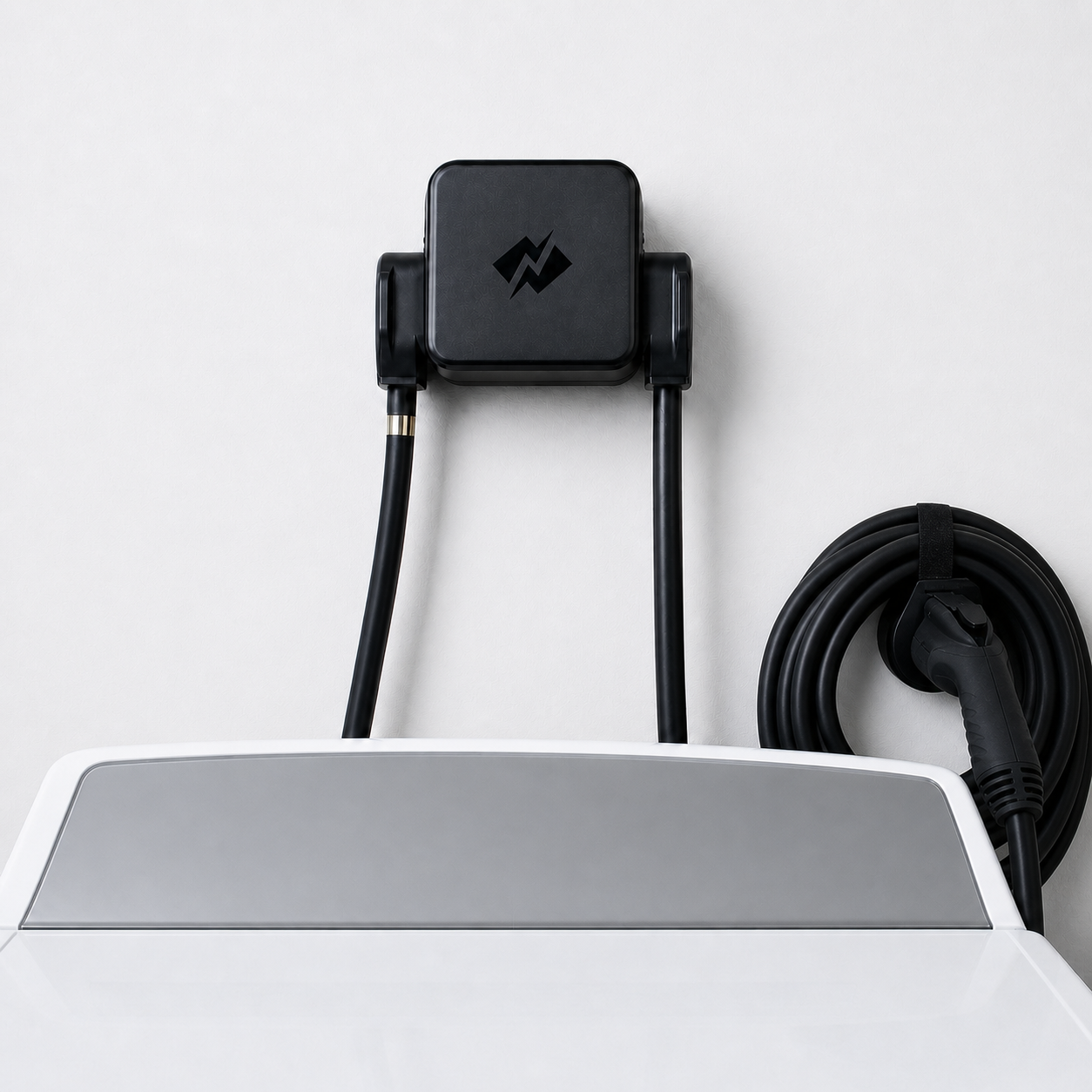
If any of those sound familiar, a NEMA 14-50 isn't your only option. A safe ~24A setup on your existing dryer outlet can cover most daily driving — and skip a $3,000–$8,000 panel upgrade.
NEMA 14-50 vs NEMA 14-30 in Ontario homes
The two outlet names most Toronto EV drivers should know are:
- NEMA 14-50: a 50A 240V outlet commonly used for EV charging. It often supports up to about 40A continuous charging when installed correctly.
- NEMA 14-30: a 30A 240V dryer outlet. It is commonly limited to about 24A continuous EV charging when the circuit is suitable.
The mistake is choosing only by speed. Choose by:
- panel capacity
- actual daily driving
- overnight parking time
- installation cost
- whether the outlet is shared
- whether scheduling and energy tracking are available
Ultra-Low Overnight changes the behavior
Ontario's Ultra-Low Overnight plan is designed with a very cheap overnight period and a much more expensive weekday evening period. For many EV owners, the behavioral rule is simple:
Let the car wait until after 11 p.m. and avoid 4 p.m. to 9 p.m. on weekdays.
This is especially important in Toronto, Mississauga, Brampton, Markham, Vaughan, Oakville, and Ottawa because the biggest savings are not from buying the fastest charger. The biggest savings come from making the charger, vehicle, or app wait until the cheap window automatically.
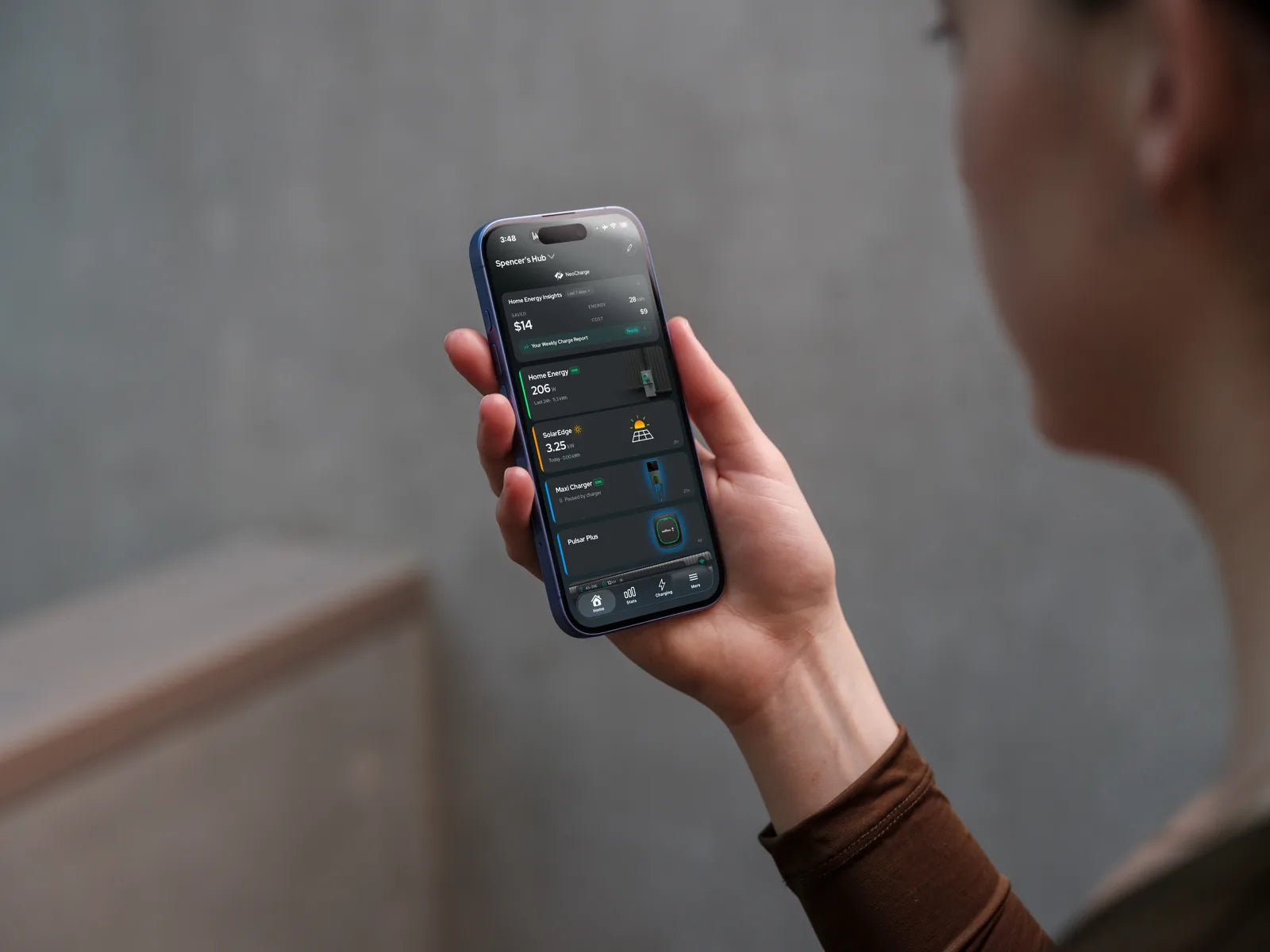
The NeoCharge app angle is strong here because the value is not abstract. It is:
- schedule charging after the expensive period
- track how much energy the EV used
- avoid guessing from the whole-home bill
- keep charging behavior consistent even when life gets busy
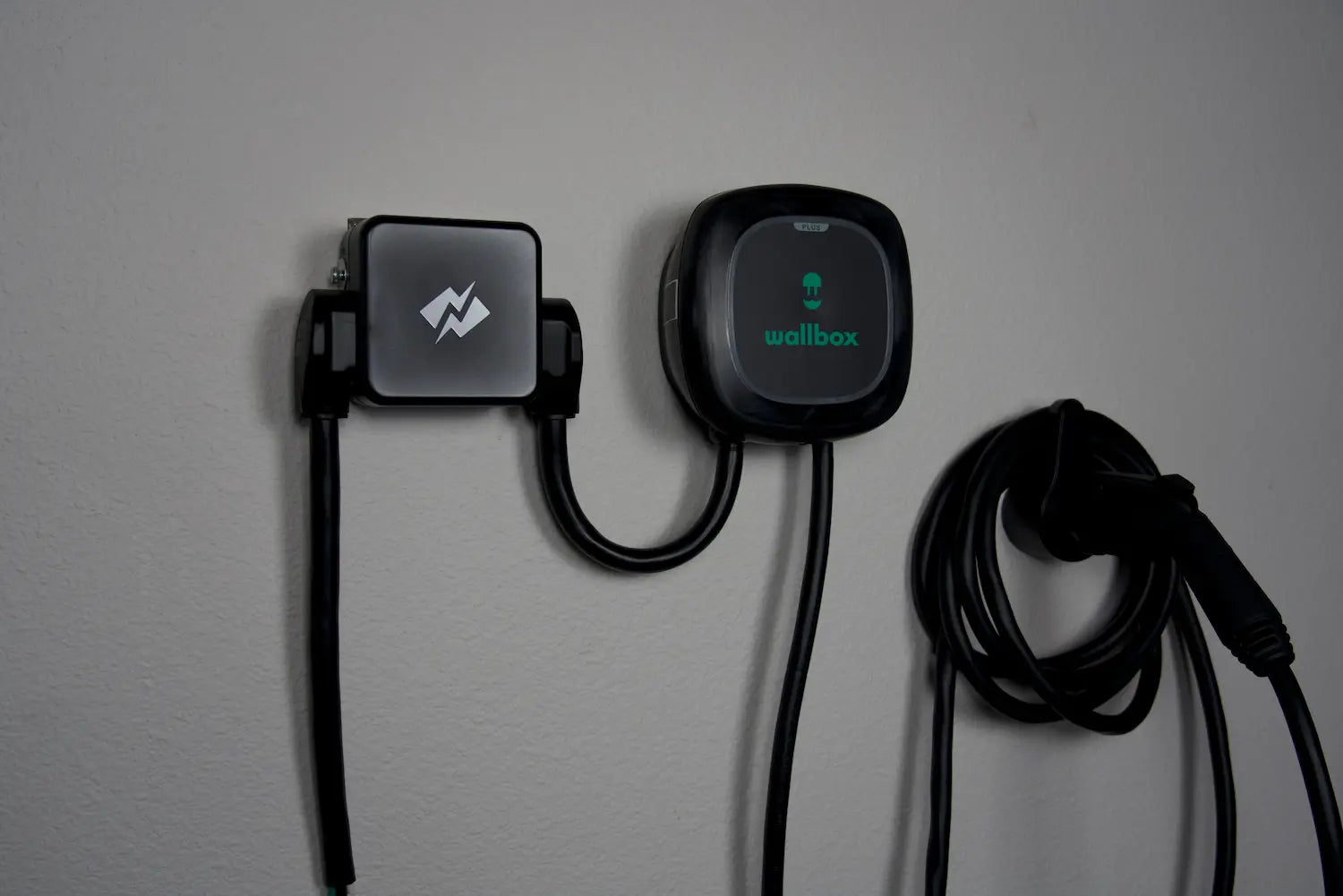
When a Smart Splitter makes sense in Toronto
A Smart Splitter is worth checking if:
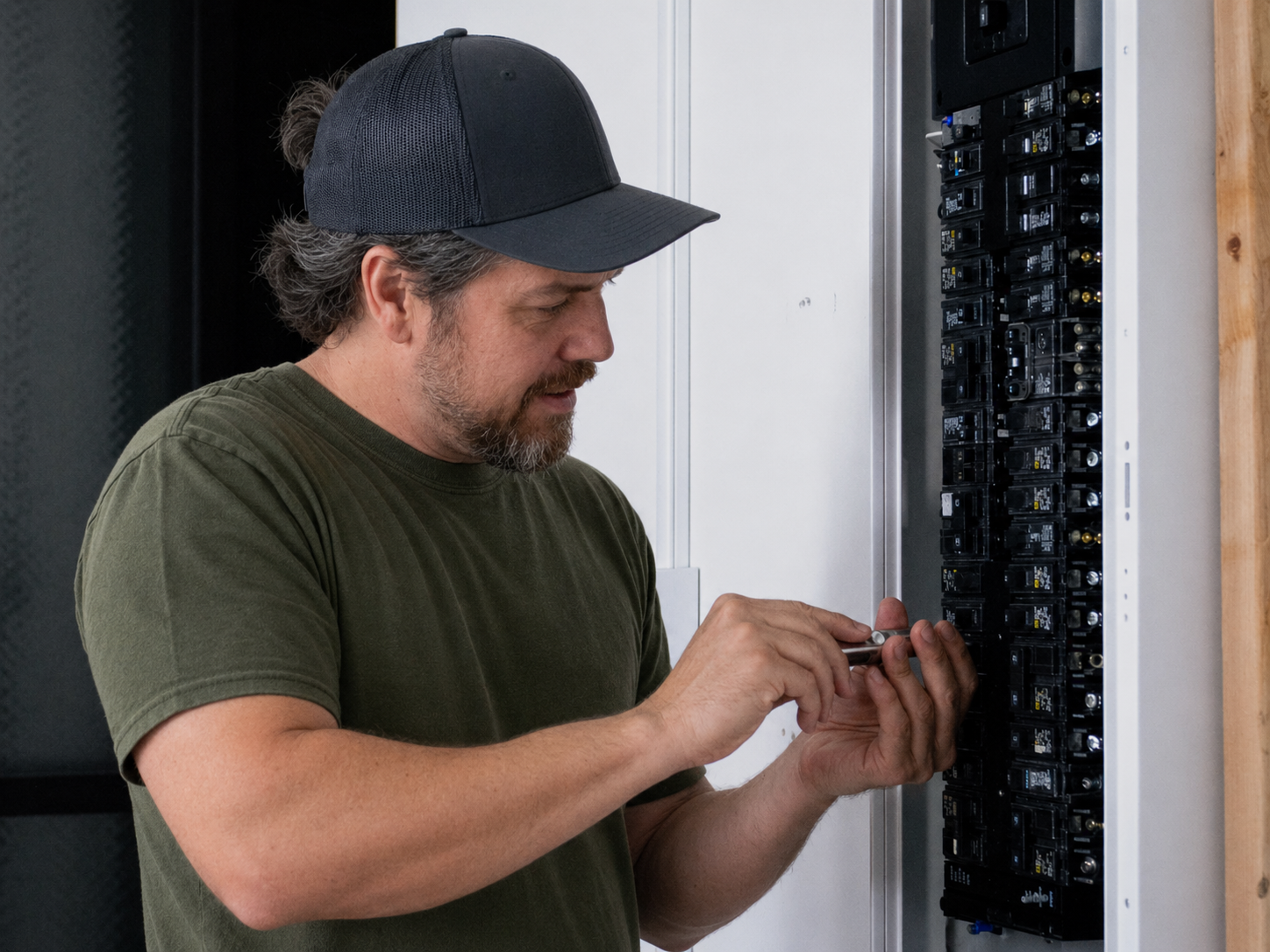
- your electrician says the panel is tight
- you have a usable 240V dryer outlet
- you want Level 2 charging without a major electrical project
- you need to share a dryer outlet safely
- you want scheduling and energy tracking in the NeoCharge app
It is not a magic permission slip to ignore electrical rules. It is a way to make the question better:
Can we safely manage load instead of adding a larger electrical project?
Toronto deal stack
Use overnight charging where it fits your Ontario price plan and household behavior.
Order the NeoCharge Smart Splitter: $399 CAD at checkout as of October 9, 2026, no code needed, and NeoCharge refunds $200 once it is connected to the app and charging your EV.
Common questions, answered straight
- Should I switch to Ultra-Low Overnight? If your car is home overnight, almost always yes. ULO is 3.9¢/kWh from 11 p.m.–7 a.m. — one of the cheapest residential EV-charging windows in North America. The catch: 4–9 p.m. weekdays jump to 39.1¢/kWh, so make sure the rest of your big appliances aren't running during the peak.
- What time should I plug in my EV? Plug in when you get home, but set the schedule to *start charging at 11 p.m.* and *stop by 7 a.m.* The NeoCharge App handles this automatically so you don't have to think about it.
- Do I need a NEMA 14-50? Probably not. A NEMA 14-50 (50A, ~40A continuous) charges fast — about 40 km/hr of range. But a properly managed NEMA 14-30 dryer outlet (~24A continuous, ~30 km/hr) covers a typical Toronto commute overnight and saves you thousands.
- Can I really skip the panel upgrade? In most homes, yes. Ask your electrician for a load calculation and a load-management quote *before* you say yes to a service upgrade. The Smart Splitter on a dryer outlet is the most common answer.
- How much does charging actually cost me? On ULO overnight: 30 kWh ≈ $1.17. During the 4–9 p.m. peak: 30 kWh ≈ $11.73. Same energy, almost 10× the price.
- Where do I buy the Smart Splitter? getneocharge.com. Canadian pricing applies automatically at checkout, no code needed: $399 CAD as of October 9, 2026, and NeoCharge refunds $200 once it is connected to the app and charging your EV.
Sources
- Ontario Energy Board electricity rates: oeb.ca
- Ontario bill calculator: oeb.ca
- Ontario electricity price plans: ontario.ca
- Ontario Energy Board EV information: oeb.ca
- NeoCharge NEMA 14-50 guide: getneocharge.com
NeoCharge App
Turn rate plans into simple charging schedules
Schedule around off-peak windows, manage compatible chargers, and keep tabs on charging sessions from the app.
Explore the app


Next steps
Keep going with NeoCharge
Use the article as your decision guide, then jump into the product, app, or related guides that match what you are trying to solve next.
Key terms
- Level 2 charging
- Level 2 EV charging uses a 240V circuit (like a dryer outlet). It typically adds ~20–35 miles of range per hour, depending on your car and the circuit amperage.
- NEMA 14-50
- A NEMA 14-50 is a common 240V, 50A outlet (often used for EV charging). Many EV chargers plug into it, but the actual charging speed depends on the circuit and your EV.
- NEMA 14-30
- A NEMA 14-30 is a 240V, 30A dryer outlet. With a properly configured EV charger, it can usually support ~24A continuous charging (about 20–25 miles of range per hour for many EVs).
- Time-of-use (TOU) rates
- Time-of-use rates are utility pricing plans where electricity costs more at peak hours and less off-peak. Scheduling EV charging off-peak can significantly reduce cost.
FAQs
What's the quick takeaway from this article?
Who is this guide for?
What should I do next?
Related posts
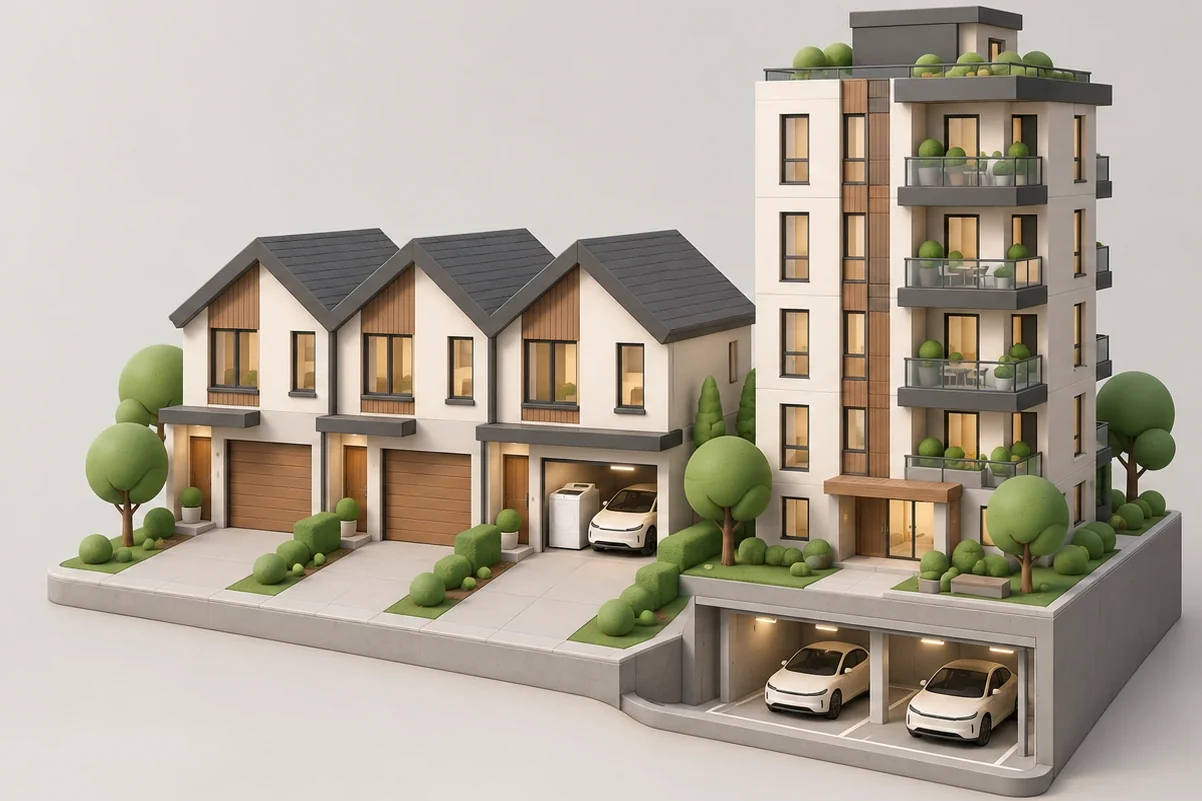

Burnaby EV Charger Installation
Burnaby EV charging by home type: share a dryer outlet instead of a panel upgrade, City permits, BC Hydro's $350 + $200 rebates, and strata right-to-charge.

Richmond EV Charger Installation
Richmond EV charger installation: Technical Safety BC permit fees, the 2018 EV-ready rule, BC Hydro's $350 + $200 rebates, and room for a heat pump.

Surrey EV Charger Installation
Add Level 2 charging in Surrey without a panel upgrade: City of Surrey permit steps, BC Hydro's $350 + $200 rebates, suited-house load math, and overnight costs.

BC Hydro EV Power Management Device Rebate: Eligible Devices (2026)
BC Hydro pays $200 extra for an eligible EV power management device. The Sept 2026 device list, which chargers qualify, and the permit rule that decides who gets it.
