




NeoCharge Blog · Home EV Charging
Bidirectional EV Charging at Home: V2H, V2G, V2L, and V2X Explained
Direct answer: Bidirectional charging means an EV can send stored battery energy back out instead of only receiving power. In 2026, the most useful homeowner version is usually V2H (vehicle-to-home) for backup power during outages. V2L (vehicle-to-load) is already common on some EVs for small appliances and tools. V2G (vehicle-to-grid) is still more program-dependent because it requires utility approval, metering, controls, and an approved way to export power.
If you are trying to decide whether V2H or V2G matters for your home, start with this simple rule:
- Want emergency backup for your house? Look at V2H.
- Want to run tools, camping equipment, or a fridge from the vehicle? Look at V2L.
- Want to sell power or provide grid services? Look at V2G, but expect utility/program requirements.
- Want one umbrella term for all of the above? That is V2X, or vehicle-to-everything.
For most EV owners, the highest-confidence savings still come from charging at home during off-peak hours. V2H can add resilience, but it is not a drop-in replacement for ordinary Level 2 charging.
V2L vs V2H vs V2G vs V2X
| Term | What it powers | Typical use | What makes it hard |
|---|---|---|---|
| V2L | Appliances, tools, camping gear, small loads | Portable power from the EV | Limited output, not integrated with the home panel |
| V2H | A home, backup panel, or critical loads | Outage backup and resilience | Requires compatible EV, bidirectional EVSE/inverter, transfer/islanding equipment, and installation |
| V2B | A building or facility | Resilience, demand response, fleet energy management | More engineering, metering, and operating controls |
| V2G | The utility grid | Demand response, grid services, possible compensation | Utility interconnection, approved equipment, program enrollment, export controls |
| V2X | “Vehicle to everything” | Umbrella term for V2L, V2H, V2B, V2G, V2V | Often used loosely in marketing, so check the exact capability |
The easiest mistake is treating these as interchangeable. A vehicle that can run a power tool from a built-in outlet is not automatically able to back up a home. A vehicle that can back up a home is not automatically approved to export to the grid.
How bidirectional charging works
A normal Level 2 charger sends AC power from your home to the EV. The EV stores that energy as DC power in its battery.
A bidirectional setup has to safely reverse that flow. Depending on the vehicle and system design, the inverter may be inside the vehicle or in external equipment. Either way, your home needs AC power, so the system must convert battery energy into grid-quality AC power and isolate your home from the grid during an outage.
That isolation step matters. If the grid is down, a V2H system must avoid back-feeding power onto utility lines. That is why real V2H systems use transfer equipment, islanding controls, or an approved home energy hub rather than a simple adapter.
ISO 15118-20 is one of the standards behind the bidirectional charging conversation. ISO says the standard defines communication messages and sequence requirements for bidirectional power transfer between an EV and EVSE. Source: iso.org
Plain English: standards help the car and charger communicate, but standards alone do not guarantee your specific EV, charger, home panel, and utility will support V2H or V2G.
What you need for V2H at home
1) A vehicle that explicitly supports bidirectional power
Do not assume every new EV supports V2H. Check the manufacturer’s exact wording:
- V2L usually means portable AC output only.
- V2H means the vehicle can power a home through approved equipment.
- V2G means the vehicle and system may be able to export power to the grid through an approved program.
Examples on the market are still system-specific. Ford describes the F-150 Lightning as able to power an average home for up to 2 days with the Standard Range battery or 3 days with the Extended Range battery through its available 9.6 kW Pro Power Onboard outlet and a compatible transfer switch. Source: ford.com
GM Energy says its V2H Enablement Kit can enable a GM Energy PowerShift Charger to send energy from a V2H-capable GM EV to a properly equipped home during a blackout, and lists the Home Hub, inverter, and dark start battery as included pieces. Source: gmenergy.gm.com
Those examples are useful because they show the real-world pattern: the EV is only one part of the system.
2) A bidirectional charger or home energy system
A normal Level 2 EVSE is usually one-way. A V2H setup needs a charger/inverter path that is rated for bidirectional power and approved for the vehicle.
Ask before buying:
- Is this an AC bidirectional system or DC bidirectional system?
- Which exact EV models and model years are supported?
- What output can it provide in backup mode?
- Does it support whole-home backup or only selected loads?
- Does it work with existing solar or a home battery?
- Does the manufacturer require its own hub, inverter, gateway, or app?
3) Transfer or islanding equipment
For outage backup, the home must disconnect from the utility grid before the EV powers loads. Tesla’s V2H overview describes an islanding controller as equipment that detects a grid outage, switches the home from the grid to the EV, and prevents back-feeding into the grid. Source: tesla.com
This is why a licensed electrician and local permitting matter. V2H is home electrical infrastructure, not a plug-in accessory.
4) A charging plan that protects the battery you need for driving
V2H only helps if the car is home and charged. If you drain the EV during an outage and need to drive the next morning, the backup plan may create a transportation problem.
Set a reserve:
- 20-30% if you only need emergency lighting, fridge, Wi-Fi, and small loads
- 40-60% if you need to drive during outages or live far from charging options
- More if winter range loss or wildfire/evacuation risk is part of your planning
Estimate backup runtime before buying anything
Top V2H pages rank well because they make the benefit concrete. Use this quick estimate:
Backup runtime = usable EV battery kWh / daily backed-up load kWh
Example:
- EV battery: 90 kWh
- Reserve you will not use for home backup: 30 kWh
- Usable backup energy: 60 kWh
- Critical loads: 15 kWh/day
60 kWh / 15 kWh per day = about 4 days of critical-load backup
If you try to back up the whole home at 30 kWh/day, the same usable energy becomes about 2 days. If you include electric heating, central AC, electric water heating, or other large loads, runtime can fall quickly.
Common backup loads
| Load | Why it matters |
|---|---|
| Refrigerator/freezer | Usually a top priority, but startup surges matter |
| Wi-Fi/router/computers | Low energy use, high comfort and work value |
| Lights | Easy to support with efficient LEDs |
| Sump pump | Critical in some homes, but motor startup can matter |
| Medical equipment | Needs careful planning and backup redundancy |
| Furnace blower | Can be practical, depending on system and panel setup |
| Central AC, electric range, electric dryer | Often too large for a basic critical-loads backup plan |
The best V2H design is usually not “power everything exactly like normal.” It is “keep the important loads running long enough to get through the outage.”
How solar changes the V2H equation
Solar can make V2H much more valuable, but only if the system is designed to work during outages. Many grid-tied solar systems shut down when the grid is down unless they have the right inverter, battery, or microgrid controls.
With compatible equipment, solar can:
- run daytime home loads directly
- reduce how much energy you pull from the EV battery
- recharge the EV or home battery during multi-day outages
- improve self-consumption if export credits are low
Tesla’s V2H guide uses the same basic idea: solar can extend backup runtime by serving daytime usage and reducing the energy pulled from the EV battery. Source: tesla.com
If you already have solar, ask your installer whether your current inverter can operate in islanded backup mode and whether it can coordinate with the EV system you are considering.
V2G: when it is worth considering
V2G sounds exciting because your EV battery could provide grid services while parked. DOE notes that bidirectional EVs can support demand response, time-of-use arbitrage, and grid service programs, including load reduction during peak demand. Source: energy.gov
For a homeowner, V2G makes the most sense when all of these are true:
- your EV and charger are approved for bidirectional export
- your utility or aggregator has a real program
- compensation is clear enough to justify the hardware and battery cycling
- the system protects your minimum driving range
- permitting and interconnection are manageable
If those boxes are not checked, treat V2G as a future bonus rather than the main reason to buy a vehicle or charger.
V2H vs a home battery vs a generator
| Option | Best for | Watch out for |
|---|---|---|
| V2H | EV owners who want large backup capacity from a battery they already own | Car must be home, compatible, and charged; hardware is still specialized |
| Home battery | Daily solar shifting, automatic backup, always-available storage | Smaller capacity per dollar than many EV batteries; installation cost |
| Generator | Long outages with high power loads | Noise, fuel, emissions, maintenance, local safety rules |
| V2L | Portable emergency power and small loads | Not a whole-home backup system |
For many homes, the best setup may be hybrid: solar plus a small stationary battery for instant backup and controls, with the EV adding large extra capacity when it is home.
Where NeoCharge fits today
V2H and V2G are still hardware- and utility-dependent. But most EV owners can improve their home charging setup now by solving two practical problems:
Charge when power is cheapest
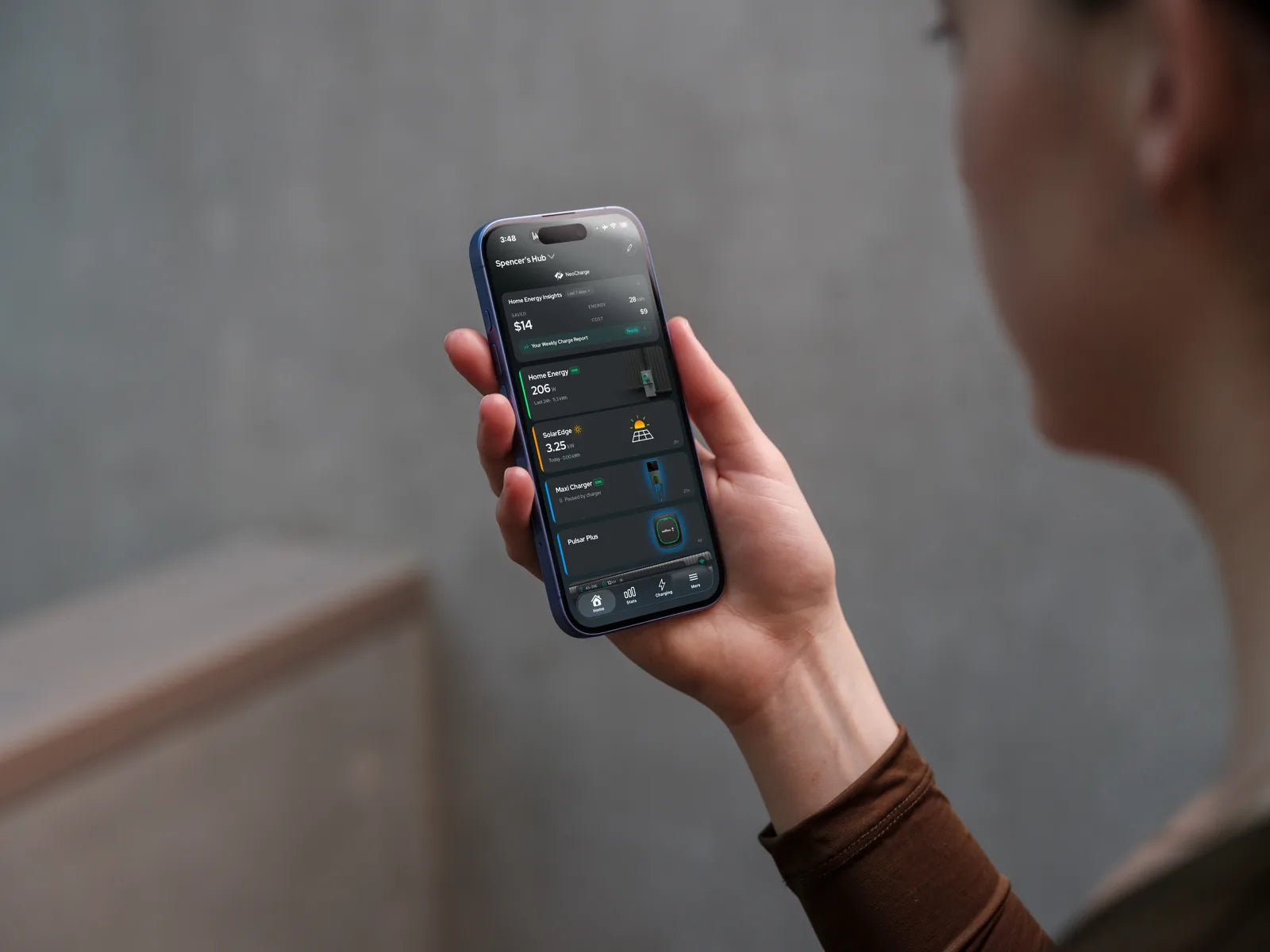
The NeoCharge App helps EV owners track charging cost and schedule around time-of-use rates, which is useful whether or not your vehicle ever supports V2H: NeoCharge App
Add Level 2 charging without overloading a limited home circuit
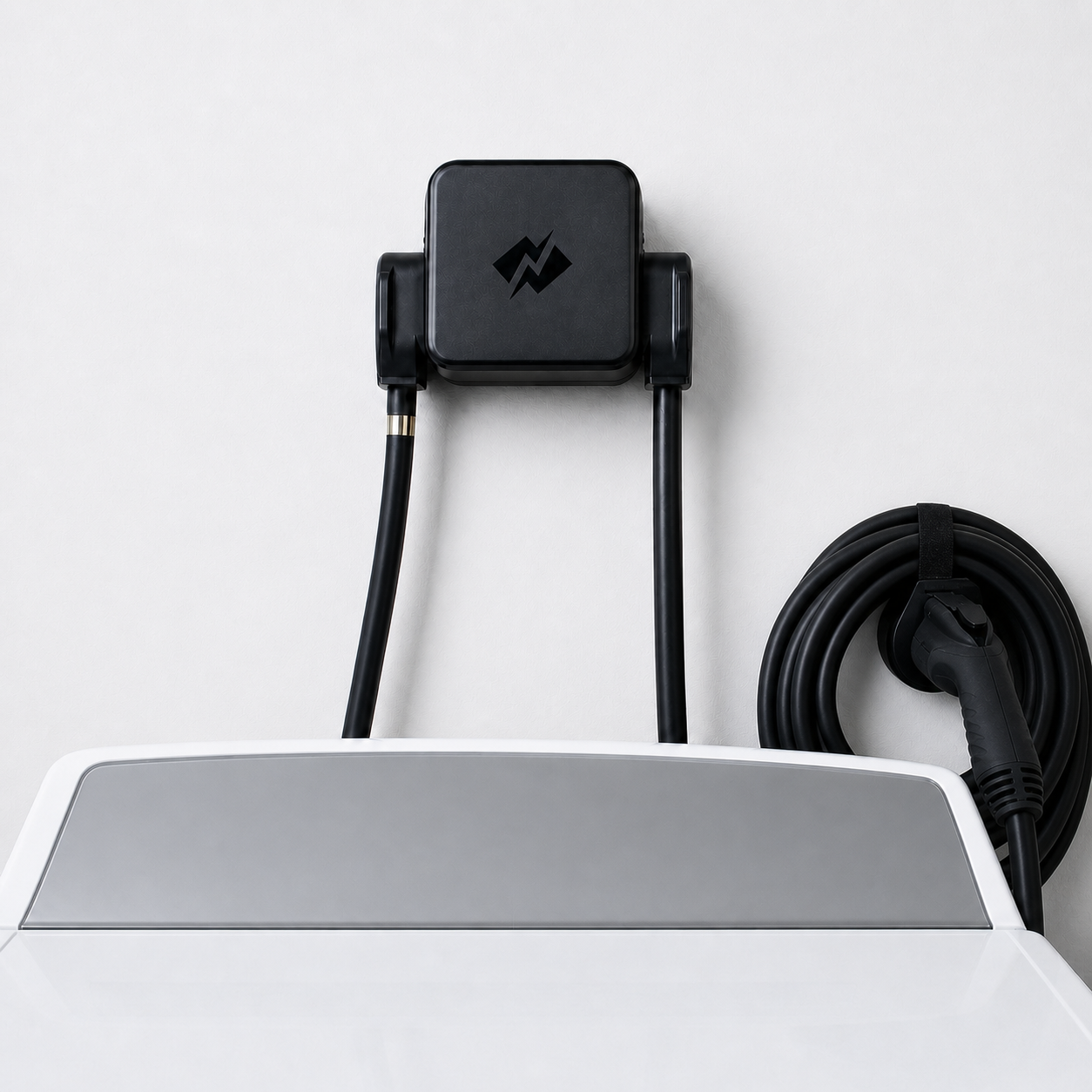
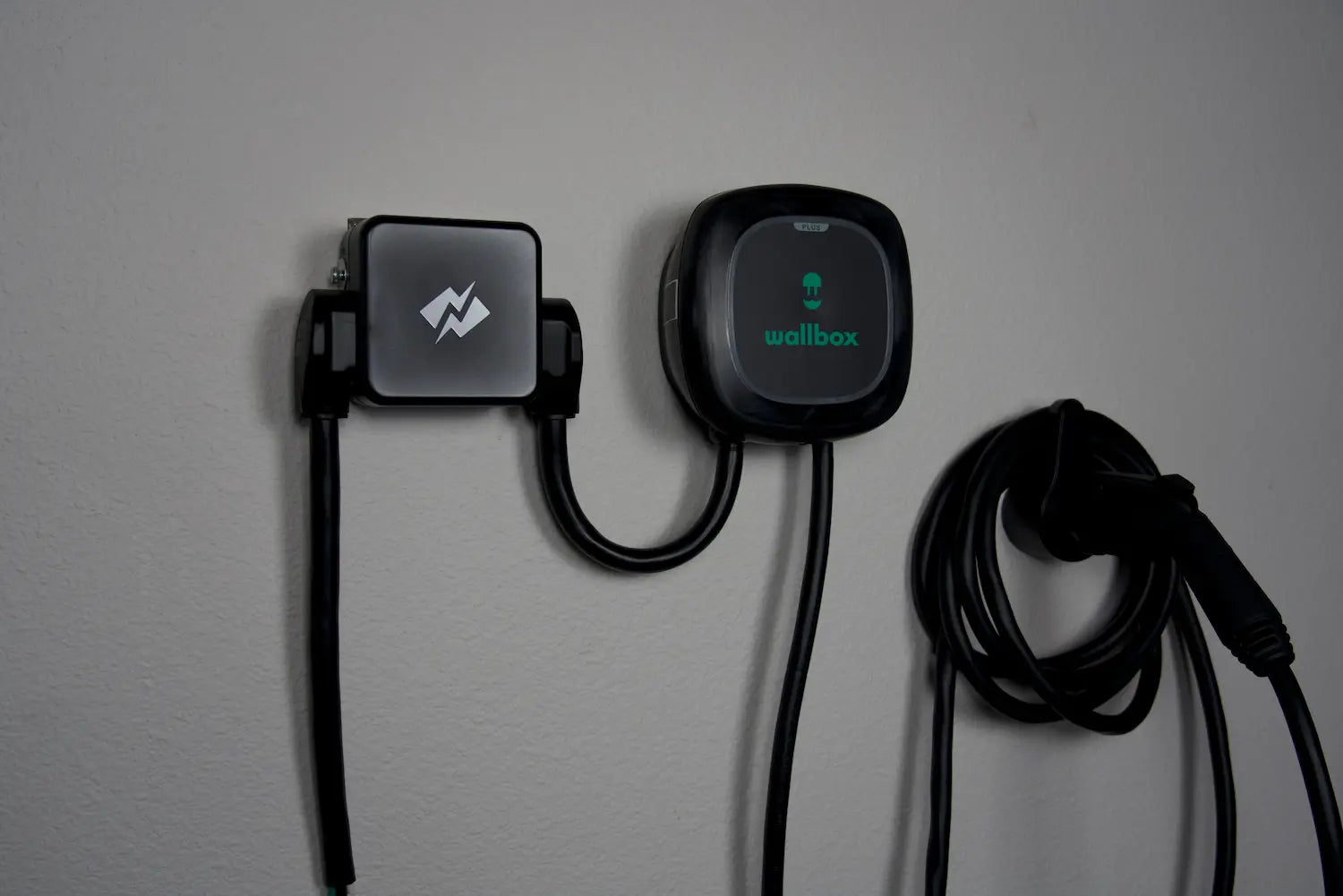
Many homes are constrained by panel capacity or by the location of an existing 240V outlet. The NeoCharge Smart Splitter helps safely share a 240V outlet by automatically sequencing loads so two high-power devices are not running at the same time: NeoCharge Smart Splitter
That matters because the first step toward future-ready home energy is usually reliable, safe, affordable Level 2 charging.
Should you wait for V2H or install Level 2 charging now?
Do not wait for V2H if you need everyday home charging.
Choose a practical Level 2 charging setup now if:
- your EV does not support V2H
- your utility has no V2G program
- you mainly want lower charging costs
- you can save by charging off-peak
- you need a simple outlet-sharing or load-management path
Consider V2H planning now if:
- you are buying a V2H-capable EV
- outages are common or expensive where you live
- you already have or plan to add solar
- you are renovating your electrical panel
- you want a critical-loads panel or home backup system anyway
The best near-term move is often to install charging in a way that does not box you in: clean panel labeling, enough space for future equipment, a practical load-management plan, and a licensed electrician who understands EV charging.
Buyer checklist
Before spending money on bidirectional hardware, ask these questions:
- Which exact vehicle model years are supported?
- Is the capability V2L, V2H, V2G, or all three?
- Does the system support whole-home backup or only selected loads?
- What is the continuous output in kW?
- What happens to large startup loads like AC compressors or pumps?
- How does the system prevent back-feed during an outage?
- Does it work with my solar inverter?
- Does it require a critical-loads panel?
- What permits and inspections are required?
- Does my utility allow export or only non-export backup?
- Can I set a minimum EV battery reserve?
- What happens if the car is unplugged, away from home, or below reserve?
FAQ
Is V2H the same as V2G?
No. V2H powers your home or home backup loads. V2G exports power to the utility grid or participates in grid services. V2G usually requires more utility approval and program coordination.
Can any EV power a house?
No. The EV must support bidirectional discharge, and the home needs compatible equipment. V2L outlets are useful, but they are not the same as an integrated V2H backup system.
How long can an EV power a home?
It depends on usable battery capacity and the loads you back up. A 60 kWh usable reserve can power 15 kWh/day of critical loads for about 4 days, but only 30 kWh/day of whole-home usage for about 2 days.
Does bidirectional charging damage the EV battery?
Battery impact depends on depth of discharge, cycle frequency, temperature, and manufacturer limits. For occasional backup, cycling may be modest. For frequent V2G export, read the vehicle and system warranty carefully.
Is V2H worth it if I already have solar?
Potentially, yes. Solar can extend backup runtime, but only if your inverter and controls can operate safely during outages. Many standard grid-tied solar systems shut down when the grid is down.
What is the easiest thing to do today?
Set up reliable Level 2 home charging, schedule charging during off-peak hours, and track your actual charging cost. That gives you savings now while V2H and V2G continue to mature.
Next steps
- If you want cheaper daily charging: use the NeoCharge App for TOU-aware scheduling and cost tracking → NeoCharge App
- If your home has limited electrical capacity or an existing 240V outlet you want to share safely: check the NeoCharge Smart Splitter → NeoCharge Smart Splitter
- If you are planning V2H: ask your electrician and utility about compatible vehicles, transfer/islanding equipment, solar integration, and whether export is allowed.
NeoCharge App
Turn rate plans into simple charging schedules
Schedule around off-peak windows, manage compatible chargers, and keep tabs on charging sessions from the app.
Explore the app


Next steps
Keep going with NeoCharge
Use the article as your decision guide, then jump into the product, app, or related guides that match what you are trying to solve next.
Key terms
- Level 2 charging
- Level 2 EV charging uses a 240V circuit (like a dryer outlet). It typically adds ~20–35 miles of range per hour, depending on your car and the circuit amperage.
- EVSE
- EVSE stands for Electric Vehicle Supply Equipment (the “charger”). It safely delivers power to your EV and communicates with the car to control charging current.
- Time-of-use (TOU) rates
- Time-of-use rates are utility pricing plans where electricity costs more at peak hours and less off-peak. Scheduling EV charging off-peak can significantly reduce cost.
FAQs
What's the quick takeaway from this article?
Who is this guide for?
What should I do next?
Related posts
Home EV Charging in Canada
The 2026 Canadian home EV charging playbook: BC Hydro $200 power-management offer, Ontario ULO at 3.9¢/kWh, Quebec $600 Écorecharge, NEMA 14-30 dryer outlets, Smart Splitters, and CAN100.
NEC 625 Continuous Load (125% Rule) Explained: Why EV Charger Breaker Sizing Matters
EV charging is typically a continuous load. Learn the NEC 625 125% sizing concept in plain English, common breaker pairings (32A→40A, 40A→50A), and safety tips for homeowners.

NEMA 6-20 EV Charging Guide (2026): A Cheap, Entry-Level Level 2 Setup
Can you charge an EV on a NEMA 6-20 outlet? Yes—learn typical speed (16A continuous), safety considerations, and how to get the most savings by charging off-peak.
NACS vs J1772 vs CCS in 2026: EV Connector Guide (Plus What Adapter You Need)
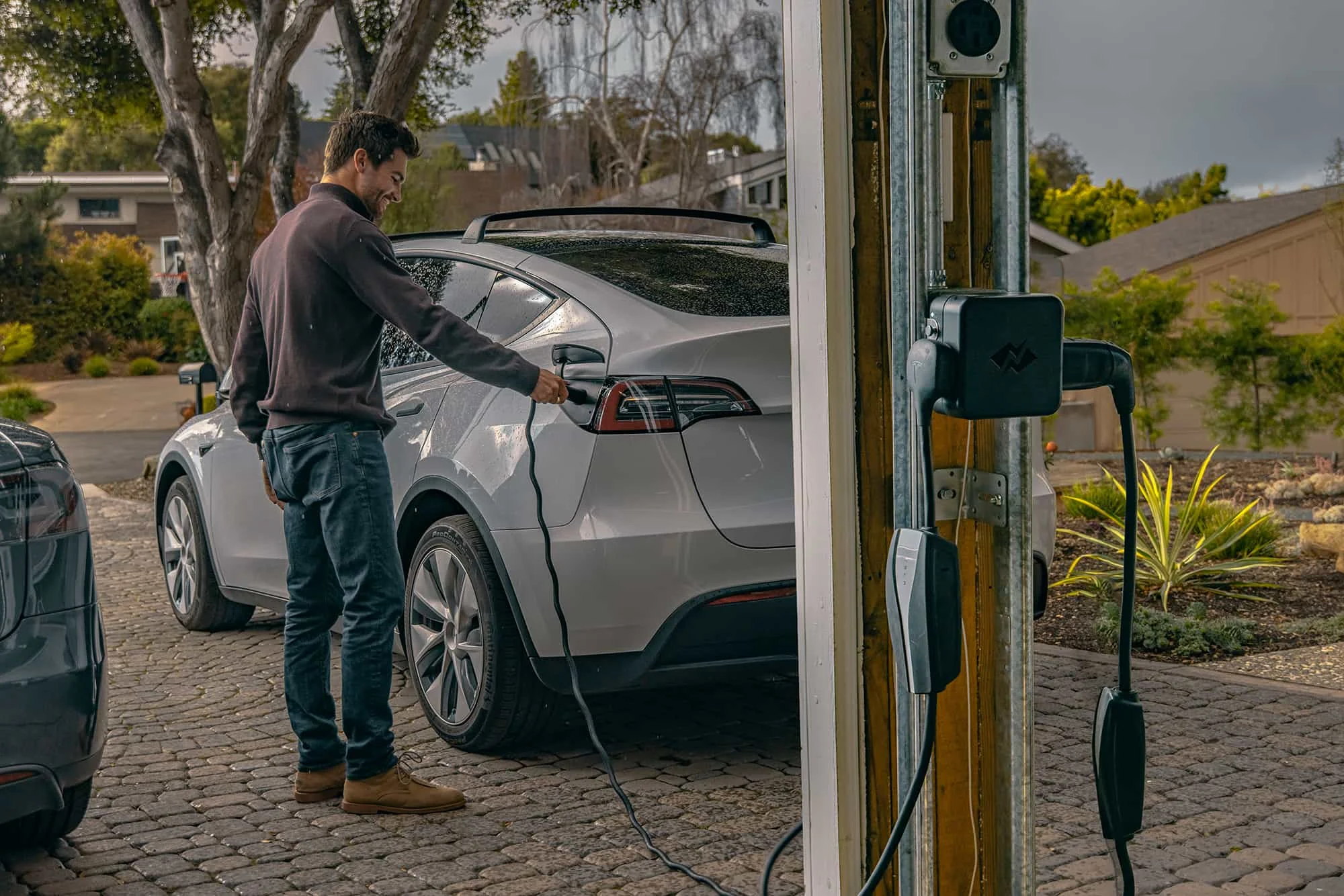
Confused by EV connectors? Here’s the 2026 guide to J1772, CCS1, and J3400/NACS: which cars use what, what public stations support, and which adapters are common.
