



EV Charger Installation in Burnaby, BC: Houses, Townhomes, and Strata (2026)
Direct answer: In a Burnaby house or townhome with a 240V dryer or range outlet near parking, the cheapest path to Level 2 charging is usually to share that outlet with a smart splitter instead of upgrading the panel. The City of Burnaby, not Technical Safety BC, issues electrical permits for new charging circuits, and BC Hydro pays up to $350 for a listed charger plus $200 for an eligible power management device installed under a permit. In a condo tower, the route is different: a "right to charge" request to your strata and BC Hydro's EV Ready building rebates.
- City of Burnaby issues electrical permits. Starting work before the permit is issued doubles the fee.
- No Burnaby top-up. BC Hydro pays up to $350 for the charger and $200 for the device. Funding is first-come, first-served.
- Smart Splitter in Canada: $399 CAD at checkout, then a $200 NeoCharge app refund once it's connected and charging your EV.
- Cheapest setup: $199 plus a permit. Use the Smart Splitter on your existing dryer outlet with a portable charger you already own. No new wiring, but B.C. requires a permit and load calculation even for a plug-in switching device.
- Strata owners can ask council for charging at their own stall. Once the building has its electrical planning report, or from January 1, 2027 at the latest, council has three months to answer and can't unreasonably refuse if there is capacity.
- Overnight on BC Hydro's Time-of-Day rate costs about $1.63 per 100 km at the Step 2 price.
Checked against City of Burnaby, BC Hydro, Province of BC, and Statistics Canada sources on October 9, 2026.
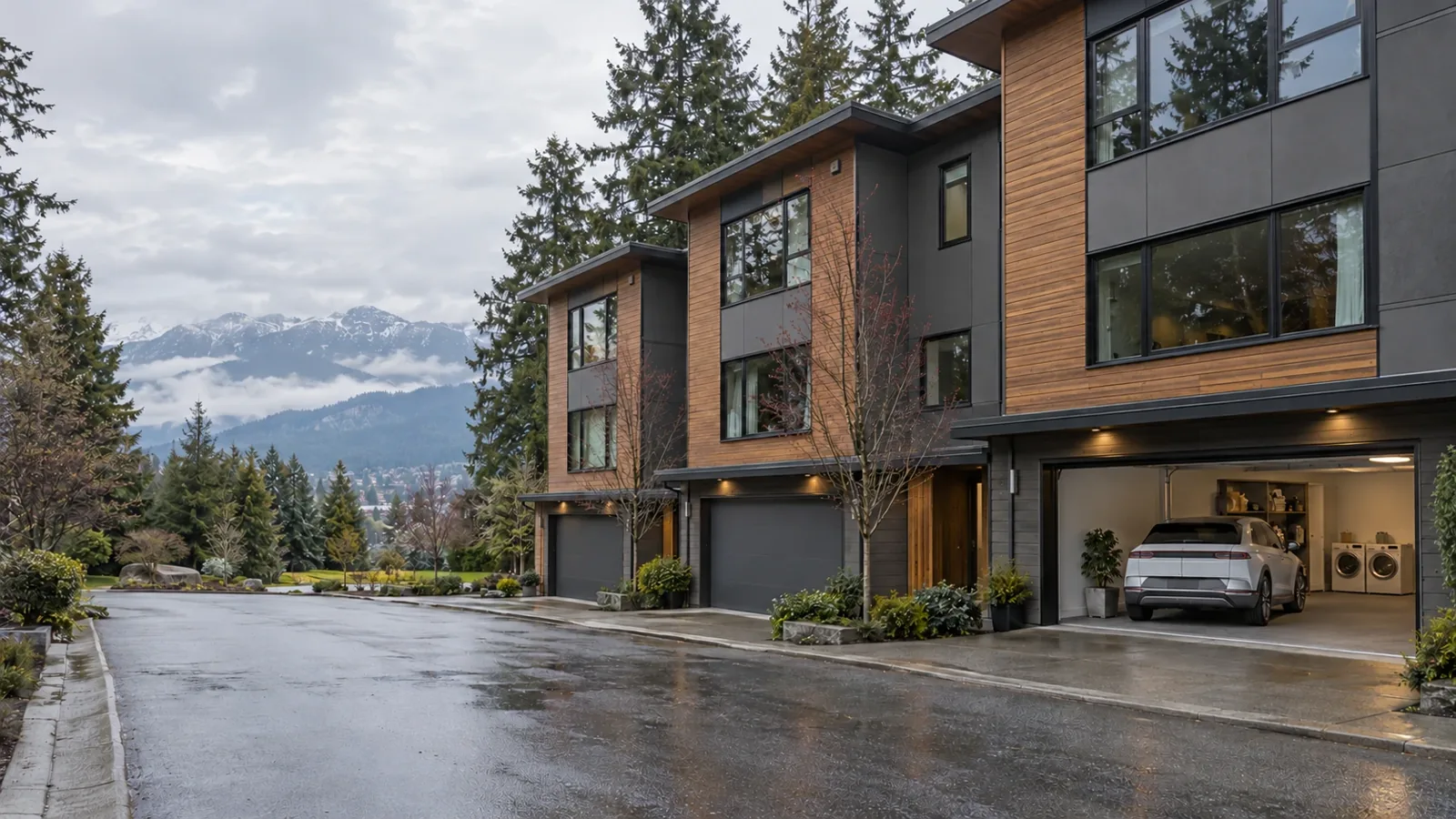
Burnaby is two cities for EV charging. Around Metrotown, Brentwood, and Edmonds, most drivers live in towers where the laundry is upstairs and the parking stall is three levels down. In Capitol Hill, Burnaby Heights, South Slope, and around Deer Lake, it's 1960s to 1990s houses, many with a suite, and townhome rows with attached garages. The right answer depends on which Burnaby you live in, so this guide covers both.
Related: BC Hydro EV power management device rebate: eligible devices · Surrey · Richmond · Vancouver
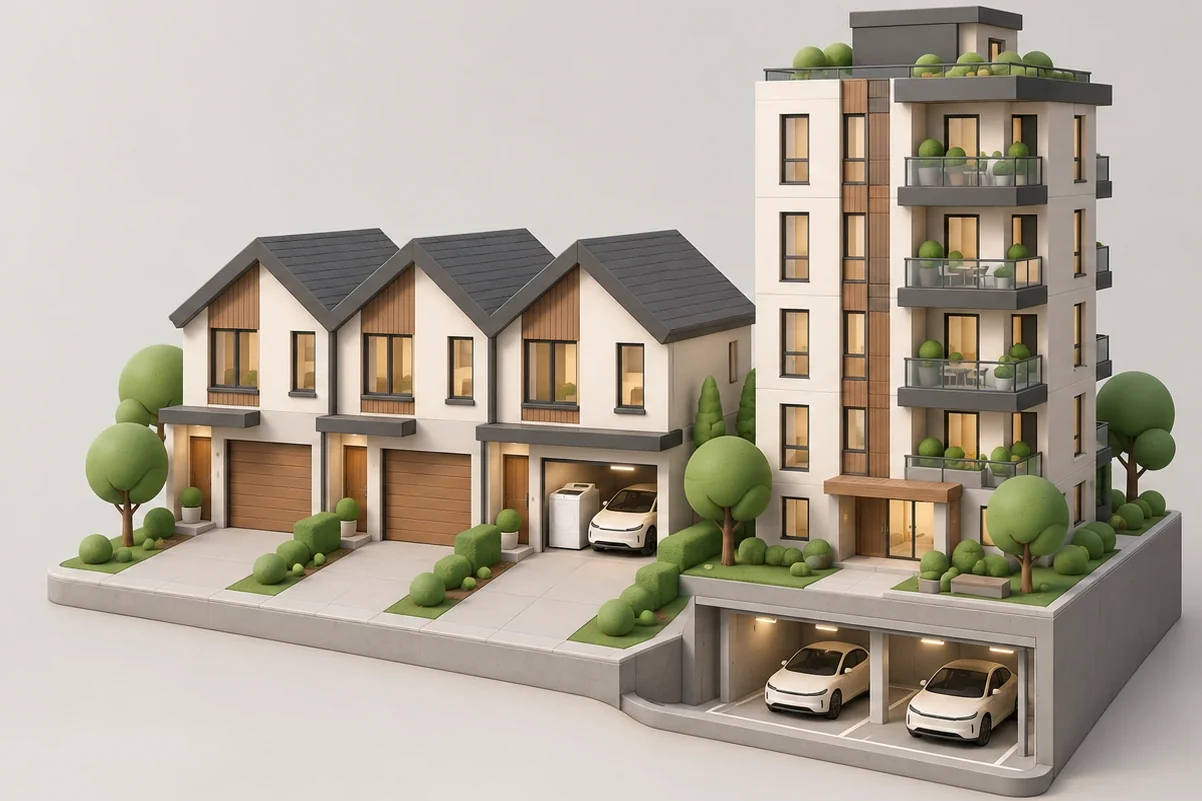
Which Burnaby are you charging in?
| Burnaby housing, 2021 Census | Homes | Share |
|---|---|---|
| Apartment, five storeys or more | 29,715 | 29.4% |
| Apartment, under five storeys | 23,835 | 23.6% |
| Single-detached house | 19,080 | 18.9% |
| "Apartment or flat in a duplex" (mostly houses with a suite) | 16,650 | 16.5% |
| Row house / townhouse | 8,770 | 8.7% |
| Semi-detached and other | 3,080 | 3.1% |
More than half of Burnaby's 101,140 homes are apartments, and 42% are condominiums. Statistics Canada counts a house with a suite above or below as two "apartment or flat in a duplex" dwellings, so that 16.5% is mostly Burnaby's suited houses.
The age profile matters as much as the type. Only 12.6% of Burnaby homes were built between 2016 and 2021, and 35% were built before 1981. Since September 1, 2018, residential parking spaces in new Burnaby homes, other than visitor and suite stalls, have needed an energized Level 2 outlet. Anything older generally wasn't built with one.
| Your home | Most likely path | Rebate program |
|---|---|---|
| House or freehold row home, 240V outlet in the garage or carport | Share the outlet with a Smart Splitter | BC Hydro single-family charger rebate; $200 device top-up with a permit |
| Strata townhouse complex, 5+ units, outlet in your own garage | Share the outlet, with strata sign-off | BC Hydro apartment and condo stream, pre-approval and strata consent |
| House, panel full, no outlet near parking | New circuit + power management device, City permit | Same, with the $200 top-up |
| Suited house or a new laneway home on the lot | Load calculation first; sharing an existing outlet adds no load | Same |
| Condo or apartment, 5+ units | Right-to-charge request; building EV Ready plan | BC Hydro EV Ready building rebates |
Houses and townhomes: share before you upgrade

Share the outlet you have, run a new managed circuit, or upgrade the service. The first is usually the cheapest.
Most Burnaby houses were wired for a dryer and a range, not a car. Adding a 40A or 50A EV circuit to a 100A or full 200A panel is exactly where a load calculation fails, and the first quote becomes a service upgrade.
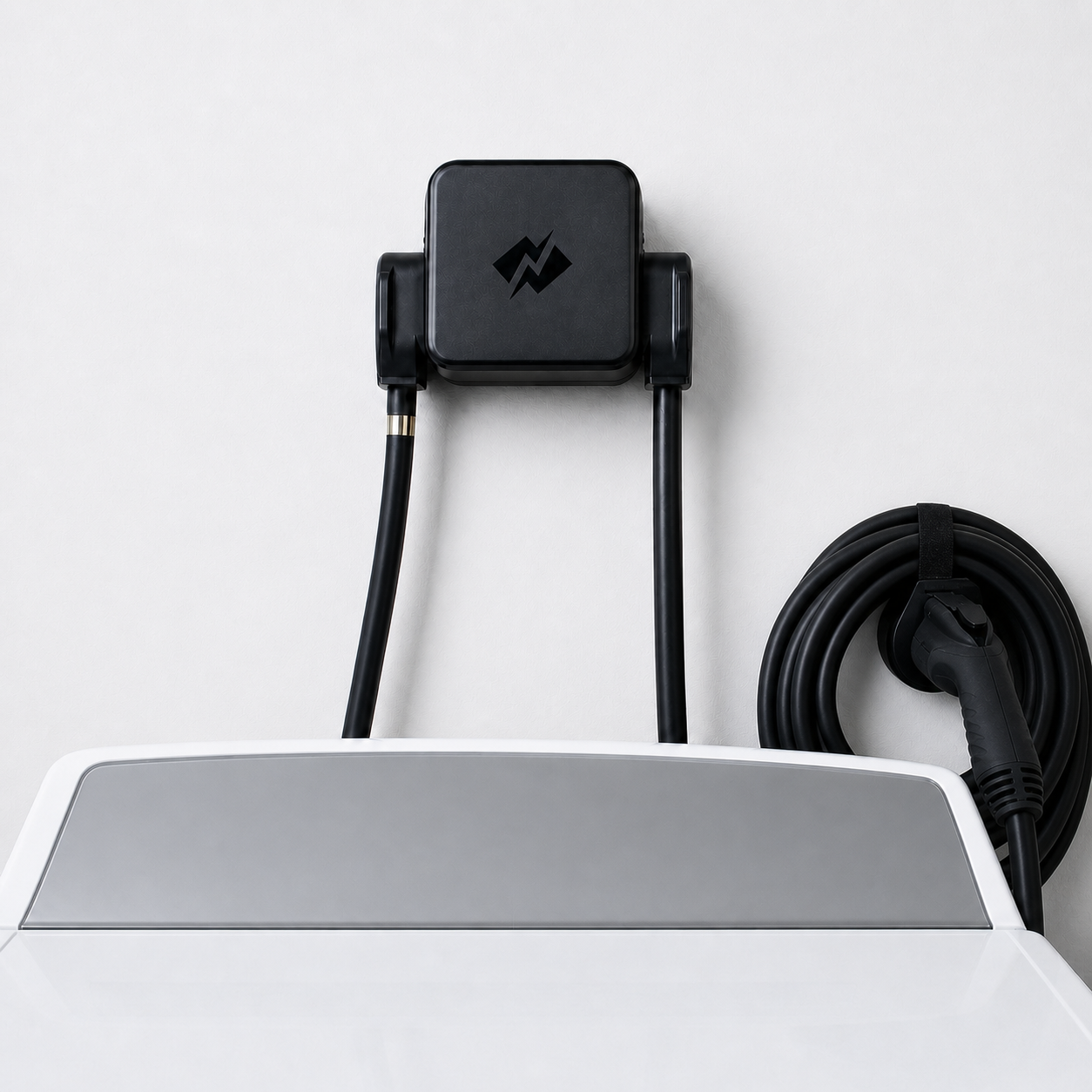
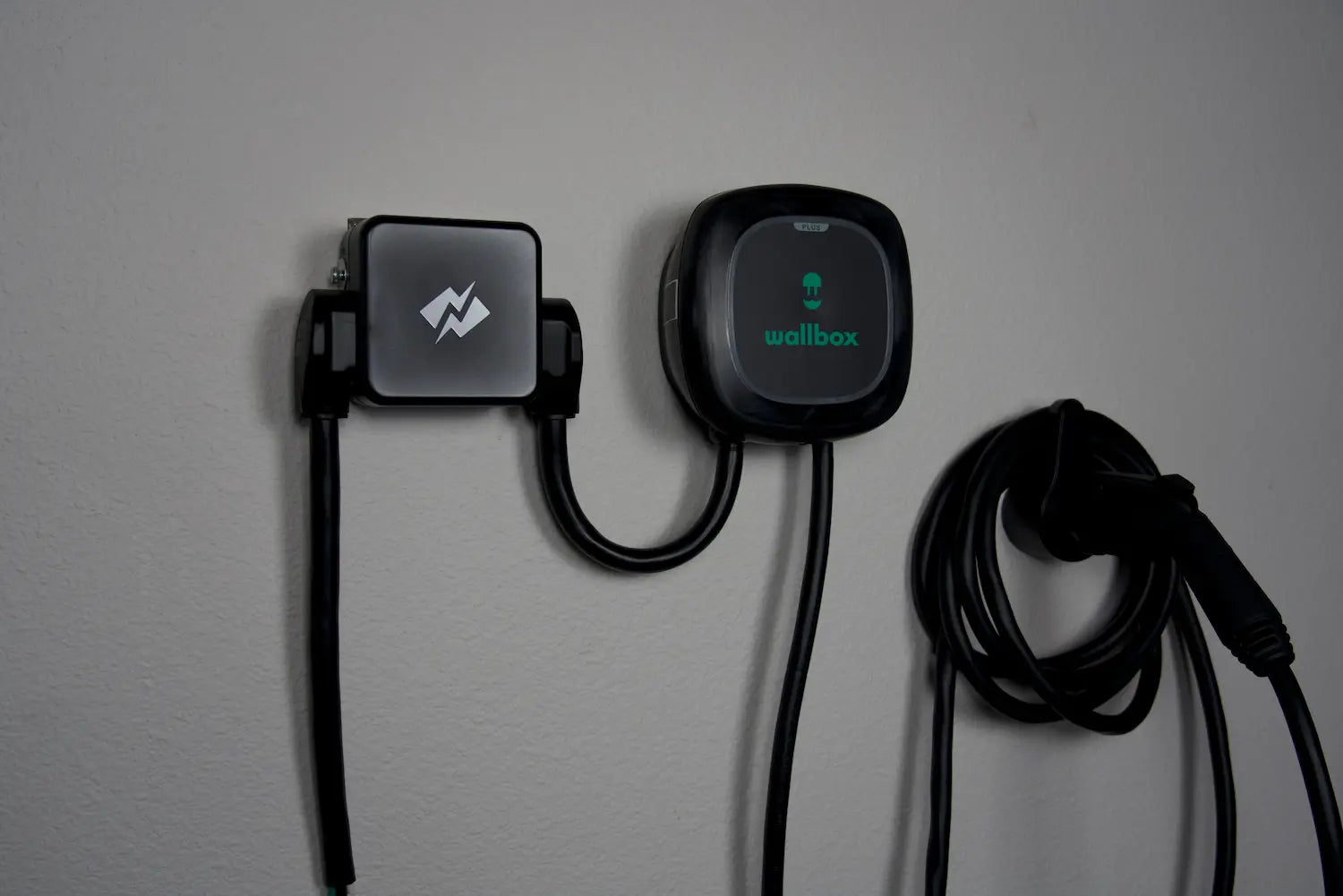
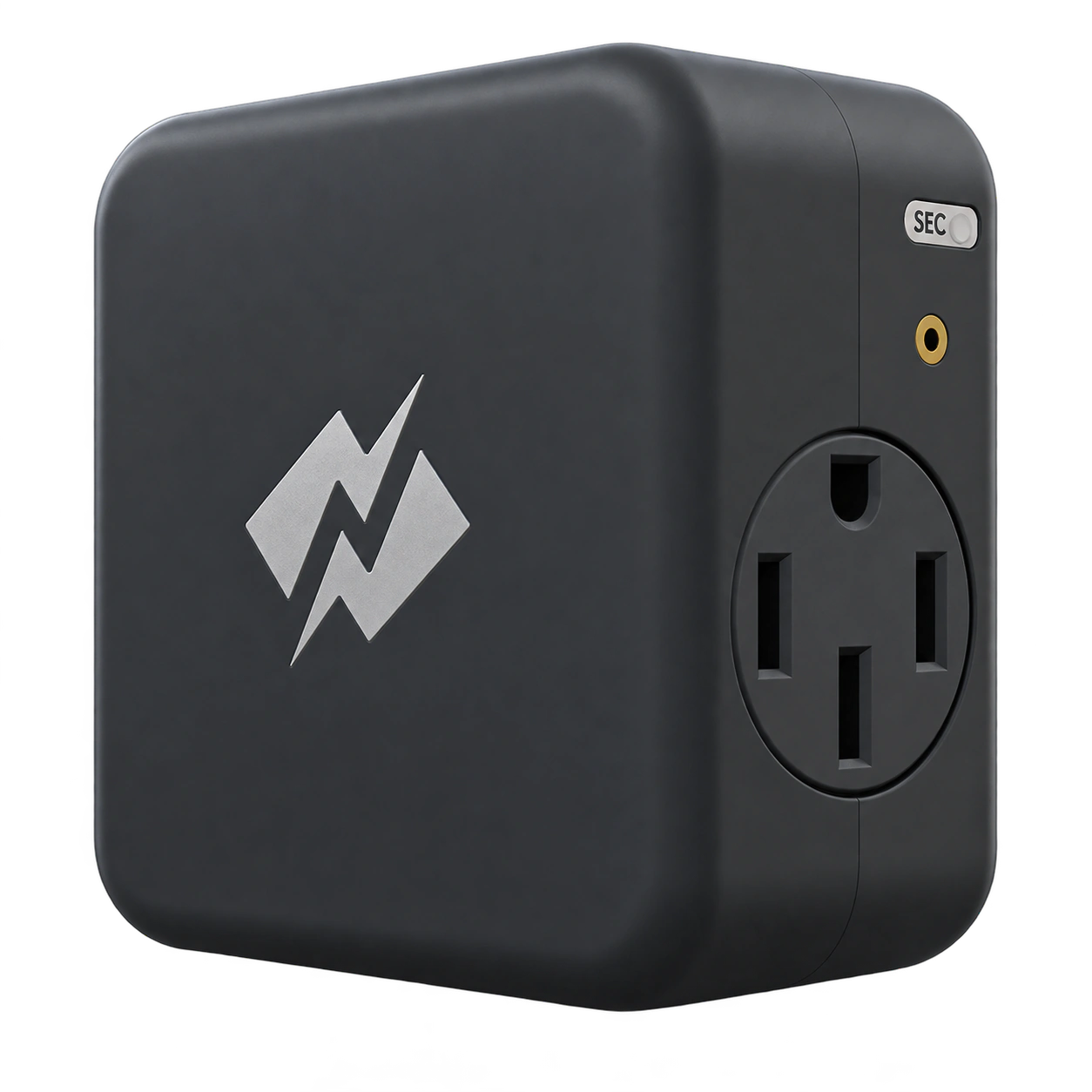
BC Hydro's own guidance is that a service upgrade "is often not required when adding an EV charger." A smart splitter is often the simplest way to avoid one. It plugs into the existing 240V outlet and gives you a second outlet for the EV charger. When the dryer or range starts, the car pauses; when it stops, charging resumes. The circuit never carries both, so the house's total load doesn't change. On a 30A dryer outlet the car charges at 24A, about 46 kWh between 11 p.m. and 7 a.m., or roughly 250 km of range for a typical crossover. That's far more than a commute from Capitol Hill to anywhere in Metro Vancouver.
It works when the outlet is in the garage, carport, or within cable reach of where you park. Townhomes with the laundry in or beside an attached garage are the ideal setup.
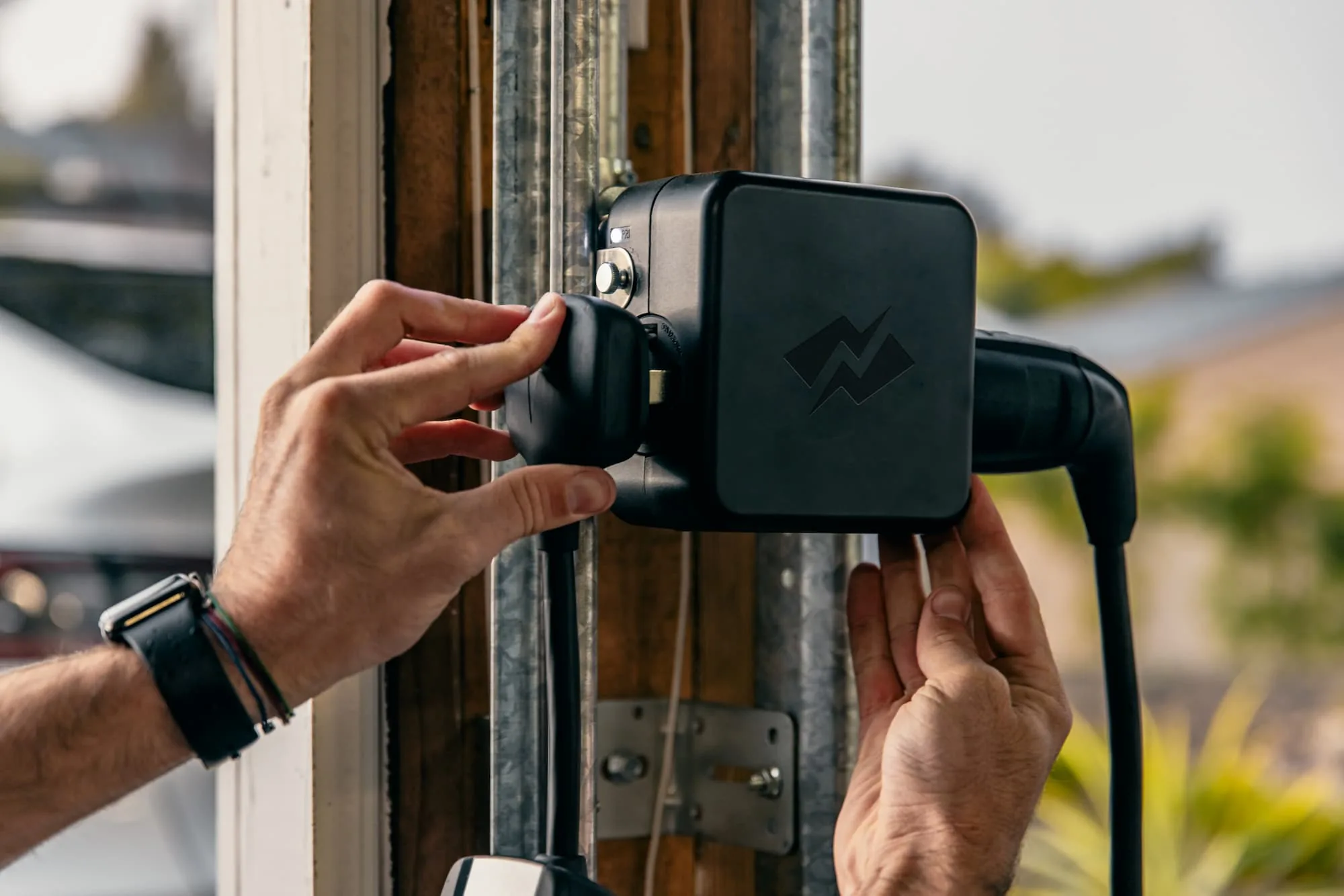
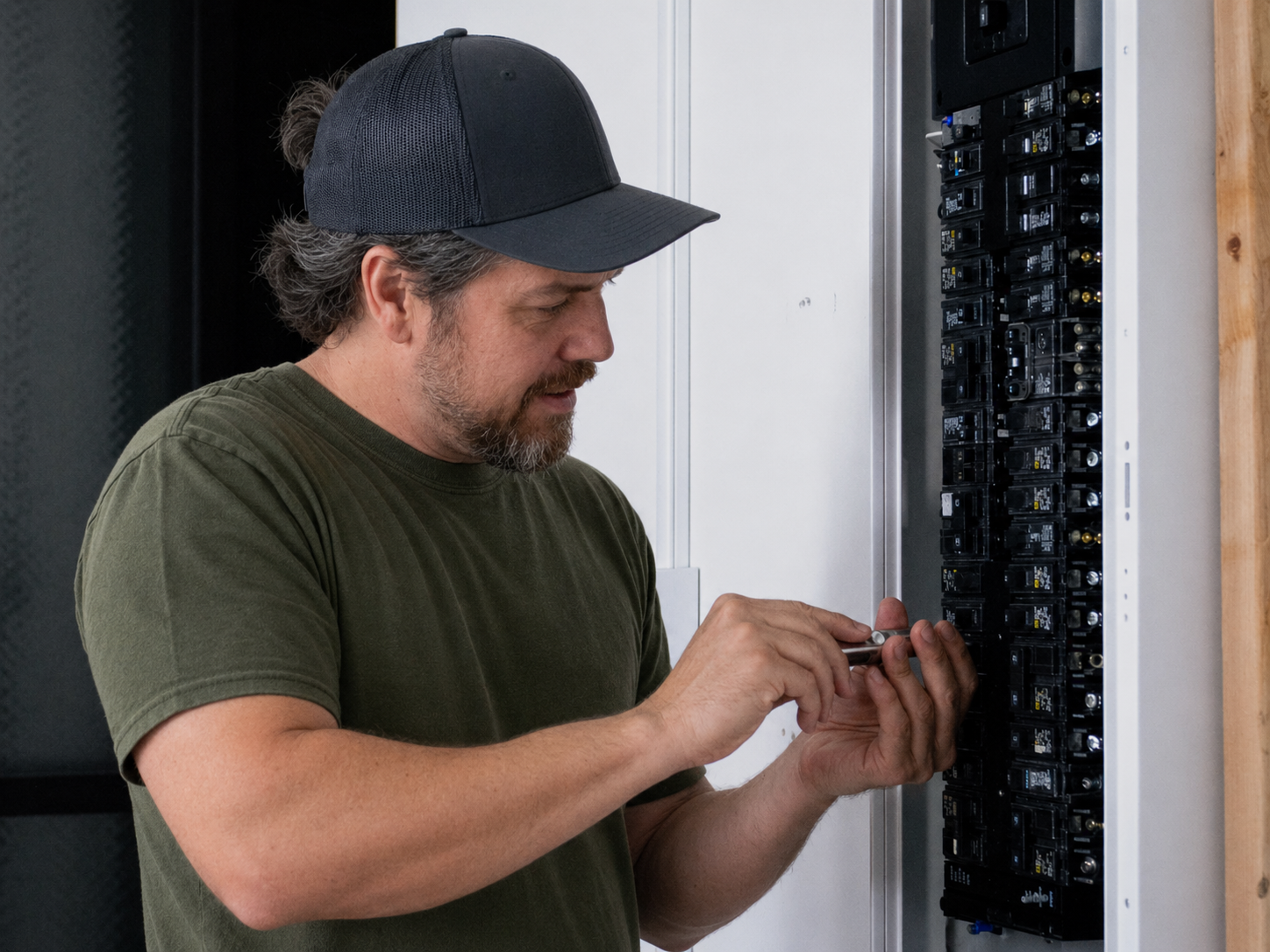
One caution for any outlet-sharing setup: have an electrician check that an older dryer receptacle and its circuit are in good condition for nightly 24A charging. Twenty-year-old receptacles can be worn, and they are about to work every night.
Suites and laneway homes. Burnaby's 2024 small-scale multi-unit housing changes folded most residential zones into one R1 district that allows suites, laneway homes, and multiplexes depending on the lot. Each new unit draws on the electrical service. If your lot already has, or is about to have, a second household, sharing a circuit that already exists is the one EV option that adds nothing to the load calculation.
Permits in Burnaby
Burnaby administers its own electrical permits under its Electrical Bylaw, so the City, not Technical Safety BC, is the authority. What to know:
- New circuit, moved outlet, or hardwired charger: an electrical permit and inspection. Your contractor normally applies.
- Homeowner permits are limited. Burnaby's homeowner declaration is written for the registered owner of a detached single-family house without a secondary suite. Confirm with the City before you plan a DIY install.
- Start after the permit is issued. Under the bylaw, the permit fee doubles if work starts first. Fees are set in the City's Consolidated Fees and Charges Bylaw, so have your contractor include them in the quote.
- Plug-in devices need a permit too. Technical Safety BC's bulletin on EV equipment says "A permit and load calculations are also required for plug-in style switching devices designed to connect to an existing receptacle such as a dryer receptacle."
That last point has an upside. BC Hydro pays its $200 device top-up only when the device is installed under an approved permit, because it wants a capacity assessment. Since a Smart Splitter install needs that permit in B.C. anyway, pair it with a charger from BC Hydro's list and claim both rebates.
Condos and strata: the right-to-charge route
If you live in a tower, a Smart Splitter usually isn't your answer: the dryer is in your suite and your stall is in the parkade. Here is what works instead.
- Ask for charging at your stall. Under B.C.'s Strata Property Act changes, an owner can request to install EV charging for their own parking stall at their own cost. Once your strata has its electrical planning report, or from January 1, 2027 at the latest in Metro Vancouver, council has to decide within three months and can't unreasonably refuse if the building has the electrical capacity. It can set reasonable conditions, such as the contractor or the equipment.
- The electrical planning report is due. Metro Vancouver stratas must have an electrical planning report by December 31, 2026. Ask council where yours stands, because it decides how much capacity there is to share.
- Majority votes. Spending from the contingency reserve fund on EV charging, and significant changes to common property for it, now need a majority vote rather than three quarters. Special levies still need three quarters.
- BC Hydro EV Ready rebates for buildings with five or more units: 75% of an EV Ready plan up to $3,000, 50% of infrastructure up to $600 per stall, and up to $1,400 per EV Ready charger. Pre-approval is required.
PlugIn BC offers stratas free EV Advisor coaching to get started.
BC Hydro rebates in Burnaby: what stacks
Burnaby doesn't add its own top-up; BC Hydro's municipal top-up list doesn't include it. For houses, duplexes to fourplexes, and freehold row homes:
| Program | Amount | Key condition |
|---|---|---|
| BC Hydro home charger rebate | 50% of costs, up to $350 | Charger on BC Hydro's eligible list (not Tesla); apply within 180 days; first-come, first-served |
| BC Hydro power management device top-up | $200 | Eligible device (the Smart Splitter is listed) with a listed charger, under an approved permit |
| NeoCharge Canadian EV Charging Rewards | $200 refund | Connect the Smart Splitter to the NeoCharge app within 30 days and charge your EV through it; paid after 14 days connected |
Freehold side-by-side row homes and buildings of up to four units use this single-family stream. Strata townhouse complexes with five or more units generally go through BC Hydro's apartment and condo stream instead, which needs pre-approval and strata consent, so confirm with BC Hydro before you buy.
Two ways to set it up, cheapest first
Because the Smart Splitter plugs into an outlet you already have, the lowest-cost setup needs no new wiring and no new charger: use a portable charger you already own, such as the one that came with many EVs or Tesla's Mobile Connector (sold separately), with the matching adapter. In B.C. it still needs a permit and load calculation, and BC Hydro pays nothing on that route, because Tesla units aren't on its eligible list. The product page asks for your outlet first, then whether you're using Tesla's Mobile Connector or your own charger, and adds the plug adapter you need.
| Setup | What you buy | Permit | BC Hydro money | Your cost (CAD) |
|---|---|---|---|---|
| Lowest cost: Smart Splitter + a portable charger you already own | Smart Splitter | Yes, permit and load calculation; no new wiring if the outlet reaches your parking | None. Tesla units aren't eligible, and the top-up needs a listed charger | $199 after the $200 app refund, plus the permit |
| Full rebate stack: Smart Splitter + a charger from BC Hydro's list | Smart Splitter + a listed plug-in charger, such as the Autel AC Lite Home 40A ($699) | Yes, the same permit | $350 charger rebate + $200 device top-up | about $348, plus the permit and any electrician |
Since the permit is the same either way, the listed-charger route adds $550 in BC Hydro rebates, so a new 40A charger ends up costing about $149 more than using a portable charger you already own. Whichever route you take, have an older receptacle checked before it carries a car every night.
All three pathways and the upload checklist are in our BC Hydro power management device rebate guide. The full rebate stack, at the Canadian store's prices on October 9, 2026, before shipping and tax:
| Smart Splitter + listed 40A charger, installed under a permit | CAD |
|---|---|
| Smart Splitter ($699 list, $300 instant rebate at checkout) | $399 |
| Autel AC Lite Home 40A charger | $699 |
| NeoCharge app refund, after connecting for EV charging | −$200 |
| BC Hydro charger rebate (50% of costs, max $350) | −$350 |
| BC Hydro power management device top-up | −$200 |
| Hardware after rebates | about $348, plus the electrician and permit |
Already own a plug-in charger from BC Hydro's list? Keep it. The Smart Splitter works with any plug-in Level 2 charger.
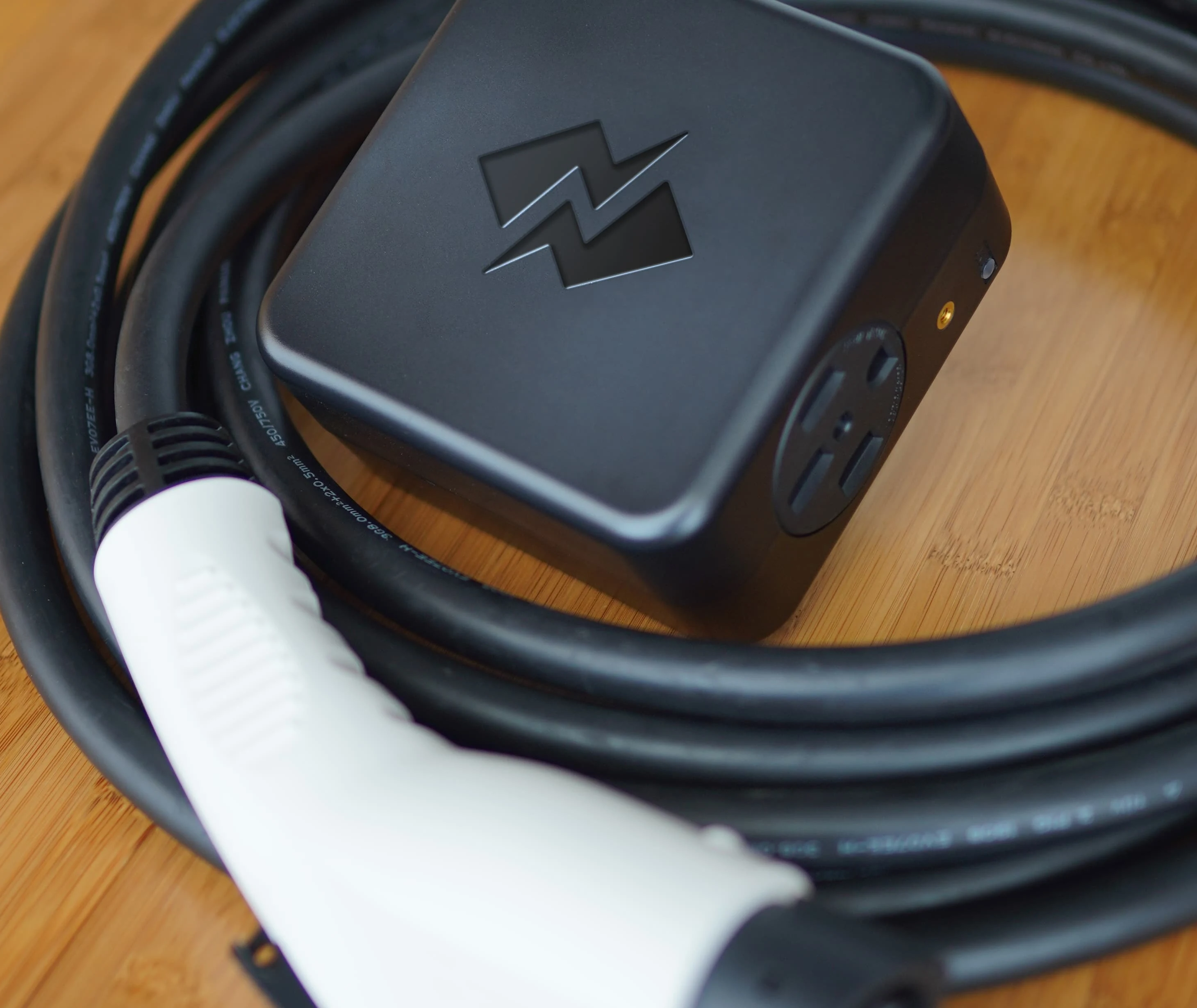
On BC Hydro's eligible-device list
No panel upgrade for the house or townhome
cUL-listed for Canada. The dryer or range gets priority, your EV charges the rest of the night. $399 CAD at checkout, $200 back once it's connected to the app and charging your EV. 60-day returns, 3-year warranty.
What charging costs in Burnaby
BC Hydro charges 11.87¢/kWh for the first 675 kWh a month and 14.08¢/kWh after that (rates from April 1, 2026). An EV mostly lands in Step 2. The optional Time-of-Day rate takes 5¢/kWh off from 11 p.m. to 7 a.m. and adds 5¢/kWh from 4 to 9 p.m.
| 15,000 km a year (about 2,700 kWh at 18 kWh/100 km) | Price per kWh | Per 100 km | Per month |
|---|---|---|---|
| Overnight on Time-of-Day, Step 2 | 9.08¢ | $1.63 | about $20 |
| Any time on the standard rate, Step 2 | 14.08¢ | $2.53 | about $32 |
| Charging during the 4–9 p.m. peak, Time-of-Day, Step 2 | 19.08¢ | $3.43 | about $43 |
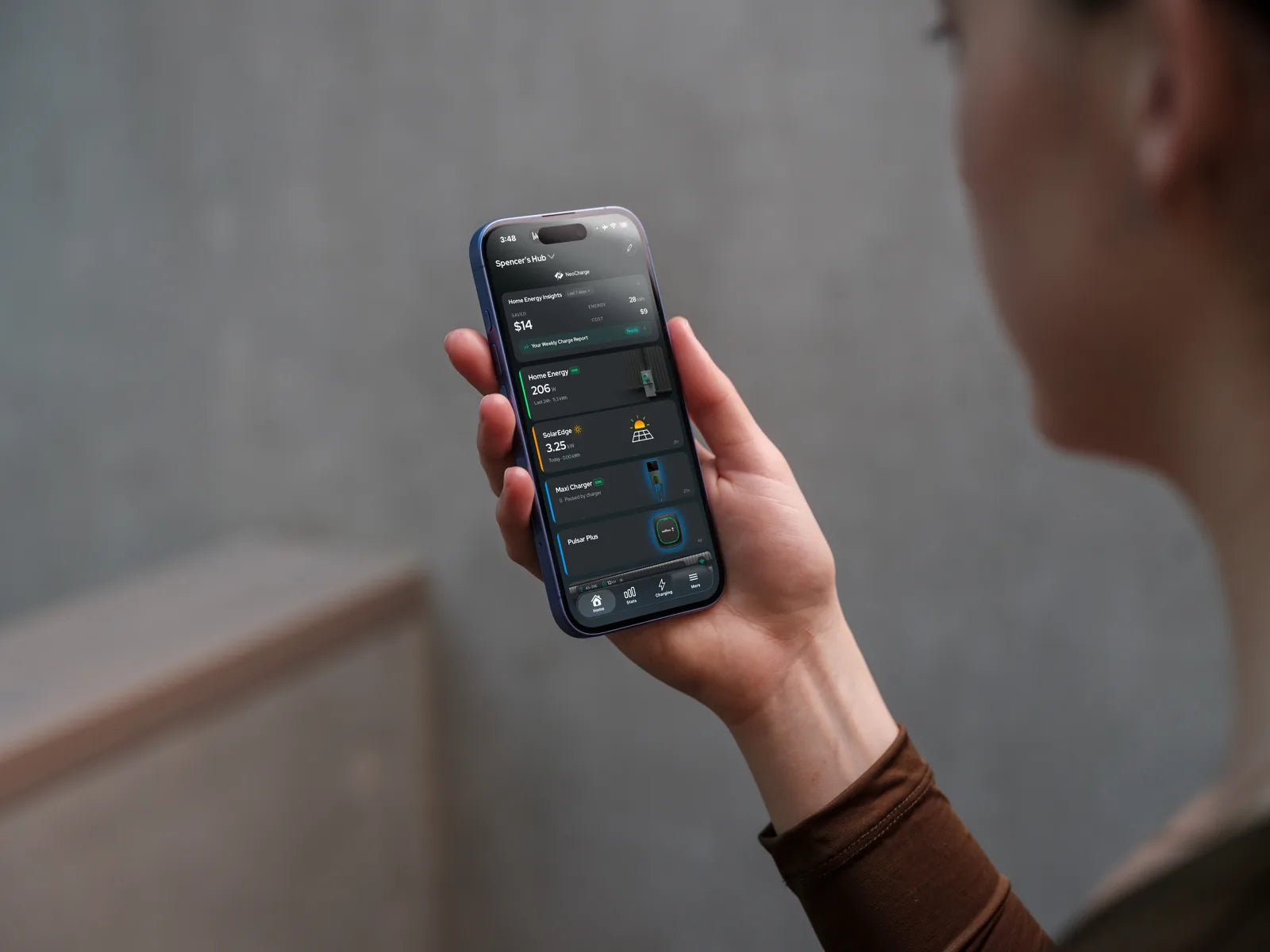
Energy only, before the basic charge, rate rider, and GST. BC Hydro says 80% or more of EV charging in B.C. is done at home, so the hour you charge matters. The NeoCharge app starts the Smart Splitter at 11 p.m. and logs the cost of every session.
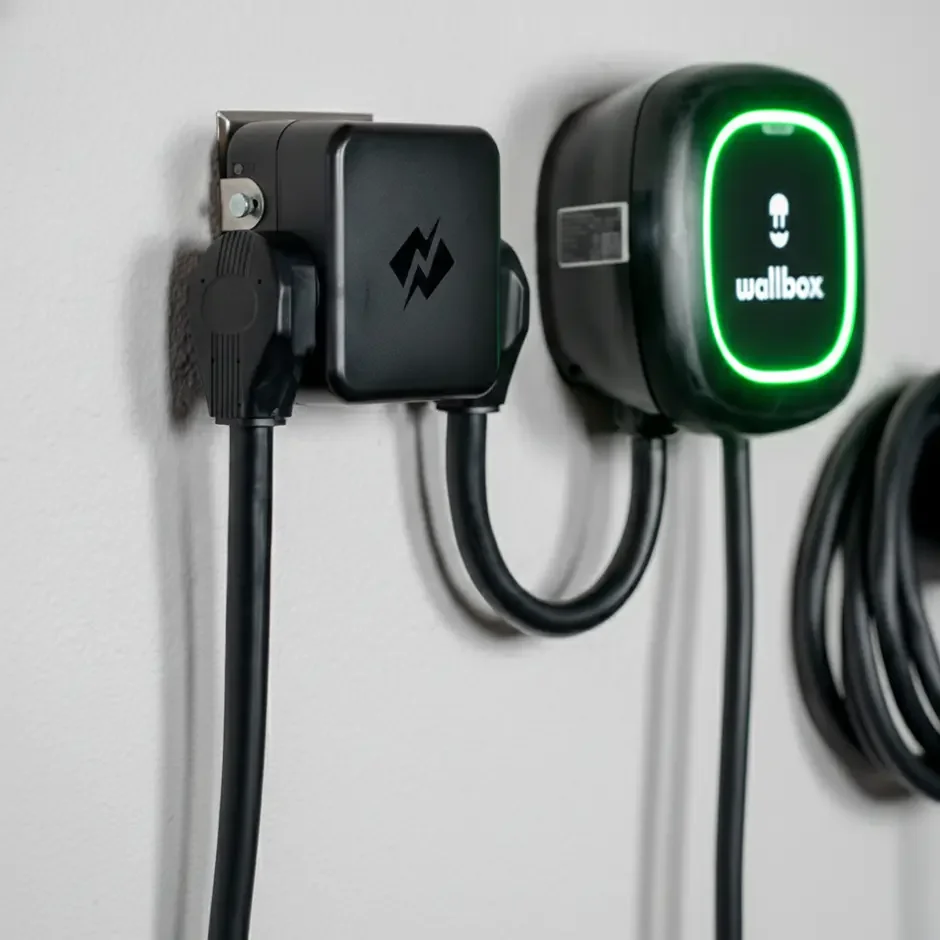
A five-step plan for a Burnaby house or townhome
- Find the outlet. Look behind the dryer and in the garage for a 240V outlet. Four prongs with an L-shaped slot is a NEMA 14-30 (30A); an older three-prong dryer outlet is a NEMA 10-30; a NEMA 14-50 (50A) has three straight slots plus a round ground. The Smart Splitter comes in versions for each.
- Check the distance to parking. Garage or carport within cable reach means outlet sharing works. Laundry two floors up means a new circuit.
- Ask for one quote with both paths: a new circuit with a power management device, and a service upgrade. Ask for the load calculation behind each.
- Choose the charger from BC Hydro's list. Any listed plug-in charger set to 24A (30A outlet) or 40A (50A outlet) pairs with the Smart Splitter.
- Apply within 180 days with receipts, photos, and the permit number. Then connect the Smart Splitter to the app for the $200 NeoCharge refund.
FAQ
Who issues electrical permits for EV chargers in Burnaby?
How much is a Burnaby electrical permit for an EV charger?
Does Burnaby have its own EV charger rebate?
Can I install an EV charger in my Burnaby condo?
Do I need a panel upgrade to charge an EV in an older Burnaby house?
Does a townhome in Burnaby qualify for BC Hydro's home charger rebate?
Do I need an electrician or a permit to use a Smart Splitter in Burnaby?
Does the Smart Splitter qualify for the BC Hydro $200 rebate?
How much does it cost to charge an EV overnight in Burnaby?
Bottom line
If you live in a Burnaby house or townhome, the outlet that runs your dryer is probably the cheapest EV charger circuit you will ever have. Share it before you pay for a bigger service, and put the install under a City permit if you want BC Hydro's $200 as well. If you live in a tower, the work happens at the strata table: make the right-to-charge request now, while your building is writing its electrical planning report.
Next steps (NeoCharge)
- See the Smart Splitter Canada offer: $399 CAD at checkout as of October 9, 2026, plus a $200 refund after you connect it for EV charging.
- Read the BC Hydro power management device rebate guide before you book the electrician.
- Look up every rebate for your postal code with the Canadian rebate finder.
- Set an 11 p.m. to 7 a.m. schedule in the NeoCharge App.
Sources
Checked October 9, 2026:
- City of Burnaby, Electrical Bylaw (consolidated), homeowner declaration, and R1 small-scale multi-unit housing summary
- Technical Safety BC, 2025 jurisdictional data: local governments that issue their own electrical permits
- PlugIn BC, City of Burnaby EV-ready requirement, and the CleanBC Go Electric program guide (April 1, 2026)
- Statistics Canada, 2021 Census Profile, Burnaby (CY): dwelling types, condominium status, and period of construction
- Province of B.C., EV charging in strata
- BC Hydro, single-family home charger rebates, EV power management device rebates, eligible-device list (updated September 1, 2026), apartment and condo charger rebates, and local rebate top-ups
- BC Hydro, Home EV charger options: "Upgrading your service is often not required when adding an EV charger."
- BC Hydro, Electric Tariff, RS 1101 and RS 2101, and 5 keys for EVs (January 6, 2026)
- Technical Safety BC, Information Bulletin IB-EL 2023-05, Revision 3 (March 4, 2025): permits and load calculations for EVSE, EVEMS, and plug-in switching devices
- NeoCharge Canadian store, Smart Splitter pricing and app-refund terms, October 9, 2026
Electrical safety disclaimer
This article is general information, not electrical advice. EV charging equipment must be installed and used according to the Canadian Electrical Code, the City of Burnaby's Electrical Bylaw, manufacturer instructions, and the judgment of a licensed electrician. Rebate amounts, eligible models, prices, strata rules, and permit fees change without notice; confirm current terms with BC Hydro, the City of Burnaby, your strata, and the NeoCharge store before you buy.
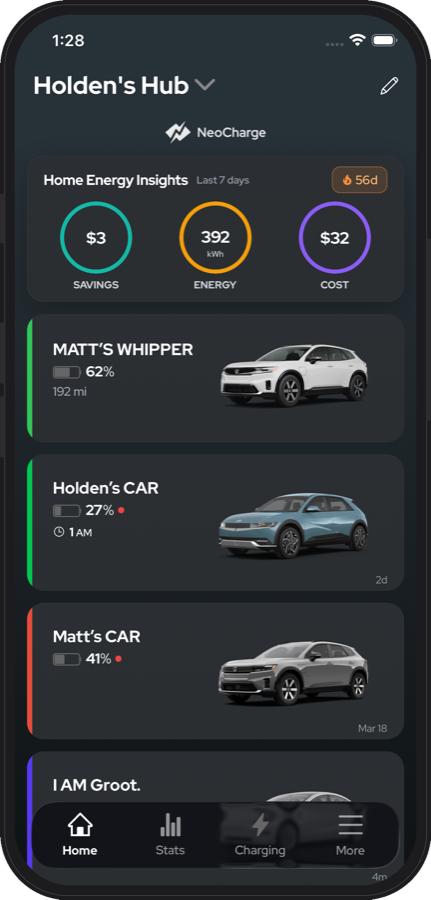
NeoCharge App
Track charging costs without spreadsheet work
See session history, monthly energy use, and savings so the article advice turns into a real household habit.
Explore the app

Next steps
Keep going with NeoCharge
Use the article as your decision guide, then jump into the product, app, or related guides that match what you are trying to solve next.
Key terms
- Level 2 charging
- Level 2 EV charging uses a 240V circuit (like a dryer outlet). It typically adds ~20–35 miles of range per hour, depending on your car and the circuit amperage.
- NEMA 14-50
- A NEMA 14-50 is a common 240V, 50A outlet (often used for EV charging). Many EV chargers plug into it, but the actual charging speed depends on the circuit and your EV.
- NEMA 14-30
- A NEMA 14-30 is a 240V, 30A dryer outlet. With a properly configured EV charger, it can usually support ~24A continuous charging (about 20–25 miles of range per hour for many EVs).
- EVSE
- EVSE stands for Electric Vehicle Supply Equipment (the “charger”). It safely delivers power to your EV and communicates with the car to control charging current.
Related posts
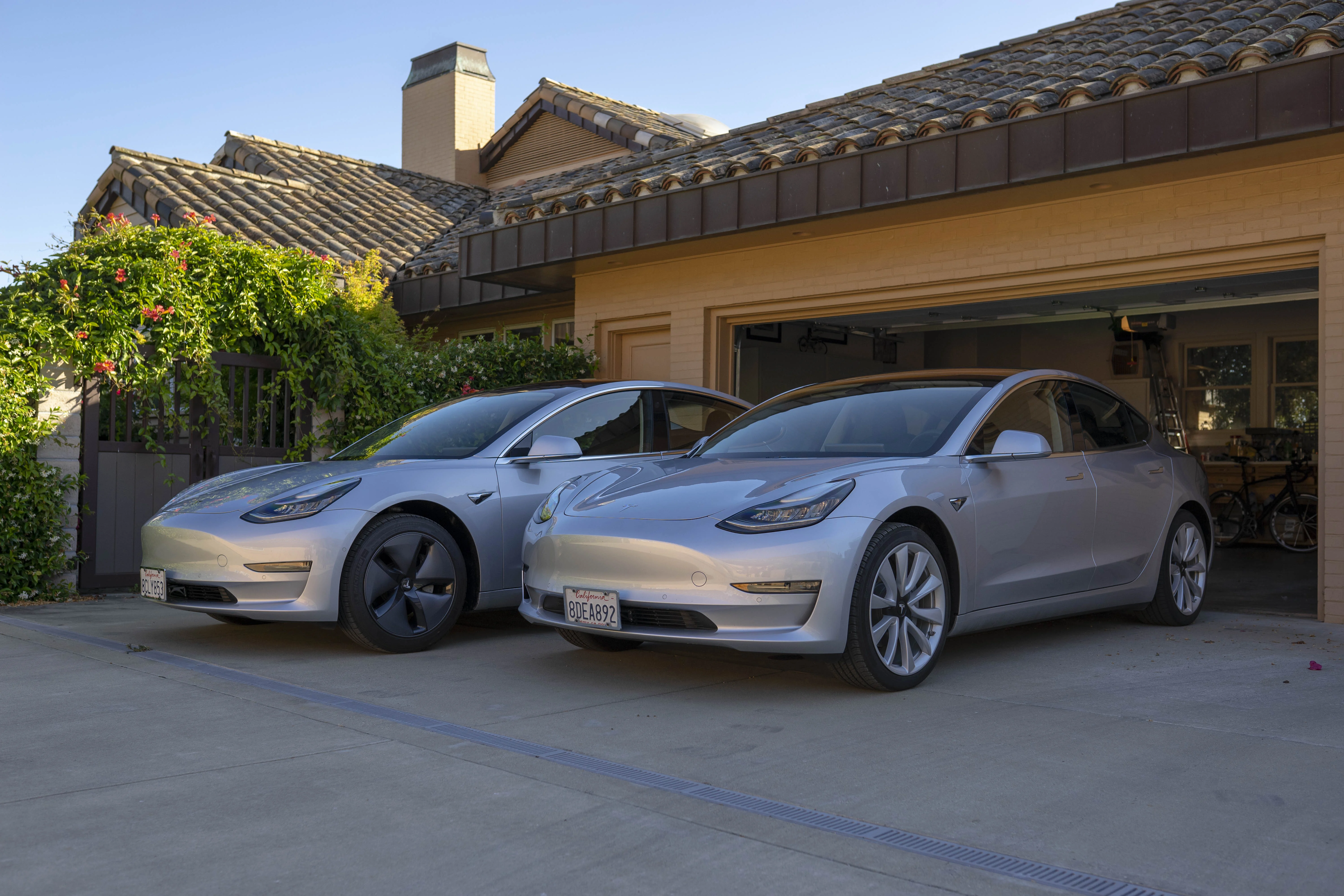
How to Charge Two EVs at Home in Canada on One 240V Outlet (2026)
One 50A circuit adds about 360 km overnight, enough for two commutes. What the Canadian Electrical Code allows, permits by province, BC Hydro rebates, and options.
Richmond EV Charger Installation
Richmond EV charger installation: Technical Safety BC permit fees, the 2018 EV-ready rule, BC Hydro's $350 + $200 rebates, and room for a heat pump.
Surrey EV Charger Installation
Add Level 2 charging in Surrey without a panel upgrade: City of Surrey permit steps, BC Hydro's $350 + $200 rebates, suited-house load math, and overnight costs.

BC Hydro EV Power Management Device Rebate: Eligible Devices (2026)
BC Hydro pays $200 extra for an eligible EV power management device. The Sept 2026 device list, which chargers qualify, and the permit rule that decides who gets it.
