



BC Hydro EV Power Management Device Rebate: Eligible Devices (2026)
Direct answer: BC Hydro adds $200 to its $350 home Level 2 charger rebate when you install an EV power management device from its eligible-device list, which includes the NeoCharge Smart Splitter. The charger must also be on BC Hydro's eligible-charger list, and Tesla units are not. The $200 is not offered on the "no electrical work" pathway, so the charger install needs a permit.
- $200 device top-up, paid with the charger rebate. No separate application.
- $350 maximum charger rebate, one per address.
- Permit required for the $200. An old outlet permit still earns the $350.
- Tesla chargers excluded. Autel, Emporia, Grizzl-E, FLO, Wallbox, and about 85 other brands qualify.
- About $548 CAD for a Smart Splitter plus a listed 40A charger after both rebates, versus a $3,000 to $8,000 service upgrade.
Verified against BC Hydro's eligible-device list dated September 1, 2026 and program guide dated July 15, 2026.
Most B.C. homeowners find this rebate backwards. They get a $3,000 to $8,000 quote for a service upgrade, go looking for a cheaper way to charge, and discover BC Hydro has been paying people to avoid that upgrade since late 2023. This is the eligible-device page we wish existed: what qualifies, which device type fits which home, and what to upload so the $200 lands on your bill.
Who qualifies for the $200
- You are a BC Hydro customer at your principal residence: a single-family home, secondary suite, duplex to fourplex, side-by-side row home, or mobile home on a permanent foundation, with off-street parking.
- You install an eligible EV power management device and an eligible Level 2 charger.
- The install carries an approved electrical permit with a capacity assessment. BC Hydro's wording: "Have an approved electrical permit (your electrician will manage this)."
- Both were installed on or after December 1, 2023. No retroactive installs.
There is no separate application. You apply for the charger rebate, and BC Hydro adds the $200 if the device qualifies. That means the charger rules apply too:
| Charger rebate rule | What BC Hydro says |
|---|---|
| Amount | Up to 50% of purchase and installation, max $350. Up to 75%, max $750, for Indigenous individuals living in B.C. |
| Limit | One rebate per address or household |
| Home | Built more than six months before the install. Owners, or tenants with the landlord consent form |
| Charger | On BC Hydro's eligible list; new, permanent, Level 2, J1772 or J3400 plug, certified for Canada. "Tesla charging stations are no longer eligible." |
| Timing | Within 180 days: BC Hydro's page says six months (180 days) of installation, and its program guide says 180 days from the charger invoice. Apply as soon as the install is done |
FortisBC electric customers in the Okanagan and Kootenays are on different programs. See the Kelowna and Okanagan guide.
What is on the eligible-device list
BC Hydro's PDF lists about 60 products from 20 manufacturers, each tagged with a "Power Management Type." BC Hydro approves by model, not brand, so check the live list for the exact model before you buy.
| Device type | Listed examples | Price range on list |
|---|---|---|
| Branch circuit switching. Shares one 240V outlet; the EV pauses while the appliance runs. Plug-in or a small box at the outlet. | NeoCharge Smart Splitter (four models), Siemens Inhab, Simple Switch 240, and others | $450 to $1,300 |
| Feeder monitoring. Sensors at the main panel cut the charger when whole-home load is high, restore it when it drops. Needs a new dedicated circuit. | RVE DCC 9 and DCC 12, ABB Microlectric, Timely Electric EVEMS, and others | $895 to $1,750 |
| Dynamic load balancing. Watches the panel and turns a compatible charger down instead of off. | Variablegrid Varian series, UNICO LISTO, VT Engineering Mesh, and others | $749 to $4,299 |
| Built into the charger. | Schneider Charge | $899 |
| Combined systems. Several of the above, sometimes at the meter. | FUTURi Power, Smappee SmartUp Kit (monitoring only) | $345 to unlisted |
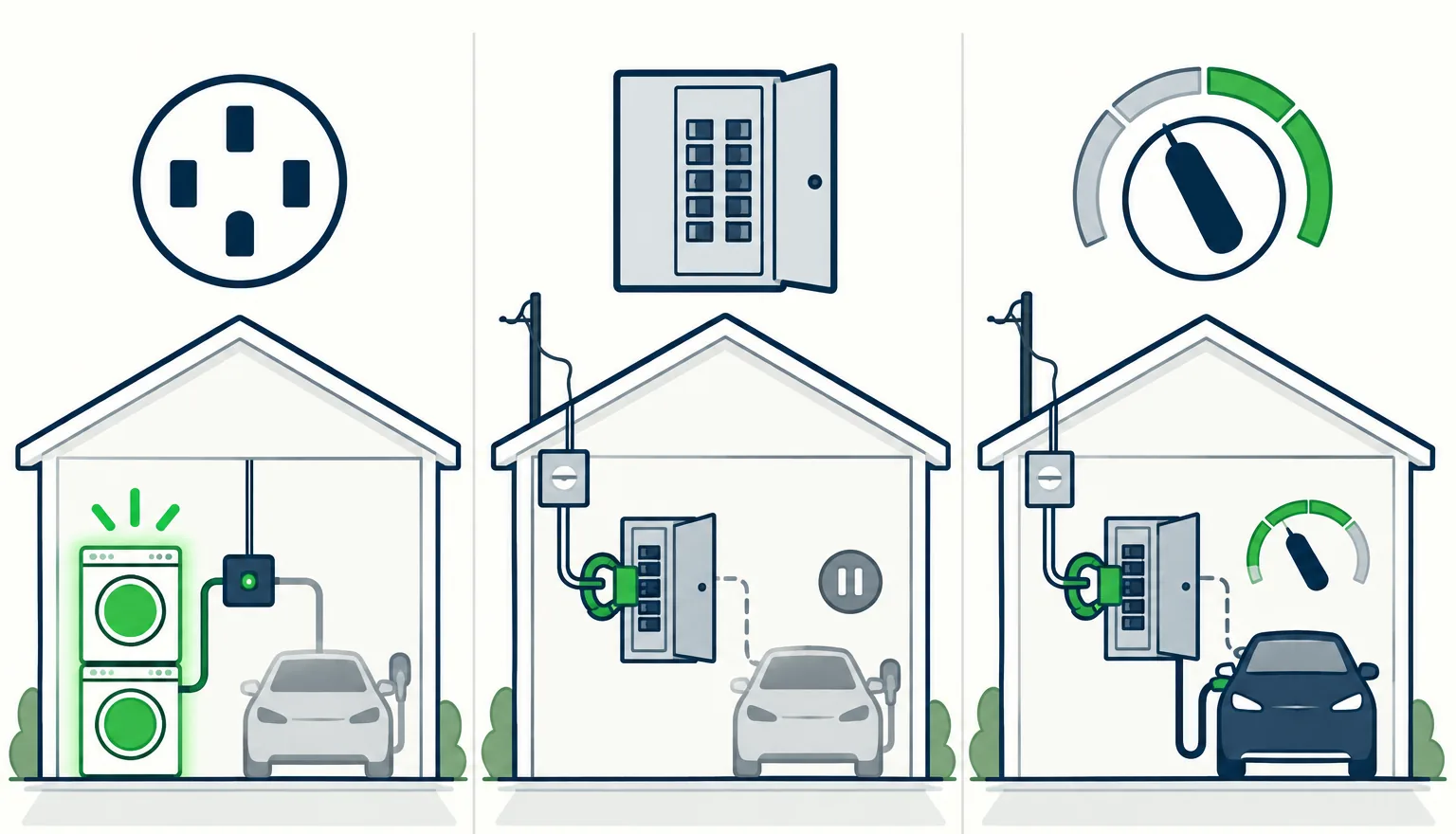
Left: share one outlet, appliance first. Middle: watch the panel, pause the car. Right: watch the panel, turn the car down.
Device not on the list? BC Hydro invites you to email the make and model to alliance@bchydro.com before you install. For the electrical-code view of these categories, read DCC-9 vs DCC-10 vs EVEMS vs Smart Splitter.
Where the Smart Splitter fits
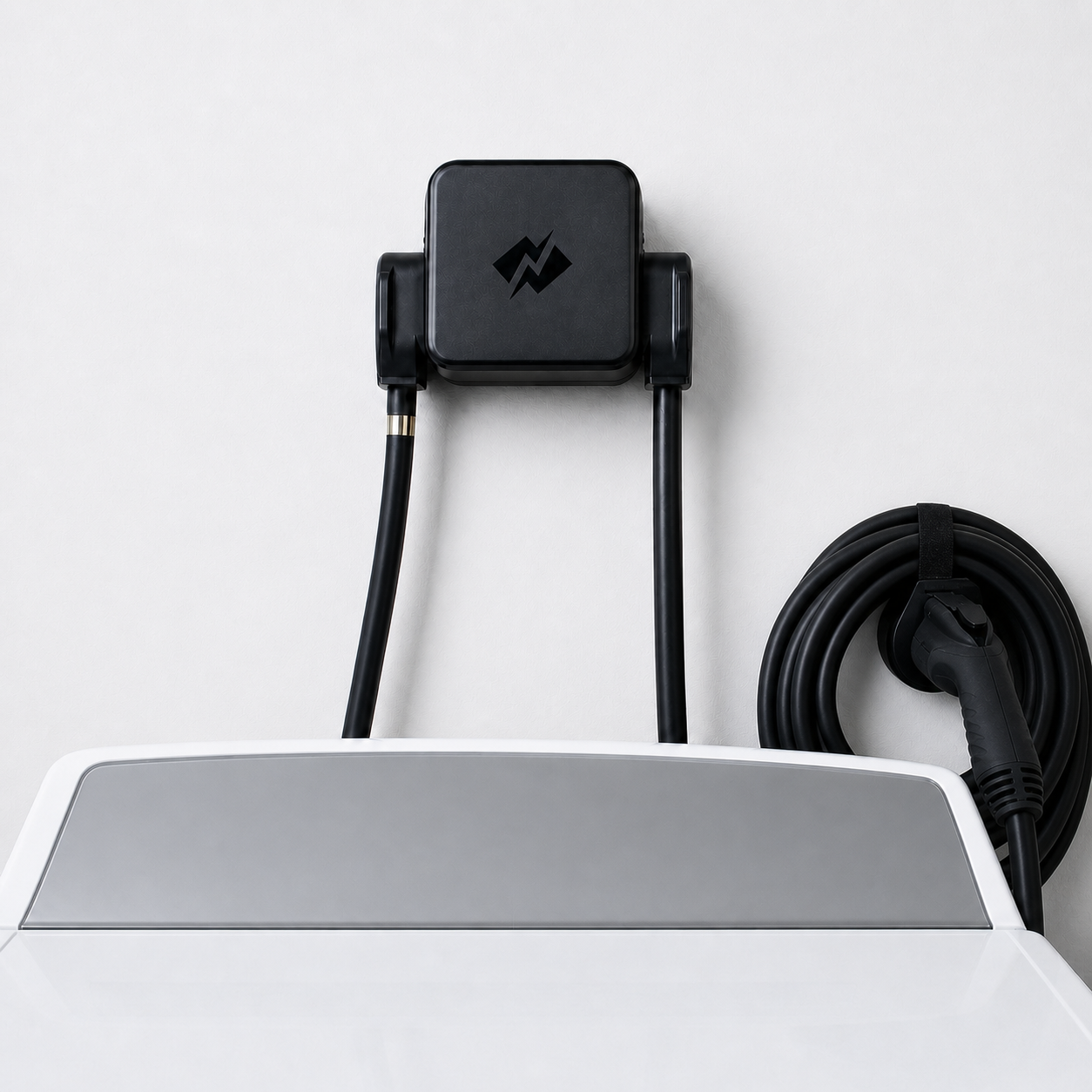
The NeoCharge Smart Splitter is listed as branch circuit switching. It plugs into an existing 240V outlet, gives you two outlets back, and gives the appliance priority: when the dryer or range starts, the EV pauses; when it finishes, charging resumes. The circuit never carries both loads at once.
| Listed model | Outlet | Max EV current |
|---|---|---|
| NCSS-1430 | NEMA 14-30, four-prong dryer | 24A |
| NCSS-1030 | NEMA 10-30, older three-prong dryer | 24A |
| NCSS-1450 | NEMA 14-50, EV or range outlet | 40A |
| NCSS-1050 | NEMA 10-50, older range outlet | 40A |
Certified to UL 60730-1 and CSA E60730-1. The Canadian-store math, before shipping and GST/PST:
| Smart Splitter in Canada | CAD |
|---|---|
| List price | $699 |
| Canada instant discount at checkout | −$300 |
| You pay today | $399 |
| BC Hydro device rebate, after approval | −$200 |
| Net hardware cost | $199 |
Add a listed charger and the whole Level 2 setup, with no panel upgrade, comes to:
| Full setup, no panel upgrade | CAD |
|---|---|
| Smart Splitter at checkout, plus Autel AC Lite 40A | $399 + $699 = $1,098 |
| BC Hydro charger rebate, 50% of charger cost up to $350 | −$350 |
| BC Hydro device top-up | −$200 |
| Net hardware cost | about $548 |
Set that against a $3,000 to $8,000 service-upgrade quote. The store also advertises a separate $200 NeoCharge app reward after setup; that is NeoCharge's own program, not part of the BC Hydro rebate. Prices are the Canadian store's as of September 14, 2026, before shipping and tax.
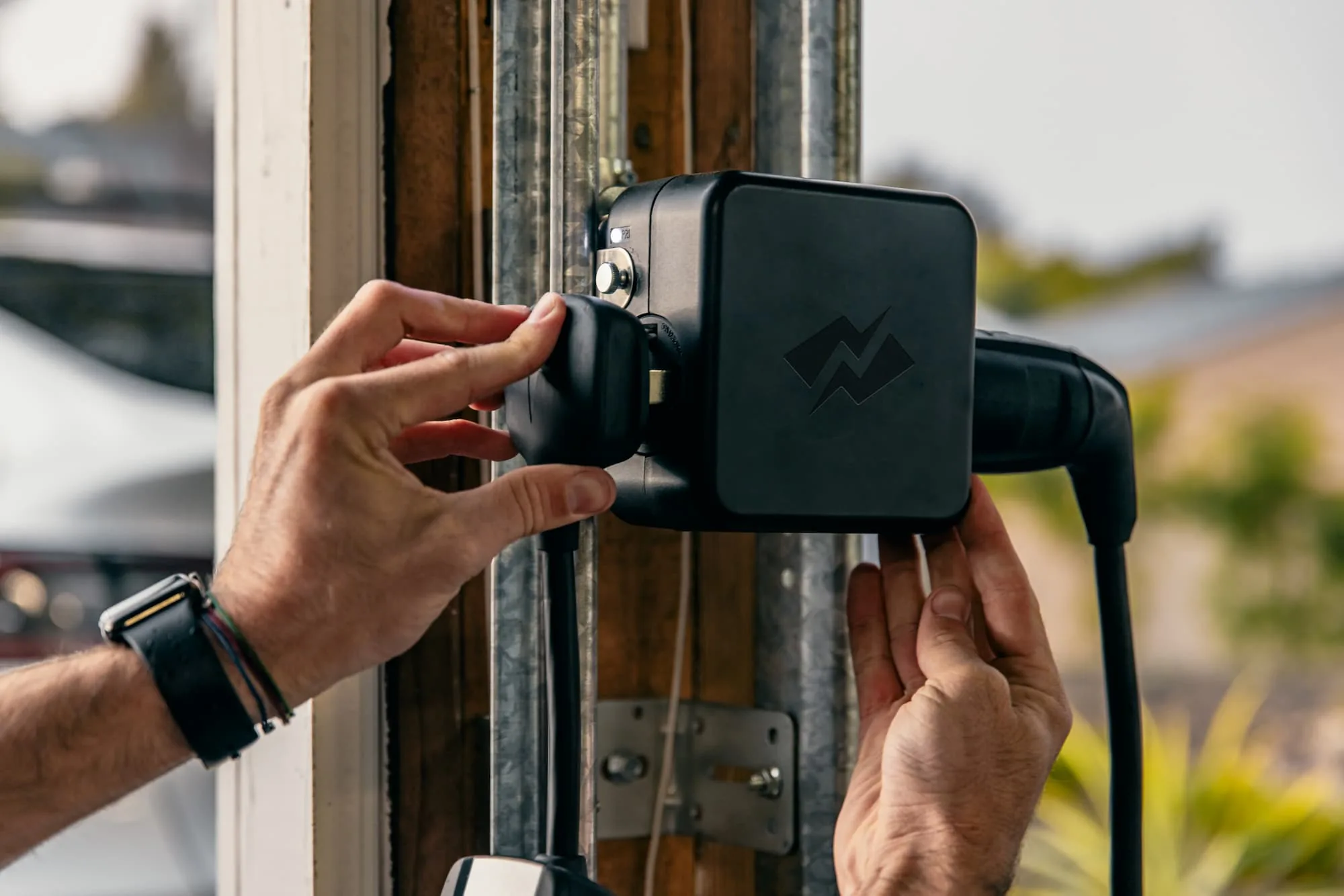
Choose the Smart Splitter when you have a dryer, range, or 240V garage outlet within reach of parking, you can charge overnight rather than while that appliance runs, and 24A or 40A covers your daily driving. For most B.C. commuters it does with hours to spare.
Choose something else when there is no usable 240V outlet near parking and you are running a new circuit anyway, when the electrician finds the panel unsafe or undersized for a heat pump, induction range, or second EV, or when you are in a condo or strata.
The honest limit: the Smart Splitter shares one circuit. It does not monitor the whole house and does not replace a load calculation when one is required.
On BC Hydro's eligible-device list
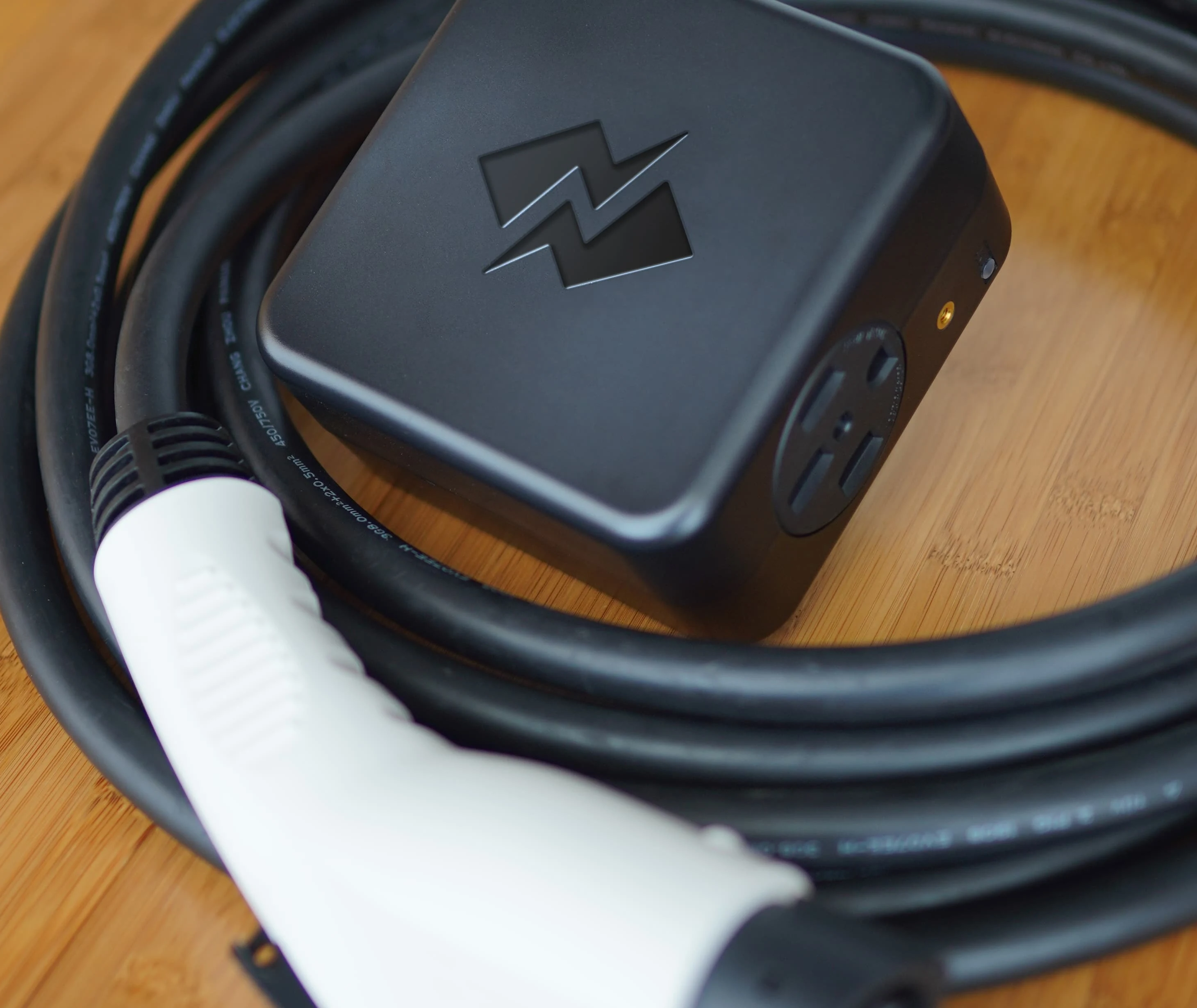
Share the 240V outlet you already have
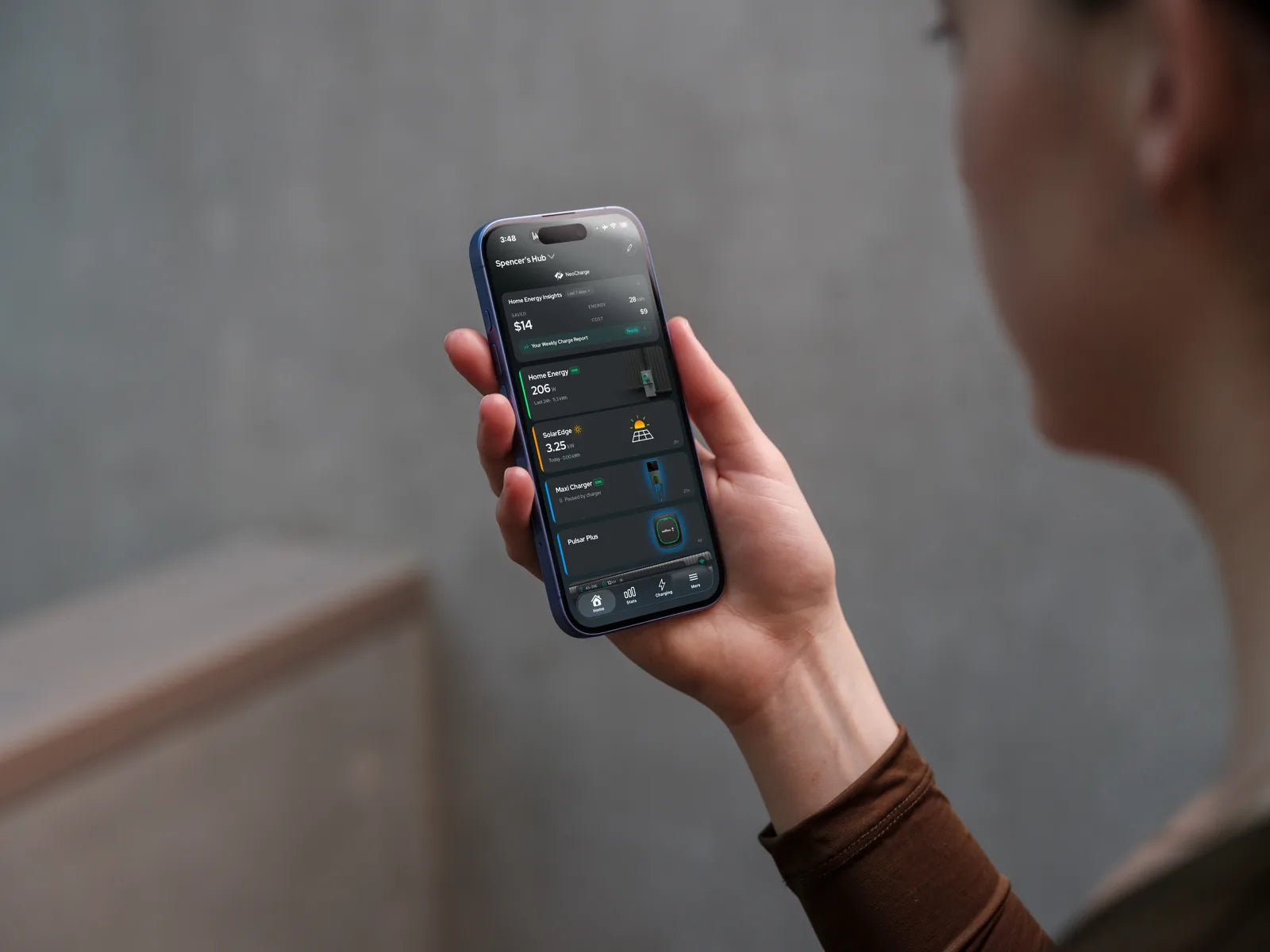
Listed as branch circuit switching in 30A and 50A versions. Appliance gets priority, EV charges the rest of the time, and the NeoCharge app handles the 11 p.m. schedule.
Pick the charger from the eligible list too
The charger "must be included on the list of rebate-eligible EV charger models." BC Hydro's filterable list covers roughly 90 manufacturers. Two things we confirmed on it on September 14, 2026: Tesla returns no results, so a Wall Connector or Mobile Connector gets neither rebate, and plug-in chargers qualify, which is what a branch-circuit setup needs.
Any listed plug-in charger that can be set to 40A or less works with a Smart Splitter. Cap it at 40A on a 50A outlet, or 24A on a 30A dryer outlet; most connected chargers set that limit in their app. 48A and higher chargers are hardwired on a 60A circuit and are not an outlet-sharing scenario.
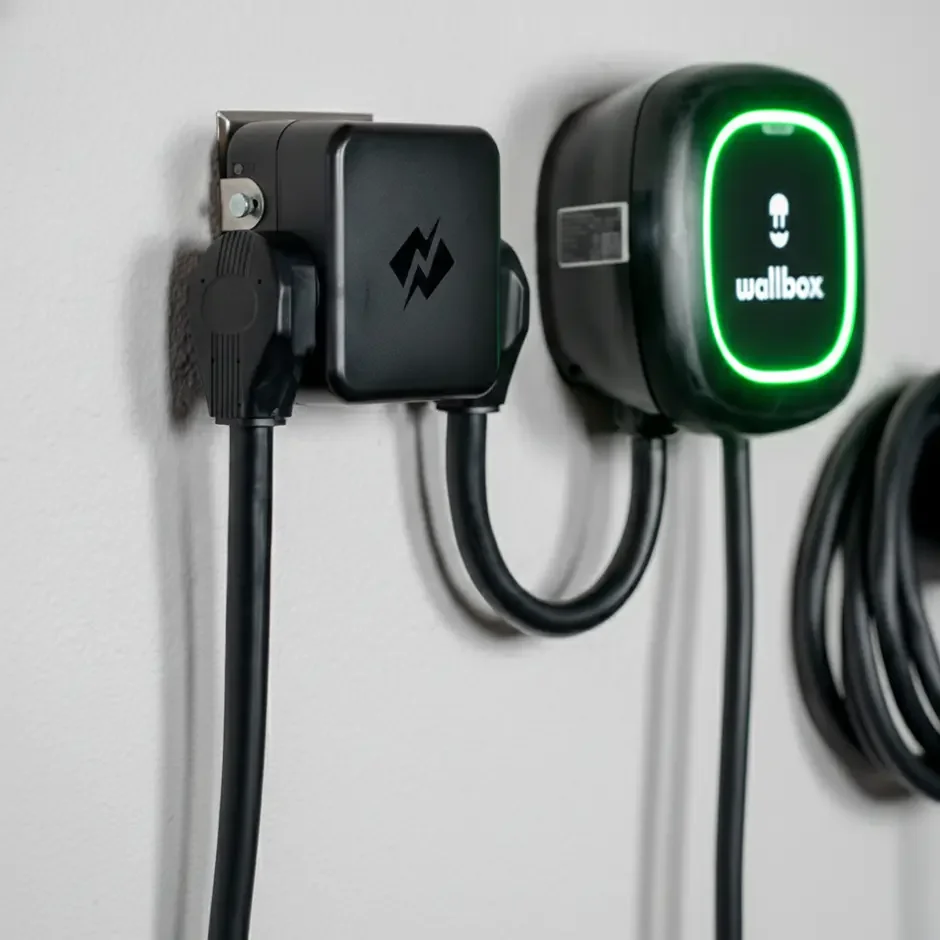
Popular plug-in models on the list, as a starting point rather than a shortlist:
| Charger on BC Hydro's list | Max current, plug | MSRP on list |
|---|---|---|
| Emporia Classic | 40A, NEMA 14-50 | $429 |
| Autel MaxiCharger AC Lite 40A | 40A, NEMA 14-50 | $559 |
| Grizzl-E Classic Connect 40A | 40A, NEMA 14-50 | $600 |
| FLO Home X3 | 6A to 50A, set to 40A | $849 |
| Wallbox Pulsar Plus 40A | 40A, NEMA 14-50 | $999 |
| ChargePoint Home Flex | 20A to 50A, set to 40A | Not listed |
MSRP figures are BC Hydro's, not retail prices. Each brand lists several variants by cable, connector, and colour, so match the exact model number on your receipt to the list.
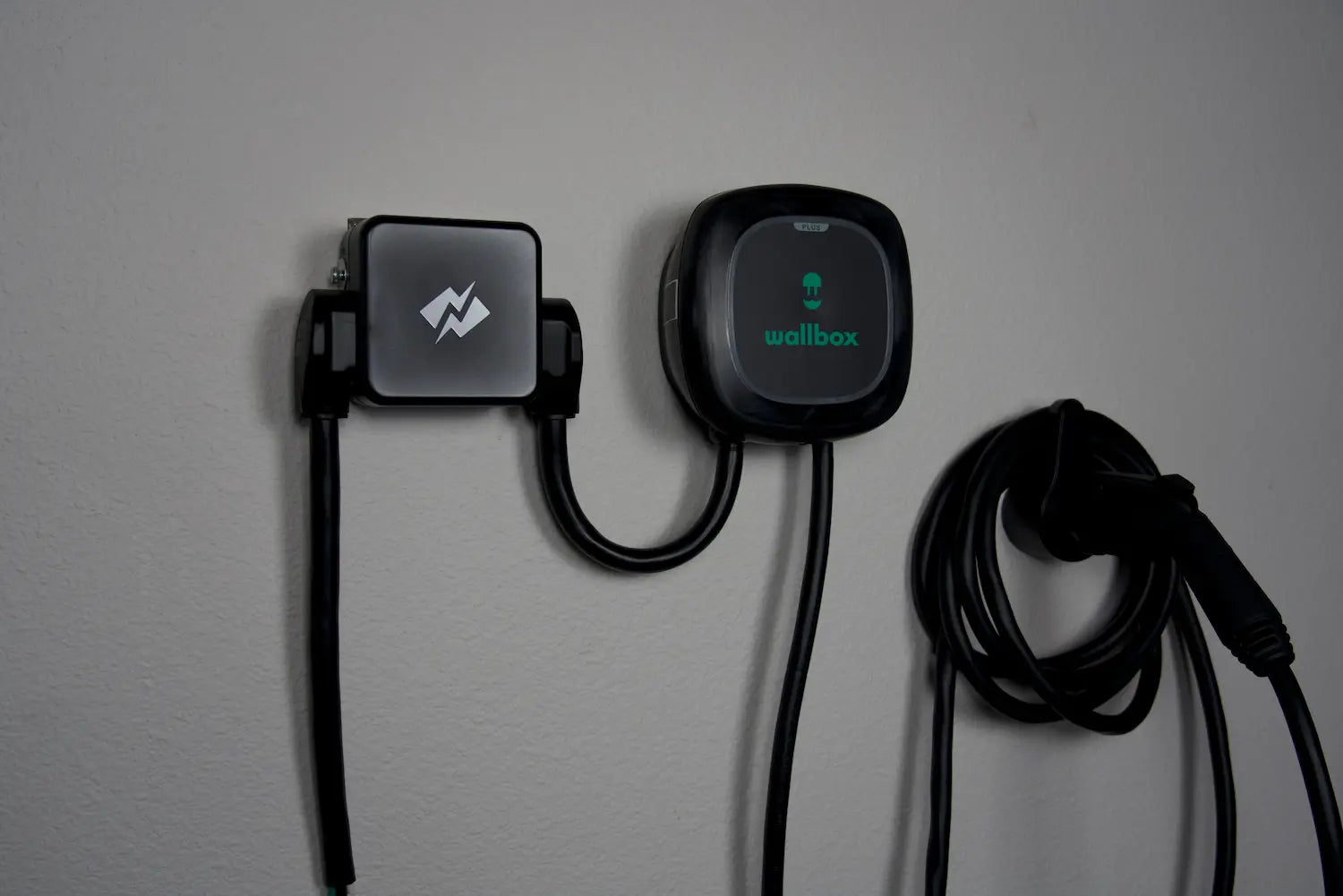
NeoCharge's Canadian store carries the Autel AC Lite Home 40A at $699 CAD, built to plug into the Smart Splitter's 14-50R outlet, and the Wallbox Pulsar Plus 40A at $899 CAD. The Autel ships from a Canadian supplier; the Wallbox ships from NeoCharge in the U.S., with duties and delivery shown at checkout. Already own a listed plug-in charger? Keep it. The Smart Splitter is charger-agnostic.
The pathway rule that catches plug-in buyers
BC Hydro's charger application has three pathways, based on who did the electrical work:
- Licensed electrician installed the charger. Charger invoice, installation invoice, electrical permit number, photo.
- Someone who is not a licensed electrician installed it. Charger invoice, paid inspection invoice, certificate of inspection, photo. "An electrical permit is required under this option. Rather than the licensed electrician, the homeowner is responsible for applying for the permit."
- No electrical work: plugged into a pre-existing 240V outlet. Charger invoice and photo, plus your confirmation that the outlet was permitted when it was installed.
Then the line that matters, quoted from the application page:
"EV Power Management Devices are not eligible under the No Electrical Work Required pathway due to capacity assessment requirements. Please select a different pathway to continue if applying for a Power Management Device top-up."
| Your setup | Charger rebate, $350 | Device top-up, $200 |
|---|---|---|
| Existing, originally permitted outlet, plug-in charger only, no power management device | Yes, pathway 3. Keep proof of the original permit; BC Hydro can ask for it | No device, so no top-up |
| Same outlet with a Smart Splitter, installed under a permit with a load calculation | Yes, pathway 1, or pathway 2 with a homeowner permit and inspection | Yes. Permit plus capacity assessment is what BC Hydro wants |
| New dedicated circuit with a feeder-monitoring or dynamic device | Yes, pathway 1 or 2 | Yes. Electrical work needs a permit here anyway |
Adding a Smart Splitter puts you in the second row, not the first: Technical Safety BC's bulletin IB-EL 2023-05 (Revision 3, March 4, 2025) says "A permit and load calculations are also required for plug-in style switching devices designed to connect to an existing receptacle such as a dryer receptacle." The requirement is the permit, not a specific person. A 20-year-old dryer receptacle should be looked at before it carries an EV load every night anyway, so the $200 is BC Hydro paying you to do the sensible thing.
The two-EV household
The Smart Splitter's other job is sharing one 240V outlet between two EVs, each car charging in turn. BC Hydro approves the device by model, not by what you plug into it, so eligibility is unchanged. What changes is the count: the program guide allows one rebate per address, so BC Hydro pays for one charger and one device. The second charger is on you. Even so, one shared circuit with two listed plug-in chargers is usually the cheapest two-EV setup a B.C. home can build without a service upgrade.
The application checklist
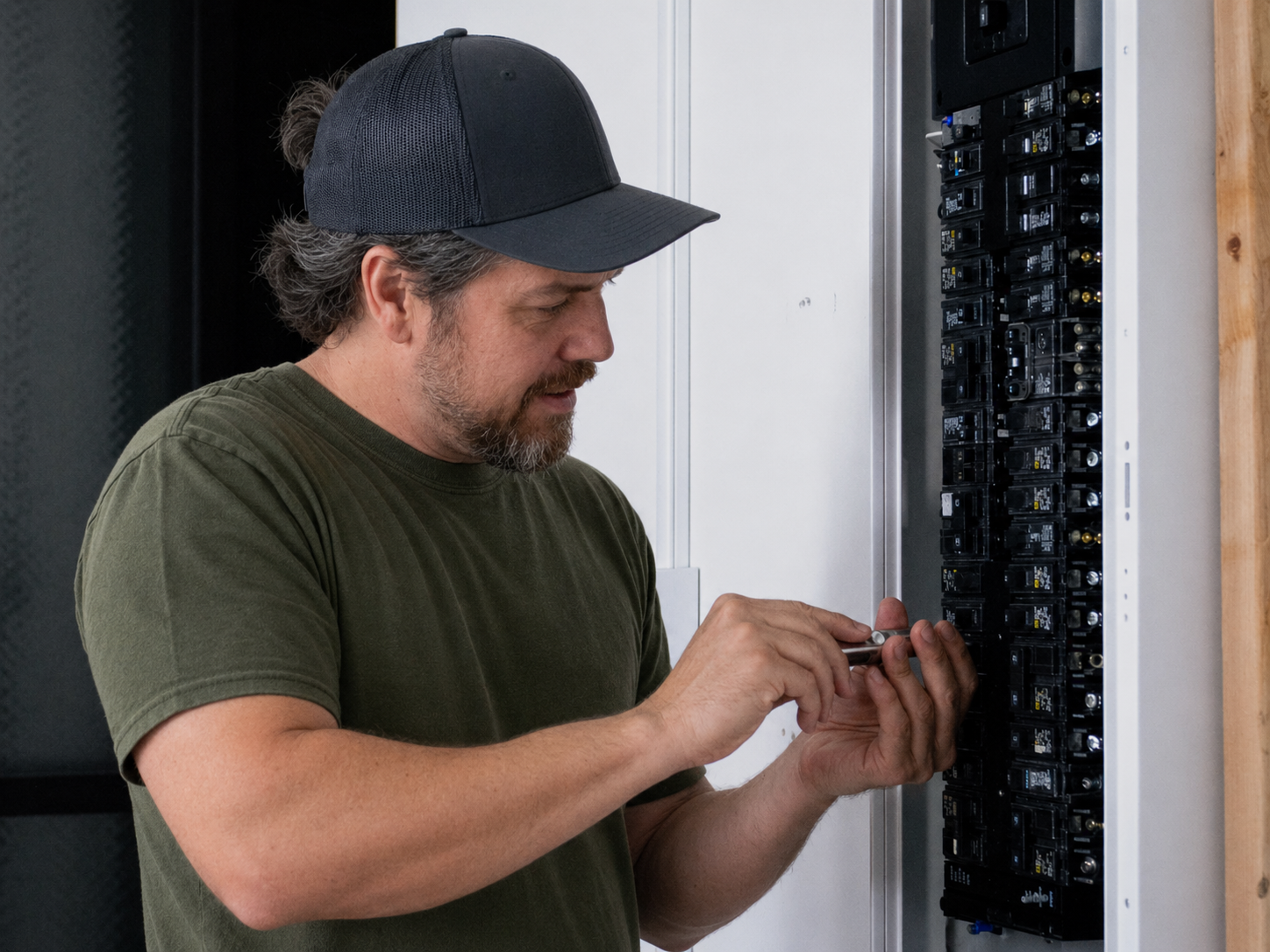
Ask the electrician two things at the site visit: what the load calculation says with Level 2 charging added, and whether the existing 240V circuit is suitable for 24A or 40A continuous charging with a sharing device. BC Hydro recommends they use your last 12 months of meter data rather than a forecast, which usually shows more headroom. Then gather:
- Charger: itemized receipt with proof of payment and the retailer's name, address, and phone; photo of the installed charger; your BC Hydro or City of New Westminster account number.
- Installation, pathway 1 or 2: installation invoice itemized by activity, or the paid inspection invoice plus certificate; electrical permit number.
- Device: itemized receipt; photo of the installed device; model number on the receipt matching a row in the PDF.
- Timing: both installed on or after December 1, 2023; home built more than six months before; apply right after the install.
Related guides
- British Columbia home EV charging guide
- Vancouver · Victoria and Vancouver Island · Kelowna and the Okanagan · Surrey · Burnaby · Richmond
- DCC-9 vs DCC-10 vs EVEMS vs Smart Splitter
- Do you need a panel upgrade for EV charging in Canada?
- BC Hydro rebates overview
FAQ
How much is the BC Hydro EV power management device rebate?
Is the NeoCharge Smart Splitter on BC Hydro's eligible device list?
Is a Tesla Wall Connector eligible for the BC Hydro charger rebate?
My dryer outlet was permitted when the house was built. Does that count?
Can two EVs share one Smart Splitter and still get the rebate?
What is the difference between branch circuit sharing and feeder monitoring?
Does a power management device replace a panel upgrade?
Is this the same as BC Hydro's Peak Saver bonus?
My device is not on the list. Can it still qualify?
Bottom line
BC Hydro's eligible-device list is a menu, and the $200 is a nudge to order from it before you order a service upgrade. If you already have a 240V outlet near parking, a branch-circuit device such as the Smart Splitter is the cheapest row on that menu and the simplest install. If you are running a new circuit on a tight panel, a feeder-monitoring or dynamic device belongs in the electrician's quote. Either way, pick a charger from BC Hydro's list and get the permit, because that is the only pathway where the $200 exists.
Next steps (NeoCharge)
- Confirm your outlet type and check compatibility with the NeoCharge Smart Splitter.
- Pair it with a listed charger such as the Autel AC Lite Home 40A or Wallbox Pulsar Plus 40A, and match the model number to BC Hydro's list.
- Walk through the BC Hydro rebate steps so you know what to hand your electrician and what to upload.
- Set an 11 p.m. to 7 a.m. schedule in the NeoCharge App. BC Hydro's optional time-of-day rate takes 5¢/kWh off overnight and adds 5¢/kWh from 4 p.m. to 9 p.m.
Sources
All program facts come from BC Hydro's own documents, checked September 14, 2026:
- Rebates for EV power management devices, the $200 offer and its conditions
- Power Management Eligible Devices, the device list PDF, updated September 1, 2026
- Single-family home charger rebates, the $350 rebate, eligible-charger criteria, and Tesla exclusion
- Home charger rebate application and documents, the three pathways and the device exclusion
- EV chargers eligible for rebates, the filterable charger list
- CleanBC Go Electric program guide, dated July 15, 2026, for dwelling types, the one-rebate limit, and the 180-day window
Update log: September 14, 2026, first published against the September 1, 2026 eligible-device list. October 9, 2026: added Technical Safety BC's permit requirement for plug-in switching devices and corrected the application window to 180 days.
Electrical safety disclaimer
This article is general information, not electrical advice. EV charging equipment must be installed and used according to the Canadian Electrical Code, local amendments, manufacturer instructions, and the judgment of a licensed electrician. Rebate amounts, eligible models, and application rules are set by BC Hydro and change without notice. Confirm current terms on BC Hydro's site before purchasing equipment.
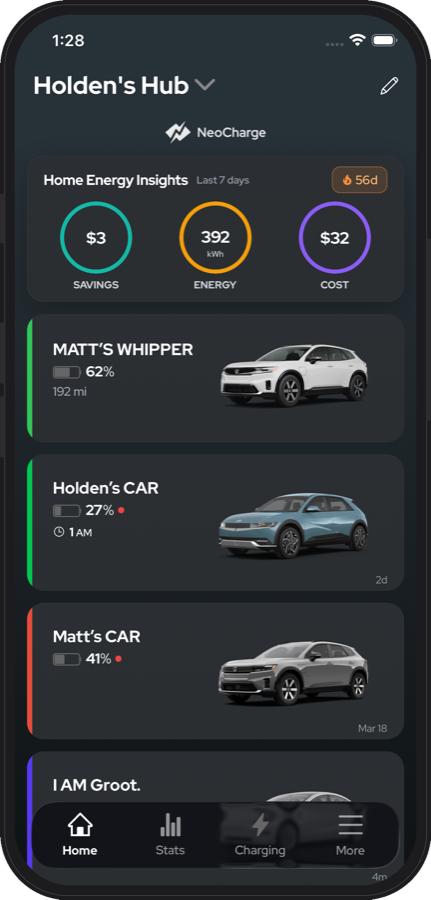
NeoCharge App
Track charging costs without spreadsheet work
See session history, monthly energy use, and savings so the article advice turns into a real household habit.
Explore the app

Next steps
Keep going with NeoCharge
Use the article as your decision guide, then jump into the product, app, or related guides that match what you are trying to solve next.
Key terms
- Level 2 charging
- Level 2 EV charging uses a 240V circuit (like a dryer outlet). It typically adds ~20–35 miles of range per hour, depending on your car and the circuit amperage.
- NEMA 14-50
- A NEMA 14-50 is a common 240V, 50A outlet (often used for EV charging). Many EV chargers plug into it, but the actual charging speed depends on the circuit and your EV.
- NEMA 14-30
- A NEMA 14-30 is a 240V, 30A dryer outlet. With a properly configured EV charger, it can usually support ~24A continuous charging (about 20–25 miles of range per hour for many EVs).
Related posts
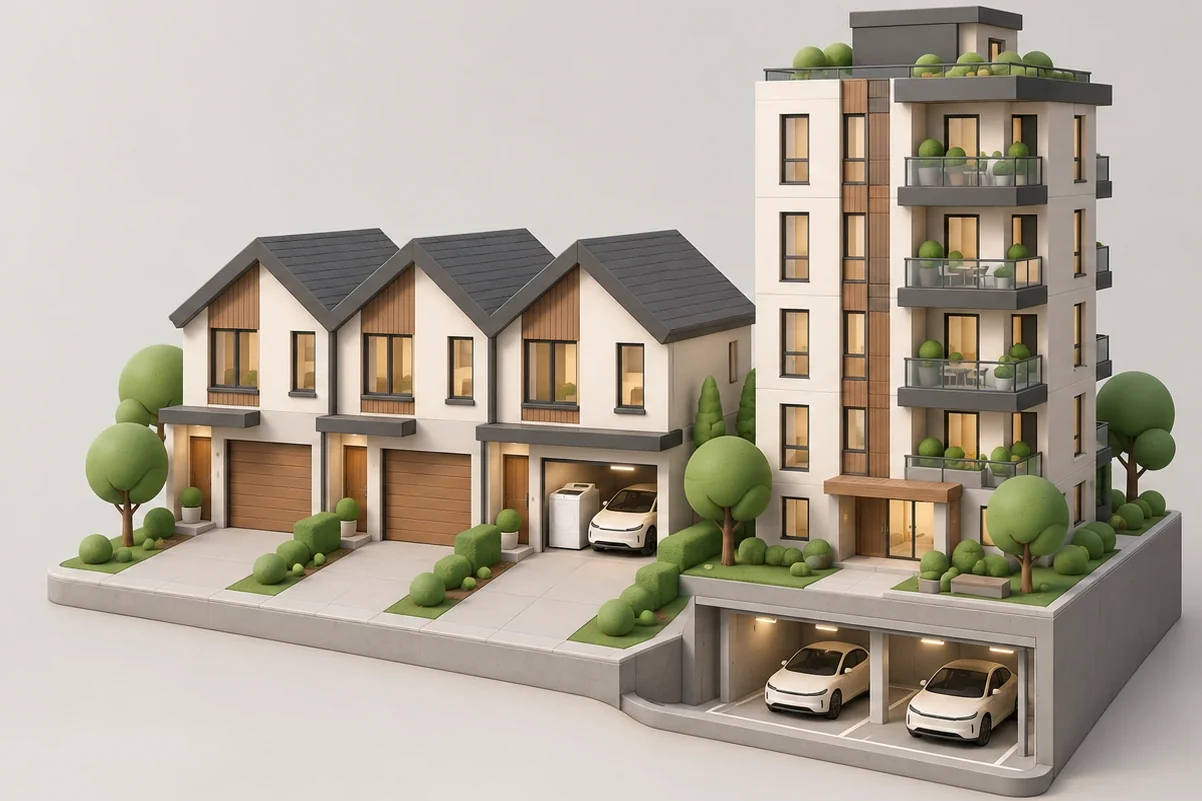

Burnaby EV Charger Installation
Burnaby EV charging by home type: share a dryer outlet instead of a panel upgrade, City permits, BC Hydro's $350 + $200 rebates, and strata right-to-charge.

Richmond EV Charger Installation
Richmond EV charger installation: Technical Safety BC permit fees, the 2018 EV-ready rule, BC Hydro's $350 + $200 rebates, and room for a heat pump.

Surrey EV Charger Installation
Add Level 2 charging in Surrey without a panel upgrade: City of Surrey permit steps, BC Hydro's $350 + $200 rebates, suited-house load math, and overnight costs.

Tesla Charging Cost in Canada (2026): Home vs Supercharger
A full Tesla charge at home costs about $6 to $17 in Canada, depending on your province. Supercharger rates, Ontario ULO overnight math, and cost per 100 km.
