


EV Charger Installation in Surrey, BC: Permits, Rebates, and Skipping the Panel Upgrade (2026)

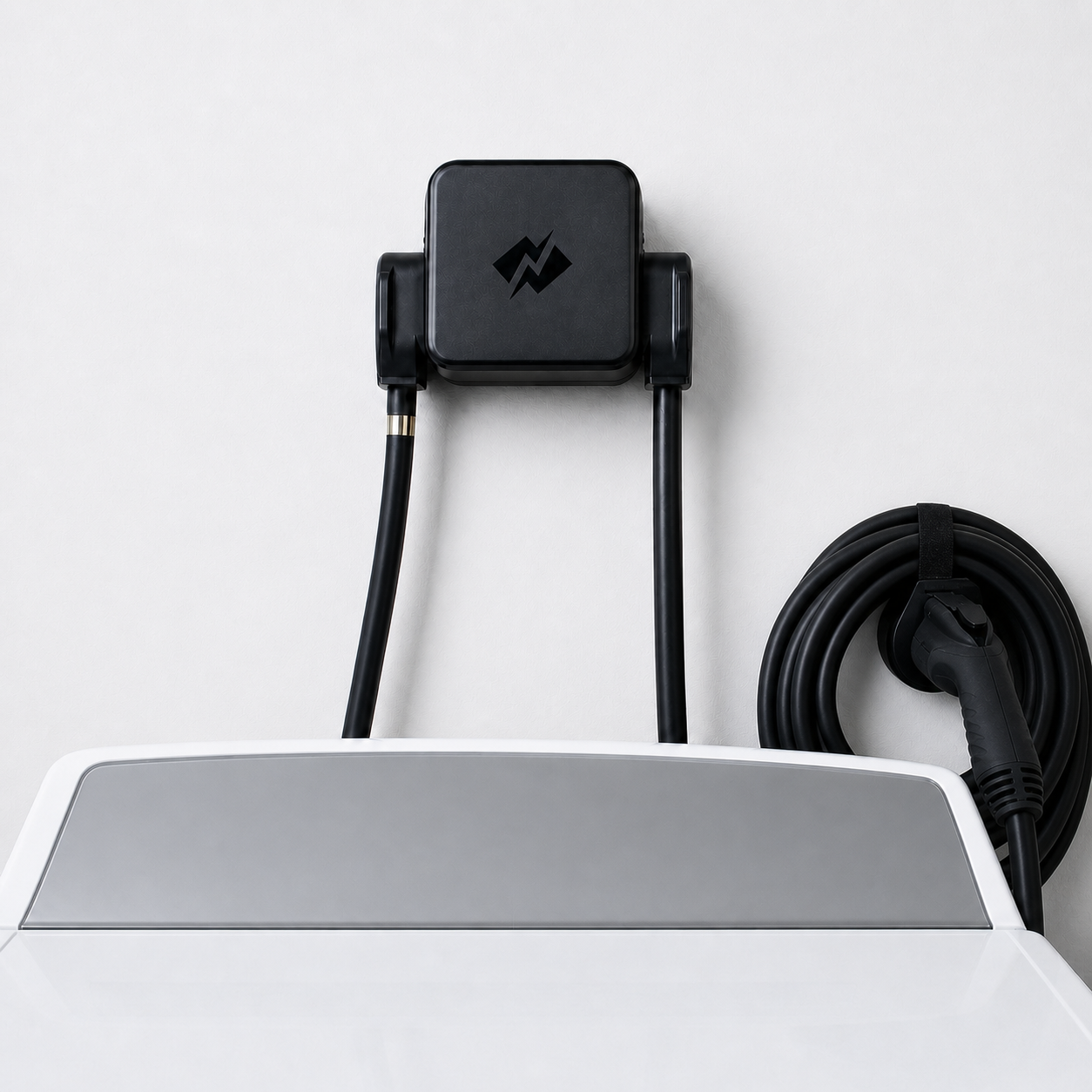
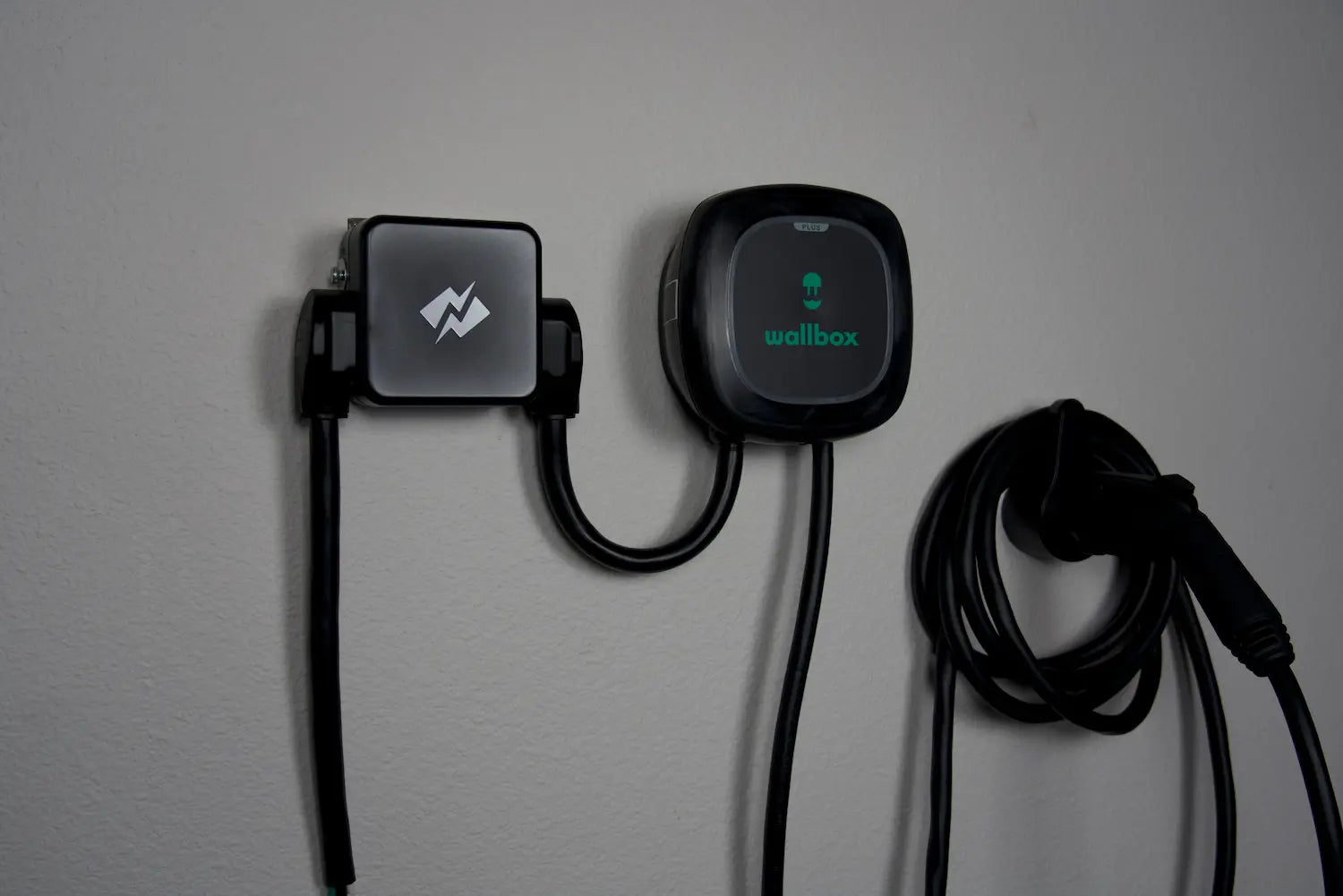
Direct answer: Most Surrey homes can add Level 2 EV charging without a panel or service upgrade by sharing the 240V dryer outlet they already have. A smart splitter pauses the car whenever the dryer runs. In Surrey the City, not Technical Safety BC, issues electrical permits, and a licensed contractor must do a load calculation before any new charging circuit is permitted. Surrey has no rebate of its own, but BC Hydro pays up to $350 toward a listed charger plus $200 for an eligible power management device installed under a permit.
- City of Surrey issues the electrical permit. A homeowner permit is possible, but EV work needs the City's Demand Load Calculation form.
- No Surrey top-up. The money is BC Hydro's: up to $350 for the charger and $200 for the power management device.
- Smart Splitter in Canada: $399 CAD at checkout, then a $200 NeoCharge app refund once it's connected and charging your EV.
- Cheapest setup: $199 plus a permit. Use the Smart Splitter on your existing dryer outlet with the charger that came with your car. No new wiring, but B.C. requires a permit and load calculation even for a plug-in switching device.
- Overnight charging on BC Hydro's Time-of-Day rate costs about $1.63 per 100 km at the Step 2 price.
- Suited houses are common in Surrey. A second household's loads are exactly why the first quote is often a service upgrade.
Checked against City of Surrey, BC Hydro, and Statistics Canada sources on October 9, 2026.
More NeoCharge app users have a home charging location in Surrey than in any other Canadian city, Vancouver included. The questions we get from Newton, Fleetwood, Cloverdale, Guildford, and South Surrey are remarkably similar: the house was built in the 1980s or 1990s, there's a suite downstairs, the panel is full, and the first electrician quote started with "you'll need a service upgrade." This guide is the Surrey-specific version of the answer: what your house is probably working with, who issues the permit, what BC Hydro will pay, and when sharing the dryer outlet is the right call.
Related: BC Hydro EV power management device rebate: eligible devices · Burnaby · Richmond · Vancouver
What Surrey homes are working with
Surrey's housing is newer than Vancouver's but still mostly pre-EV. Of the city's 185,670 occupied homes in the 2021 Census, 78.5% were built before 2011, and only 11.4% between 2016 and 2021.
| Surrey housing, 2021 Census | Homes | Share |
|---|---|---|
| Single-detached house | 60,895 | 32.8% |
| "Apartment or flat in a duplex" (mostly houses with a suite) | 42,540 | 22.9% |
| Row house / townhouse | 30,930 | 16.7% |
| Apartment under five storeys | 37,470 | 20.2% |
| Apartment five storeys or more | 8,835 | 4.8% |
| Semi-detached, movable, other | 5,005 | 2.7% |
Statistics Canada counts a house with a suite above or below as two "apartment or flat in a duplex" dwellings, so that 22.9% is best read as Surrey's suited-house stock. It's a big deal for EV charging. A suite usually brings a second kitchen, a second laundry, and sometimes a second set of baseboard heaters onto the same service. When an electrician runs the demand load calculation, those loads use up the headroom a new 40A or 50A EV circuit needs.
Then there's timing. Surrey amended its zoning bylaw in February 2019 to require an energized outlet for every residential parking stall in new construction. Homes approved before that weren't required to have one, which describes most of the city.
Your three options, side by side

Share the outlet you have, run a new managed circuit, or upgrade the service. The first is usually the cheapest.
| Share the dryer outlet | New circuit + load management | Service upgrade | |
|---|---|---|---|
| What it is | A smart splitter on the existing 240V outlet; the dryer gets priority, the EV charges the rest of the time | New 240V circuit to the driveway, plus a device that pauses or slows the charger when the house is busy | Bigger service from BC Hydro, often a new panel |
| Typical speed | 24A on a 30A dryer outlet (about 5.8 kW), 40A on a 50A range outlet | Up to the circuit size, throttled at busy times | Full speed |
| Electrical work | No new wiring if the outlet already reaches your parking; a permit and load calculation are still required in B.C. | New circuit, permit, inspection | Panel and service work, BC Hydro connection, permit |
| BC Hydro money | Charger rebate; device top-up only with a permit (see below) | Charger rebate + $200 device top-up | Charger rebate only |
| Best for | Laundry in or beside the garage; overnight charging | No outlet near parking, tight panel | Heat pump, induction range, and EV all at once, or a panel that is unsafe |
BC Hydro's own guidance is that a service upgrade "is often not required when adding an EV charger," so ask any electrician to price the first two columns before the third.
Overnight at 24A, a dryer outlet adds about 46 kWh between 11 p.m. and 7 a.m. That's roughly 250 km of range for a typical crossover, well over the daily round trip from Clayton to downtown Vancouver.
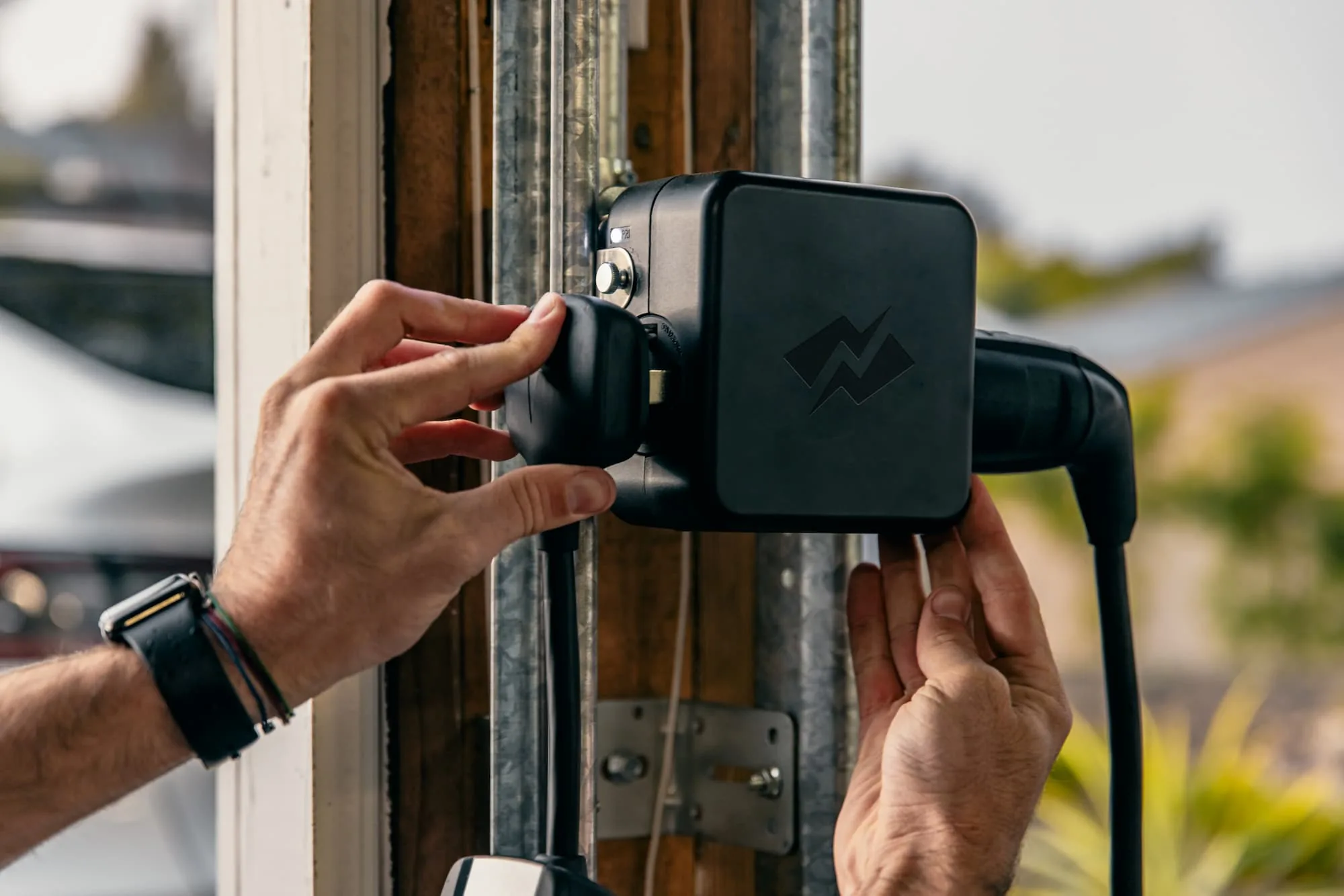
One caution for any outlet-sharing setup: have an electrician check that an older dryer receptacle and its circuit are in good condition for nightly 24A charging. Twenty-year-old receptacles can be worn, and they are about to work every night.
Permits in Surrey: what's different
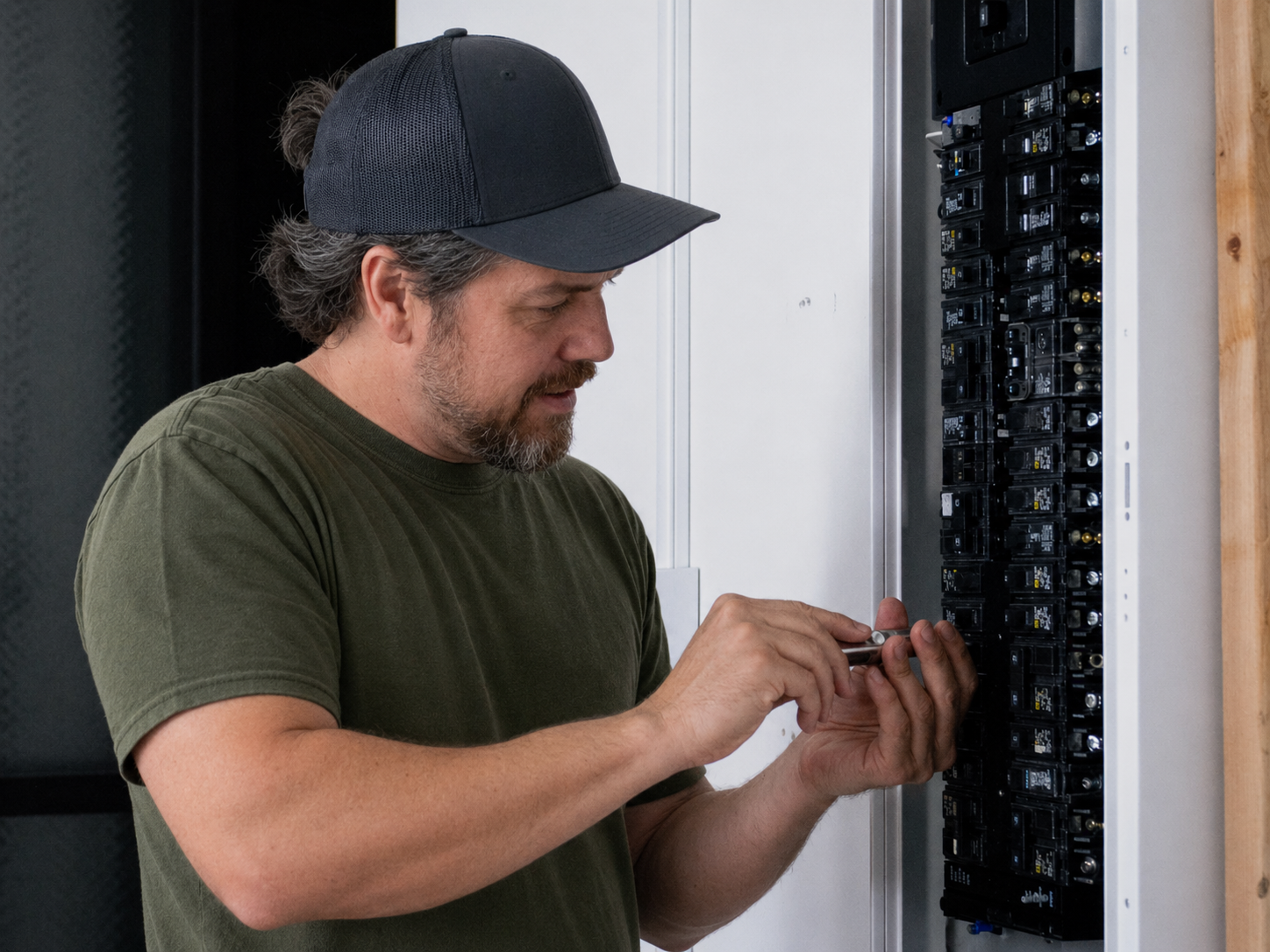
Surrey is one of the BC municipalities that runs its own electrical permits, so Technical Safety BC is not who you call. The City's EV charger page sets out the process:
- Load calculation first. For a detached house, multiplex, or townhouse with its own meter, "a Licensed Electrical Contractor must assess service capacity and load calculation" before a permit application.
- Contractor or homeowner permit. Your contractor applies for an Electrical Contractor Installation Permit. If you'd rather do the work yourself, you can apply for a Homeowner Electrical Installation Permit by email to electrical@surrey.ca. The City suggests contacting your area electrical safety officer first if you're changing your service or need guidance. For EV work, include the City's Demand Load Calculation form. The City publishes a version for single-family homes with or without a secondary suite, coach house, or garden suite.
- Inspection. The permit is valid for 180 days and the work gets inspected. A charger by itself doesn't need a building permit and can sit within setbacks.
- Strata. Townhouse and condo owners need a strata approval letter or council minutes, and Surrey routes those applications through its commercial EV process.
Surrey's requirements page is explicit that "EVEMS/load-share devices may be used to avoid service upgrades." Equipment has to carry certification from an SCC-accredited body, and a contractor's permit application has to identify the EVEMS or load-share device being used. The Smart Splitter is cUL-listed and certified to CSA E60730-1, so name it on the application.
If the load calculation does show a service upgrade, the City's electrical safety officer and BC Hydro coordinate the disconnect and reconnect. Fees follow the City's permit fee schedule, so ask your contractor to include them in the quote.
Plug-in still needs a permit in B.C. Technical Safety BC's bulletin on EV charging equipment says "A permit and load calculations are also required for plug-in style switching devices designed to connect to an existing receptacle such as a dryer receptacle." The reason: the device changes how the circuit is loaded. So even with no new wiring, a Smart Splitter install goes through the City of Surrey with a load calculation, and the permit should name the Smart Splitter as the load-switching device. The upside: because you need the permit anyway, pair the Splitter with a charger from BC Hydro's list and the same install earns BC Hydro's $200 device top-up as well as the $350 charger rebate.
BC Hydro rebates in Surrey: what actually stacks
Surrey doesn't offer its own EV charger top-up. BC Hydro's municipal top-up list covers places like Kamloops, Squamish, and the Regional District of Nanaimo, not Surrey. What you can get:
| Program | Amount | Key condition |
|---|---|---|
| BC Hydro home charger rebate | 50% of costs, up to $350 | Charger on BC Hydro's eligible list (Tesla units are not); house, duplex to fourplex, or freehold row home; apply within 180 days |
| BC Hydro power management device top-up | $200 | Eligible device (the Smart Splitter is listed) installed with a listed charger under an approved permit |
| NeoCharge Canadian EV Charging Rewards | $200 refund | Connect the Smart Splitter to the NeoCharge app within 30 days and charge your EV through it; paid after 14 days connected |
| BC Hydro Peak Saver | $250 bill credit + $50 per season | Separate program for eligible smart chargers |
Freehold side-by-side row homes and buildings of up to four units use this single-family stream. Strata townhouse complexes with five or more units generally go through BC Hydro's apartment and condo stream instead, which needs pre-approval and strata consent, so confirm with BC Hydro before you buy.
The catch most people miss: BC Hydro does not pay the $200 device top-up on its "no electrical work" pathway, because it wants a capacity assessment. With a Smart Splitter in B.C. you'll have a permit and load calculation anyway, so apply on the permitted pathway and claim both. Our BC Hydro device rebate guide walks through all three pathways and the upload checklist.
Two ways to set it up, cheapest first
Because the Smart Splitter plugs into an outlet you already have, the lowest-cost setup needs no new wiring and no new charger: use the mobile charger that came with your car, such as Tesla's Mobile Connector with the matching adapter. In B.C. it still needs a permit and load calculation, and BC Hydro pays nothing on that route, because Tesla units aren't on its eligible list. The product page asks for your outlet first, then whether you're using Tesla's Mobile Connector or your own charger, and adds the plug adapter you need.
| Setup | What you buy | Permit | BC Hydro money | Your cost (CAD) |
|---|---|---|---|---|
| Lowest cost: Smart Splitter + the charger that came with your car | Smart Splitter | Yes, permit and load calculation; no new wiring if the outlet reaches your parking | None. Tesla units aren't eligible, and the top-up needs a listed charger | $199 after the $200 app refund, plus the permit |
| Full rebate stack: Smart Splitter + a charger from BC Hydro's list | Smart Splitter + a listed plug-in charger, such as the Autel AC Lite Home 40A ($699) | Yes, the same permit | $350 charger rebate + $200 device top-up | about $348, plus the permit and any electrician |
Since the permit is the same either way, the listed-charger route adds $550 in BC Hydro rebates, so a new 40A charger ends up costing about $149 more than using the one that came with your car. Whichever route you take, have an older receptacle checked before it carries a car every night.
Here's the full rebate stack in detail, using the Canadian store's prices on October 9, 2026 before shipping and tax:
| Smart Splitter + listed 40A charger, installed under a permit | CAD |
|---|---|
| Smart Splitter ($699 list, $300 instant rebate at checkout) | $399 |
| Autel AC Lite Home 40A charger | $699 |
| NeoCharge app refund, after connecting for EV charging | −$200 |
| BC Hydro charger rebate (50% of costs, max $350) | −$350 |
| BC Hydro power management device top-up | −$200 |
| Hardware after rebates | about $348, plus the electrician and permit |
Already own a plug-in charger from BC Hydro's list? Keep it. The Smart Splitter works with any plug-in Level 2 charger, Tesla's Mobile Connector included, although Tesla units don't qualify for BC Hydro's rebate.
What charging costs on BC Hydro in Surrey
BC Hydro's residential rates from April 1, 2026 are 11.87¢/kWh for the first 675 kWh a month and 14.08¢/kWh after that. An EV adds a couple of hundred kWh a month, so most of it lands in Step 2. The optional Time-of-Day rate takes 5¢/kWh off from 11 p.m. to 7 a.m. and adds 5¢/kWh from 4 to 9 p.m.
| 15,000 km a year (about 2,700 kWh at 18 kWh/100 km) | Price per kWh | Per 100 km | Per month |
|---|---|---|---|
| Overnight on Time-of-Day, Step 2 | 9.08¢ | $1.63 | about $20 |
| Any time on the standard rate, Step 2 | 14.08¢ | $2.53 | about $32 |
| Charging during the 4–9 p.m. peak, Time-of-Day, Step 2 | 19.08¢ | $3.43 | about $43 |
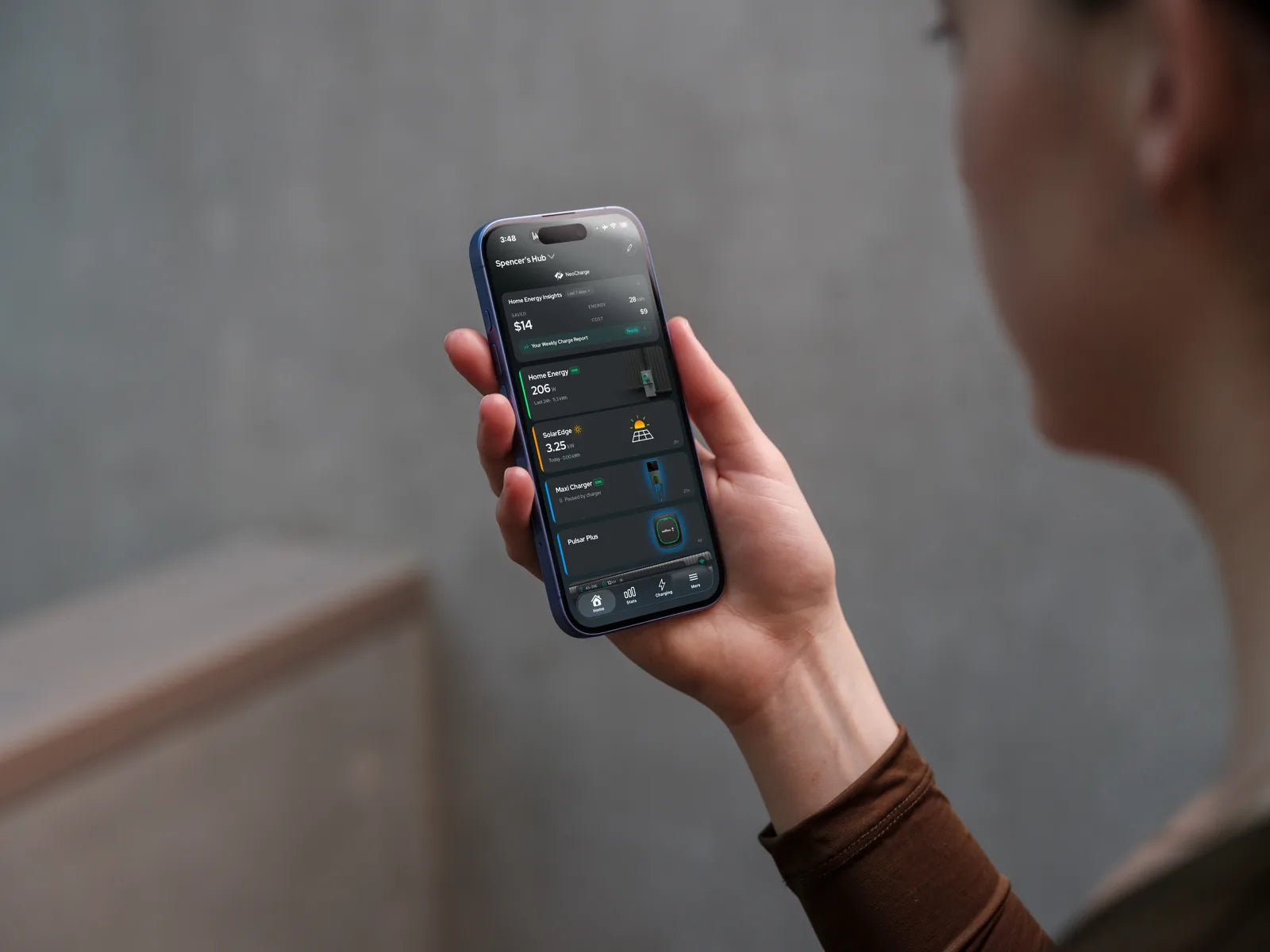
Energy charges only, before the basic charge, rate rider, and GST. The difference between the first and last rows is the case for a schedule. The NeoCharge app starts the Smart Splitter at 11 p.m. and tracks every session's cost.
The Surrey suite and the two-EV driveway
Two situations come up more in Surrey than anywhere else we hear from:
A suite on the same service. If the upstairs and downstairs households share one panel, the electrician's load calculation is the tight spot, not the dryer outlet. Sharing a circuit that already exists adds no new load to that calculation, because the EV only draws when the dryer doesn't. Two practical notes: use the dryer on the floor that has the outlet near parking, and agree a laundry window with your tenants so the car isn't paused during the night.
Two EVs, one outlet. Multi-generational households in Surrey often have two cars plugged in. A Smart Splitter on a 14-50 EV outlet, or a range outlet the range no longer uses, shares one 40A supply between two chargers, taking turns. BC Hydro pays one charger rebate and one device top-up per address, so the second charger is on you. Even so, it's usually the cheapest two-EV setup a house can get without a service upgrade.
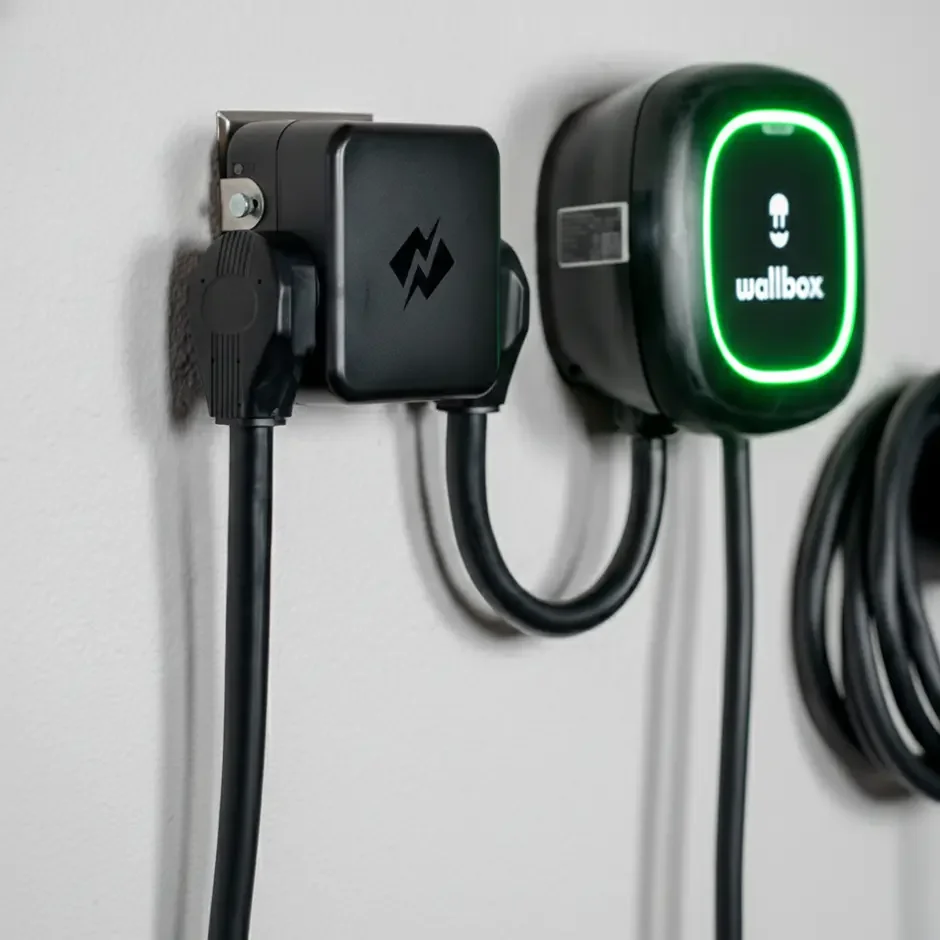
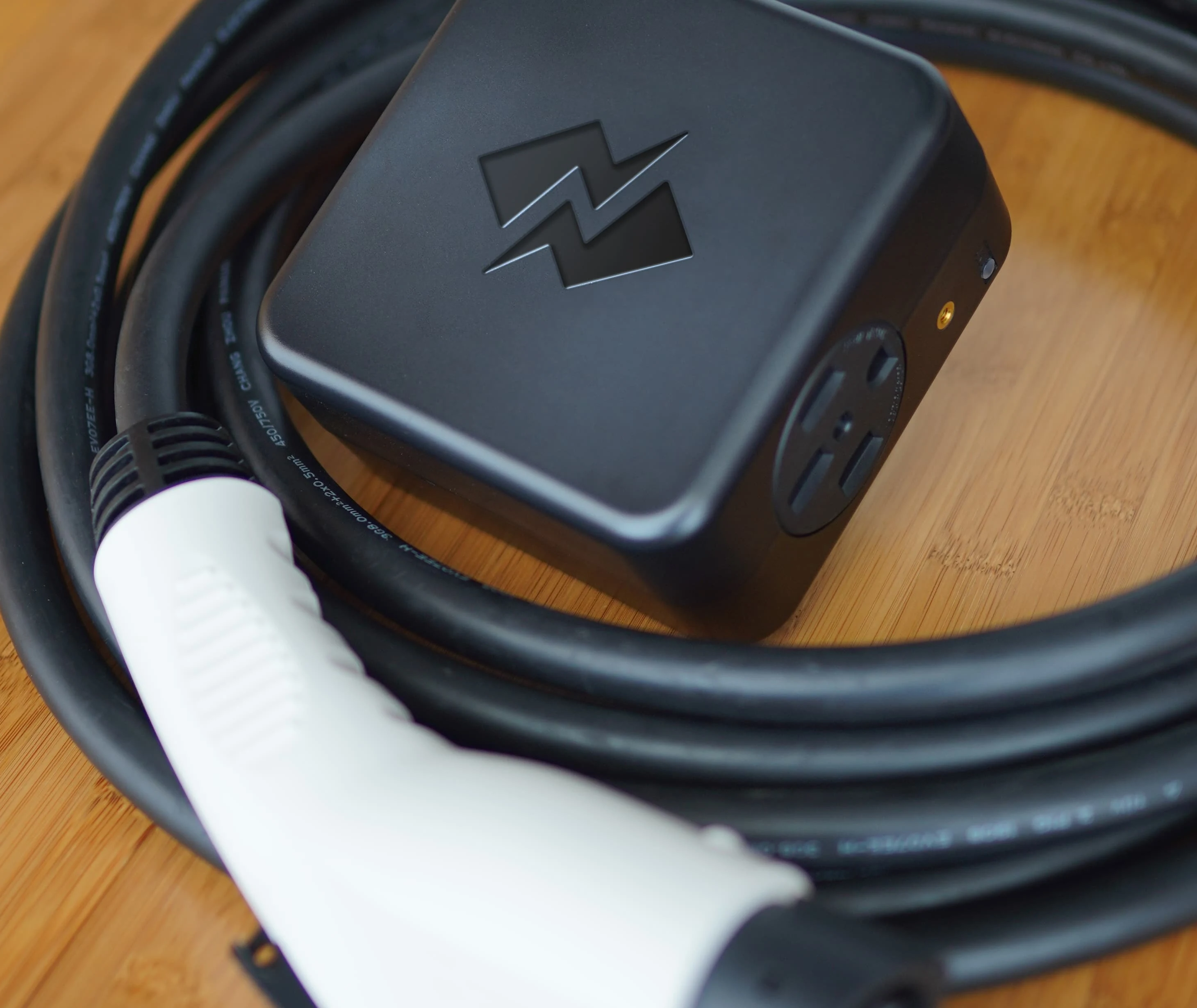
On BC Hydro's eligible-device list
Charge from the dryer outlet you already have
cUL-listed for Canada, dryer gets priority, EV charges the rest of the night. $399 CAD at checkout, $200 back once it's connected to the app and charging your EV. 60-day returns, 3-year warranty.
A five-step plan for a Surrey home
- Find the outlet. Look behind the dryer and in the garage for a 240V outlet. Four prongs with an L-shaped slot is a NEMA 14-30 (30A); an older three-prong dryer outlet is a NEMA 10-30; a NEMA 14-50 (50A) has three straight slots plus a round ground. The Smart Splitter comes in versions for each.
- Measure to parking. If the outlet is in the garage or within cable reach of the driveway, outlet sharing is on the table. If it's two floors away in a suite, you're probably looking at a new circuit.
- Get one quote that prices both paths. Ask for the load calculation, the cost of a new circuit with a power management device, and the cost of a service upgrade, in that order.
- Pick the charger from BC Hydro's list before buying. A listed plug-in charger capped at 24A (30A outlet) or 40A (50A outlet) pairs with the Smart Splitter.
- Apply within 180 days with the receipts, photos, and permit number. Then connect the Smart Splitter to the app for the $200 NeoCharge refund.
FAQ
Who issues electrical permits for EV chargers in Surrey?
How much is a City of Surrey electrical permit for an EV charger?
What are Surrey's EV charging requirements for an existing home?
Does Surrey offer its own EV charger rebate?
Do I need a panel upgrade to charge an EV in Surrey?
Can I charge my EV from my dryer outlet if I have a secondary suite?
How much does it cost to charge an EV overnight in Surrey?
Do I need an electrician or a permit to use a Smart Splitter in Surrey?
Does the Smart Splitter qualify for the BC Hydro $200 rebate?
Is the NeoCharge $200 refund the same as the BC Hydro rebate?
Is there still a rebate for buying an EV in BC?
Bottom line
In Surrey, the expensive part of home EV charging is rarely the charger. It's the panel, and the suite downstairs is often why. Before you sign a service-upgrade quote, check whether a 240V outlet already reaches your parking spot. If it does, sharing it is the fastest and cheapest Level 2 setup in the city. If you want BC Hydro's $200 device top-up as well, put the install under a City of Surrey permit and keep the paperwork.
Next steps (NeoCharge)
- Check your outlet and see the Smart Splitter Canada offer: $399 CAD at checkout as of October 9, 2026, plus a $200 refund after you connect it for EV charging.
- Read the BC Hydro power management device rebate guide before booking the electrician.
- Look up every rebate for your postal code with the Canadian rebate finder.
- Set an 11 p.m. to 7 a.m. schedule in the NeoCharge App.
Sources
Checked October 9, 2026:
- City of Surrey, Electric vehicle charger installation: load calculation, permit types, inspection, strata
- City of Surrey, Electric vehicle charger installation requirements: certification, load-share devices, strata letter, application documents
- City of Surrey, Homeowner electrical installation permits and electrical forms, bulletins and fees
- Statistics Canada, 2021 Census Profile, Surrey (CY): dwelling types and period of construction
- Electric Autonomy, Canada EV-ready bylaw tracker, and City of Surrey corporate report R255 (2018)
- BC Hydro, Single-family home charger rebates, EV power management device rebates, eligible-device list (updated September 1, 2026), and local rebate top-ups
- BC Hydro, Home EV charger options: "Upgrading your service is often not required when adding an EV charger."
- BC Hydro, Electric Tariff, RS 1101 and RS 2101, rates effective April 1, 2026, and the Time-of-Day rate
- Transport Canada, Electric Vehicle Affordability Program
- Technical Safety BC, Information Bulletin IB-EL 2023-05, Revision 3 (March 4, 2025): permits and load calculations for EVSE, EVEMS, and plug-in switching devices
- NeoCharge Canadian store, Smart Splitter pricing and app-refund terms, October 9, 2026
Electrical safety disclaimer
This article is general information, not electrical advice. EV charging equipment must be installed and used according to the Canadian Electrical Code, the City of Surrey's requirements, manufacturer instructions, and the judgment of a licensed electrician. Rebate amounts, eligible models, prices, and permit rules change without notice; confirm current terms with BC Hydro, the City of Surrey, and the NeoCharge store before you buy.
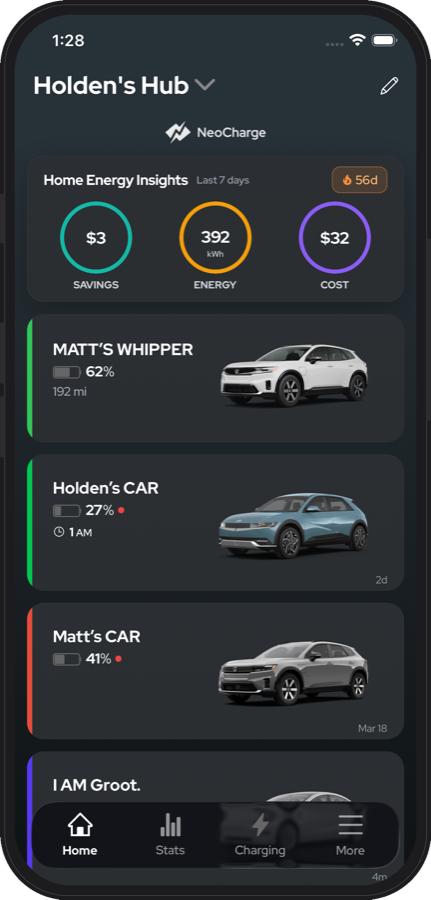
NeoCharge App
Track charging costs without spreadsheet work
See session history, monthly energy use, and savings so the article advice turns into a real household habit.
Explore the app

Next steps
Keep going with NeoCharge
Use the article as your decision guide, then jump into the product, app, or related guides that match what you are trying to solve next.
Key terms
- Level 2 charging
- Level 2 EV charging uses a 240V circuit (like a dryer outlet). It typically adds ~20–35 miles of range per hour, depending on your car and the circuit amperage.
- NEMA 14-50
- A NEMA 14-50 is a common 240V, 50A outlet (often used for EV charging). Many EV chargers plug into it, but the actual charging speed depends on the circuit and your EV.
- NEMA 14-30
- A NEMA 14-30 is a 240V, 30A dryer outlet. With a properly configured EV charger, it can usually support ~24A continuous charging (about 20–25 miles of range per hour for many EVs).
- EVSE
- EVSE stands for Electric Vehicle Supply Equipment (the “charger”). It safely delivers power to your EV and communicates with the car to control charging current.
- Load management
- Load management is a strategy to keep your home’s electrical load within safe limits—often by scheduling or pausing EV charging when other appliances are running.
Related posts

Burnaby EV Charger Installation
Burnaby EV charging by home type: share a dryer outlet instead of a panel upgrade, City permits, BC Hydro's $350 + $200 rebates, and strata right-to-charge.

Richmond EV Charger Installation
Richmond EV charger installation: Technical Safety BC permit fees, the 2018 EV-ready rule, BC Hydro's $350 + $200 rebates, and room for a heat pump.

BC Hydro EV Power Management Device Rebate: Eligible Devices (2026)
BC Hydro pays $200 extra for an eligible EV power management device. The Sept 2026 device list, which chargers qualify, and the permit rule that decides who gets it.

Tesla Charging Cost in Canada (2026): Home vs Supercharger
A full Tesla charge at home costs about $6 to $17 in Canada, depending on your province. Supercharger rates, Ontario ULO overnight math, and cost per 100 km.
