


How to Charge Two EVs at Home in Canada on One 240V Outlet (2026)
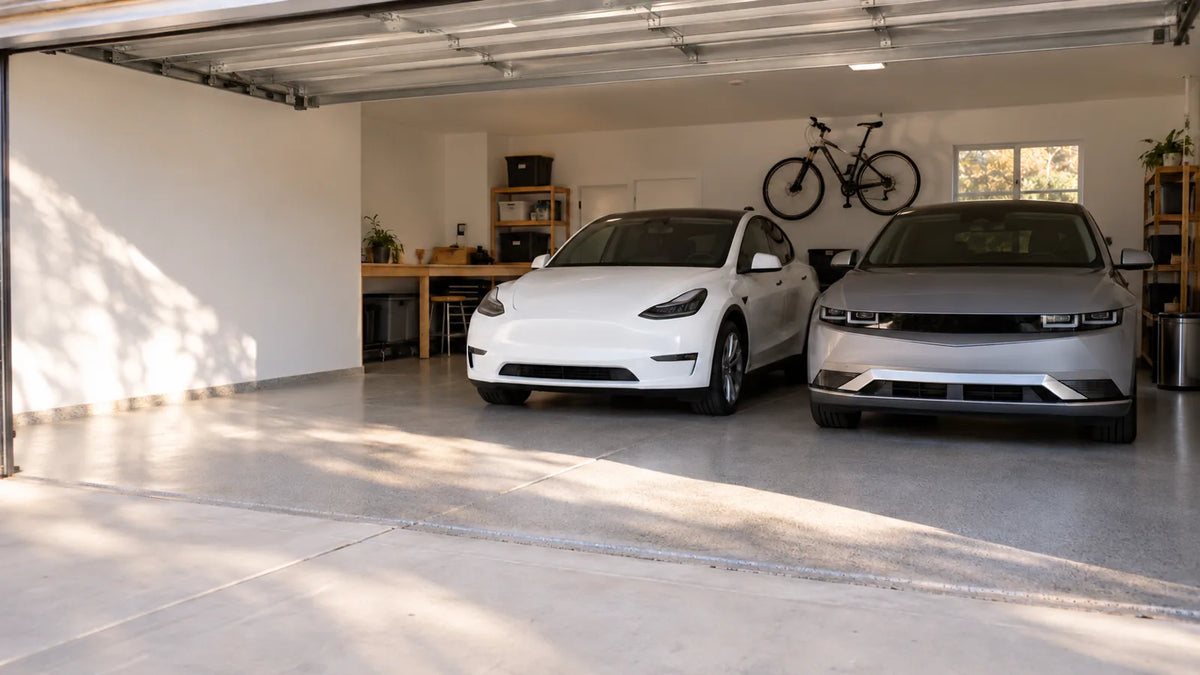
Direct answer: Yes, two EVs can share one 240V circuit in a Canadian home, and for most households it's enough. A 50A circuit charging at 40A adds roughly 360 km of range in an 8-hour night, far more than two typical commutes. The Canadian Electrical Code requires a separate circuit for EV charging unless an energy management system (often called an EVEMS) controls the load, so the sharing has to go through a certified device: a smart splitter on one outlet, two chargers with built-in power sharing, or a dual-port charger. Permit rules vary by province, and B.C. requires one even for plug-in devices.
- What one circuit delivers: about 360 km overnight at 40A, or about 220 km on a 30A dryer circuit at 24A.
- Code: Rule 86-300 allows EV charging to share a circuit when an energy management system is installed.
- Cheapest option: a Smart Splitter on the 240V outlet you already have, $399 CAD at checkout, with a $200 NeoCharge refund once it's connected and charging your EV.
- Permits: required in B.C.; check with your provincial or city electrical authority elsewhere.
- Rebates: BC Hydro pays one charger rebate and one device top-up per address.
Checked October 9, 2026 against the Canadian Electrical Code as published in Ontario's bulletin, Technical Safety BC, provincial and city permit guidance, charger documentation, and the NeoCharge Canadian store.
A second EV is when Canadian homes hit the panel. The first car got the dryer or range outlet; the quote for the second is a new circuit, and on a 100A service that often means a service upgrade and weeks of waiting for the utility. Before you book it, work out how much charging two cars actually need overnight. In most homes, one circuit covers both, as long as a certified device manages it.
Related: Can I charge my EV from a dryer outlet in Canada? · Do you need a panel upgrade for EV charging in Canada? · BC Hydro power management device rebate
How much charging do two EVs need?
Two typical commutes add up to roughly 100 km a day; U.S. survey data puts two-car households at under about 155 km. At about 19 kWh per 100 km, typical of an EV crossover, 100 km takes about 19 kWh into the batteries.
| Circuit | Charging current | Power | Added overnight (8 h) | Time to add 100 km |
|---|---|---|---|---|
| 30A (dryer outlet) | 24A | 5.8 kW | about 220 km | about 3.7 hours |
| 50A (range or EV outlet) | 40A | 9.6 kW | about 360 km | about 2.2 hours |
| 60A (hardwired) | 48A | 11.5 kW | about 435 km | about 1.8 hours |
Assumes 90% charging efficiency and 19 kWh per 100 km. Winter driving uses more energy, so allow extra in January; even then, one 50A circuit leaves plenty of headroom for two commutes.
What the Canadian Electrical Code allows
- Rule 86-300: EV supply equipment needs its own branch circuit, but may share a branch circuit with other loads when an energy management system (EMS, formerly called EVEMS) is installed.
- Rule 8-106: with an EMS, the EV's demand load in the service calculation is limited to what the EMS allows. That's how a second car can be added without a bigger service.
The energy management system can be a device that switches between loads on one circuit, or one that watches the whole service. Either way, it has to be certified for use in Canada.
Four ways to charge two EVs
| Option | What you need | Both at once? | Best for |
|---|---|---|---|
| Smart splitter on one outlet | An existing 240V outlet (14-50 or 14-30) | Takes turns; on a 50A outlet both can charge at once if each is set to 20A | Most homes; no new wiring |
| Two power-sharing chargers | Two compatible hardwired chargers on one circuit | Yes, splitting the limit | New garages and full rewires |
| Dual-port charger | One unit with two cables, on a 14-50 or 6-50 outlet | Yes, 50/50 when both draw full power | Two cars side by side |
| Second circuit | Panel capacity, or a service upgrade | Yes, full speed | Two long commutes, short charging window |
Option 1: a Smart Splitter on the outlet you already have
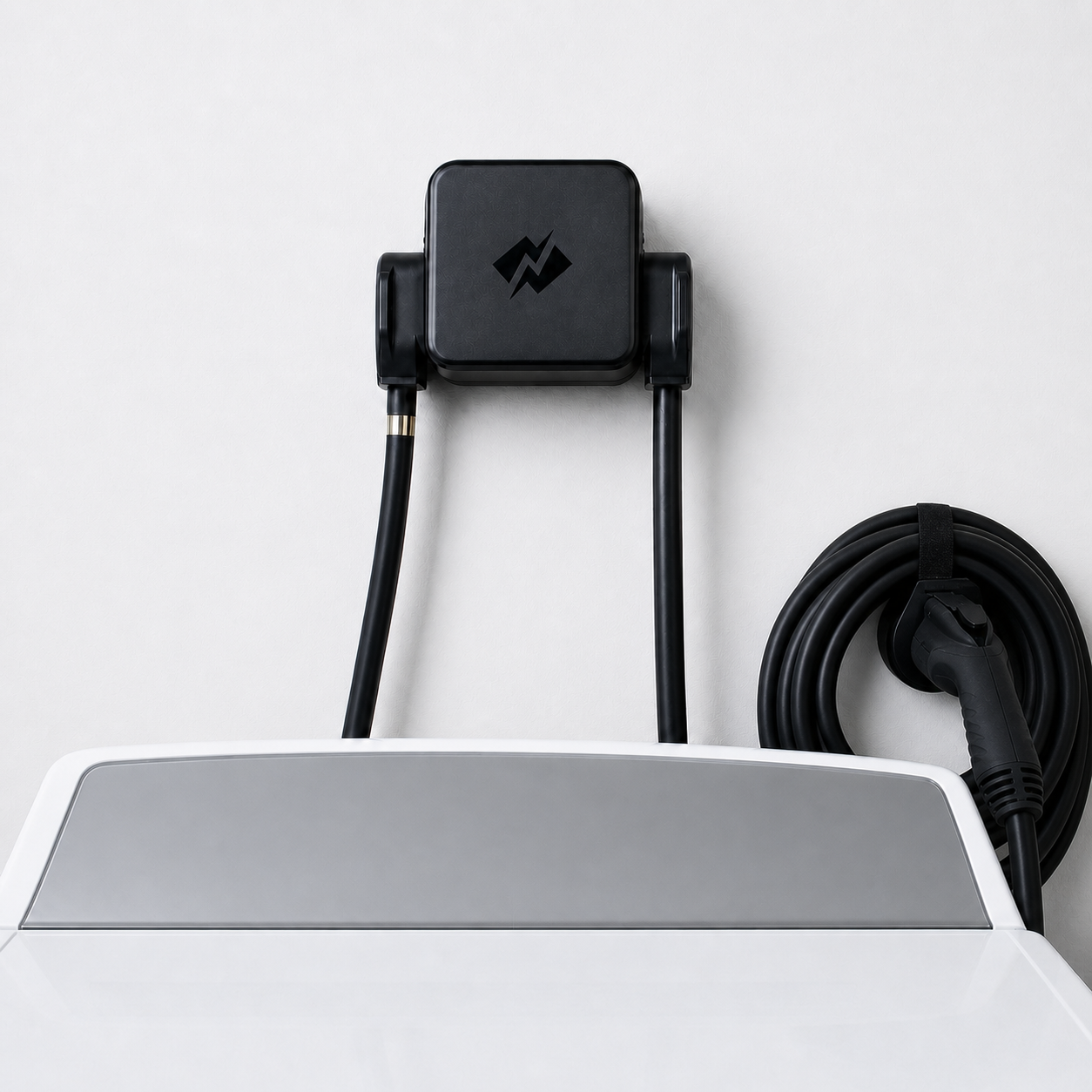
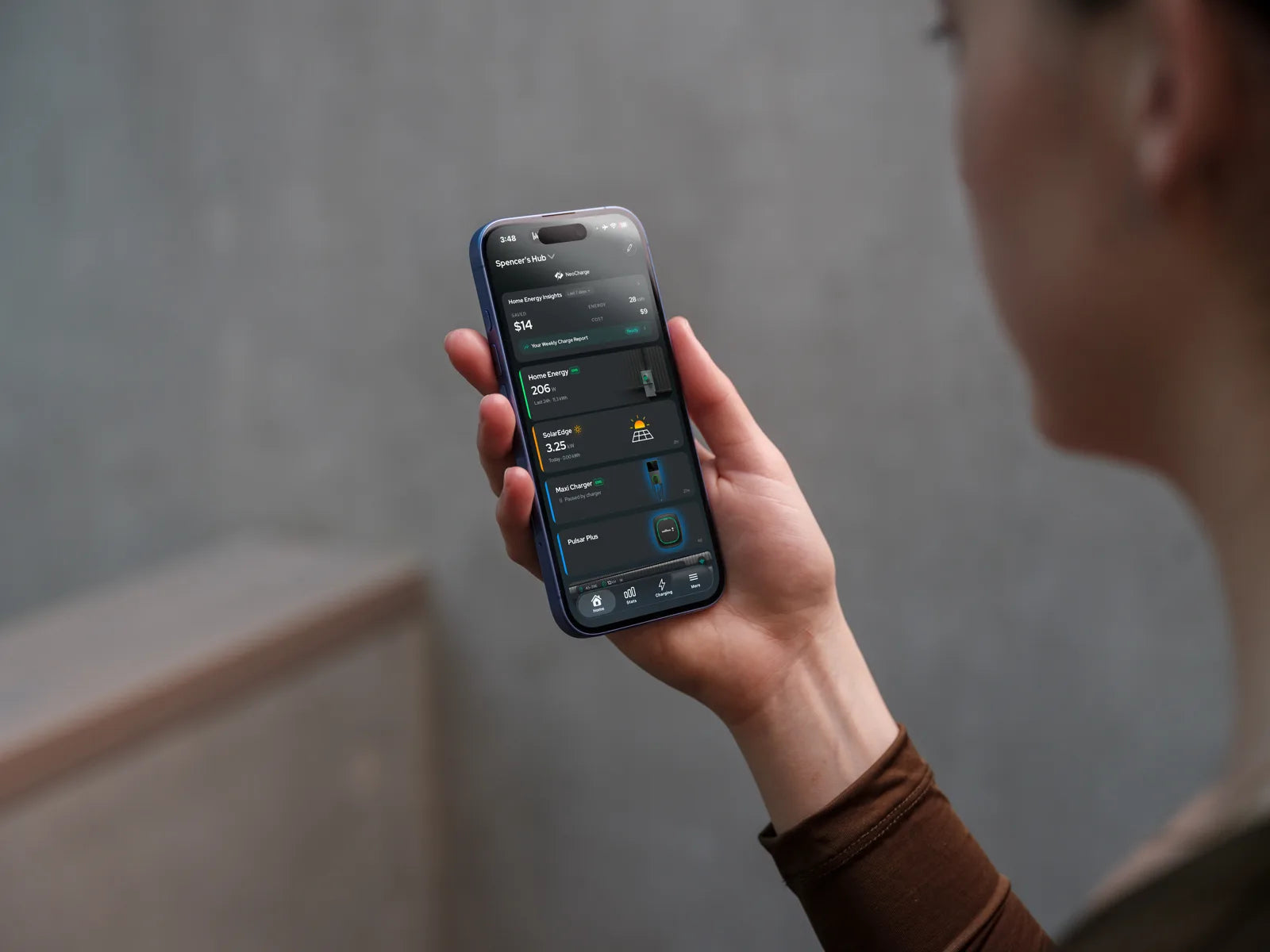
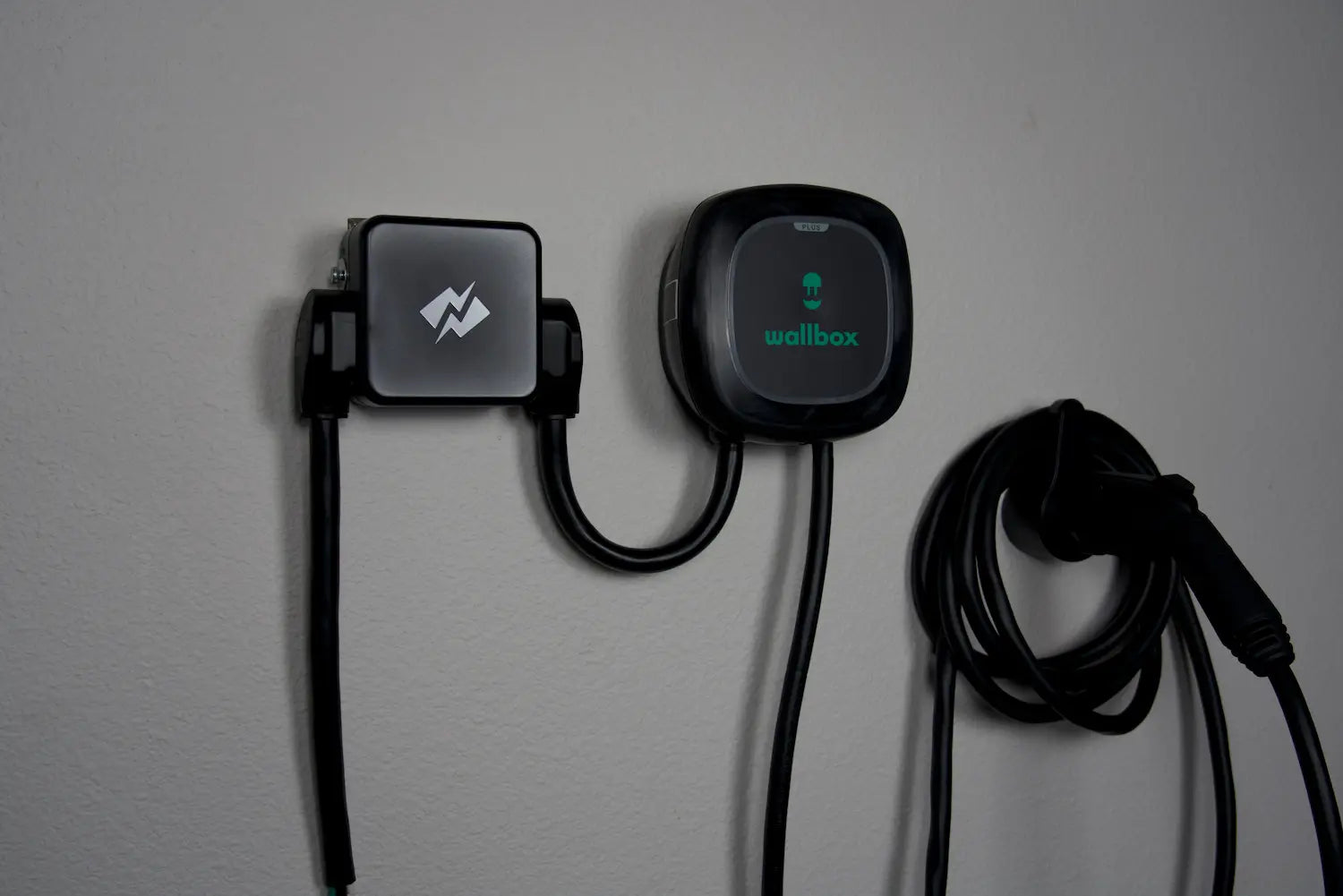
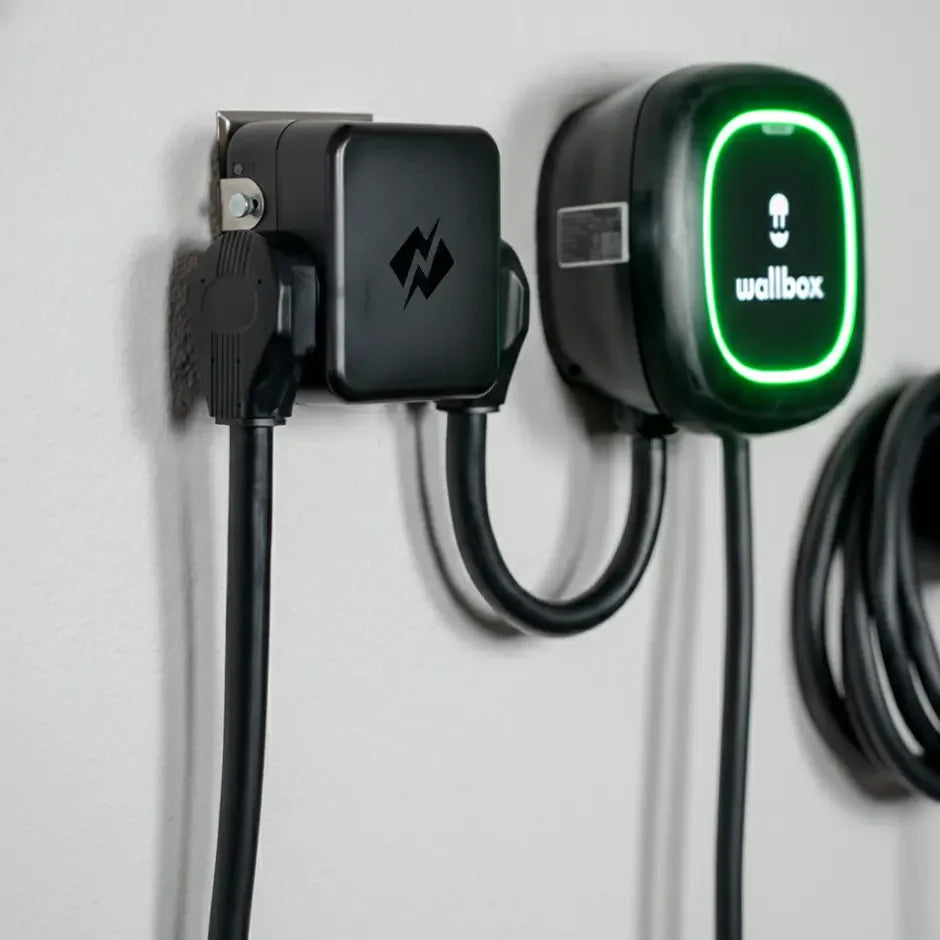
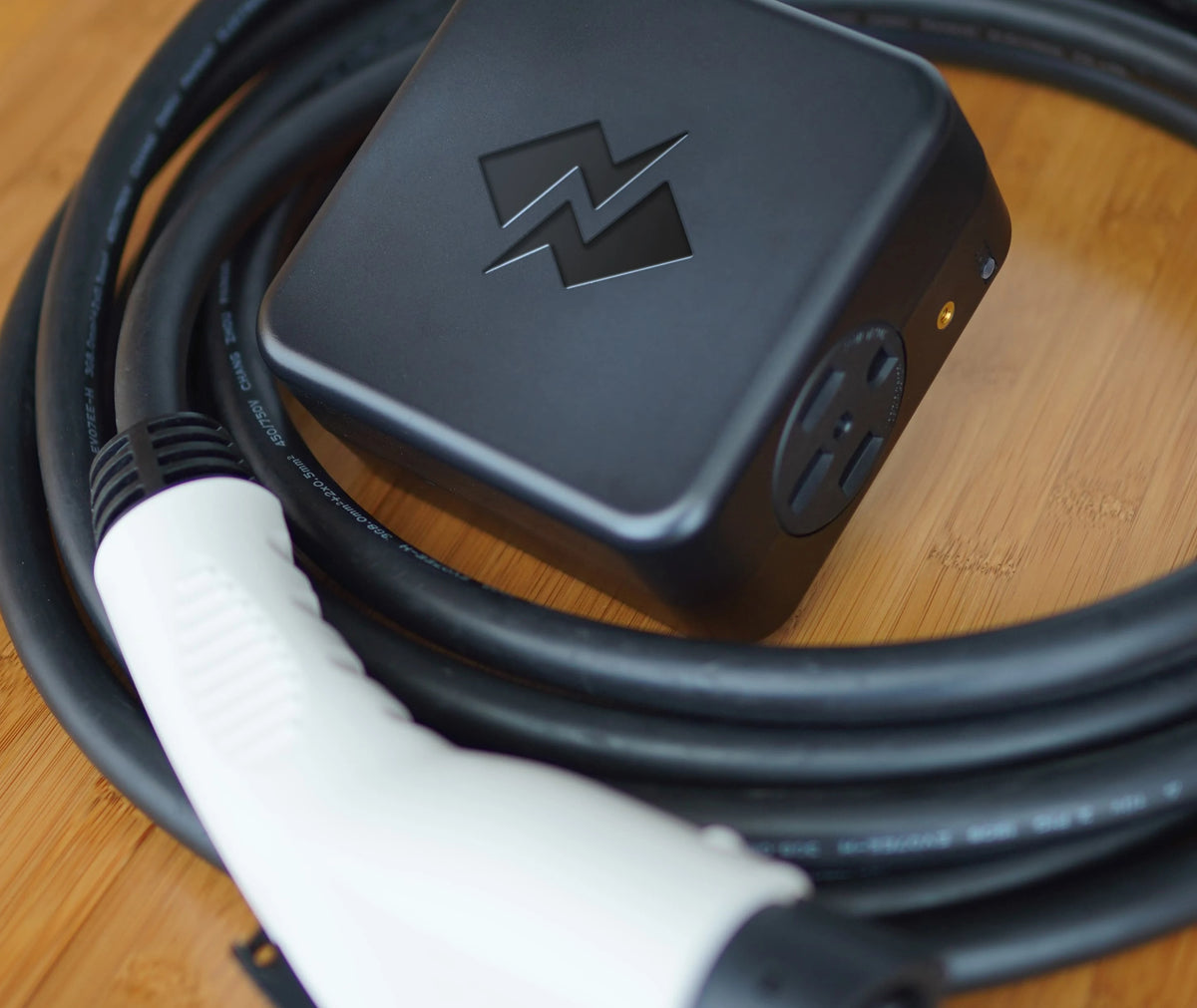
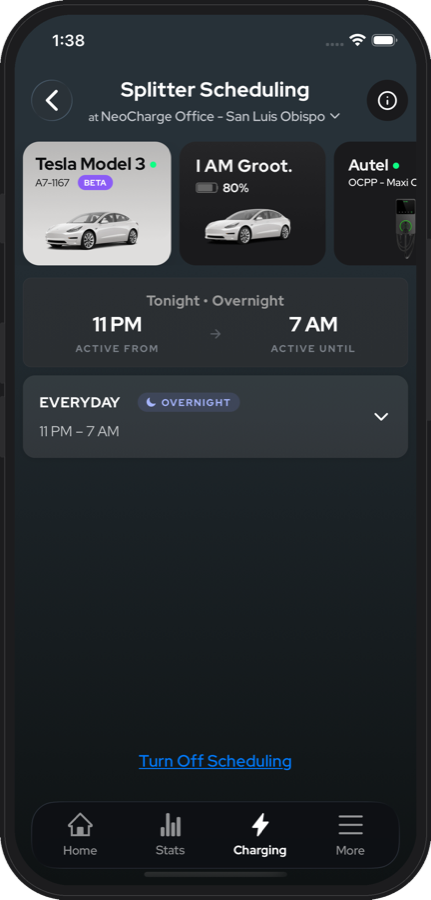
The NeoCharge Smart Splitter plugs into a 240V outlet and provides two. On a 50A outlet it shares up to 40A between two EV chargers; on a 30A dryer outlet, up to 24A. It charges the cars in turn, so the first finishes and the second starts automatically, or, if you set each car to 20A, charges both at once on a 50A outlet. In the NeoCharge app you set a time-of-use schedule, so charging waits for your cheapest overnight hours.
On the Canadian store it is $399 CAD at checkout as of October 9, 2026 ($699 list with $300 off applied automatically), and NeoCharge refunds $200 once it's connected to the app within 30 days and has been charging your EV for 14 days. It's cUL-listed for Canada, comes with a 3-year warranty and 60-day returns, and is on BC Hydro's list of eligible EV power management devices.
Option 2: two chargers that share one circuit
- Tesla Wall Connectors: Gen 3 units share power over Wi-Fi (up to six) but each needs its own circuit. Only the Universal Wall Connector can share one circuit, daisy-chained: up to 48A total on a 60A breaker.
- Wallbox Pulsar Plus: Power Sharing links up to 25 chargers on a common circuit with a data cable, at least 6A each.
This costs more than a splitter, because you buy and install two wall units, but it suits a new build or a garage being rewired.
Option 3: a dual-port charger
The Grizzl-E Duo, built by Ontario-based United Chargers, has two cables in one unit. It delivers 40A to a single car, or splits it 50/50 when both cars draw full power, and plugs into a NEMA 14-50 or 6-50 outlet on a dedicated 50A circuit.
Option 4: a second circuit
Sometimes the answer is another circuit: two long highway commutes, a pickup and an SUV, or a very short charging window. The cost depends on panel space and distance, and the big jump comes if the service needs upgrading. In B.C., BC Hydro's own connection charge for a single-phase service up to 200A is $880 plus GST overhead, or $1,400 plus GST underground, before the electrician's work. Our panel upgrade guide covers when you can avoid it.
Permits, province by province
| Province | Plug-in sharing device on an existing outlet |
|---|---|
| British Columbia | Permit and load calculation required. Technical Safety BC's bulletin covers "plug-in style switching devices designed to connect to an existing receptacle such as a dryer receptacle." Surrey, Burnaby, and Vancouver issue their own permits. |
| Ontario | The Electrical Safety Authority says all EV charger installations require an electrical permit. ESA hasn't published guidance on plug-in splitters specifically, so check with ESA or a licensed electrical contractor. |
| Alberta | Calgary and Edmonton treat an energy management device that shares a dryer or stove circuit as permitted work with a load calculation; Calgary requires a qualified electrical professional to install one. Check with your city. |
| Quebec | Electrical work must be done by an RBQ-licensed contractor. Ask a licensed contractor about a plug-in sharing device on your outlet. |
Any new circuit or outlet needs a permit in every province.
Rebates for a two-EV home
- BC Hydro: up to $350 for a listed charger plus a $200 power management device top-up, installed under a permit. BC Hydro allows one rebate per address, so it covers one charger and one device, not both cars. See our BC Hydro device rebate guide.
- Quebec: the Écorecharge grant for a home charging station requires a connected charger from April 1, 2026, installed by a licensed contractor. See our Quebec home charging guide.
- NeoCharge Canadian EV Charging Rewards: $200 refund per Smart Splitter once it's connected to the app and charging your EV.
Making two cars share smoothly
- Plug the earlier commuter in first, so the car that leaves first finishes first.
- Use the overnight window. Ontario's ultra-low overnight rate and BC Hydro's optional time-of-day rate both reward charging from 11 p.m. to 7 a.m.
- Plan for winter. Range drops in the cold, so give both cars the full night in January.
- Check the receptacle. An outlet that works every night for two cars should be in good condition and rated for the load.
Skip the panel upgrade
Level 2 charging from the outlet you already have
Plug into the 240V dryer outlet you already have. The dryer gets priority and your EV charges the rest of the night, with no panel upgrade and no new circuit. cUL-listed for Canada, and NeoCharge refunds $200 once it is connected and charging your EV.
FAQ
Can two EVs share one circuit in Canada?
Is one 240V outlet enough for two EVs in Canada?
Do I need a permit to add a second EV charger?
Does BC Hydro give a rebate for each EV?
Can two Teslas share one outlet in Canada?
Bottom line
A second EV in a Canadian home rarely needs a second circuit. One 50A circuit covers two commutes with hours to spare, and the Canadian Electrical Code allows sharing it through a certified energy management system. Pick the sharing method that fits your garage, check your province's permit rules, and save the service upgrade for when both cars truly need full speed at once.
Next steps (NeoCharge)
- Choose your outlet on the Smart Splitter product page: $399 CAD at checkout as of October 9, 2026, plus a $200 refund after you connect it for EV charging.
- Look up rebates for your postal code with the Canadian rebate finder.
- In B.C.? Start with the BC Hydro power management device rebate guide.
Sources
Checked October 9, 2026:
- Electrical Safety Authority (Ontario), Bulletin 86-1-7 (May 2025): Canadian Electrical Code Rules 86-300 and 8-106, and EV charging systems
- Technical Safety BC, Information Bulletin IB-EL 2023-05, Revision 3 (March 4, 2025)
- City of Calgary, Homeowner trades permits; City of Edmonton, EV charger permit and inspection process
- Gouvernement du Québec, Choosing a residential charging station (connected-charger rule) and home charging station installation
- Tesla, Gen 3 Wall Connector installation manual and power sharing application note
- Wallbox, Pulsar Plus Power Sharing guide
- United Chargers, Grizzl-E Duo manual v4.4
- BC Hydro, EV power management device rebates and connection fees
- NeoCharge Canadian store, Smart Splitter pricing, refund, warranty, and returns, October 9, 2026
Electrical safety disclaimer
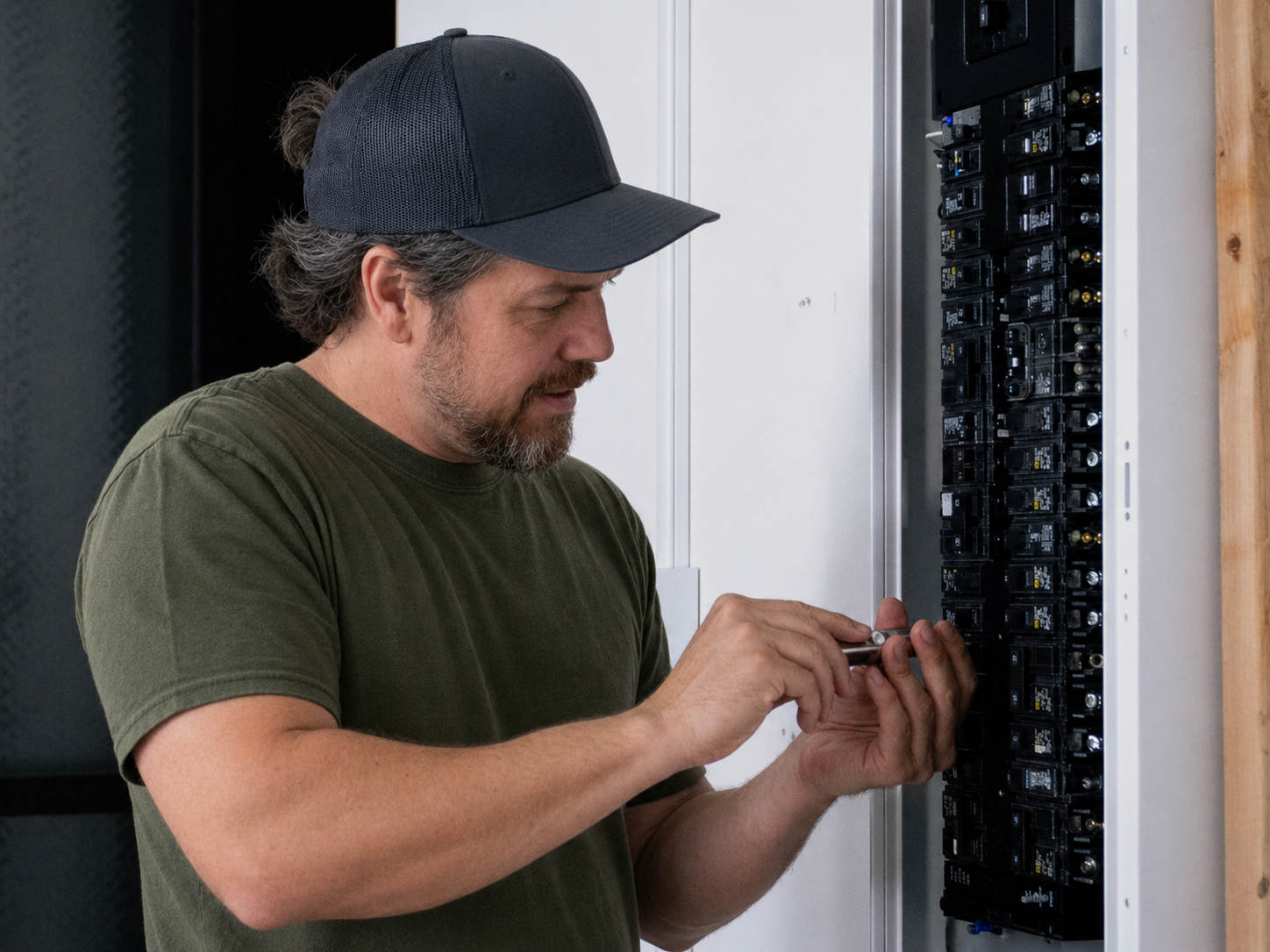
This article is general information, not electrical advice. EV charging equipment must be installed according to the Canadian Electrical Code, your province's amendments and permit rules, manufacturer instructions, and the judgment of a licensed electrician. Never share a circuit between two chargers without a certified device or system that controls the combined load.
NeoCharge App
Turn rate plans into simple charging schedules
Schedule around off-peak windows, manage compatible chargers, and keep tabs on charging sessions from the app.
Explore the app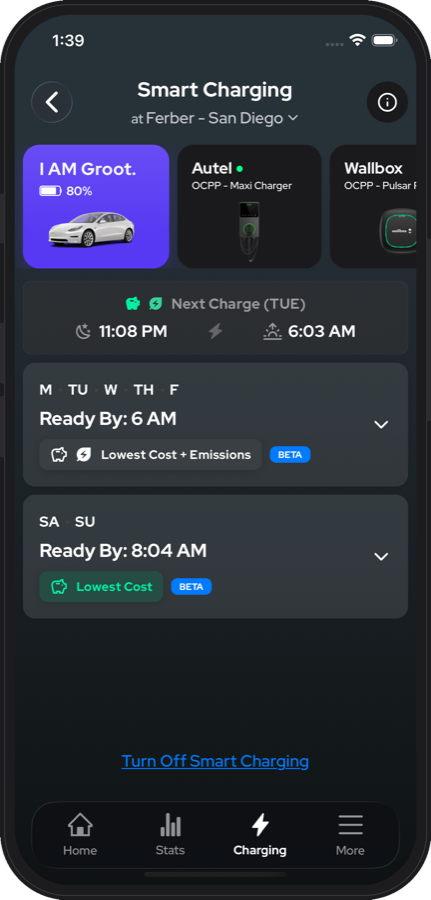
Next steps
Keep going with NeoCharge
Use the article as your decision guide, then jump into the product, app, or related guides that match what you are trying to solve next.
Key terms
- NEMA 14-50
- A NEMA 14-50 is a common 240V, 50A outlet (often used for EV charging). Many EV chargers plug into it, but the actual charging speed depends on the circuit and your EV.
- NEMA 14-30
- A NEMA 14-30 is a 240V, 30A dryer outlet. With a properly configured EV charger, it can usually support ~24A continuous charging (about 18 miles of range per hour for a mid-size EV).
- Time-of-use (TOU) rates
- Time-of-use rates are utility pricing plans where electricity costs more at peak hours and less off-peak. Scheduling EV charging off-peak can significantly reduce cost.
Related posts


Burnaby EV Charger Installation
Burnaby EV charging by home type: share a dryer outlet instead of a panel upgrade, City permits, BC Hydro's $350 + $200 rebates, and strata right-to-charge.
Richmond EV Charger Installation
Richmond EV charger installation: Technical Safety BC permit fees, the 2018 EV-ready rule, BC Hydro's $350 + $200 rebates, and room for a heat pump.
Surrey EV Charger Installation
Add Level 2 charging in Surrey without a panel upgrade: City of Surrey permit steps, BC Hydro's $350 + $200 rebates, suited-house load math, and overnight costs.

BC Hydro EV Power Management Device Rebate: Eligible Devices (2026)
BC Hydro pays $200 extra for an eligible EV power management device. The Sept 2026 device list, which chargers qualify, and the permit rule that decides who gets it.
