




Montreal Home EV Charging Guide: Hydro-Quebec Rates, Flex D, Dryer Outlets, and Smart Charging

Direct answer: For most Montreal-area homes, the simplest reliable Level 2 EV charging path is sharing a NEMA 14-30 dryer outlet with a Smart Splitter and scheduling charging overnight to avoid Hydro-Québec winter peak events on Flex D (Dec 1–Mar 31, up to 120 hours total). If you want the $600 Écorecharge grant, choose a connected charging station — required for eligibility from April 1, 2026.
Quebec gives you a great EV deal — if you set it up right
You already know the headline: Quebec has some of the cleanest, cheapest electricity in Canada. That's why everyone you know in Montreal, Laval, Longueuil, Brossard, Terrebonne, Sherbrooke, and Gatineau seems to be driving an EV.
But that doesn't mean home charging is automatic. Whether you're in a duplex in the Plateau or a single-family in Brossard, you still need to answer five things:
- What outlet do I actually have in the garage or basement?
- Can I charge overnight?
- Should I be on Hydro-Québec Flex D, or does it punish me?
- Can my panel handle another big load?
- Is a Smart Splitter going to be cheaper than running a new circuit?
Let's go through them.
The Flex D trap (and how to avoid it)
Hydro-Québec's Flex D rate sounds great on paper: lower rates most of the winter, except during peak demand events when prices spike. Peak events happen from December 1 through March 31, usually on cold mornings and evenings, up to 120 hours total.
Here's the trap: if your EV is plugged in and charging during one of those peak events, you're paying premium prices for a 7-hour session. A few of those undo the whole-year savings.
Here's the fix: schedule your charging. As long as your car only charges during off-peak hours — or pauses automatically when a peak event is called — Flex D is a great deal. If you just plug in and let it run on dumb timer, it's a coin flip.
That's why "smart" charging in Quebec isn't a marketing word. It's a survival feature.
That four-prong plug behind your dryer probably charges your EV
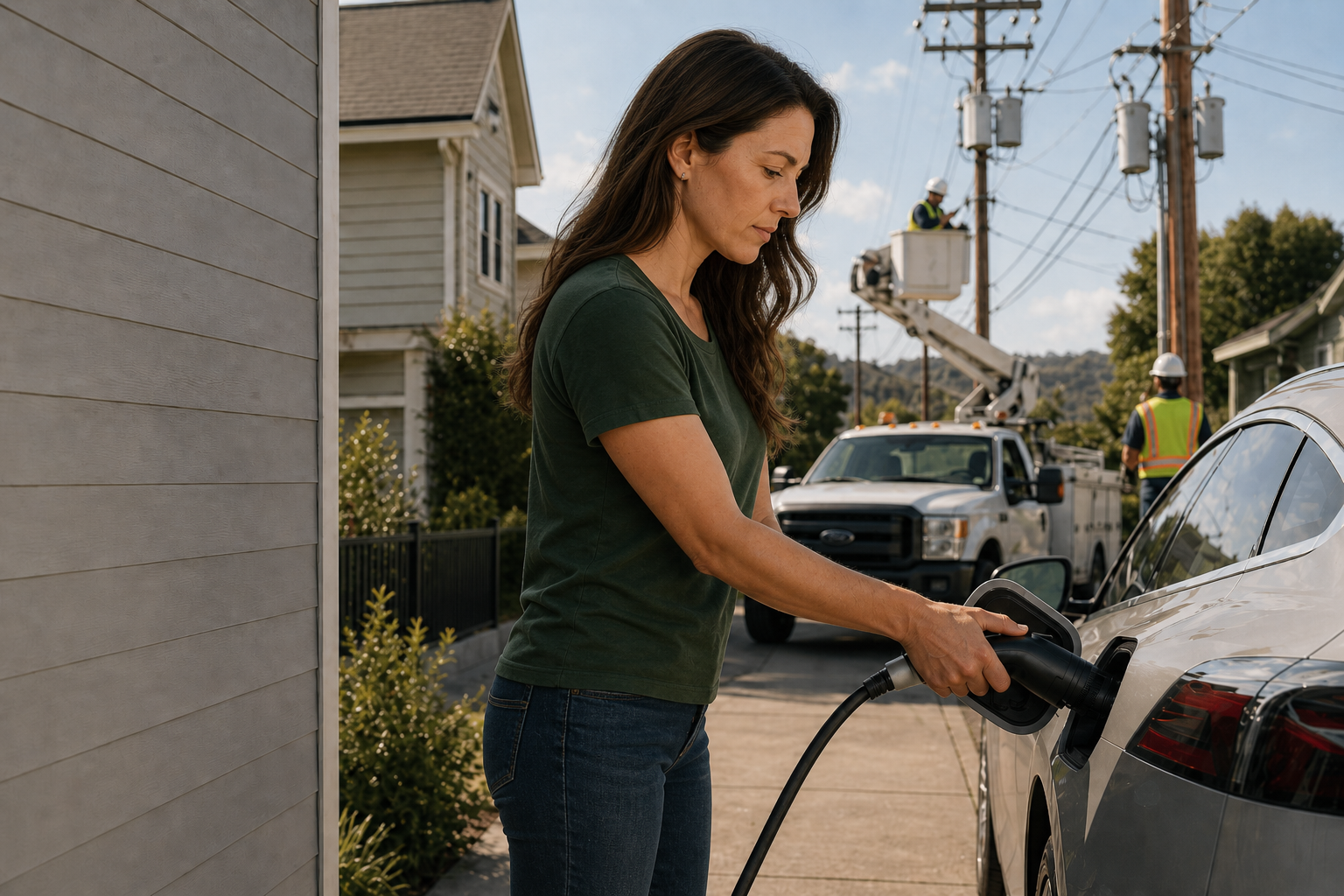
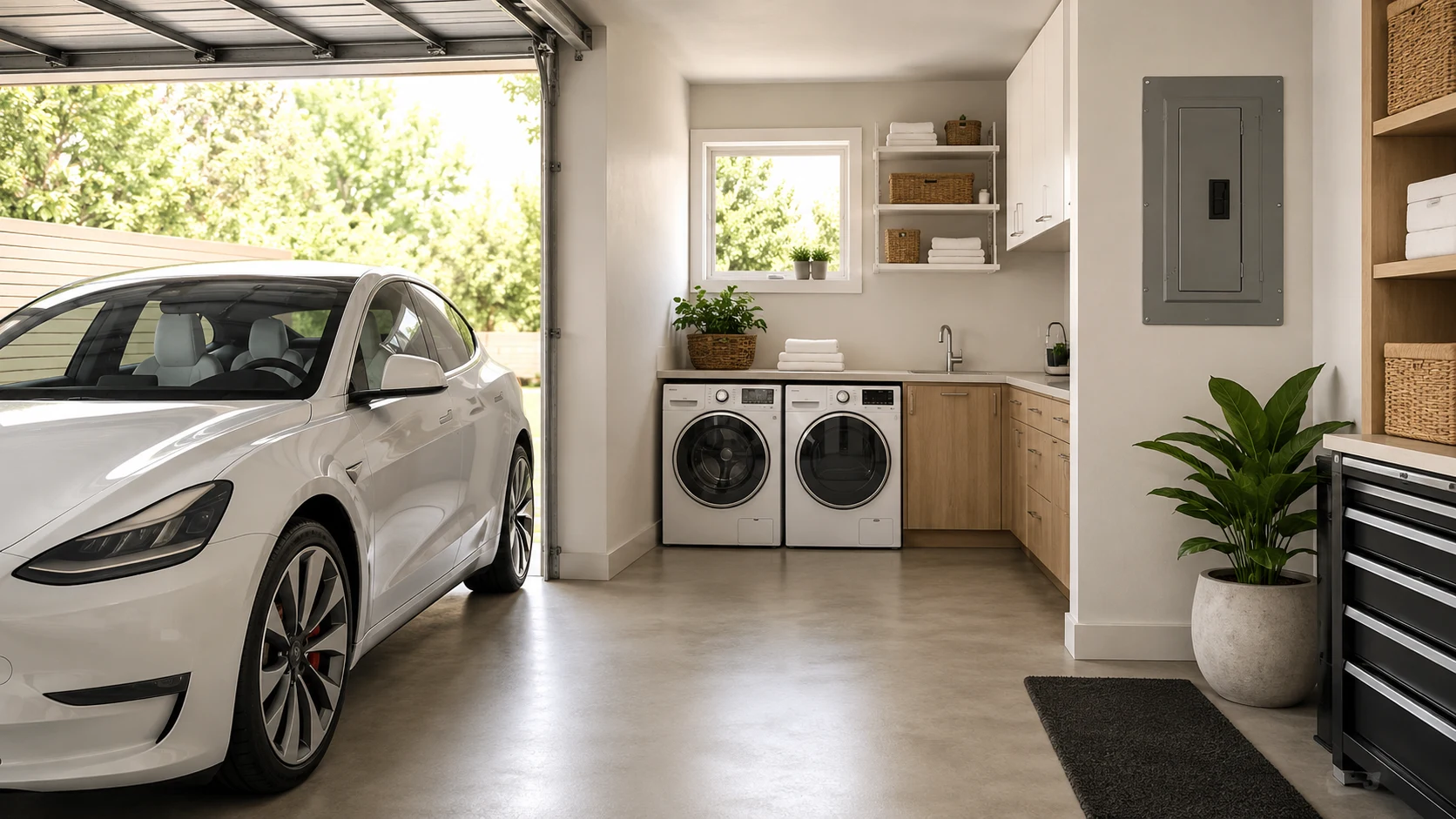
If your laundry room has a four-prong outlet, it's almost certainly a NEMA 14-30 — a 30A, 240V circuit. With proper equipment that limits charging current to ~24A continuous, it can deliver real Level 2 charging: roughly 30–35 km of range per hour, or a full normal commute overnight.
Quick safety check before you use it:
- Confirm it's a NEMA 14-30, not an older three-prong dryer outlet (those are NEMA 10-30, less safe for EV charging).
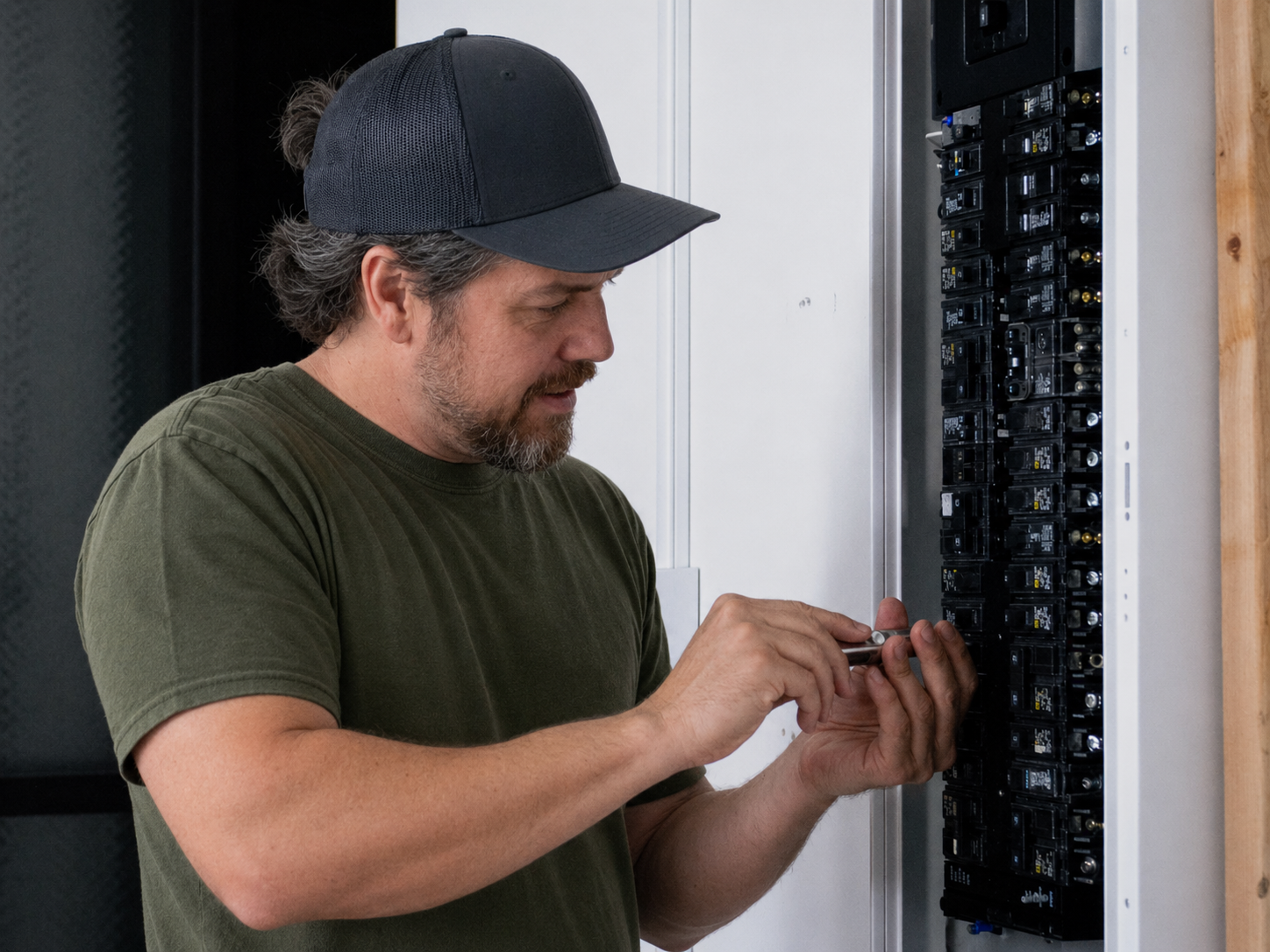
- Have a licensed electrician inspect the breaker, wiring, and receptacle condition.
- Use EV equipment that limits current properly — set it to ~24A, not the default 32A or 40A.
- No extension cords. No cheap adapters. Ever.
- If you're sharing with the dryer, use automatic load sharing — not "I'll just unplug it when I'm done."
Why the Smart Splitter is usually the right answer in Montreal
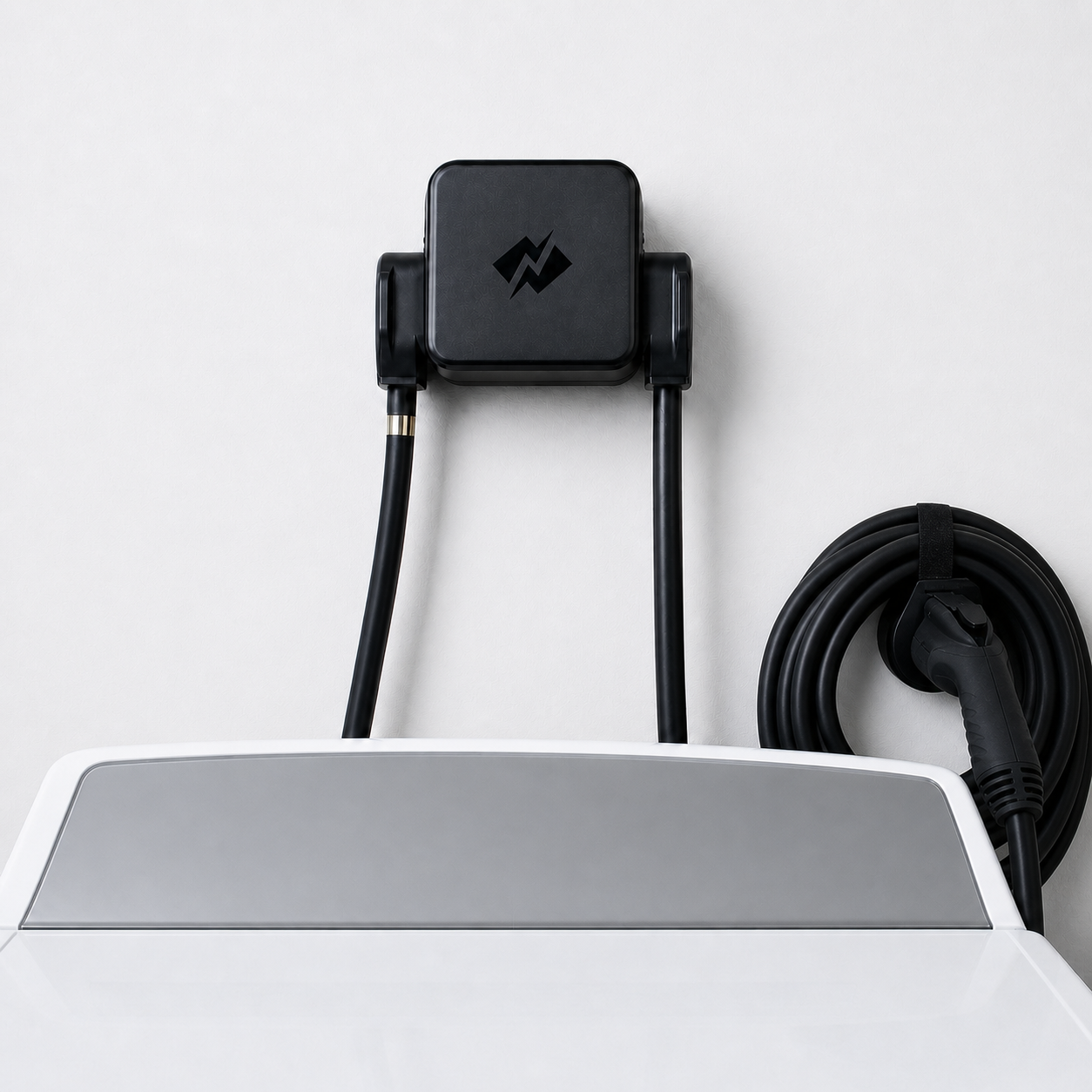
If you already have 240V power near where you park and you don't want to spend thousands on a panel project, the Smart Splitter is built for exactly your situation. It:
- Lets your EV and dryer share one outlet safely — no plug-swapping
- Pauses whichever device isn't actively needed so the circuit never overloads
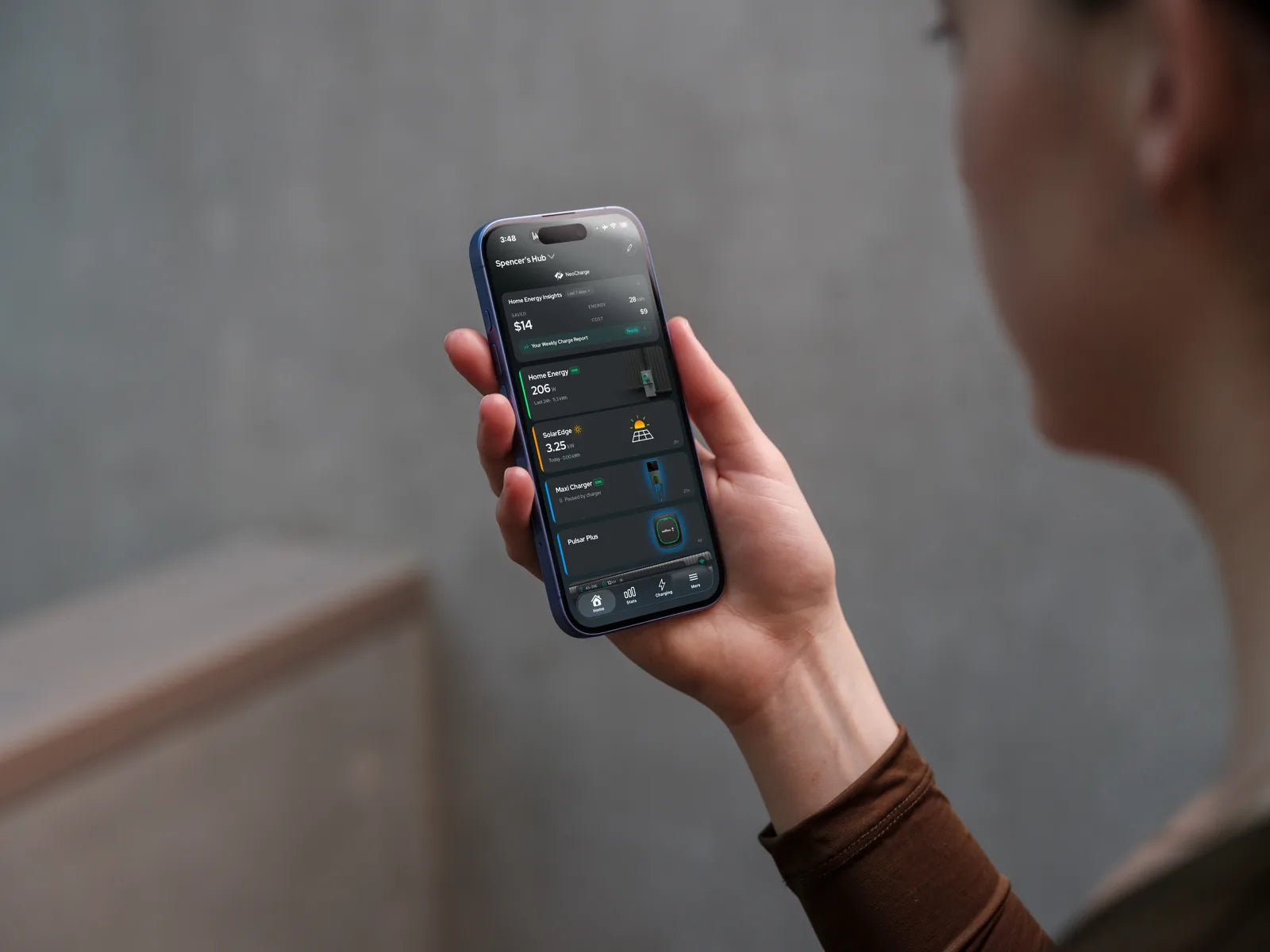
- Works with the NeoCharge app so you can schedule charging around Flex D peak events
- Keeps your panel out of the conversation — you're not adding a new circuit, just managing the one you already have
If your electrician quoted a panel upgrade, ask them this instead: "Can a load-management device do the job here?" In most Montreal homes, the answer is yes.
Montreal home charging offer
The Smart Splitter is $399 CAD at checkout as of October 9, 2026, with $300 off the list price applied automatically. NeoCharge refunds $200 once it is connected to the app and charging your EV.
If you use a dynamic rate like Flex D, make sure EV charging can avoid expensive winter peak events.
This guide applies wherever you live in Quebec
The setup, the rate plans, and the rebate framework are the same whether you're in Montreal, Laval, Longueuil, Brossard, Terrebonne, Sherbrooke, Gatineau, or Lévis. Only your garage layout changes.
Common questions, answered straight
- Is home EV charging actually cheap in Quebec? Yes — usually among the cheapest in Canada. But the rate plan you're on and how you handle winter peak events make a real difference.
- Should I switch to Hydro-Québec Flex D? Only if you're confident you can avoid charging during peak demand events (Dec 1–Mar 31, up to 120 hours total). Schedule your charger properly and Flex D pays off. Let it run on dumb timer and it can cost you.
- Can I really charge from my dryer outlet? Usually yes, if a licensed electrician confirms the circuit is safe and you set your EV charging current correctly. A NEMA 14-30 gives you about 24A continuous — enough for a normal Montreal commute overnight.
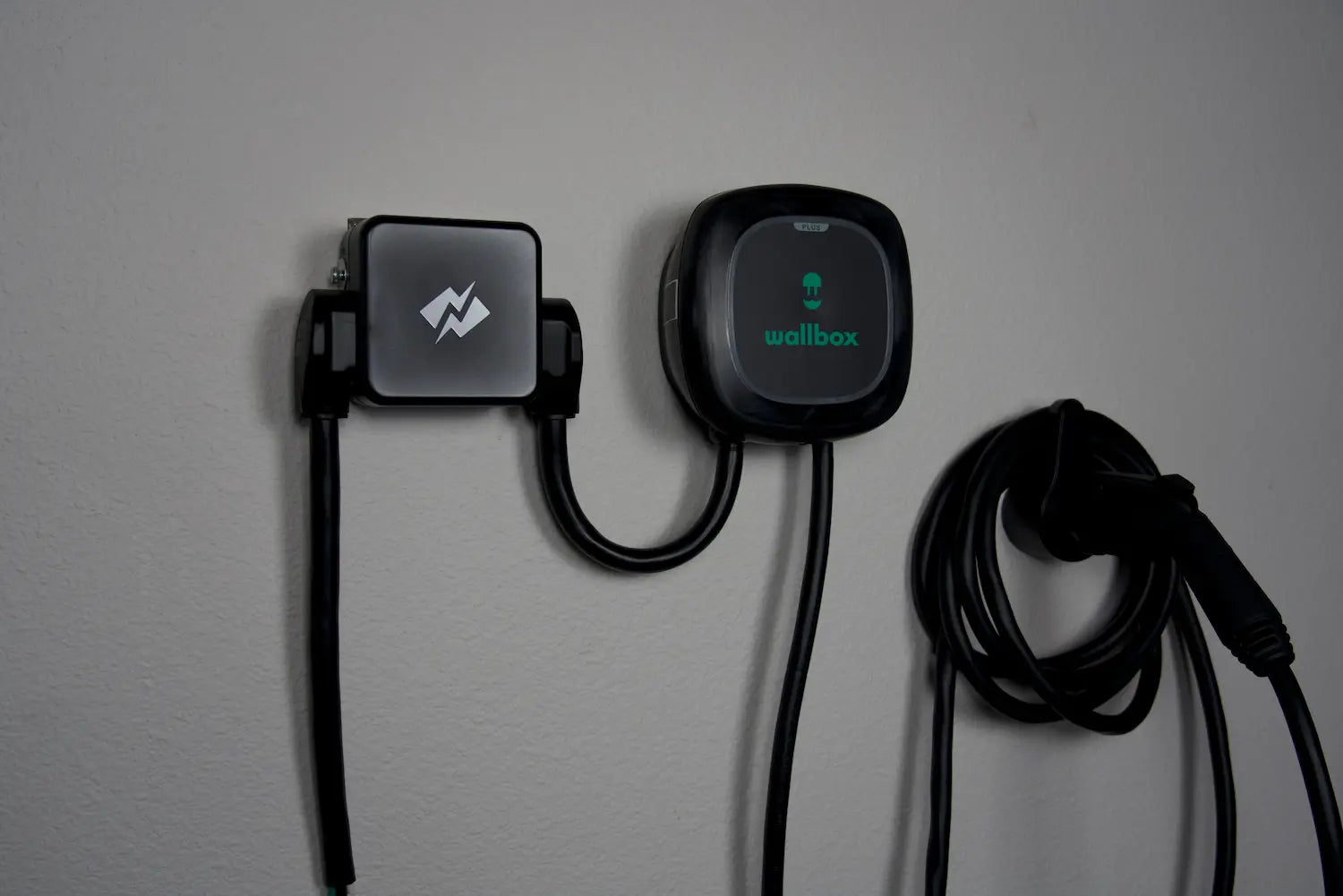
- Do I qualify for the $600 Écorecharge grant? Possibly — verify on Québec.ca. The big change for 2026: from April 1, only *connected* charging stations are eligible. Buy a charger you can schedule and control remotely, not a dumb one.
- How much does the Smart Splitter cost in Canada? $399 CAD at checkout as of October 9, 2026: the $699 list price with $300 off applied automatically, no code needed. NeoCharge then refunds $200 once it has been connected to the app and charging your EV for 14 days.
Sources
- Hydro-Quebec Flex D: hydroquebec.com
- Hydro-Quebec EV charging information: hydroquebec.com
- NeoCharge NEMA 14-30 guide: getneocharge.com
NeoCharge App
Turn rate plans into simple charging schedules
Schedule around off-peak windows, manage compatible chargers, and keep tabs on charging sessions from the app.
Explore the app


Next steps
Keep going with NeoCharge
Use the article as your decision guide, then jump into the product, app, or related guides that match what you are trying to solve next.
Key terms
- Level 2 charging
- Level 2 EV charging uses a 240V circuit (like a dryer outlet). It typically adds ~20–35 miles of range per hour, depending on your car and the circuit amperage.
- NEMA 14-30
- A NEMA 14-30 is a 240V, 30A dryer outlet. With a properly configured EV charger, it can usually support ~24A continuous charging (about 20–25 miles of range per hour for many EVs).
- Load management
- Load management is a strategy to keep your home’s electrical load within safe limits—often by scheduling or pausing EV charging when other appliances are running.
FAQs
What's the quick takeaway from this article?
Who is this guide for?
What should I do next?
Related posts


Burnaby EV Charger Installation
Burnaby EV charging by home type: share a dryer outlet instead of a panel upgrade, City permits, BC Hydro's $350 + $200 rebates, and strata right-to-charge.

Richmond EV Charger Installation
Richmond EV charger installation: Technical Safety BC permit fees, the 2018 EV-ready rule, BC Hydro's $350 + $200 rebates, and room for a heat pump.

Surrey EV Charger Installation
Add Level 2 charging in Surrey without a panel upgrade: City of Surrey permit steps, BC Hydro's $350 + $200 rebates, suited-house load math, and overnight costs.

BC Hydro EV Power Management Device Rebate: Eligible Devices (2026)
BC Hydro pays $200 extra for an eligible EV power management device. The Sept 2026 device list, which chargers qualify, and the permit rule that decides who gets it.
