



Charging an EV With a NEMA 14-30 Dryer Outlet: Safety, Speed, and Smart Splitter Options

Direct answer: Yes, you can charge an EV from a NEMA 14-30 dryer outlet if the outlet, breaker, wiring, and EV charger are suitable. Because a 14-30 is usually a 30A circuit and EV charging is a continuous load, the practical charging limit is commonly 24A, or about 5.7 kW on a 240V circuit. That is enough for many overnight drivers, but the setup needs the right current limit, a healthy receptacle, and a safe plan if the outlet is shared with a dryer.
What is a NEMA 14-30 outlet?
A NEMA 14-30 is a 240V, 30A outlet commonly used for electric dryers. It has four prongs: two hot conductors, one neutral, and one ground. That makes it different from older three-prong dryer outlets, usually called NEMA 10-30, and different from larger EV/RV-style outlets like NEMA 14-50.
For EV owners, the appeal is obvious: many homes already have a 240V dryer circuit, and 240V Level 2 charging is much faster than a standard 120V wall outlet.
The catch is that the outlet shape is only one part of the answer. The breaker size, wire size, receptacle condition, charger plug, current limit, and local electrical rules all matter.
Can you charge an EV from a NEMA 14-30?
Yes, if the setup is safe and correctly limited. A NEMA 14-30 can be a practical Level 2 charging option when:
- the circuit is correctly wired and protected by the right breaker
- the receptacle is modern, tight, and undamaged
- the EVSE or vehicle can reliably limit charging to the right amperage
- the outlet is not being overloaded by another appliance at the same time
- any required permits, inspections, and local code requirements are followed
For background on home charging and code compliance, the U.S. Department of Energy notes that home EV charging equipment should be installed in accordance with local, state, and national codes: DOE home charging overview
The 24A rule: why 30A does not mean 30A charging
EV charging usually runs for hours, so it is commonly treated as a continuous load. Continuous loads need margin so wiring, breakers, terminals, and receptacle contacts are not pushed at their maximum rating for long overnight sessions.
For a typical 30A dryer circuit:
- Circuit rating: 30A
- Common continuous-load limit: 30A x 80% = 24A
- Charging power at 240V: 24A x 240V = 5,760W, or about 5.7 kW
That is the number many EV owners should think about. A NEMA 14-30 is not a 7.2 kW EV outlet in normal continuous-use planning. It is usually closer to 5.7 kW when configured safely.
How fast is NEMA 14-30 EV charging?
At about 5.7 kW, many EVs add roughly 20-25 miles of range per hour. The exact number depends on vehicle efficiency, temperature, battery preconditioning, charger efficiency, and whether the car tapers charging near full.
For normal daily driving, that is often enough:
| Charging setup | Typical circuit | Common EV charging current | Approx. power | Best for |
|---|---|---|---|---|
| Level 1 wall outlet | 120V / 15A | 12A | 1.4 kW | Short commutes, backup charging |
| NEMA 14-30 dryer outlet | 240V / 30A | 24A | 5.7 kW | Overnight Level 2 charging |
| NEMA 14-50 outlet | 240V / 50A | 40A | 9.6 kW | Faster home charging |
| Hardwired EV charger | varies | often 32A-48A | 7.7-11.5 kW | Dedicated long-term installs |
If your car sits at home for 8-10 hours overnight, a 14-30 may cover a normal commute without needing a panel upgrade or new high-amperage circuit.
NEMA 14-30 vs NEMA 10-30 vs NEMA 14-50
The names look similar, but they should not be treated as interchangeable.
| Outlet | Common use | Typical rating | EV charging note |
|---|---|---|---|
| NEMA 14-30 | Modern electric dryer | 30A / 240V | Often usable at 24A continuous if the setup is suitable |
| NEMA 10-30 | Older three-prong dryer outlet | 30A / 240V | Needs extra caution because it lacks a separate equipment ground |
| NEMA 14-50 | EV/RV/range-style outlet | 50A / 240V | Common EV outlet, often supports 40A continuous when installed correctly |
| NEMA 6-50 | Welder/EV outlet | 50A / 240V | Common for plug-in EVSEs; no neutral |
Do not solve mismatch problems with random adapters. If your charger plug does not match your outlet, the right answer is usually a properly matched EVSE, a permitted receptacle change, a hardwired install, or a load-sharing setup designed for the actual circuit.
Tesla, J1772, and adapter notes
The outlet does not charge the car directly. Your EVSE does. That matters because:
- Some portable EV chargers offer a NEMA 14-30 plug and automatically set the correct current.
- Some chargers require manual current configuration in the charger or vehicle.
- Some vehicles may remember current settings by location, but you should still verify the actual charging current.
- Tesla owners may need the right Mobile Connector adapter for a 14-30 outlet.
- J1772 vehicles need a compatible EVSE that is rated and configured for the circuit.
The practical rule: confirm the EVSE is intended for a 30A circuit and confirm the car is not requesting more than the circuit can safely provide.
What EV charger do you need for a NEMA 14-30 dryer outlet?
For a 30 amp dryer outlet, look for an EV charger or portable EVSE that explicitly supports a NEMA 14-30 plug or can be hard-limited to 24A or lower. The best EV charger for a dryer outlet is not the highest-amp model you can buy. It is the one that matches the circuit safely and holds the correct current limit.
Good options usually fall into three groups:
- Portable EVSE with a NEMA 14-30 plug: simplest when the outlet is in good condition and close to the car.
- Adjustable plug-in EV charger: workable only if the current limit can be reliably set and maintained.
- Hardwired EV charger at lower amperage: useful when an electrician repurposes or relocates a circuit.
If your search is "EV charger for dryer outlet," "Tesla dryer outlet adapter," or "NEMA 14-30 adapter for EV charging," the safety question is the same every time: does the equipment keep the car at the correct current for the actual circuit?
When a dryer outlet is a good EV charging option
A NEMA 14-30 dryer outlet can make sense when:
- you drive a normal daily commute and park at home overnight
- the outlet is close enough to the parking spot without extension cords
- the circuit is in good condition
- the EVSE can be set to 24A or lower
- you want Level 2 charging without immediately adding a new dedicated circuit
- the dryer and EV can be safely managed with load-sharing hardware if they use the same outlet
This is exactly why dryer outlets matter for home EV charging. They are not the fastest possible setup, but they can be the most practical setup for many homes.
When not to use a NEMA 14-30 for EV charging
Do not rely on a dryer outlet for EV charging if:
- the outlet is loose, cracked, discolored, buzzing, or warm/hot during use
- the plug does not fit firmly
- the breaker trips repeatedly
- the wiring history is unknown or visibly modified
- the circuit has aluminum wiring concerns
- you need an extension cord to reach the vehicle
- the EVSE cannot reliably limit current
- the dryer and EV could run at the same time on the same circuit
If any of those are true, stop and have the setup evaluated. A long EV charging session will expose weak electrical connections more aggressively than a short appliance cycle.
Sharing a dryer outlet with an EV charger
A dryer circuit is not meant to power a dryer and an EV charger at full draw at the same time. The unsafe version is a cheap Y-splitter or a manual routine where everyone in the house has to remember not to run both loads.
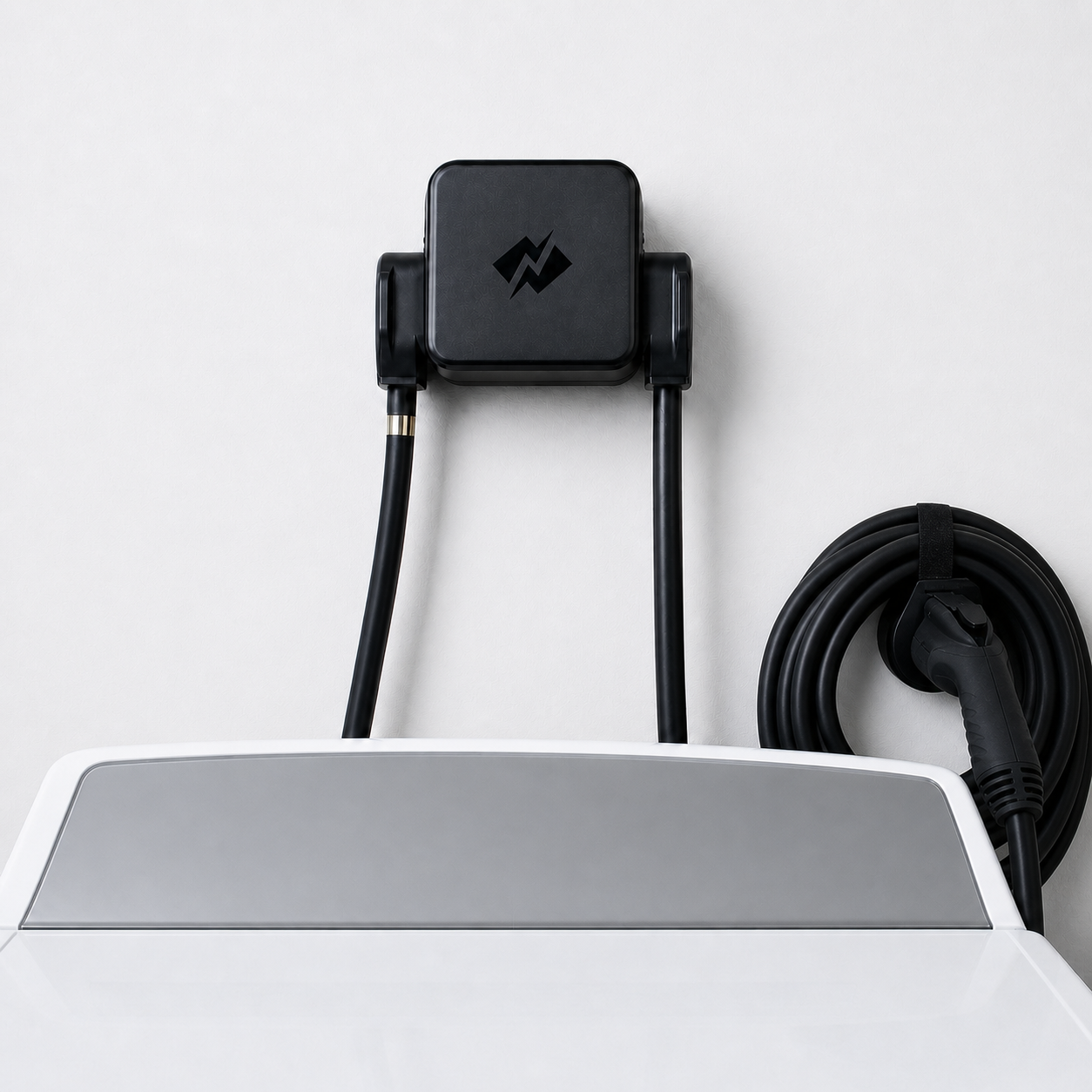
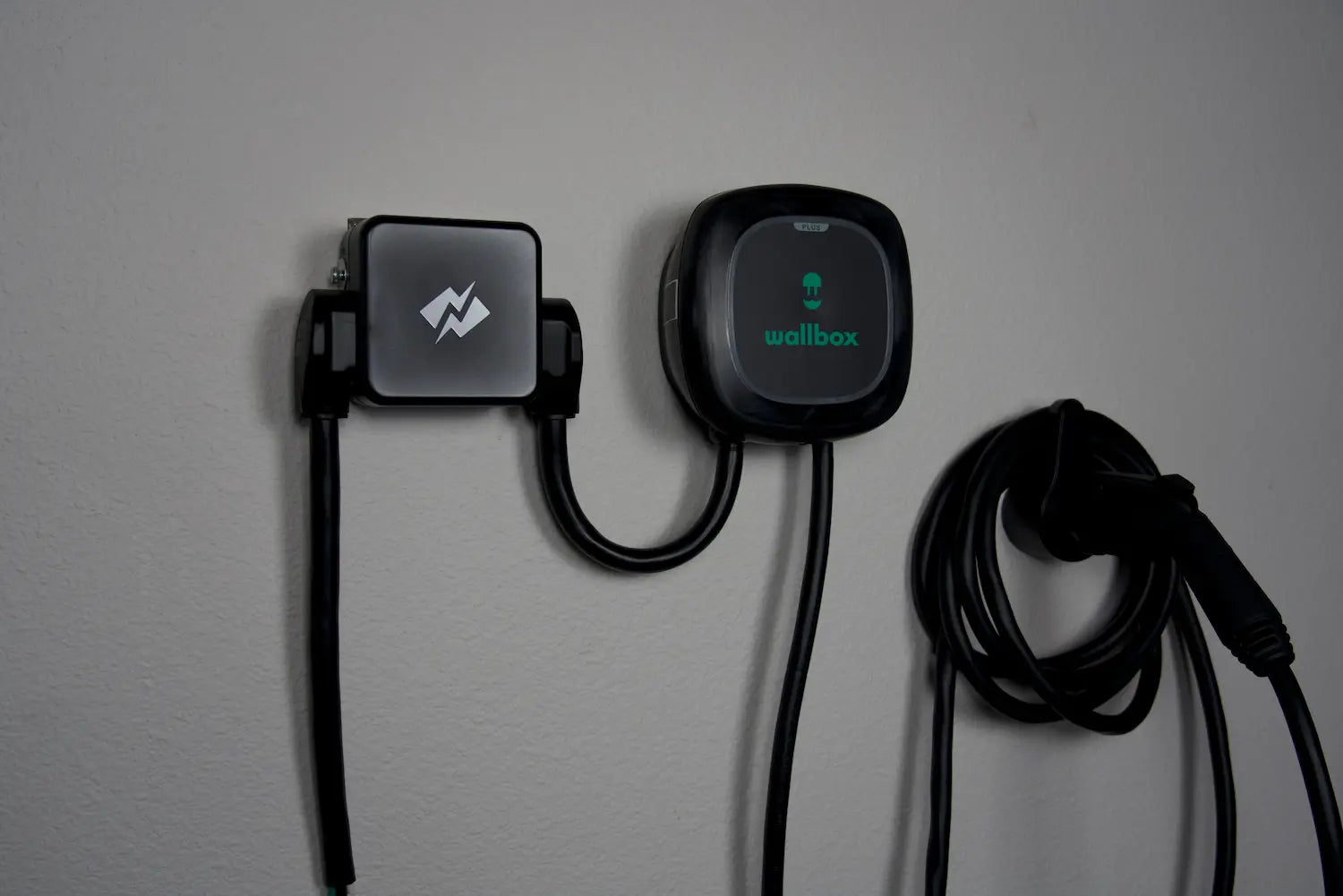
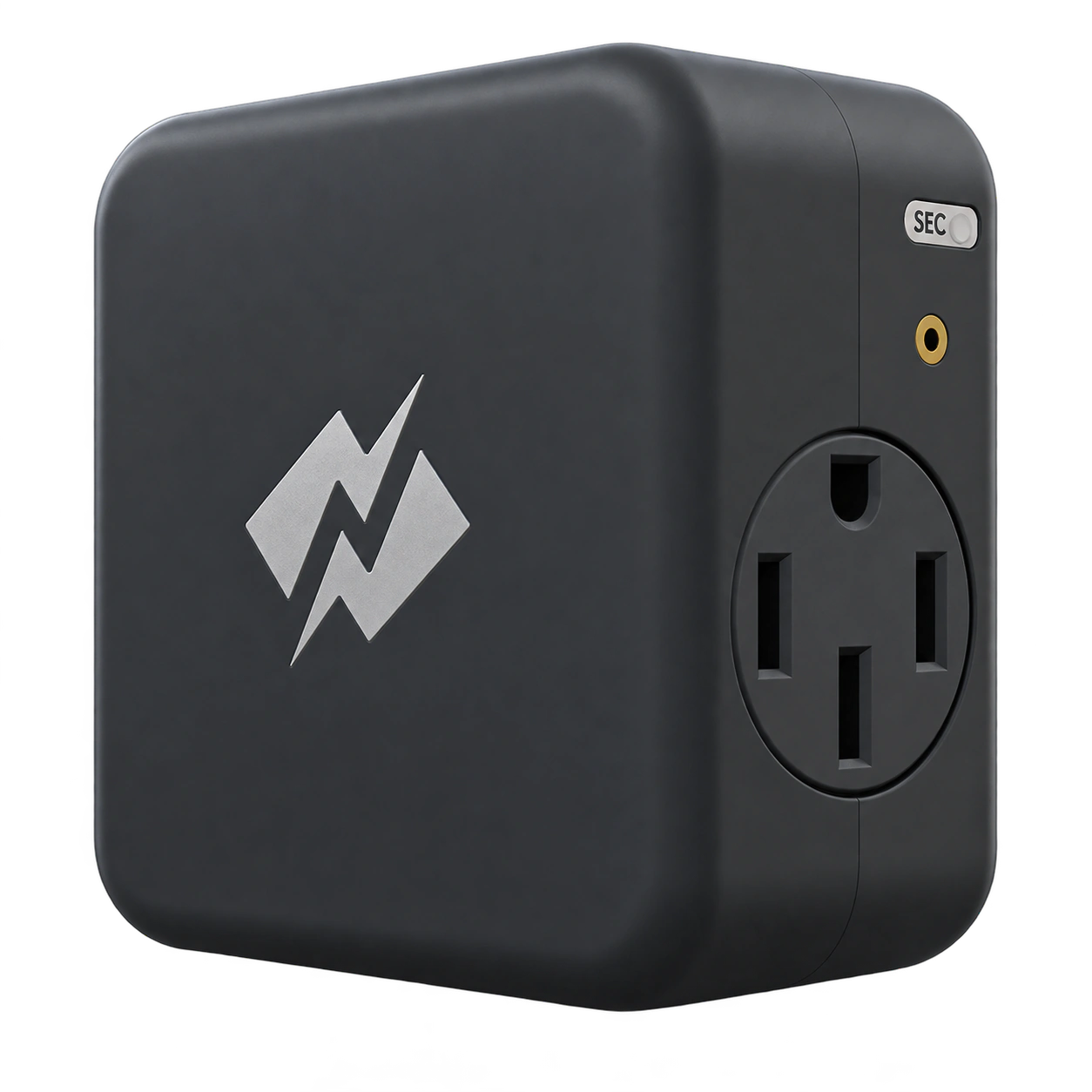
The safer version is load management: hardware that prevents both high-power loads from operating simultaneously. A NeoCharge Smart Splitter sits between the outlet and the two devices, then automatically manages which load can draw power.
That matters because it removes the human-error problem:
- the dryer can run when it needs to
- EV charging can resume afterward
- the circuit is not asked to carry both large loads at once
- the homeowner may avoid a costly panel upgrade when the existing circuit is suitable
For a deeper walkthrough, see how to share a 240V outlet between an EV charger and dryer safely.
Safety checklist before charging from a dryer outlet
Before using a NEMA 14-30 for regular EV charging, check the basics:
- Confirm the outlet type. A four-prong dryer outlet is usually NEMA 14-30, but verify before buying hardware.
- Confirm the breaker. A typical 14-30 dryer outlet should be on a 30A two-pole breaker, not an improvised mismatch.
- Inspect the receptacle. Look for cracks, looseness, discoloration, heat marks, or weak plug grip.
- Set the current limit. A common target is 24A maximum on a suitable 30A circuit.
- Avoid extension cords. Move the EVSE or install the right outlet location instead.
- Avoid cheap adapters. Use properly rated, reputable equipment.
- Plan for dryer sharing. Use load management if the EV and dryer share one outlet.
- Ask an electrician when unsure. Especially for older homes, aluminum wiring, panel constraints, or anything modified.
Should you install a dedicated EV circuit instead?
A dedicated EV circuit can be the best long-term answer when:
- you want faster charging than 24A
- the dryer outlet is far from the parking spot
- your household has multiple EVs
- the existing dryer circuit is old or inconvenient
- you are already doing electrical work
- you want the cleanest permanent install
But a dedicated circuit is not always necessary. If your daily driving is modest and the dryer outlet is in the right place, a safe 14-30 setup or Smart Splitter can be a practical middle path.
U.S. vs Canada note
This guide covers the general NEMA 14-30 dryer outlet decision for North American EV owners. If you are in Canada, see our Canada-specific guide: Can you charge an EV from a NEMA 14-30 dryer outlet in Canada?
The electrical logic is similar, but provincial rebates, utility rates, product availability, and local rules can change the best next step.
FAQ
Is a NEMA 14-30 enough for EV charging?
How many amps can an EV charge on a NEMA 14-30?
Can I plug a Tesla into a dryer outlet?
Can I use a NEMA 14-30 to NEMA 14-50 adapter?
Can I use an extension cord with a dryer outlet EV charger?
Is a Smart Splitter the same as a simple outlet splitter?
Do I need an electrician?
Bottom line
A NEMA 14-30 dryer outlet can be one of the most practical ways to get Level 2 EV charging at home. The winning setup is not "plug anything into the dryer outlet." It is a properly inspected circuit, a charger limited to the right current, no unsafe adapters or extension cords, and load management if the dryer and EV share the outlet.
If you need to share the outlet, start with the NeoCharge Smart Splitter. If you want faster charging or a permanent standalone setup, ask an electrician about a dedicated EV circuit.
Sources
- U.S. Department of Energy home charging overview: DOE home charging overview
- NYSERDA EVSE and NEC Article 625 overview: nyserda.ny.gov
- Tesla installation guidance and breaker/current sizing reference: energylibrary.tesla.com
Electrical safety disclaimer
This article is for general informational purposes only and does not replace advice from a qualified professional. Electrical work can cause fire, injury, or death if done incorrectly. Always follow local codes, obtain permits where required, and consult a licensed electrician to evaluate your specific panel, wiring, receptacle, and EV charging equipment before making changes or relying on a dryer outlet for regular EV charging.
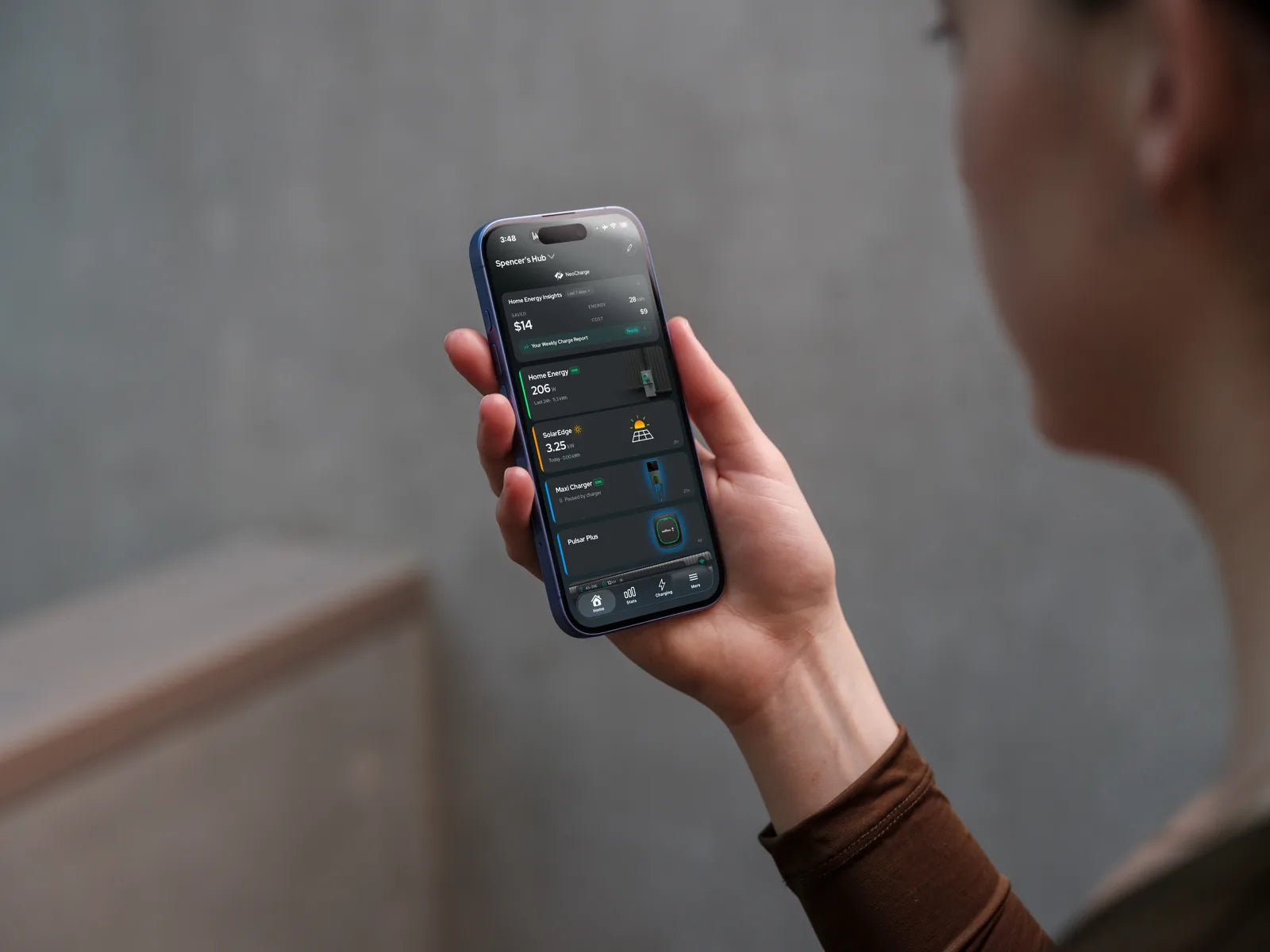
NeoCharge App
Turn rate plans into simple charging schedules
Schedule around off-peak windows, manage compatible chargers, and keep tabs on charging sessions from the app.
Explore the app


Next steps
Keep going with NeoCharge
Use the article as your decision guide, then jump into the product, app, or related guides that match what you are trying to solve next.
Key terms
- Level 2 charging
- Level 2 EV charging uses a 240V circuit (like a dryer outlet). It typically adds ~20–35 miles of range per hour, depending on your car and the circuit amperage.
- NEMA 14-50
- A NEMA 14-50 is a common 240V, 50A outlet (often used for EV charging). Many EV chargers plug into it, but the actual charging speed depends on the circuit and your EV.
- NEMA 14-30
- A NEMA 14-30 is a 240V, 30A dryer outlet. With a properly configured EV charger, it can usually support ~24A continuous charging (about 20–25 miles of range per hour for many EVs).
- EVSE
- EVSE stands for Electric Vehicle Supply Equipment (the “charger”). It safely delivers power to your EV and communicates with the car to control charging current.
- Load management
- Load management is a strategy to keep your home’s electrical load within safe limits—often by scheduling or pausing EV charging when other appliances are running.
Related posts

BC Hydro EV Power Management Device Rebate: Eligible Devices (2026)
BC Hydro pays $200 extra for an eligible EV power management device. The Sept 2026 device list, which chargers qualify, and the permit rule that decides who gets it.

Can I Charge My EV From a Dryer Outlet in Canada?
Can you charge an EV from a dryer outlet in Canada? Learn NEMA 14-30, NEMA 10-30, 24 amp charging, Tesla adapters, safety, and Smart Splitter options.

Do You Need a Panel Upgrade for Home EV Charging in Canada?
Can you install an EV charger without a panel upgrade in Canada? Compare 100 amp panels, Level 2 charging, dryer outlets, load management, and rebates.
DCC-9 vs DCC-10 vs EVEMS vs Smart Splitter: Canada EV Load Management Guide
Compare DCC-9, DCC-10, EVEMS, dynamic charger load management, NeoCharge Smart Splitter, and panel upgrades for Canadian EV charging on 100A or 125A panels.
