






How Much Does It Cost to Charge an EV at Home? (2026, by State)
Direct answer: At the U.S. average residential price of 18.3 cents per kWh (EIA, July 2026), charging an EV at home costs about 5.7 cents a mile: roughly $57 a month for 1,000 miles, or about $15 to fill a 75 kWh battery from empty. Where you live changes that a lot, from about $40 a month in Louisiana to $105 in California and $149 in Hawaii, and charging on an off-peak EV rate can cut it further.
- U.S. average: 18.3¢/kWh, about 5.7¢ a mile.
- Cheapest states: Louisiana, Nevada, and Utah, around 13¢/kWh.
- Most expensive: Hawaii, California, and Maine, 32¢ to 48¢/kWh.
- Biggest lever: charge overnight on a time-of-use EV rate.
Prices from EIA's Electric Power Monthly, released September 24, 2026. Use the calculator below with your own rate.
Whether you're considering an EV purchase or already plugging in nightly, understanding your actual charging costs helps you budget accurately and maximize savings. This guide breaks down the real numbers, compares charging methods, and shows you exactly what to expect on your electric bill.
Make it yours
What will your next charge cost?
Starts with an example rate of 15¢/kWh and 90% efficiency. Enter your own rate from your bill.
How the estimate works
Energy added × electricity rate ÷ (efficiency ÷ 100). A 40 kWh top-up at $0.15/kWh and 90% efficiency costs $6.67. Include applicable per-kWh charges in your rate. Excludes fixed fees, installation and public charging fees; the currency follows your bill. For a full charge, enter usable battery capacity; for a top-up, enter only the energy added.
The Simple Formula for EV Charging Cost at Home
Calculating your cost to charge an EV at home comes down to a straightforward formula:
Charging Cost = (Battery Capacity in kWh × Electricity Rate per kWh) ÷ Charger Efficiency
Here's what each component means:
- Battery Capacity (kWh): How much energy your EV battery holds when empty to full
- Electricity Rate ($/kWh): What your utility company charges per kilowatt-hour (check your electric bill)
- Charger Efficiency: Energy lost during charging process (typically 88-92% for Level 2, 70-85% for Level 1)
For example, if you're charging a Tesla Model Y (about 75 kWh usable) at the U.S. average of $0.183/kWh with a Level 2 charger at 90% efficiency:
(75 kWh × $0.183) ÷ 0.90 = $15.25 per full charge
Most EV owners don't charge from completely empty to 100% daily. If you're only topping up 30 to 40 kWh at a time, you're looking at about $6 to $8 per charging session at the average rate.
Cost to charge an EV at home, by state (2026)
What a typical EV costs to charge at home in every state, at each state's average residential price for July 2026. Assumes about 31 kWh per 100 miles from the wall (28 kWh at the battery plus about 10% charging losses), a little above EPA ratings for popular EVs, which already include charging losses (a Tesla Model 3 is rated about 24 to 26, a Chevy Equinox EV about 31).
| State | Avg. home rate (¢/kWh) | Cost per mile | 1,000 miles a month | Full charge, 75 kWh |
|---|---|---|---|---|
| U.S. average | 18.31 | 5.7¢ | $57 | $15.26 |
| Alabama | 16.40 | 5.1¢ | $51 | $13.67 |
| Alaska | 28.83 | 9.0¢ | $90 | $24.02 |
| Arizona | 15.38 | 4.8¢ | $48 | $12.82 |
| Arkansas | 14.33 | 4.5¢ | $45 | $11.94 |
| California | 33.61 | 10.5¢ | $105 | $28.01 |
| Colorado | 17.00 | 5.3¢ | $53 | $14.17 |
| Connecticut | 24.16 | 7.5¢ | $75 | $20.13 |
| Delaware | 18.48 | 5.7¢ | $57 | $15.40 |
| District of Columbia | 25.21 | 7.8¢ | $78 | $21.01 |
| Florida | 15.03 | 4.7¢ | $47 | $12.52 |
| Georgia | 16.27 | 5.1¢ | $51 | $13.56 |
| Hawaii | 48.00 | 14.9¢ | $149 | $40.00 |
| Idaho | 13.73 | 4.3¢ | $43 | $11.44 |
| Illinois | 19.22 | 6.0¢ | $60 | $16.02 |
| Indiana | 16.73 | 5.2¢ | $52 | $13.94 |
| Iowa | 15.99 | 5.0¢ | $50 | $13.32 |
| Kansas | 15.27 | 4.8¢ | $48 | $12.72 |
| Kentucky | 13.81 | 4.3¢ | $43 | $11.51 |
| Louisiana | 12.72 | 4.0¢ | $40 | $10.60 |
| Maine | 32.41 | 10.1¢ | $101 | $27.01 |
| Maryland | 21.41 | 6.7¢ | $67 | $17.84 |
| Massachusetts | 30.49 | 9.5¢ | $95 | $25.41 |
| Michigan | 23.05 | 7.2¢ | $72 | $19.21 |
| Minnesota | 17.45 | 5.4¢ | $54 | $14.54 |
| Mississippi | 14.54 | 4.5¢ | $45 | $12.12 |
| Missouri | 16.09 | 5.0¢ | $50 | $13.41 |
| Montana | 14.99 | 4.7¢ | $47 | $12.49 |
| Nebraska | 13.78 | 4.3¢ | $43 | $11.48 |
| Nevada | 12.77 | 4.0¢ | $40 | $10.64 |
| New Hampshire | 26.60 | 8.3¢ | $83 | $22.17 |
| New Jersey | 25.19 | 7.8¢ | $78 | $20.99 |
| New Mexico | 16.09 | 5.0¢ | $50 | $13.41 |
| New York | 29.90 | 9.3¢ | $93 | $24.92 |
| North Carolina | 15.16 | 4.7¢ | $47 | $12.63 |
| North Dakota | 13.41 | 4.2¢ | $42 | $11.18 |
| Ohio | 19.45 | 6.1¢ | $61 | $16.21 |
| Oklahoma | 14.35 | 4.5¢ | $45 | $11.96 |
| Oregon | 15.97 | 5.0¢ | $50 | $13.31 |
| Pennsylvania | 21.72 | 6.8¢ | $68 | $18.10 |
| Rhode Island | 28.29 | 8.8¢ | $88 | $23.57 |
| South Carolina | 15.47 | 4.8¢ | $48 | $12.89 |
| South Dakota | 15.37 | 4.8¢ | $48 | $12.81 |
| Tennessee | 13.71 | 4.3¢ | $43 | $11.43 |
| Texas | 15.88 | 4.9¢ | $49 | $13.23 |
| Utah | 13.12 | 4.1¢ | $41 | $10.93 |
| Vermont | 23.75 | 7.4¢ | $74 | $19.79 |
| Virginia | 17.55 | 5.5¢ | $55 | $14.62 |
| Washington | 14.71 | 4.6¢ | $46 | $12.26 |
| West Virginia | 15.78 | 4.9¢ | $49 | $13.15 |
| Wisconsin | 19.06 | 5.9¢ | $59 | $15.88 |
| Wyoming | 14.36 | 4.5¢ | $45 | $11.97 |
Source: U.S. EIA, Electric Power Monthly Table 5.6.A, July 2026 (preliminary). July prices run a little above the yearly average in some states. Your utility bill shows your actual rate, including delivery charges.
Off-peak rates change the math. PG&E's EV2-A rate in California, effective June 1, 2026, charges about 22.6¢/kWh overnight, compared with California's 33.6¢ statewide average (EV2-A also has a fixed daily base services charge). That cuts the cost of 1,000 miles from about $105 to about $70. Most large utilities offer a similar EV or time-of-use plan; see how to find your off-peak hours. Two EVs on one circuit? Both usually fit in the same overnight window; see how to charge two EVs on one 240V outlet.
Real-World Charging Costs: 2026 EV Comparison
Here's what it costs to charge popular 2026 EVs at home at the U.S. average of $0.183/kWh, using EPA efficiency ratings (measured at the wall) and approximate usable battery sizes:

| EV model (2026) | Usable battery (approx.) | Full charge | Cost per mile | 12,000 miles a year |
|---|---|---|---|---|
| Tesla Model 3 Standard | ~69 kWh | ~$14.00 | ~4.4¢ | ~$534 |
| Tesla Model Y Long Range AWD | ~79 kWh | ~$16.10 | ~5.0¢ | ~$604 |
| Hyundai Ioniq 5 RWD | ~80 kWh | ~$16.30 | ~5.5¢ | ~$659 |
| Ford Mustang Mach-E RWD Extended | ~91 kWh | ~$18.50 | ~5.6¢ | ~$674 |
| Chevy Equinox EV FWD | ~85 kWh | ~$17.30 | ~5.7¢ | ~$683 |
Compare that with gas: at $4.35 a gallon (EIA's U.S. average for regular on October 5, 2026), a 30 mpg car spends about $1,740 on fuel for the same 12,000 miles, roughly three times what a Model 3 costs to charge at home. For a deeper dive, see whether Teslas really save you money.
Your actual costs will vary based on:
- Your local electricity rate (about 12.7¢/kWh in Louisiana to 48¢ in Hawaii; see the state table above)
- Whether you charge during peak or off-peak hours
- Your daily driving distance
- Whether you charge to 80% (recommended) vs 100%
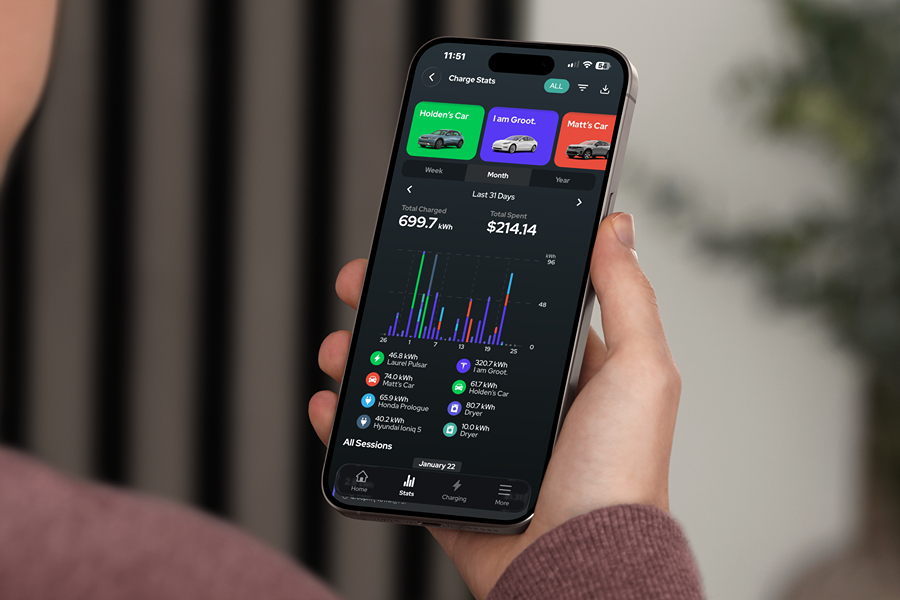
The NeoCharge app's cost tracking dashboard automatically calculates your real charging costs by monitoring your actual energy usage and time-of-use rates, giving you precise numbers instead of estimates.
Level 1 vs Level 2 Charging: The Hidden Cost Difference
When calculating the cost to charge your EV at home, the type of charger you use makes a bigger difference than most people realize—not just in charging speed, but in actual dollars spent.
Level 1 Charging Costs (120V Standard Outlet)
- Charger Efficiency: 70-85%
- Energy Loss: 15-30% of electricity is lost as heat
- Real Cost: about $17 for a 69 kWh charge (vs about $14 at Level 2)
Example: Charging a Tesla Model 3 Standard (about 69 kWh) at $0.183/kWh:
- Level 1 at 75% efficiency: (69 × $0.183) ÷ 0.75 = $16.84
- Additional cost vs Level 2: about $2.80 per full charge
Level 2 Charging Costs (240V Dedicated Circuit)
- Charger Efficiency: 88-92%
- Energy Loss: 8-12% lost to heat and conversion
- Real Cost: about $14 for a 69 kWh charge
Example: Same Tesla Model 3 with Level 2 at 90% efficiency:
- (69 × $0.183) ÷ 0.90 = $14.03
The Math on Long-Term Savings
If you drive 12,000 miles a year in a Model 3, at the U.S. average rate:
- Level 2: about 2,900 kWh from the wall, about $534 a year
- Level 1, with roughly 15% more lost as heat: about $640 a year
- Savings with Level 2: roughly $100 a year, plus far faster charging
Skip the panel upgrade
Level 2 charging from the outlet you already have
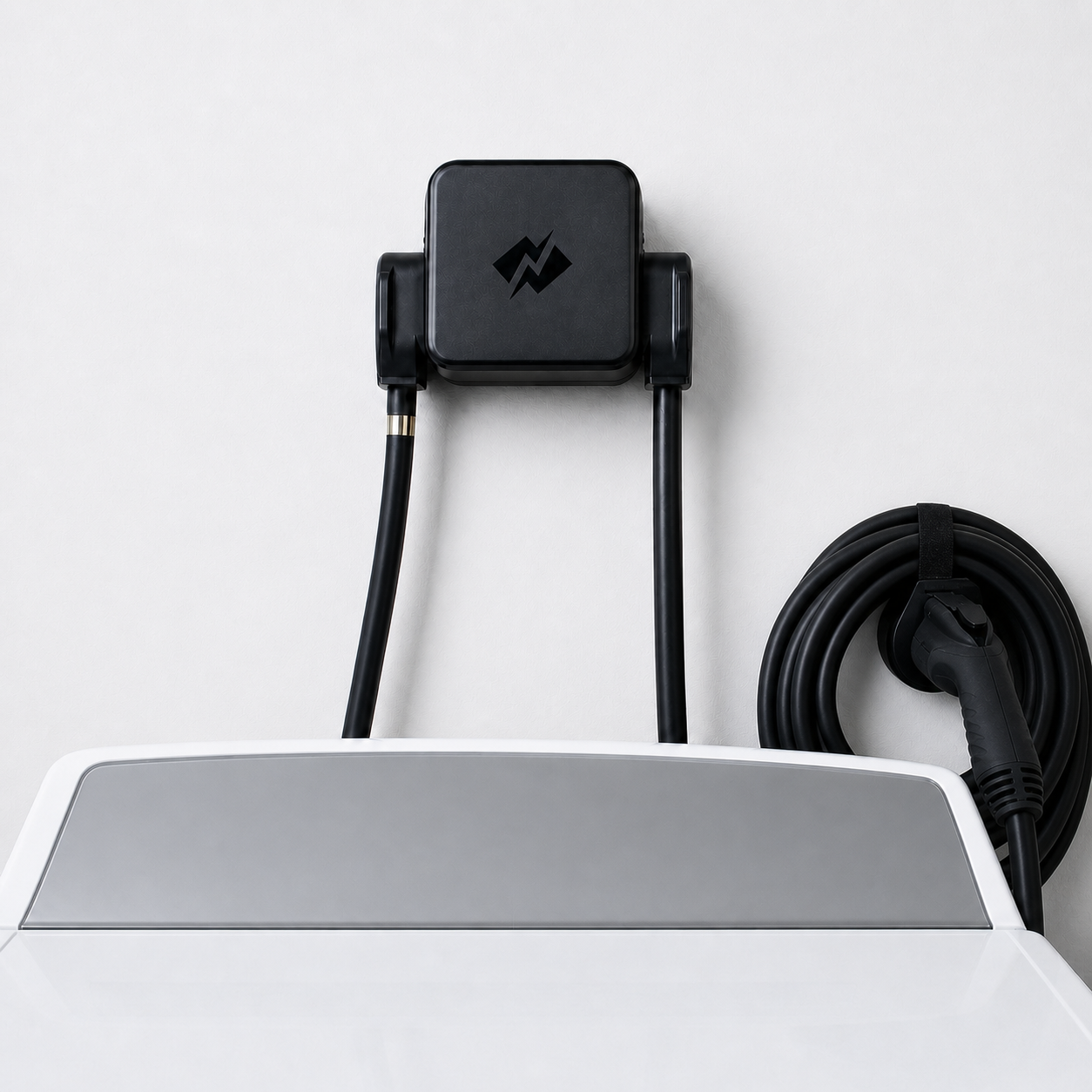
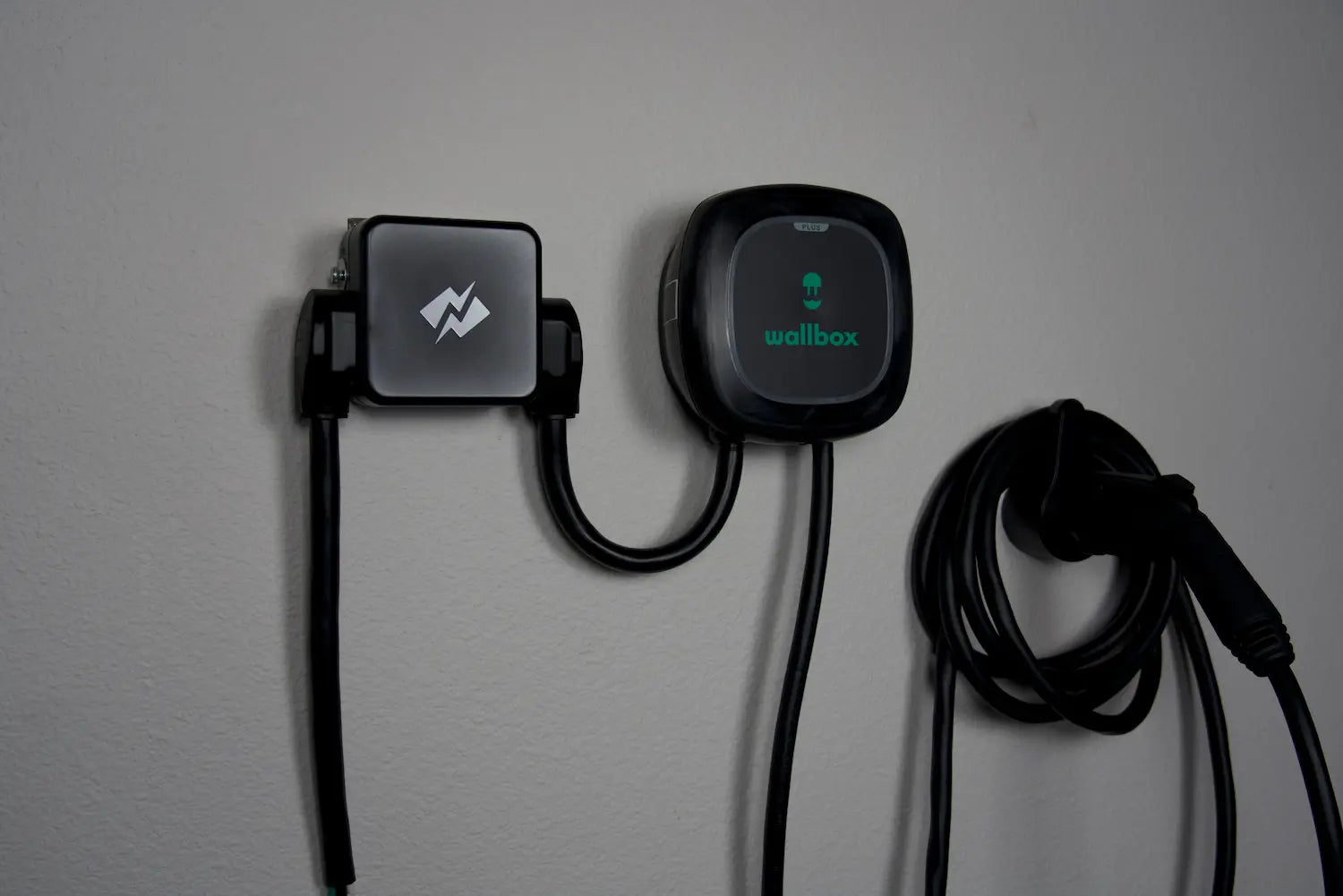
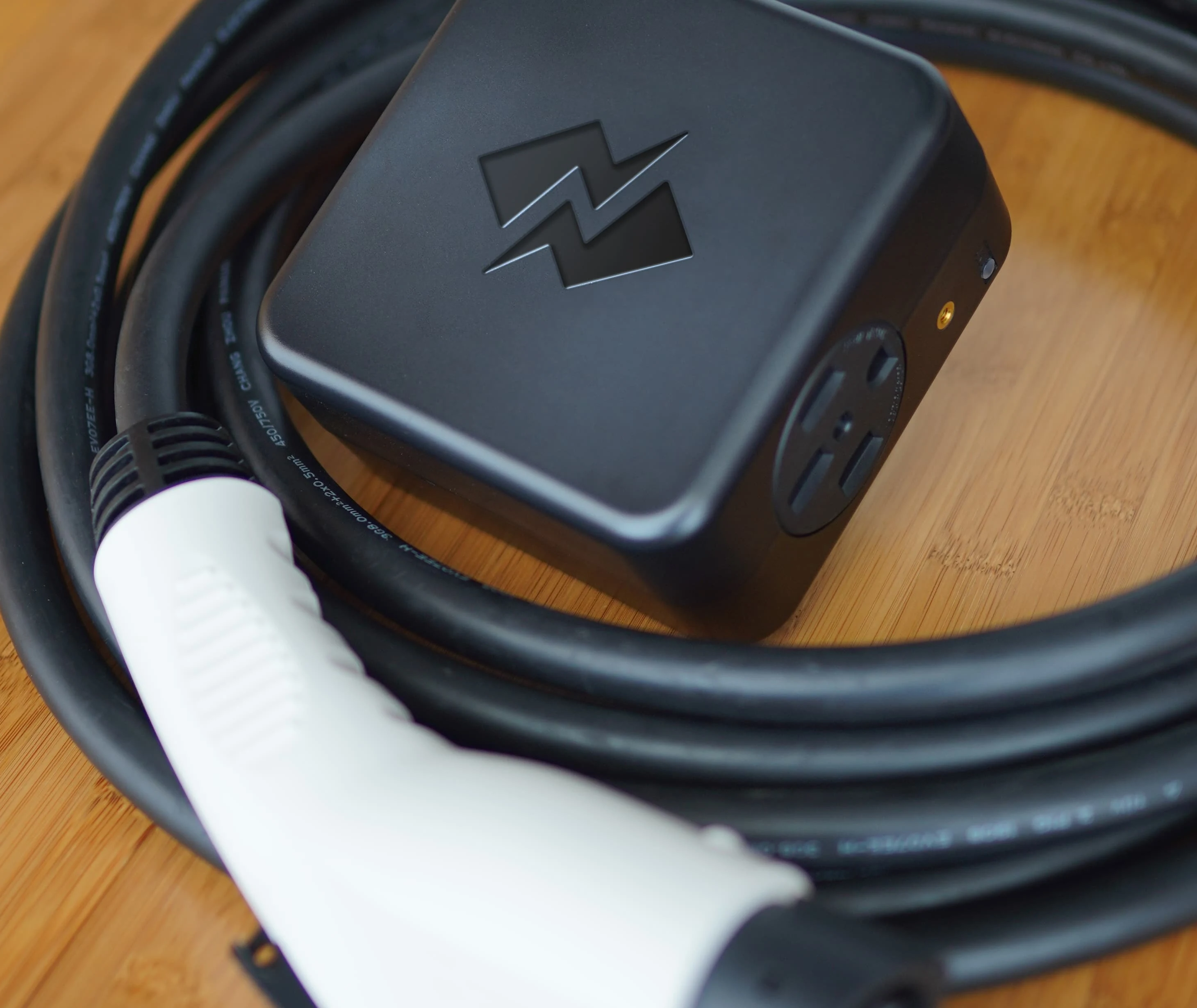
Plug into the 240V dryer outlet you already have. The dryer gets priority and your EV charges the rest of the night, with no panel upgrade and no new circuit. cUL Listed for the US and Canada, with rebates from 30+ utilities.
Frequently Asked Questions
How much does it cost to charge an electric car at home per month?
At the U.S. average of 18.3¢/kWh, 1,000 miles a month costs about $44 in a Tesla Model 3 and about $57 in a typical EV crossover, from about $40 in the cheapest states to over $100 in California and Hawaii. That's roughly 60 to 70% less than fuel for a comparable gas car at $4.35 a gallon.
Is charging an EV at home cheaper than gas?
Yes, significantly. At average prices, home charging costs about 4.5 to 6 cents a mile, while a 30 mpg gas car costs about 14.5 cents a mile at $4.35 a gallon, and a 20 mpg truck about 22 cents. Over 12,000 miles that's roughly $540 to $720 for electricity versus $1,740 to $2,600 for gas. Charging off-peak widens the gap.
Does charging an EV increase your electric bill?
Yes, by a predictable amount: about $45 to $60 a month for 1,000 miles at the U.S. average rate, more in high-rate states. That's offset by no longer buying gas, and charging off-peak lowers it further.
What's the most cost-effective way to charge an EV at home?
Combine three things: (1) charge on Level 2 rather than Level 1, which wastes less energy as heat, (2) charge during off-peak hours, and (3) switch to your utility's EV or time-of-use rate if it has one. Scheduling makes sure you never charge at peak by accident. In California, for example, PG&E's EV2-A overnight rate cuts the cost of 1,000 miles from about $105 to about $70.
Track Your Real Costs with NeoCharge
Calculating estimates is helpful, but knowing your actual charging costs in real-time is even better. The NeoCharge app's cost tracking dashboard monitors every charging session, factors in your exact electricity rates (including time-of-use pricing), and shows you:
- Cost per charging session
- Monthly and annual charging expenses
- Savings vs gasoline equivalent
- Optimal charging windows to minimize costs
- Historical cost trends and projections

Stop guessing what your EV costs to charge. Download the NeoCharge app today (iOS | Android) and see your exact numbers—most users discover they're spending 15-25% less than they estimated once they optimize their charging schedule.
Ready to take control of your EV charging costs? Get started with NeoCharge and start saving from your very first charge.
Sources
- U.S. Energy Information Administration, Electric Power Monthly, Table 5.6.A: average residential electricity price by state, July 2026 (released September 24, 2026)
- U.S. EIA, Gasoline and diesel fuel update: U.S. regular, October 5, 2026
- U.S. EPA, fueleconomy.gov: 2026 EV efficiency ratings
- PG&E, Electric Schedule EV2: rates effective June 1, 2026
Key terms
- Level 2 charging
- Level 2 EV charging uses a 240V circuit (like a dryer outlet). It typically adds ~20–35 miles of range per hour, depending on your car and the circuit amperage.
- Time-of-use (TOU) rates
- Time-of-use rates are utility pricing plans where electricity costs more at peak hours and less off-peak. Scheduling EV charging off-peak can significantly reduce cost.
FAQs
What's the quick takeaway from this article?
Who is this guide for?
What should I do next?
Related posts


Demand Charges vs. TOU Rates for Home EV Charging: What Matters (and How to Avoid Peak Costs)
Learn the difference between demand charges and time-of-use (TOU) rates for home EV charging, how to tell what you’re on, and practical steps to reduce peak costs and charge cheaper overnight.
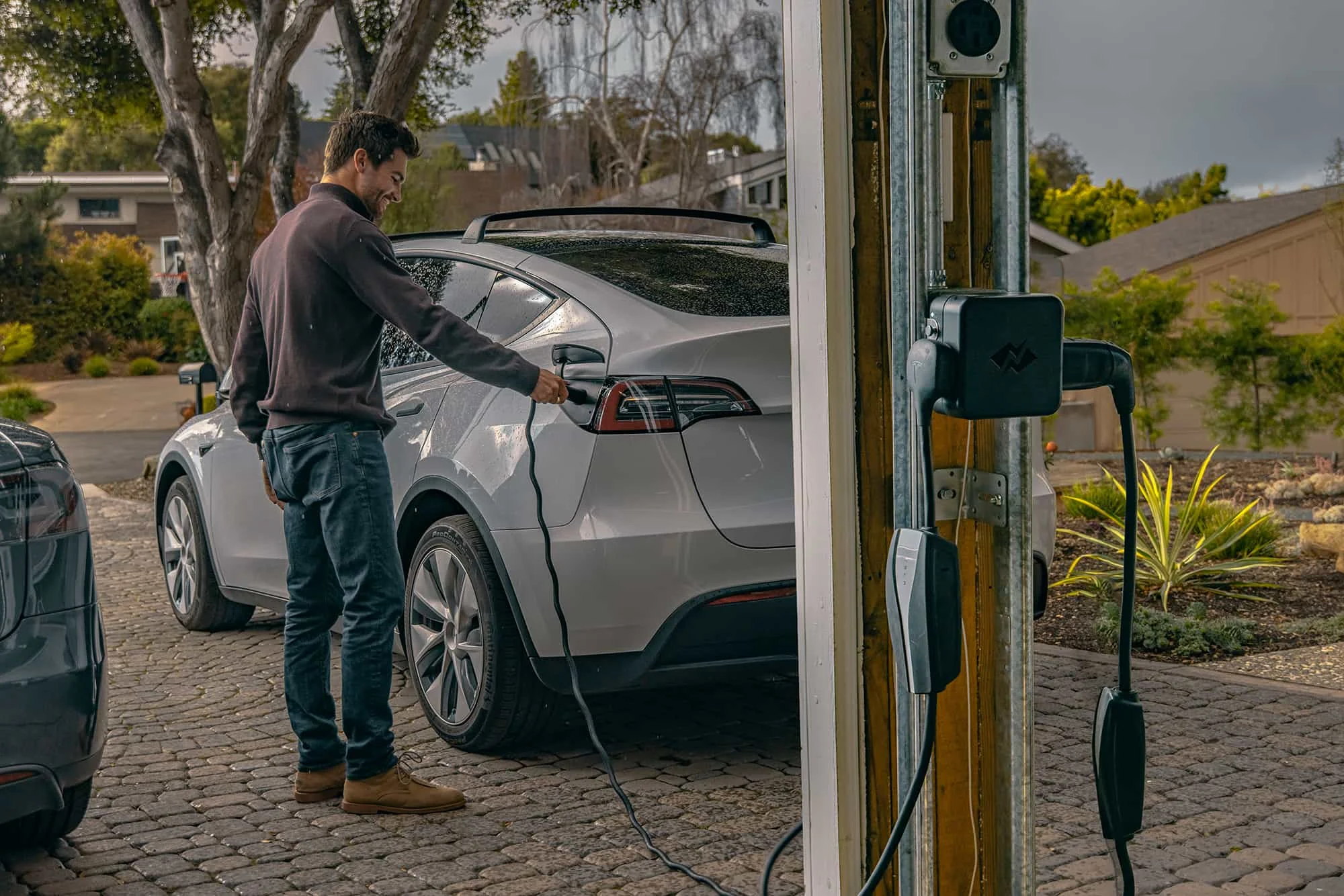
How to Choose the Best Time-of-Use (TOU) Rate Plan for EV Charging
A practical checklist to pick the best TOU rate plan for EV charging: compare peak/off-peak windows, seasonal schedules, fees, and estimate real savings.
Home EV Charging Cost per Mile Calculator (2026)
Use this simple calculator to estimate EV charging cost per mile using your $/kWh and mi/kWh, plus tips to save money with off-peak TOU smart charging.

How Much Does It Cost to Install an EV Charger at Home? (2026)
Most US homes pay $1,000 to $2,600 for a Level 2 install, and a panel upgrade adds $2,000 to $5,000. What drives the price and the $399 way to skip a new circuit.
