



The Three Levels of EV Charging Explained (2026 Guide)
Direct answer: There are three levels of electric car charging. Level 1 uses a standard 120V outlet and adds about 3–5 miles of range per hour. Level 2 uses a 240V circuit and adds about 25–40 miles per hour — the best option for home charging. Level 3 (DC fast charging) uses high-voltage commercial stations and can take many EVs from 10% to 80% in about 30 minutes. The level is set by voltage and power, which determine how fast you charge.
The three levels of EV charging at a glance
| Level 1 | Level 2 | Level 3 (DC Fast) | |
|---|---|---|---|
| Voltage | 120V | 240V | 400V+ |
| Power type | AC | AC | DC |
| Range per hour | ~3–5 miles | ~25–40 miles | ~3–20 miles/minute |
| Typical use | Home, backup | Home, workplace, public | Road trips, public only |
| Equipment | Included cordset | Charger or 240V outlet | The station is the charger |
| Time to "full" | 30+ hours | ~6–12 hours | ~30 min to 80% |
| Where you find it | Residential | Residential + commercial | Commercial only |
What each level costs to charge
Speed is not the only difference — cost per "fill" varies a lot by level, because home rates are far cheaper than commercial fast charging.
| Level | Where | Typical cost to charge | Notes |
|---|---|---|---|
| Level 1 | Home (120V) | Cheapest (home electricity rate) | Same per-kWh cost as Level 2, just slower |
| Level 2 | Home / public (240V) | Cheapest at home, esp. off-peak | Best value for daily charging |
| Level 3 | Public DC fast | 2–3x more than home | Convenience premium for speed |
At home, Level 1 and Level 2 cost the same per kWh — Level 2 just delivers it faster. DC fast charging carries a convenience premium, which is why it is best saved for trips.
Level 1 EV charging (120V)
Location: Residential · Voltage: 120V · Rate: ~3–5 miles/hour · Power: AC
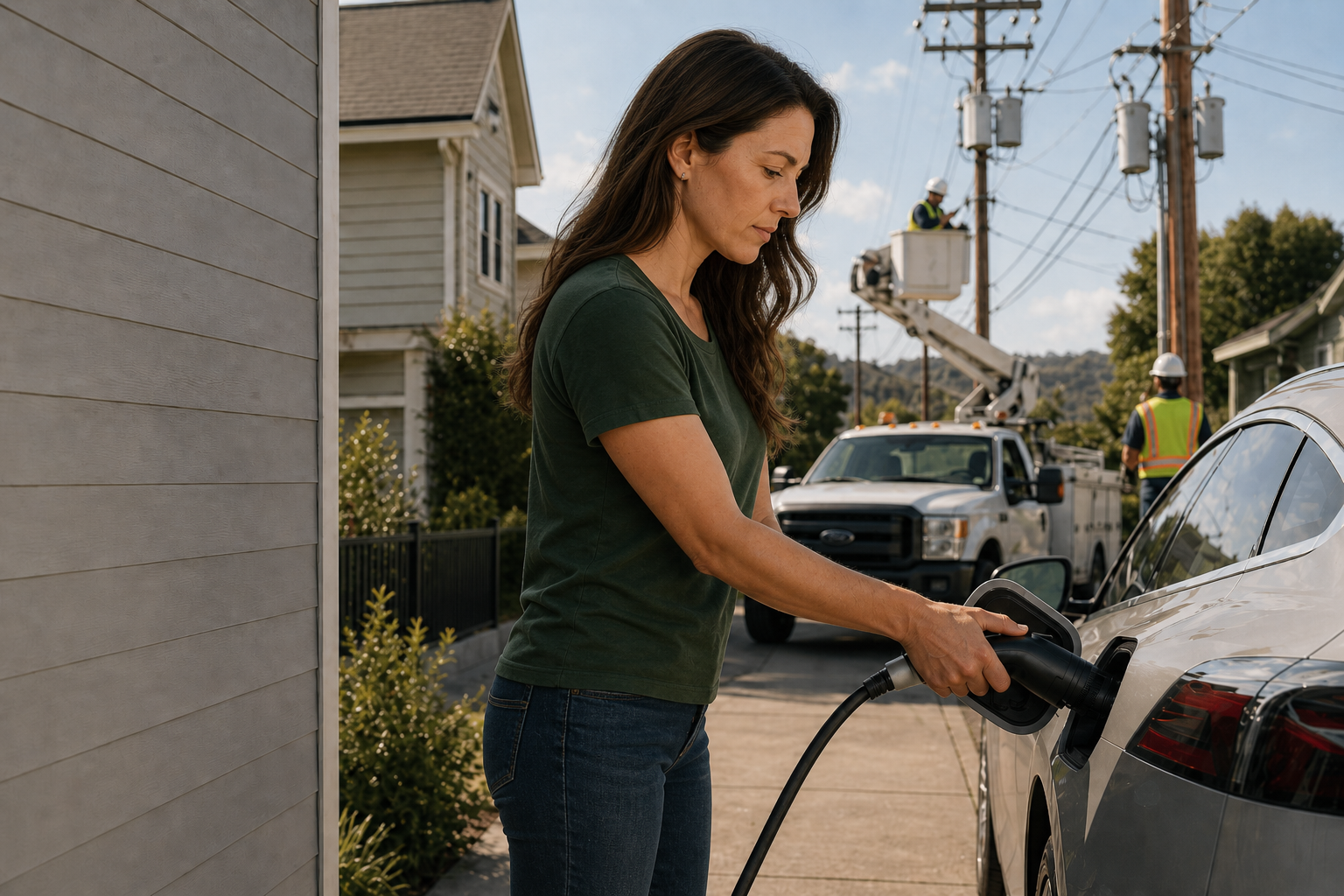
Level 1 is charging from a standard household 120V outlet — the same kind that powers your TV or phone charger — using the portable cordset (the EVSE) that comes with the car. The actual charger is built into the vehicle; the cordset just delivers AC power to it.
It is the simplest possible setup: no electrician, no new outlet. The trade-off is speed. The EPA puts Level 1 at roughly 3 to 5 miles of range per hour, so a full recharge of a big battery can take well over a day.
Source: epa.gov
That sounds slow, but it works better than people expect. Since most charging happens overnight at home, a 10–12 hour stretch adds 40–60 miles — enough for many commutes and plenty for plug-in hybrids. Level 1 is sometimes called "trickle charging" for a reason, but for low-mileage drivers it can be all you need.
Level 2 EV charging (240V)
Location: Residential, commercial · Voltage: 240V · Rate: ~25–40 miles/hour · Power: AC
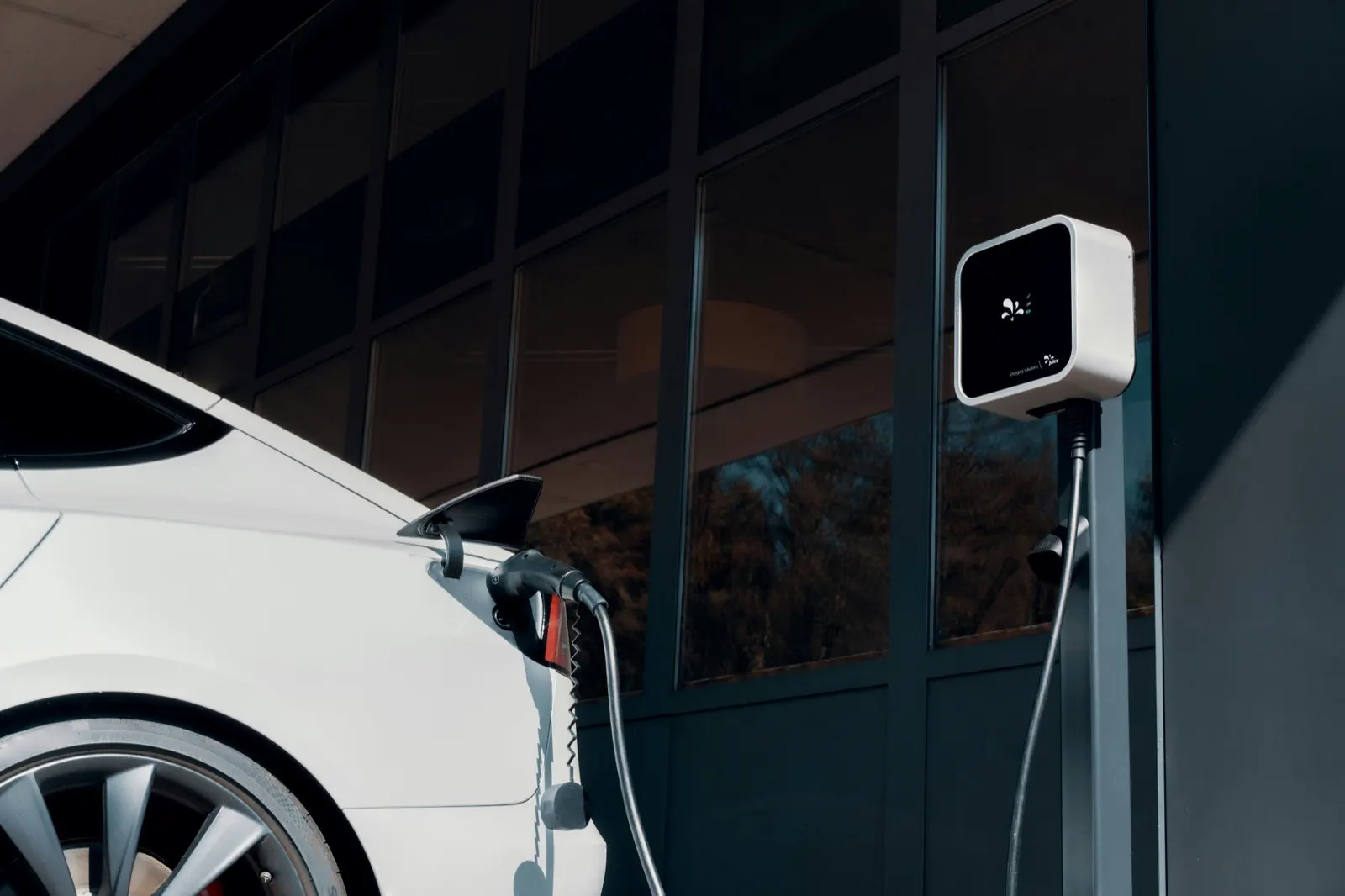
Level 2 is the home-charging sweet spot. It uses a 240V circuit — the same voltage that runs an electric dryer, range, or water heater — and the EPA puts it at roughly 25 to 40 miles of range per hour. That refills almost any EV overnight with room to spare.
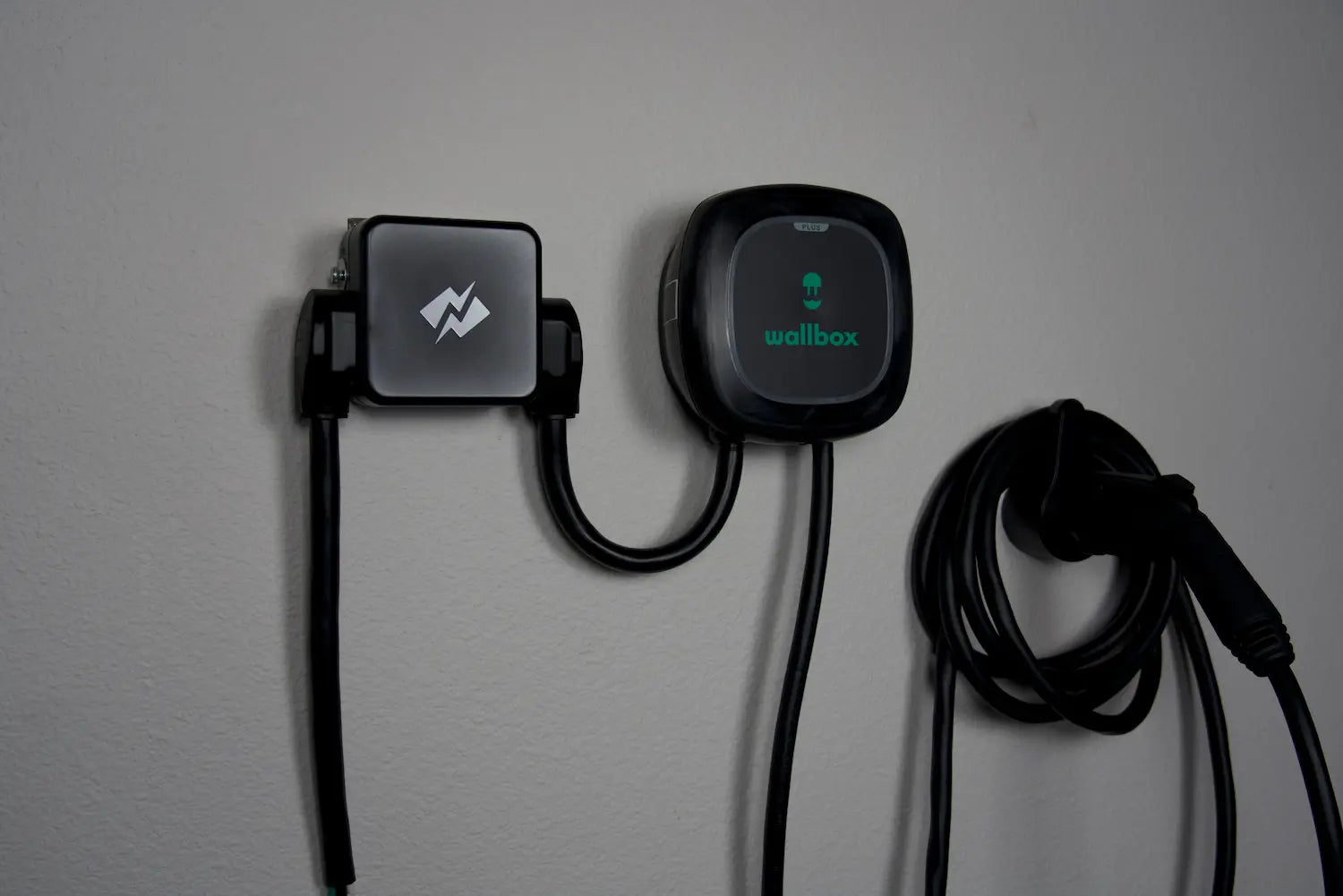
You can get Level 2 two ways: a dedicated Level 2 charger (smart models add scheduling, app control, and energy data), or a 240V outlet your car's cordset plugs into. For the full side-by-side, see Level 1 vs Level 2 charging.
Like Level 1, Level 2 is best used overnight, when time-of-use rates are cheapest. You wake up to a full battery and a low charging bill.
The catch with Level 2 — and the workaround
Most garages do not have a spare 240V outlet, so adding one means hiring an electrician for a new circuit. If your electrical panel is full, you may be quoted a panel upgrade on top of that — which is where costs climb.
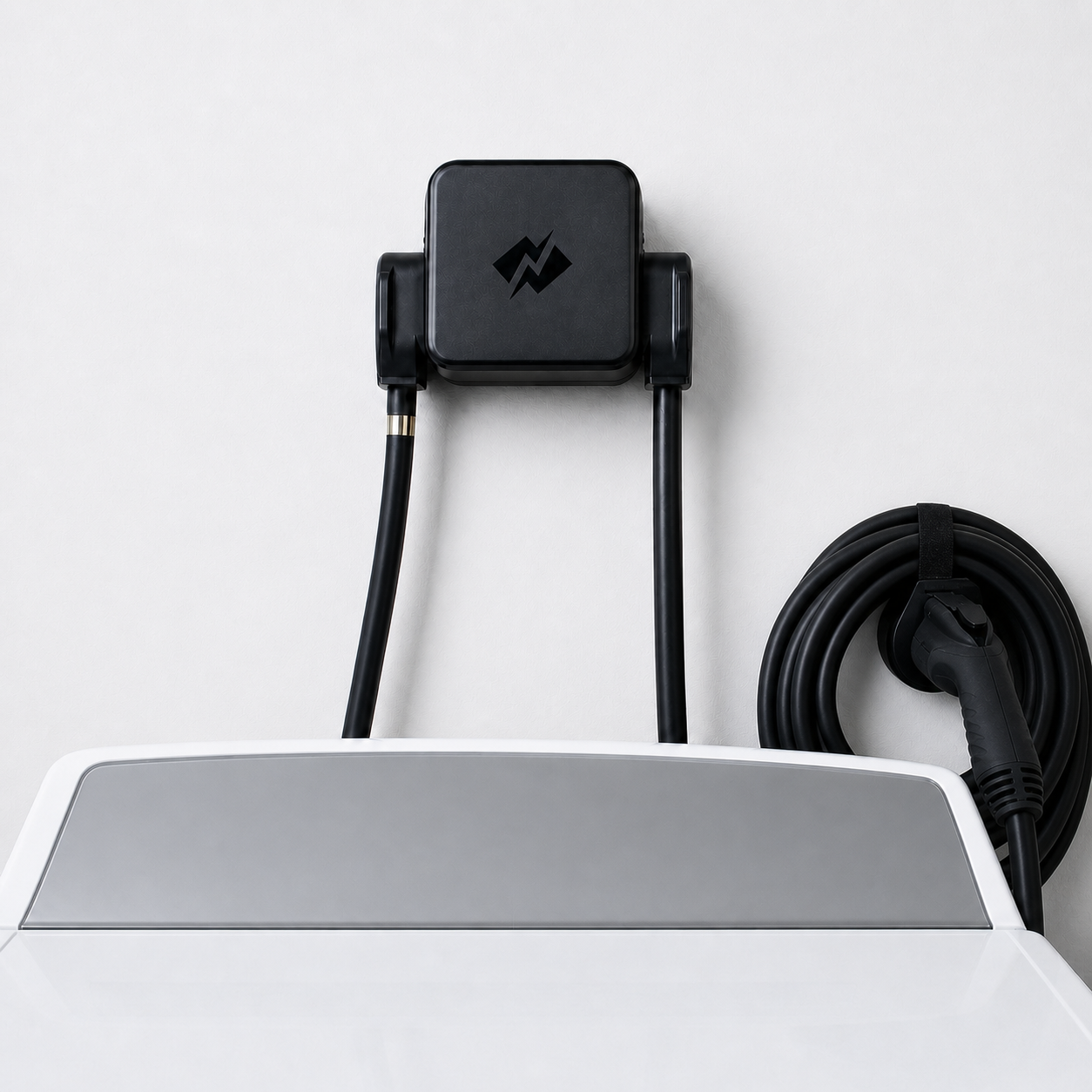
There is often a cheaper path. If you already have a 240V outlet that is occupied — typically the dryer — a NeoCharge Smart Splitter plugs into it and safely shares it between your EV charger and the appliance, so the two never draw power at the same time. That can unlock Level 2 charging without a new circuit or panel upgrade, saving hundreds to thousands of dollars. To weigh your options, see Smart Splitter vs EVEMS vs panel upgrade.
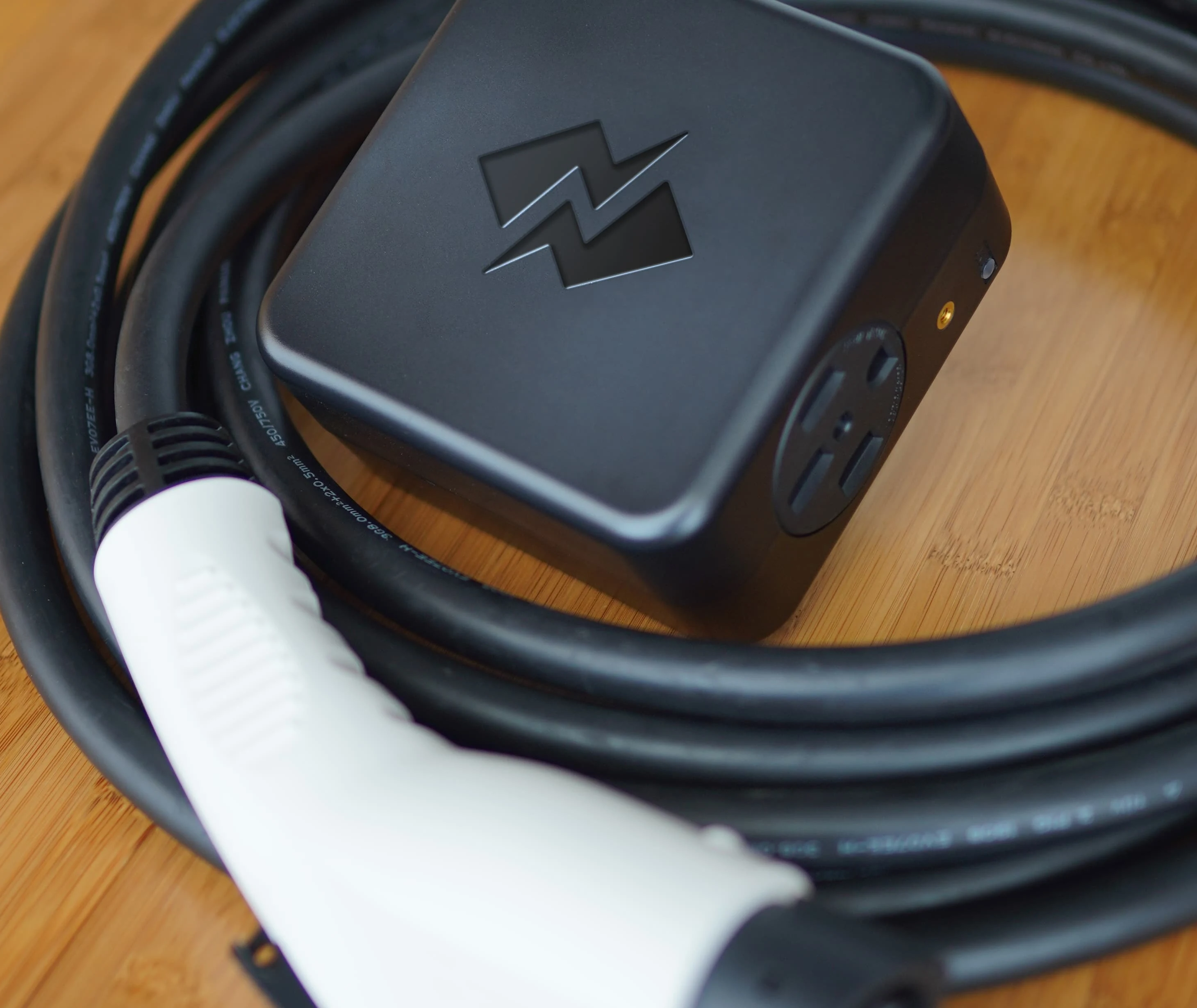
NeoCharge Smart Splitter
Unlock Level 2 from your existing 240V outlet
Share a dryer outlet between your EV and appliance automatically — no panel upgrade required.
Level 3 EV charging (DC fast charging)
Location: Commercial · Voltage: 400V+ · Rate: ~3–20 miles/minute · Power: DC
Level 3 — almost always called DC fast charging — is the fast lane. It runs at 400V or more and is only found at commercial charging stations, because the power levels are far beyond a home circuit.
The key difference is the type of power. Levels 1 and 2 send AC power to your car's onboard charger, which converts it to DC for the battery. A DC fast charger does that conversion in the station itself and sends DC straight to the battery — which is why it is so much faster and why the station is the charger (there is no separate cordset).
DC fast charging is measured in miles per minute, not per hour. The common benchmark is about 10% to 80% in roughly 30 minutes for many EVs — enough time to grab food or use the restroom on a road trip.
Why charge to only 80%?
Charging slows down as the battery fills. To protect the pack, EVs throttle the charge rate past about 80%, so the last 20% can take nearly as long as the first 80%. On a road trip, it is usually faster overall to stop more often and charge from a low percentage up to ~80%, rather than waiting for a full battery. (At home on Level 1 or 2, charging to 100% before a trip is fine.)
DC fast charging networks work like gas brands — Tesla Superchargers, Electrify America, EVgo, and others — with thousands of stations now spanning coast-to-coast routes. Connector standards matter here too; see NACS vs J1772 and CCS.
Can you install a Level 3 charger at home?
Realistically, no. DC fast charging needs high-voltage, high-power electrical service and equipment that costs tens of thousands of dollars — far beyond what a typical home's panel can supply. It is why Level 3 only exists at commercial sites.
For home, Level 2 is the fastest practical option, and it is more than enough: it refills almost any EV overnight. If the cost of getting Level 2 installed is your worry, the answer is usually load management or sharing an existing 240V outlet — not a DC fast charger.
Which level of charging is right for you?
- Plug-in hybrid or short commute? Level 1 may be all you need.
- Daily EV driver? Level 2 at home is the sweet spot — fast enough overnight, cheap on off-peak rates.
- Road trips? Use Level 3 DC fast charging in short bursts up to ~80%.
Most owners land on the same pattern: Level 2 at home for 90%+ of charging, Level 3 on trips. The main question is usually how to get Level 2 affordably — and sharing an existing 240V outlet is often the answer.
FAQ
What are the three levels of EV charging?
What is the difference between Level 2 and Level 3 charging?
Is there a Level 3 home charger?
How long does each level take to charge an EV?
Can I get Level 2 charging without a panel upgrade?
Why does DC fast charging stop being fast after 80%?
Bottom line
The three levels of EV charging come down to power and place: Level 1 for slow, anywhere charging; Level 2 for fast, convenient home charging; and Level 3 for quick top-ups on the road. For nearly every owner, the winning combination is Level 2 at home plus Level 3 on trips — and the cheapest way into Level 2 is often sharing a 240V outlet you already have.
Next steps (NeoCharge)
- To get Level 2 charging from an existing dryer outlet, see the NeoCharge Smart Splitter.
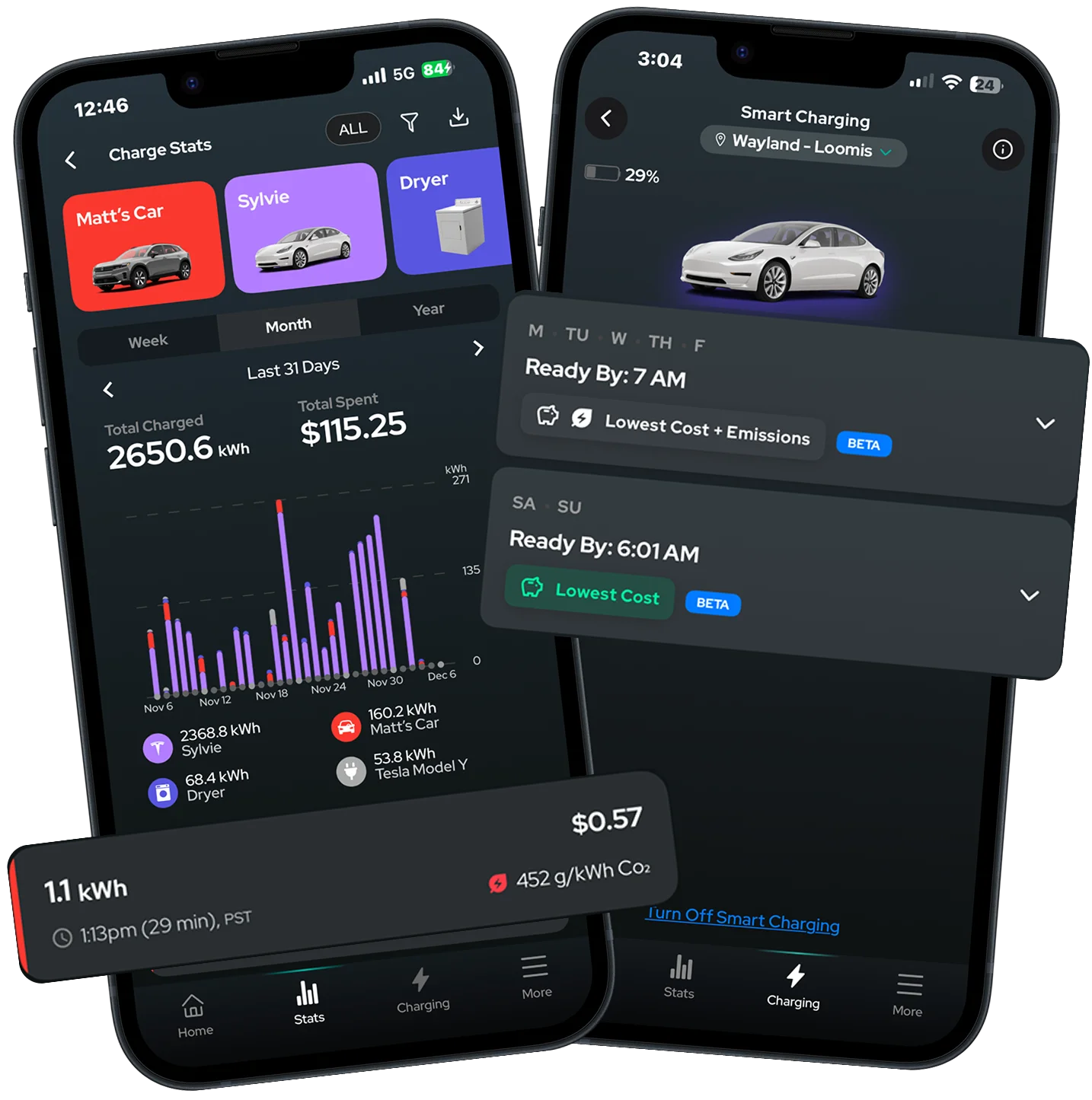
- To schedule off-peak charging and track cost, explore the NeoCharge App.
- Comparing the two home levels? Read Level 1 vs Level 2 EV charging.
- Weighing install paths? Read Smart Splitter vs EVEMS vs panel upgrade.
Sources
- U.S. EPA home EV charging guide: epa.gov
- U.S. Department of Energy Alternative Fuels Data Center, home charging guide: DOE home charging overview
Electrical safety disclaimer
This article is for general informational purposes only and does not replace advice from a qualified professional. Electrical work can cause fire, injury, or death if done incorrectly. Always follow local codes, obtain permits where required, and consult a licensed electrician to evaluate your specific panel, wiring, receptacle, and EV charging equipment before making changes.
NeoCharge App
Turn rate plans into simple charging schedules
Schedule around off-peak windows, manage compatible chargers, and keep tabs on charging sessions from the app.
Explore the app


Next steps
Keep going with NeoCharge
Use the article as your decision guide, then jump into the product, app, or related guides that match what you are trying to solve next.
Key terms
- Level 2 charging
- Level 2 EV charging uses a 240V circuit (like a dryer outlet). It typically adds ~20–35 miles of range per hour, depending on your car and the circuit amperage.
- EVSE
- EVSE stands for Electric Vehicle Supply Equipment (the “charger”). It safely delivers power to your EV and communicates with the car to control charging current.
- Time-of-use (TOU) rates
- Time-of-use rates are utility pricing plans where electricity costs more at peak hours and less off-peak. Scheduling EV charging off-peak can significantly reduce cost.
- Load management
- Load management is a strategy to keep your home’s electrical load within safe limits—often by scheduling or pausing EV charging when other appliances are running.
Related posts

Can I Charge My EV From a Dryer Outlet in Canada?
Can you charge an EV from a dryer outlet in Canada? Learn NEMA 14-30, NEMA 10-30, 24 amp charging, Tesla adapters, safety, and Smart Splitter options.

Do You Need a Panel Upgrade for Home EV Charging in Canada?
Can you install an EV charger without a panel upgrade in Canada? Compare 100 amp panels, Level 2 charging, dryer outlets, load management, and rebates.
EV Charging Best Practices: Battery Life, Safety, and Cost
Learn EV charging best practices for battery life, home safety, off-peak savings, fast charging, 80% limits, Level 2 charging, and panel upgrades.
DCC-9 vs DCC-10 vs EVEMS vs Smart Splitter: Canada EV Load Management Guide
Compare DCC-9, DCC-10, EVEMS, dynamic charger load management, NeoCharge Smart Splitter, and panel upgrades for Canadian EV charging on 100A or 125A panels.
