

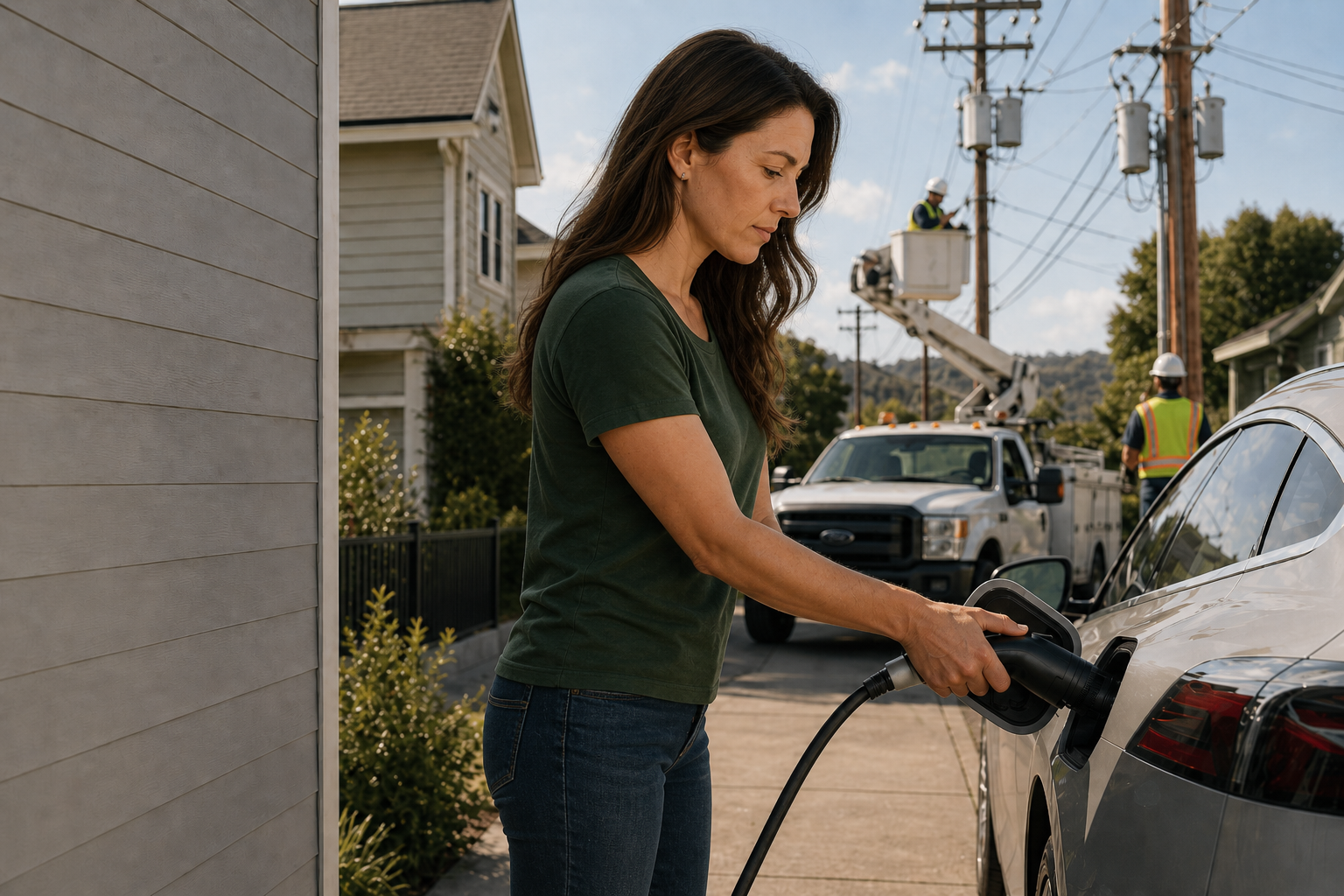



How Do You Charge an Electric Car at Home? (2026 Guide)
Direct answer: You charge an electric car at home by plugging it into either a standard 120V outlet (Level 1) or a 240V outlet or wall charger (Level 2), usually overnight. Level 1 adds about 3–5 miles of range per hour and needs no new wiring; Level 2 adds about 25–40 miles per hour and is the setup most EV owners prefer. Most drivers plug in at night and wake up to a full battery.
The two ways to charge an EV at home
| Level 1 | Level 2 | |
|---|---|---|
| Outlet | Standard 120V wall outlet | 240V circuit or outlet |
| Range added per hour | ~3–5 miles | ~25–40 miles |
| Equipment | Cordset included with the car | Dedicated charger or 240V outlet |
| Typical use | Short commutes, plug-in hybrids, backup | Daily charging for most EVs |
| New wiring needed? | Usually no | Often yes (or share an existing outlet) |
Level 1: plug into a regular outlet
Level 1 charging uses the same 120V outlet you use for a lamp or phone charger, with the portable cordset that came with your EV. It is the simplest possible setup — no electrician, no new outlet.
The trade-off is speed. The EPA puts Level 1 at roughly 3 to 5 miles of range per hour. Over a 10–12 hour overnight stretch, that is 40–60 miles back — plenty if you have a short commute or drive a plug-in hybrid, but tight for higher-mileage drivers.
Source: epa.gov
Level 2: the setup most EV owners want
Level 2 charging uses a 240V circuit — the same voltage as an electric dryer, range, or water heater. The EPA puts Level 2 at roughly 25 to 40 miles of range per hour, so it refills almost any EV overnight with room to spare.
You can get Level 2 charging two ways:
- A hardwired or plug-in Level 2 charger (smart chargers add scheduling, app control, and usage data).
- A 240V outlet (like a NEMA 14-50) that your car's portable cordset can plug into.
For a full side-by-side, see Level 1 vs Level 2 charging.
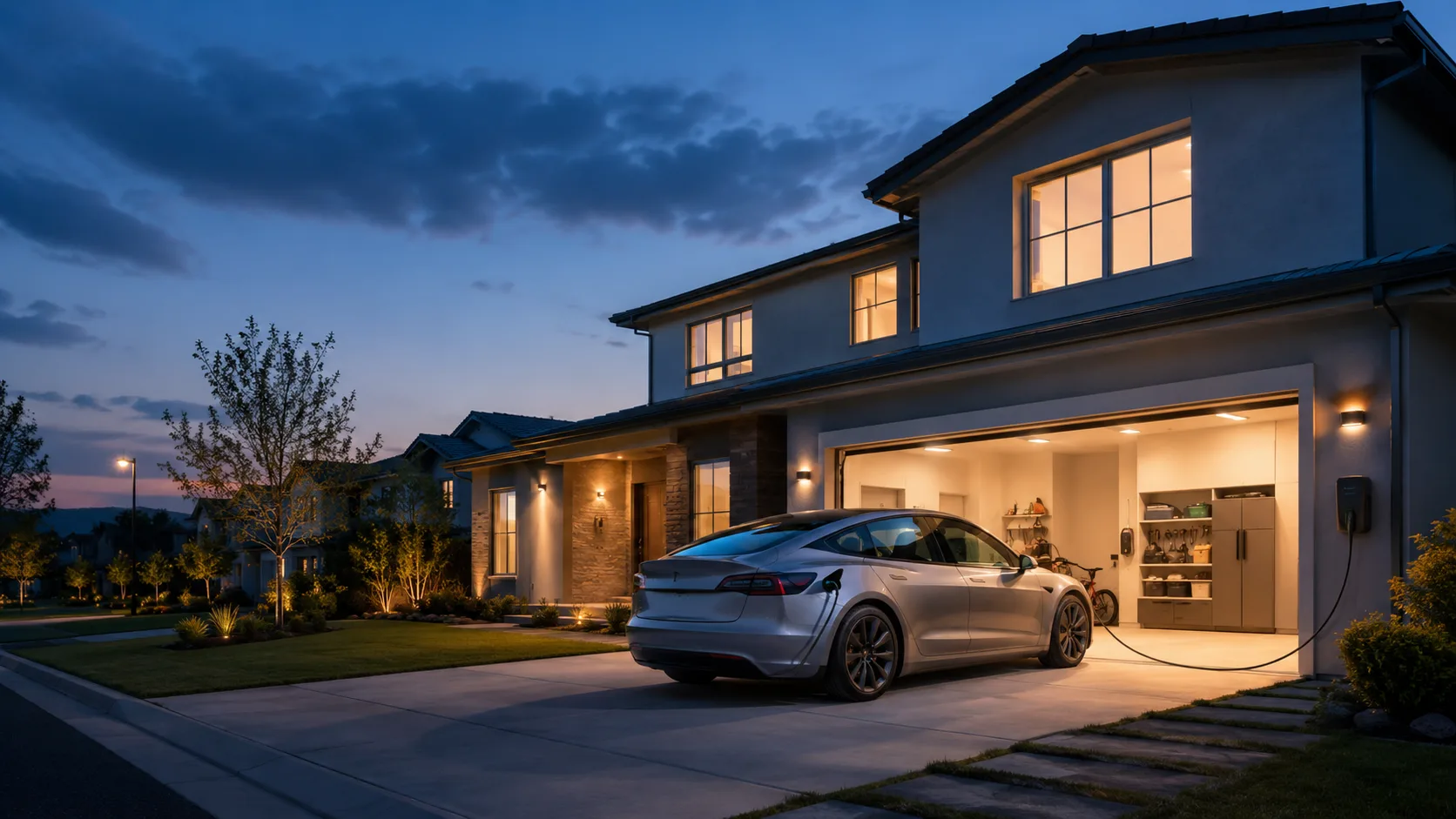
What equipment do you actually need?
Most EVs ship with a portable charging cord (technically the EVSE) that handles Level 1, and often Level 2 if you have a 240V outlet. From there:
- Non-smart Level 2 charger: ~$200–$500
- Smart/Wi-Fi Level 2 charger: ~$400–$700, with scheduling and energy tracking
- 240V outlet install: varies widely (see below)
You do not always need to buy a separate charger. If you have a suitable 240V outlet, the cord that came with the car may be all you need.
How long does it take to charge at home?
It depends on your battery size and charging level, but the question that matters is "will it be ready by morning?" — and for Level 2, the answer is almost always yes.
| Charging level | Range per hour | Overnight (10 hrs) |
|---|---|---|
| Level 1 (120V) | ~3–5 miles | ~30–50 miles |
| Level 2 (240V) | ~25–40 miles | ~250–400 miles |
With the average U.S. commute around 35–40 miles a day, even Level 1 keeps many drivers topped up. Level 2 simply removes any doubt.
How much does home charging cost?
The electricity itself is cheap — most drivers spend about $0.04 to $0.06 per mile at home, far less than gas. For the full breakdown, see how much it costs to charge an EV at home.
The bigger cost is often the install. Here is a rough breakdown of what each piece can run:
| Item | Typical cost |
|---|---|
| Level 1 charging (use included cord) | $0 |
| Level 2 charger (non-smart / smart) | ~$200–700 |
| New dedicated 240V outlet install | ~$300–1,500+ |
| Panel upgrade (if your panel is full) | ~$1,500–4,000+ |
| Share an existing 240V outlet (Smart Splitter) | one-time device cost, no new circuit |
For a deeper breakdown, see how much it costs to install a home charging station. The good news: the most expensive line items — a new circuit or panel upgrade — are exactly what the next section helps you avoid.
How to get Level 2 charging without a panel upgrade
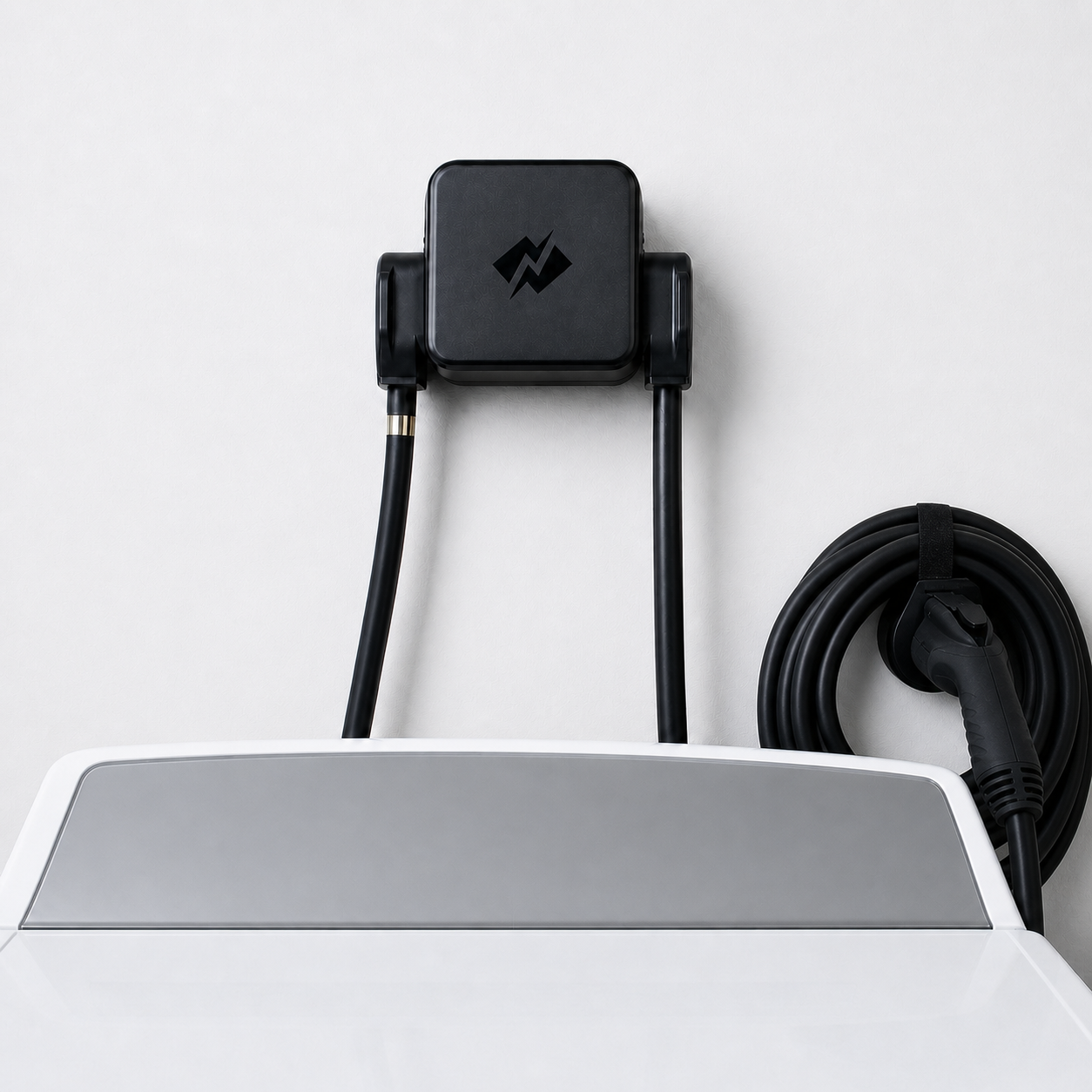
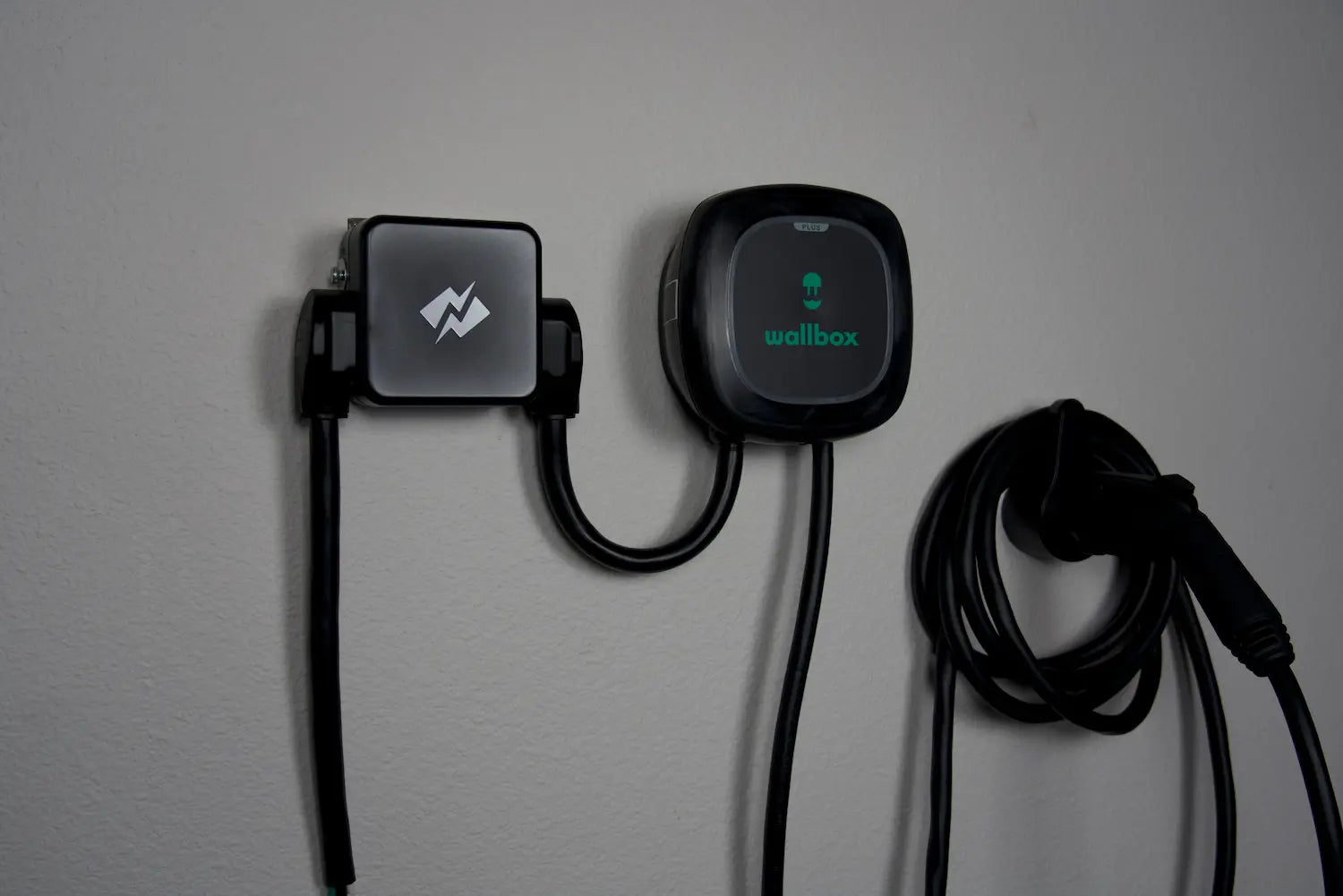
Many homes already have a 240V outlet — it is just busy running the dryer. Instead of paying for a new circuit or a panel upgrade, a NeoCharge Smart Splitter plugs into that existing outlet and safely shares it between your EV charger and the appliance, so the two never draw power at the same time.
That turns a dryer outlet into Level 2 EV charging without new wiring — often saving hundreds to thousands of dollars.
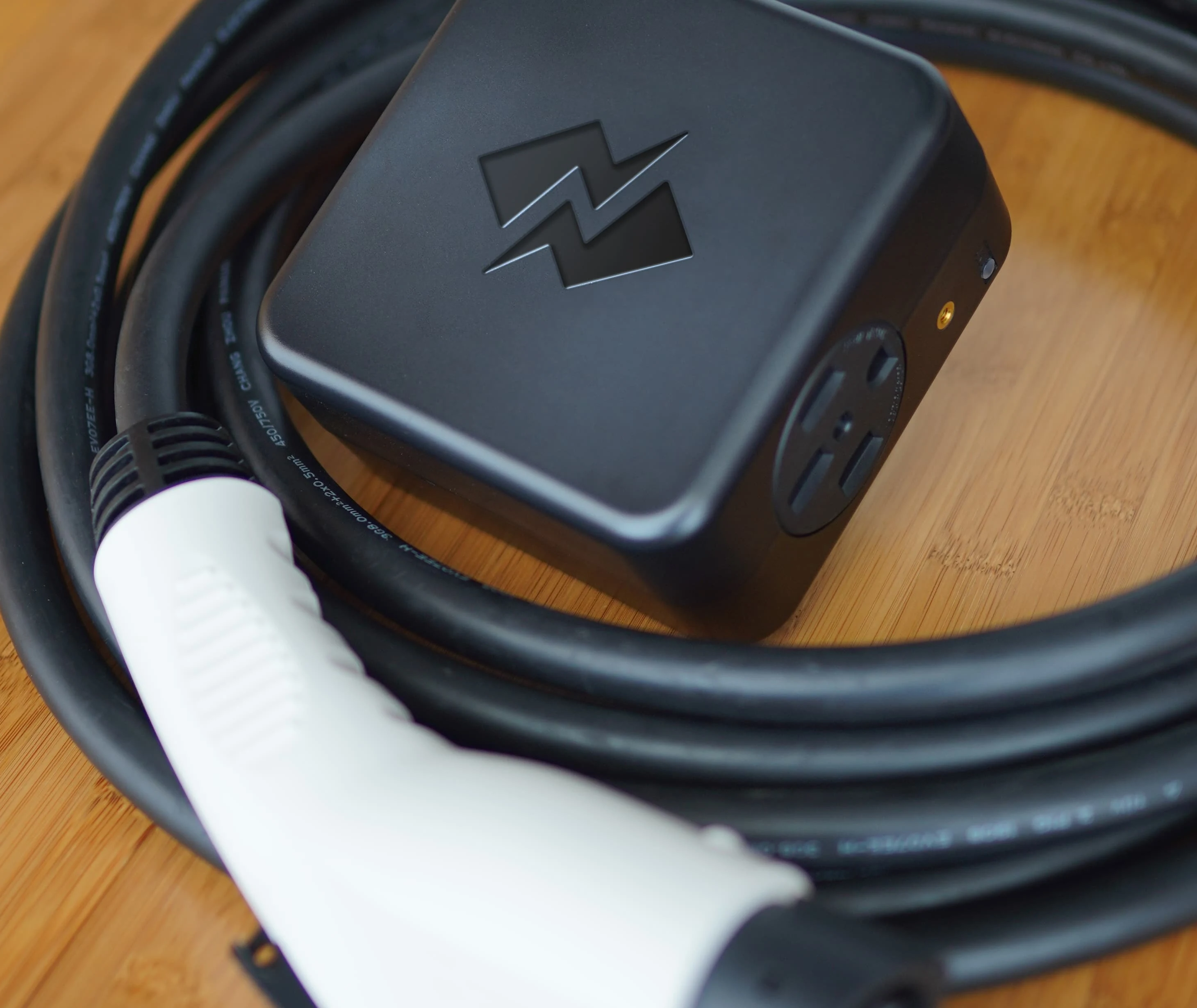
NeoCharge Smart Splitter
Level 2 charging from your existing dryer outlet
Share a single 240V outlet between your EV and dryer automatically — no panel upgrade, no new circuit.
When should you charge at home?
Overnight. It is convenient — the car is parked anyway — and usually the cheapest time. Most utilities offer time-of-use (TOU) rates where overnight power costs much less than mid-to-late afternoon peak hours.
The move is simple:
- Look up your utility's EV or time-of-use rate.
- Set your car, charger, or app to start charging after peak hours end.
- Make sure it finishes before you leave in the morning.
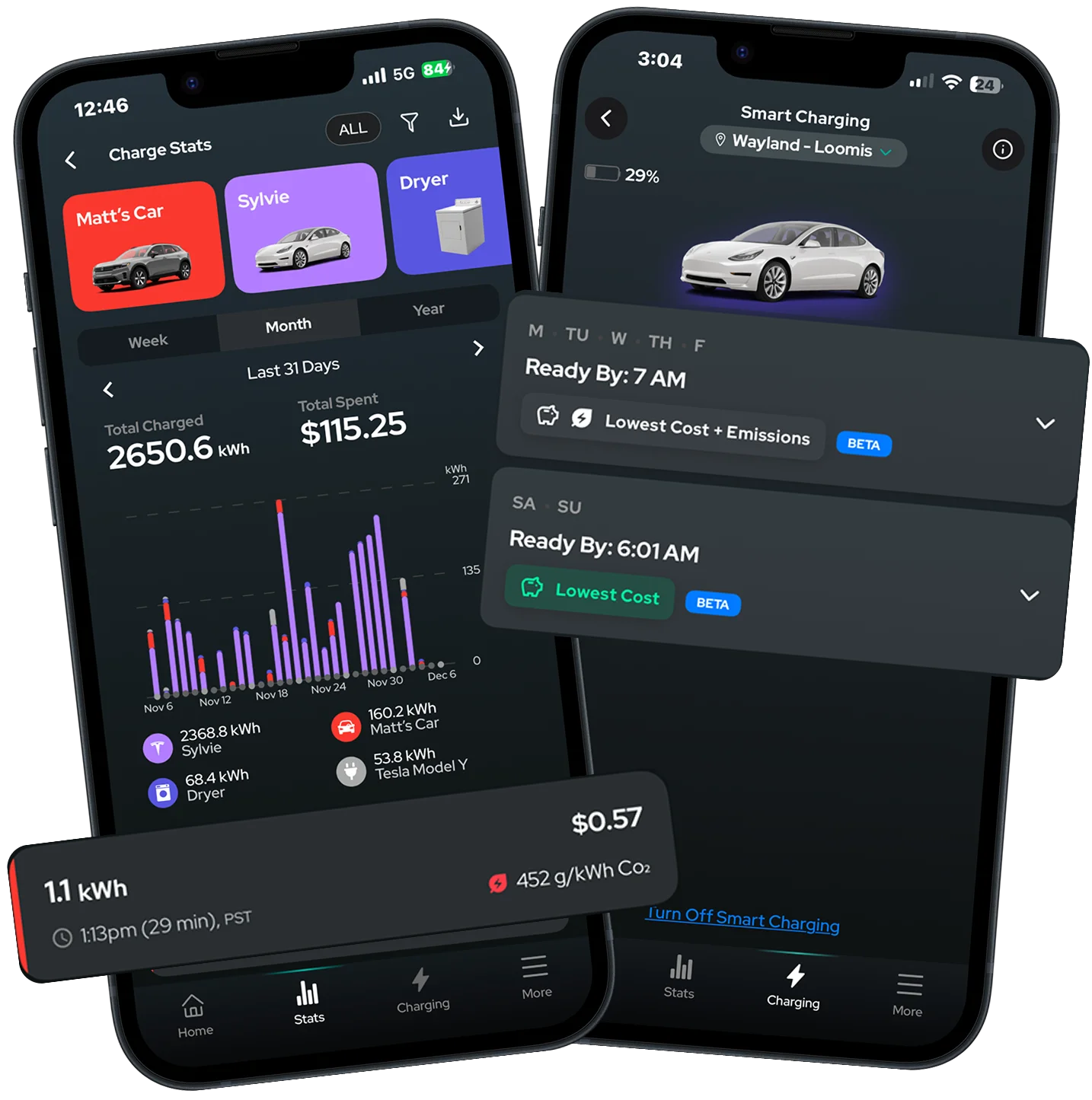
See how to find your off-peak hours, and use the NeoCharge App to automate the schedule and track what you spend.
What about charging away from home?
For trips beyond your range, public charging fills the gap. Level 2 public stations work like home charging, while DC fast charging (Level 3) can take many EVs from about 10% to 80% in roughly 30 minutes — enough time for a coffee or restroom break. Tools like PlugShare help you find stations and plan routes. But for everyday driving, home charging stays cheaper and more convenient, which is why it handles the vast majority of charging sessions.
One thing to know before you plug in anywhere: connectors. North America is shifting from the J1772/CCS standard to Tesla's NACS plug, and most automakers now include adapters. See NACS vs J1772 and CCS so you know which cable and adapter you need.
What if you rent or live in an apartment?
You can still charge at home in many cases. Level 1 from a standard outlet in a garage or carport works for a lot of renters, and some buildings allow a dedicated Level 2 circuit with landlord approval. If you share a panel or have limited capacity, load management or a Smart Splitter can help. We cover the specifics in EV charging options for apartments and renters.
A quick safety note
EV charging is a long-duration electrical load, so equipment quality matters. Use a charger certified by a recognized testing lab (UL or ETL), match it to the circuit, and never use a household extension cord or bargain adapter — they add heat and failure risk over hours of charging. See why extension cords are risky for EV charging.
Step-by-step: charging your EV at home
- Pick your level. Short commute or plug-in hybrid? Level 1 may be enough. Higher mileage? Go Level 2.
- Check your outlet. Have a free 240V outlet, a dedicated charger, or a dryer outlet you can share with a Smart Splitter.
- Plug in when you park. Connect the cordset to the car and the outlet.
- Set a schedule. Charge overnight on your off-peak rate; cap the daily limit around 80% unless your manual says otherwise.
- Wake up charged. Unplug and go.
FAQ
Can I charge an electric car with a regular wall outlet?
Do I need a special charger to charge at home?
How long does it take to charge an EV at home?
Do I need to upgrade my electrical panel for Level 2 charging?
Is it cheaper to charge an EV at home or in public?
Should I charge my EV to 100% every night?
Bottom line
Charging an electric car at home is simple: plug in when you park, ideally overnight on a cheap rate, and let the car do the rest. Level 1 works with any outlet; Level 2 makes it effortless. The only real hurdle is sometimes the 240V install — and a Smart Splitter or load management often removes that hurdle without a panel upgrade.
Next steps (NeoCharge)
- To add Level 2 charging from an existing dryer outlet, see the NeoCharge Smart Splitter.
- To schedule off-peak charging and track cost, explore the NeoCharge App.
- Still deciding on a setup? Read Level 1 vs Level 2 EV charging.
- Comparing install paths? Read Smart Splitter vs EVEMS vs panel upgrade.
Sources
- U.S. Department of Energy Alternative Fuels Data Center, home charging guide: DOE home charging overview
- U.S. EPA home EV charging guide: epa.gov
Electrical safety disclaimer
This article is for general informational purposes only and does not replace advice from a qualified professional. Electrical work can cause fire, injury, or death if done incorrectly. Always follow local codes, obtain permits where required, and consult a licensed electrician to evaluate your specific panel, wiring, receptacle, and EV charging equipment before making changes.
NeoCharge App
Turn rate plans into simple charging schedules
Schedule around off-peak windows, manage compatible chargers, and keep tabs on charging sessions from the app.
Explore the app


Next steps
Keep going with NeoCharge
Use the article as your decision guide, then jump into the product, app, or related guides that match what you are trying to solve next.
Key terms
- Level 2 charging
- Level 2 EV charging uses a 240V circuit (like a dryer outlet). It typically adds ~20–35 miles of range per hour, depending on your car and the circuit amperage.
- NEMA 14-50
- A NEMA 14-50 is a common 240V, 50A outlet (often used for EV charging). Many EV chargers plug into it, but the actual charging speed depends on the circuit and your EV.
- EVSE
- EVSE stands for Electric Vehicle Supply Equipment (the “charger”). It safely delivers power to your EV and communicates with the car to control charging current.
- Time-of-use (TOU) rates
- Time-of-use rates are utility pricing plans where electricity costs more at peak hours and less off-peak. Scheduling EV charging off-peak can significantly reduce cost.
- Load management
- Load management is a strategy to keep your home’s electrical load within safe limits—often by scheduling or pausing EV charging when other appliances are running.
Related posts

Can I Charge My EV From a Dryer Outlet in Canada?
Can you charge an EV from a dryer outlet in Canada? Learn NEMA 14-30, NEMA 10-30, 24 amp charging, Tesla adapters, safety, and Smart Splitter options.

Do You Need a Panel Upgrade for Home EV Charging in Canada?
Can you install an EV charger without a panel upgrade in Canada? Compare 100 amp panels, Level 2 charging, dryer outlets, load management, and rebates.
EV Charging Best Practices: Battery Life, Safety, and Cost
Learn EV charging best practices for battery life, home safety, off-peak savings, fast charging, 80% limits, Level 2 charging, and panel upgrades.
DCC-9 vs DCC-10 vs EVEMS vs Smart Splitter: Canada EV Load Management Guide
Compare DCC-9, DCC-10, EVEMS, dynamic charger load management, NeoCharge Smart Splitter, and panel upgrades for Canadian EV charging on 100A or 125A panels.
