




DCC-9 vs DCC-10 vs EVEMS vs Smart Splitter: Canada EV Load Management Guide
Direct answer: For many Canadian homes with 100A or 125A panels, the best EV charging path is not automatically a panel upgrade. If you already have a compatible 240V outlet near parking, start with a Smart Splitter compatibility check. If you need a new dedicated charger circuit but the load calculation is tight, ask a licensed electrician about DCC-9, DCC-10, or another EVEMS/load-management option. If you are planning broader electrification or need high-power charging, a panel or service upgrade may still be the better long-term answer.
Quick Answer
If you are trying to add Level 2 EV charging in Canada and your electrician says your panel is full, you may not automatically need a panel upgrade. The right path depends on what is actually constrained: the main service, the panel load calculation, the available breaker space, the building rules, or simply the fact that you already have one useful 240V outlet and want to share it safely.
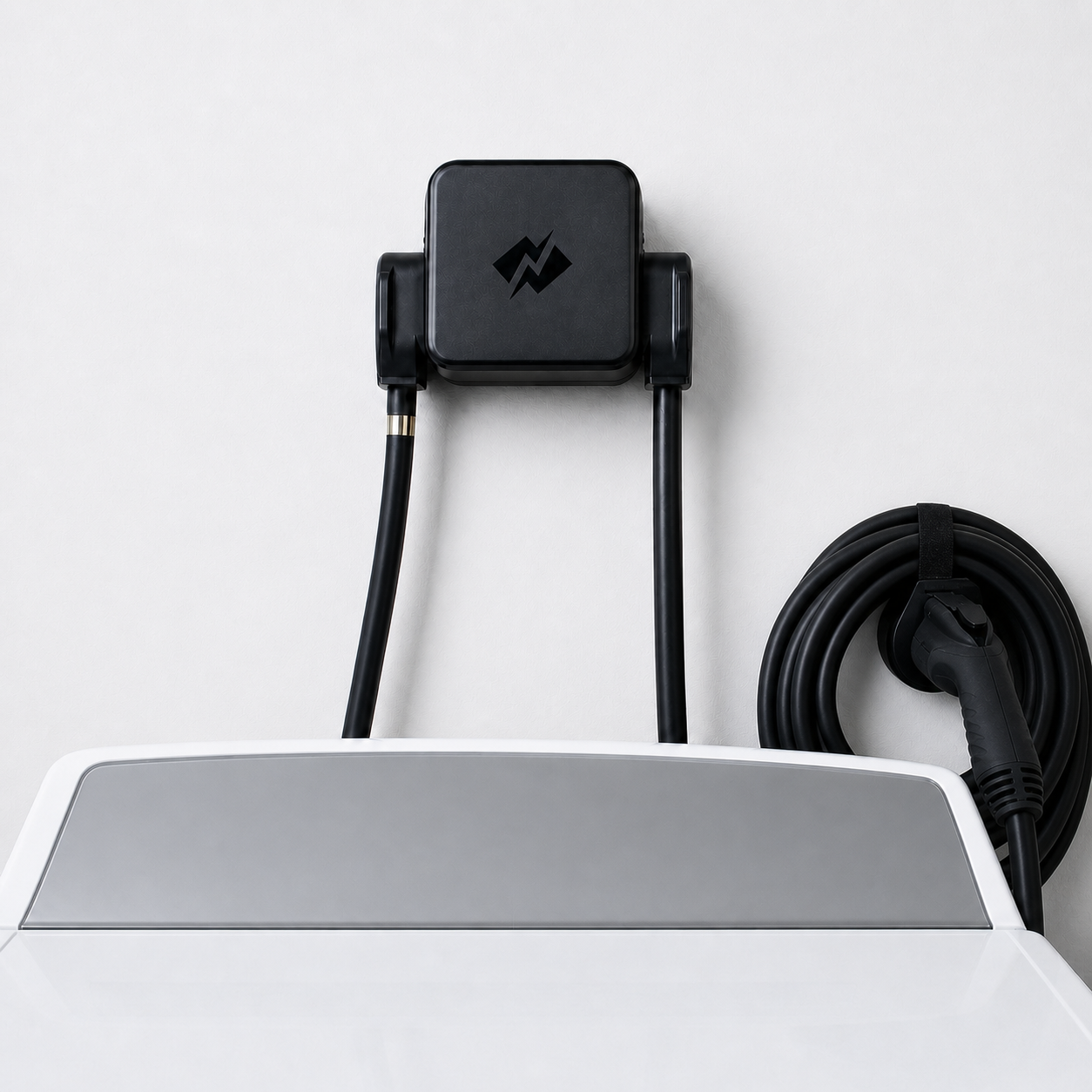
Choose a NeoCharge Smart Splitter when you already have a compatible 240V outlet, such as a dryer outlet near where you park, and you want to share that circuit safely instead of adding a new dedicated EV circuit.
Choose a DCC-10 when you are in a single-family home, want a dedicated EV charger circuit, and your panel or service load calculation is the limiting factor. RVE describes the DCC-10 as an EVEMS for single-family homes where the electrical panel would otherwise not have sufficient capacity. RVE DCC-10
Choose a DCC-9 when the installation is more condo, apartment, or MURB-oriented and the charger may need to connect at the unit's main power supply rather than a convenient in-suite panel. RVE describes the DCC-9 as ideal for multi-unit residential buildings. RVE DCC-9
Choose dynamic EVEMS or smart charger load management when you want the charger to adjust charging current based on available electrical capacity rather than only turning charging fully on or off.
Choose a panel upgrade when your home's long-term electrification plans, existing electrical condition, desired charging speed, permit requirements, or load calculation make managed charging insufficient.
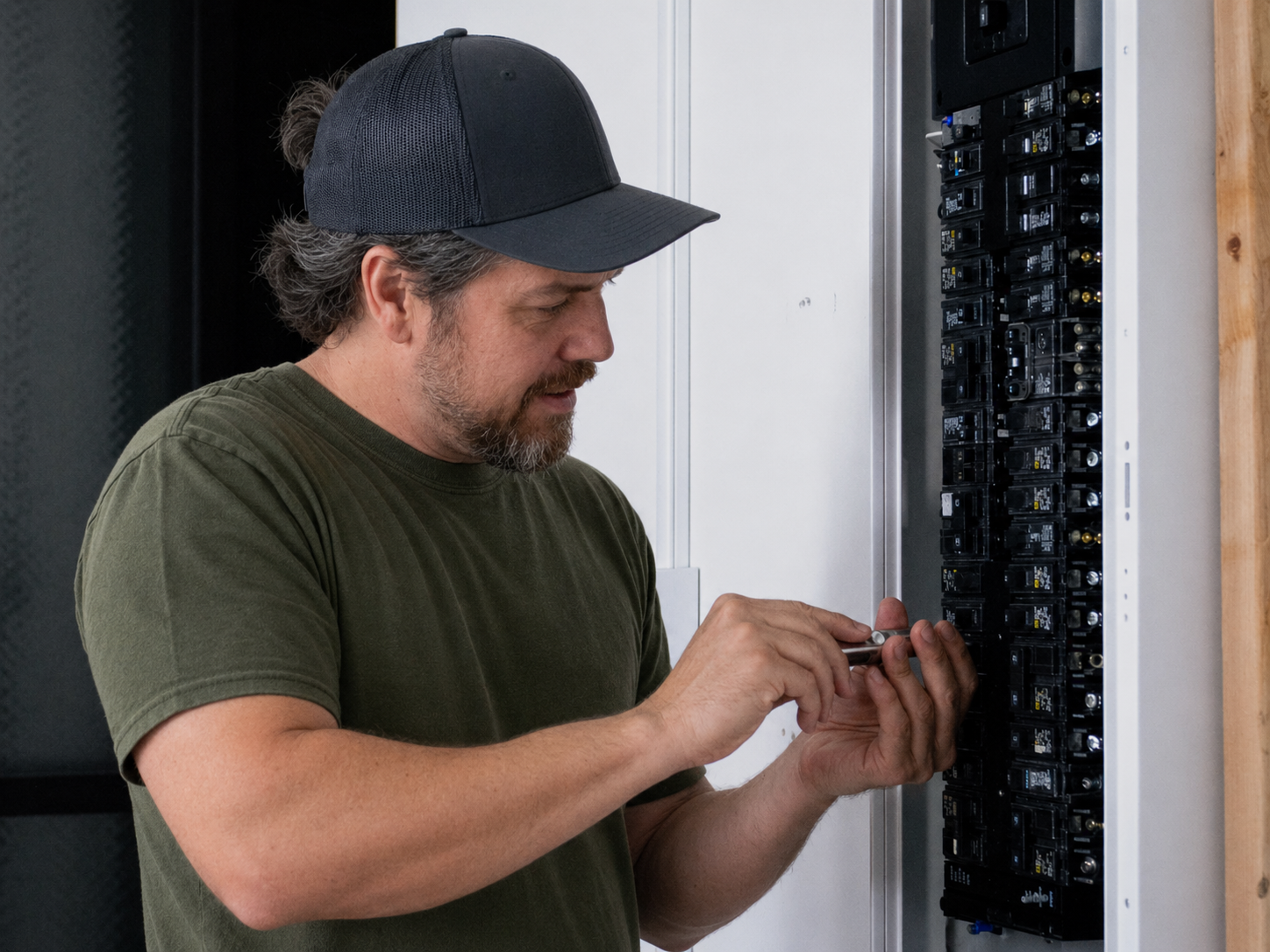
In every case, use a licensed electrician where required and confirm local code, permitting, inspection, utility, strata, and manufacturer requirements.
What EV Load Management Means
EV load management is a way to add EV charging without letting the home, panel, feeder, or branch circuit exceed its safe electrical limits.
In plain English, the home gets a traffic controller for electricity. When the dryer, range, heat pump, water heater, EV charger, and other loads could push the system too high, load management either pauses, reduces, schedules, or shares EV charging.
This matters because Level 2 EV charging can be a large, long-duration load. A 100 amp panel EV charger installation may be completely reasonable in one home and difficult in another, depending on existing appliances, heating type, service size, panel condition, available breaker space, wiring route, charger amperage, and local inspection requirements.
Load management can include:
- Sharing one 240V outlet between an appliance and EV charger.
- Lowering charger amperage.
- Pausing EV charging when whole-home load is high.
- Dynamically adjusting charging current.
- Coordinating multiple chargers in a condo, strata, or MURB.
- Scheduling charging around lower-cost overnight rates.
Qmerit describes load shedding as a practical way to reduce demand when electrical use approaches available capacity, while also noting that a qualified electrician should evaluate the installation. Qmerit
DCC-9 and DCC-10 Style Load Shedding, in Plain English
DCC-style EVEMS devices are typically installed by an electrician to monitor the electrical load and disconnect the EV charger when the home or unit is using too much power.
The key point: the EV charger is treated as the flexible load. Your home's normal electrical loads keep running, and charging pauses when needed.
RVE describes both the DCC-9 and DCC-10 as systems that read total panel power consumption with current transformers, detect when total power consumption exceeds 80% of the main breaker capacity, temporarily de-energize the EV charger, and re-energize it after the load has stayed below 80% for more than 15 minutes. RVE DCC-9 RVE DCC-10
DCC-9
The DCC-9 is commonly relevant for condos, apartments, and multi-unit residential buildings. RVE says the DCC-9 allows a charger to connect directly to the main power supply of a MURB dwelling that otherwise would not have enough capacity. It is described as ideal for MURBs and available in 30A, 40A, 50A, and 60A models. RVE DCC-9
DCC Canada's product listing for a DCC-9-50A-3R describes it as an EV Energy Management System designed to allow charger connection to the main feeder of a panel without affecting the load calculation, with exterior installation and a 50A breaker included for that specific model. DCC Canada DCC-9-50A-3R
DCC-10
The DCC-10 is more commonly the single-family-home comparison point. RVE describes it as an EVEMS that lets a charger connect directly to an electrical panel that would otherwise lack sufficient capacity. It is listed as ideal for single-family homes, intended to avoid upgrading a full-capacity panel, and available in multiple amperage models. RVE DCC-10
DCC-10 load management can make sense when:
- You want a dedicated EV charger circuit.
- The panel is at capacity after the load calculation.
- There is still physical room for the required breaker.
- You are comfortable with charging occasionally pausing during high household load.
- Your electrician confirms the device, wiring, breaker, permitting, and installation path are appropriate.
EVEMS and Dynamic Load Management
EVEMS stands for Electric Vehicle Energy Management System. In everyday terms, EVEMS Canada conversations usually revolve around one question: can the EV charging load be automatically controlled so the home stays within approved electrical limits?
There are two broad styles:
On/off load shedding: Charging runs normally until the monitored load is too high, then the system pauses the EV charger. DCC-9 and DCC-10 style systems are examples of this approach.
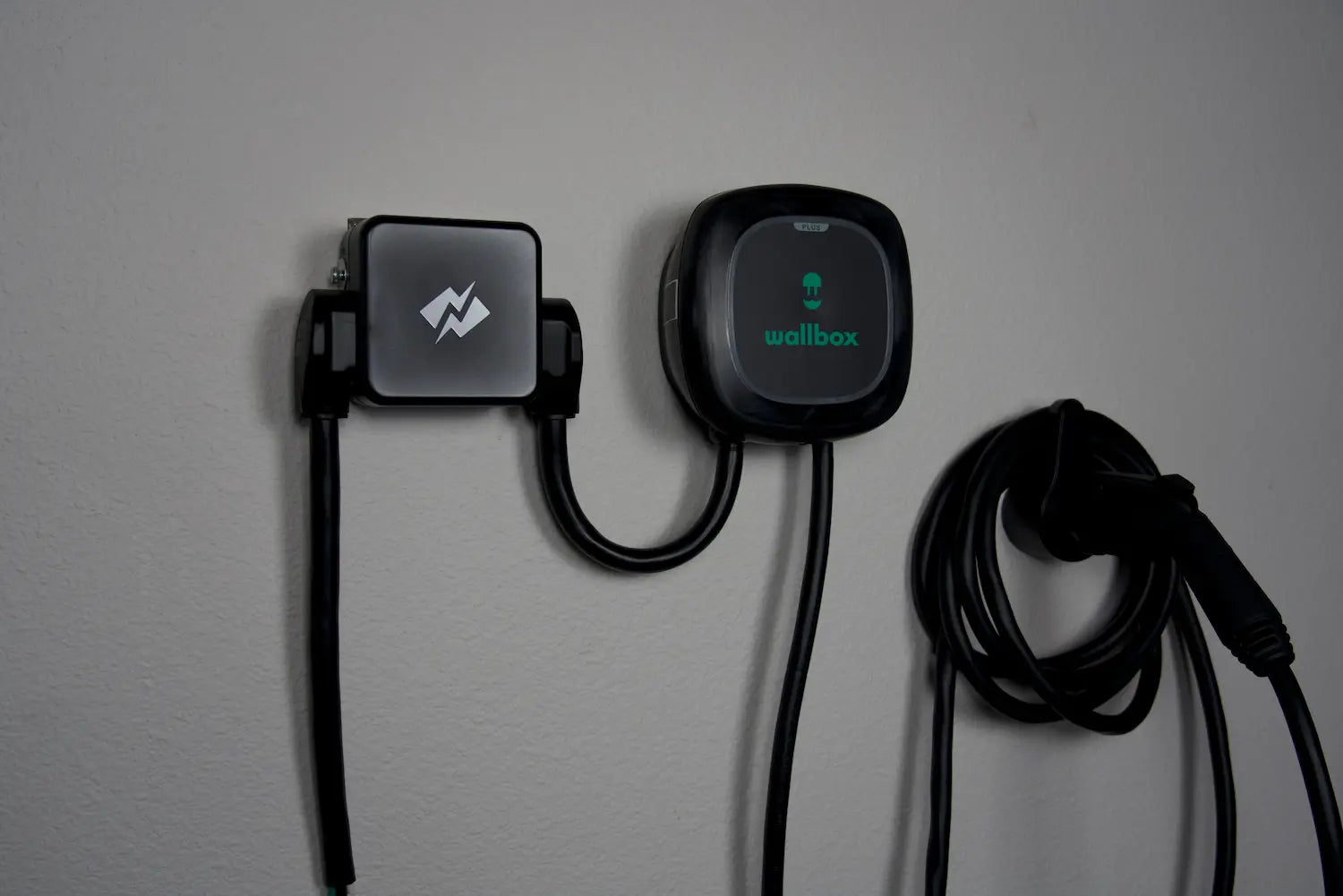
Dynamic load management: The charger or energy management system can reduce charging current instead of only turning the charger off. For example, a charger might charge at a higher rate overnight when the home is quiet, then ramp down if other electrical loads increase.
Dynamic charger load management can be a strong fit when:
- You want a new dedicated charger circuit.
- You want smoother charging than full shutoff events.
- You have a compatible smart charger or energy management hardware.
- Your electrician can design the installation around the applicable rules.
- The goal is to maximize overnight charging while respecting panel or service limits.
Schneider Electric's discussion of residential energy management describes using active load control based on a maximum setpoint to support added loads such as EV charging and potentially reduce the need for service capacity upgrades. Schneider Electric
For a deeper electrical-code explainer, read NeoCharge's guide to NEC 625 and EVEMS for home EV charging.
NeoCharge Smart Splitter: When Outlet Sharing Is the Better Path
A NeoCharge Smart Splitter solves a different problem than a DCC-9 or DCC-10.
A DCC or EVEMS installation usually asks: "Can I add or manage a dedicated EV charging circuit?"
A Smart Splitter asks: "Do I already have a usable 240V circuit, and can I safely share it?"
That distinction matters. Many Canadian homeowners with 100A or 125A panels already have a dryer outlet, range outlet, or other 240V outlet near the garage, driveway, or parking area. If the outlet and circuit are compatible, the practical path may be to share the existing circuit rather than add a new one.
NeoCharge's existing guide explains the Smart Splitter as a fit when you have a 240V dryer outlet near parking, do not need to run the dryer and charge at the same time, and want an automatic alternative to unplugging or using unsafe splitter cords. Smart Splitter vs EVEMS vs Panel Upgrade
A Smart Splitter can make sense when:
- You already have a compatible 240V outlet.
- You are okay charging when the appliance is not running.
- You want Level 2 charging without adding a new dedicated circuit.
- You want to avoid repeated plugging and unplugging.
- Your charging needs are mostly overnight.
- Your electrician or qualified installer confirms the outlet, breaker, wiring, and use case are appropriate where required.
A Smart Splitter is not the same as a whole-home EVEMS. It does not replace a load calculation when one is required, and it is not the answer for every electrical constraint. But for the right home, it can be the simplest and most practical way to avoid panel upgrade EV charger costs.
Comparison Table
| Option | Best for | How it manages load | Advantages | Watch-outs |
|---|---|---|---|---|
| NeoCharge Smart Splitter | Homes with an existing compatible 240V outlet near parking | Shares one 240V circuit between two loads, such as dryer and EV, with automatic switching | Often simpler than adding a new circuit; useful for 100A or 125A homes; good for overnight charging | Requires compatible outlet and circuit; not a whole-home EVEMS; does not replace code review where required |
| DCC-9 / DCC-10 | DCC-9: condos, apartments, and MURBs. DCC-10: single-family homes with full panels | Monitors electrical load and temporarily de-energizes the EV charger when load is high | Purpose-built EVEMS Canada option; can help avoid a panel upgrade in the right installation | Charging may pause during high load; requires electrician installation; device selection depends on building and panel details |
| Dynamic EVEMS / smart charger load management | Dedicated charger installs where available capacity changes throughout the day | Adjusts charging current or pauses charging based on measured load | More flexible than simple on/off shedding; good for maximizing overnight charging | Requires compatible hardware; electrician must confirm design, code, and inspection path |
| Panel upgrade | Homes needing more long-term capacity or major electrification | Increases service or panel capacity rather than managing around the limit | Best future-proofing for heat pumps, induction, multiple EVs, suites, or high-power charging | Usually more expensive and disruptive; may involve utility coordination, permits, and longer timelines |
Decision Tree
Existing dryer, range, or 240V outlet
If you already have a dryer, range, or other 240V outlet near parking, start by checking whether outlet sharing is viable. A NeoCharge Smart Splitter may be the cleanest path if the circuit, receptacle, charger plug, appliance, and parking layout are compatible.
If you do not have a useful 240V outlet, move to a dedicated charger circuit or EVEMS conversation.
No panel capacity
Ask what specifically is constrained:
- No breaker space?
- Failed load calculation?
- Service size too small?
- Feeder limitation?
- Old or unsafe panel?
- Utility or permit requirement?
- Condo or strata electrical-room limitation?
If the issue is load calculation, a DCC-10, dynamic EVEMS, or other load shedding EV charger Canada solution may be worth pricing before a panel upgrade.
Condo or multi-unit building
Start with building rules, strata approval, parking stall rights, metering, billing, electrical-room access, and future scalability. DCC-9 style solutions are often discussed in MURB contexts because the charger may need to connect at the unit's main power supply rather than a convenient panel. RVE specifically describes the DCC-9 as ideal for multi-unit residential buildings. RVE DCC-9
Two EV household
If you have one existing 240V outlet and both vehicles can charge at different times, outlet sharing or two-EV circuit sharing may be enough.
If both EVs need high daily energy, ask about a managed dual-charger setup, dynamic load management, or whether a panel or service upgrade is more sensible long-term.
100A panel
A 100 amp panel EV charger setup is not automatically impossible. The right answer depends on the home. If you have electric heat, heat pumps, a hot tub, electric range, electric dryer, or other large loads, capacity may be tighter. If you mostly need overnight charging and already have a compatible 240V outlet, a Smart Splitter or lower-amperage charging may be practical.
New dedicated charger circuit
If you are installing a new dedicated charger circuit, ask your electrician to compare:
- Lower-amperage EVSE.
- DCC-10 or equivalent EVEMS.
- Dynamic charger load management.
- Panel or service upgrade.
The best solution is the one that passes the required load calculation, meets local code and inspection requirements, fits your driving needs, and leaves appropriate room for future electrical plans.
Canada-Specific Notes
BC Hydro power management device awareness
BC Hydro's home charger rebate documentation references EV power management devices and asks for documentation when a power management device is installed. It also distinguishes certain power management installations from "no electrical work required" situations. BC Hydro home charger rebate documents
Practical takeaway: in B.C., do not assume every plug-in or load management path falls into the same rebate or documentation category. Check current BC Hydro rules, eligible device requirements, inspection requirements, and whether your installation needs a licensed electrician.
For B.C.-specific reading, see NeoCharge's guide to home EV charging, panel upgrades, and BC Hydro.
Ontario ULO and off-peak savings
Ontario's Ultra-Low Overnight price plan is designed for customers who can shift significant electricity use overnight, including EV owners. Ontario says ULO may be better if you use most electricity overnight or charge an EV overnight, while noting that it has a lower overnight rate and a higher on-peak rate. Ontario electricity price plans
Practical takeaway: load management is not only about panel capacity. Pairing overnight charging with scheduling can reduce costs, but ULO is not automatically best for every household. Compare your whole-home usage, not just EV charging.
Quebec connected charging and Ecorecharge context
Quebec's Ecorecharge program includes home and multiple-dwelling charging support, subject to current program rules. For individual charging stations in multiple dwellings, Quebec says eligible chargers must be Level 2 and, as of April 1, 2026, only connected charging stations are eligible for financial assistance. Gouvernement du Quebec
Practical takeaway: in Quebec, confirm whether your chosen charger, outlet-sharing setup, or EVEMS path fits the current Ecorecharge category before buying hardware.
Condo, strata, and MURB notes
In multi-unit buildings, the best technical solution is only part of the decision. You may also need:
- Board or strata approval.
- Parking-stall electrical access review.
- Metering or billing plan.
- Electrical-room capacity review.
- Fire and safety documentation.
- Future expansion plan for more EV drivers.
- A licensed electrician familiar with MURB EV charging.
DCC-9 style systems, dynamic EVEMS, networked chargers, and building-level load management can all be relevant. A Smart Splitter may still be useful in some private-garage or townhouse-style situations, but shared-building rules often add extra requirements.
Safety and Electrician Checklist
Before choosing DCC-9, DCC-10, EVEMS, a Smart Splitter, or a panel upgrade, confirm:
- The home or unit load calculation.
- Service size: 100A, 125A, 150A, 200A, or other.
- Panel age, condition, breaker availability, and manufacturer compatibility.
- Whether the EV charger will be plug-in or hardwired.
- Circuit breaker rating, conductor size, receptacle rating, and receptacle condition.
- Whether the EV charging load must be treated as continuous.
- Whether the charger amperage can be reduced.
- Whether permits and inspection are required.
- Whether the product is certified or listed for use in Canada.
- Whether the utility, municipality, province, condo board, or strata has extra requirements.
- Whether overnight charging meets your daily driving needs.
- Whether future loads, such as heat pumps, induction cooking, battery storage, or a second EV, change the decision.
Do not use unapproved splitter cords, improvised adapters, or repeated plug swapping as a long-term EV charging strategy.
FAQ
Is a DCC-9 the same as a DCC-10?
No. They are related EV energy management products, but they are aimed at different installation contexts. RVE describes DCC-9 as ideal for multi-unit residential buildings and DCC-10 as ideal for single-family homes. DCC-9 DCC-10
Is a Smart Splitter an EVEMS?
A Smart Splitter is a load management device for sharing a compatible 240V circuit, such as a dryer outlet and EV charger. It is not the same as a whole-home EVEMS that monitors the full panel or service. For the right outlet-sharing case, it can be simpler than installing a new managed EV circuit.
Can I install Level 2 charging on a 100A panel in Canada?
Often, yes, but not always. A 100A panel may support Level 2 charging with the right circuit, lower amperage, outlet sharing, EVEMS, or load management. A licensed electrician should verify the load calculation and local requirements.
Does load shedding mean my car will not charge?
Usually, no. Load shedding means charging may pause during high household load and resume when capacity is available. In many homes, the panel load is lower overnight, so charging can still complete normally. But if your daily driving is high or your home has heavy overnight loads, confirm the expected charging window.
When is a panel upgrade still required?
A panel upgrade may still be required if the existing equipment is unsafe, the service is too small for your broader electrical plans, the desired charger power cannot be supported with management, local rules require it, or you are adding multiple major loads such as a second EV, heat pump, induction range, hot tub, or suite.
What is the best option for a condo or strata?
There is no universal answer. Condos and stratas need building approval, electrical capacity review, metering or billing decisions, and often a scalable plan for future EVs. DCC-9, building-level EVEMS, networked chargers, or dedicated infrastructure may all be considered.
Is dynamic load management better than a DCC-style load shedder?
It depends. Dynamic load management can be smoother because it may reduce charging current instead of fully pausing charging. But DCC-style on/off load shedding can be simpler and well-suited to many installations. The best choice depends on approved hardware, charger compatibility, cost, and electrician design.
Can the NeoCharge app help with Canadian off-peak rates?
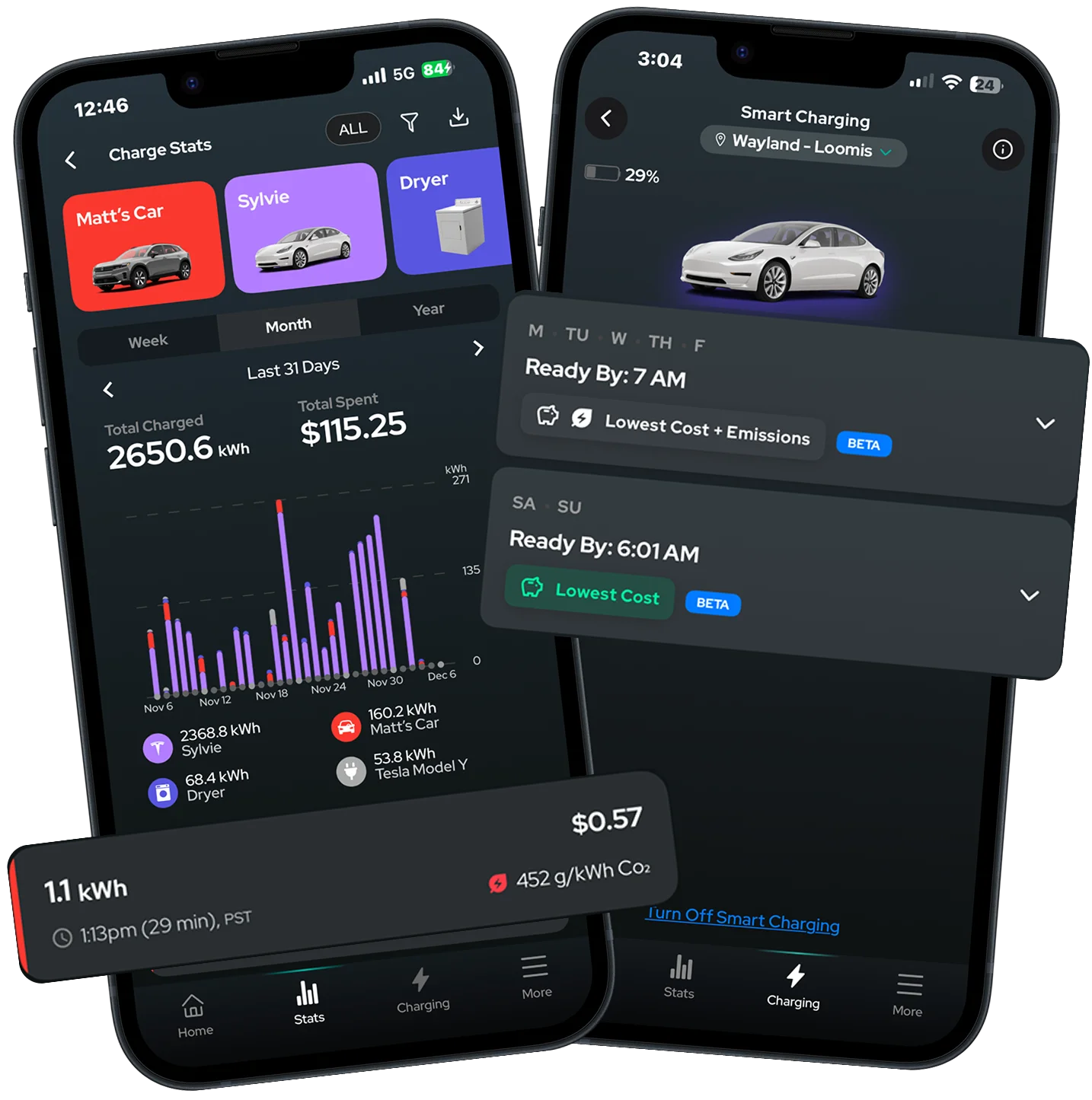
Yes. The NeoCharge app can help with scheduling and cost tracking, which is useful for time-varying electricity plans such as Ontario ULO or other off-peak programs. Always compare your full household rate plan before switching.
Related NeoCharge Guides
- Smart Splitter vs EVEMS vs Panel Upgrade
- Add an EV Charger Without a Panel Upgrade
- Share a 240V Outlet With an EV Charger and Dryer Safely
- Canada EV Charging Rebates, Dryer Outlets, and Smart Splitter
Check Smart Splitter Compatibility
If you already have a 240V outlet near where you park, start by checking whether your home is compatible with the NeoCharge Smart Splitter. If it is, outlet sharing may be the most practical way to get Level 2 charging without an unnecessary panel upgrade.
Then use the NeoCharge app to schedule charging around off-peak windows, track charging costs, and make your home EV setup easier to manage.
Sources
- DCC Canada, DCC-9-50A-3R product page: shop.dcc-can.technology
- RVE, DCC-9: rve.ca
- RVE, DCC-10: rve.ca
- Qmerit, load shedding and panel upgrade alternatives: qmerit.com
- Schneider Electric, managing EV load demand: blog.se.com
- NeoCharge, Smart Splitter vs EVEMS vs Panel Upgrade: getneocharge.com
- NeoCharge, NEC 625 and EVEMS: getneocharge.com
NeoCharge App
Turn rate plans into simple charging schedules
Schedule around off-peak windows, manage compatible chargers, and keep tabs on charging sessions from the app.
Explore the app


Next steps
Keep going with NeoCharge
Use the article as your decision guide, then jump into the product, app, or related guides that match what you are trying to solve next.
Key terms
- Level 2 charging
- Level 2 EV charging uses a 240V circuit (like a dryer outlet). It typically adds ~20–35 miles of range per hour, depending on your car and the circuit amperage.
- EVSE
- EVSE stands for Electric Vehicle Supply Equipment (the “charger”). It safely delivers power to your EV and communicates with the car to control charging current.
- Load management
- Load management is a strategy to keep your home’s electrical load within safe limits—often by scheduling or pausing EV charging when other appliances are running.
FAQs
What's the quick takeaway from this article?
Who is this guide for?
What should I do next?
Related posts
How Much Does It Cost to Charge a Tesla in Canada? (2026 Guide)
How much does it cost to charge a Tesla in Canada? About $6-$17 per full charge depending on province. See per-province rates, the formula, and Supercharger pricing.
Can I Charge My EV From a Dryer Outlet in Canada?
Can you charge an EV from a dryer outlet in Canada? Learn NEMA 14-30, NEMA 10-30, 24 amp charging, Tesla adapters, safety, and Smart Splitter options.

Do You Need a Panel Upgrade for Home EV Charging in Canada?
Can you install an EV charger without a panel upgrade in Canada? Compare 100 amp panels, Level 2 charging, dryer outlets, load management, and rebates.

EV Charging Best Practices: Battery Life, Safety, and Cost
Learn EV charging best practices for battery life, home safety, off-peak savings, fast charging, 80% limits, Level 2 charging, and panel upgrades.
